In ABC inventory analysis, which of the following is TRUE of class C items?
a. Close control of Class C items (more than of class A or class B items) is required.
b. Class C items are critical items that must be monitored with a fixed-period system as
they have low unit costs and a high volume.
c. Class C items make up a lower percentage of total dollar value than either class A or
class B items.
d. Class C items make up for 10 to 20 percent of inventory items and 60 to 80 percent
of the total dollar usage.
Answer:
Zainab opens an aquarium store in a lively shopping mall and finds business to be
booming, but she often stocks out of key items customers want. She decides to
experiment with inventory control methods such as using a fixed order quantity (FQS)
and/or fixed order period (FPS) systems. The Fluval 303 pump, a high margin and
profitable pump, is one of her best sellers, but it stocks out frequently. She collects the
following data with respect to this pump’s sales:
Demand = 5 units per week Store operates 50 weeks/year
Order cost = $40/order Lead time = 3 weeks
Item cost = $80/pump
Inventory-holding cost = 15% per year
If the current order quantity used by Zainab is 20 pumps per order, how much money
can she save by adopting an economic order quantity (EOQ) policy?
a. Less than $50
b. More than $50 but less than or equal to $75
c. More than $75 but less than or equal to $120
d. More than $120
Answer:
Inventory management does not involve supplies and replacement parts
Answer:
Call center phone lines are examples of inventory in service organizations.
Answer:
What is inventory management and why is it important?
Answer:
Explain the different types of inventories maintained throughout a value chain.
Answer:
What are the four categories of inventory costs?
Answer:
Summarize the characteristics of the inventory environment that management considers
when developing an inventory management system
Answer:
Kelly opens an aquarium store in a lively shopping mall and finds business to be
booming, but she often stocks out of key items customers want. She decides to
experiment with inventory control methods such as using a fixed order quantity (FQS)
and/or fixed order period (FPS) systems. The Fluval 303 pump, a high margin and
profitable pump, is one of her best sellers, but it stocks out frequently. She collects the
following data about the pump’s sales.
Demand = 10 units per week Store operates 45 weeks/year
Order cost = $30/order Lead time = 3 weeks
Item cost = $80/pump Standard deviation of weekly demand = 4
units
Inventory-holding cost = 15% per year Desired service level = 90 percent
The economic order quantity (EOQ) rounded to the next highest number is:
a. less than 25 pumps.
b. more than 25 but less than or equal to 35 pumps.
c. more than 35 but less than or equal to 45 pumps.
d. more than 45 but less than or equal to 55 pumps.
Answer:
The total order and inventory-holding cost for the economic order quantity (EOQ) is:
a. less than $1,000.
b. more than or equal to $1,000 but less than $1,500.
c. more than or equal to $1500 but less than $2,500.
d. more than or equal to $2,500.
Answer:

Table 1
Jackson Enterprises uses a fixed order quantity inventory control system. The firm
operates 50 weeks per year and has the following characteristics for an item:
Demand = 20,000 units/year
Ordering cost = $45/order
Inventory-carrying cost as a percent of item value = 25%
Item (Unit) value = $20
Lead time = 5 weeks
Standard deviation in weekly demand = 125 units
Using the information in Table 1, if the service level is 96 percent, what is the reorder
point?
a. Less than or equal to 2,800 units
b. Greater than 2,800 but less than or equal to 3,200 units
c. Greater than 3,200 but less than or equal to 3,600 units
d. Greater than 3,600 units
Answer:
Brenda opens a pool and spa store in a lively shopping mall and finds business to be
booming, but she often stocks out of key items customers want. She decides to
experiment with inventory control methods such as using a fixed order quantity (FQS)
and/or fixed order period (FPS) systems. The 28-ounce bottle of Super Algaecide (SA)
is a high margin stock keeping unit (SKU), but it stocks out frequently. Ten SA bottles
come in each box, and she orders boxes from a vendor 160 miles away. Brenda is busy
running the store and seldom has time to review store inventory status and order the
right quantity at the right time. She collects the following data with respect to these SA
sales.
Demand = 10 boxes per week Store operates 50 weeks/year
Order cost = $40/order Lead time = 3 weeks
Item cost = $80/box Std. deviation in weekly demand = 6

Inventory-holding cost = 15% per year Service level = 96%
The average number of orders per year using the economic order quantity (EOQ) is:
a. less than 6.
b. more than 6 but less than or equal to 8.
c. more than 8 but less than or equal to 10.
d. more than 12.
Answer:
Brenda opens a pool and spa store in a lively shopping mall and finds business to be
booming, but she often stocks out of key items customers want. She decides to
experiment with inventory control methods such as using a fixed order quantity (FQS)
and/or fixed order period (FPS) systems. The 28-ounce bottle of Super Algaecide (SA)
is a high margin stock keeping unit (SKU), but it stocks out frequently. Ten SA bottles
come in each box, and she orders boxes from a vendor 160 miles away. Brenda is busy
running the store and seldom has time to review store inventory status and order the
right quantity at the right time. She collects the following data with respect to these SA
sales.
Demand = 10 boxes per week Store operates 50 weeks/year
Order cost = $40/order Lead time = 3 weeks
Item cost = $80/box Std. deviation in weekly demand = 6
Inventory-holding cost = 15% per year Service level = 96%
The reorder point for Super Algaecide (SA) with safety stock is:
a. less than 20 boxes.
b. more than 20 but less than or equal to 30 boxes.
c. more than 30 but less than or equal to 40 boxes.
d. more than 40 but less than or equal to 50 boxes.
Answer:

Brenda opens a pool and spa store in a lively shopping mall and finds business to be
booming, but she often stocks out of key items customers want. She decides to
experiment with inventory control methods such as using a fixed order quantity (FQS)
and/or fixed order period (FPS) systems. The 28-ounce bottle of Super Algaecide (SA)
is a high margin stock keeping unit (SKU), but it stocks out frequently. Ten SA bottles
come in each box, and she orders boxes from a vendor 160 miles away. Brenda is busy
running the store and seldom has time to review store inventory status and order the
right quantity at the right time. She collects the following data with respect to these SA
sales.
Demand = 10 boxes per week Store operates 50 weeks/year
Order cost = $40/order Lead time = 3 weeks
Item cost = $80/box Std. deviation in weekly demand = 6
Inventory-holding cost = 15% per year Service level = 96%
If the current order quantity for SA is 20 boxes per order, how much money can she
save per year by adopting an economic order quantity (EOQ) ordering policy?
a. Less than $100
b. More than $100 but less than or equal to $200
c. More than $300 but less than or equal to $400
d. More than $400
Answer:
Brenda opens a pool and spa store in a lively shopping mall and finds business to be
booming, but she often stocks out of key items customers want. She decides to
experiment with inventory control methods such as using a fixed order quantity (FQS)
and/or fixed order period (FPS) systems. The 28-ounce bottle of Super Algaecide (SA)
is a high margin stock keeping unit (SKU), but it stocks out frequently. Ten SA bottles
come in each box, and she orders boxes from a vendor 160 miles away. Brenda is busy
running the store and seldom has time to review store inventory status and order the
right quantity at the right time. She collects the following data with respect to these SA
sales.
Demand = 10 boxes per week Store operates 50 weeks/year
Order cost = $40/order Lead time = 3 weeks
Item cost = $80/box Std. deviation in weekly demand = 6
Inventory-holding cost = 15% per year Service level = 96%
The Economic Order Quantity (EOQ) rounded to the next highest number is:
a. less than 25 boxes.
b. more than 25 but less than or equal to 35 boxes.
c. more than 35 but less than or equal to 45 boxes.
d. more than 55 boxes.
Answer:
18 . In Six Sigma terminology, a defect is any mistake or error that is passed on to the
customer.
Answer:
Discuss the following:
Answer:
Discuss each of the four strategies for capacity expansion. Include the risks and benefits
of each.
Answer:
What are complementary goods and services and why do firms have them?
Answer:
Which one of the following statements is TRUE of the Alternative Water Supply case
study?
a. The case data allows one to use Project Evaluation and Review Technique (PERT)
methods.
b. Crashing the project to 35 weeks results in two critical paths.
c. The project was crashed 7 weeks to get to the target completion time of 35 weeks.
d. The total crash cost exceeds the total cost of the original project.
Answer:
Which is the most comprehensive solution for a firm if a load report shows not enough
capacity is available?
a. Revise the bill of materials (BOM) and increase capacity.
b. Change the action bucket.
c. Change the master production schedule (MPS) and add capacity.
d. Rerun materials requirements planning (MRP).
Answer:
Identify a TRUE statement about sustainability.
a. Sustainability is always a variant in the customer benefit package framework.
b. The goal of economic sustainability is to reduce time-based competition.
c. Sustainability includes the global perspective.
d. Sustainability includes the idea of preserving resources for future generations.
Answer:
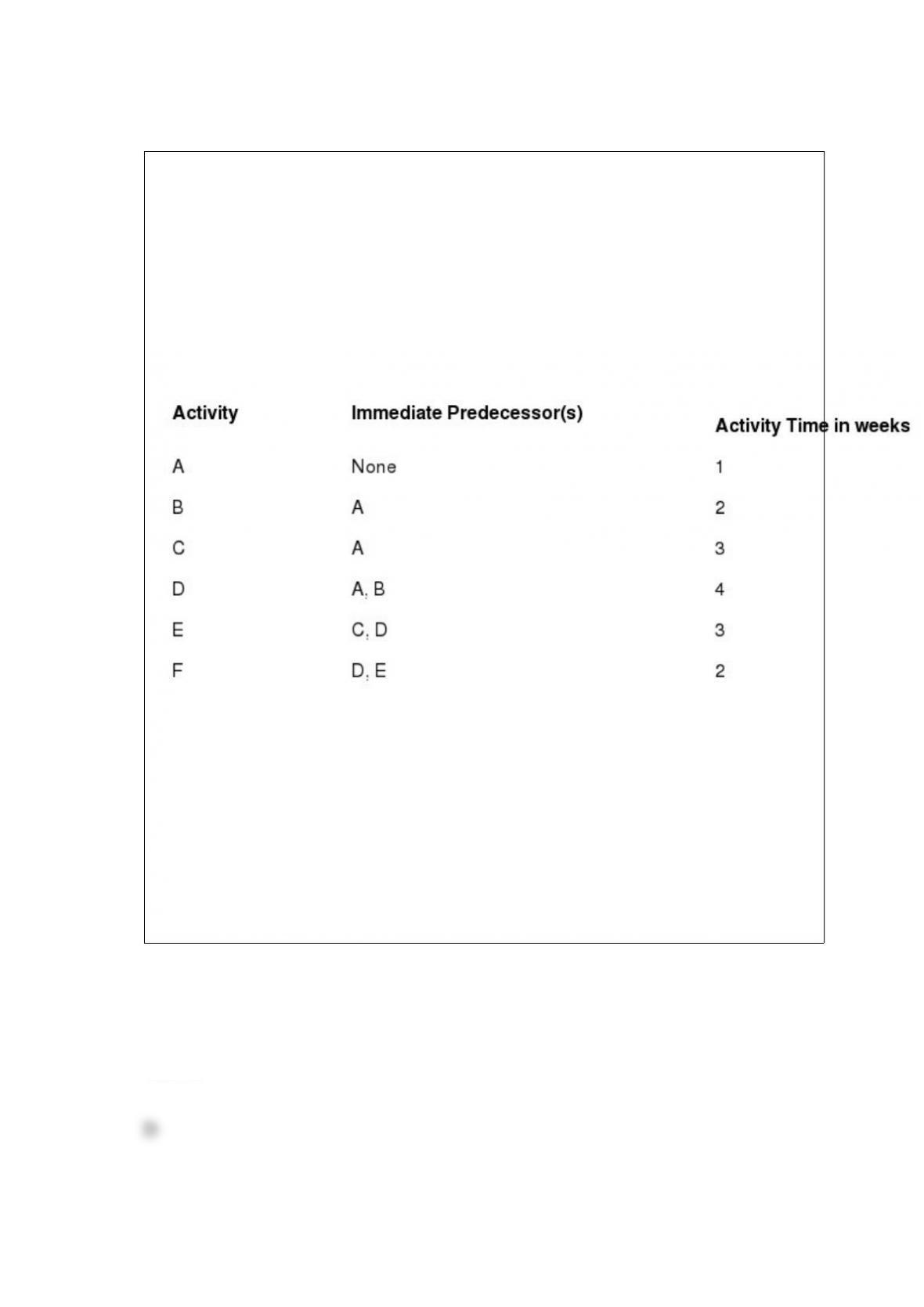
Shea is in charge of the “advertising program” for the Boston Red Sox baseball team
during their spring training in Fort Myers, Florida. She has defined the advertising
program as a project with the following characteristics. The goal is to fill all stadium
seats during the spring training season or she may not have the same job next yearthe
pressure is on!
The earliest completion time for this project is:
a. 9 weeks.
b. 10 weeks.
c. 11 weeks.
d. 12 weeks.
Answer:
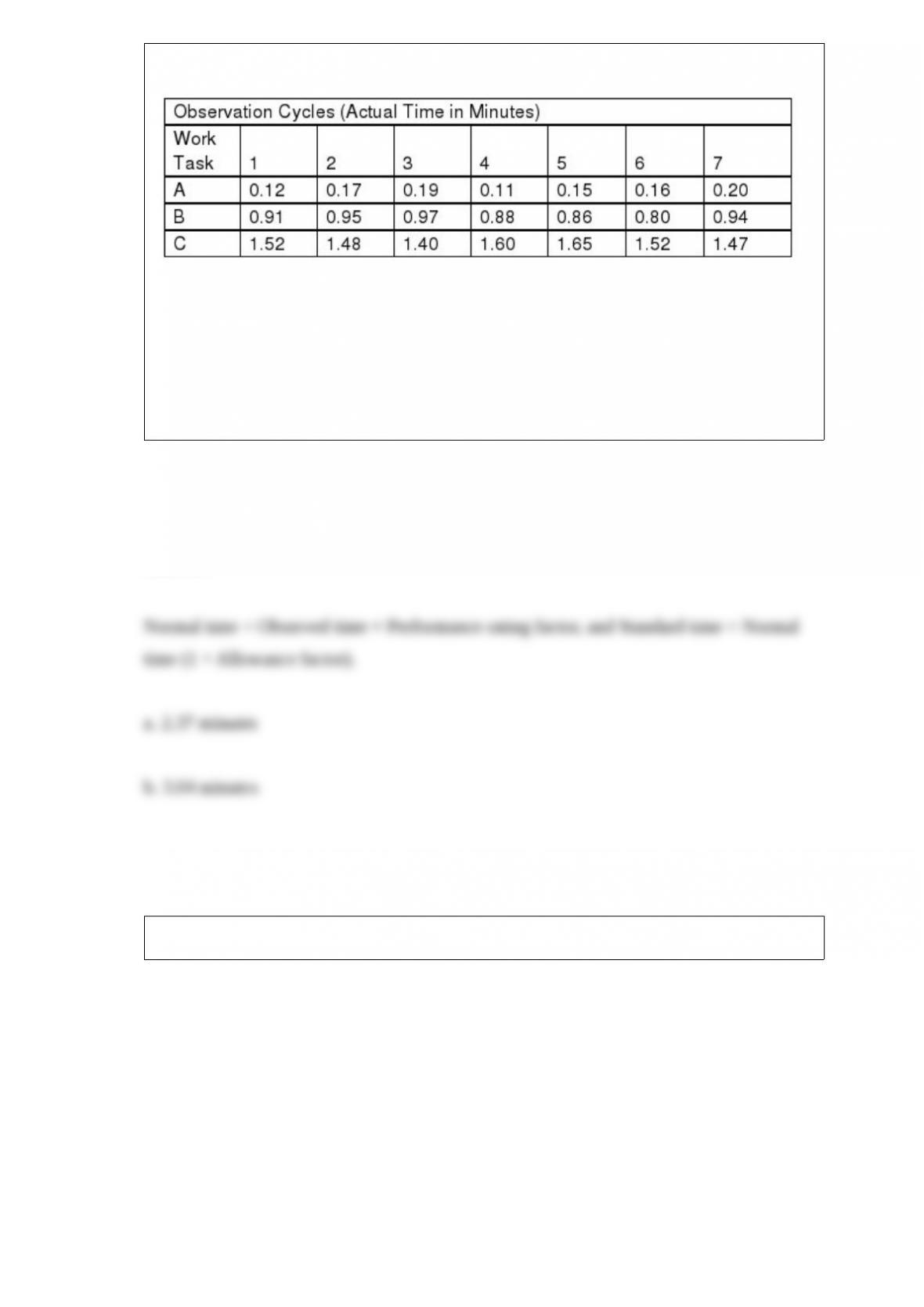
Consider the following time study data.
a. If the performance rating factor for A = 1.15, B = 1.0, and C = 0.85, determine the
normal time for the job.
b. If personal allowance is 7 percent, fatigue allowance is 12 percent, personal delay
allowance is 9 percent, and avoidable delay is 4 minutes, determine the standard time
for the job.
Answer:
Which one of the following statements is TRUE?
•A Pareto diagram is also called a fishbone diagram.
•Scrap and rework costs are part of external failure costs.
•Kaizen focuses on small, frequent, and gradual improvements over the long term,
with minimum financial investment.
•The Juran cycle is named after a famous quality guru and consists of four stepsplan,
do, study, and act (PDSA).
•
Answer:
A requirement of Johnson’s two-resource sequencing rule is:
a. all jobs must begin at the same time.
b. jobs must be processed through each work center in the same job sequence.
c. only two jobs can be processed at a time through each work center.
d. total processing time must be minimized.
Answer:
A quick setup or changeover of tooling and fixtures is associated with _____.
a. visual controls
b. single minute exchange of dies
c. single-piece flow
d. six sigma
Answer:
All the following are means to adjust short-term capacity EXCEPT:
a. adding peripheral goods and/or services.
b. adding or sharing equipment.
c. selling unused capacity.
d. changing labor skill mix.
Answer:
The standard deviation (not variance) of the critical path in days is _____.
a. less than or equal to 1.0 days
b. greater than 1.0 but less than or equal to 2.0 days
c. greater than 2.0 but less than or equal to 3.0 days
d. greater than 3.0 days
Answer:
In a design specification 25 ± 5, the value 25 is called the _____, while ± 5 is called the
_____.
a. nominal; reliability
b. average; tolerance
c. average; nominal
d. nominal; tolerance
Answer:
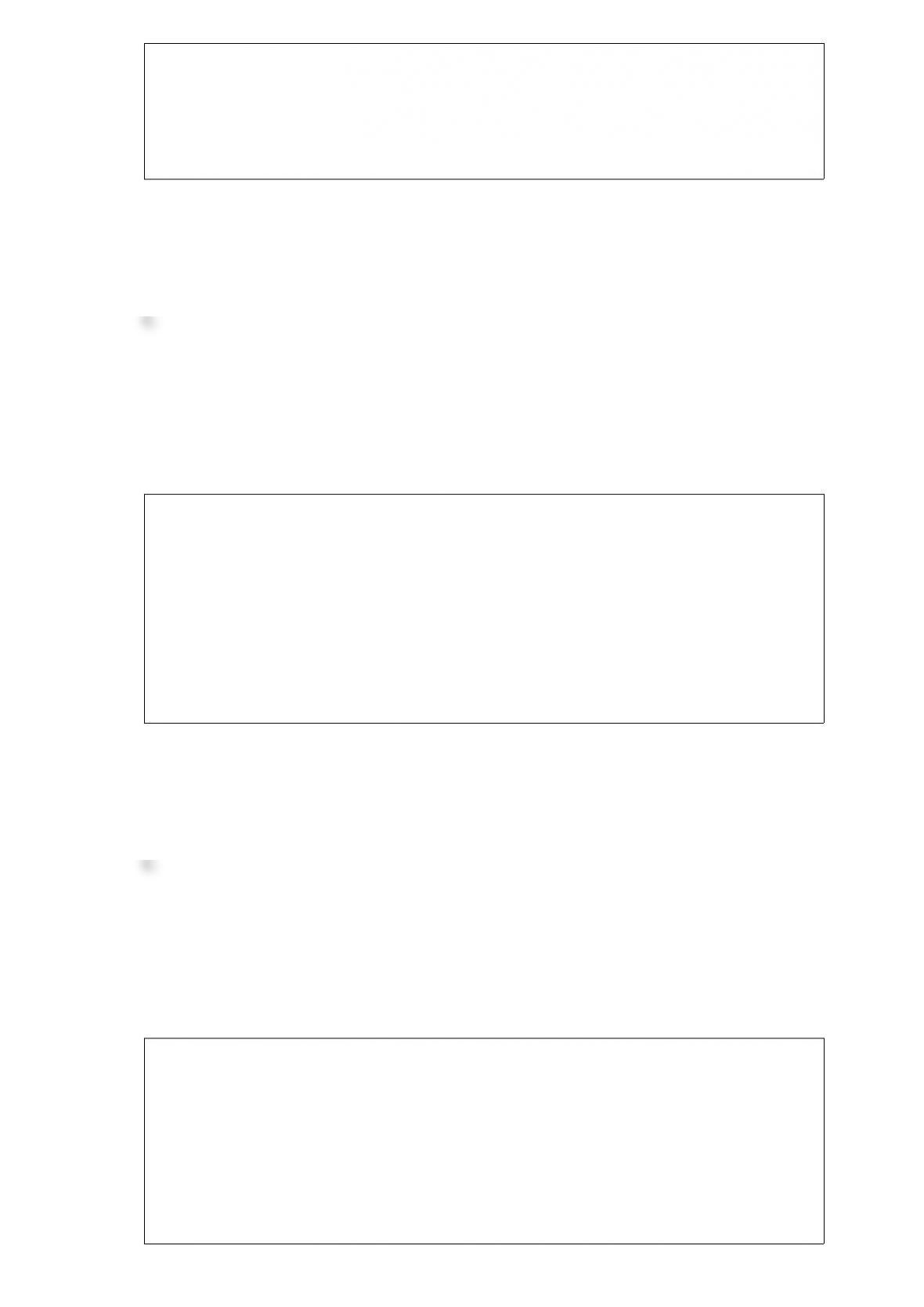
The eleven tasks necessary to assemble an MP3 player along with their time (in
seconds) and immediate predecessor(s) is given below:
The company wants to produce 600 units in a 9-hour day.
The minimum number of workstations required is _____.
a. 5
b. 6
c. 7
d. 8
Answer:
Which of the following is most closely related to a discrete metric?
a. R-charts
b. x-bar charts
c. c-charts
d. Process capability indices
Answer:
A line-balancing solution has been developed for the assembly line for fertilizer
spreaders at Green Grass, Inc. The desired output rate of 30 spreaders per hour will be
achieved. The sum of times for all tasks performed on the line is 1200 seconds for each
spreader assembled. Which of the following statements is TRUE?
a. The cycle time is 30 seconds per spreader.
b. The theoretical minimum number of workstations is 10.
c. If the solution calls for 12 stations, the efficiency is 90%.
d. If the solution calls for 11 stations, the efficiency is 80%.
Answer:
Customer relationship management (CRM) helps firms gain competitive advantage by
all of the following EXCEPT:
a. by providing real-time transaction processing.
b. by segmenting markets based on demographic and behavioral characteristics
c. by tracking sales trends and advertising effectiveness.
d. by identifying which customers should be the focus of targeted marketing initiatives.
Answer:
Taguchi’s loss function is most closely associated with:
a. design failure-mode-and-effects analysis.
b. reliability calculation.
c. tolerance design.
d. prototype testing.
Answer:
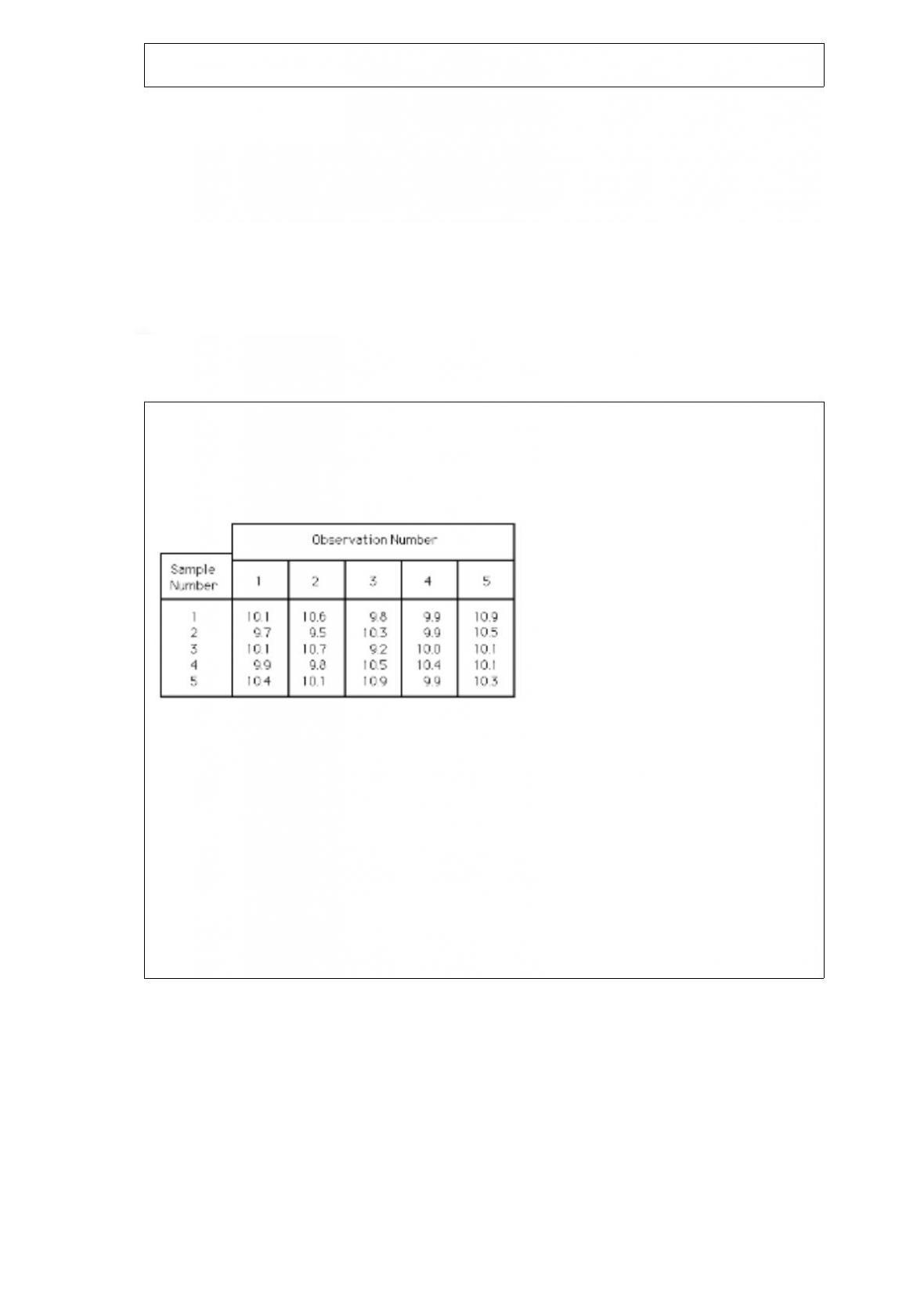
Table 1SPC Problem Data
In Table 1, the sample values represent service times in minutes. For the R-chart, what
is the value of UCLR?
a. Less than or equal to 0.94
b. Greater than 0.94 but less than or equal to 0.99
c. Greater than 0.99 but less than or equal to 1.99
d. Greater than 1.99
Answer:
In applying Six Sigma to services, the four key measures of performance include all of
the following EXCEPT:
a. accuracy.
b. productivity.
c. cost.
d. customer satisfaction.
Answer:
_____ is a manufactured good recovery option in which a physical good is
disassembled and the parts or the scrap materials are sold to other suppliers.
a. Refurbishing
b. Repairing
c. Recycling
d. Cannibalizing
Answer:
A c-chart _____.
a. is used for the fraction of nonconforming items
b. is used to monitor the number of nonconformances per unit
c. uses continuous metrics
d. can have negative lower limits
Answer:
Which of the following is LEAST related to a push system?
a. Maximum responsiveness
b. Predefined schedule
c. Finished goods inventory
d. Forecast dependent
Answer:
A U.S. motorcycle manufacturer has the option of either making the gas tank in their
newly designed motorcycle, or subcontracting it to a manufacturer from Sinagpore. The
manufacturer expects to produce 1,000 units per year. Costs for the two options are:
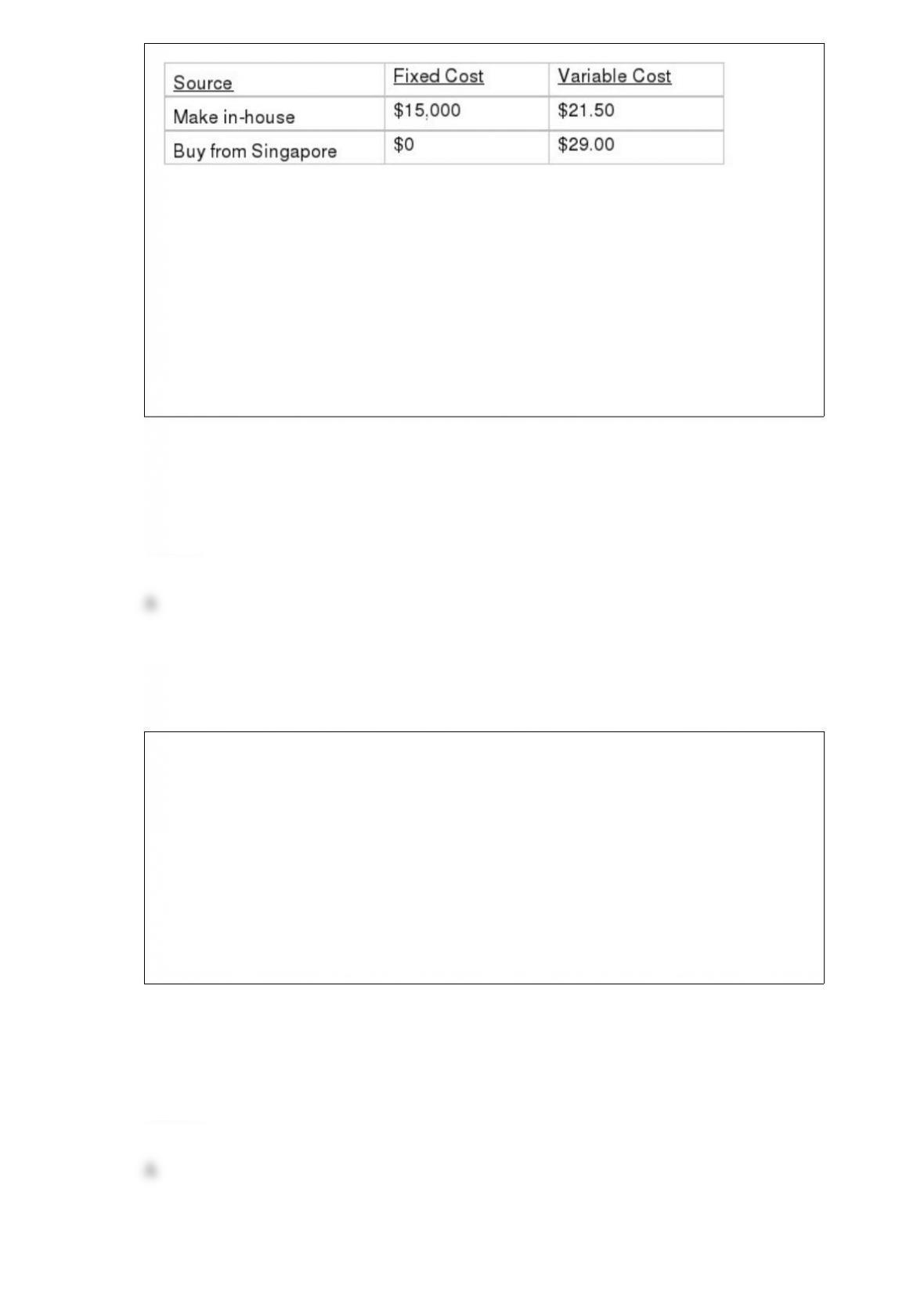
The annual cost to outsource the manufacturing to Singapore is _____.
a. less than or equal to $30,000
b. more than $30,000 but less than or equal to $40,000
c. more than $40,000 but less than or equal to $50,000
d. more than $50,000 but less than or equal to $60,000
Answer:
In the context of the integrative case study of LensCrafters, which of the following
statements is TRUE?
a. Each store has a visible low contact area.
b. LensCrafters’ employees do not need service management skills.
c. Each store has a totally unique servicescape and layout that varies by location.
d. Low cost makes a long drive to LensCrafters worthwhile.
Answer:
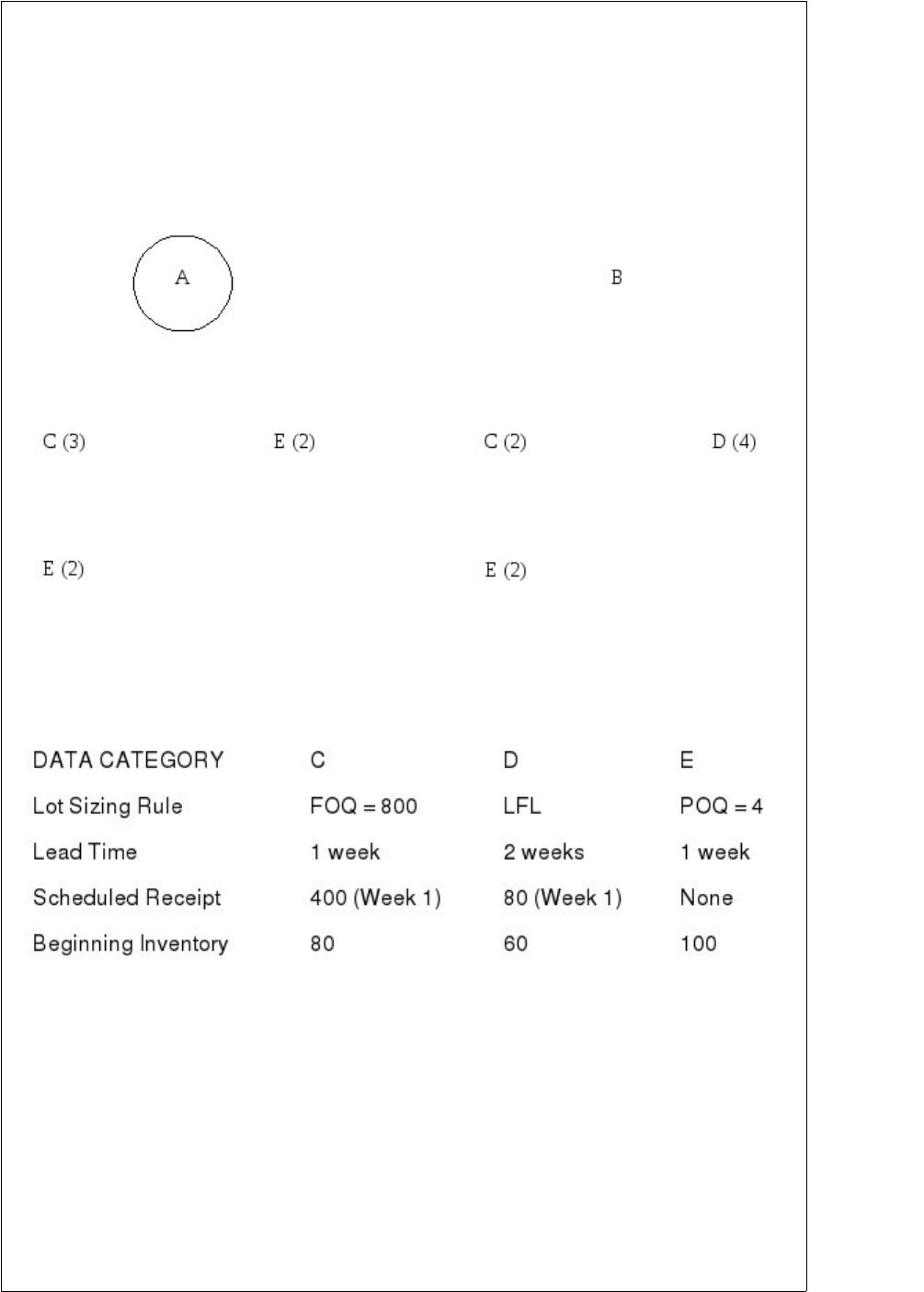
The bill of material (BOM) for Products A and B are shown below followed by a table
of inventory data (called Exhibit 1). The master production scheduling (MPS) for A
calls for 150 units of A to be completed in Week 4 and another 225 units to be
completed in Week 5. End item A has a two-week lead time. The MPS calls for 400
units of B to be completed in Week 6. End item B has a one-week lead time.
Exhibit 1
Using the data in Exhibit 1, determine the timing and amount of the first planned order
receipt for Item C.
a. Week 3; 800 units
b. Week 3; 645 units
c. Week 3; 1,600 units
d. Week 2; 800 units
Answer:
Which one of the following statements about the critical path method (CPM) is TRUE?
a. The activity time estimates are accurate and stable.
b. Activities are dependent on each other.
c. Activities can be interrupted before completion.
d. The project schedule defines a correct sequence of work in terms of technology and
workflow.
Answer:
Janice Smith is an expert at calligraphy. However, it is found that a specialized robot
can imitate Janice’s work perfectly. Variable costs are 75% of selling price and fixed
costs are $190,000 for the robot system.
Answer:
A _____ is defined as the inability to satisfy the demand for an item.
a. Reorder point
b. Stockout
c. Lost sale
d. Backorder
Answer:
Which of the following statements is TRUE about single exponential smoothing?
a. Large values of alpha (α) place more emphasis on recent data.
b. α values range from 0.6 to 1.
c. Smaller values of smoothing constant have the advantage of quickly adjusting the
forecasts when forecasting errors occur.
d. Larger values of smoothing constant do not allow the forecast to react faster to
changing conditions.
Answer:
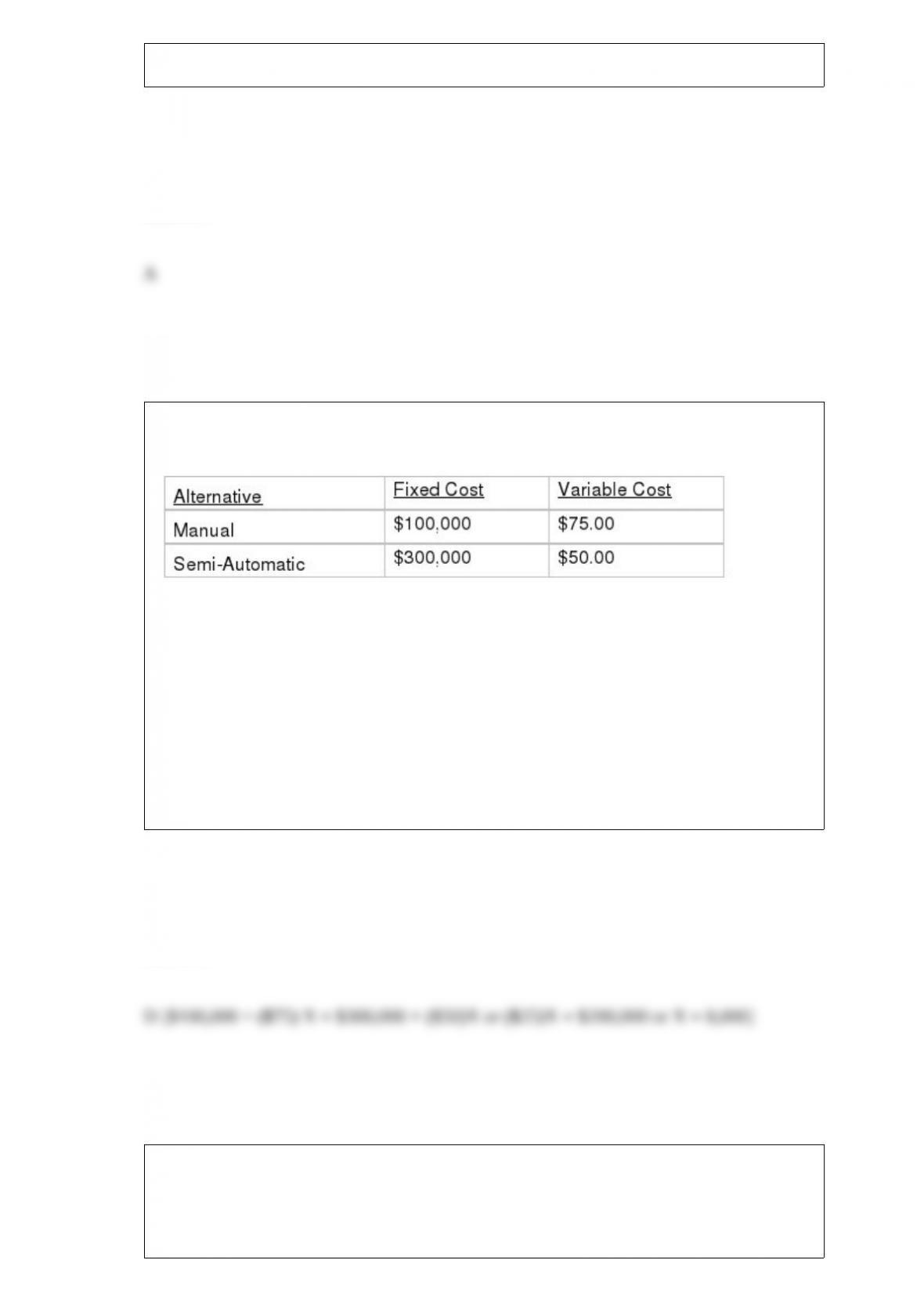
A firm must make a choice between a manual and a semi-automatic production process
for a new product line. The following are the costs for each process:
The breakeven volume is _____.
a. less than or equal to 2000 units
b. more than 2000 but less than or equal to 4000 units
c. more than 4000 but less than or equal to 6000 units
d. more than 6000 but less than or equal to 8000 units
Answer:
If one was monitoring the average time to load a web page, the chart to use would be
a(n) _____.
a. R- or x-bar chart
b. sample-size chart
c. p-chart
d. c-chart
Answer:
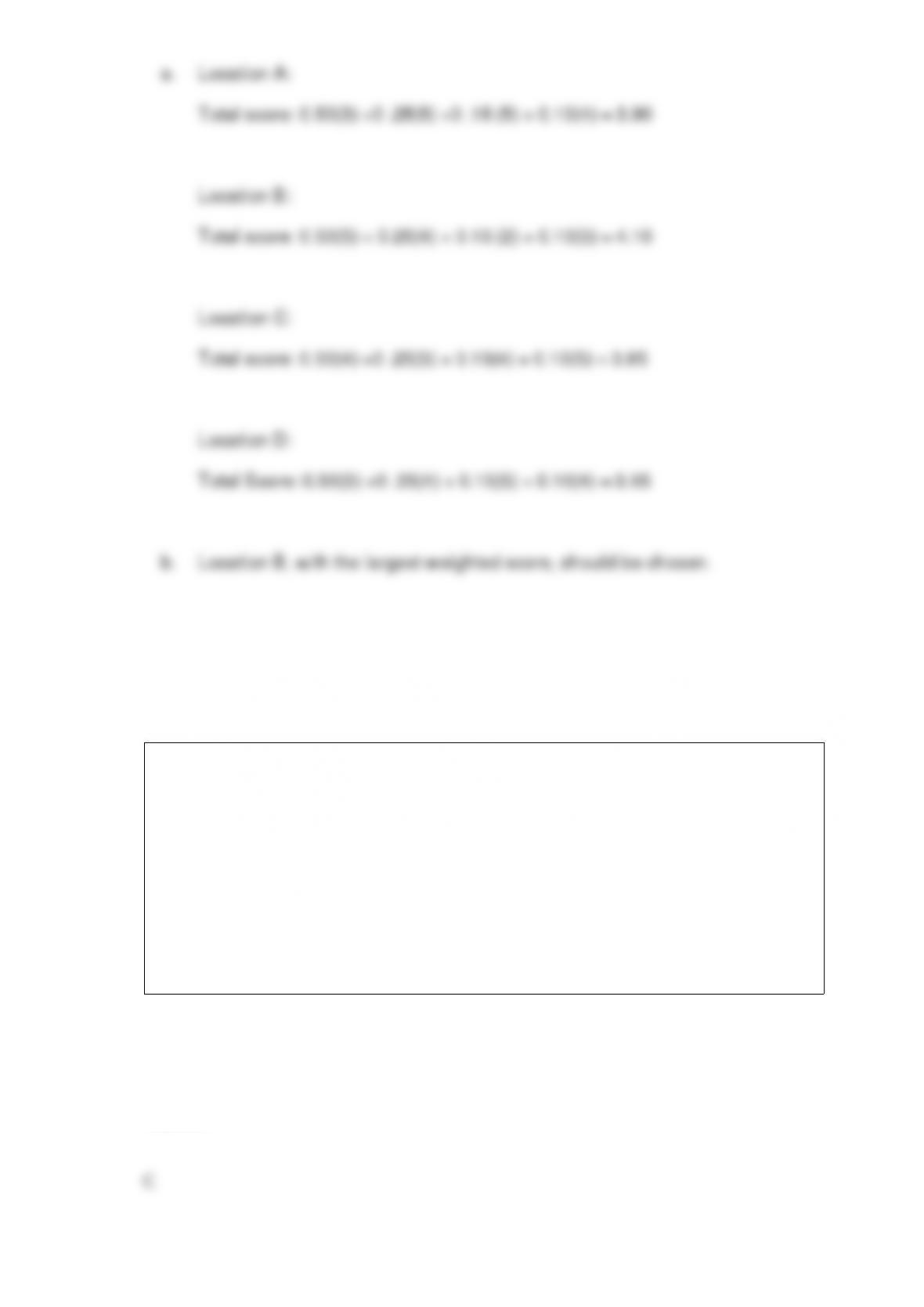
Call Centers, Ltd. has decided to use the weighted scoring model approach to aid the
company in finding new locations for major call centers. Given below is information
regarding four potential locations. (A score of 1 is least favorable and 5 is most
favorable.)
Answer:
_____ is defined as the perception of the benefits associated with a good, service, or
bundle of goods and services in relation to what buyers are willing to pay for them.
a. Proportionality
b. Competitiveness
c. Value
d. Equity
Answer:
Where in its supply chain does Dell Inc. begin to use a pull system?
a. Supplier
b. Factory
c. Distribution center
d. Customer
Answer:
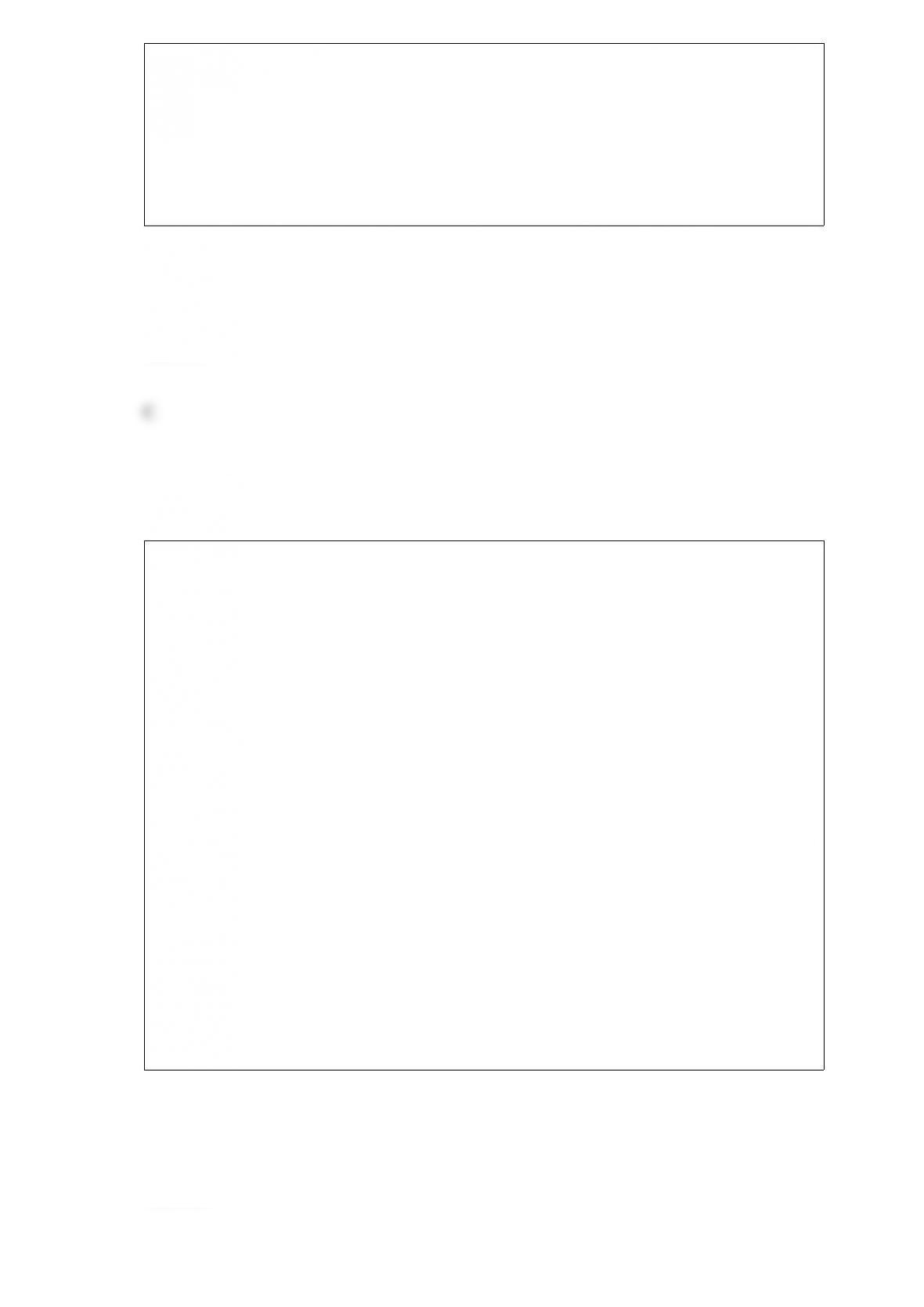
A new surgical facility called Cut & Sew is opening in neighborhoods throughout the
United States. They are job shops that handle a variety of outpatient surgical
procedures. Their process is set up so that one doctor cuts and another sews. They have
five patients to sequence for tomorrow. Since the weather forecast is for a warm and
sunny day, they would also like to play golf tomorrow. They want to sequence their
patients with the objective of minimizing the time from the beginning of the first job
until the finish of the last job. The patients and estimated times are as follows:
Using Johnson’s rule to sequence these patients, the makespan is _____.
a. less than or equal to 5 hours
b. more than 5 but less than or equal to 10 hours
c. more than 10 but less than or equal to 15 hours
d. more than 15 but less than or equal to 20 hours
Answer:
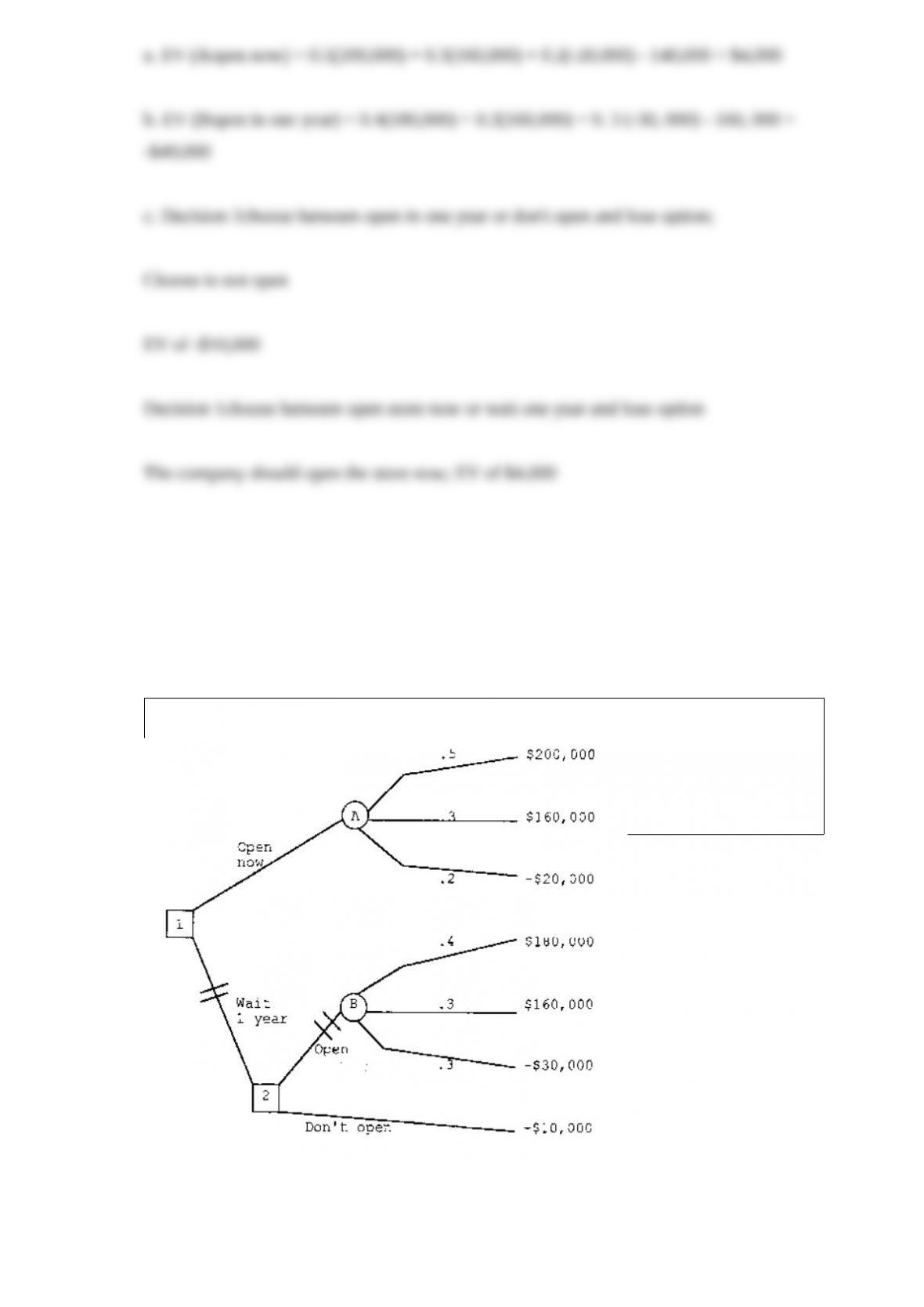
A major retail clothing store is considering whether to open a new store on the other
side of town or wait for one year and then open the store. In the meantime, they have
paid $10,000 for one year option on a building. If they open the store now it will cost
$140,000 to refurbish it, but it will cost $160,000 if they wait one year. They expect
sales to depend on the economy in the area at the time they open the store. If they go
ahead now, there is a 50% chance the economy will go up, 30% it will stay the same,
and 20% it will go down. They then expect the following returns: if the economy goes
up $200,000; stays the same $160,000; and goes down -$20,000.
If they wait one year, they can either open the store then or not open the store and let
the option expire. If the option expires, they will lose the $10,000. One year from now
they expect there is a 40% chance the economy will go up, 30% stay the same, and 30%
go down. The returns they expect to get would then be: if the economy goes up
$180,000; stays the same $160,000; and goes down -$30,000.
a. Using decision tree analysis, what is the expected value (EV) of opening the store
now?
b. Using decision tree analysis, what is the expected value (EV) of waiting one year to
open the store?
c. What should the company do and what is the expected value (EV) of that decision?
Answer:
Given the table below with information on lead time, followed by a set of six random
numbers,
determine the
average lead
time.
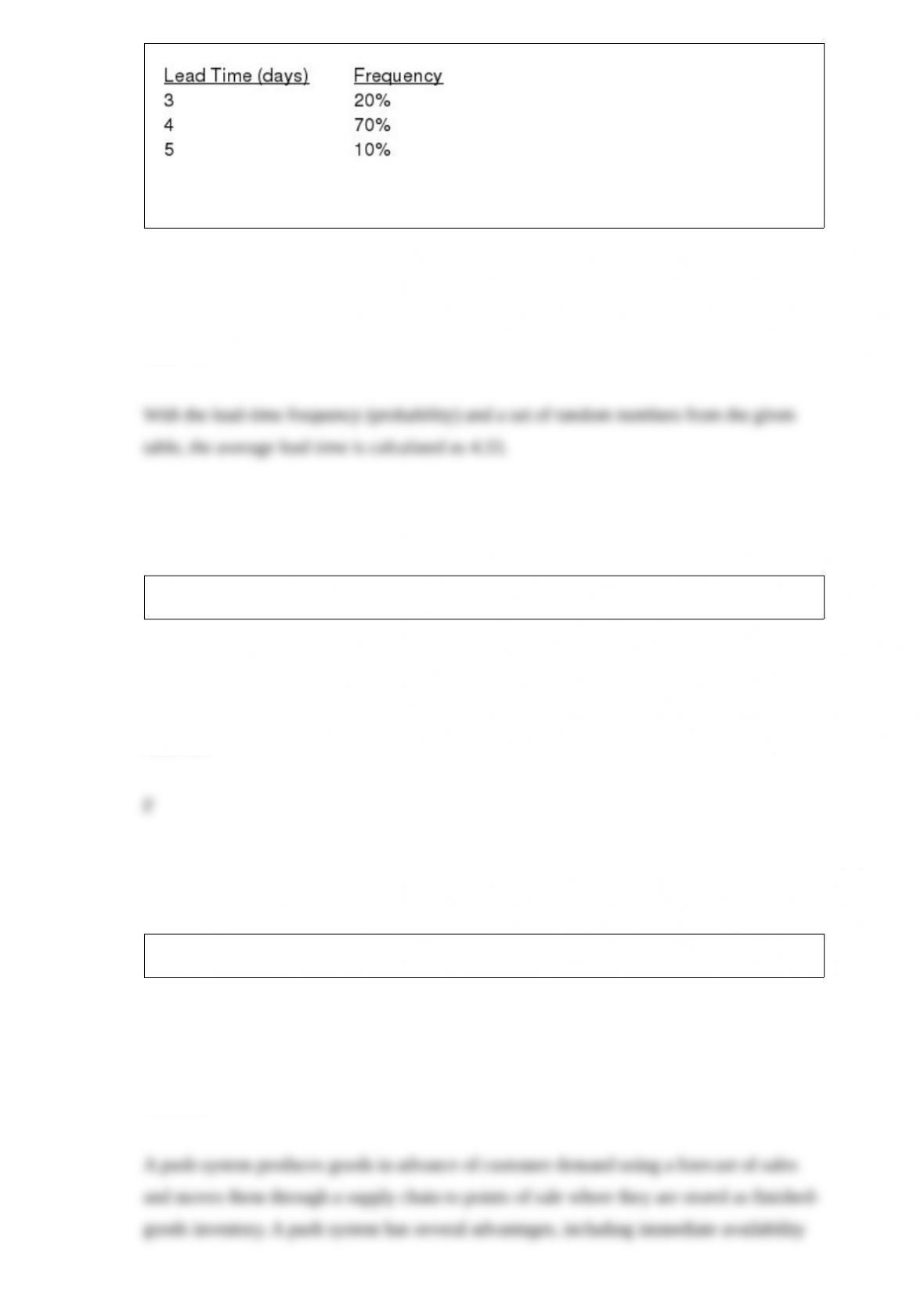
RANDOM NUMBERS: 90, 52, 54, 47, 56, and 95
Answer:
Activities on the critical path should not be crashed.
Answer:
Differentiate between a push system and a pull system. Include the advantages of each.
Answer:
Empathy relates to the knowledge and courtesy of service providers and their ability to
convey trust and confidence.
Answer:
What is the implied service rate per service-counter employee at an airport automobile
rental counter if customer demand is 30 customers per hour, two service-counter
employees are on duty, and their labor utilization is 65%?
Answer:
Since most service times follow an exponential distribution, there is no need to collect
data on actual service times.
Answer:
A company currently has no items in inventory. The demand for the next four months is
200, 400, 250, and 350 units. Determine the level production rate if a level strategy is
selected with the goal of ending Period 4 with 100 units in inventory.
Answer:
The value chain model of organizational performance is based on a set of
cause-and-effect linkages among performance measures.
Answer:
Crashing refers to the process of shortening selected activity times in order to reduce
the overall project completion time.
Answer:
Finished-goods inventory consists of completed products that are ready for sale.
Answer:
When the beta probability distribution is used to characterize uncertain activity times,
the distribution of the project completion time will also have a beta probability
distribution.
Answer:
A clean and organized work area is an important principle of lean thinking.
Answer:
The design of a service cannot be done independently from the “process” by which the
service is delivered.
Answer:
A process can be designed by operations managers independently of the choice of a
customer benefit package, which is chosen exclusively by marketing staff.
Answer:
“A” items typically comprise a high percentage of total dollar usage but a low
percentage of unit volume.
Answer:
The early start time for an activity is computed by finding the largest early finish time
of all immediate predecessors.
Answer:
Virtual teams are empowered work teams that assume many traditional management
responsibilities.
Answer:
Explain the issues associated with selecting the appropriate sample size and sampling
frequency for control charts.
Answer:
Costs of recalls and warranty claims are classified as internal failure costs.
Answer:
An R2 of 0.70 mean 30% of the variability in the dependent variable was explained by
the independent variable.
Answer: