
Which of the following is a commonly used method of classifying retail outlets?
a. service versus product
b. form of ownership
c. proportion of national versus private label brands carried
d. revenues generated
e. profitability
Answer:
A level of distribution density whereby a firm tries to place its products in a few retail
outlets in a specific geographical area is referred to as __________.
a. intensive distribution
b. extensive distribution
c. selective distribution
d. exclusive distribution
e. concentrated distribution
Answer:
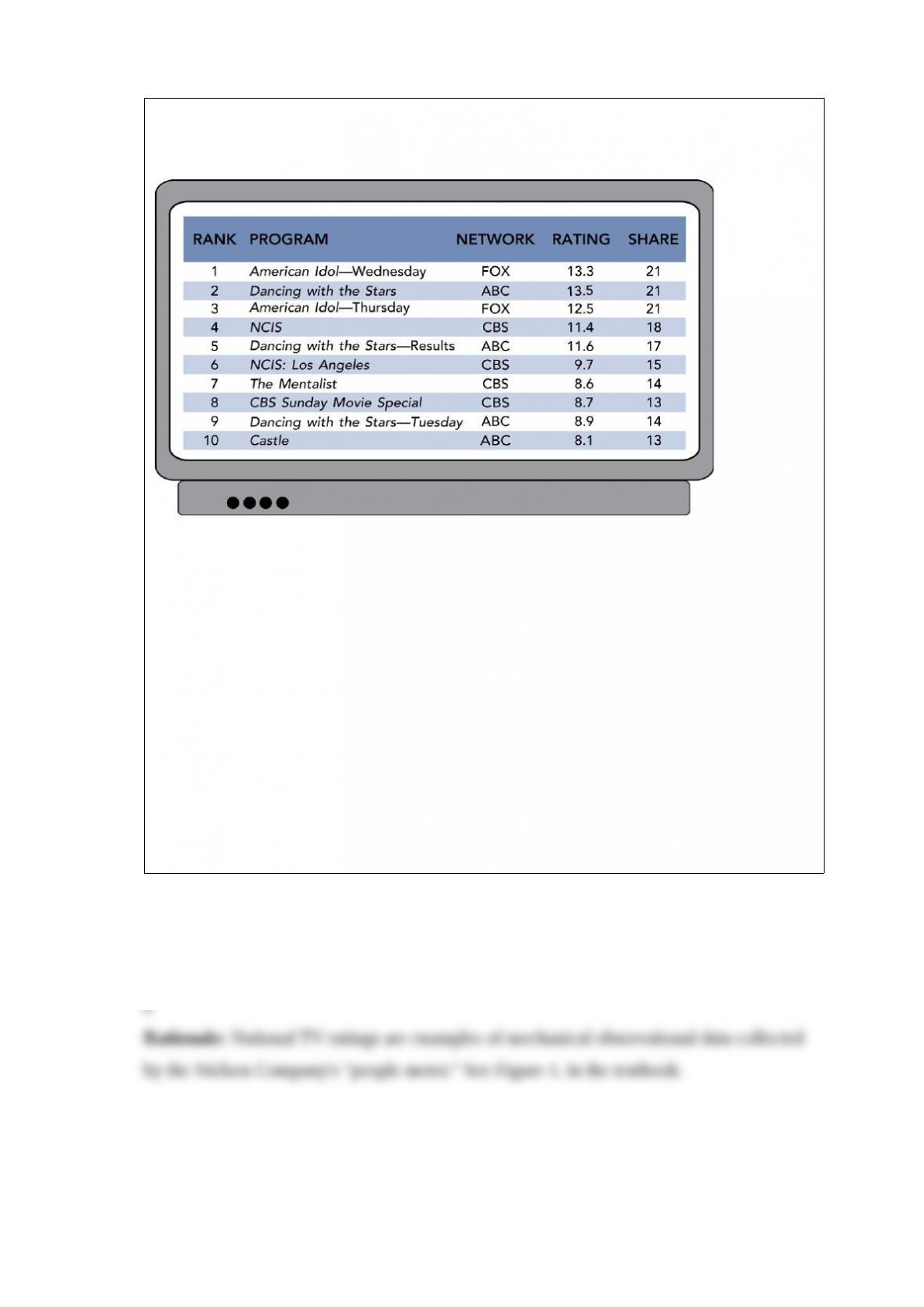
Figure 1.
Consider Figure 1. above, which is based on data collected from mechanical
observations through the use of a _________ to prepare the Nielsen Television Index
Ranking Report.
a. a people meter
b. neuromarketing
c. a bot
d. a DVR
e. a VOD
Answer:
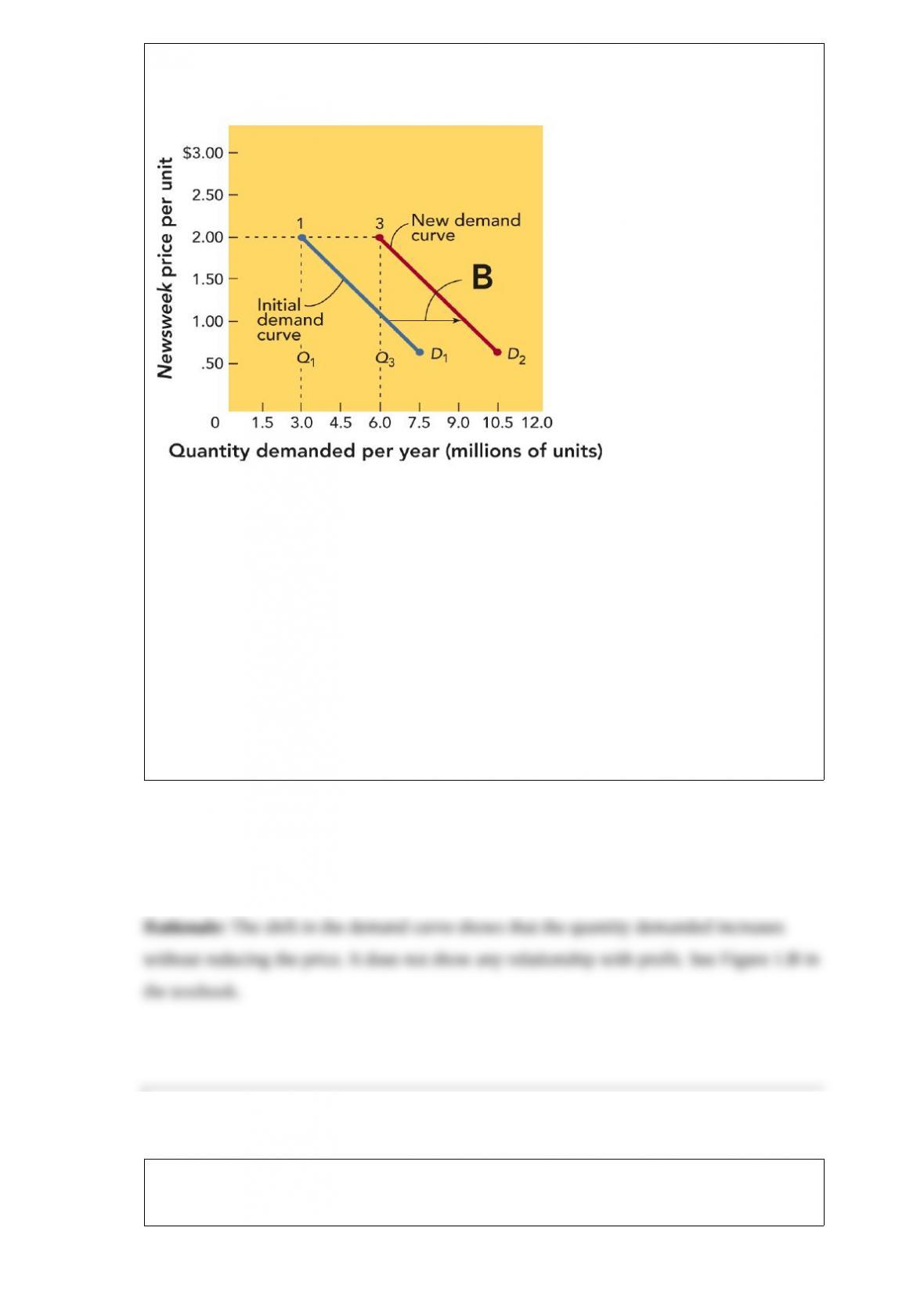
Figure 1.B
In Figure 1.B above, the demand curve shifts from D1 to D2. This most likely represents
a. an increase in demand that did not require a decrease in price.
b. an increase in demand that required an increase in price.
c. no change in price and no change in demand.
d. no change in demand or price but a greater profit due to economies of scale.
e. an increase in price from $0.50 to $1. per unit.
Answer:
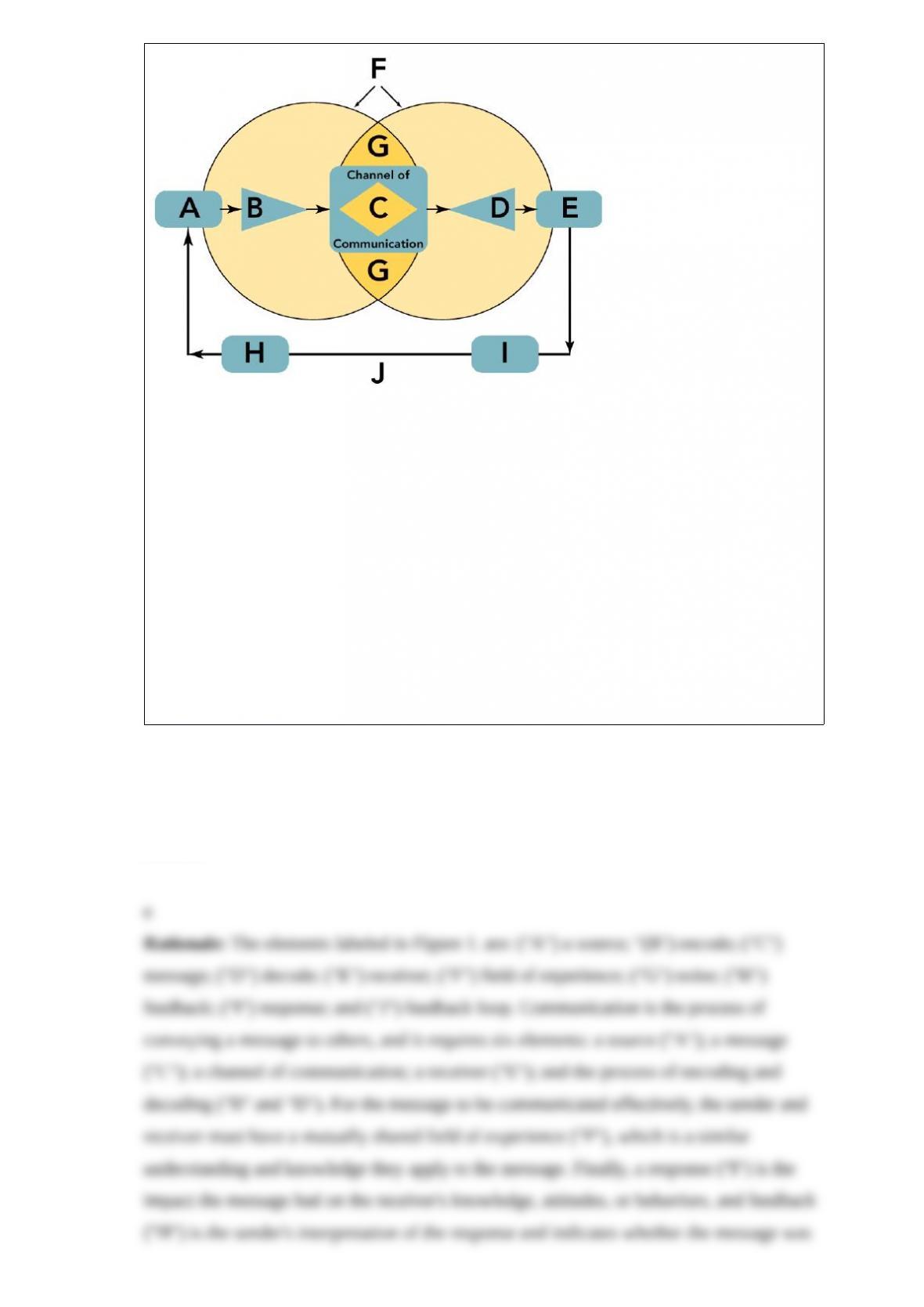
Figure 1.
Figure 1. above depicts the communication process, which consists of ten key elements
(“A” through “J”). The position labeled “H” is referred to as _________.
a. noise
b. the message
c. the receiver
d. the field of experience
e. feedback
Answer:
The most indirect marketing channel is employed where many small manufacturers and
many small retailers and other intermediaries are used to help coordinate a large supply
of the product. This channel is represented in Channel “D” in Figure 1. above. Which of
the following products would most likely be marketed using this kind of channel?
a. dental services
b. automobiles
c. pool supplies
d. rugs made in India
e. candy bars
Answer:
The group of people within an organization who participate in the buying process and
share common goals, risks, and knowledge important to a purchase decision is referred
to as the
a. gatekeepers.
b. buying center.
c. purchasing department.
d. procurement committee.
e. acquisition office.
Answer:
A maximizing current profit objective implies that a company chooses to
a. set targets whose performance can be measured quickly.
b. give up immediate profit in exchange for achieving a higher market share in hopes of
penetrating competitive markets.
c. set a profit goal that is often determined by its board of directors.
d. reduce investment in any further market or product research.
e. set prices based on return on sales.
Answer:
Setting a price to achieve a profit that is a specified percentage of the sales volume is
referred to as __________.

a. target return-on-investment pricing
b. target return-on-sales pricing
c. loss-leader pricing
d. target pricing
e. standard markup pricing
Answer:
An important factor in developing successful IMC programs is to create a process that
facilitates their design and use. A tool used to evaluate a company’s current process is
the IMC
a. audit.
b. sensitivity analysis.
c. what-if analysis.
d. perceptual map.
e. pretest.
Answer:
Saks Fifth Avenue is an upscale retailer that offers designer brand women’s apparel,
fragrances, jewelry, and leather accessories. The retailer relies on better service to sell
its products and to retain its customers. Saks Fifth Avenue would be classified as a(n)
_________.
a. exclusive-service retailer
b. limited-service retailer
c. full-service retailer
d. full-domain retailer
e. limited-domain retailer
Answer:
One advantage of using the Internet as an advertising medium is
a. there is no need to segment markets.
b. messages are automatically translated into multiple languages.
c. initial encoding is easily outsourced.
d. there are a variety of online advertising options.
e. online ads almost always result in a “click,” an action that leads to the purchasing of a
product.
Answer:
Every country engages in some form of protectionism. However, protectionism has
declined internationally over the past 50 years due in large part to the
a. United Nations Agreement on Trade (UNAT).
b. North American Free Trade Agreement (NAFTA).
c. General Agreement on Tariffs and Trade (GATT).
d. North Atlantic Treaty Organization (NATO).
e. World Trade Association Treaty (WTAT).
Answer:
There are three key methods of classifying retail operations
a. method of operation, revenues generated, and merchandise line.
b. form of ownership, method of operation, and merchandise line.
c. form of ownership, level of service, and merchandise line.
d. level of service, merchandise line, and revenues generated.
e. merchandise line, form of ownership, and revenues generated.
Answer:
Office Depot has given its staff wireless tablet devices. When customers inquire about a
product, a computer-equipped sales associate can pull up detailed information about the
product from the corporate database. In addition, employees at one store can contact
employees at another store for advice or information. This is an example of how a(n)
__________ can be used to enhance marketing.
a. Internet service provider
b. web exchange
c. commercial online service
d. extranet
e. intranet
Answer:

Pizza Hut’s website __________ and __________ are integrated with the company’s
overall communications programsincluding traditional mediawith product innovations,
promotions, and special events shared across platforms.
a. context; content
b. communication; context
c. commerce; customization
d. communication; connection
e. content; communications
Answer:
The monetary value of all goods and services produced in a country during one year is
referred to as the
a. gross national production.
b. national monetary reserve.
c. gross domestic product.
d. monetary domestic product.
e. annual national product.
Answer:
Marketing information or data consists of secondary and primary data. Define each of
these types of marketing information. Give examples for secondary and primary data.
Answer:
Schwan’s Sales Enterprises of Marshall, Minnesota, markets a full line of frozen foods
in 49 states and parts of Canada using door-to-door salespeople who sell from its
refrigerated trucks. This particular method of distribution is referred to as a(n)
a. indirect channel.
b. direct channel.
c. facilitated channel.
d. customer-service channel.
e. truck-jobber channel.
Answer:
Websites designed to engage the visitor in an interactive experience involving games,
contests, and quizzes with electronic coupons and other gifts as prizes would be
referred to as __________ websites.
a. promotional
b. conventional
c. intermediary
d. choiceboard
e. transactional
Answer:
If a major food company offered supermarket chains special prices and incentives to
carry its brand of frozen vegetables and not to carry competing brands, it could be
accused of __________ and would be subject to prosecution if its actions substantially
reduce competition.
a. requirement contracting
b. a tying arrangement
c. a territorial infringement
d. a monopolistic practice
e. exclusive dealing
Answer:
Click fraud can occur when legitimate website visitors click on ads without any
intention of looking at the site to keep them free. This practice is called _________.
a. click hamming
b. click banging
c. clickbotting
d. webtipping
e. webcrawling
Answer:
Which of the following statements about salesforce training is most accurate?
a. The training of sales managers is both expensive and extensive, unlike the training of
salespeople, which is relatively inexpensive and short-term.
b. A major flaw in the sales industry is a lack of employer-sponsored training.
c. Sales ability is instinctive; it cannot be taught.
d. Whereas recruitment and selection of salespeople is a onetime event, salesforce
training is an ongoing process that affects both new and seasoned salespeople.
e. A limitation of sales training is that it is too narrowly focused on “making the sale”
rather than on learning new business skills.
Answer:
Which of the following is an element of related and supporting industries?
a. media exposure of products
b. existence of supplier clusters
c. sophistication of consumers
d. intensity of competition
e. aggregation of markets
Answer:
More magazine is a publication designed to appeal to women aged 40 and over.
Demand for such magazines is an example of how changing __________ characteristics
impact the marketing environment.
a. cultural
b. behavioral
c. psychographic
d. occupational
e. demographic
Answer:

__________ demand buyers purchase all or part of their needs for a product from a
particular seller for a period of time.
a. Exclusive deals
b. Requirement contracts
c. Tying arrangements
d. Territorial dealership contracts
e. Selective promotion contracts
Answer:
The two aspects of the process for evaluating the results of a marketing decision are (1)
evaluate the decision itself and (2) __________.
a. evaluate the sales results.
b. conduct a SWOT analysis.
c. evaluate the decision process used.
d. begin a new environmental scan.
e. reallocate resources to become more efficient and effective.
Answer:
The concept of the diffusion of innovation shows how a product “diffuses” or spreads
through the population over time. The consumer population is divided into five
categories of product adopters based on when they adopt (i.e., first buy) a new product.
Each product adopter category has a unique profile. Consumers who are skeptical and
have below average social status are called __________.
a. innovators
b. early adopters
c. early majority
d. late majority
e. laggards
Answer:
Advertising such as “Retail Value $100, Our Price $85” is deceptive if
a. a verified and substantial number of stores in the market area did not price the item at
$100.
b. even one store in that retail chain did not price the item at $100.
c. a competitor is selling the same item for $75 on sale and their normal price is only
$85.
d. there is not enough product on hand at that price to satisfy the needs of the store’s
regular customer traffic.
e. the markup on the original price is more than 200 percent.
Answer:
An example of a public source of information consulted during an external search
would include
a. advertising.
b. Consumer Reports magazine.
c. sales personnel.
d. friends and relatives.
e. point of purchase displays in stores.
Answer:
The set of actions a person takes in purchasing and using products and services,
including the mental and social processes that come before and after these actions, is

referred to as
a. purchase decisions.
b. market research.
c. consumer behavior.
d. consumer conduct.
e. purchase protocols.
Answer:
A business firm segments its markets when this strategy increases its sales revenue,
profit, and ROI. When expenses are greater than the potential increased sales from
segmentation, the firm should
a. not consider market segmentation at this time.
b. combine departments within the company to make the process more streamlined.
c. reduce production costs or increase prices to facilitate the segmentation process.
d. seek alternate channels of distribution, including Internet sales.
e. discontinue manufacturing any products that are not in the mature stage of their
product life cycle.
Answer:
CarMax dealers have adopted a “no-hassle, no-haggle” sales policy that eliminates the
need for negotiating. Instead, all customers are offered the same price. Test drives,
financing, trade-ins, and leasing are all offered to encourage customers to purchase a
car. Which utility does CarMax best provide?
a. product
b. form
c. convenience
d. service
e. possession
Answer: