Technology can change existing products and the ways they are produced. Many
companies are using technological developments to allow the __________ of products
through the manufacturing cycle several times.
a. pruning
b. adding
c. recycling
d. precycling
e. refining
Answer:
All of the following are publicity tools EXCEPT:
a. high-visibility individuals.
b. PSAs.
c. news releases.
d. contests.
e. news conferences.
Answer:
In its research for Disney Online, C&R Research identifies a mother who believes the
Internet brings her family closer together, spends an average of 10 hours per week
online, and prefers online shopping to in-store shopping as the “__________” segment.
a. Mrs. NetSkeptic
b. Tech Nester
c. Passive Under Pressure
d. Drifting Surfers
e. Yes Mom
Answer:
Porter’s four generic business strategies are differentiation, cost focus, __________, and
cost leadership.
a. exclusivity
b. differentiation focus
c. quality focus
d. geographic span
e. service leadership

Answer:
A push strategy is when a manufacturer
a. advertises a great deal to its wholesalers, retailers, and ultimate consumers with the
use of nationwide advertising campaigns.
b. directs the promotional mix to channel members to gain their cooperation in ordering
and stocking the product.
c. forces a retailer to promote its products by placing national ads in local newspapers.
d. directs its efforts in the form of advertising and sales promotions to ultimate
consumers to encourage them to ask the retailer for the product.
e. directs retailers to promote one product over another to help balance fluctuations in
inventory.
Answer:
In 1962, President John F. Kennedy outlined a Consumer Bill of Rights that codified the
ethics of exchange between buyers and sellers. These were the right: (1) to safety; (2)
__________; (3) to choose; and (4) to be heard.
a. to privacy
b. to be informed
c. to be treated with respect
d. to be treated without prejudice
e. to receive fair prices for both products and services
Answer:
Observational data refer to
a. facts and figures newly collected for the project at hand.
b. facts and figures obtained by watching, either mechanically or in person, how people
actually behave.
c. facts and figures obtained by asking people questions either through personal
interviews, panel discussions, or questionnaires.
d. facts and figures that have already been recorded from multiple sources prior to the
project.
e. conclusions developed from information obtained from a representative sample of a
population.
Answer:

Everyday low pricing refers to
a. the pricing strategy of “extreme value” stores to maintain high price-quality images
for the products they sell.
b. the pricing strategy of starting a product at standard list price and then lowering the
price by a certain percentage until it is sold.
c. short-term price reductions when consumer demand takes a significant and
unexpected dip.
d. the practice of replacing promotional allowances with lower manufacturer list prices.
e. a form of predatory pricing used solely for the purpose of undercutting competitors’
prices.
Answer:
Customs refer to
a. what is considered normal and expected about the way people do things in a specific
country.
b. those actions or activities within a community that are unique or distinctly different
from any other group.
c. actions or behaviors that are repeated over time and carry a specific meaning only to
a unique group, nationality, or ethnicity.
d. traditions among a group of people, a nation, or ethnicity that affect their purchase
behaviors.
e. what would be considered unusual or unexpected, and even unacceptable about the
way people do things in a specific country.
Answer:
Today, married households comprise __________ of the U.S. population.
a. 10 percent
b. 21 percent
c. 50 percent
d. 60 percent
e. 75 percent
Answer:
A competitive advantage refers to
a. the cluster of benefits that an organization promises customers to satisfy their needs.
b. those characteristics of a product that make it superior to competitive substitutes.
c. a unique strength relative to competitors that provides superior returns, often based
on quality, time, cost, or innovation.
d. actions taken by a firm with the sole intent of putting a competitor out of business.
e. the cluster of benefits that an organization promises customers to satisfy their needs.
Answer:
To handle products in the decline stage of the product life cycle, companies often use
either a __________ or a __________ strategy.
a. divesting; harvesting
b. diversification; contraction
c. deletion; harvesting
d. deletion; diversification
e. building; divesting
Answer:
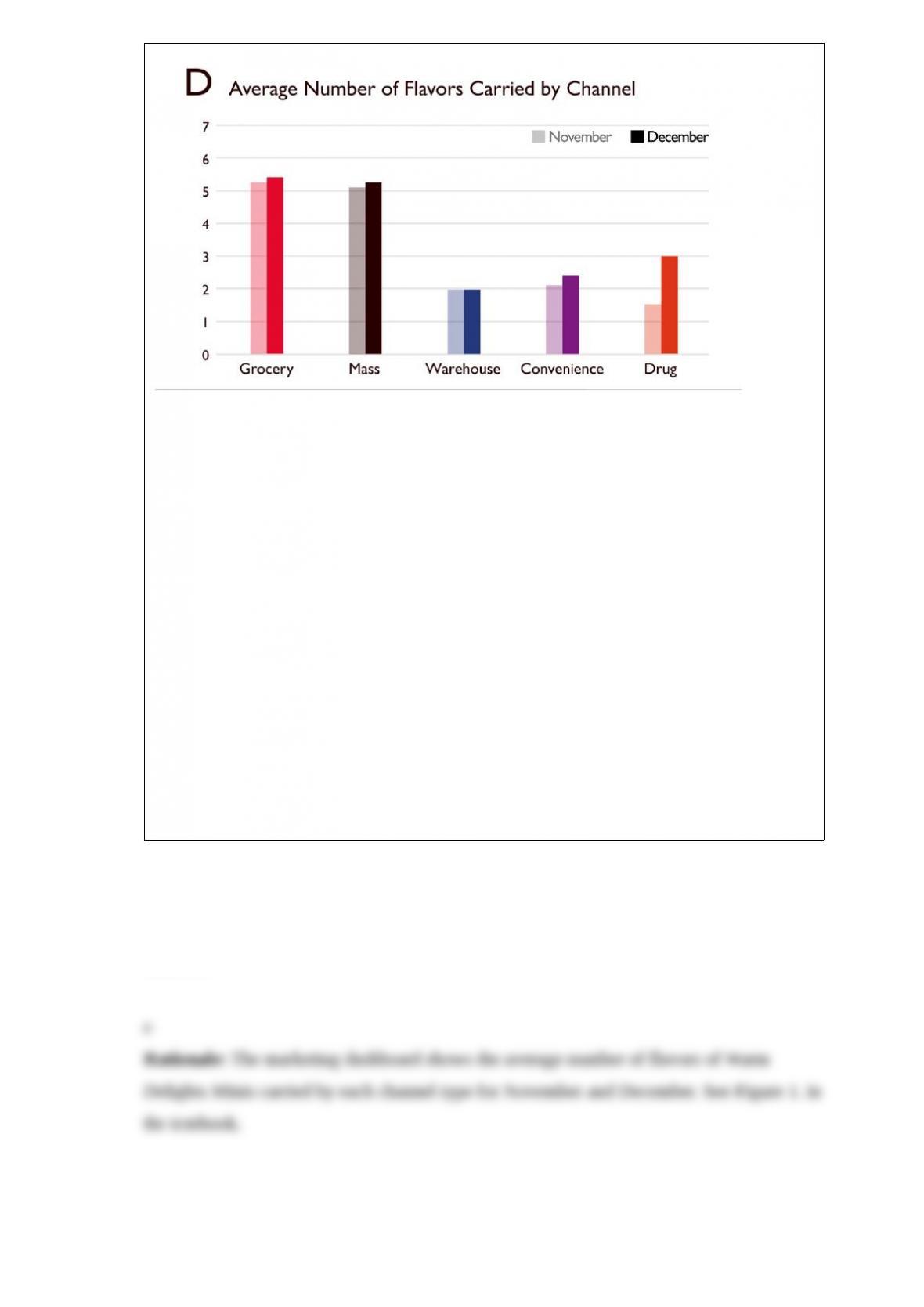
Figure 1.: General Mills Marketing Dashboard Chart “D”
Consider Figure 1.: General Mills Marketing Dashboard Chart “D” above. As part of
the Warm Delights team at General Mills, you are asked to analyze and interpret the
marketing dashboard for Warm Delights Minis. After a careful analysis of Chart “D,”
you are especially interested in major changes from November to December. As a
result, you would look most carefully at
a. the total amount spent on Warm Delights (regular) by customers in November and
December.
b. the preference of Warm Delights Minis over Warm Delights (regular).
c. the distribution channel preferences of customers.
d. the level of analysis for sales results for the total sales Warm Delights.
e. the differences in the numbers of Warm Delights Minis flavors carried by different
outlets for November and December.
Answer:

Apple recently offered consumers a __________ of $100 when they purchased a
computer and a printer.
a. premium
b. deal
c. coupon
d. rebate
e. student incentive
Answer:
A buy class situation affects buying center tendencies in different ways. If there are
many people involved, the problem definition is uncertain and the time required for a
decision is long, the buy class situation is MOST LIKELY a
a. standard buy.
b. straight rebuy.
c. conditional rebuy.
d. modified rebuy.
e. new buy.
Answer:
There are three key reasons for putting the customer into customer solutions in selling:
(1) considerable time and effort is necessary to fully understand a specific customer’s
requirements; (2) effective customer solutions are based on relationships among sellers
and buyers; and (3) __________.
a. it is ultimately the customer who converts a lead into a sale
b. only customers knows how much they are will to pay for any given solution
c. consultative selling is central to providing novel solutions for customers, thereby
creating value for them
d. only the salesperson knows when the solution has finally been found
e. customers are better able to articulate their problems and solutions than sellers
Answer:
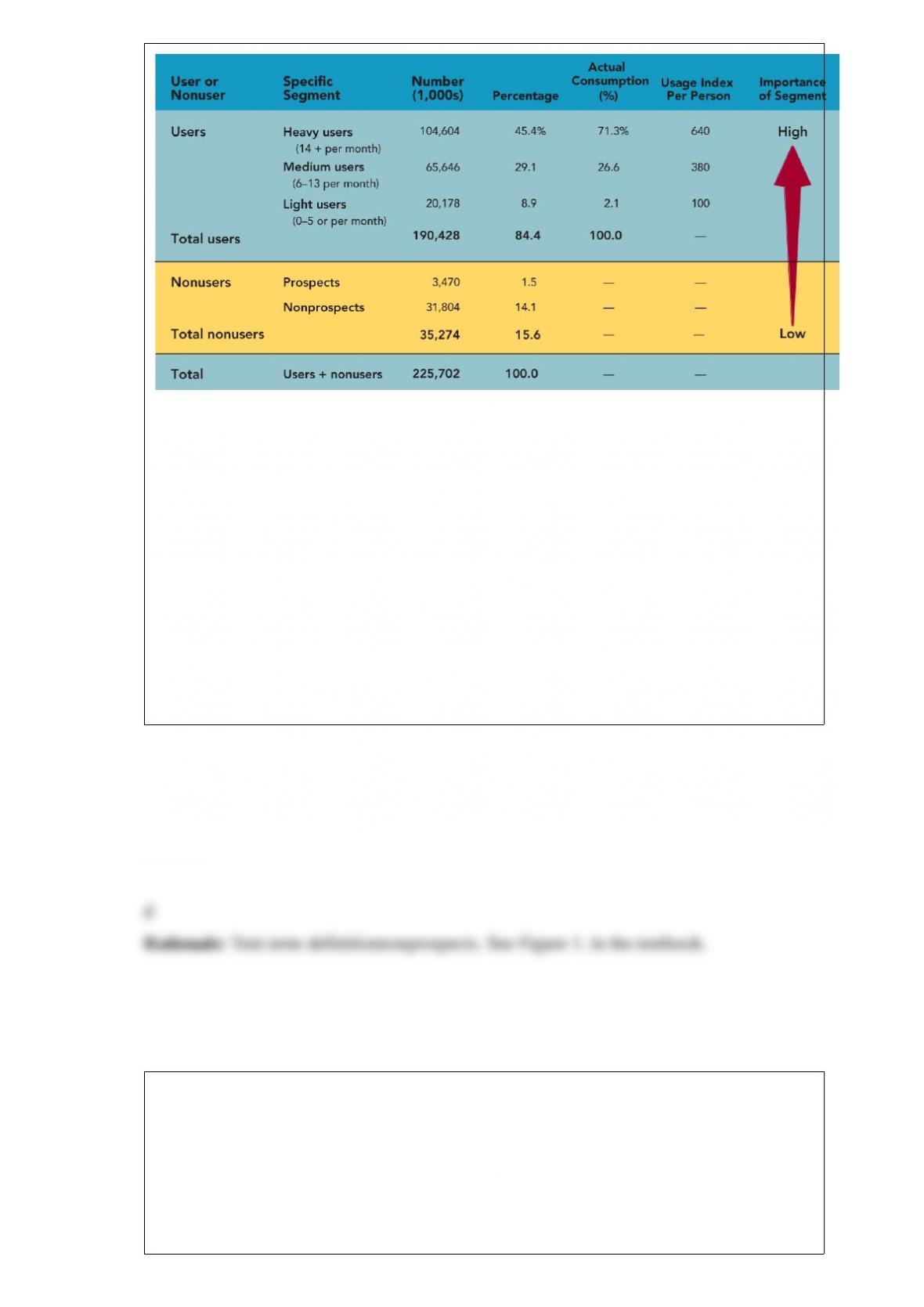
Figure 1.
According to Figure 1. above, people who most likely will never use a firm’s product or
service are referred to as
a. nonqualified prospects.
b. dead leads.
c. potential prospects.
d. nonprospects.
e. laggards.
Answer:
Instead of everyday low prices (EDLP), supermarkets prefer a __________ approach,
which is based on frequent specials where prices are temporarily lowered for a brief
period of time and then raised again.
a. odd-even pricing
b. a one-price policy
c. hi-lo pricing
d. bundle-pricing
e. flexible-pricing
Answer:
Post supports the Boys & Girls Clubs. For every coupon found on a box of any of the
Post brands redeemed, Post promises to donate $0.10 to the organization. This is an
example of
a. cause marketing.
b. philanthropic marketing.
c. goodwill marketing.
d. public relations marketing.
e. societal marketing.
Answer:
Today, __________ of companies employ cross-functional teams of professionals to
work with customers to improve relationships, find better ways of doing things, and, of
course, create and sustain value for their customers.
a. 15%
b. 20%
c. 45%
d. 75%
e. 90%
Answer:
The promotional mix includes advertising, personal selling, sales promotion, public
relations, and __________.
a. public relations
b. direct selling
c. merchandising
d. word-of-mouth
e. direct marketing
Answer:
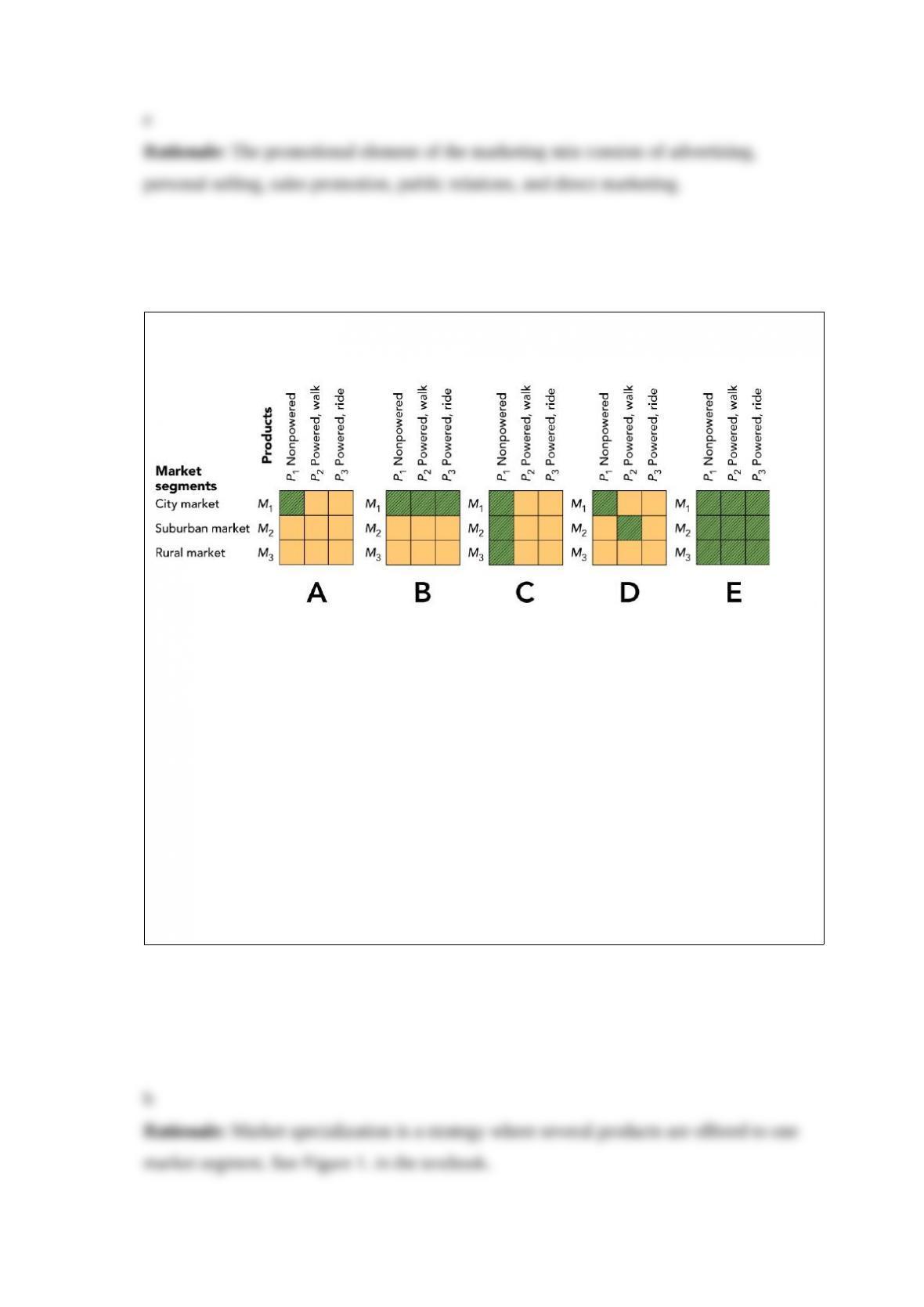
Figure 1.
In Figure 1. above, the market-product grid labeled “B” illustrates which of the
following market-product strategies?
a. full coverage
b. market specialization
c. product specialization
d. selective specialization
e. market-product concentration
Answer:

The Direct Marketing Association estimates that direct-mail and catalog retailing
creates __________ in sales.
a. $100,000
b. $14,000,000
c. $190,000,000
d. $22,000,000,000
e. $669,000,000,000
Answer:
Which of the following statements is an example of place utility?
a. airlines that allow you to print your own boarding pass at home
b. a service station that sells both unleaded gasoline and diesel fuel
c. a mobile phone company that offers six-month financing, same as cash
d. cold cut packages that can be zipped close for reuse
e. an iPhone with a “multitouch” user interface for easy navigation
Answer:
The __________ cost of a service is the cost of paying the person used to provide the
service along with any needed equipment.
a. intangibility
b. inconsistency
c. inseparability
d. inventory
e. hidden
Answer:
The five alternative marketing strategies that can be identified by market-product grids
are: __________, market specialization, product specialization, selective specialization,
and full coverage.
a. diversification
b. selective distribution
c. product reorientation
d. market-product concentration
e. new product specialization

Answer:
Customization refers to
a. the specialization in one very small but highly sought-after specialty item.
b. Internet-enabled capabilities that make possible a highly interactive and
individualized information and exchange environment for shoppers and buyers.
c. the growing practice of not only customizing a product or service but also
personalizing the marketing and overall shopping and buying interaction for each
customer.
d. items that are unique in every dimension rather than simply adapted according to
limited features.
e. novelty items used as sales promotions, such as cups, hats, etc., that will be imprinted
with a company logo, colors and slogans, if applicable.
Answer:
At the __________ stage in the personal selling process, a salesperson gains a
prospect’s attention, stimulates interest, and builds the foundation for the sales
presentation itself.

a. approach
b. prospecting
c. preapproach
d. qualifying
e. trial close
Answer:
General merchandise wholesalers
a. carry a broad assortment of merchandise and perform all channel functions.
b. own the merchandise they sell but do not physically handle, stock, or deliver it.
c. have a small warehouse from which they stock their trucks for distribution to
retailers.
d. work for several producers, carry noncompetitive, complementary merchandise in an
exclusive territory, and use over-the-road transportation for all product deliveries.
e. deal exclusively with small low-cost consumer products that are distributed to a
select number of large retail chains.
Answer:
Marketers produce a customer experience through seven website design elements: (1)
context; (2) content; (3) __________; (4) customization; (5) communication; (6)
connection; and (7) commerce.
a. creativity
b. community
c. consistency
d. collaboration
e. control
Answer:
Pizza Hut set out to reinvent the retail pizza business by breaking away from a(n)
__________ platform to an efficient and powerful __________ platform by reaching
into its customers’ kitchens and couches to offer a better mealtime ordering, delivery,
and dining experience.
a. transformational; promotional
b. promotional; transactional
c. transactional; customer engagement
d. informational; transactional
e. customer engagement; transactional

Answer:
For marketers, the primary objective of a point-of-purchase display is to
a. eliminate the need for any special pricing promotion.
b. retaliate against competitors’ actions.
c. encourage present customers to buy more; minimize brand-switching behavior.
d. build business inventory.
e. increase product trial and provide in-store support for other promotions.
Answer: