
A coupon bond is a bond that:
A. always sells at a price that is less than the face value.
B. provides the owner with regular payments.
C. pays the owner the sum of the coupons at the bond’s maturity.
D. pays a variable coupon rate depending on the bond’s price.
Answer:
The relationship between the velocity of money and interest rates is:
A. positive but not stable.
B. negative but not stable.
C. positive and stable.
D. negative and stable.
Answer:

Which of the following statements is false?
A. Pension plans and life insurance are often both offered by the same institution.
B. Life insurance companies hold more in stocks than pension funds do.
C. Life insurance pays off when you die while the pension plan pays off if you don’t.
D. They are both vehicles for saving.
Answer:
According to the Expectations Theory of the term structure, if interest rates are
expected to be 2%, 2%, 4%, and 5% over the next four years, which yield is the closest
to the yield on a three-year bond today?
A. 2.7%
B. 4%
C. 4.3%
D. 8%
Answer:

The bid price for a bond quote is:
A. the price at which the bond dealer is willing to sell the bond.
B. the price at which the bond dealer is willing to purchase the bond.
C. fixed over the life of a bond.
D. determined solely by the time left to maturity.
Answer:
According to the Expectations Hypothesis:
A. when short-term interest rates are expected to rise in the future, the long-term
interest rates are equal to current short-term interest rates.
B. when short-term rates are expected to remain constant in the future, the long-term
interest rates are higher than current short-term interest rates.
C. short-term bonds are perfect substitutes for long-term bonds.
D. expectations of future short-term rates equal estimates of current short-term rates.
Answer:

The coupon rate for a coupon bond is equal to the:
A. annual coupon payment divided by the face value of the bond.
B. annual coupon payment divided by the purchase price of the bond.
C. purchase price of the bond divided by the coupon payment.
D. annual coupon payment divided by the selling price of the bond.
Answer:
If a dollar will currently purchase 120 Japanese yen but it is expected that one year
from now a dollar will purchase 130 yen:
A. the demand for dollars now will increase.
B. the demand for dollars now will decrease.
C. the dollar is expected to depreciate.
D. the yen is expected to appreciate.
Answer:

When expected inflation decreases for any given nominal interest rate, all of the
following occur except the:
A. real interest rate decreases.
B. bond supply curve shifts to the left.
C. cost of borrowing increases and the desire to borrow decreases.
D. price of bonds increases.
Answer:
Which of the books used at the FOMC meetings contain the Board staff’s economic
forecast for the next few years?
A. The blue book
B. The beige book
C. The teal book
D. Both the beige and blue books

Answer:
With a put option, the option holder:
A. has the right to buy the asset.
B. can buy or sell the asset, it is their option.
C. has the right to sell the asset.
D. can buy the asset but only on the date specified.
Answer:
The time value of the option should:
A. decrease the longer the time to expiration.
B. increase the longer the time to expiration.
C. not change with time to expiration.
D. approach infinity at expiration.

Answer:
A bank faces foreign exchange risk when:
A. it has assets denominated in one currency and liabilities in another.
B. it lends to foreign borrowers because they are less likely to repay a U.S. bank.
C. foreign governments restrict dollar-denominated payments.
D. it has branches in other countries.
Answer:
A foreign exchange intervention is:
A. synonymous with a fixed exchange rate.
B. the use of public statements by government officials to influence inflation
expectations.
C. only used in crisis situations.
D. the buying/selling of currencies to affect supply or demand which impacts the
exchange rate.

Answer:
A $500 investment has the following payoff frequency: half of the time it will pay $350
and the other half of the time it will pay $900. Its standard deviation and value at risk
respectively are:
A. $275; $150
B. $625; $275
C. $275; $350
D. $125; $500
Answer:
Which of the following statements is not true of the yield curve for U.S. Treasury
securities?
A. The yield curve usually slopes upward.
B. The yield curve usually is inverted.

C. The yield curve shows the relationship among securities of different maturities.
D. The yield curve can shift over time.
Answer:
The value of money as a means of payment:
A. is independent of changes in the amount of money in the economy.
B. is fixed once relative prices are set.
C. depends on the amount of money in the economy, among other things.
D. depends on whether the majority of M1 is in currency or demand deposits.
Answer:
To be independent, a central bank must have:

A. its policies overturned only by the president.
B. control of its own budget.
C. the board members appointed for very short terms.
D. the chairperson serve as a member of the President’s cabinet.
Answer:
The fact that returns from the stock market are less volatile over long-periods of time
suggests that:
A. investors are more risk averse over the long run.
B. stock markets are efficient.
C. people get comfortable with the stocks they own.
D. stock market bubbles have become more common.
Answer:

The Consumer Price Index (CPI) is:
A. an example of an index that uses variable expenditure weights.
B. a fixed-expenditure-weight index used to measure changes in the GDP Deflator.
C. a fixed-expenditure-weight index used to measure changes in purchasing power for
households.
D. the least commonly used measure of inflation.
Answer:
If a bank’s return on equity remains constant, but the ratio of bank assets to bank capital
decreases:
A. the bank’s return on assets must have increased.
B. the bank’s return on assets must have decreased.
C. the bank’s assets and capital must have increased by the same percent.
D. the bank must be unprofitable.
Answer:

Financial instruments used primarily as stores of value include each of the following,
except:
A. bonds.
B. futures contracts.
C. stocks.
D. home mortgages.
Answer:
According to the theory of efficient markets:
A. investors use rules of thumb to make choices about which stocks to buy and sell.
B. investors are able to use forecasts based on the dividend-discount model to generate
above-average returns.
C. a portfolio manager who charges no commission should not, on average, outperform
an individual investor with access to the same funds.
D. the stock price should remain constant.
Answer:

The Federal Reserve System is composed of:
A. five branches with clear responsibilities.
B. six branches with overlapping responsibilities.
C. three branches with overlapping responsibilities.
D. twelve branches with clear responsibilities.
Answer:
Many states had their own insurance fund to protect depositors. The critical problem
with these state funds is:
A. they are monopolies in their own state and extract extremely high prices for the
insurance they provide.
B. they are highly inefficient they cannot achieve the economies of scale a federal fund
can achieve.
C. they do not have regulators as knowledgeable as the regulators at FDIC.
D. no state fund is large enough to withstand a run on all of the banks it insures.

Answer:
Secondary reserves for banks are:
A. the same as the bank’s net worth.
B. mainly the bank’s liquid securities.
C. vault cash.
D. deposits the bank has at the Federal Reserve.
Answer:
The government’s role of lender of last resort is directed to:
A. large manufacturing firms that employ thousands of people.
B. depositors; this is role the government plays when they insure depositors’ balances
in banks that fail.
C. developing countries that are trying to build their financial systems.
D. banks that experience sudden deposit outflows.
Answer:
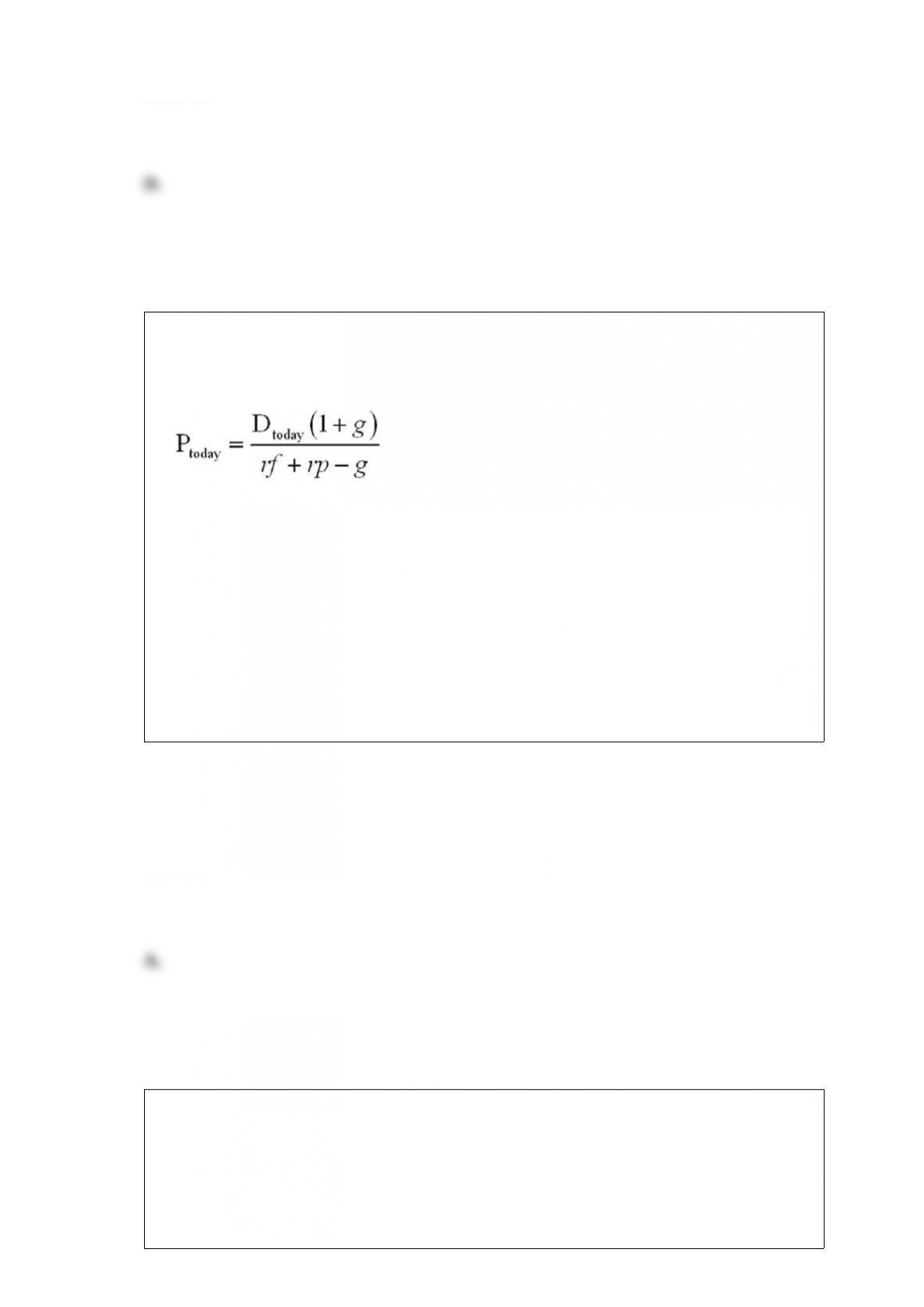
Suppose there is a reduction of the return provided on U.S. Treasury bonds. We should
expect the current price of stocks to:
A. increase since the risk-free return is now lower.
B. decrease since U.S. Treasury bonds are safer.
C. increase since the risk premium on the stocks will increase.
D. stay the same; there is no effect on stock prices from this reduction.
Answer:
An investor practicing hedging would be most likely to:
A. avoid the stock market and focus on bonds.

B. purchase shares in general motors and buy U.S. treasury bonds.
C. purchase shares in general motors and Amoco oil.
D. put his/her invested funds in CDs.
Answer:
A review of economic data suggests that:
A. expansions are shorter than recessions.
B. business cycles are recurrent and periodic.
C. over the last fifty years, recessions are becoming more common.
D. recessions are shorter in duration than expansions.
Answer:
If Americans develop a greater appreciation for Mexican-made goods, we should
observe the following change(s) in the U.S. dollar-peso market:

A. the demand curve for dollars shifts right.
B. the supply curve of dollars shifts left.
C. the demand curve for pesos shifts right.
D. a movement down the supply curve of dollars.
Answer:
The empirical evidence on purchasing power parity seems to point out that:
A. purchasing power parity can explain long run movements in exchange rates but does
not hold up to scrutiny for short-run changes.
B. purchasing power parity does a good job of explaining short-run movements in
exchange rates, but does not hold up to scrutiny over the long run.
C. purchasing power parity is a good theory for international trade, but is of little use in
explaining exchange rate movements.
D. inflation and a country’s rate of currency appreciation are positively correlated.
Answer:
Answer:
Answer:
Answer:
Answer:
Answer:
Answer:
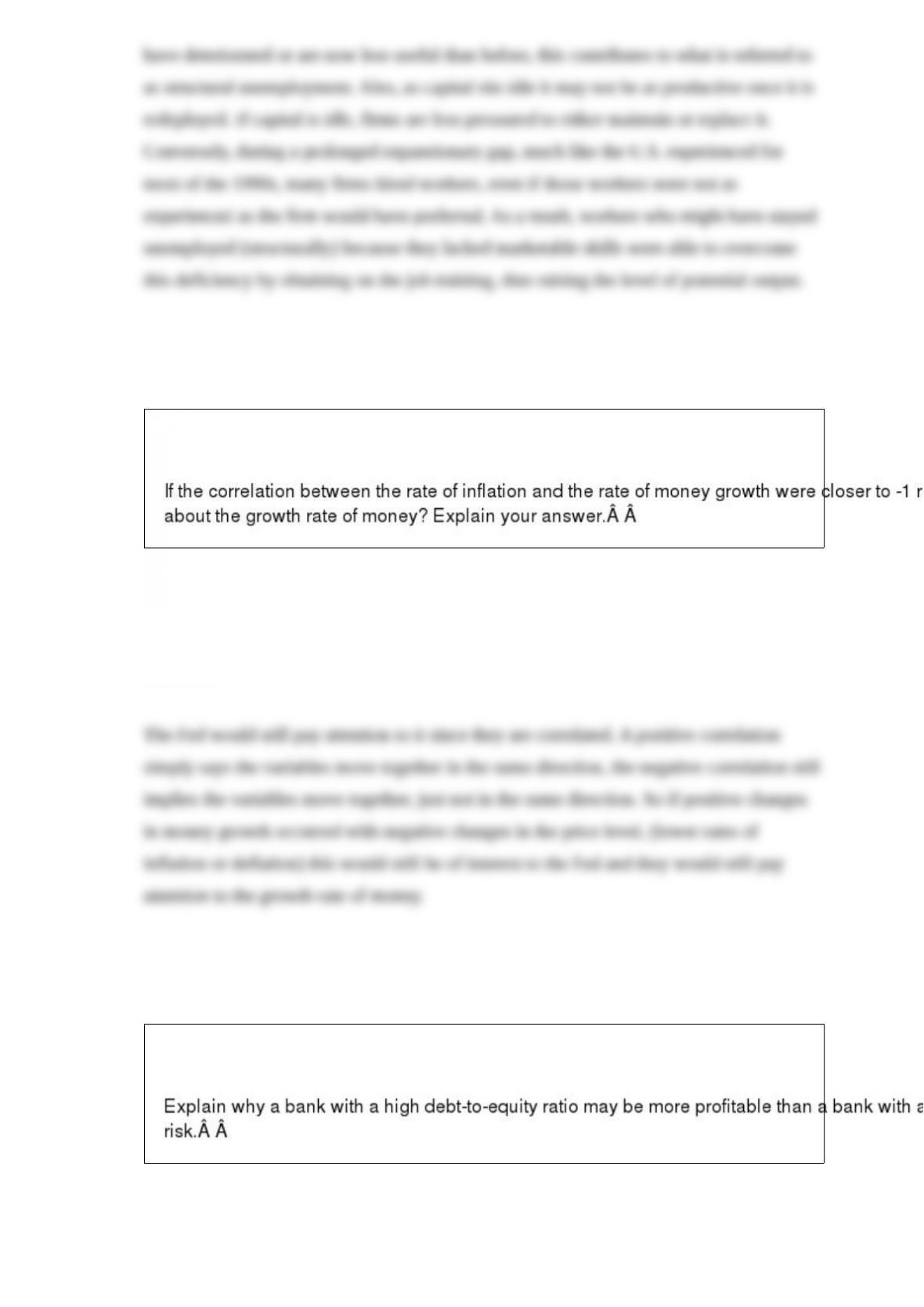
Answer:
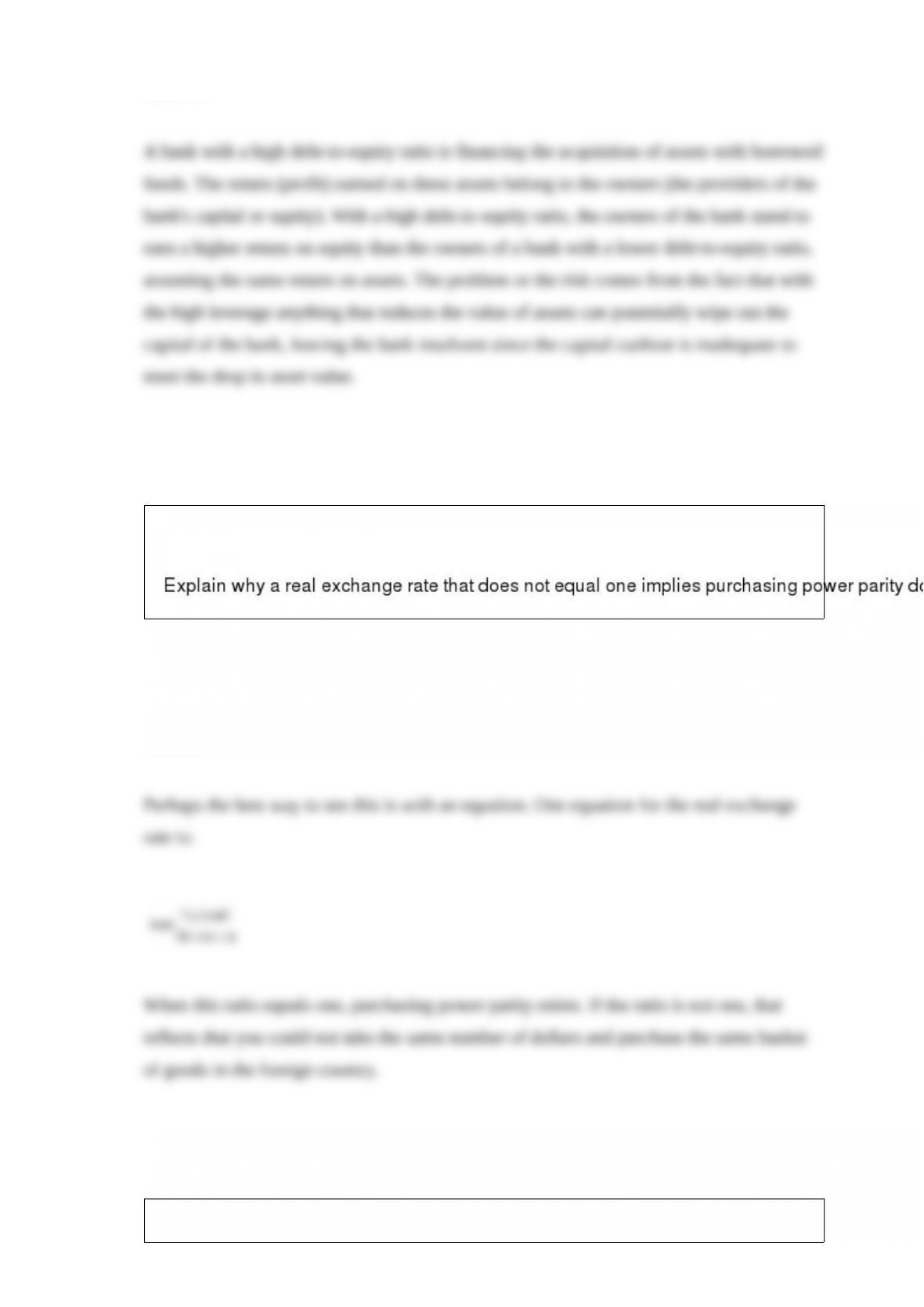
Answer:
Answer:
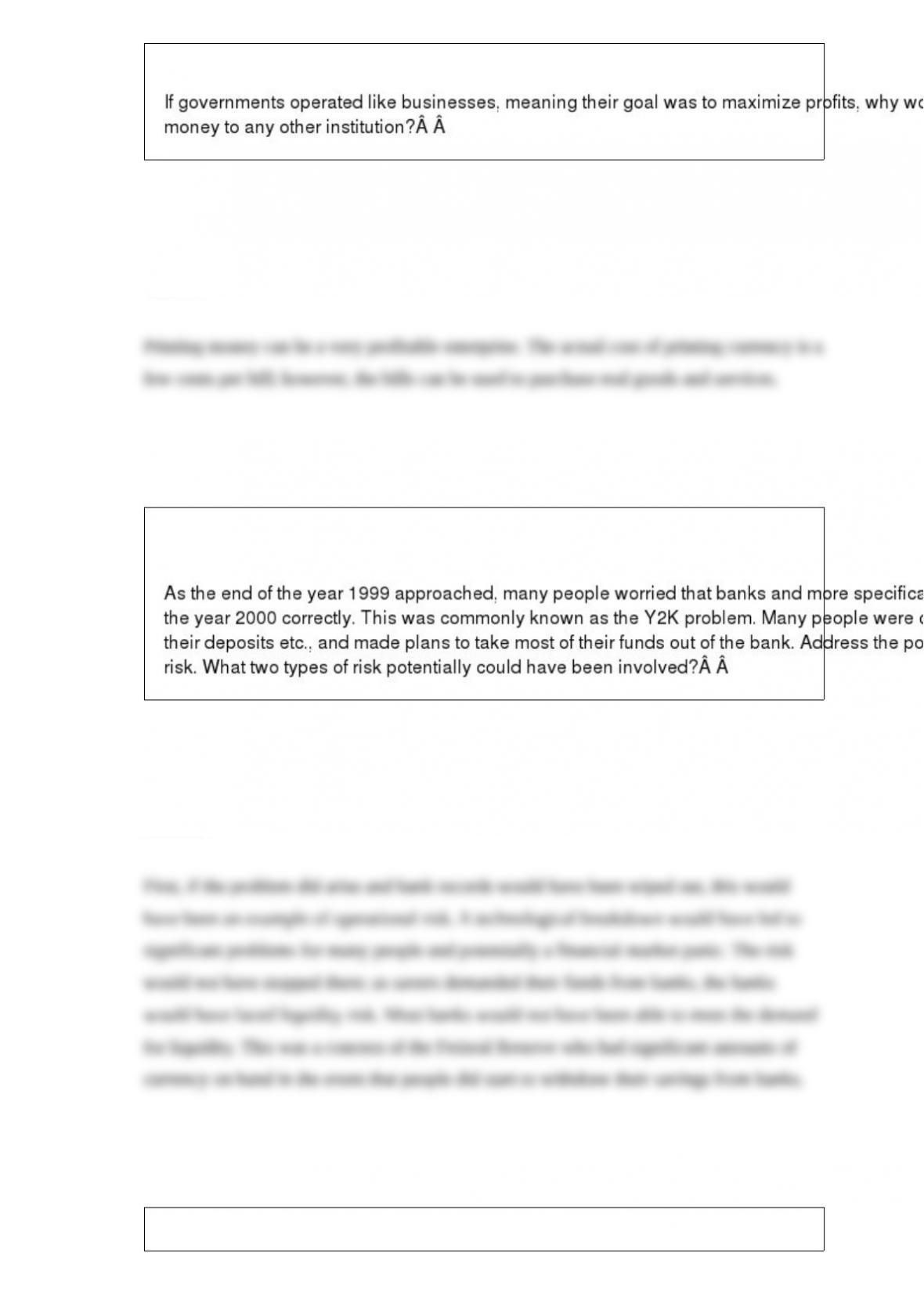
Answer:
Answer:
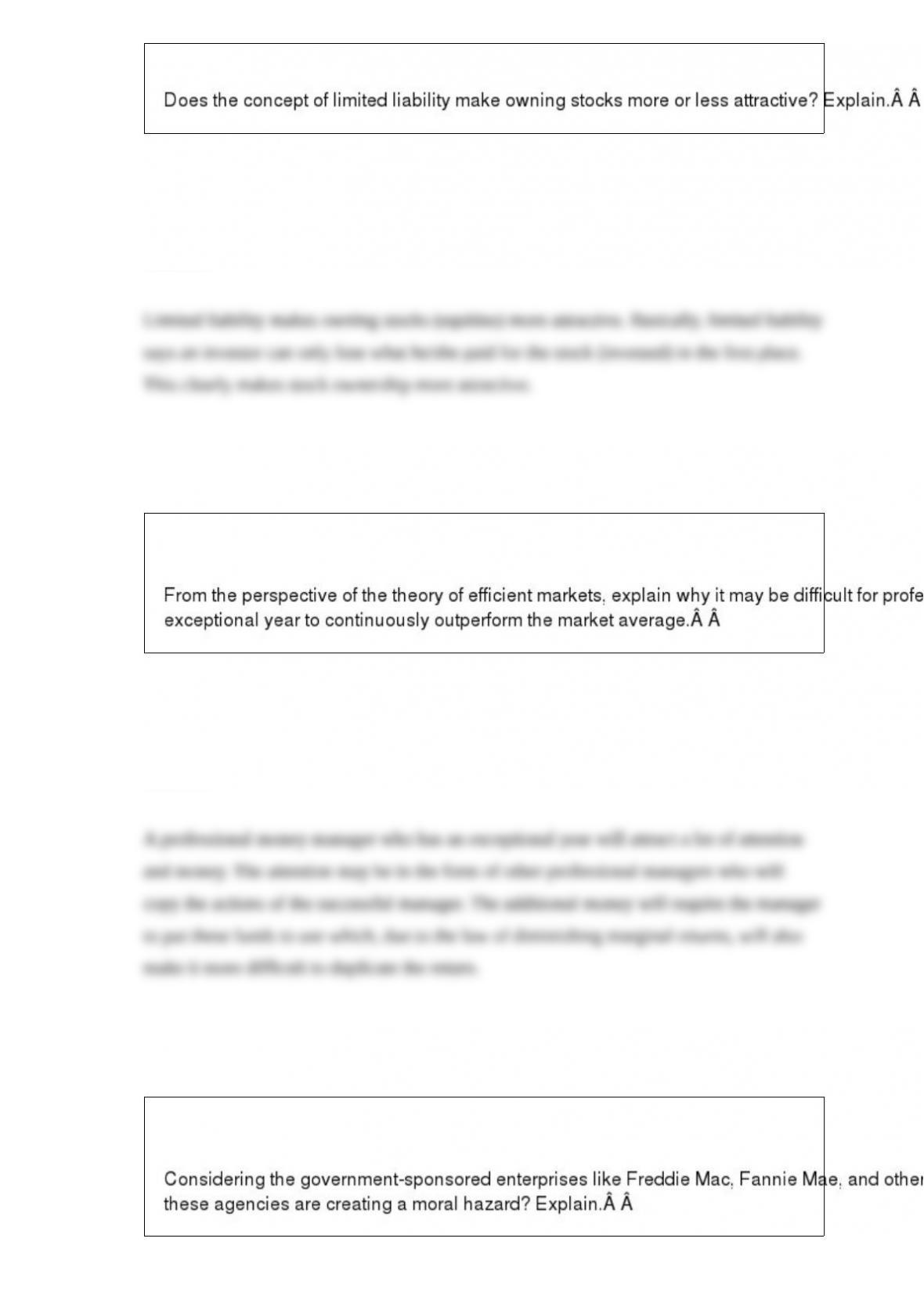
Answer:
Answer:
Answer:
Answer:
Answer:
Answer:
Answer:
Answer: