
Suppose that it would cost a firm $9 million to develop a new drug. In the absence of a
patent, other firms will be able to copy and bring to market a generic equivalent of the
drug in three years. In each of these three years, the firm would earn monopoly profits
of $4 million. A patent will generate monopoly status for the firm for twenty years. If
the government knew this information ahead of time, which of the following is most
correct?
A) The government should grant a patent to the firm, because the firm would not
produce the drug at all without a patent.
B) The government should grant a patent to the firm, because it does not have the
resources to determine on a case-by-case basis exactly which inventions merit award of
the patent.
C) The government should grant a patent to the firm, because even with a patent the
firm will not earn a monopoly profits.
D) The government should not grant a patent to the firm, because the firm would earn
sufficient profits to develop the drug without the patent.
Suppose we observe that as a firm increases its price its total revenue decreases. Which
of the following is a possible value of its price elasticity of demand?
A) 0.25
B) 0.5
C) 1
D) 2

Suppose a product suddenly becomes very popular and the firms producing the product
begin to realize large profits. In response, entrepreneurs would:
A) enter the market and increase production.
B) enter the market and decrease production.
C) exit the market and decrease production.
D) exit the market and increase production.
A large or a small wind turbine have similar installation, operating and maintenance
costs, however, a large turbine has four times the generating capacity but costs less than
three times as much as a small turbine, the average cost of generating electricity with
wind is:
A) constant at each output.
B) increasing as output increases.
C) decreasing as output increases.
D) at first increasing and then decreasing as output rises.
Recall the Application. If a gasoline tax increase is combined with a cut in income taxes

to insure that total tax revenue does not change, gasoline consumption will ________
due to the substitution effect.
A) increase
B) decrease
C) remain unchanged
D) Any of the above could be correct.
A minimum wage that is less than the prevailing market wage will:
A) have no effect on the market.
B) increase unemployment.
C) increases wages.
D) reduce wages.
Suppose that a new study is released stating that consumption of orange juice (a
substitute for apple juice) reduces the risk of cancer, and a major freeze destroys half of
the country’s apple crop. What happens to the price and quantity of apple juice?
A) The price of apple juice might rise or fall and the quantity of apple juice falls.

B) The price of apple juice might rise or fall and the quantity of apple juice rises.
C) The price of apple juice falls and the quantity of apple juice falls.
D) The quantity of apple juice might rise or fall, and the price of apple juice rises.
According to the Application, the average annual spending on state lotteries per adult
living in a lottery state is:
A) less than $20.
B) $56.
C) $212.
D) more than $500.
In the short run, the marginal cost of the first unit of output is $40, the average variable
cost of producing three units of output is $32, and the marginal cost of producing the
second unit of output is $32. What is the marginal cost of producing the third unit of
output?
A) $24
B) $32
C) $40

D) $96
If a firm perceived that the other firm in an implicit pricing agreement dropped its price
in an attempt to gain market share then its most likely response would be to:
A) merge with the other firm.
B) engage in a price war.
C) raise price to punish the other firm.
D) keep its price the same.
In Figure 9.6 if price is P1 then the industry will:
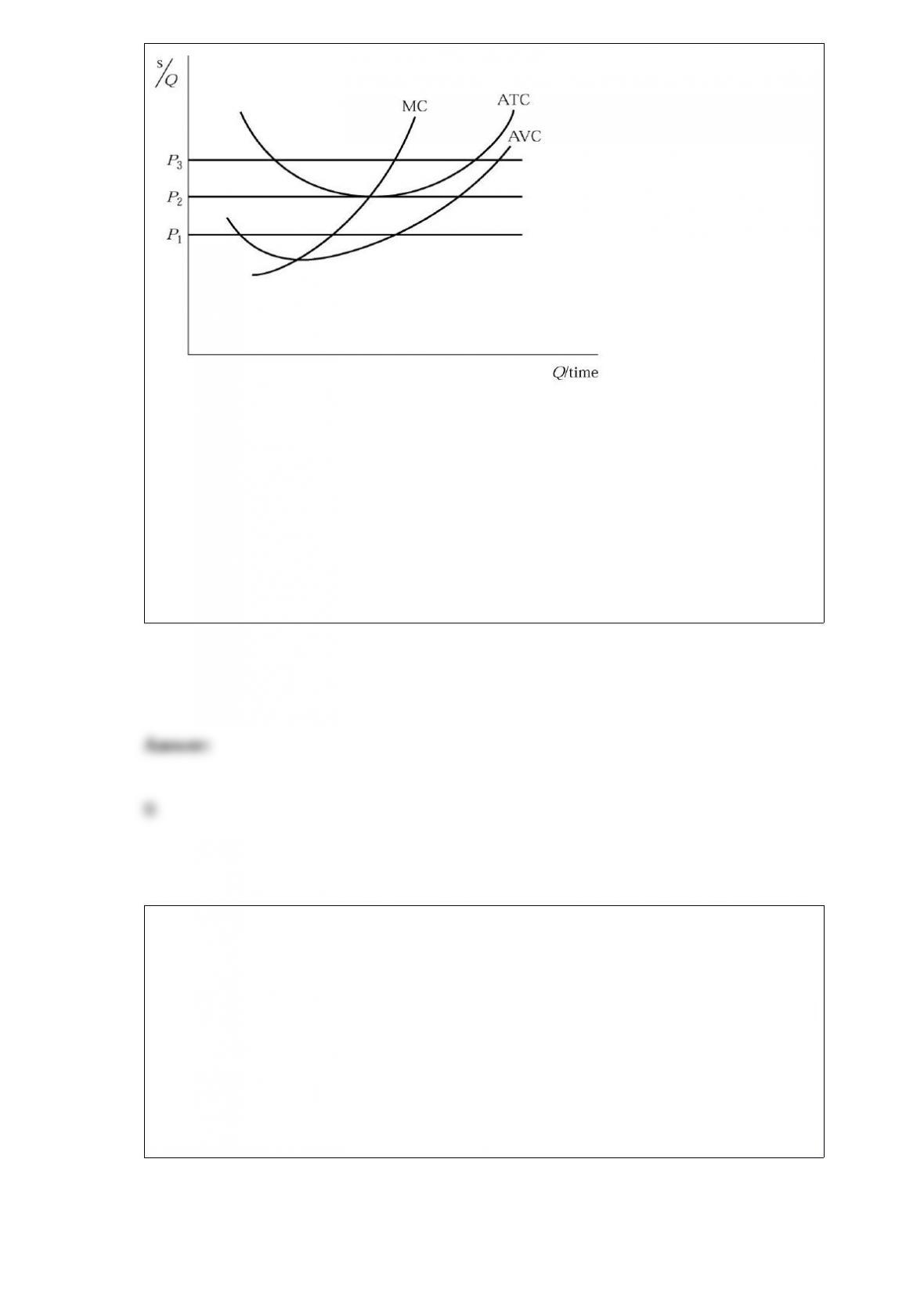
Figure 9.6
A) expand.
B) contract.
C) stay the same size.
D) merge.
How much economic profit does a firm make in the long-run equilibrium when the
price equals the average cost of production?
A) more than the average cost
B) zero
C) less than the average cost
D) It cannot be determined.

A situation in which the uninformed side of the market must choose from an
undesirable selection of goods:
A) indifferent information.
B) perfect information.
C) asymmetric information.
D) a thick market.
Suppose Toor’s beer is sold in a monopolistically competitive market. In the long run
we expect the price of Toor’s beer to:
A) equal the average cost of production of Toors beer.
B) exceed the average cost of production of Toors beer.
C) equal the marginal cost of production for Toors beer.
D) equal the minimum possible average cost of producing Toors beer.

Suppose that your tuition to attend college is $24,000 per year and you spend $8,000
per year on room and board. If you were working full time, you could earn $30,000 per
year. What is your opportunity cost of attending college for one year?
A) $32,000
B) $38,000
C) $54,000
D) $62,000
The supply of workers in a particular occupation could be relatively small if:
A) training costs are high.
B) job features are undesirable.
C) there are few people with the required skills.
D) All of the above are correct.
A command-and-control policy:
A) usually does not result in the use of the most efficient pollution abatement
technology.

B) does not affect the production costs of firms.
C) usually finds the most efficient pollution abatement technology.
D) increases the incentive for firms to develop efficient abatement technologies.
Recall the Application. The introduction of satellite TV service is a form of:
A) price gouging.
B) profiteering.
C) market entry.
D) all of the above.
Refer to Figure 18.4. With a tariff or quota, what is the equilibrium price of gloves in
Duckland?
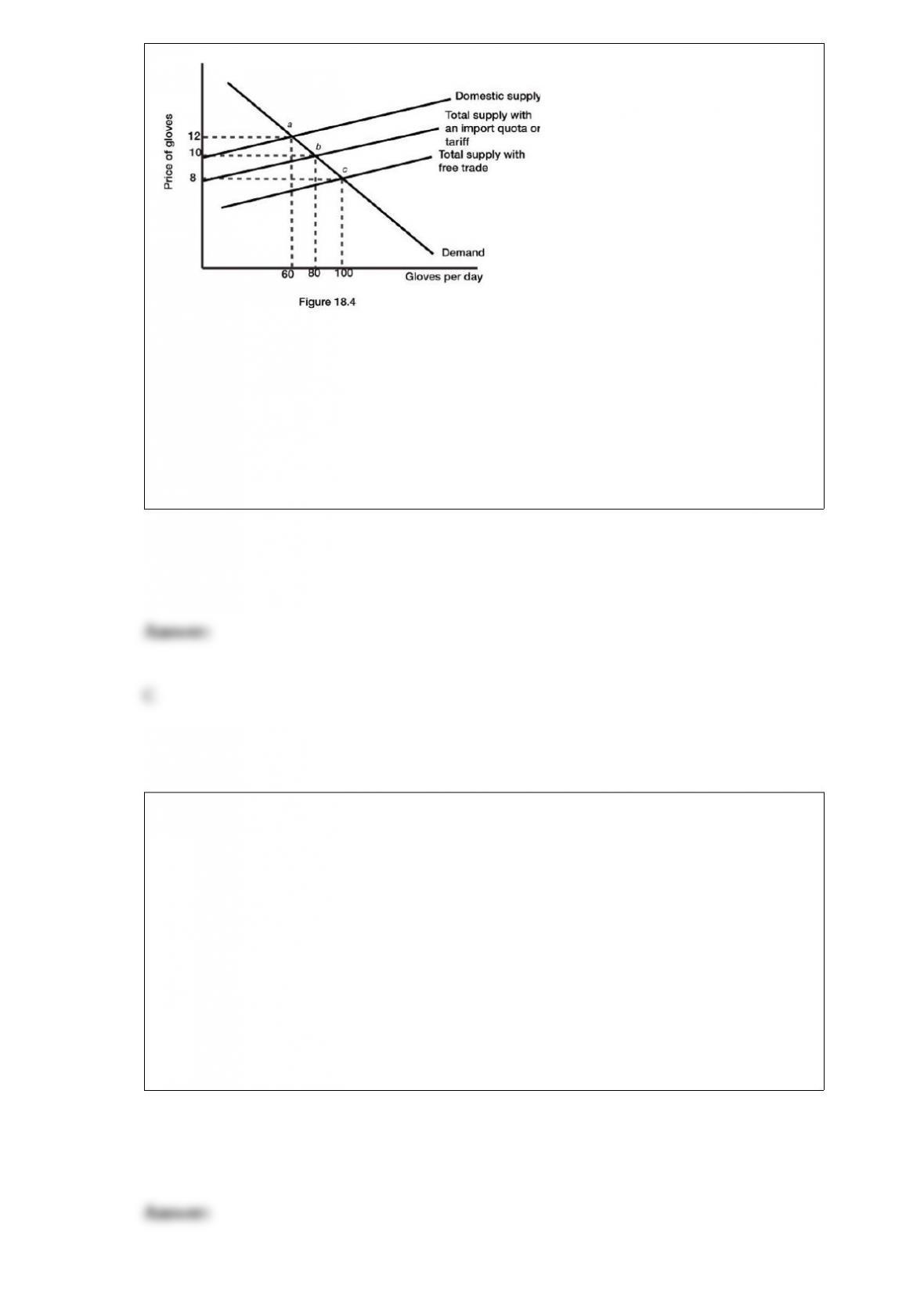
A) $8
B) $9
C) $10
D) $11
Recall the application on the break-even price for switchgrass, a feedstock for biofuel.
What are the following statements is true about the implications f in order to get some
North Dakota farmers to switch their crops to switchgrass?
A) the higher the price, the larger the acreage devoted to switchgrass
B) the lower the price, the more amount of farmers who would switch their crops to
switchgrass
C) There are no farmers willing to switch their crops to switchgrass.
D) There is no fertile land in North Dakota to grow switchgrass.
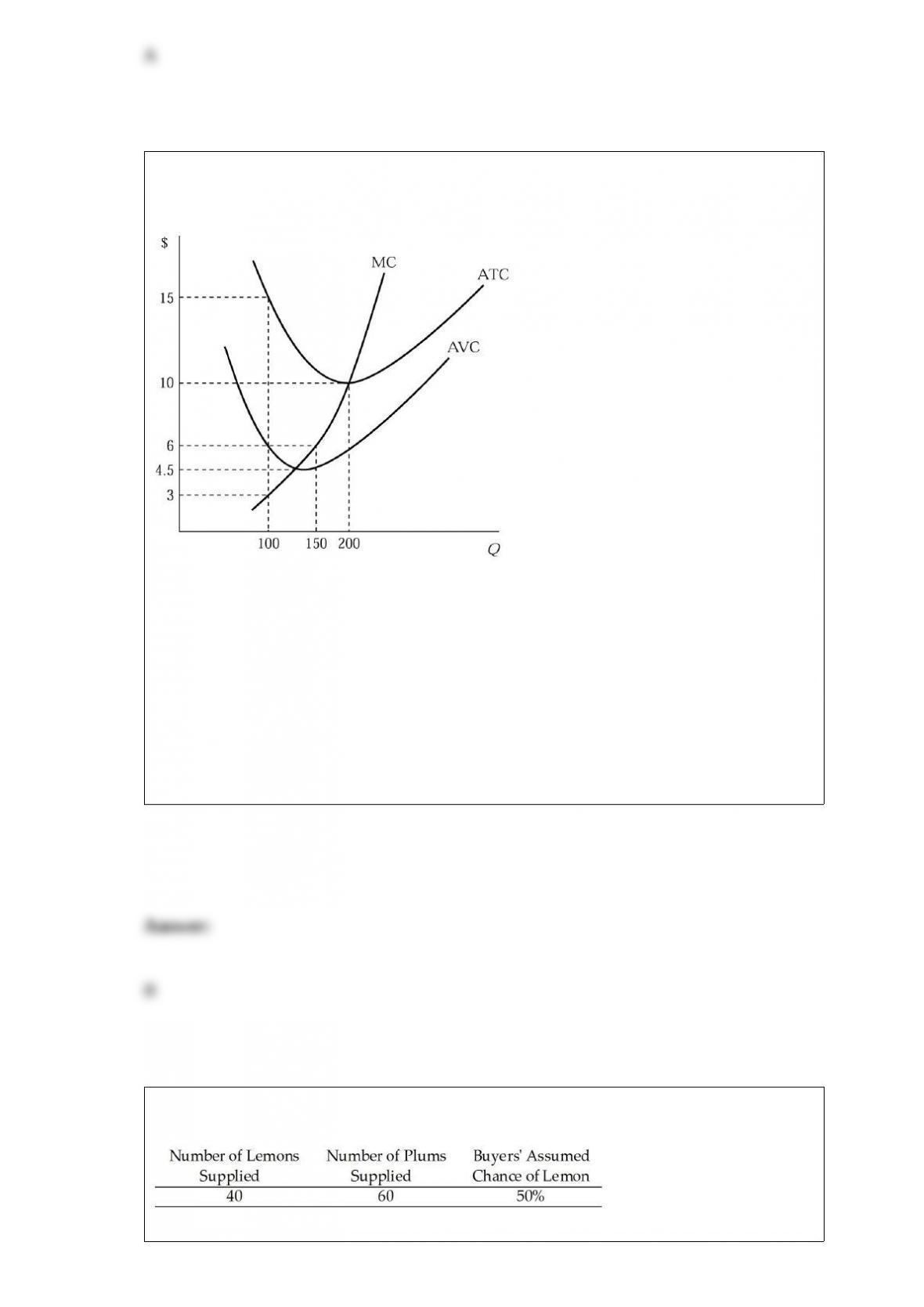
Figure 9.3 shows the cost structure of a firm in a perfectly competitive market. The
price at which the firm is just as well off either operating or shutting down is:
Figure 9.3
A) $3.
B) $4.5.
C) $6.
D) $10.
Refer to Table 14.2, which shows the market for used fishing boats. Which of the
following is NOT true about this market?

Table 14.2
A) The price buyers will be willing to pay will rise.
B) The quantity of plums supplied will rise.
C) The proportion of lemons in the market will rise.
D) All of the above are false.
When the price of apples goes up:
A) the demand for apples will decrease.
B) the demand for apples will increase.
C) the quantity demanded for apples will decrease.
D) the quantity demanded for apples will increase.
Voluntary export restraints:
A) have the same effect as an import ban.
B) are illegal under the international trading rules.
C) violate the spirit of international trade agreements.

D) all of the above.
According to the Application, why might introducing sheep shearing not be an effective
policy to raise wool prices?
A) Increased sheep shearing might decrease the demand for wool.
B) Increased sheep searing might increase the demand for wool substitutes.
C) Increased sheep shearing will definitely increase the demand for wool, causing the
prices to drop.
D) Increased sheep shearing will definitely increase the supply of wool, causing the
prices to drop.
A soybean farmer sells soybeans in a perfectly competitive market and hires labor in a
perfectly competitive market. The market price of soybeans is $1 a bushel, the wage
rate is $12, the farmer employs six workers and the marginal product of the sixth
worker is 10. What would you advise this farmer to do?
A) Do nothing because the wage rate and the marginal product of the last worker hired
are equal.
B) Reduce employment because the wage paid is greater than the marginal revenue
product.
C) Increase employment because the wage paid is less than the marginal revenue
product.
D) Increase the product price so that the wage and marginal revenue product will be
equal.
In a monopoly firms are called “price makers” because:
A) they are so small that they must accept any reasonable offer from consumers for
their outputs.
B) they are able to affect the market price.
C) they are unable to sell their products at any price above the market price.
D) the firms are large relative to the size of the industry.
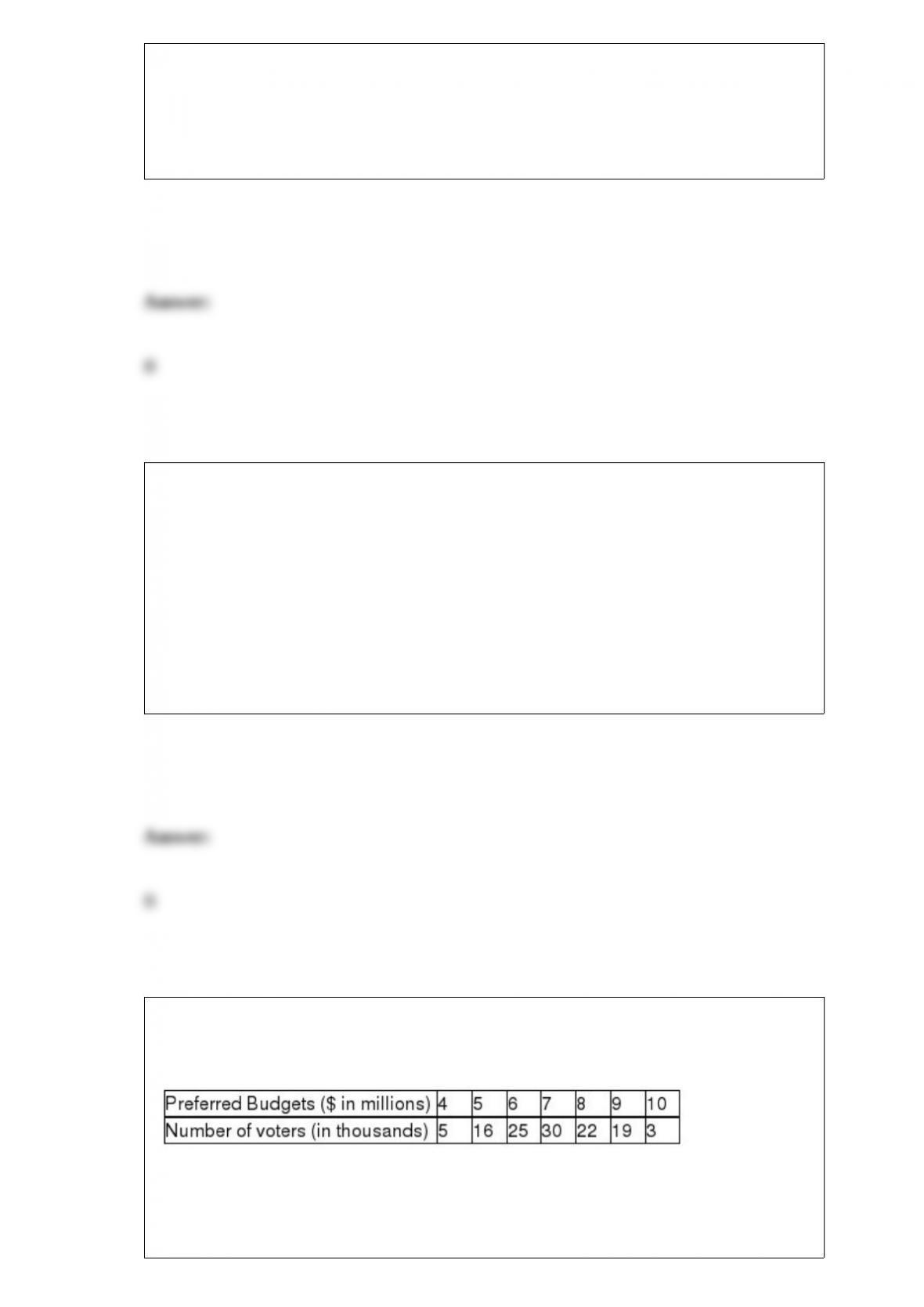
Table 15.3 shows the preferred budget for a new performance center and the number of
voters in a community who prefer that budget. What budget does the median voter
prefer?
Table 15.3
A) 6

B) 7
C) 8
D) 9
When a credit card company offers different services with its card, like travel insurance
for air travel tickets purchased with the credit card or product insurance for items
purchased with the card, the credit card company is trying to:
A) create a barrier to entry for competing firms.
B) create a perfectly competitive market in which to sell its credit card.
C) differentiate its credit card from those offered by other companies.
D) shift the demand curve for competing firms to the right.
Refer to Table 6.1. When quantity = 3, this market is ________ because ________.
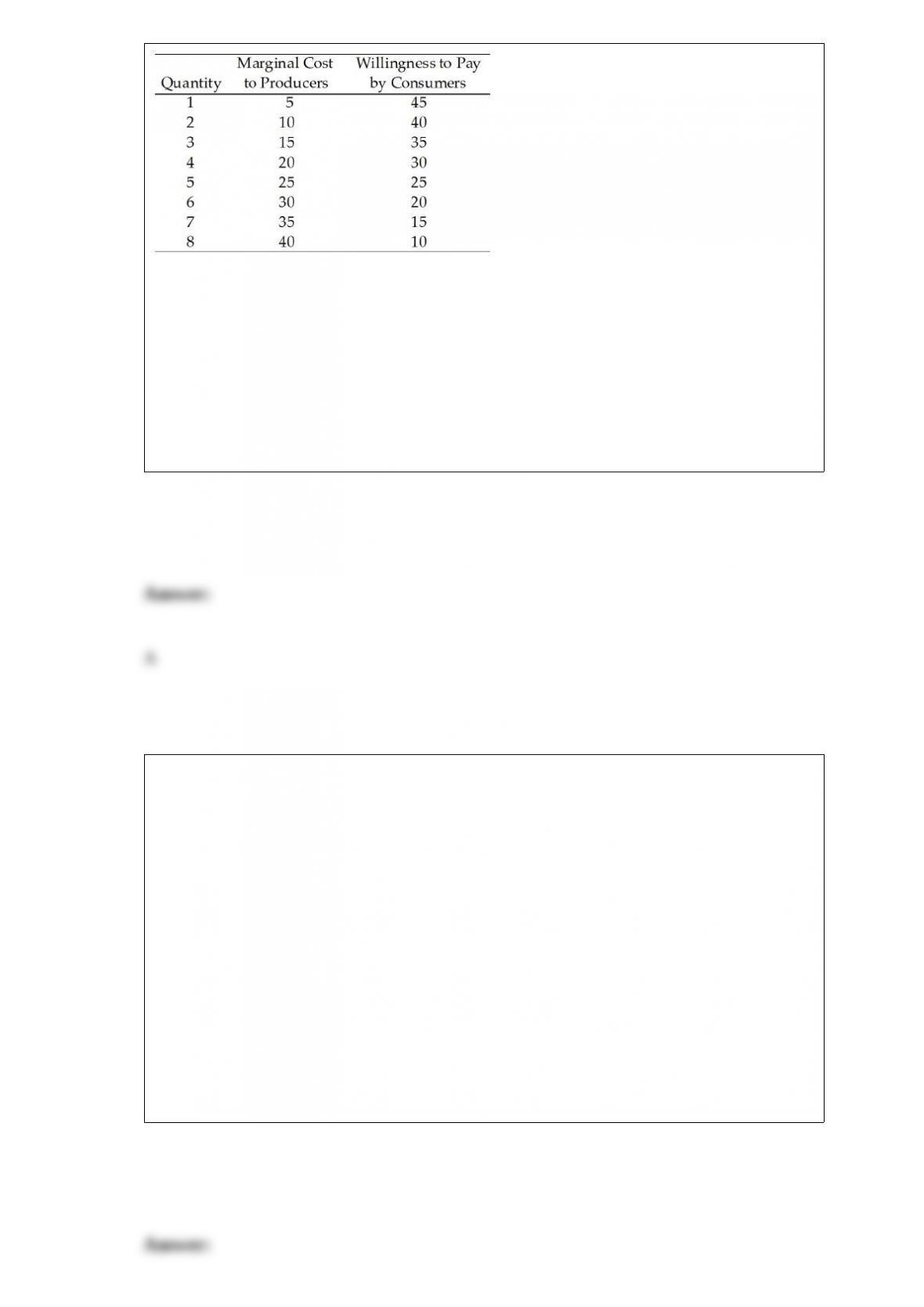
Table 6.1
A) inefficient; willingness to pay > marginal cost
B) inefficient; willingness to pay < marginal cost
C) efficient; willingness to pay = marginal cost
D) producing too much consumer surplus; willingness to pay > marginal cost
During a volunteer program to rebuild a local play ground, a group of volunteers from a
top corporation participate in the program. Among the 20 people that show up to help
rebuild the play ground, there are two individuals that just talk to each other and do not
do any work as the rest of the people. At the end of the day, the entire group takes credit
for the renovated project. How do you best describe this situation with the volunteer
program to rebuild a local play ground?
A) The incentive to help others is high.
B) The free-ride of the two workers on the hard work of the others in the group who did
work.
C) The two individuals impose an external cost on other members of the group.
D) none of the above
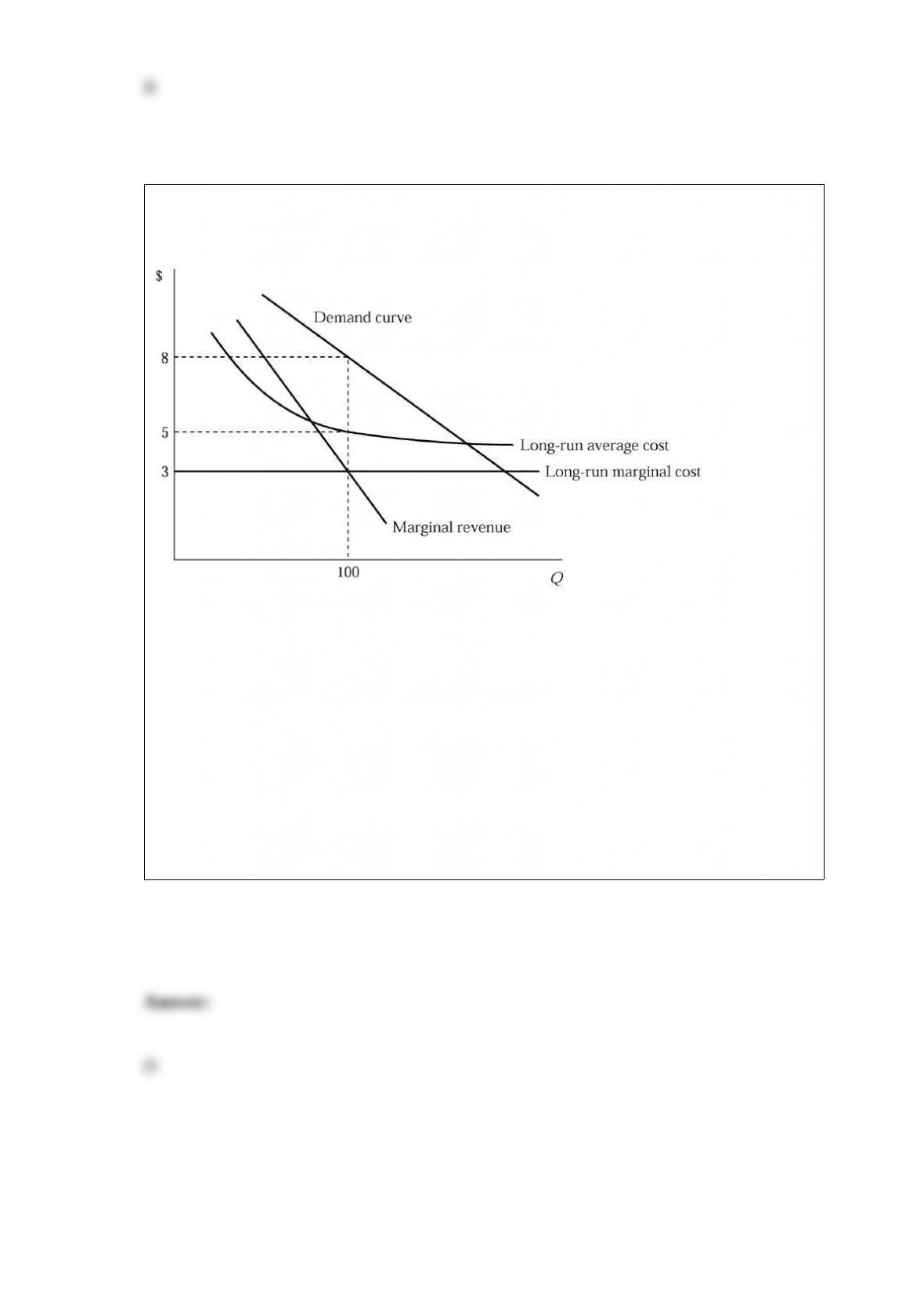
Figure 11.4 depicts demand and costs for a monopolistically competitive firm. If the
firm’s demand curve shifts to the left as more firms enter the market:
Figure 11.4
A) the firm’s average cost will be lower at the new profit maximizing output level.
B) the firm’s marginal cost will be higher at the new profit maximizing output level.
C) the firm’s marginal revenue will remain the same at the mew profit maximizing
output level.
D) the firm’s marginal cost will remain the same at the new profit maximizing output
level.