
A product produced in the home country and sold in another country is an export.
As an individual consumes more of a good, total utility increases and marginal utility
decreases.
The house slipper industry is an example of an oligopolistic industry.
The automobile is the biggest source of smog-causing pollutants.

The cigarette industry is not an example of an oligopolistic industry.
When demand changes and the demand curve shifts, equilibrium price and equilibrium
quantity change in the same direction.
Special interest groups never use propaganda to express their views to government
officials.
If the long-run average total cost curve is rising as output increases, then the firm faces
diseconomies of scale.

Demand is elastic along the upper half of a linear demand curve, which means that a
decrease in price will increase the quantity sold by a larger percentage amount.
The increase in total cost resulting from producing one more unit of output is the
marginal cost.
Perfect competition is characterized by many firms and no barriers to entry.

If an increase in the price of accordions does not change total revenue from accordion
sales, we can infer that demand for accordions is inelastic.
A quantity restriction greater than the equilibrium quantity has no effect on a market.
If a person has an absolute advantage in some activity, she must have a comparative
advantage in that activity as well.
If Eddie can produce 40 milk shakes or 20 banana splits in an hour, and Tina can
produce 30 milk shakes or 16 banana splits in an hour, then Tina has a comparative
advantage in producing banana splits.

If the price elasticity of demand is less than 1, then a 6% increase in the price will result
in an increase in total revenue.
The output effect is the change in labor supply due to a change in the quantity of output
produced.
Under the command-and-control regulation the supply curve for the polluting good will
shift downward by a larger amount than with a tax regulation.

From 1979-2007, labor income for U.S. households became more evenly distributed.
The government can offer a subsidy that encourages people to seek more education.
The opportunity cost of 1 wristwatch is 4 wall clocks in Japan and 2 wall clocks in
Germany. If the nations split the difference between the willingness to pay and the
willingness to accept, the terms of trade are 3 wristwatches per wall clock.
Under an average-cost pricing policy, the government picks the price at which the
market demand curve intersects the monopolist’s long-run average-cost curve.

When a celebrity is endorsing a product, it is usually because the celebrity is
enthusiastic about the product.
In an oligopoly, the behavior of any one firm depends on the reaction it expects of all
the others in the industry.
Because the monopolist is the sole producer of a good, it can never incur a loss.

The reservation price is the price at which a consumer is indifferent about additional
search for a lower price.
There are only winners from the minimum wage.
If a market switches from being a perfectly competitive market to being a monopoly
market, the decrease in consumer surplus is more than offset by an increase in producer
profits.
National policy always overrides free trade in matters of environmental concern.

There are no fixed costs in the long run.
If the supply curve is a vertical line, then supply is perfectly inelastic.
The demand for a product tends to be less elastic as the product accounts for a larger
fraction of a consumer’s budget.

As new firms enter an industry the price charged will increase.
Government intervention can be justified on efficiency grounds when at least one of the
efficiency conditions are not being met.
When product prices increase slower than nominal wages increase, the real value of
wages decreases.
Low-price guarantees mean lower prices for consumers.
After Fred discovered he was seriously ill, he went and purchased health insurance
without telling the insurance company about his illness. This is an example of moral
hazard.
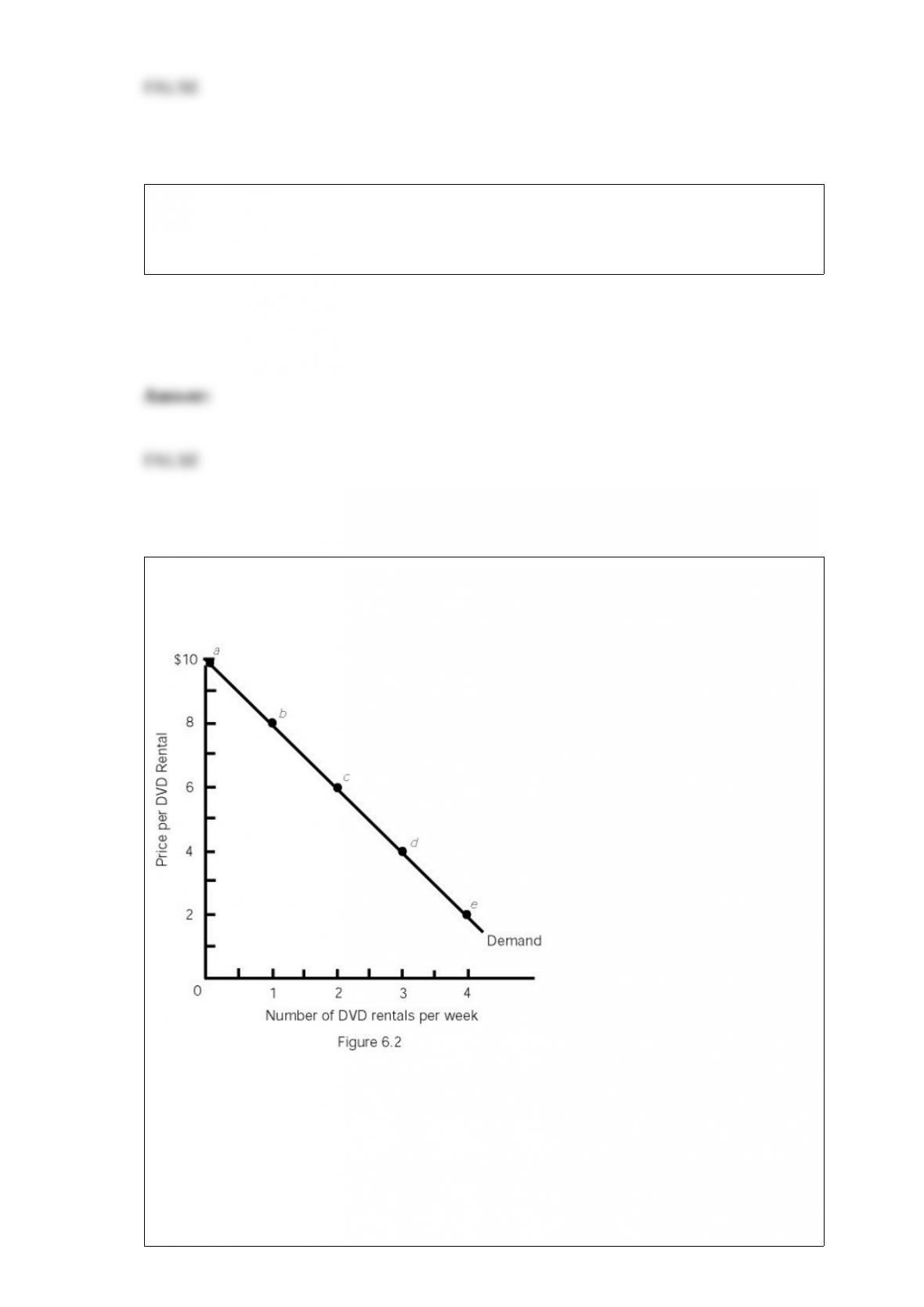
Refer to Figure 6.2. If the price of a DVD rental is $2.00, consumer surplus will be $
________ each week.
A) 6.00
B) 4.00
C) 2.00
D) 12.00
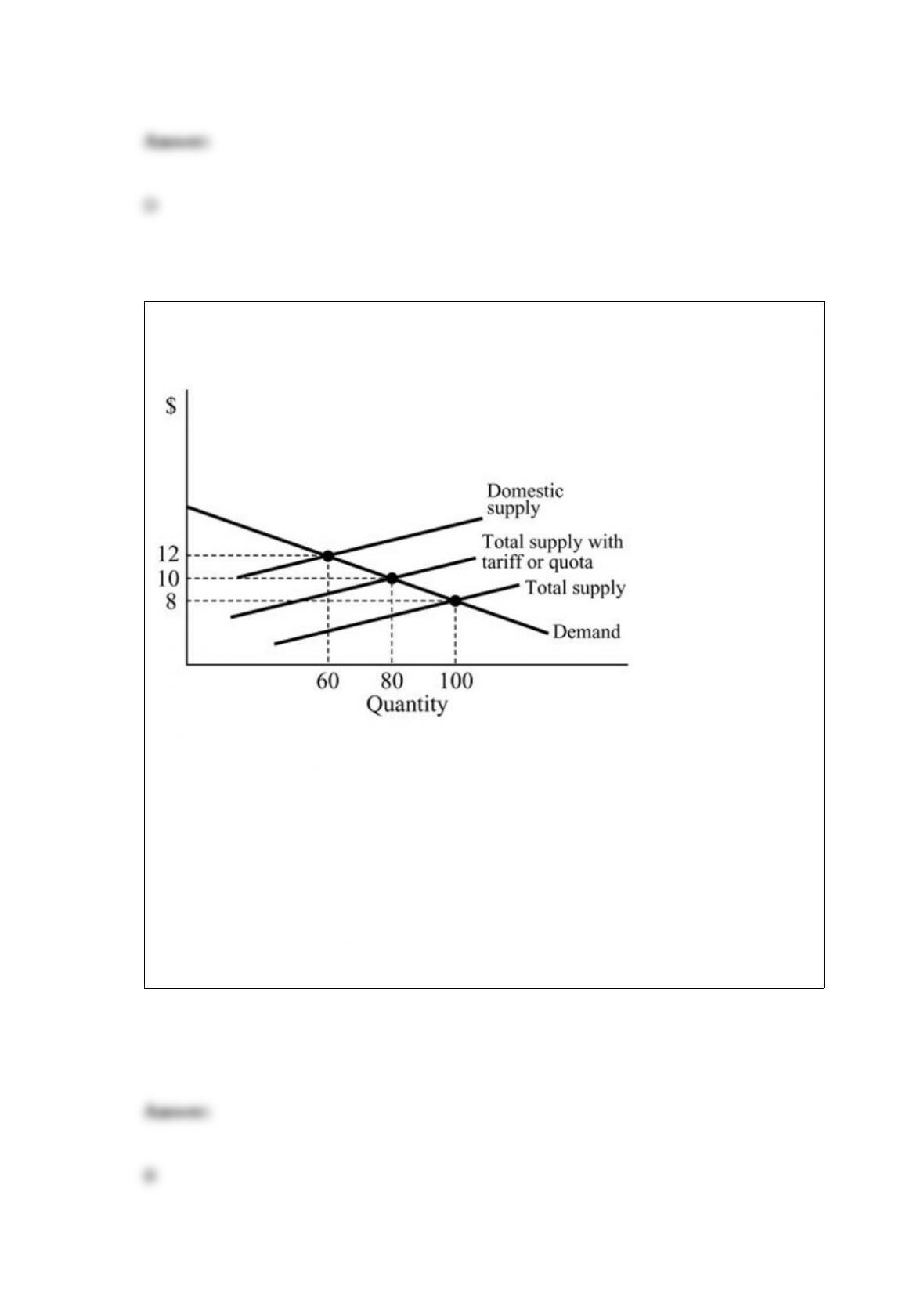
Figure 18.3
Refer to Figure 18.3. With free trade, the equilibrium quantity is:
A) 80.
B) 100.
C) 60.
D) 40.

The difference between the price a producer receives for a product and the minimum
amount a producer is willing to accept for that product is:
A) the market demand for a product.
B) consumer surplus.
C) perfect competition surplus.
D) producer surplus.
Suppose that a price discriminating monopolist is able to divide its market into two
groups. If the firm sells its product for $50 to the group whose customers have the most
elastic demand, what price are they likely to charge to the group whose customers have
the least elastic demand?
A) $50
B) more than $50
C) less than $50
D) The answer depends on the marginal revenue for that group.
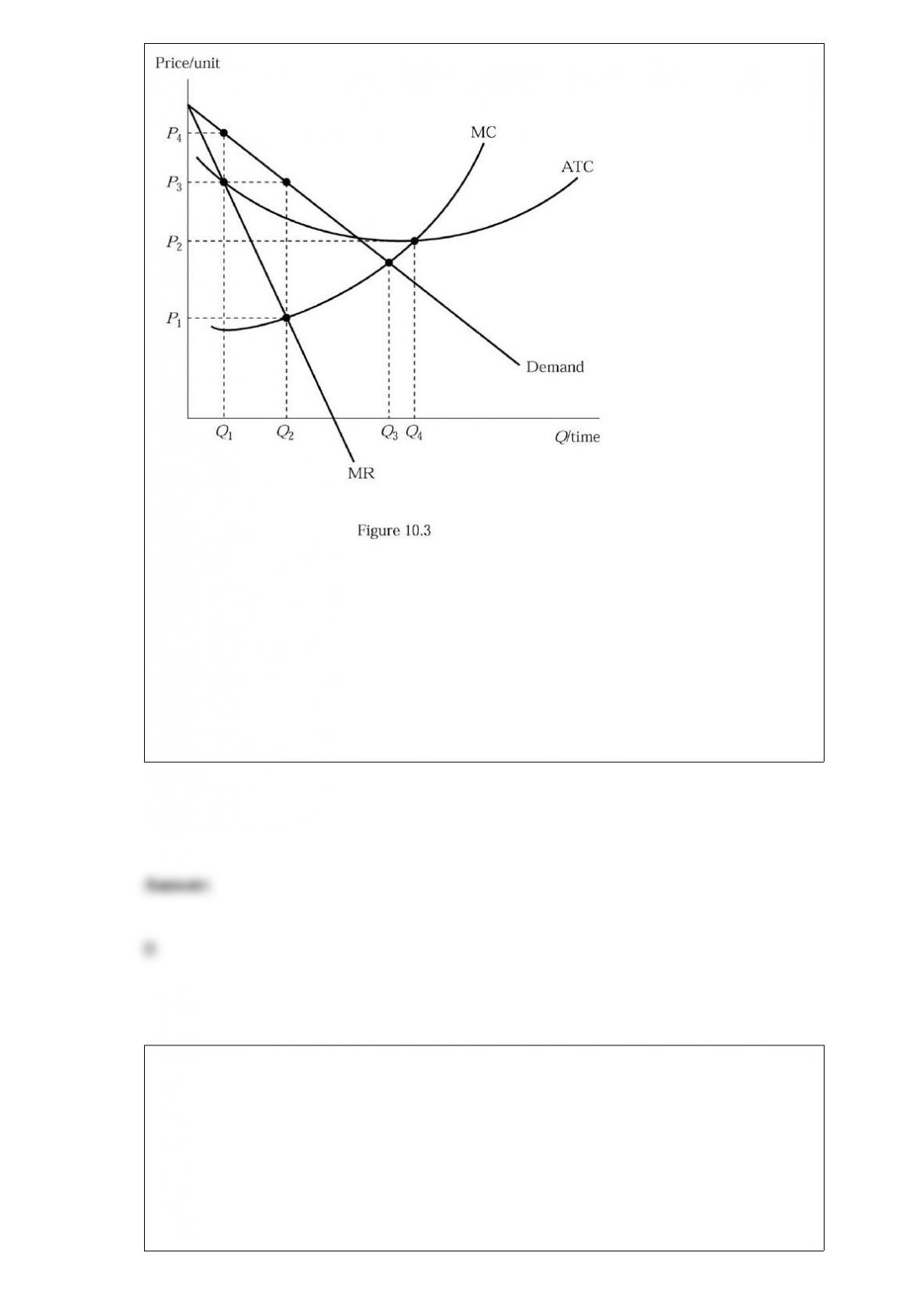
The firm in Figure 10.3 will produce:
A) Q1.
B) Q2.
C) Q3.
D) Q4.
Recall the Application about how physical attractiveness affects wages to answer
the following question(s).
Recall the Application. Relative to people of average appearance workers receive
________ wages if they are ________.
A) higher; unattractive
B) the same; either attractive or unattractive
C) lower; more attractive than average
D) higher; more attractive than average
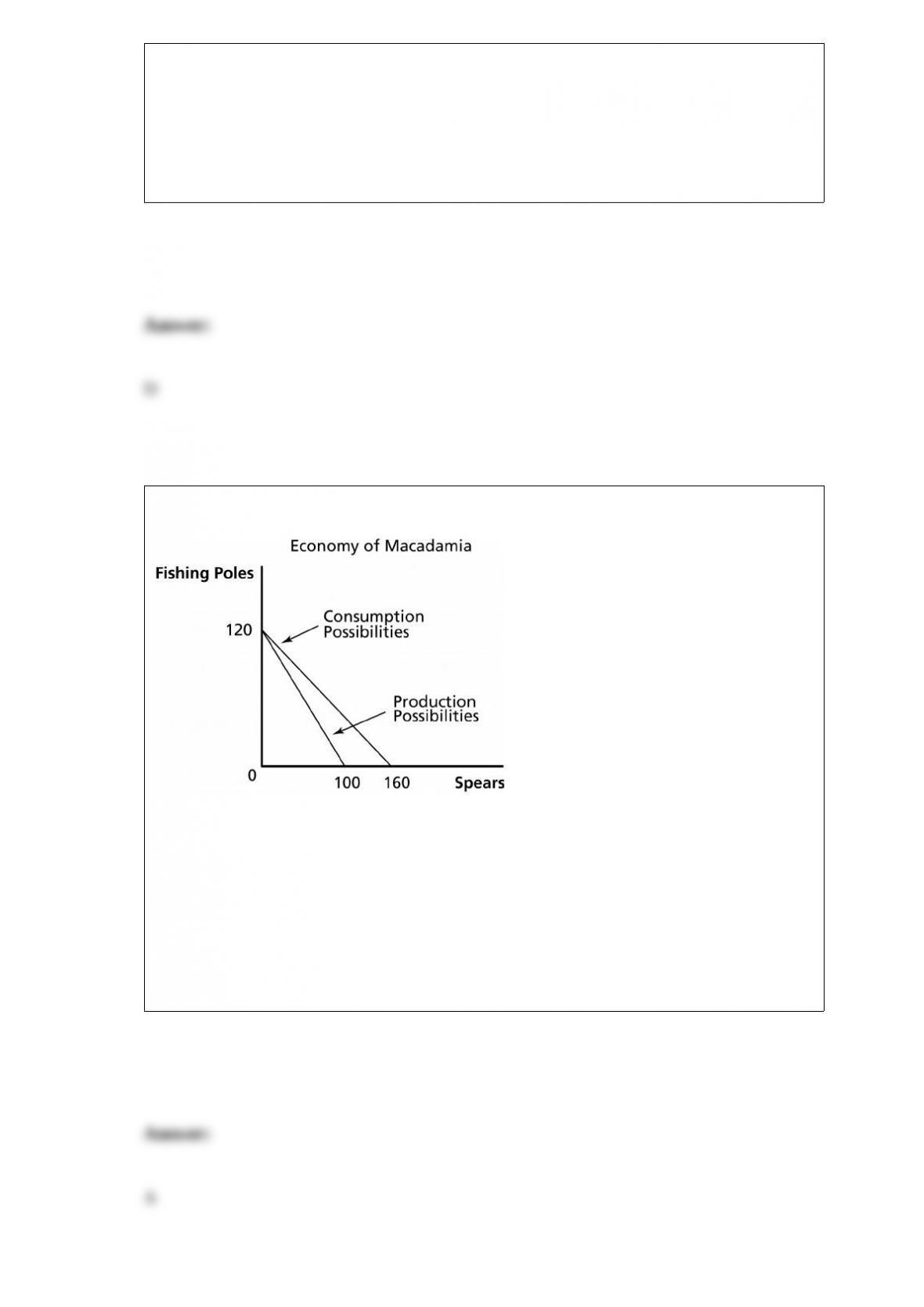
Refer to Figure 18.2. Macadamia has a comparative advantage in the production of:
Figure 18.2
A) fishing poles.
B) spears.
C) both spears and fishing poles.
D) neither spears nor fishing poles.

What is one way that firms can overcome the duopolists’ dilemma and promote cartel
pricing?
A) One firm can guarantee it will match a lower price of a competitor.
B) Firms can come to an agreement to be at Nash equilibrium.
C) Firms create a cartel to control prices.
D) none of the above
Recall the application regarding the vanity plates in Virginia. Why would an increase in
price for vanity plates raise the total revenue that the state of Virginia will receive from
vanity plates?
A) The demand for vanity plates in Virginia is inelastic.
B) The demand for vanity plates in Virginia is elastic.
C) The demand for vanity plates in Virginia is equal to 1.
D) There is insufficient information to draw a conclusion.
If a competitive market operates perfectly, it relies on:
A) the number of people buying goods.
B) the laws of supply and demand.
C) how many products can be produced for sale.
D) how much people are willing to pay for the products.
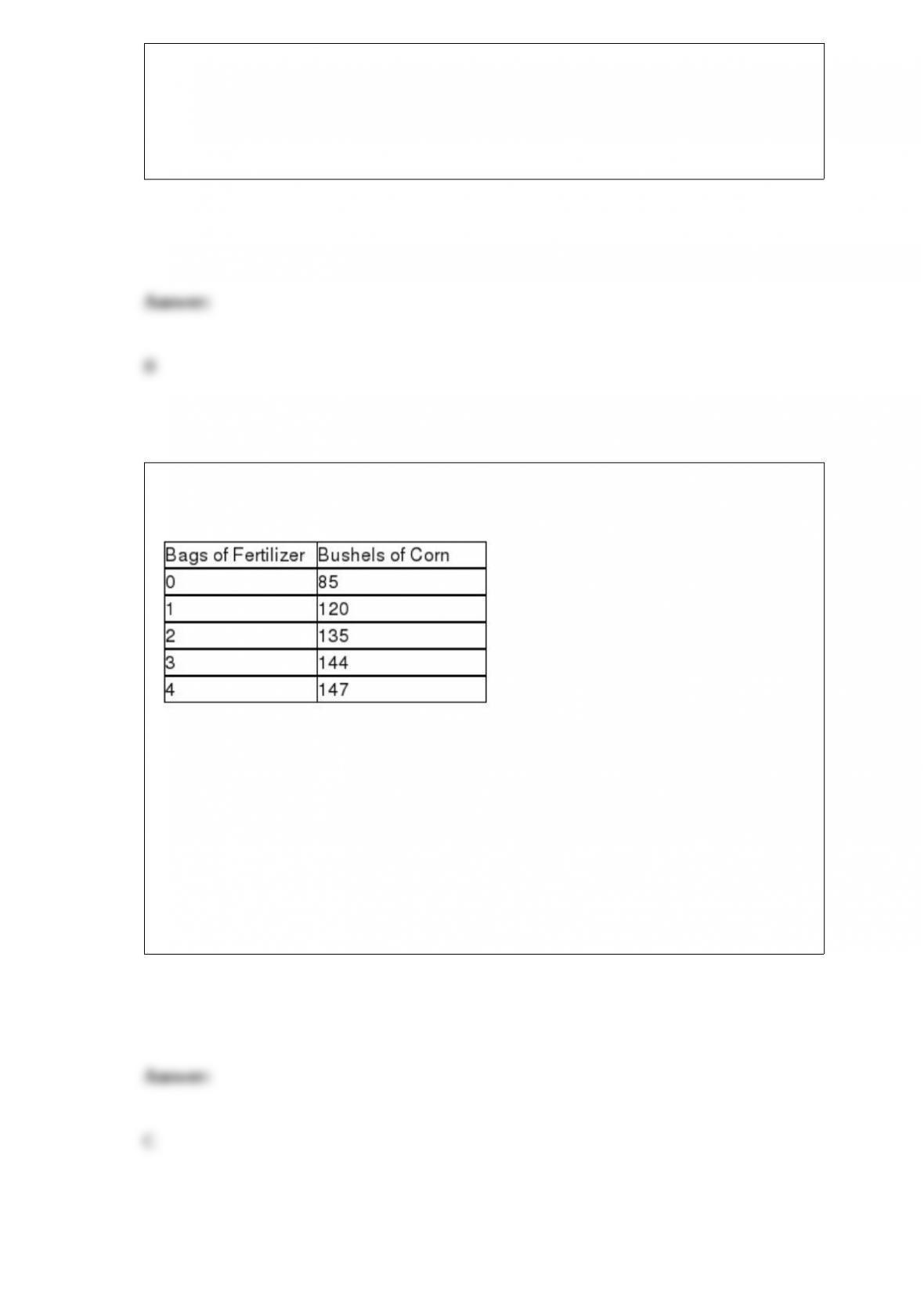
Fertilizer and Corn Yield
The farmer increased his total production of corn by 9 bushels per acre after applying:
A) the first bag of fertilizer.
B) the second bag of fertilizer.
C) the third bag of fertilizer.
D) the fourth bag of fertilizer.
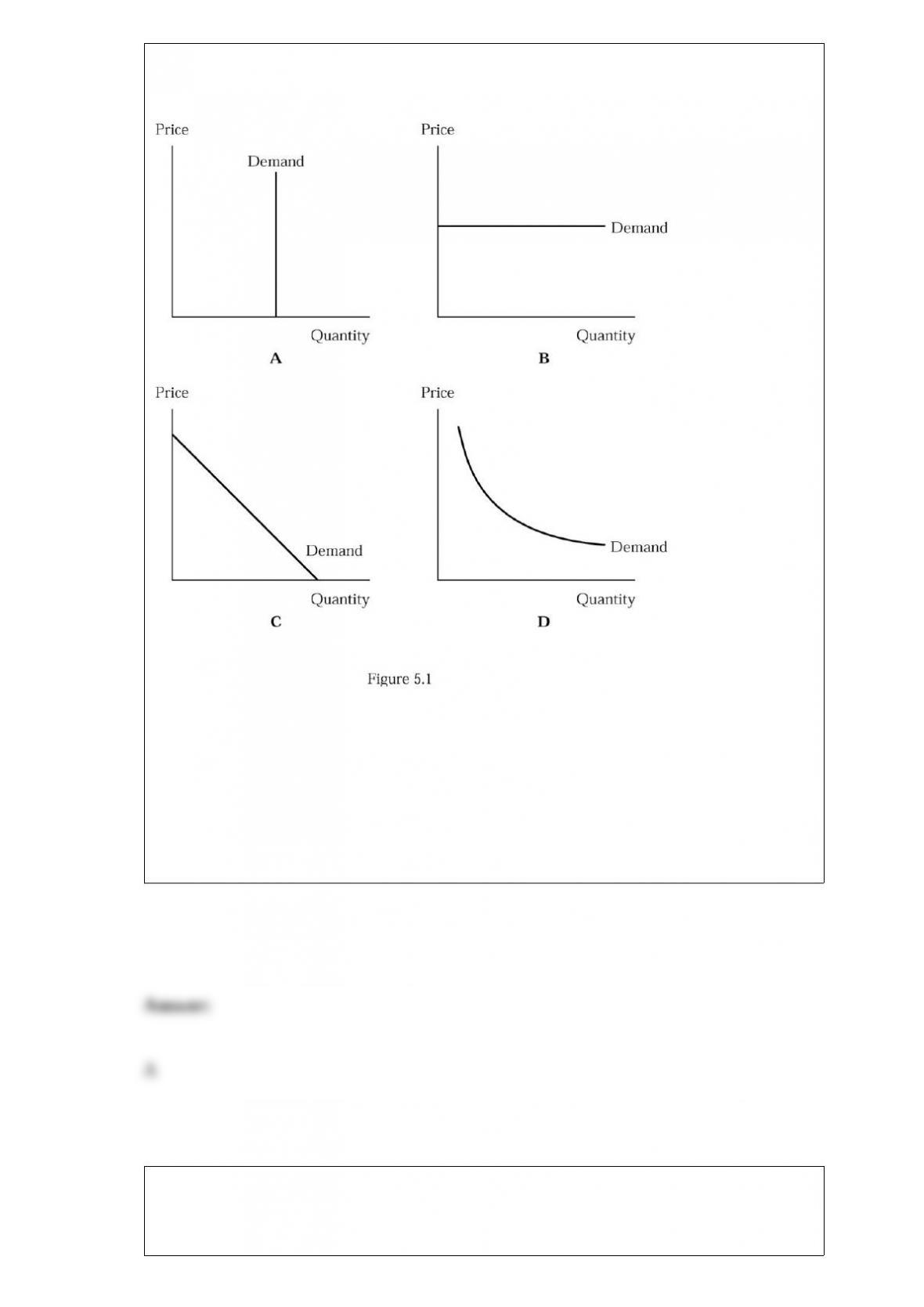
In figure 5.1 the demand curve that is perfectly inelastic is on graph:
A) A.
B) B.
C) C.
D) D.
Adverse selection in employment is more likely when:
A) jobs require specific training.
B) everyone is equally qualified for the job.
C) people’s abilities are easy to measure.
D) people’s abilities are difficult for potential employers to observe.
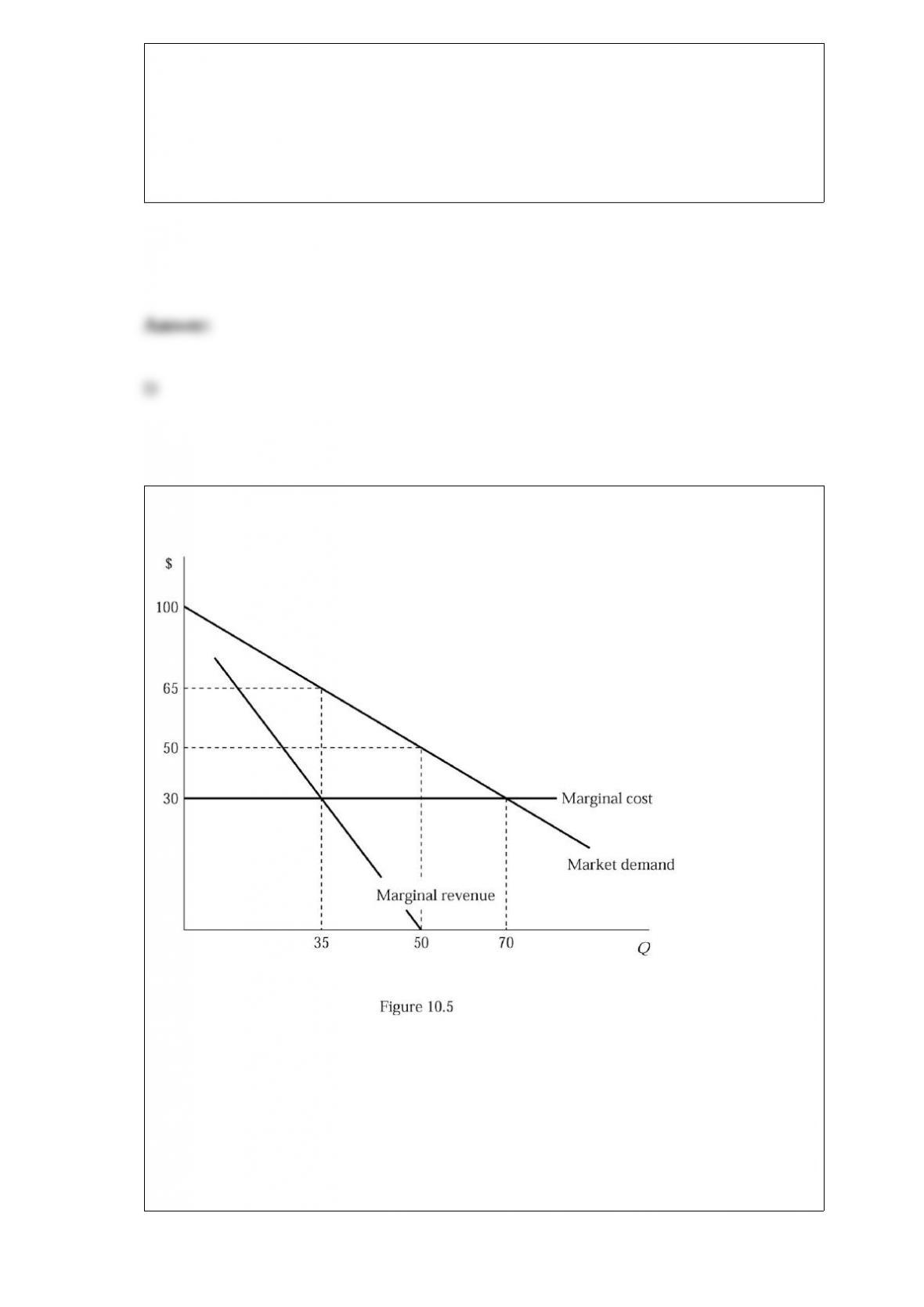
Refer to Figure 10.5. The deadweight loss associated with the monopoly would be:
A) $787.5.
B) $612.5.
C) $262.5.
D) There is not sufficient information.
Marginal revenue is equal to:
A) the change in total revenue from selling one more unit of a good.
B) the number of units sold times the price of the good.
C) the change in average revenue from selling one more unit of a good.
D) all of the above.
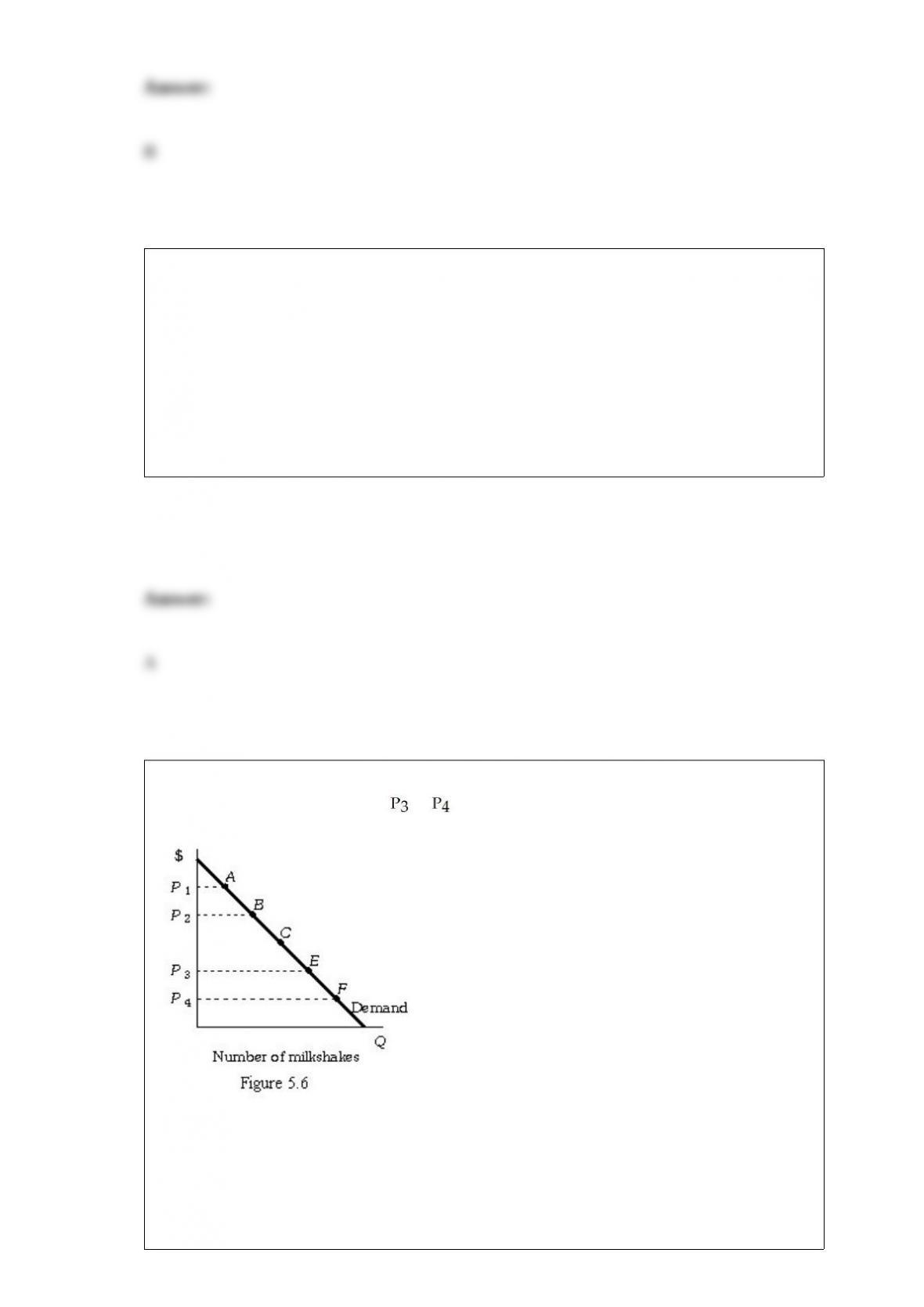
Refer to Figure 5.6. The demand for milkshakes is unitary elastic at point C. If the price
of a milkshake is reduced from to total revenue:
A) will increase.
B) will decrease.
C) will remain constant.

D) could either increase or decrease.
Suppose that a house painter can earn $200 per day painting houses and painting Jasper
Johns’ house requires 25 days of labor. According to the application, if Jasper Johns
earns $5,000 per day painting art, then he must:
A) paint his house if he can paint it in less than a day.
B) switch occupations and paint houses only.
C) never paint his house.
D) paint his house if he can paint it in less than 25 days.
If the price of an input decreases, each individual firm’s marginal cost curve shifts
________ and the industry supply curve ________.
A) downward; shifts to the left
B) downward; shifts to the right
C) upward; does not change
D) upward; shifts to the left
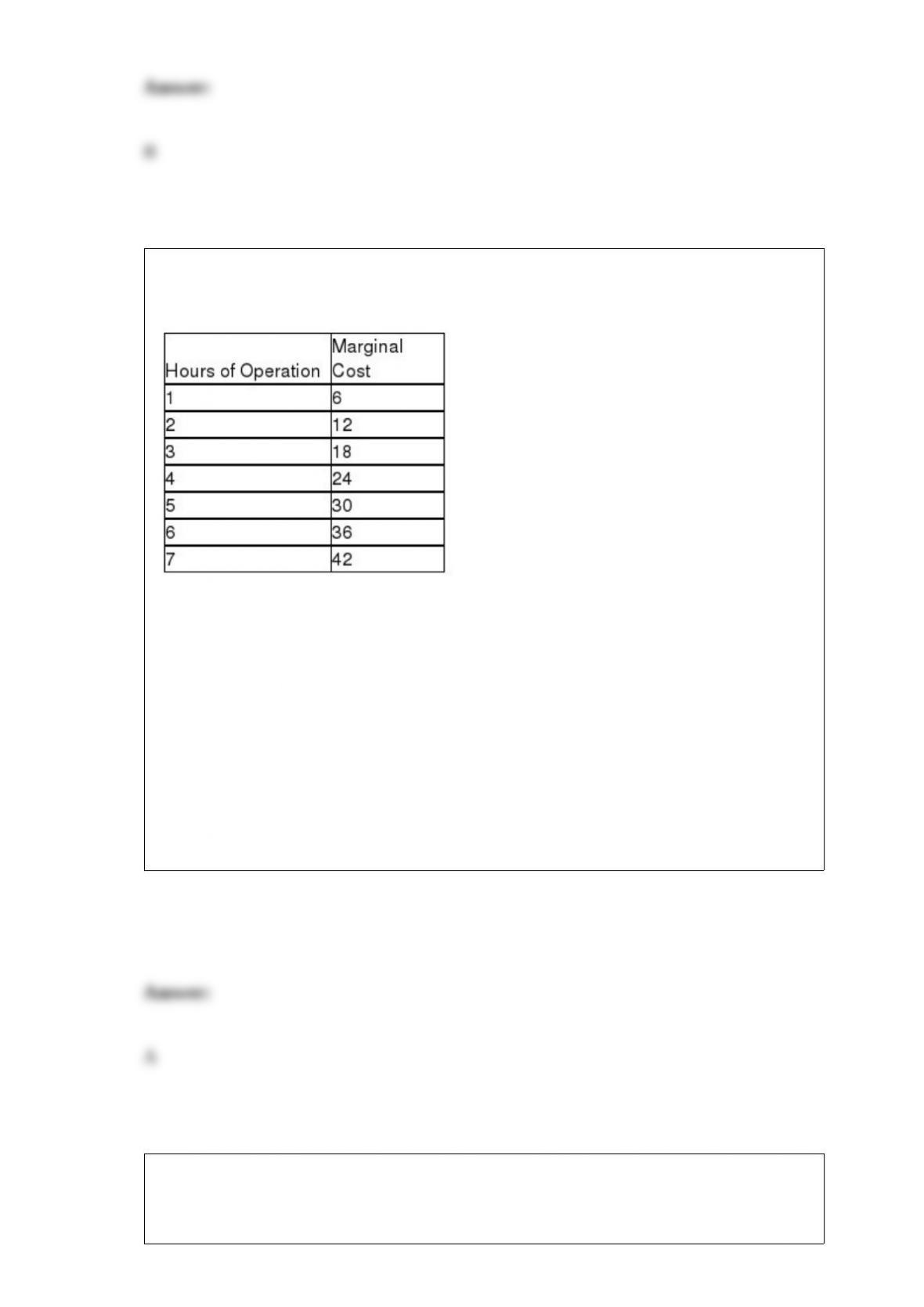
Krystal runs a nail salon and needs to decide how many hours to stay open. Table 2.2
illustrates her marginal costs of staying open for each additional hour.
Table 2.2
Suppose that we observe Krystal staying open 5 hours and her marginal benefit of
staying open per hour is $36. If she is following the marginal principle, Krystal should:
A) stay open 1 more hour.
B) stay open 2 more hours.
C) stay open 1 fewer hour.
D) stay open 2 fewer hours.
The effect of higher wages on the individual supply of labor is ________ and the effect
of higher wages on the market supply of labor is ________.
A) ambiguous; to increase the quantity supplied
B) to increase the quantity supplied; ambiguous
C) ambiguous; to decrease the quantity supplied.
D) to decrease the quantity supplied; ambiguous
Various state governments have passed “lemon laws” to protect buyers of used cars as a
result of the problem of:
A) moral hazard.
B) spillovers.
C) an injunction.
D) asymmetric information.
You currently sell the same product to both professional plumbers and homeowners,
and are able to prevent transfer from one group to the other. Your current prices,
quantities sold, and the absolute values of the slopes of the demand curves are as
follows:
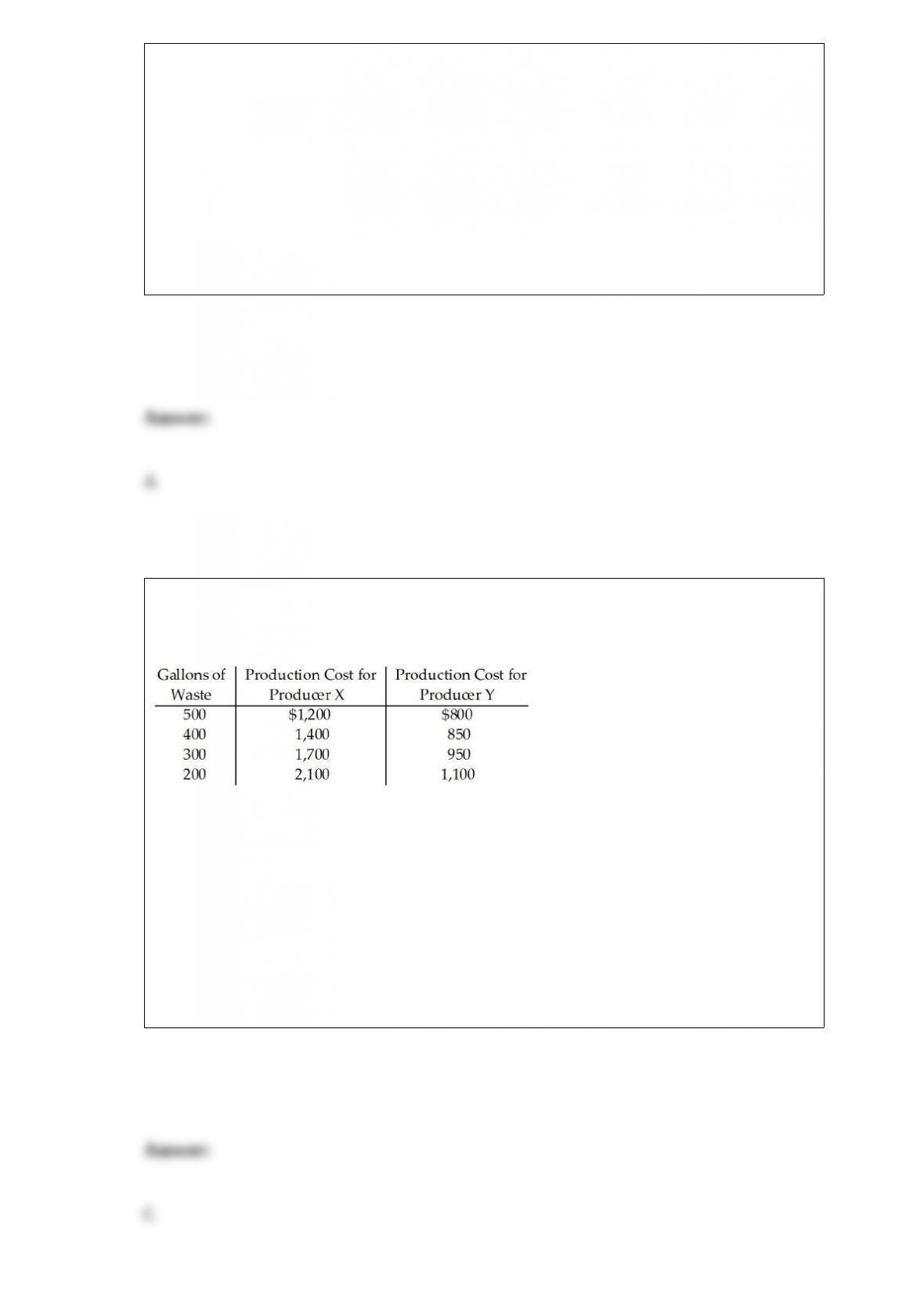
If your marginal cost is $10 and you are interested in maximizing your revenues, how
would you adjust your prices?
A) Increase plumbers’ price and decrease homeowners’ price.
B) Decrease plumbers’ price and increase homeowners’ price.
C) Increase prices for both groups.
D) Decrease prices for both groups.
Producers X and Y dump waste into a local river. Table 16.1 shows the production costs
each firm faces at different levels of waste. For Producer X, the marginal cost of
reducing waste from 500 gallons to 400 gallons is:
Table 16.1
A) $1,400
B) $300
C) $200
D) $240
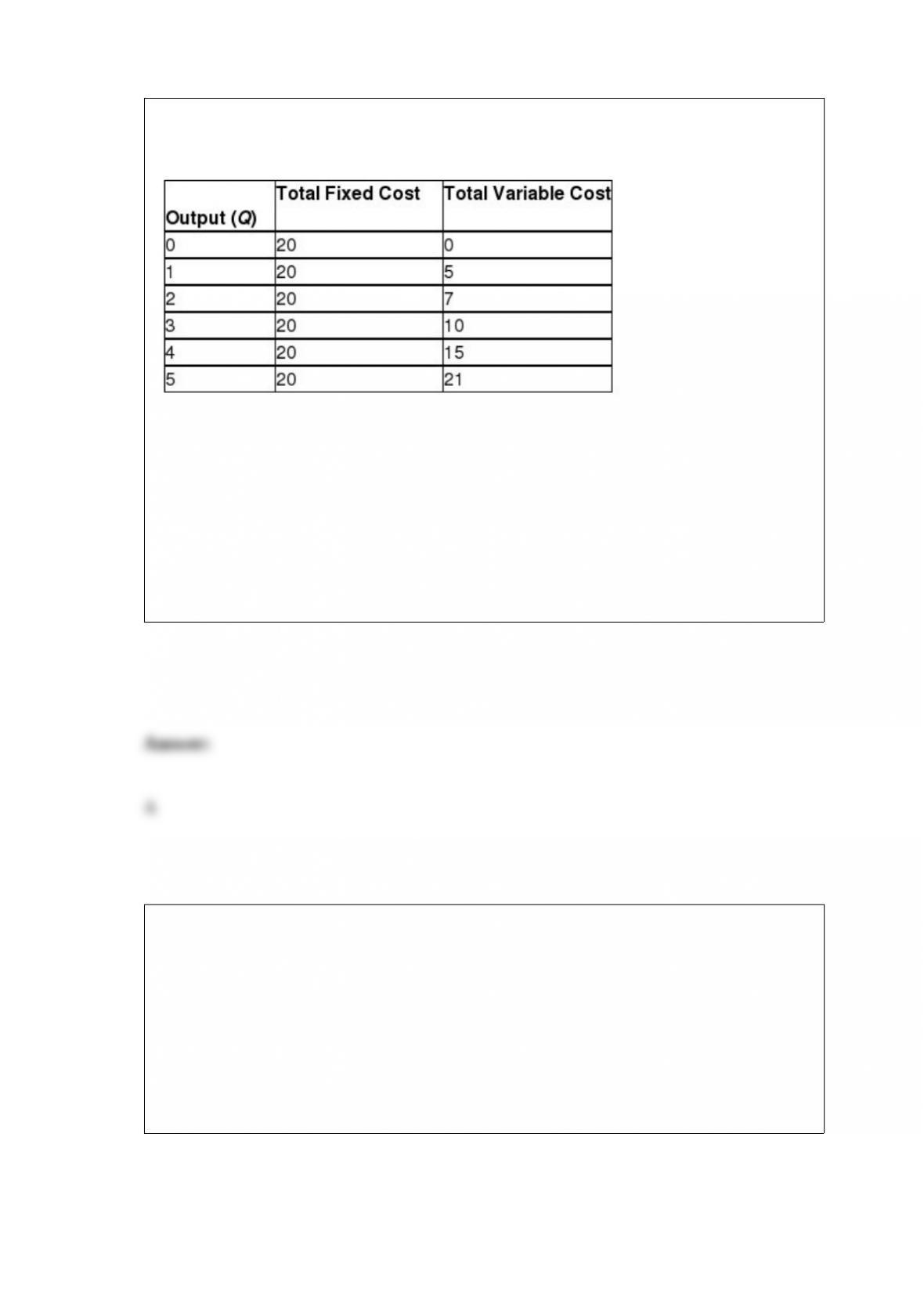
Table 9.1 shows the cost structure of a firm in a perfectly competitive market. If the
market price is $3:
Table 9.1
A) the firm suffers a loss and is better off shutting down.
B) the firm suffers a loss but is better off producing the output level where MR = MC.
C) the market price is greater than the minimum average variable cost.
D) none of the above
The adverse selection problem suggests that:
A) the ratio of lemons (low quality) to plums (high quality) is likely to be high.
B) the ratio of plums (high quality) to lemons (low quality) is likely to be high.
C) the price of lemons (low quality) will be below buyer’s willingness to pay.
D) plums (high quality) will sell for more than most buyers’ willingness to pay.

Recall the Application about the benefits generated when one country gathers
information on global weather to answer the following question(s).
Recall the Application. Weather monitoring is:
A) a public good.
B) a private good.
C) impossible because it requires international cooperation.
D) efficiently provided by private markets because it is profitable.
The dopamine learning system generates gut feelings that are useful in assessing the
benefits and costs of actions. The expression of these gut feelings occur:
A) after marginal thought.
B) instantaneously.
C) after careful thought.
D) after conscious weight is given to the perceived benefit and cost of the product.
If firms in a monopolistically competitive industry are earning economic profits, then in
the long run:
A) these firms can continue earning economic profits because entry into the industry is
blocked.
B) new firms producing close substitutes will continue to enter the market until
economic profit is zero.
C) new firms producing the exact same product will enter the industry and this entry
will continue until economic profit is zero.
D) the government will most likely regulate firms in this industry to reduce the
economic profits.
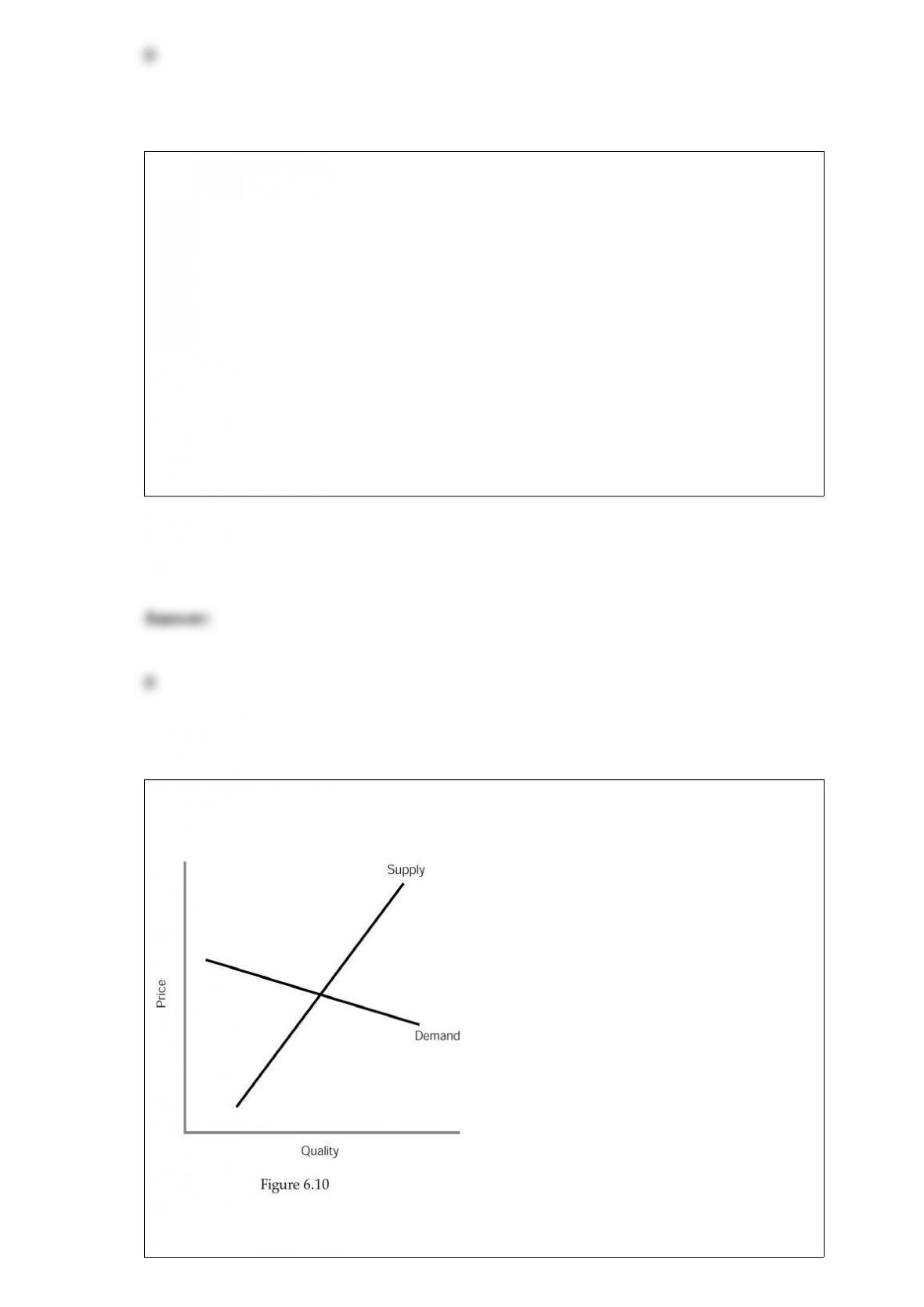
Refer to Figure 6.10. If a tax is imposed on the market in Figure 6.10, ________ will
bear a larger share of the tax.
A) the consumers

B) the producers
C) the government
D) no one
If you see a movie at a theater, the movie is:
A) a private good but nonrival in consumption.
B) a private good and rival in consumption.
C) a public good but nonexcludable.
D) a public good and nonrival.
A consumer should increase her consumption of good Y relative to good X if:
A) the marginal benefit per dollar spent on good X is greater than the marginal benefit
per dollar spent on good Y.
B) the marginal benefit per dollar spent on good X is smaller than the marginal benefit
per dollar spent on good Y.
C) the marginal benefit per dollar spent on good X is the same as the marginal benefit
per dollar spent on good Y.
D) none of the above
In some markets for used goods:
A) the seller has more information than the buyer about the quality of the good.
B) the buyer has more information than the seller about the quality of the good.
C) low-quality used goods will be underpriced.
D) the quality of used goods sold in the market will typically rise over time.
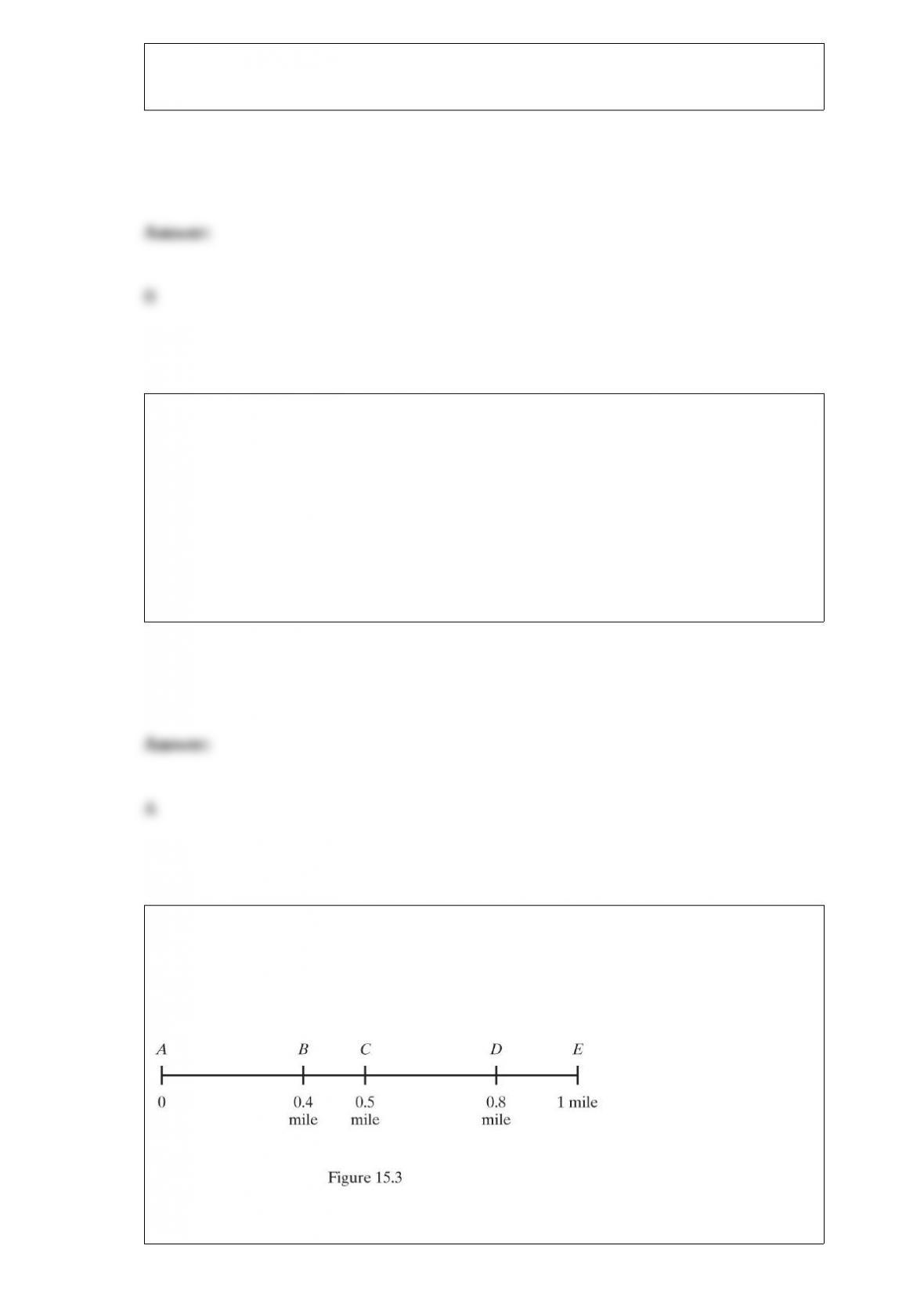
Figure 15.3 depicts a one-mile stretch of beach with 100 swimmers distributed evenly
along the beach. There are two ice cream vendors – 1 and 2 – on the beach selling an
identical product. Assume that each swimmer buys only one ice cream cone and that
they prefer to buy ice cream from the nearer vendor. If vendor 1 is at B while vendor 2
is at D, vendor 1 has an incentive to move:
A) to the left of its current location.

B) toward the median location.
C) to the right of vendor 2’s location.
D) none of the above
Which of the following is NOT a question answered with normative economic
reasoning?
A) If we had more money, should the college offer free parking for students?
B) As a result of the recent recession, should the college offer more financial aid
assistance?
C) If the college increased tuition, what is the estimated decline in enrollments?
D) Given the additional funding that we received, should the college cut tuition to
stimulate enrollments?
The market supply of labor curve is:
A) upward sloping.
B) upward sloping if the income effect dominates and downward sloping if the
substitution effect dominates.

C) downward sloping if the income effect dominates and upward sloping if the
substitution effect dominates.
D) perfectly inelastic.
What do economists mean when they say that there is no such thing as a free lunch?
What is acid rain?

What are the assumptions of perfect competition?
What three conditions must be met in order for a firm to be able to price discriminate?
List two reasons why command-and-control policies may be inefficient.

List four reasons why the supply of labor in a particular occupation may be small.
How does the Internet auction site, eBay, address the asymmetric information problem?
Would a firm whose health insurance premiums are based on an experience rating be
more likely to develop health and safety educational programs for its employees?

Explain why or why not.
Graphically illustrate and explain the effect of an increase in the wage rate on the
demand curve for labor.
What role can the government play in correcting for external costs?
Using a graph, illustrate what the market effects of a quota, a tariff, or a complete ban
on imports would be.

Martha is trying to sell a high-quality television. All of the potential buyers are not
willing to pay the price that Martha deserves. Explain to Martha how the problem of
asymmetric information has led to this situation.
One of the business revolutions of the 1980s is “just in time” inventory, a system where
businesses estimate their requirements for raw materials and keep no more on hand than
is necessary to complete that period’s production. What affect did the change to “just in
time” inventory have on short-term supply elasticities?
Figure 10.7 shows the demand and cost conditions for a monopolist. What is the firm’s
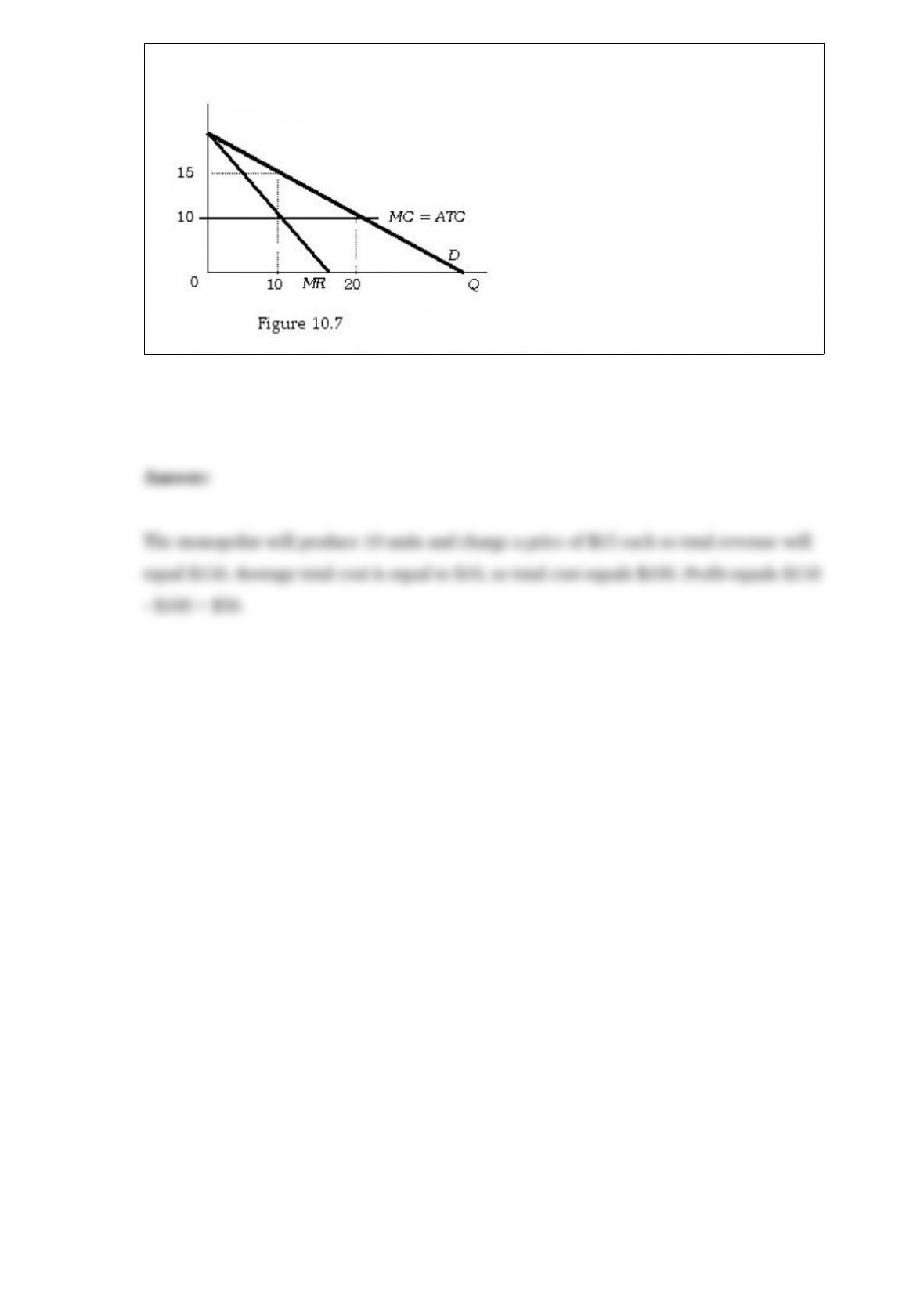
maximum profit?