Suppose that the price of a donut is $1 each. Lorena is willing to pay $2 for the first
donut, Ricky is willing to pay $1.80 for the second donut, Jennifer is willing to pay
$1.50 for the third donut, and Betty is willing to pay $1.20 for the fourth donut. In
equilibrium, what is the total consumer surplus from the consumption of donuts?
A) $2.40
B) $2.50
C) $3.50
D) $3.60
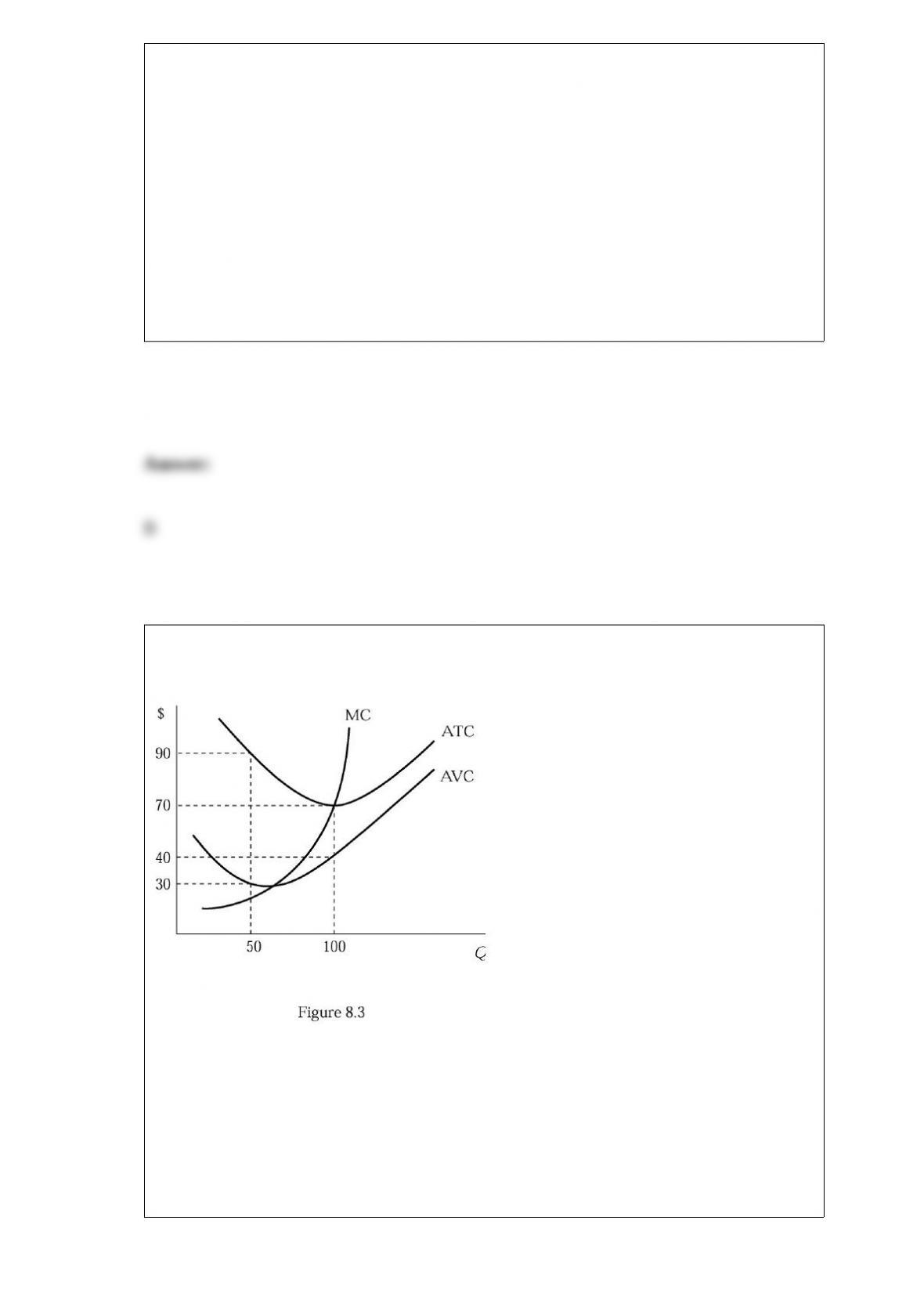
Figure 8.3 shows a firm’s marginal cost, average total cost, and average variable cost
curves. At Q=50, the total cost is:
A) $2,100.
B) $2,800.
C) $4,500.
D) $6,300.

Consumer surplus can be defined as the:
A) value a consumer receives from a good minus the price paid for that good.
B) maximum amount the consumer would pay for a good.
C) actual amount paid for a good minus the benefit of using that good.
D) marginal utility of a good divided by its price.
If the government did not provide and subsidize education:
A) parents would acquire less education for their children than is efficient because some
of the benefits of education are private and some are social.
B) parents would acquire the efficient quantity of education for their children, because
all of the benefits of education are private.
C) no children would receive an education because the benefits of education are public
goods.
D) the education market would reach efficiency.

If the elasticity of demand for cigarettes by teenagers is 1.5, then to reduce teen
smoking by 60 percent, tobacco companies would need to raise their prices by:
A) 15%.
B) 40%.
C) 60%.
D) 90%.
Producer A has a comparative advantage over Producer B if, in producing a good:
A) A can produce more of the good than B can in a given time period.
B) A has a lower opportunity cost of producing the good than does B.
C) A has to trade off more than B does to produce the good.
D) A has a higher opportunity cost of producing the good than does B.

Suppose Canada produces only two goods, corn and automobiles. If Canada has a
comparative advantage in automobiles, a move toward free trade will:
A) harm automobile workers, benefit corn workers, but benefit the nation as a whole.
B) harm automobile workers, harm corn workers, but benefit the nation as a whole.
C) benefit automobile workers, harm corn workers, but harm the nation as a whole.
D) benefit automobile workers, harm corn workers, but benefit the nation as a whole.
Microeconomics is best described as the study of:
A) the choices made by individual households, firms, and governments.
B) inflation, unemployment, gross national product, and the nation’s economy as a
whole.
C) how markets interact in the aggregate economy.
D) marginal changes in the economy.
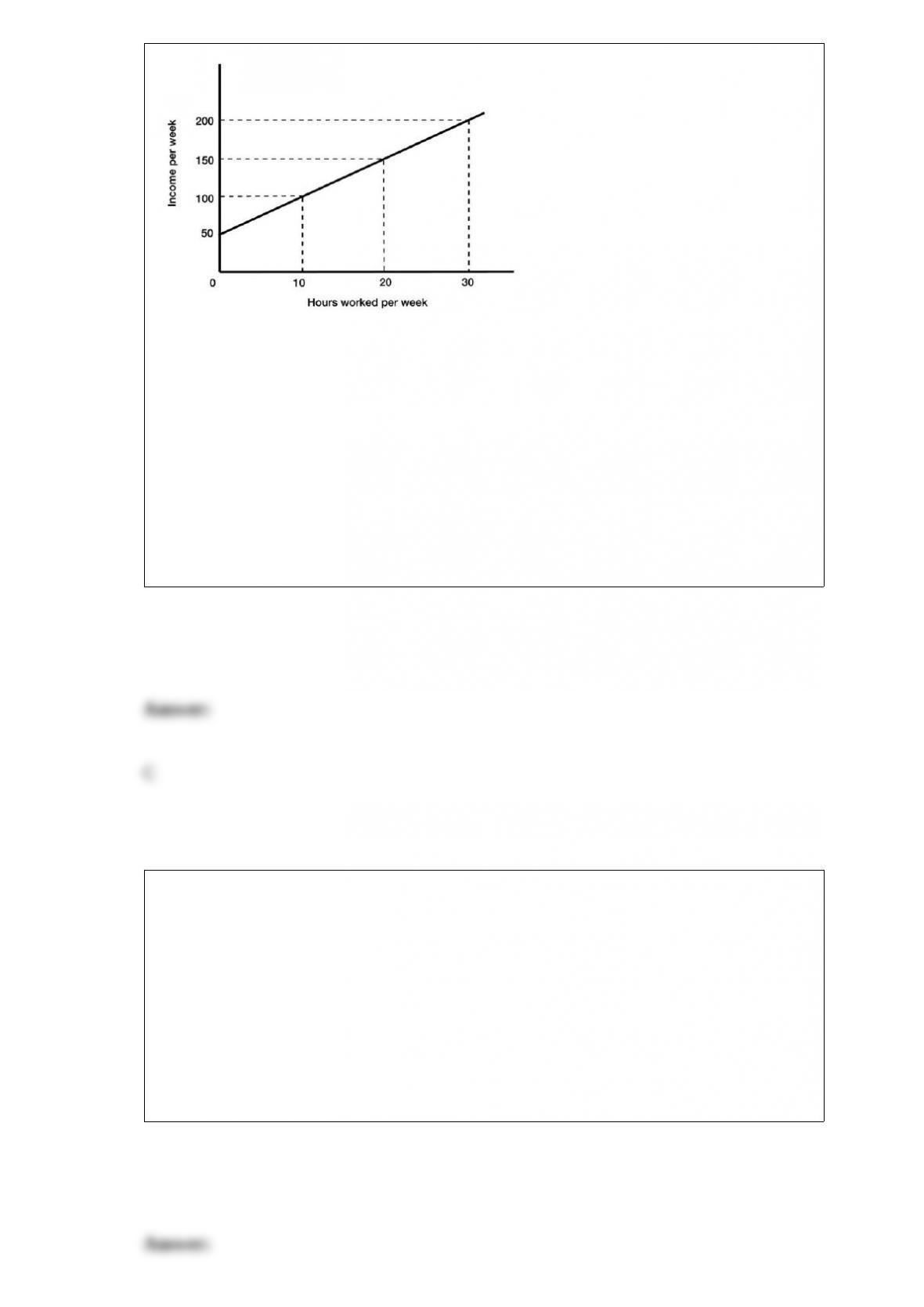
Figure 1A.1
If the hours worked per week is 20, the income per week is:
A) 50.
B) 100.
C) 150.
D) 200.
The Clayton Act of 1914:
A) prohibited selling products at “unreasonably low prices” with the intent of reducing
competition.
B) outlawed tying contracts.
C) outlawed asset-purchase contracts that would substantially reduce competition.
D) made it illegal to monopolize a market.
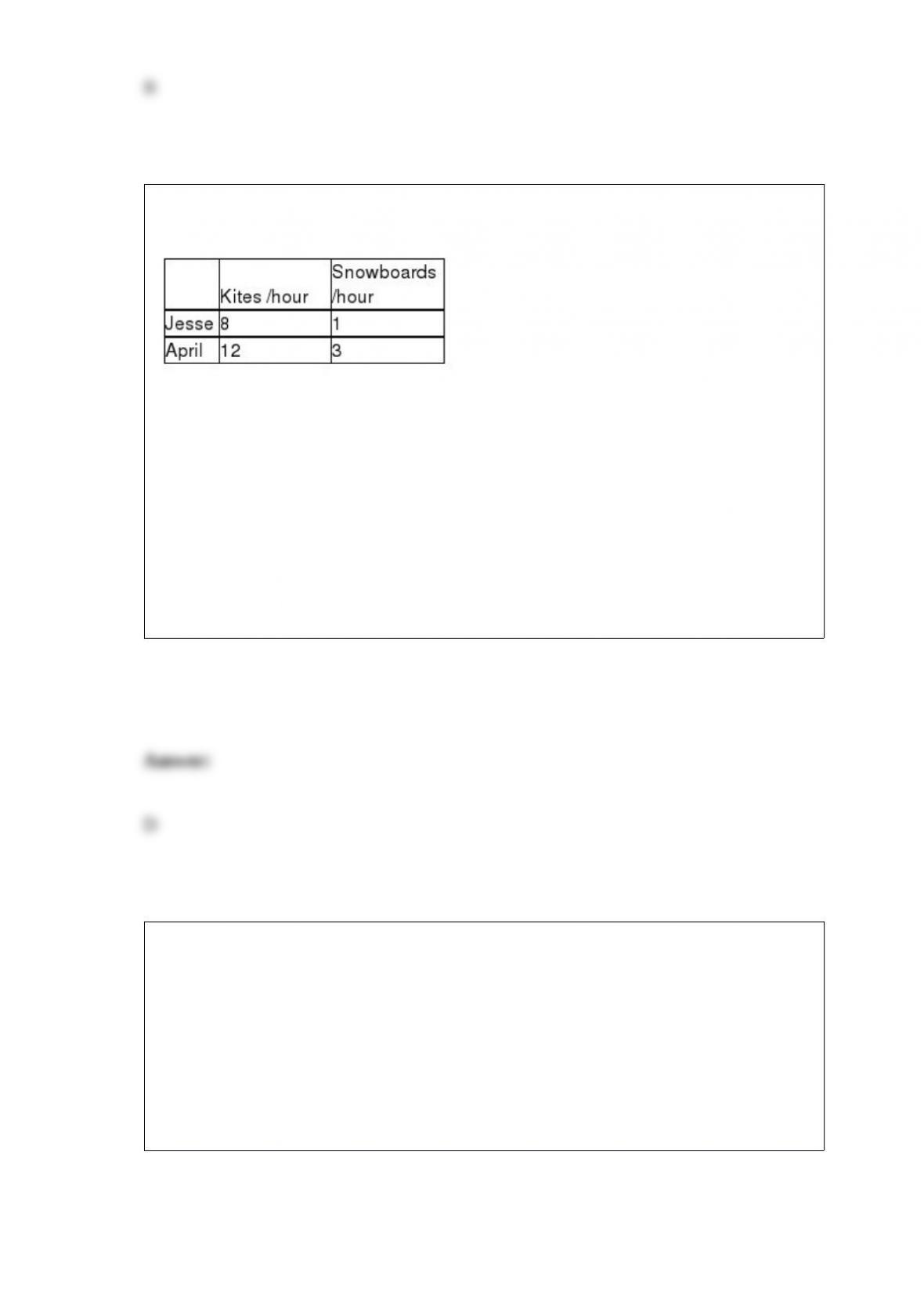
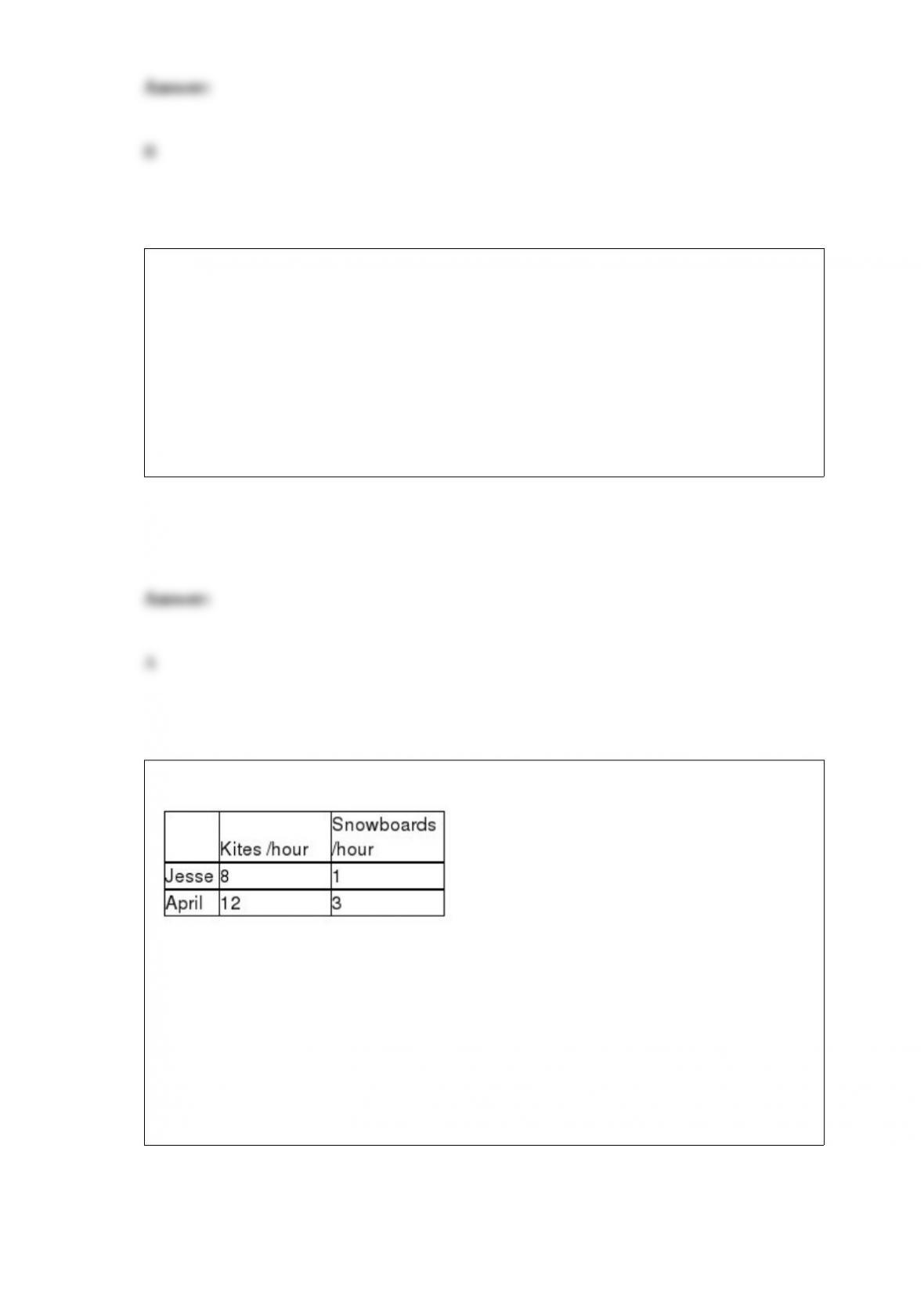
Consider two individuals, Jesse and April, who hand paint kites and snowboards. Table
3.2 shows how much of each good Jesse and April can paint in one hour.
Table 3.2
Which of the following is true?
A) Jesse has an absolute advantage in painting kites but not snowboards.
B) Jesse has an absolute advantage in painting snowboards but not kites.
C) Jesse has an absolute advantage in painting both goods.
D) Jesse has an absolute advantage in painting neither good.
After the U.S. government deregulated the trucking industry:
A) profits rose.
B) freight prices rose.
C) freight prices fell.
D) the number of trucking companies decreased.
Which of the following is true concerning public goods?
A) One person’s enjoyment of a public good reduces another person’s enjoyment from
the same public good.
B) People cannot be prevented from enjoying a public good.
C) Public goods can be produced and patented by individuals.
D) none of the above
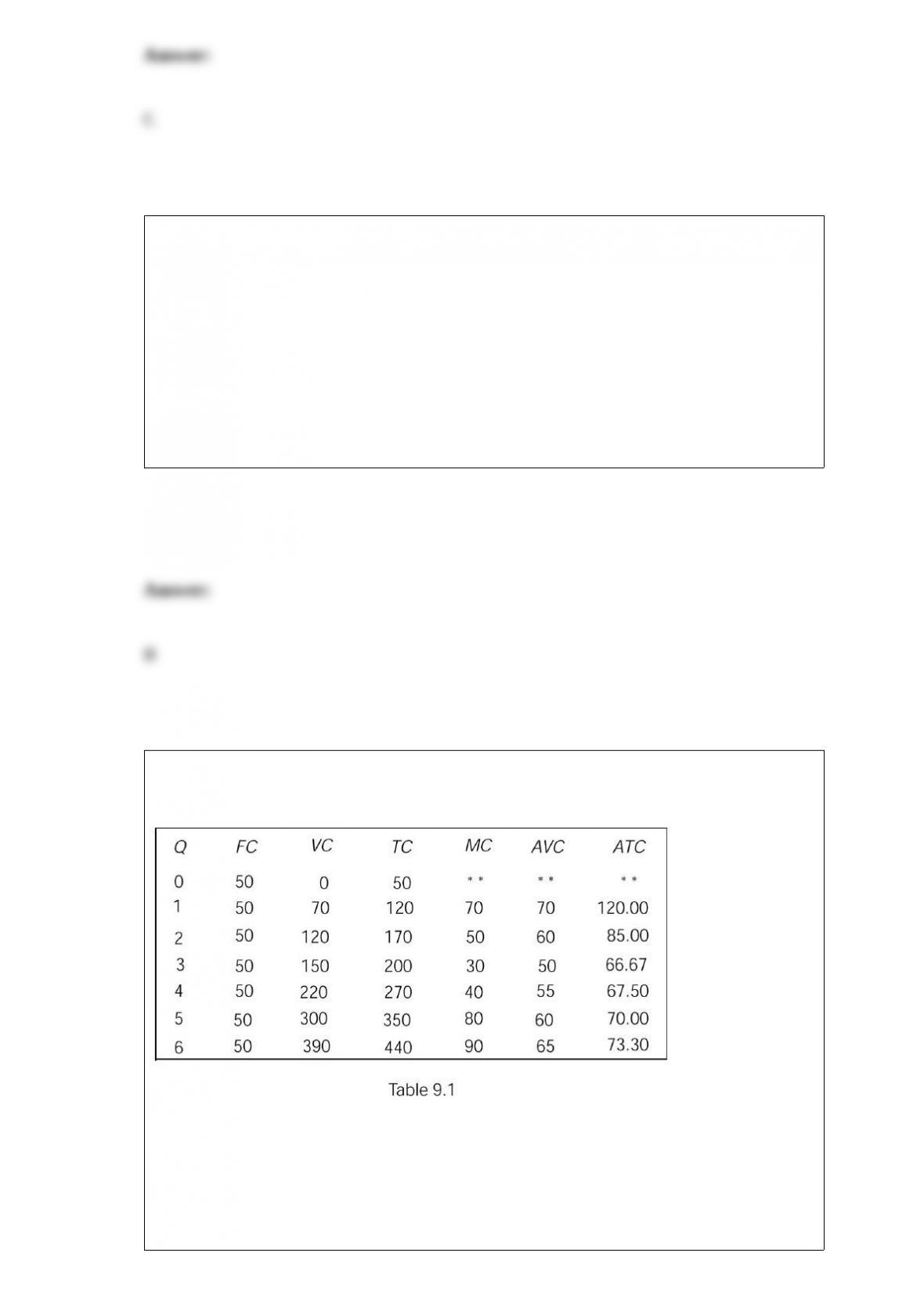
Refer to Table 9.1. If the market price is $40, which of the following would you
recommend to this firm?
A) Continue producing four units of output, because the firm is able to make an
economic profit.
B) Increase output to five units, so that marginal cost equals marginal revenue.
C) Reduce price to $35, so that marginal cost will be less marginal revenue.
D) Shut down production to insure loss minimization.
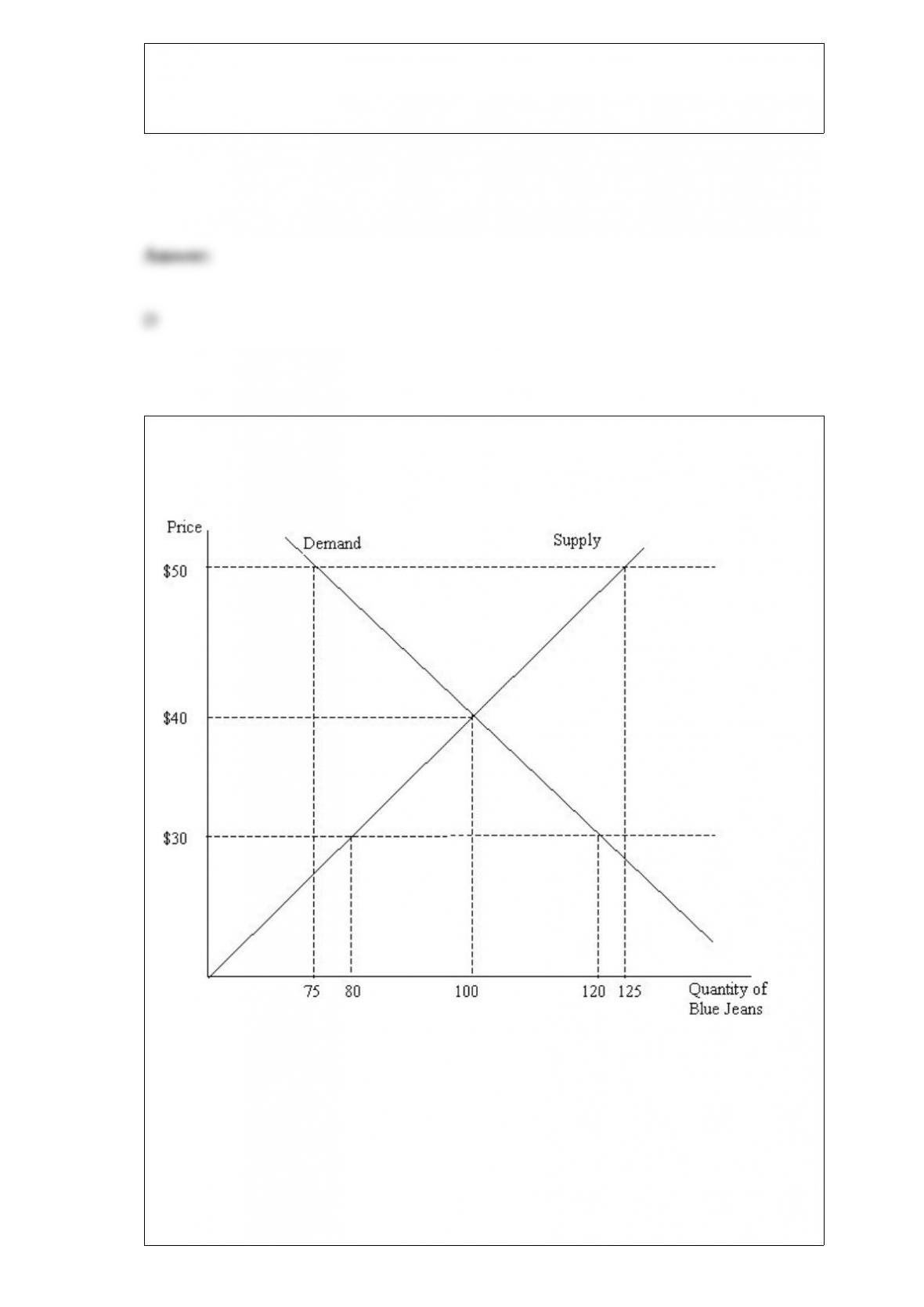
Figure 4.3 illustrates the supply and demand for blue jeans. If the actual price of blue
jeans is $30, we would expect that:
Figure 4.3
A) demand will decrease until quantity demanded equals quantity supplied.
B) supply will increase until quantity demanded equals quantity supplied.
C) price will increase until quantity demanded equals quantity supplied.

D) there will be no change since the market is in equilibrium.
For any an increasing-cost industry, the long-run supply curve has:
A) an undefined slope.
B) a negatively slope.
C) a positive slope.
D) a zero slope.
The purpose of advertising products to consumers is to:
A) reduce costs for producers.
B) decrease the demand for the product.
C) increase the price of the product.
D) change consumers’ tastes toward the product.

Under a system of marketable pollution permits:
A) firms with lower costs of reducing emissions are likely to sell permits to those with
higher costs of reducing emissions.
B) environmentalists can decrease pollution by purchasing permits.
C) the government can decrease the amount of pollution to the desired level.
D) All of the above are correct.
If the price in an oligopoly market is the same as that of a monopoly with identical cost
and demand conditions then:
A) the average cost curve must be downward sloping.
B) there may be collusion between firms.
C) market demand must be unit elastic.
D) This could never happen.
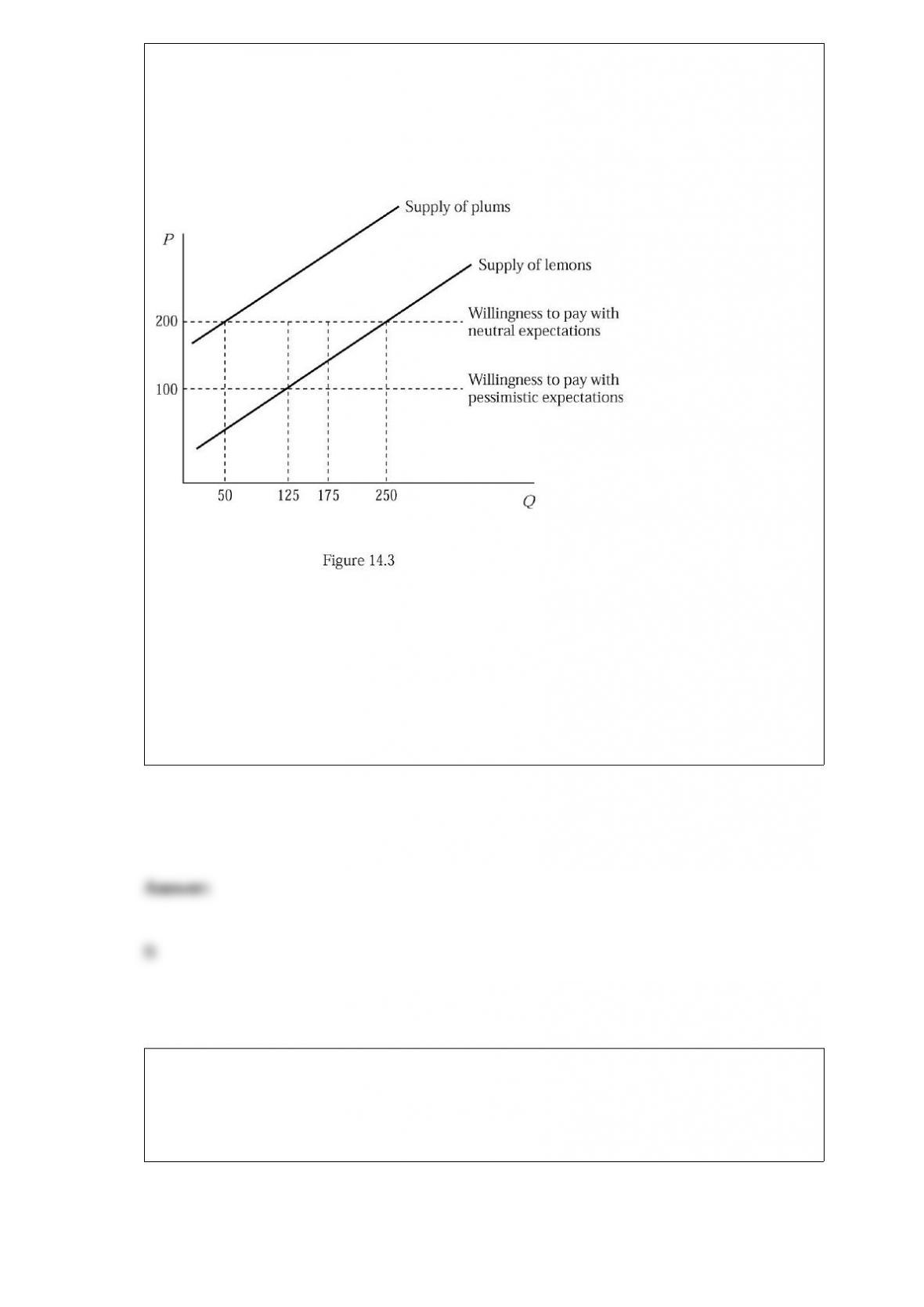
Figure 14.3 represents the market for used refrigerators. Suppose buyers are willing to
pay $300 for a plum (high-quality) used refrigerator and $100 for a lemon (low-quality)
used refrigerator. If buyers believe that all of the used refrigerators in the market are
lemons (low quality), what number of used refrigerators sold will actually be lemons
(low quality)?
A) 50
B) 125
C) 175
D) 250
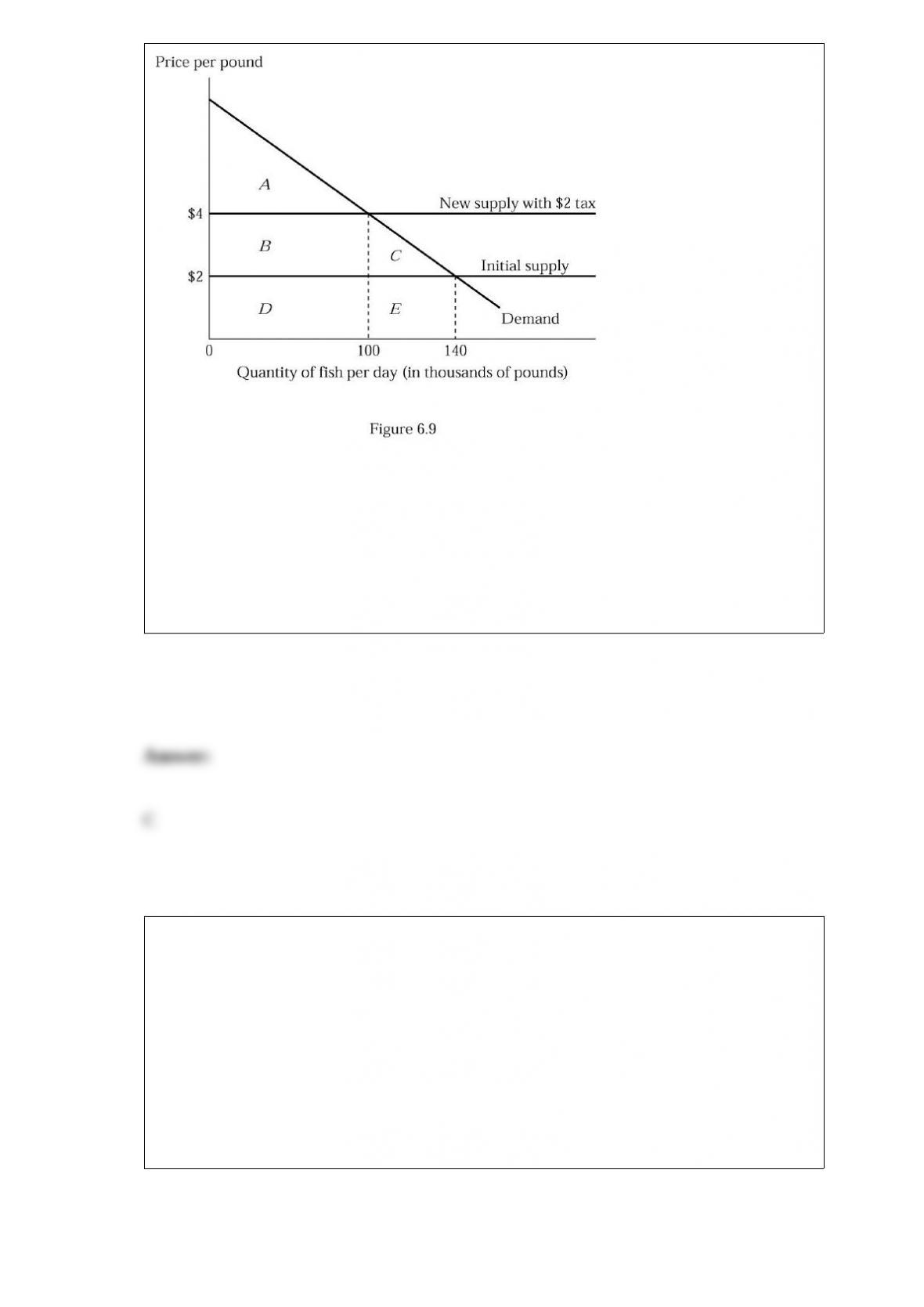
Figure 6.9 depicts a hypothetical fish market with a horizontal supply curve. Suppose
the government imposes a tax of $2 per pound of fish, and the tax is paid in legal terms
by producers. Which of the following shows the difference between the total burden of
the tax and the amount of revenue collected by the government?
A) Triangle A
B) Rectangle B
C) Triangle C
D) Rectangle E
Which of the following is TRUE about price discrimination?
A) It can only be used by monopolistic firms.
B) It is only possible if the good cannot be resold.
C) It maximizes consumer welfare since each consumer pays only what he is willing to
pay.
D) All of the above are true.
Which one of the following is the best example of an oligopolistic industry?
A) cigarettes
B) wheat growers
C) apple growers
D) public utilities
Based on the data in Table 3.1:
Table 3.1
A) April should specialize in painting kites and trade for snowboards.
B) April should specialize in painting snowboards and trade for kites.
C) Jesse should specialize in both goods.
D) April should specialize in both goods.

In Sioux Falls, South Dakota, there are many pizza restaurants, each offering similar
types of pizza but each restaurant located in a different place around the city. It is likely
a pizza restaurant in Sioux Falls, South Dakota, operates in a:
A) perfectly competitive market.
B) monopolistically competitive market.
C) monopoly market.
D) oligopoly market.
Firms in an oligopoly can increase profit by:
A) jointly acting to reduce output and increase prices.
B) independently acting to increase price.
C) acting alone and refusing to join the group.
D) none of the above.
Recall the example of increasing-cost industries such as sugar, at a price of 11 cents, the
world supply of sugar equals the amount produced in the areas with low production
costs. If the price of sugar increases what will happen in the sugar market?
A) Sugar production becomes profitable in areas with higher production costs.
B) The quantity demanded increases.
C) The quantity supplied increases.
D) Both A and C
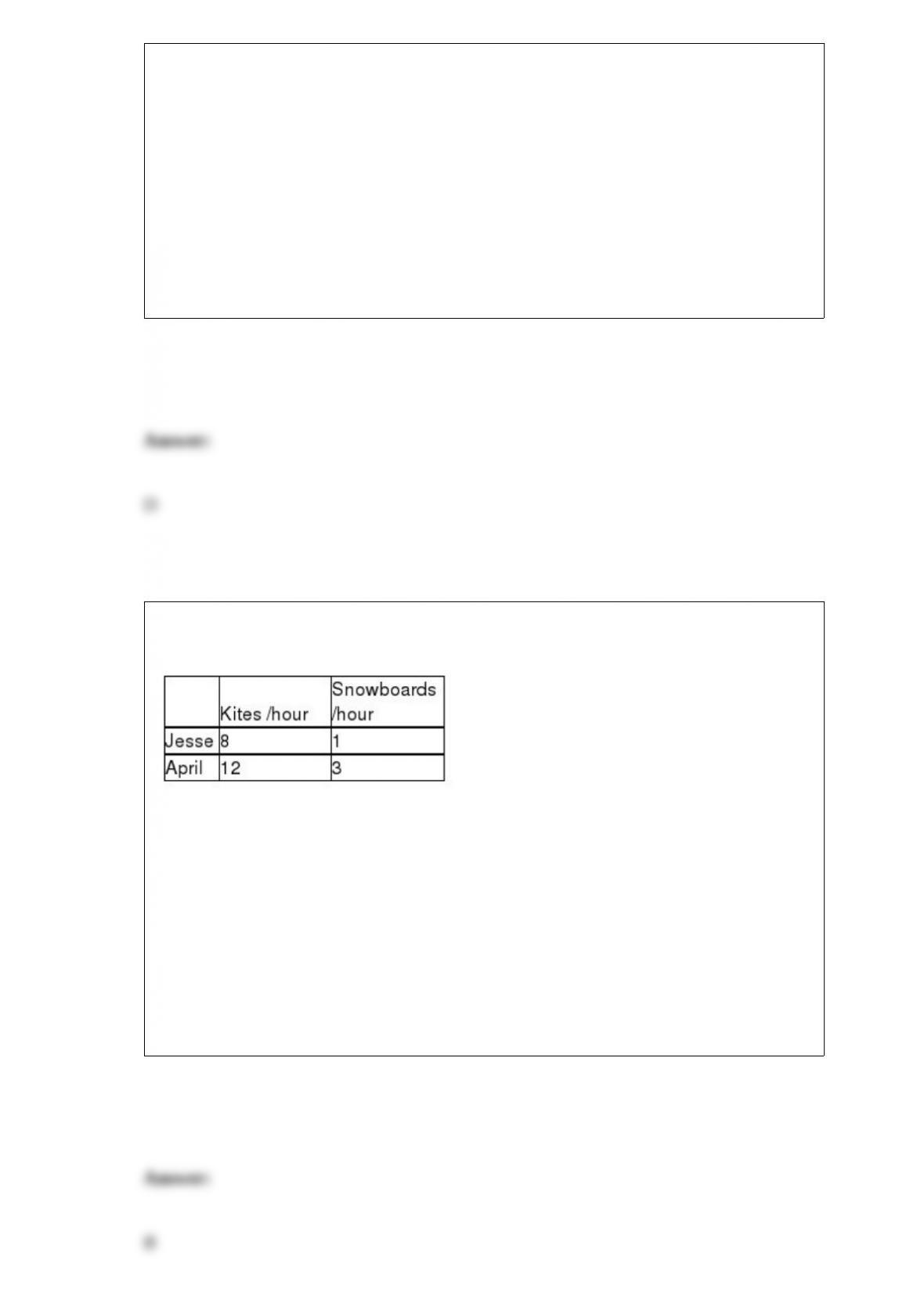
Consider two individuals, Jesse and April, who hand paint kites and snowboards. Table
3.2 shows how much of each good Jesse and April can paint in one hour.
Table 3.2
Which of the following is true?
A) April has both an absolute and comparative advantage in painting kites.
B) April has both an absolute and comparative advantage in painting snowboards.
C) April has neither an absolute nor comparative advantage in painting kites.
D) April has neither an absolute nor a comparative advantage in painting snowboards.
Recall the Application about food and drink pricing during “happy hour” at bars
and restaurants to answer the following question(s).
Recall the Application. Bars and restaurants generally operate in a(n):
A) monopoly market.
B) monopolistically competitive market.
C) perfectly competitive market.
D) oligopoly market.
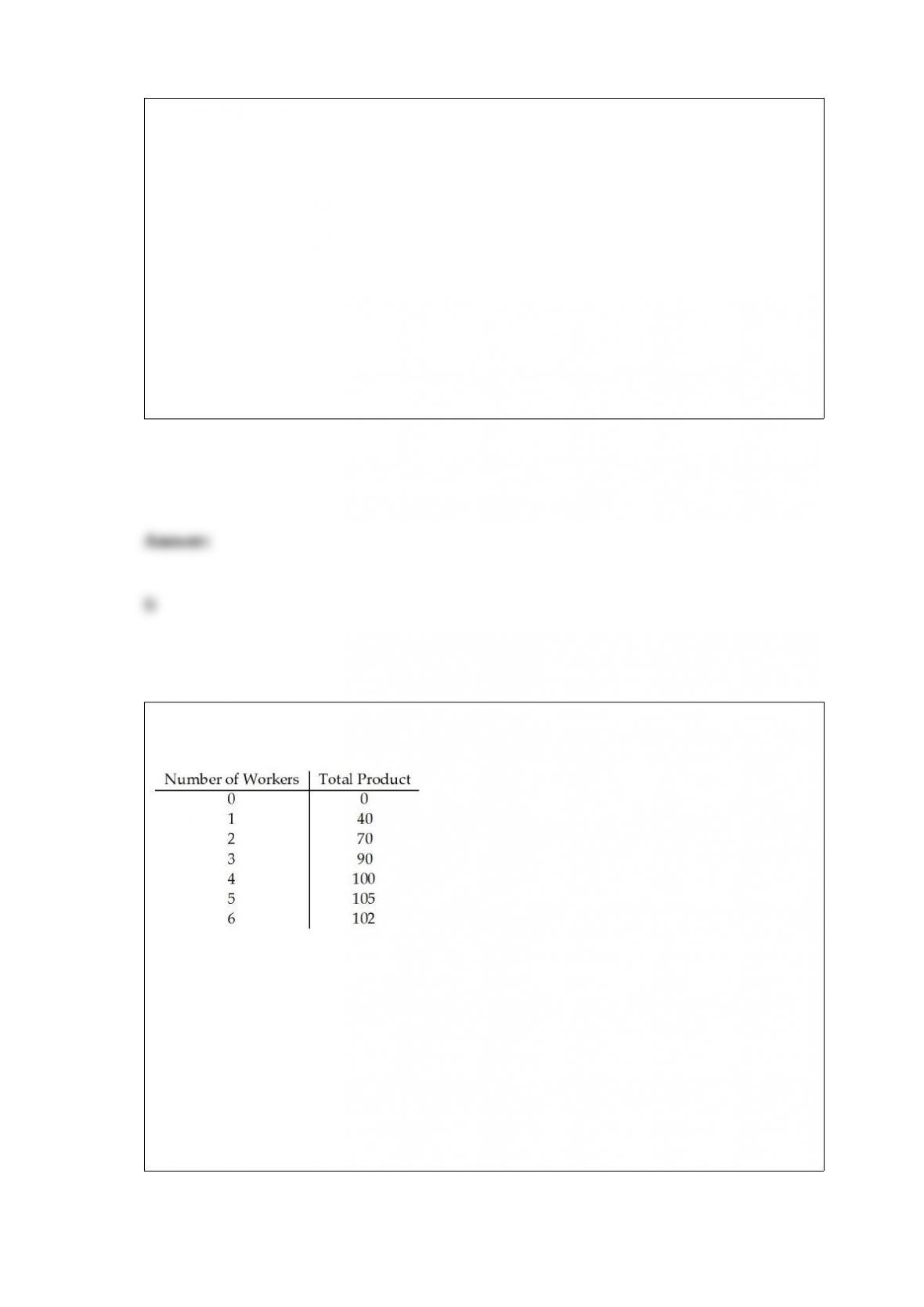
Refer to Table 17.3. If the market price of the product is $5 and the wage rate is $40, the
firm should hire ________ workers.
Table 17.3
A) 2
B) 3
C) 4
D) 5

Jerry’s Quarry sells building stone in a perfectly competitive market. At its current level
of building stone production, Jerry’s Quarry has marginal costs equal to $45, and AVC is
rising. If the market price of building stone is $50, Jerry’s Quarry should:
A) decrease its level of building stone production.
B) continue producing its current level of production.
C) increase its production of building stone.
D) shut down and produce no building stone.
Recall the application about the California kiwifruit market and the “lemons” problem.
There is asymmetric information in the kiwifruit market because:
A) buyers have more information than sellers.
B) sellers have more information than buyers.
C) both the buyers and sellers have complete information.
D) sellers have the same information as the buyers.
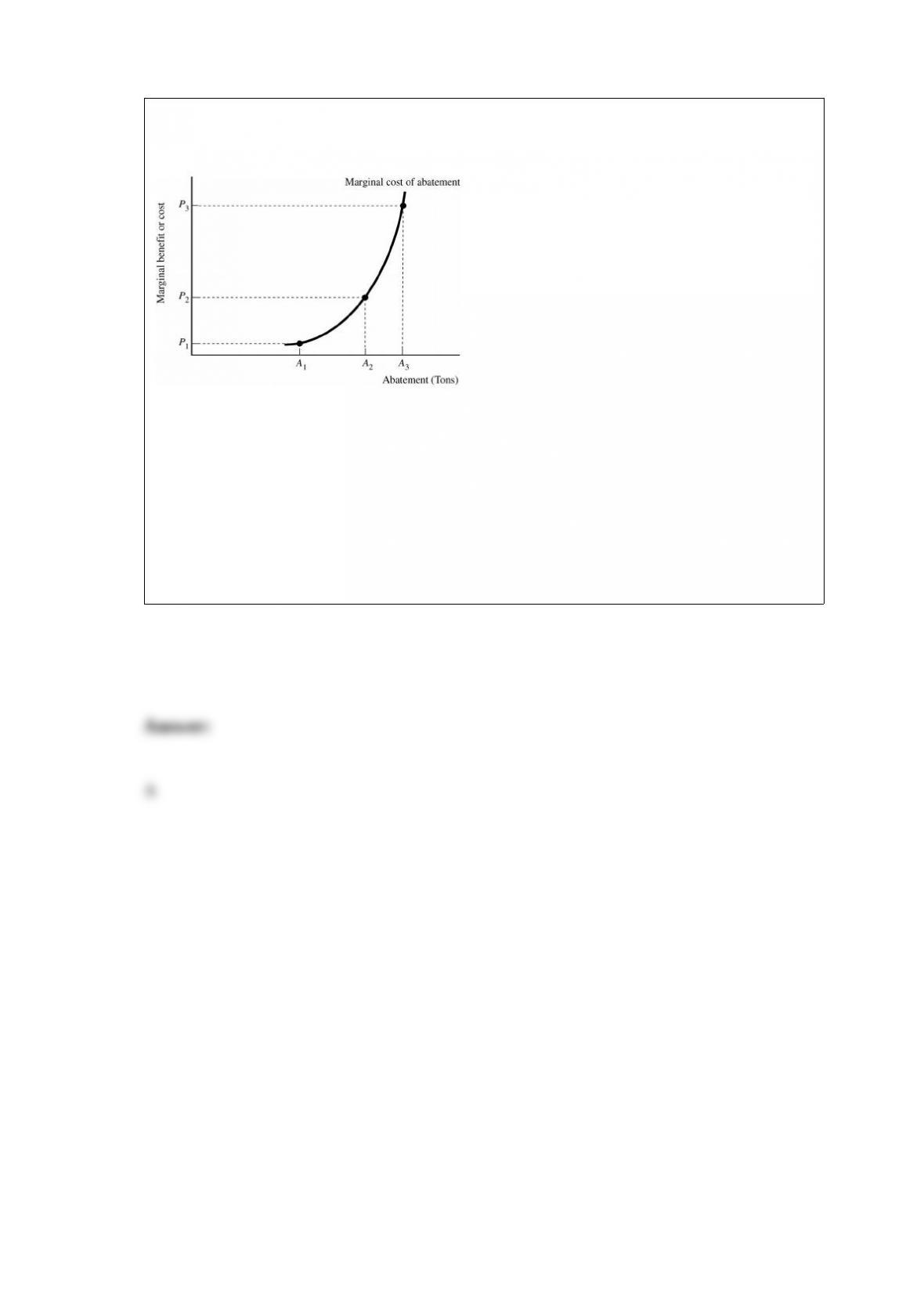
A firm that generates pollution is illustrated in Figure 16.1. If the government imposes a
pollution tax equal to P2 and the firm chooses abatement level A3:
Figure 16.1
A) the marginal cost of abating is greater than the marginal benefit of abating.
B) the marginal benefit of abating is greater than the marginal cost of abating.
C) the firm is choosing optimally.
D) the firm is in violation of environmental protection laws.