1) Which of the following is a true statement?
A.Under normal conditions there is a short-run tradeoff between inflation and
unemployment.
B.There is a long-run tradeoff between inflation and unemployment.
C.The short-run Phillips Curve is vertical.
D.The long-run Phillips Curve is horizontal.
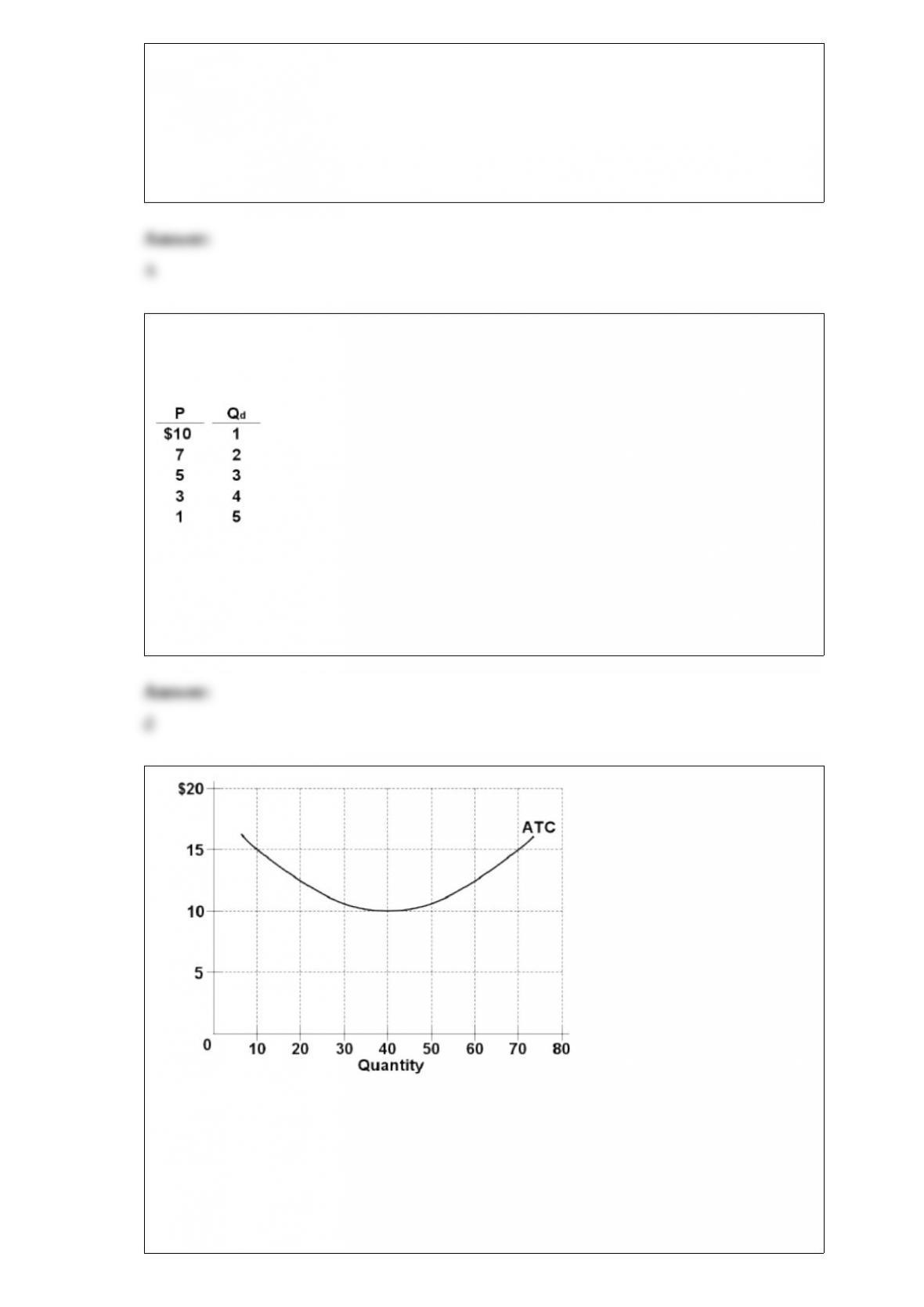
2) the following table showing the demand schedule facing a nondiscriminating
monopolist:
refer to the above table. the profit-maximizing monopolist will sell at a price:
a.of $10.
b.of $7.
c.of $5
d.that cannot be determined with the information provided.
3)
refer to the above diagram showing the average total cost curve for a purely competitive
firm. suppose this firm is maximizing its total profit and the market price is $15. the
firm’s per unit profit is:
a.$5.
b.$200.
c.a positive amount less than $5.
d.a positive amount more than $200.
4) The tragedy of the commons is the idea that:
A.society has a tendency to overuse and thus abuse common resources.
B.total external costs in society far outweigh total external benefits.
C.matter can be transformed to other matter or into energy but can never vanish.
D.crime rates typically are higher in public places than where property is privately
owned.
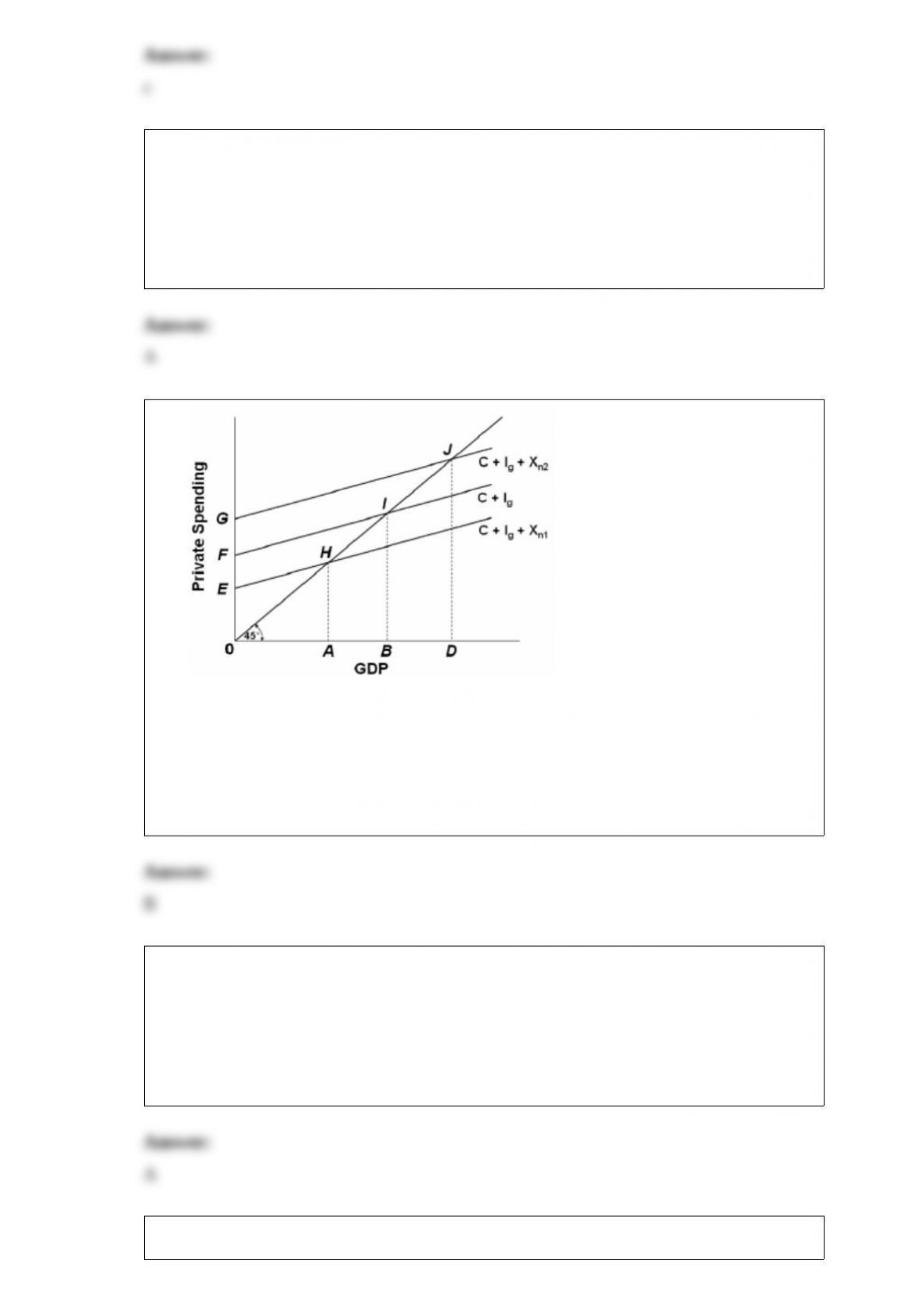
5)
Refer to the above diagram. If (C + Ig) are the private expenditures in the closed
economy and Xn2 are the net exports in the open economy:
A.exports are negative.
B.net exports are positive.
C.net exports are negative.
D.exports are positive.
6) Which of the following nations has a total fertility rate that would suggest that its
next generation will only be half the size of the current generation?
A.Hong Kong.
B.Australia.
C.Sweden.
D.All of these nations.
7) diseconomies of scale means that:
a.a firm’s long-run average total cost curve is declining.
b.a firm’s long-run average total cost curve is rising.
c.the advantages of specialization are being more fully realized.
d.a given increase in inputs results in a more-than-proportionate increase in output.
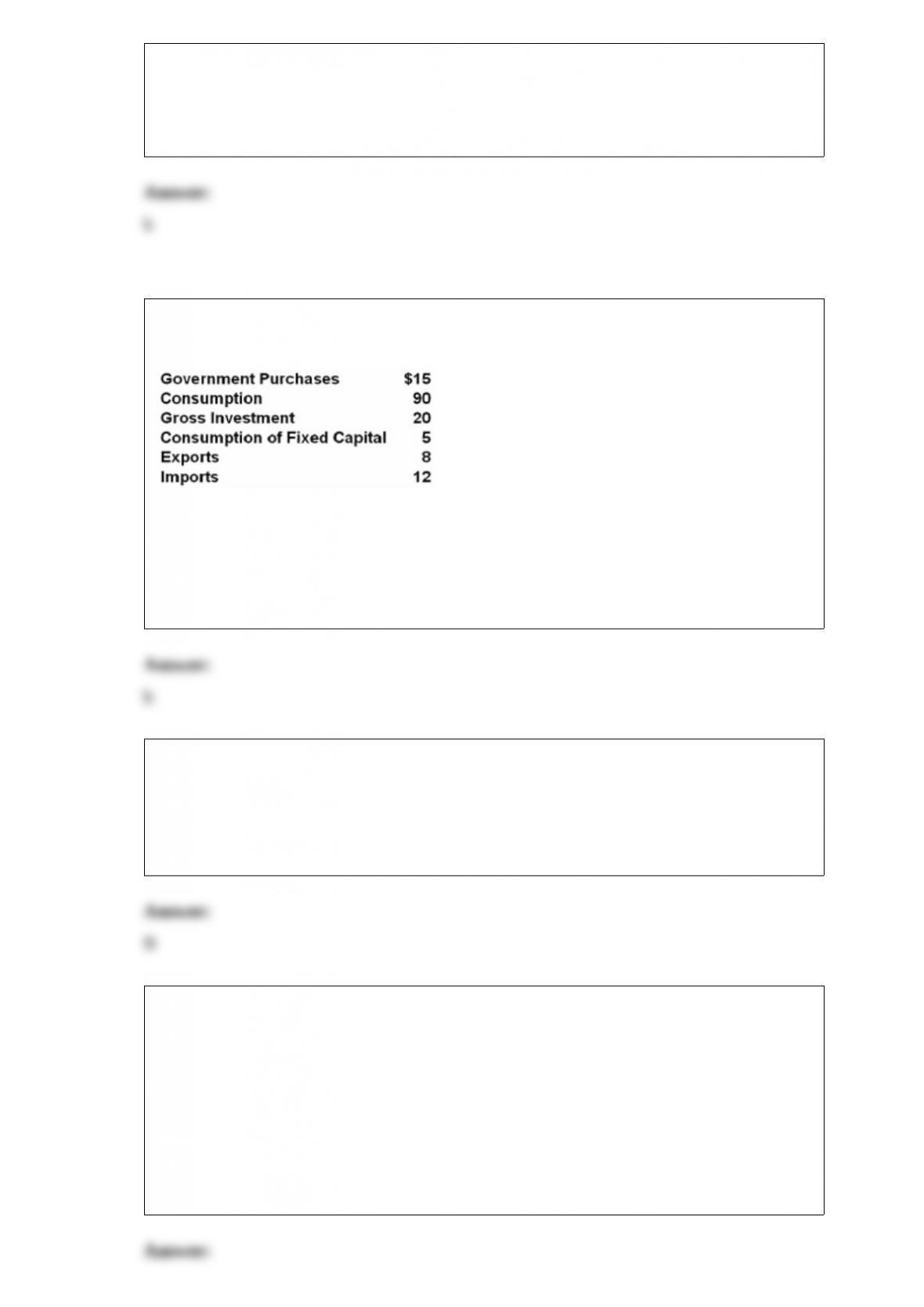
8) answer the next question(s) on the basis of the following data. all figures are in
billions of dollars:
refer to the above data. gdp is:
a.$116.
b.$121.
c.$125.
d.$150.
9) Real wages in the United States are:
A.the highest in the world.
B.relatively high, but not as high as in some other industrially advanced nations.
C.much higher than output per worker.
D.higher than nominal wages.
10) skeptics of the recent productivity acceleration say that:
a.it is too soon to judge whether the high productivity advances between 1995 and 2007
are permanent or transitory.
b.the difficulties of the dot.com companies in 2001 will eventually undermine
productivity.
c.between 1995 and 2007 the economy moved below its natural rate of unemployment
and paid the price in the form of accelerating inflation.
d.the improved growth performance of the u.s. economy between 1995 and 2007
resulted from adroit monetary policy and not from increases in productivity.
11) The trading of votes by elected officials to secure favorable outcomes is called:
A.splitting the difference.
B.social engineering.
C.logrolling.
D.grandstanding.
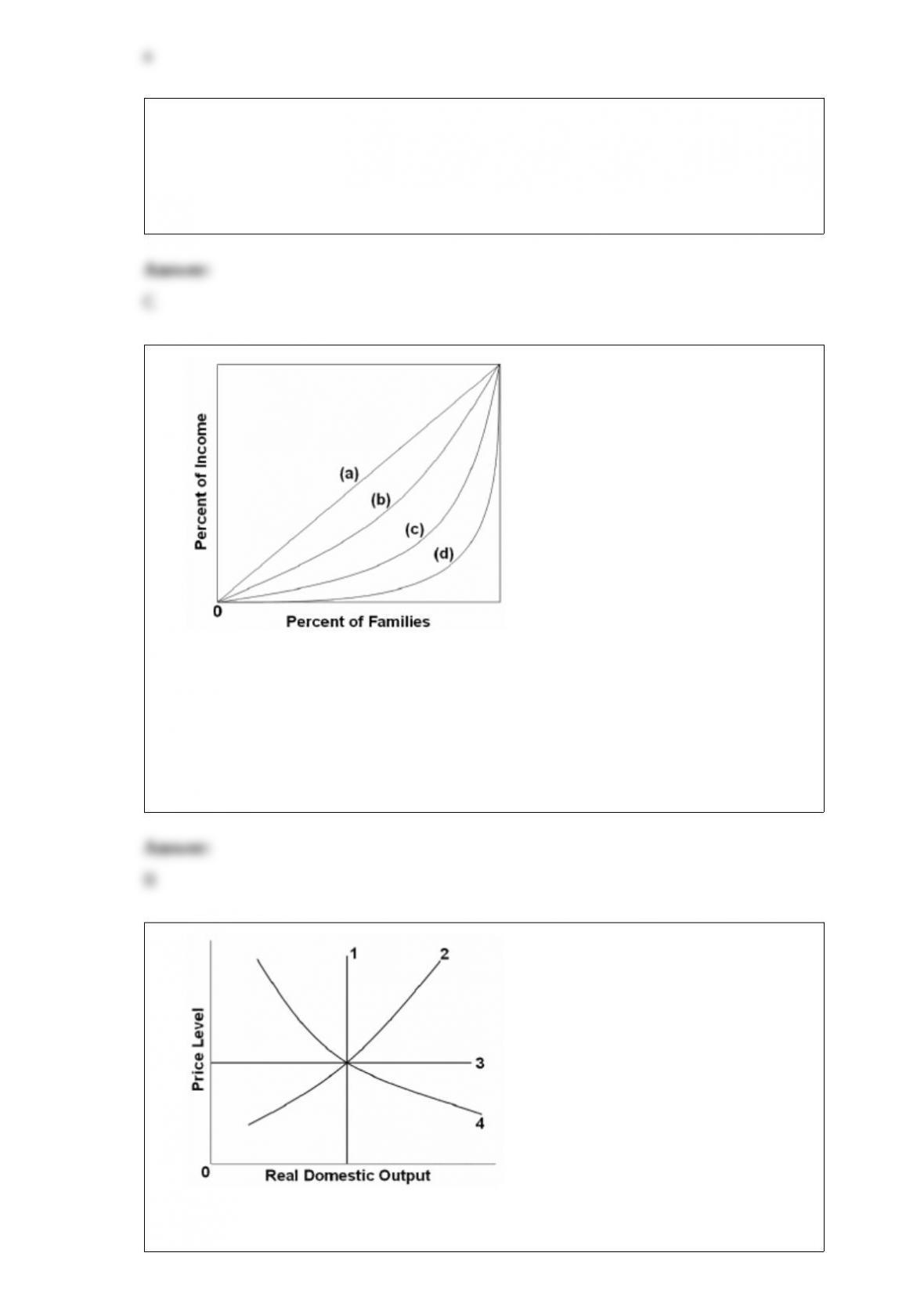
12)
Refer to the above diagram. If line c represents the distribution of income before taxes
and transfers and line b represents the distribution after taxes and transfers, then taxes
and transfers have:
A.added to income inequality.
B.decreased the Gini ratio.
C.increased poverty.
D.reduced real GDP per person.
13)
In the above diagram, the economy’s immediate-short-run AS curve is line ___, its
short-run AS curve is _____, and its long-run AS curve is line ___.
A.1; 2; 4
B.1; 2; 3
C.2; 3; 4
D.3; 2; 1
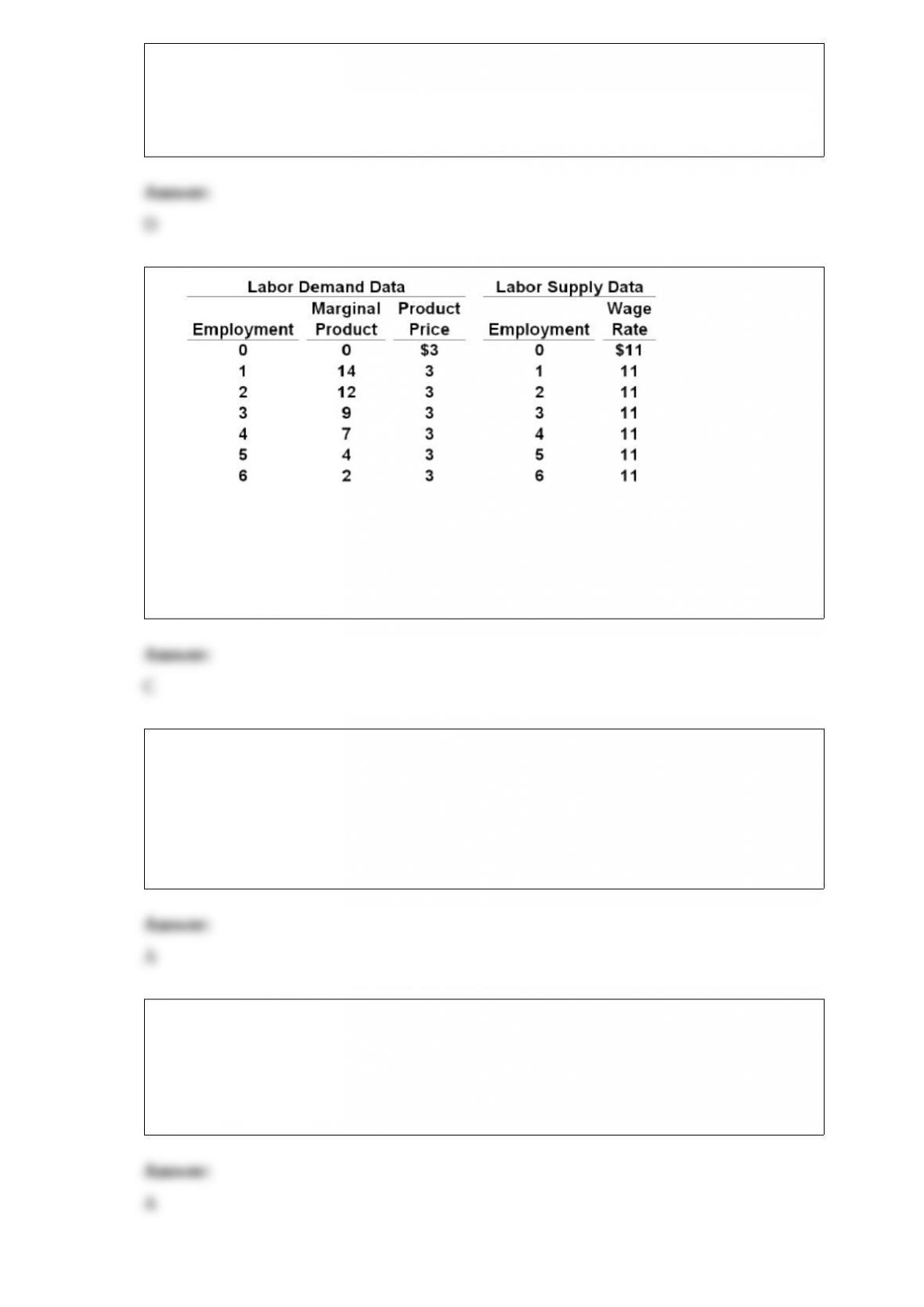
14)
On the basis of the above information we:
A.can say that the labor supply curve facing the firm is upsloping.
B.cannot say whether the firm’s product market is purely or imperfectly competitive.
C.can say that the firm is selling its product in a purely competitive market.
D.can say that the firm is selling its product in an imperfectly competitive market.
15) Which pair of market structures provides firms with the greatest ability to finance
R&D out of retained earnings?
A.oligopolists and pure monopolists.
B.pure competitors and pure monopolists.
C.pure competitors and monopolistic competitors.
D.monopolistic competitors and pure monopolists.
16) Which of the following will not cause a shift in the demand for resource X?
A.a decline in the price of resource X
B.an increase in the price of the product resource X is producing
C.a decrease in the price of substitute resource Y
D.an increase in the productivity of resource X
17) (consider this) an exception to the advice “go to college, stay in college, and earn a
degree” occurs when:
a.tuition expenses are high and rising.
b.the opportunity cost of attending college is extraordinarily high.
c.the price of textbooks is high and rising.
d.the economy is growing rapidly and jobs are plentiful.
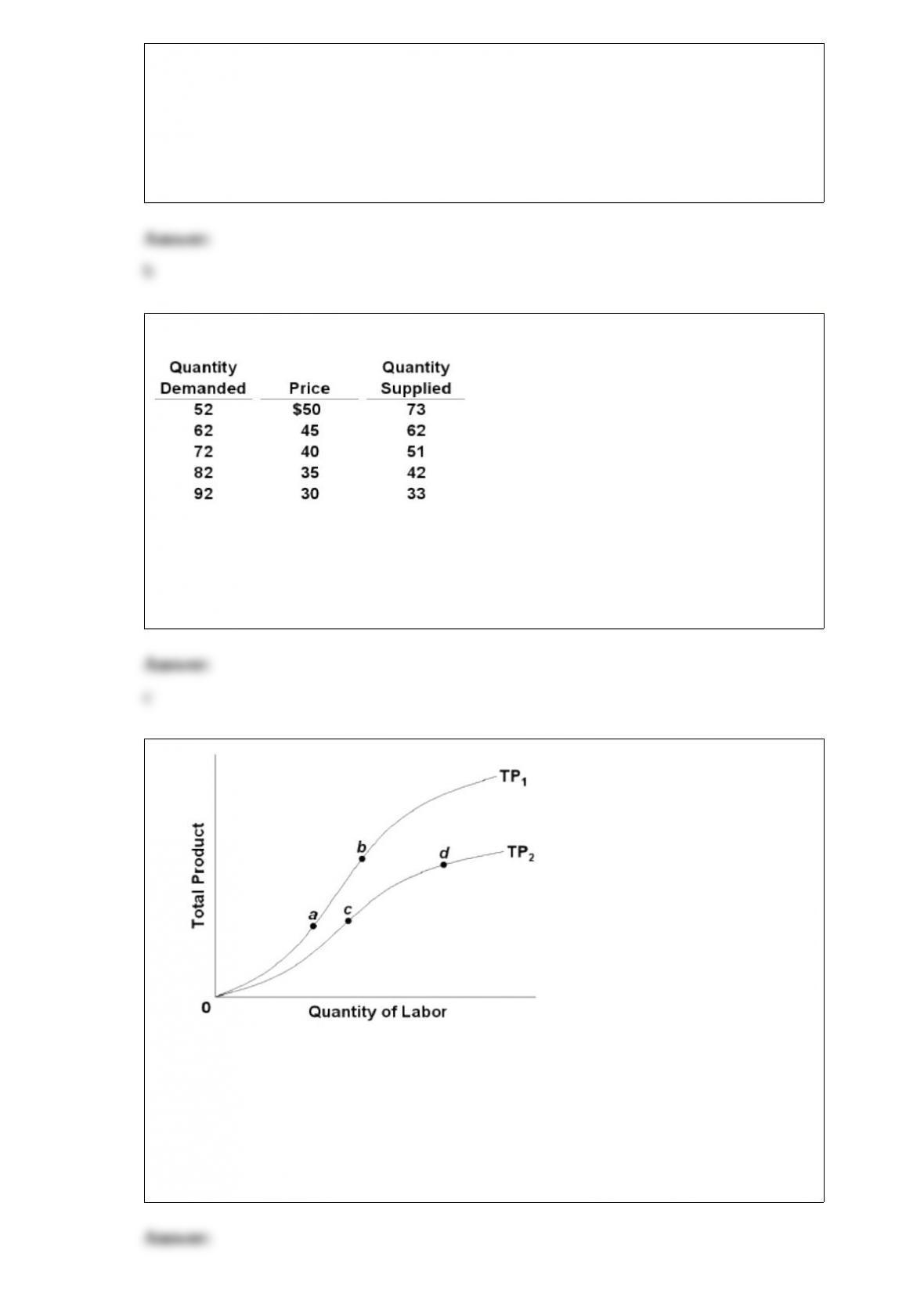
18) government-set prices
if government set a minimum price of $50 in the above market, a:
a.shortage of 21 units would occur.
b.shortage of 125 units would occur.
c.surplus of 21 units would occur.
d.surplus of 125 units would occur.
19)
Refer to the above diagram that relates to Firm X. Suppose X implements an innovative
new production method that shifts its total product curve from TP2 to TP1. Other things
equal:
A.the average product of X’s labor would fall.
B.the average total cost of X’s output would decline.
C.X would supply less output at each product price than before.
D.the demand curve for X’s product would shift to the right.