
Alan Jones owns a company that sells life insurance. When he employs 10 salespersons
his firm sells $200,000 worth of contracts per week, and when he employs 11
salespersons, total revenue is $210,000. The marginal revenue product of the 11th
salesperson is:
a. $410,000.
b. $10,000.
c. $20,000.
d. $210,000.
To finance medical care, the federal government raises the tax per pack paid by sellers
of cigarettes. Other things being equal, the price of cigarettes rises because of a(n):
a. upward movement along the supply curve for cigarettes.
b. rightward shift of the supply curve for cigarettes.
c. upward movement along the demand curve for cigarettes.
d. leftward shift of the supply curve for cigarettes.
Which of the following is a normative statement?
a. The deduction for state taxes cost the federal government $100 billion per year.
b. Taxpayers in North Carolina pay state taxes which are above the national average.
c. Twenty-two states use a lottery to raise state taxes.
d. Congress is considering the president’s tax plan to increase taxes which is a fair plan.

The marginal rate of substitution measures the slope of the:
a. total utility curve.
b. demand curve.
c. budget line.
d. indifference curve.
If the market price of bicycle frames is $500, and frame welders earn a wage of $50,
how many welders will be hired?
a. 10.
b. More than 10.
c. Fewer than 10.
d. Hiring will stop when the MP is 10.
e. Hiring will stop when the MP is 0.1.
A merger of firms with a supplier is a:
a. vertical merger. c. monopoly merger.
b. conglomerate merger. d. horizontal merger.
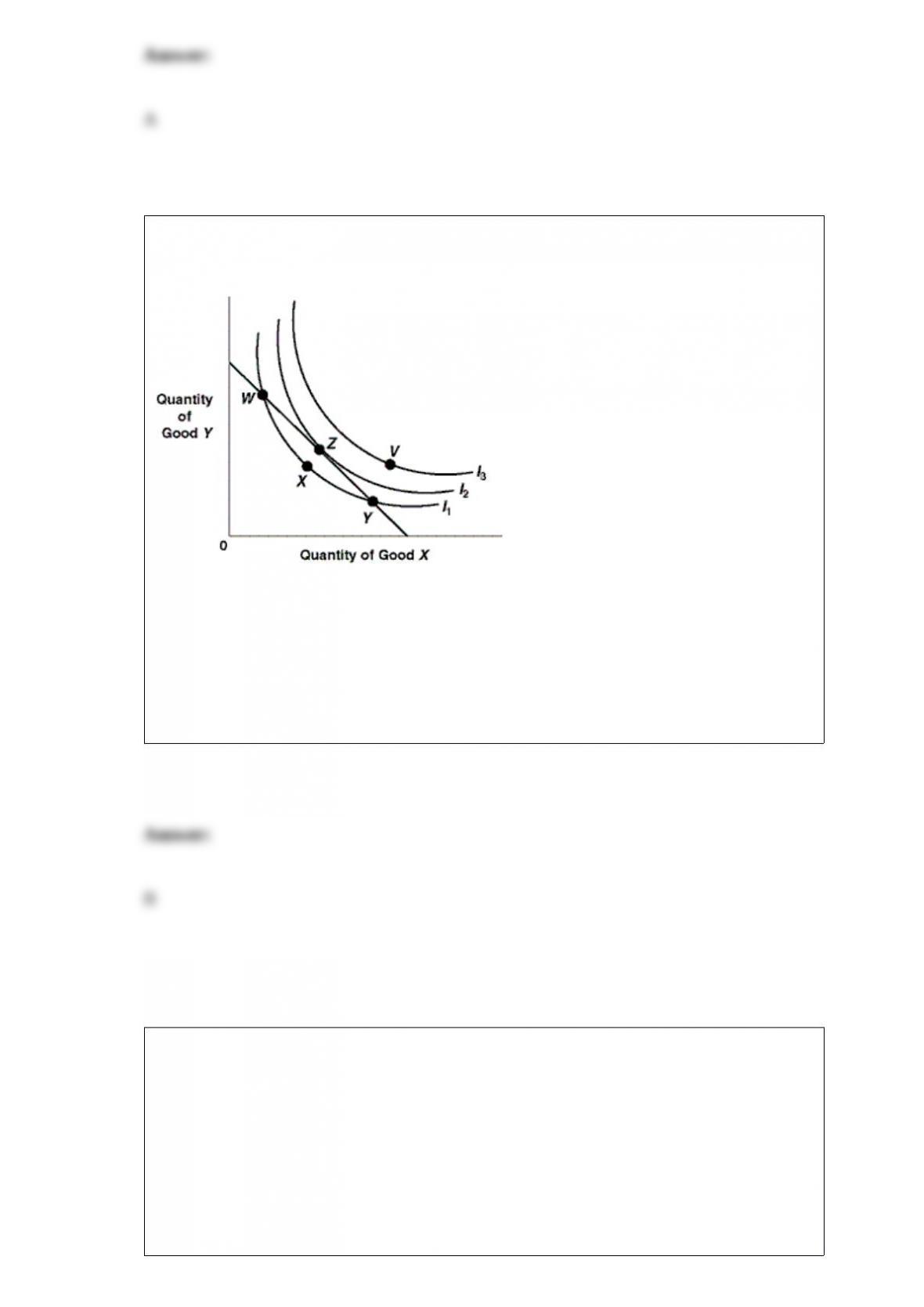
Exhibit 6A-2 Consumer equilibrium
Given the budge line and indifference curves shown in Exhibit 6A-2, consumer
equilibrium occurs at a tangency to which of the following indifference curves?
a. I1.
b. I2.
c. I3.
d. I1 or I2.
Which of the following is not an example of a country’s infrastructure?
a. Transportation system.
b. Communications system.
c. Political system.
d. Educational system.

e. Energy system.
In a command economy, the basic economic questions are answered by:
a. central authority. c. the traditional methods.
b. individual buyers and sellers. d. none of these.
Which of the following statements is false?
a. Marginal analysis is an examination of the effects of additions or subtractions from a
current situation.
b. The production possibilities curve shows the maximum combination of two outputs
that an economy can produce, given its available resources and technology.
c. Technology is the body of knowledge and skills applied to how goods are produced.
d. Economic growth is illustrated as an inward shift of the production possibilities
curve.

If a Japanese stereo priced at 1,000,000 yen can be purchased for $1,000, the exchange
rate is:
a. 1,000 yen per dollar. c. 0.001 dollars per yen.
b. 1,000 dollars per yen. d. none of these.
In order to achieve a high economic freedom rating, a country must:
a. provide secure protection of privately owned property and evenhanded enforcement
of contracts.
b. refrain from creating barriers that limit domestic and international trade.
c. rely more fully on markets rather than governments to allocate goods and resources.
d. do all of these.
Exhibit 15-1 Production possibilities curves
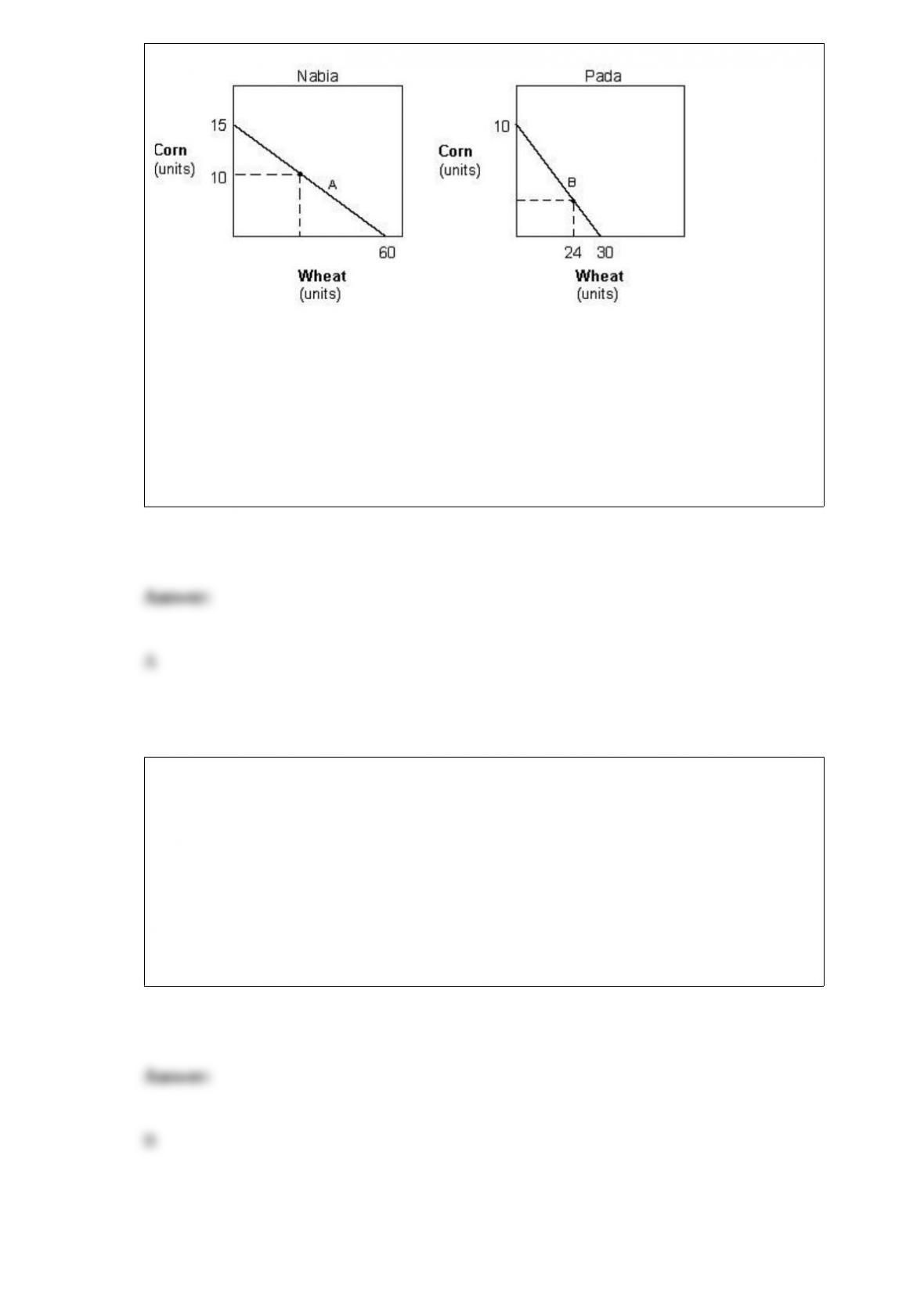
In Exhibit 15-1, the production possibilities curves of wheat and corn for Nabia and
Pada are presented. If these two nations trade, Pada should specialize in the production
of:
a. corn.
b. corn and wheat.
c. neither product since Nabia has the comparative advantage in the production of both.
d. neither product since Nabia has the absolute advantage in the production of both.
e. wheat.
Which of the following statements is true?
a. Marginal revenue product is the extra revenue generated to the firm from the
production of one more unit of output.
b. Marginal factor cost is the extra cost to a firm of employing one more unit of a factor
of production.
c. The demand curve for a perfectly competitive employer is horizontal at the market
wage rate.
d. The supply curve of labor is upward sloping because of the law of diminishing
marginal productivity.
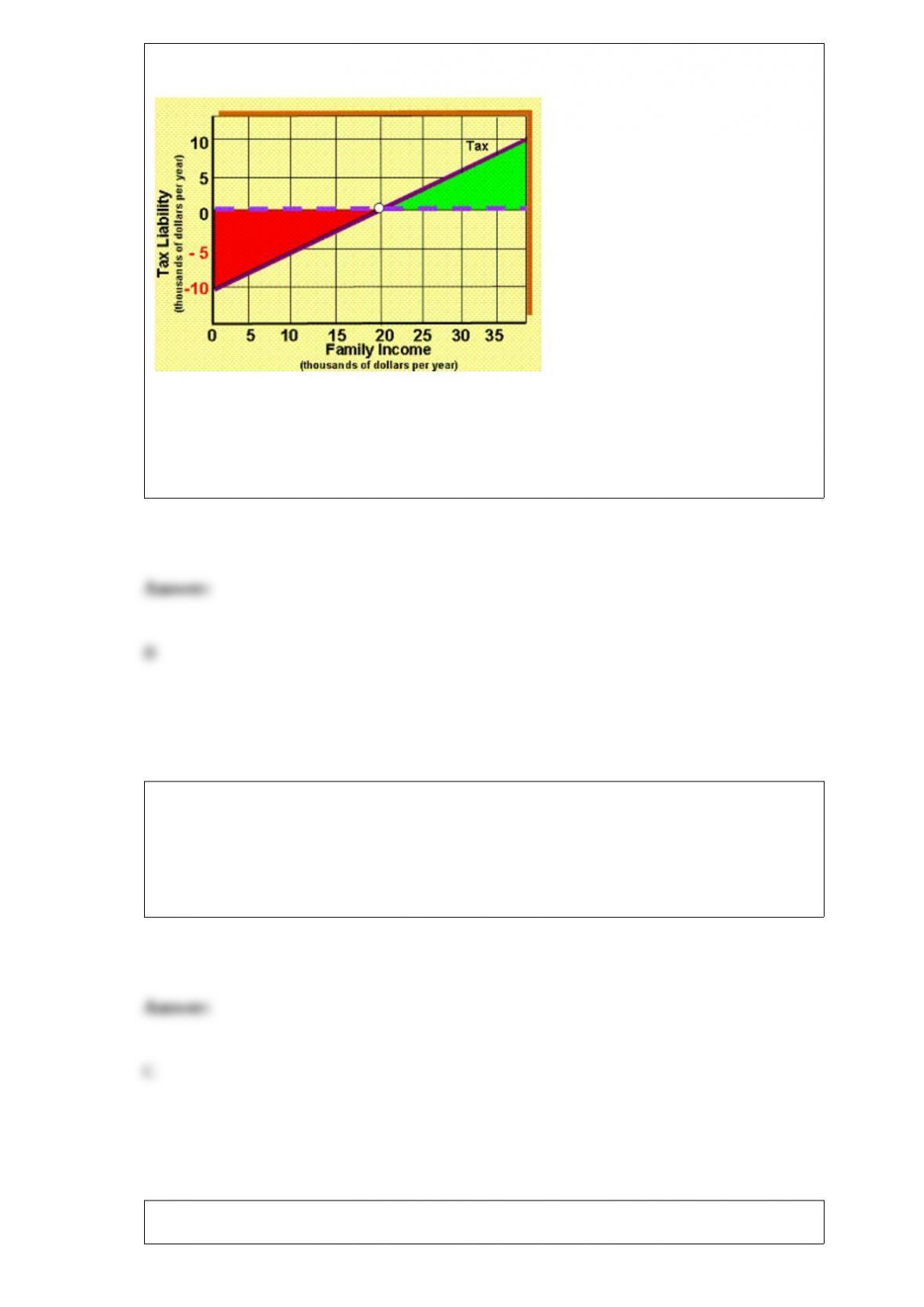
Exhibit 12-9 Negative Income Tax
As shown in Exhibit 12-9, a family of four does not pay income taxes at:
a. an income of $25,000.
b. any income between zero and $20,000.
c. all levels of income.
d. any income above $20,000.
In the short run, a perfectly competitive firm’s most profitable level of output is where:
a. marginal cost exceeds marginal revenue.
b. total revenue is at a maximum.
c. marginal cost equals marginal revenue.
d. All of these.
Which of the following is not a characteristic of less-developed countries?
a. High rates of illiteracy.
b. High unemployment.
c. Over half of the labor force in agriculture.
d. Low savings and investment rates.
e. Low infant mortality rates.
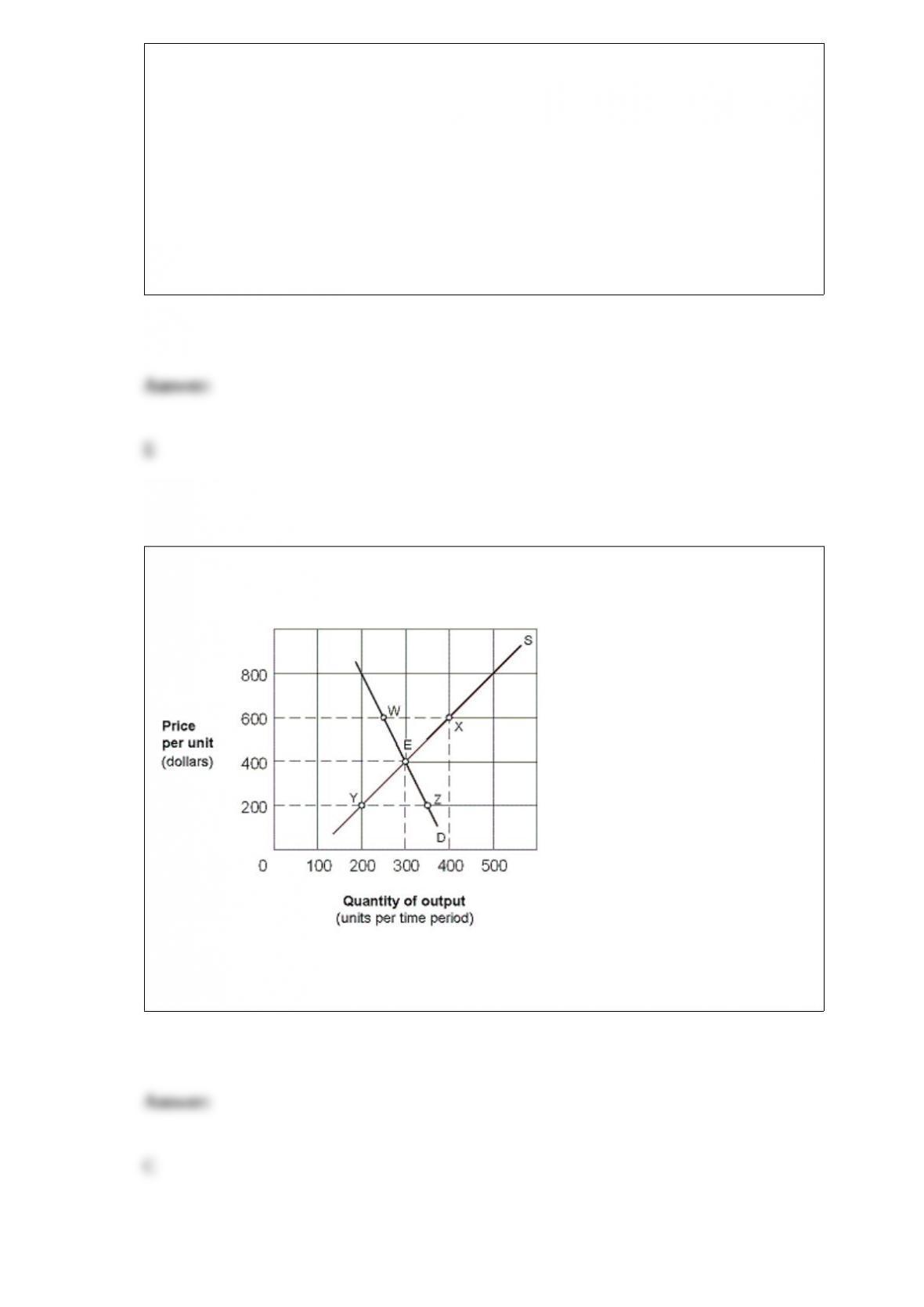
Exhibit 5-8 Supply and demand curves for good X
In Exhibit 5-8, the price elasticity of supply for good X between points E and X is:
a. 7/5 = 1.40. c. 5/7 = 0.71.
b. 1/5 = 0.20. d. 1.

Distinguish the laws of demand and supply. How are the laws of demand and supply
illustrated graphically?
Karl Marx’s massive work, titled Das Kapital, was published in 1848.
A price floor is a price set below equilibrium by government and it creates a shortage.
Microeconomics only looks at the behavior of one consumer or one firm in a market,
while macroeconomics looks at the behavior of an entire industry or group of
consumers.

What happens to total revenue given a price increase and demand is inelastic? Why?
A shortage occurs when the quantity demanded exceeds the quantity supplied.