1) The Federal funds market is the market in which:
A.banks borrow from the Federal Reserve Banks.
B.U.S. securities are bought and sold.
C.banks borrow reserves from one another on an overnight basis.
D.Federal Reserve Banks borrow from one another.
2) free trade:
a.discourages growth by increasing competitive pressures on domestic firms.
b.encourages growth by effectively eliminating all patent and copyright barriers to
growth.
c.discourages growth compared to circumstances where the government strongly
controls foreign trade.
d.encourages growth by promoting the rapid spread of new inventions and innovations.
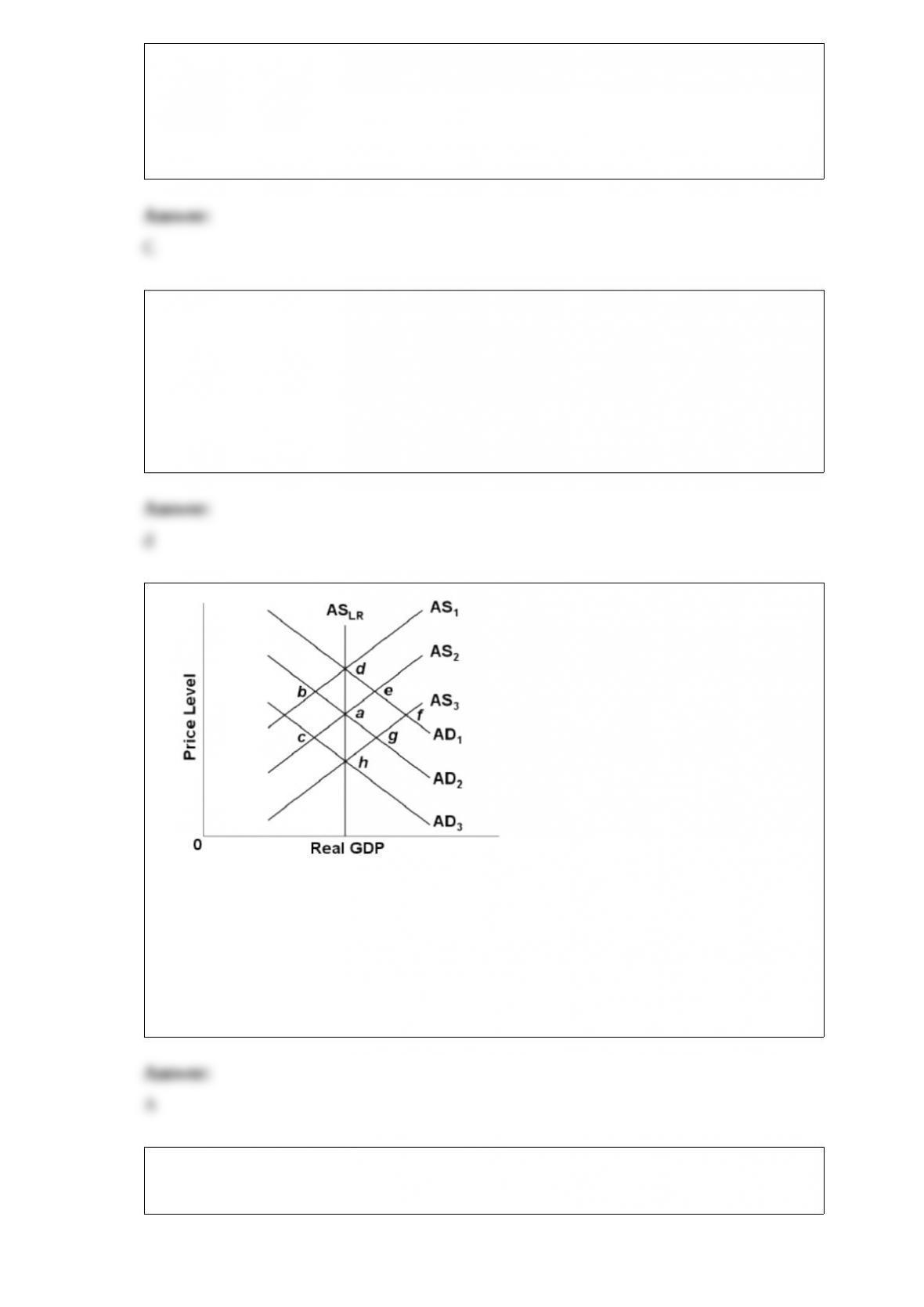
3)
Refer to the above figure and assume the economy initially is in equilibrium at point a.
In the new classical theory, a fully anticipated decrease in aggregate demand from AD2
to AD3 would move the economy:
A.directly from a to h
B.from a to g to h
C.directly from a to d
D.from a to c to h
4) The following production possibilities data for two countries, Alpha and Beta, which
have populations of equal size.
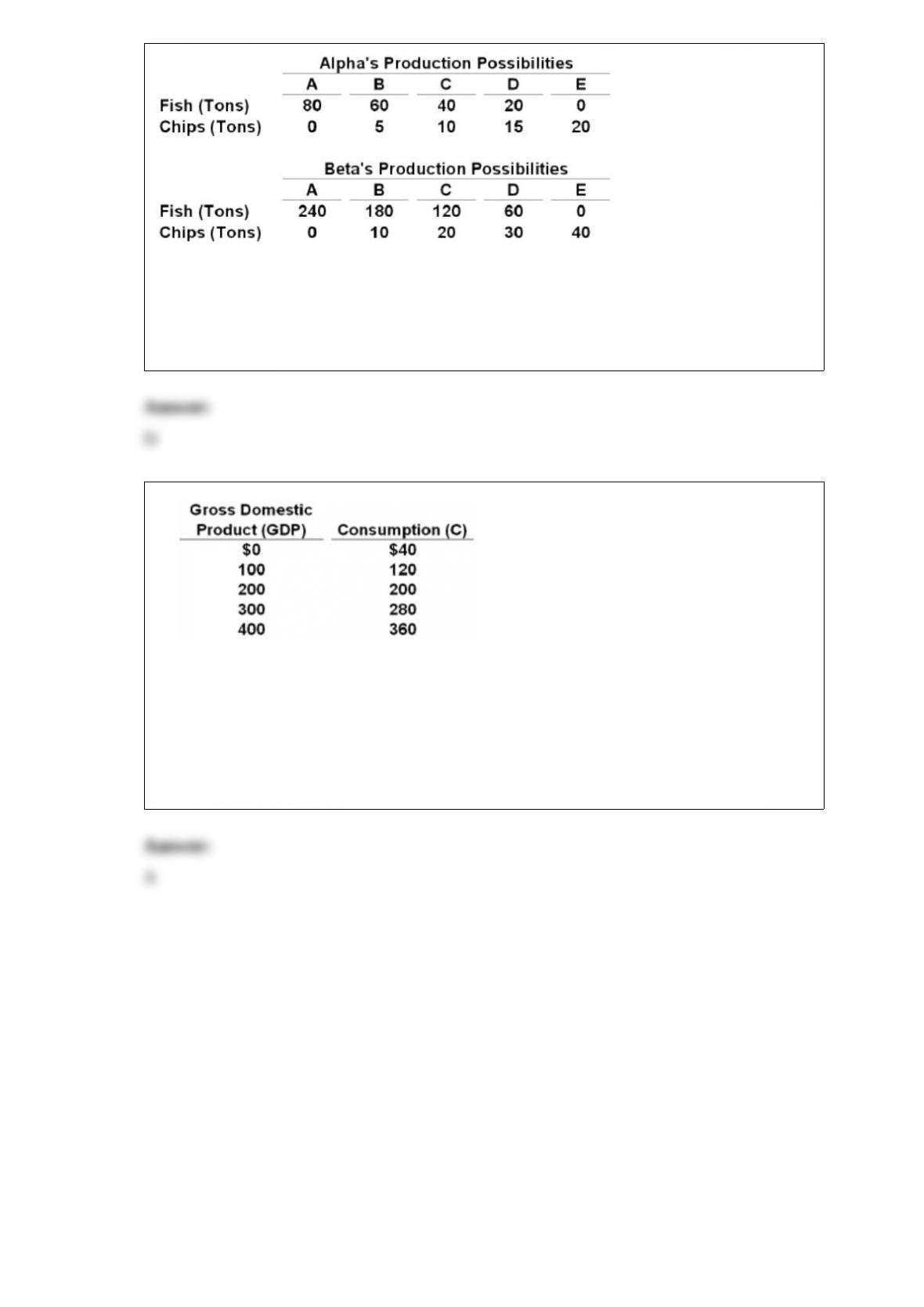
The above data show that:
A.Beta has a comparative advantage in producing chips.
B.Alpha has a comparative advantage in catching fish.
C.Alpha is subject to constant costs and Beta is subject to increasing costs.
D.Beta is more efficient than Alpha both in catching fish and in producing chips.
5)
Refer to the above data. If a lump-sum tax (the same tax amount at each level of GDP)
of $40 is imposed in this economy, the tax system:
A.is regressive.
B.is proportional.
C.is progressive.
D.may be either proportional or progressive.
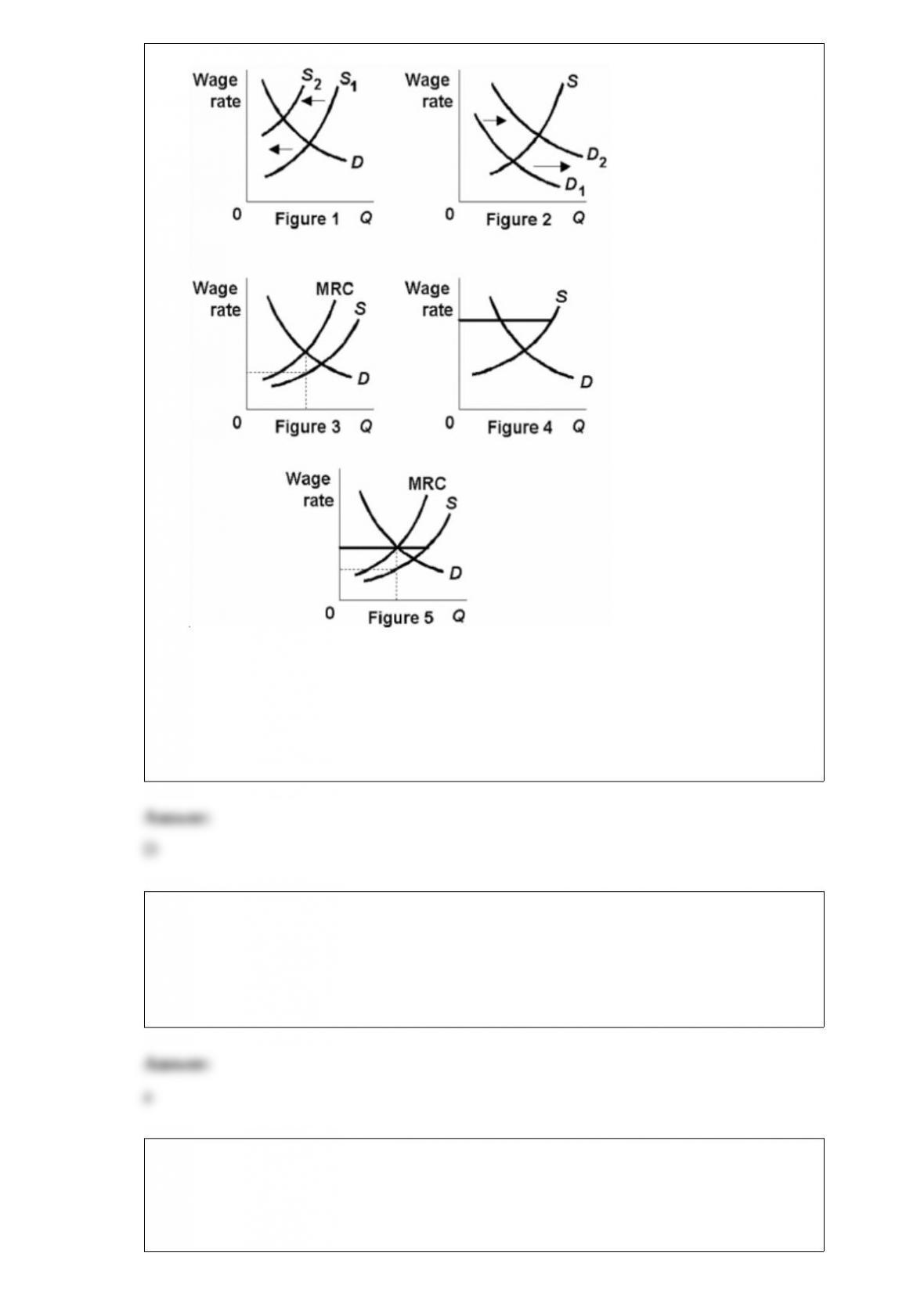
6)
Refer to the above labor market diagrams. The tactics of exclusive unionism are
portrayed in Figure:
A.4
B.3
C.2
D.1
7) a consumer who has a limited budget will maximize utility or satisfaction when the:
a.ratios of the marginal utility of each product purchased divided by its price are equal.
b.total utility derived from each product purchased is the same.
c.marginal utility of each product purchased is the same.
d.price of each product purchased is the same.
8) according to economist donald boudreaux:
a.private property eliminates the possibility that resource arrangements will be random.
b.the market system threatens to do irreparable harm to the world’s ecosystem.
c.arranging resources under the market system is much like shuffling a deck of cards.
d.the market system works wondrously for advanced industrial nations but not for
developing nations.
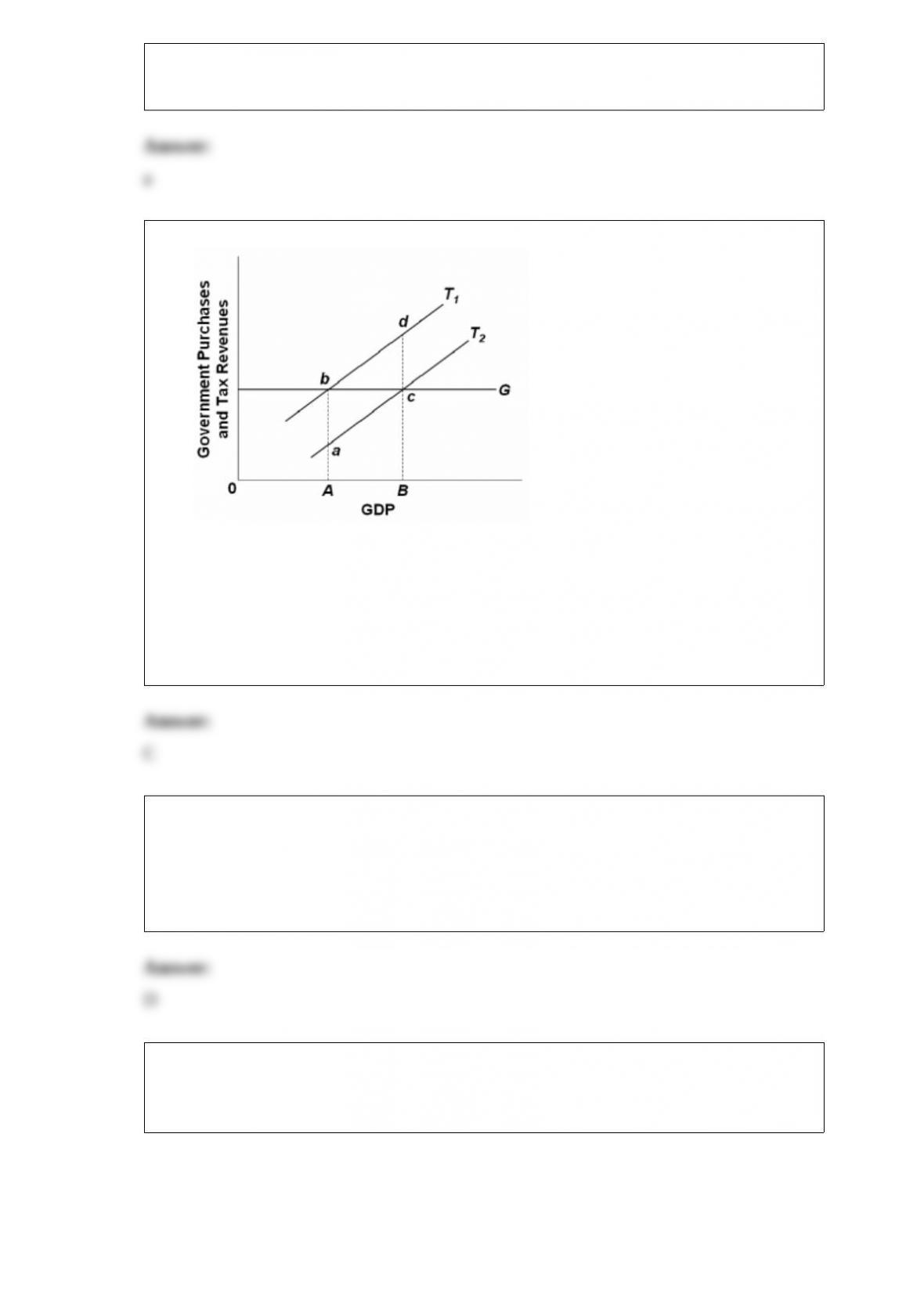
9)
Refer to the above diagram. Assume that G and T1 are the relevant curves and that the
economy is currently at B, which is its full-employment GDP. This economy has a:
A.standardized budget surplus only.
B.standardized budget deficit only.
C.standardized budget surplus and an actual budget surplus.
D.standardized deficit and an actual budget deficit.
10) Interlocking directorates are:
A.legal if the two firms have small market shares.
B.illegal under provisions of the Federal Trade Commission Act of 1914.
C.illegal under provisions of the Celler-Kefauver Act of 1950.
D.illegal under provisions of the Clayton Act of 1914.
11) the following output data for a firm. assume that the amounts of all non-labor
resources are fixed.
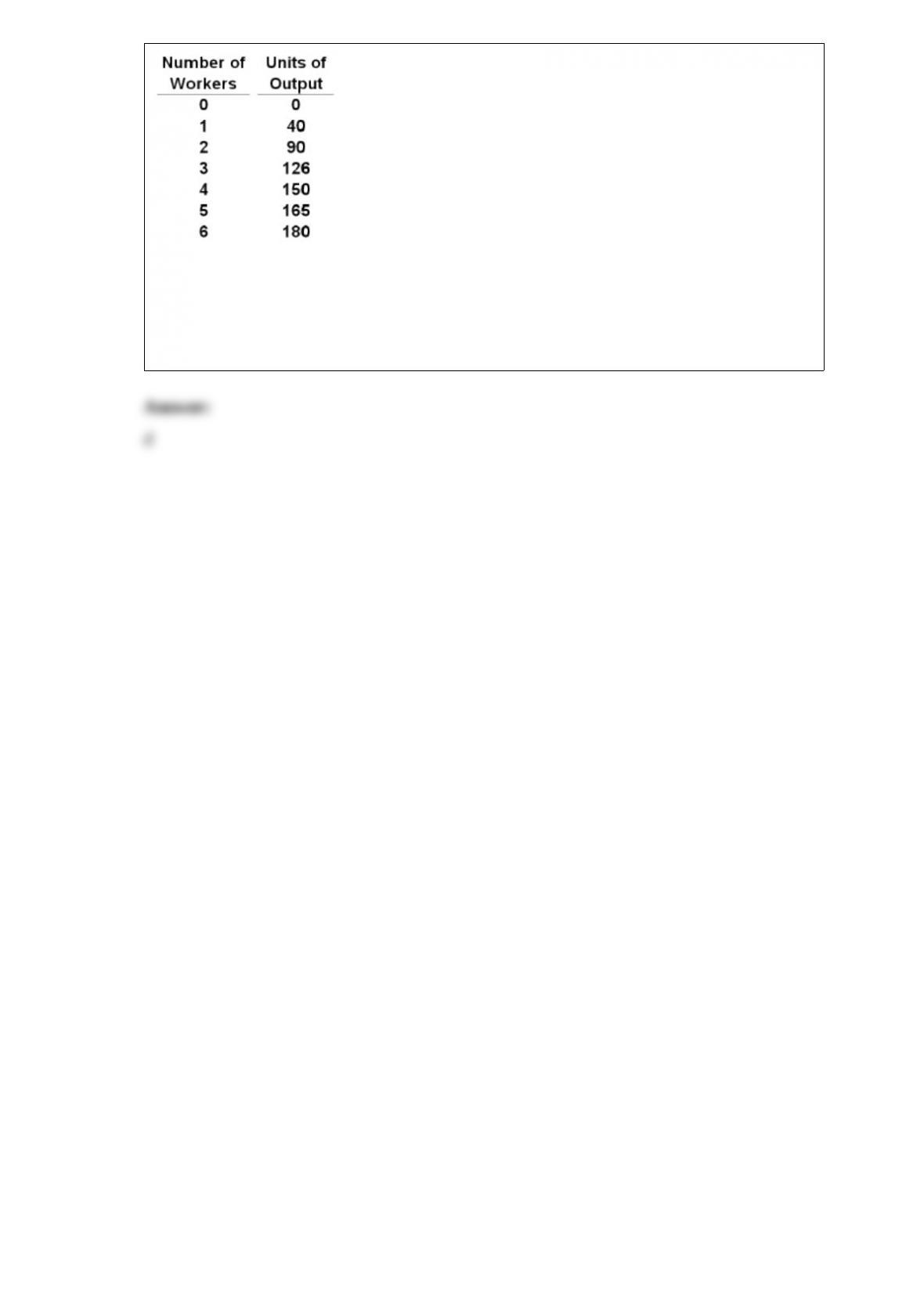
refer to the above data. average product is at a maximum when:
a.five workers are hired.
b.four workers are hired.
c.three workers are hired.
d.two workers are hired.