
If the marginal propensity to consume is 0.75 and government spending decreases by
$2,000 billion, what is the change in GDP?
a. -$2,000 billion
b. -$8,000 billion
c. $2,000 billion
d. $1,500 billion
e. $8,000 billion
If the labor demand decreases, what will happen to the real wage, employment, and
output, assuming no change in the labor supply?
a. The real wage will increase, employment will decrease, and real output will increase.
b. The real wage will decrease, employment will decrease, and real output will increase.
c. The real wage will increase, employment will decrease, and real output will decrease.
d. The real wage will increase, employment will increase, and real output will increase.
e. The real wage will decrease, employment will decrease, and real output will
decrease.
Refer to Figure 9-3. An investment tax credit that increases the demand for loanable
funds from D1to D2will increase investment spending by
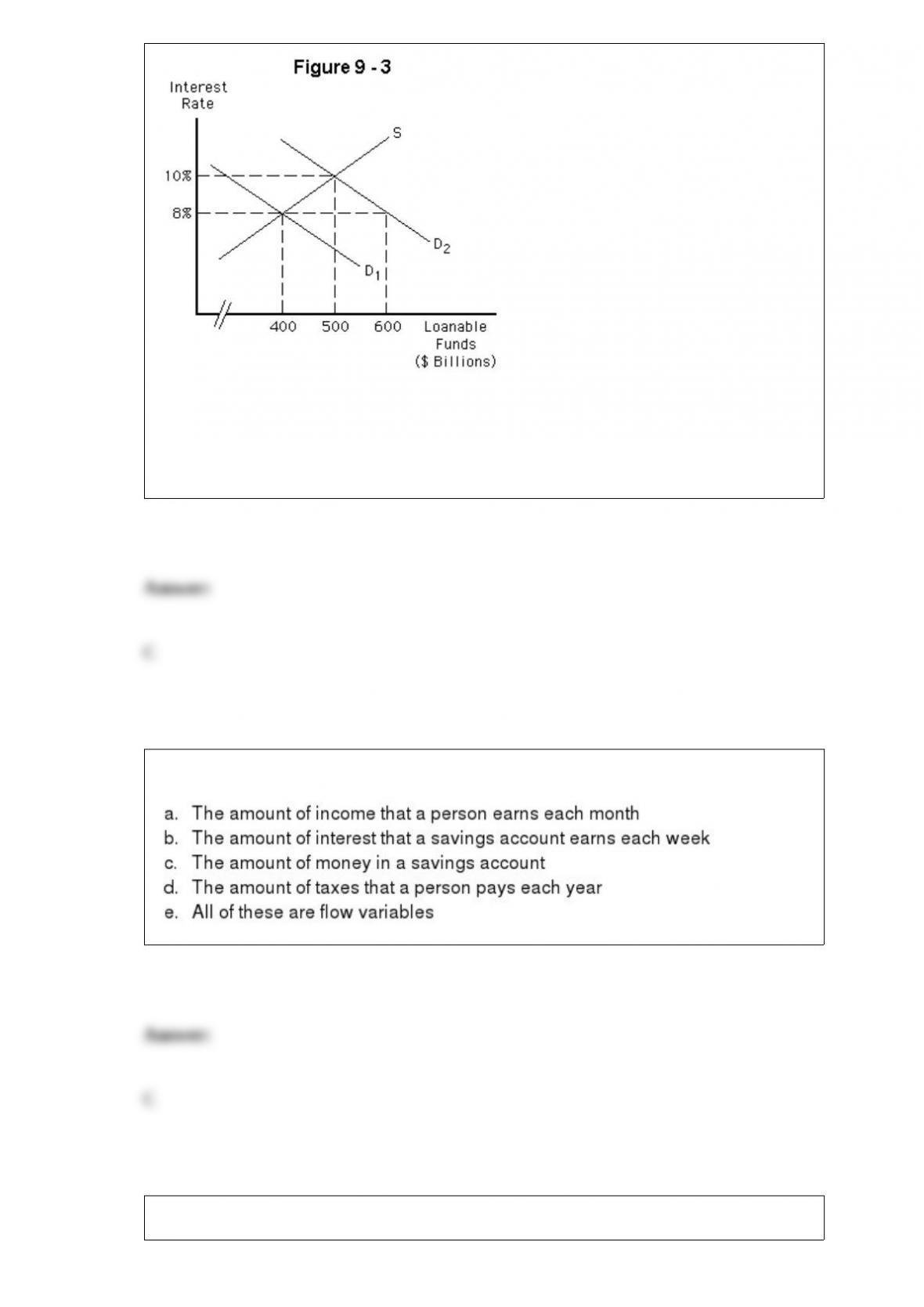
a. $400 billion and leave the interest rate unchanged
b. $100 billion and leave the interest rate unchanged
c. $100 billion and increase the interest rate by 2 percentage points
d. $200 billion and leave the interest rate unchanged
e. $500 billion and increase the interest rate by 2 percentage points
Which of the following is not an example of a flow variable?
The primary reason that U.S. money has value is that it
a. is backed by gold
b. is fiat money
c. is accepted by others in exchange for goods and services
d. is commodity money
e. has a fixed value established by the Federal Reserve.
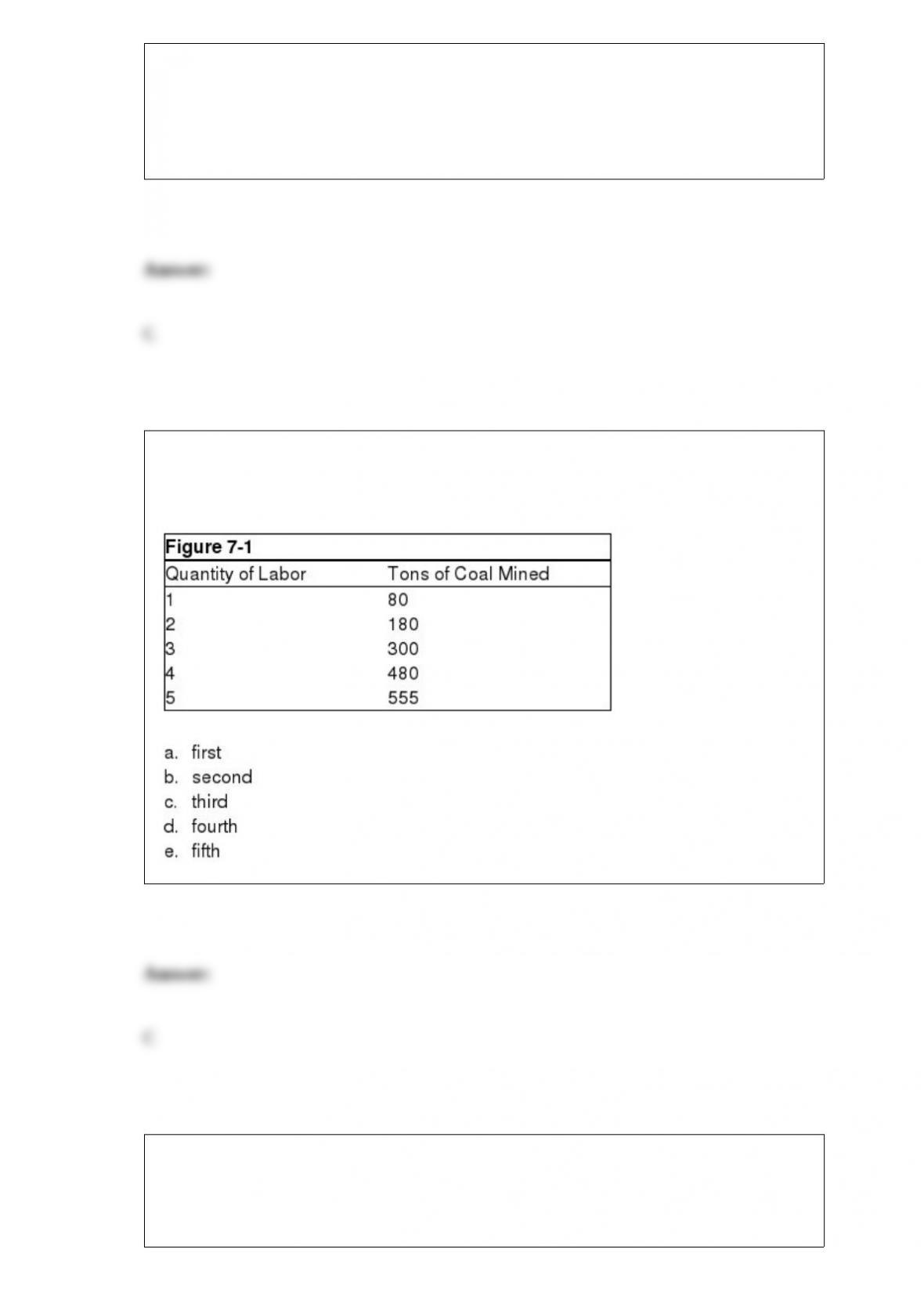
Figure 7-1 shows the amounts of coal that a mining company could produce per week
by changing the number of workers while capital and technology remain constant.
Which worker has a marginal product of 120 tons of coal?
In Figure 16-4, which of the following is true?
Figure 16-4
Number of workers needed to produce one unit of each of the following goods:
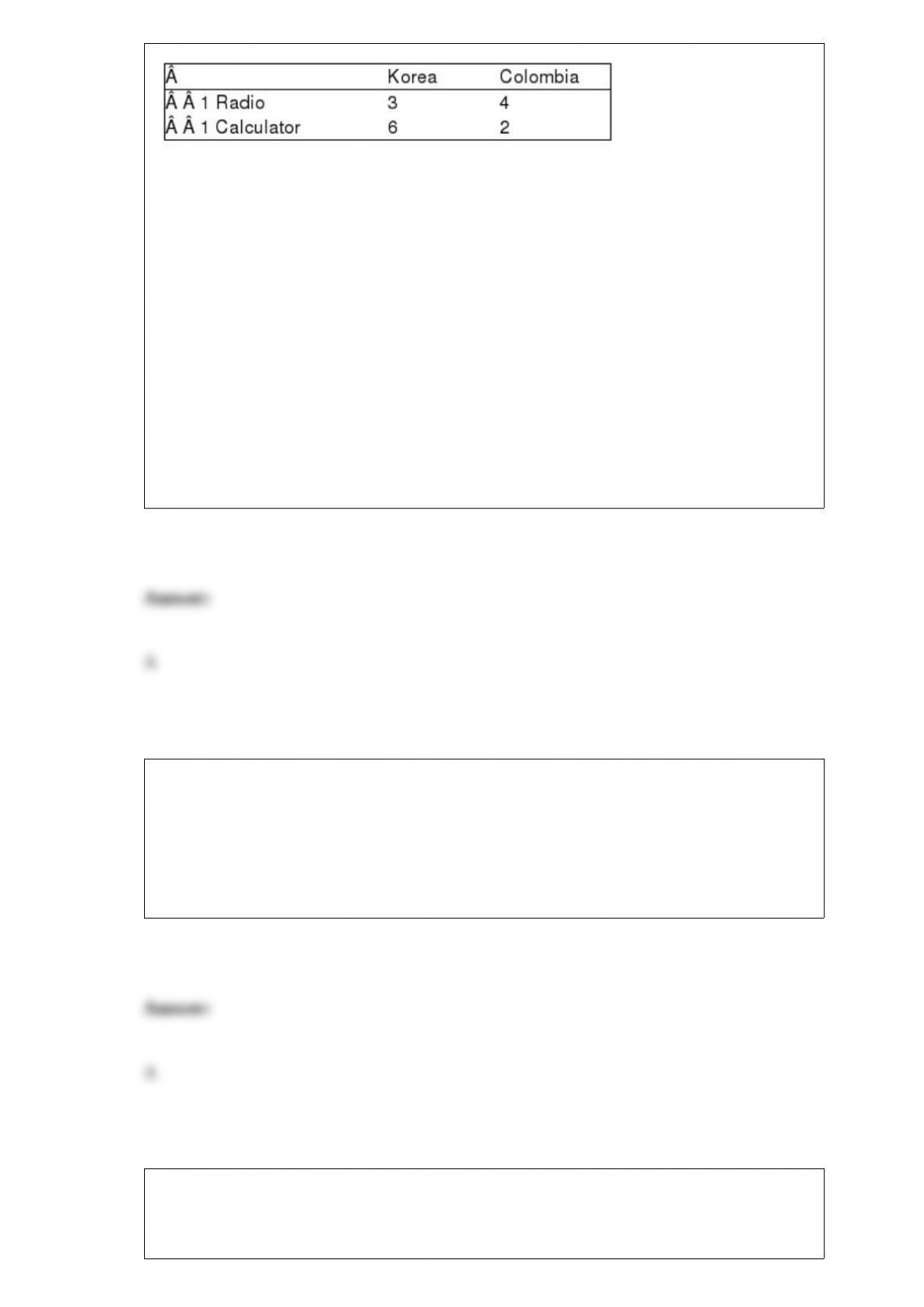
a. Gains from trade are possible if Korea produces radios and Colombia produces
calculators.
b. No gains from trade are possible since neither country has an absolute advantage in
producing both radios and calculators.
c. Gains from trade are not possible if Korea produces calculators and Colombia
produces radios.
d. No trade will occur because neither country has a comparative advantage in
producing either good.
e. No trade will occur because neither country has a comparative advantage in
producing both radios and calculators.
The Phillips curve reflects
a. the short-run tradeoff between inflation and unemployment
b. short- and long-run tradeoffs between unemployment and inflation
c. the long-run tradeoff between inflation and unemployment
d. the income distribution effects of inflation
e. short-run fluctuations in GDP
A shock that could trigger an expansion is a
a. large increase in oil prices
b. financial crisis
c. sudden cutback in military spending
d. large decrease in oil prices
e. sudden increase in the interest rate
In the vicious cycle of discrimination,
If bond prices rise in the secondary market,
a. the interest rate rises in the secondary market
b. the interest rate rises in the primary market
c. this has no impact on the primary market
d. they fall in the primary market
e. they also rise in the primary market
Newly constructed homes are classified as
a. private consumption
b. housing services
c. housing supply
d. investment
e. construction.
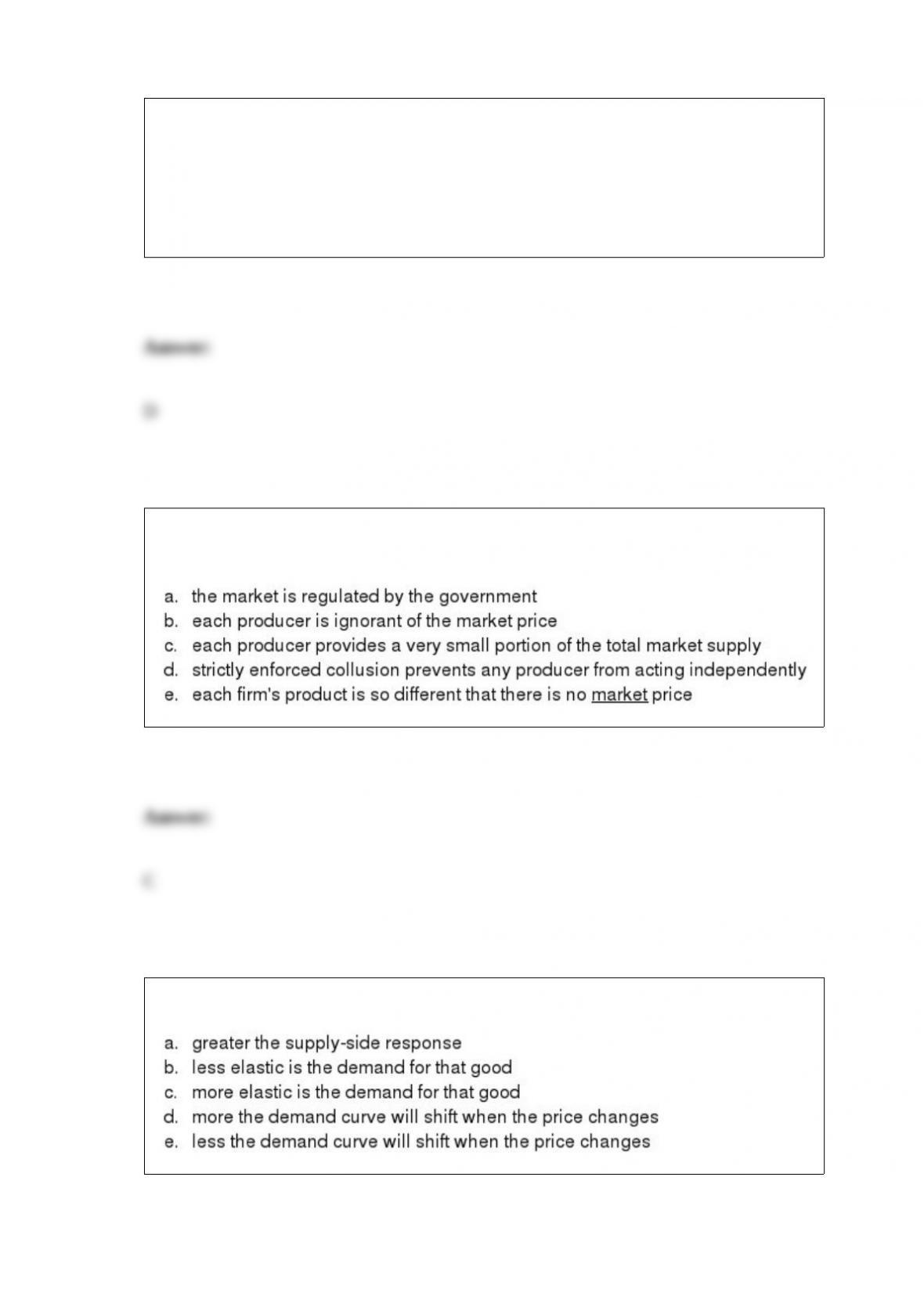
In perfect competition, no individual producer can significantly affect the market price
because
In general, the more of an individual’s total budget that is spent on a given product, the

When a non-discriminating monopolist is maximizing profit, its marginal revenue