
An increase in the minimum wage will have a large effect on the number of workers
employed in minimum wage occupations if:
A) demand for workers is elastic.
B) demand for workers is inelastic.
C) supply of workers is elastic.
D) supply of workers is inelastic.
The concept of Nash Equilibrium:
A) has wide applicability.
B) is limited in its applicability to economic behavior because firms do not follow their
dominant strategies.
C) is limited in its applicability to economic behavior because firms generally follow
their dominant strategies.
D) has been disproven by modern economists.
A discovered price is:
A) the lowest price found so far in a search process.

B) a retail price listed on a product.
C) a negotiated price for a product or service.
D) the price at which a consumer is indifferent about additional search for a lower price.
Ceteris paribus, if more alternative forms of energy become available, we would expect
the demand for gasoline to become:
A) more elastic.
B) more inelastic.
C) perfectly elastic.
D) perfectly inelastic.
If we compare the effects of a pollution tax with those of a command-and-control
policy, production cost will be:
A) the same under a command-and-control policy and a pollution tax.
B) higher under a command-and-control policy than they would be under a pollution
tax.
C) less under a command-and-control policy than they would be under a pollution tax.
D) none of the above
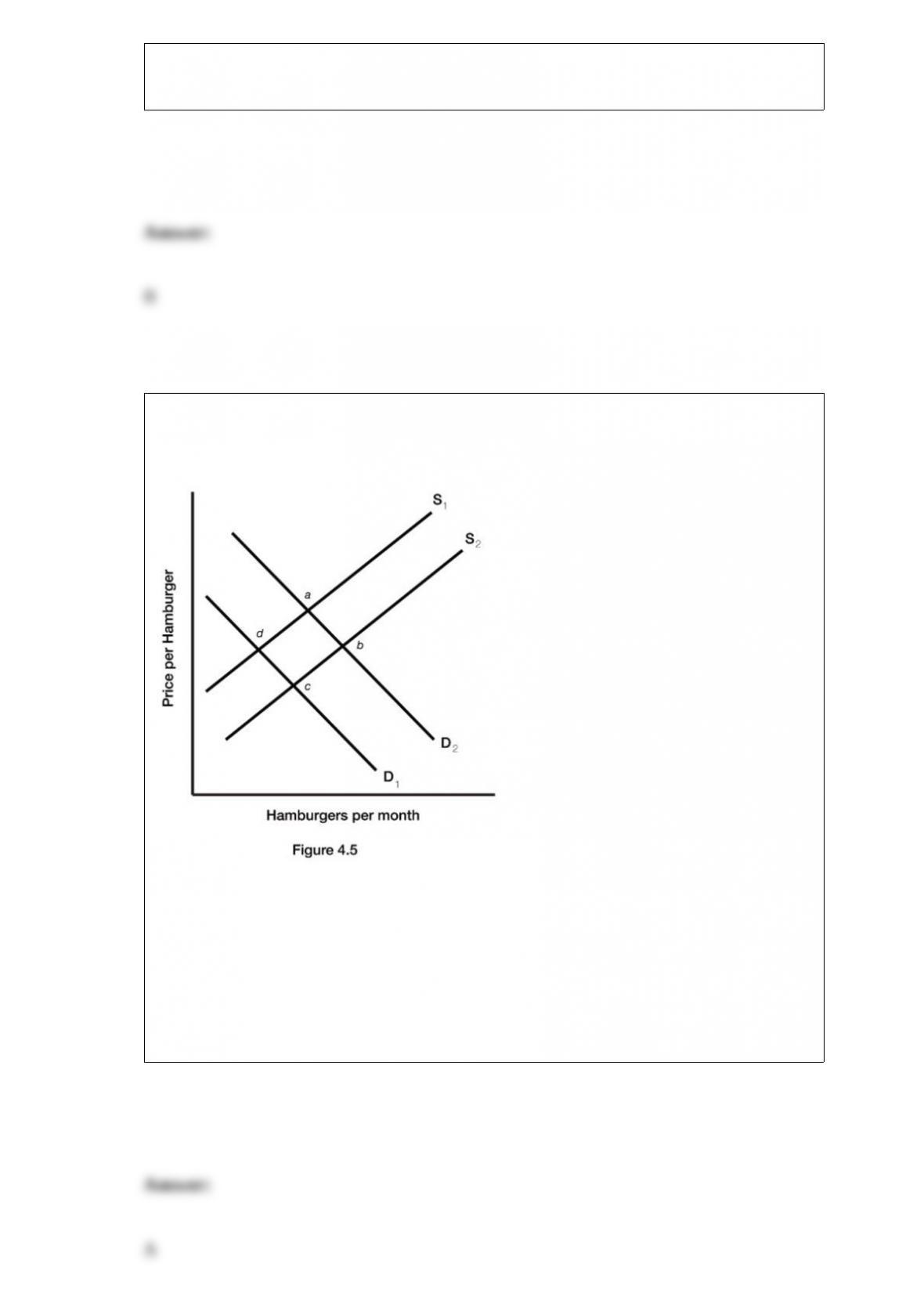
Figure 4.5 illustrates a set of supply and demand curves for hamburgers. An increase in
supply and an increase in quantity demanded are represented by a movement from:
A) point a to point b.
B) point a to point c.
C) point d to point b.
D) point c to point d.

Suppose that Anne buys three pairs of designer shoes at $200 a pair. If the price equals
the amount Anne is willing to pay for the third pair, then:
A) she earned no consumer surplus.
B) she might have earned some consumer surplus on the first two pairs of shoes.
C) she would have earned consumer surplus if she bought one more pair of shoes.
D) she would have earned more consumer surplus if she bought one fewer pair of
shoes.
Suppose that in October the price of a cup of cafe latte was $1.50 and 400 lattes were
consumed. In November the price of a latte was $2.00 and 200 lattes were consumed.
What might have caused this change?
A) The price of tea (a substitute for cafe lattes) fell.
B) The price of tea (a substitute for cafe lattes) rose.
C) The price of coffee beans (an input of production of cafe lattes) rose.
D) The price of coffee beans (an input of production of cafe lattes) fell.
Which of the following would be an example of an external benefit?

A) More people start to ride the bus and as a result air pollution is reduced.
B) Firms are able to reduce their costs of production by using a more efficient
technology.
C) The government requires polluting firms to pay a special tax.
D) A firm has just gotten permission to open a landfill on property that is adjacent to
your home.
A policy of average-cost pricing will initially ________ price for a natural monopoly,
but as costs increase price will ________.
A) increase; not change
B) decrease; increase
C) decrease; not change
D) increase; decrease
Refer to Table 10.3. The competitive industry will choose to produce ________ units of
output.

Table 10.3
A) 4
B) 5
C) 6
D) 7
Joe runs a business and needs to decide how many hours to stay open. Figure 2.2
illustrates his marginal benefit of staying open for each additional hour.
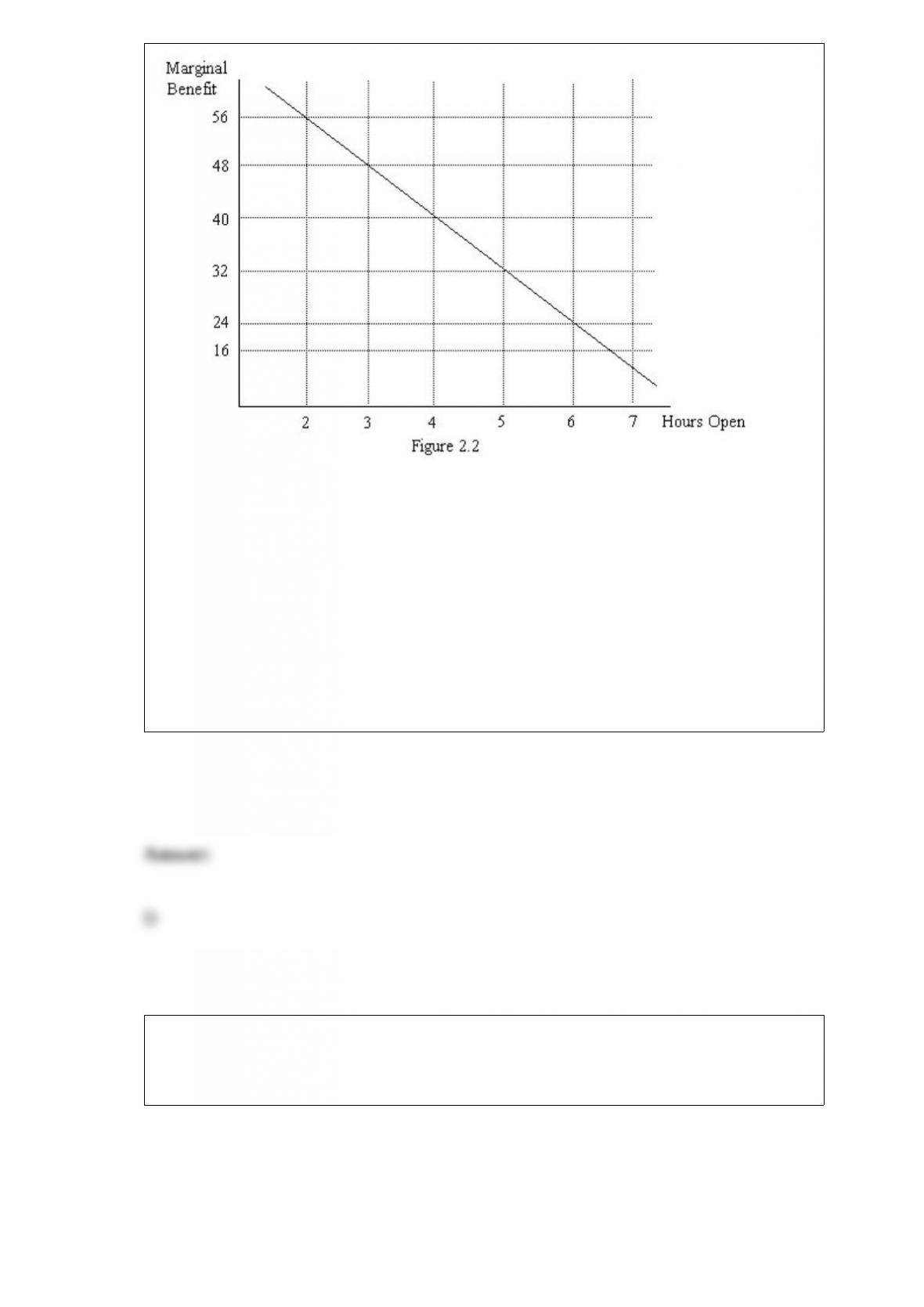
Suppose that we observe Joe staying open 3 hours per day. If he is following the
marginal principle, what must his marginal cost per hour be?
A) $24
B) $32
C) $40
D) $48
Figure 4.5 illustrates the supply of guitars. If the government offered a subsidy to guitar
manufacturers for each guitar they produce, this would most likely cause a movement
from:
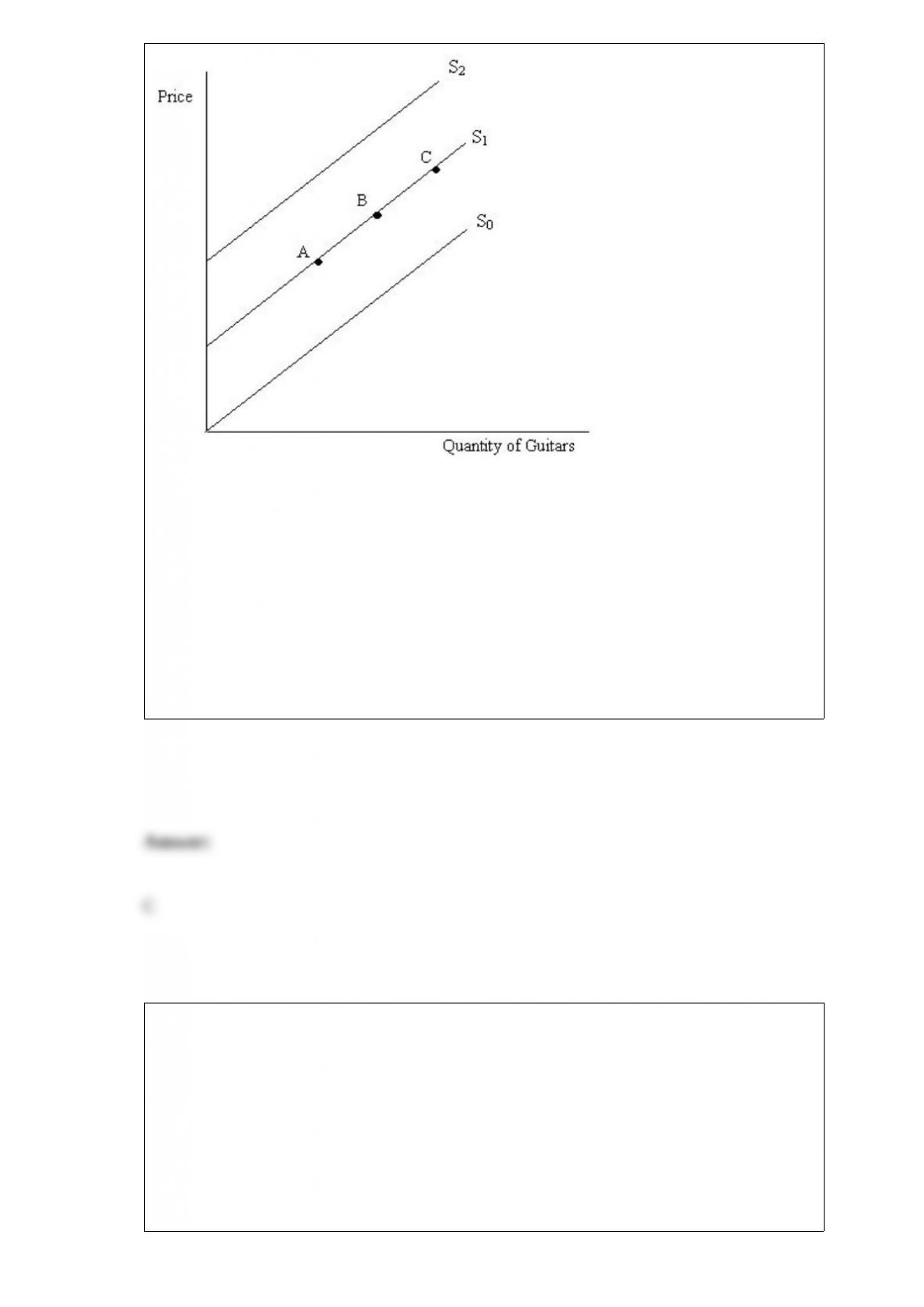
Figure 4.5
A) point B to point C.
B) point B to point A.
C) S1 to S0.
D) S1 to S2.
If the price elasticity of demand is 1, demand is:
A) upward sloping.
B) inelastic.
C) unitary elastic.
D) elastic.

Recall the application about the market for free-agent pitchers and how they are similar
to used cars. In the market for used baseball pitchers:
A) free agency has eliminated the adverse selection problem.
B) pitchers who switch teams are generally healthier than those who do not.
C) asymmetric information leads to adverse selection.
D) both A and B
The Clayton Act:
A) prohibited predatory pricing.
B) outlawed tie-in sales contracts.
C) extended antitrust legislation to proprietorships and partnerships.
D) all of the above

A consumer should increase her consumption of good X relative to good Y if:
A) the marginal benefit per dollar spent on good X is greater than the marginal benefit
per dollar spent on good Y.
B) the marginal benefit per dollar spent on good X is smaller than the marginal benefit
per dollar spent on good Y.
C) the marginal benefit per dollar spent on good X is the same as the marginal benefit
per dollar spent on good Y.
D) none of the above
A monopolist will never produce at a quantity where the:
A) MR < 0.
B) MR > 0.
C) P > MR.
D) MR= MC.
Imagine that an upward sloping line is depicted in a graph with income per week on the
y-axis and hours worked per week on the x-axis. From the graph, we can conclude that:

A) income and hours worked are negatively related.
B) income and hours worked per week are positively related.
C) hours worked are not related.
D) income and hours worked are equal.
What is the total surplus of a market?
A) the sum of consumer surplus and producer deficit
B) the sum of consumer surplus and producer surplus
C) the difference between the consumer surplus and producer surplus
D) the difference between the highest price that a consumer is willing to pay and the
lowest price that a producer is willing to sell
The first antitrust legislation was the:
A) Sherman Act.
B) Clayton Act.
C) Federal Trade Commission Act.

D) Robinson-Patman Act.
A normal good is defined as a good for which demand decreases when:
A) the price increases.
B) income increases.
C) the price decreases.
D) income decreases.
Other things being equal, if the demand for a taxed good is relatively elastic, that is, the
demand curve is relatively ________ consumers pay a ________ part of the tax.
A) steep; large
B) steep; small
C) flat; large
D) flat; small
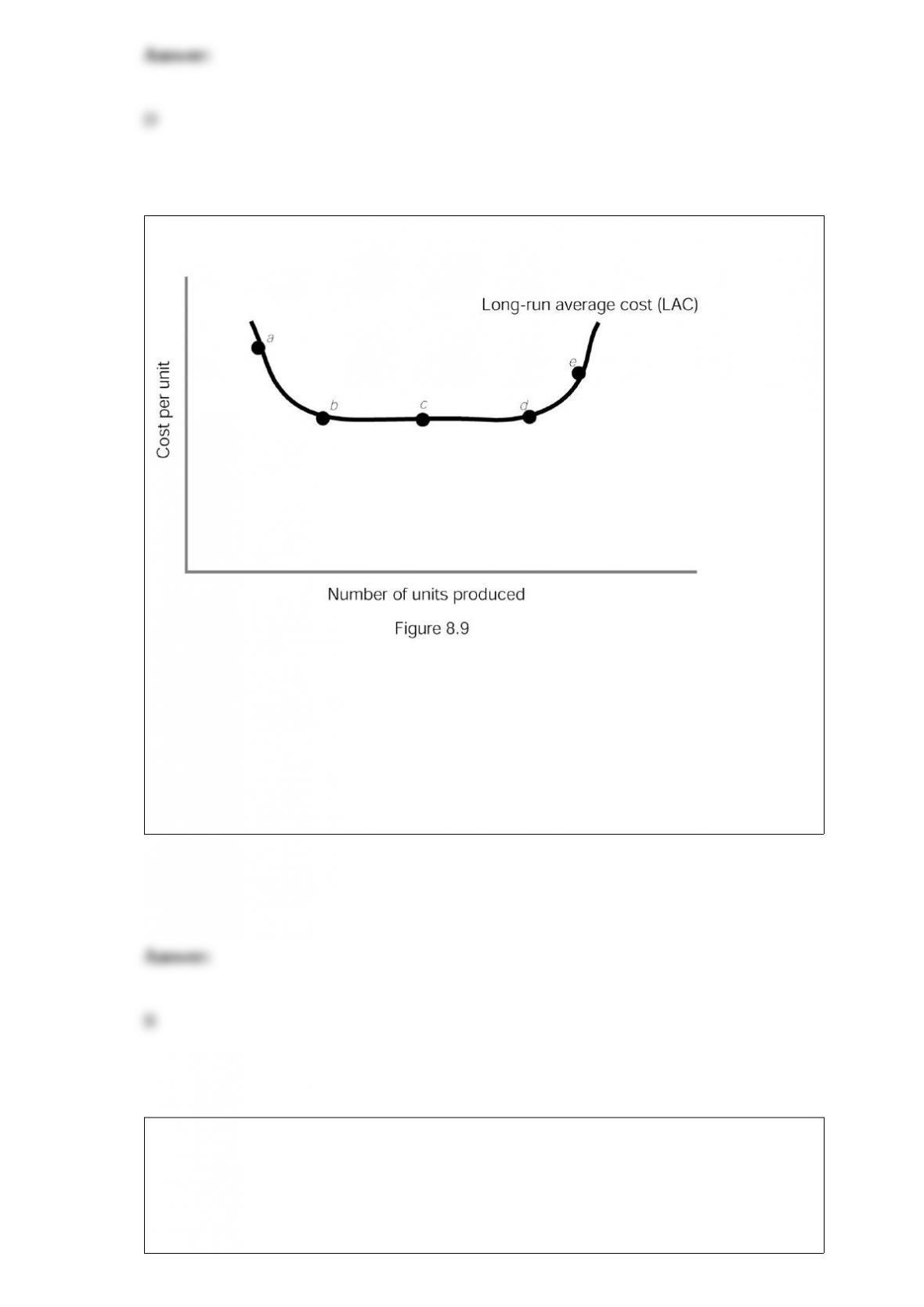
Which segment of the LAC in Figure 8.9 represents constant returns to scale?
A) ab
B) cd
C) de
D) all of the above
Marginal cost equals average total cost:
A) when average total cost is at its minimum point.
B) when marginal cost is at its minimum point.
C) when average variable cost is at its minimum point.
D) when there are no fixed costs.
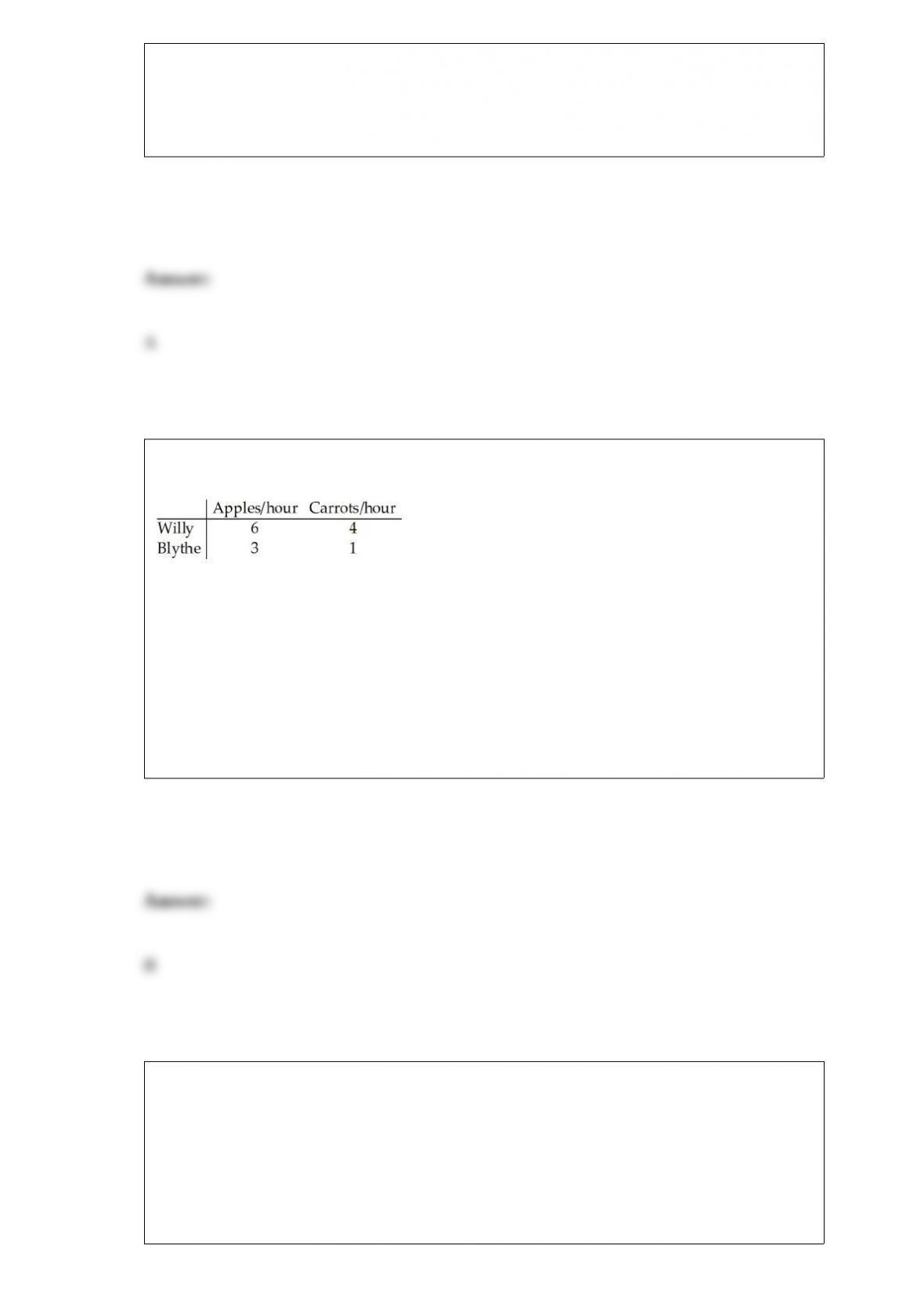
Table 3.1 illustrates Willy and Blythe’s hourly production for apples and carrots. Based
on the table, Willy’s opportunity cost of 1 apple is:
Table 3.1
A) 1 carrot.
B) 2/3 carrot.
C) 4 carrots.
D) 6 carrots.
The domination of the used car market by lemons is an example of the ________
problem.
A) adverse selection
B) moral hazard

C) perfect information
D) marginal analysis
Additional Application
Late in the day on August 7, 2006 numerous U.S. airlines cut their fares on leisure
travelers. These included American Airlines, Delta, Continental, and Southwest. This
fare cut, which was approximately 4 to 8 percent, occurred during a period of rising fuel
costs and a record number of seats being filled. If costs are up and demand is strong,
why did these airlines reduce their prices on this class of passengers? The explanation is
that they were following the lead of United. United Airlines is the implicit price leader
in this industry and many other carriers watch closely what the leader does and base
their decisions on the leader’s actions. Such behavior is not uncommon in an industry
dominated by a few large firms.
“United Airlines sparks fare war,” August 9, 2006, retrieved November 3, 2006 from
http://money.cnn.com/2006/08/09/news/companies/airfares/index.htm.
What market structure does the airline industry most likely resemble?
A) monopoly
B) oligopoly
C) monopolistic competition
D) perfect competition
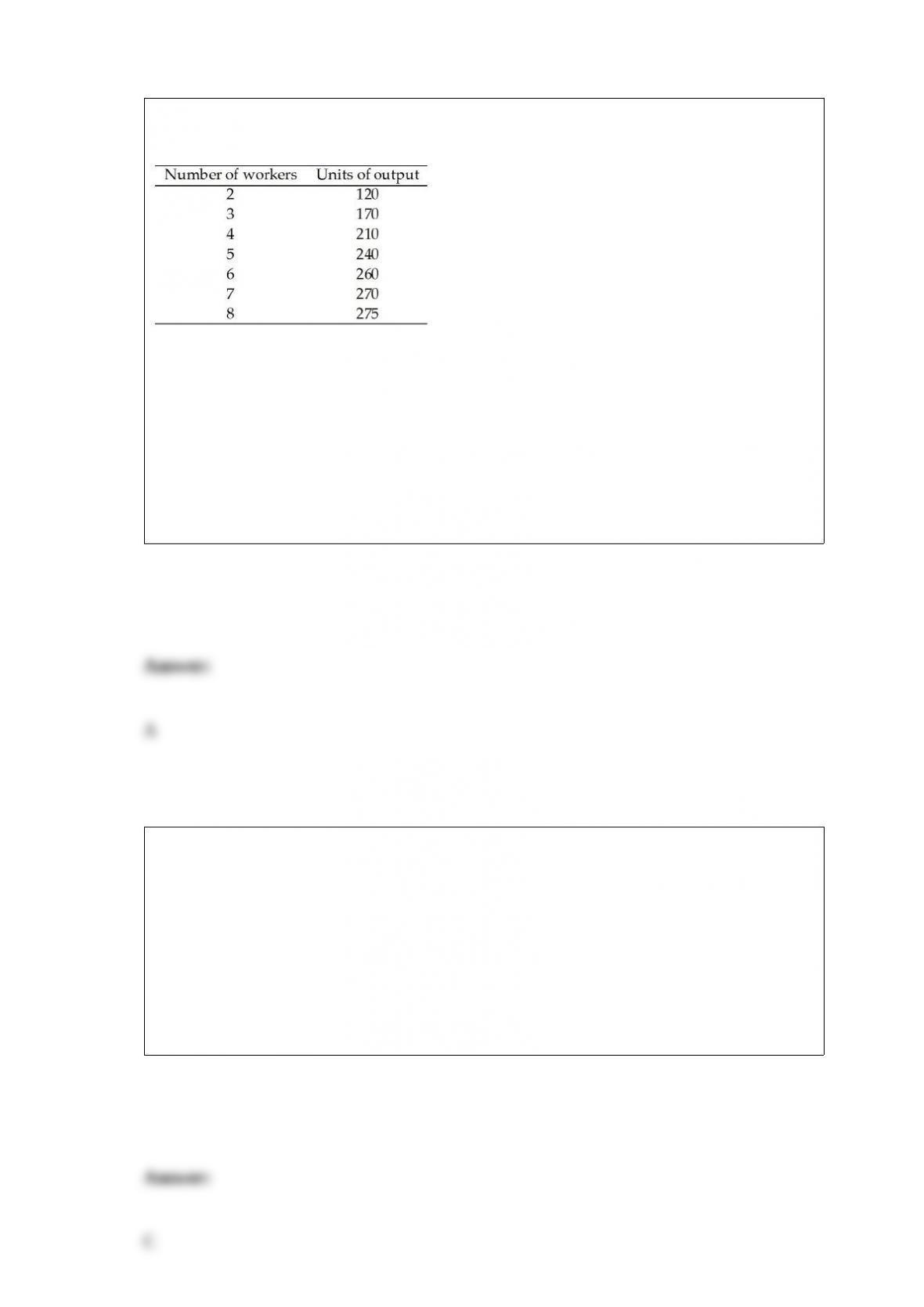
Refer to Table 17.2. If the price of output is $2 per unit and the wage rate is $40, how
many workers should be hired?
Table 17.2
A) six workers
B) five workers
C) four workers
D) three workers
The price elasticity of supply is generally:
A) negative.
B) zero.
C) positive.
D) decreasing at an increasing rate.
Consider a perfectly competitive market. What do you expect to happen to the number
of firms and firm profitability in the short run and long run if demand for the product
falls?
Suppose that you lend $1,000 to a friend who pays you back $1,100 the next year.
Suppose that prices that year rose by 8% and the real rate of return in the stock market
was 4%. Your friend says that he or she was being more than fair by giving you more
than the rate of inflation as a return. What do you think?
Compare the outcomes in terms of price charged and output produced of the following
three oligopoly models: the cartel model, the price leadership model, and the kinked
demand curve model.

When people exchange things, trading what they have for what they want, it is called a
________ economy.
Explicit price fixing is illegal, firms then relay on implicit pricing agreements. What
happens under the model of price leadership?
Explain how cash incentives to the poor affect incentives to work.
Suppose that you’re the manager of a firm. You notice that when you raised your price
from $10 to $11, sales fell from 500 to 400. Should you raise your price more?
Can a firm experience diminishing returns in the long run?
Consider the following weekly production possibilities of gloves and hats in Panama
and Russia:
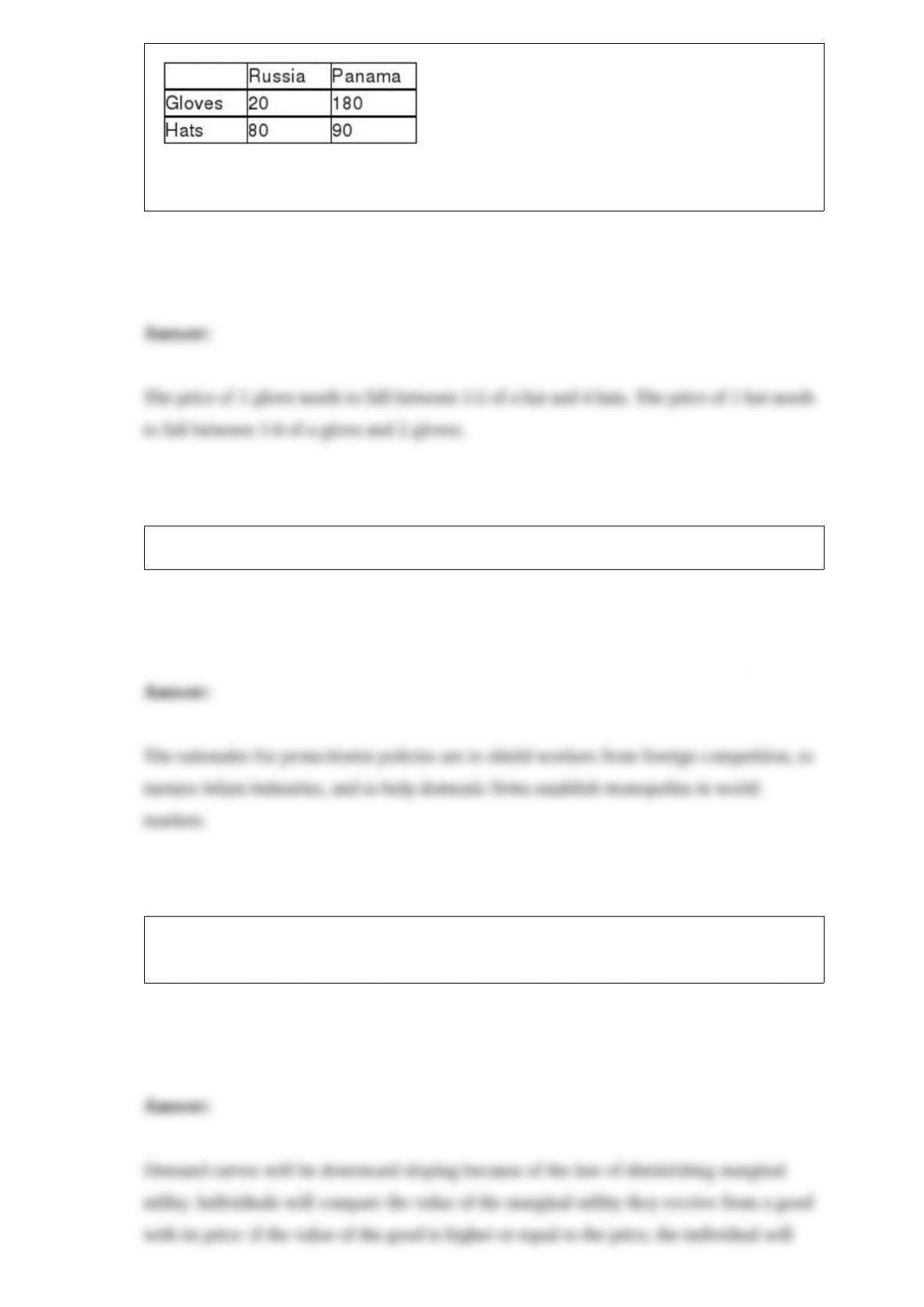
What is the possible range of terms of trade between Panama and Russia?
What are the rationales for protectionist policies?
What does diminishing marginal utility imply about the shape of a person’s demand
curve? Explain.
How does rent-seeking behavior result in additional deadweight loss?
For what kinds of goods are buyers most likely to seek additional information about
quality?
Suppose that the price elasticity of demand for an ice cream cone is 1.9. If the local ice
cream shop owner wants to increase total revenue, what would you recommend he or
she do?
Explain the process by which long-run equilibrium will be achieved in a
monopolistically competitive industry if some firms are incurring losses.
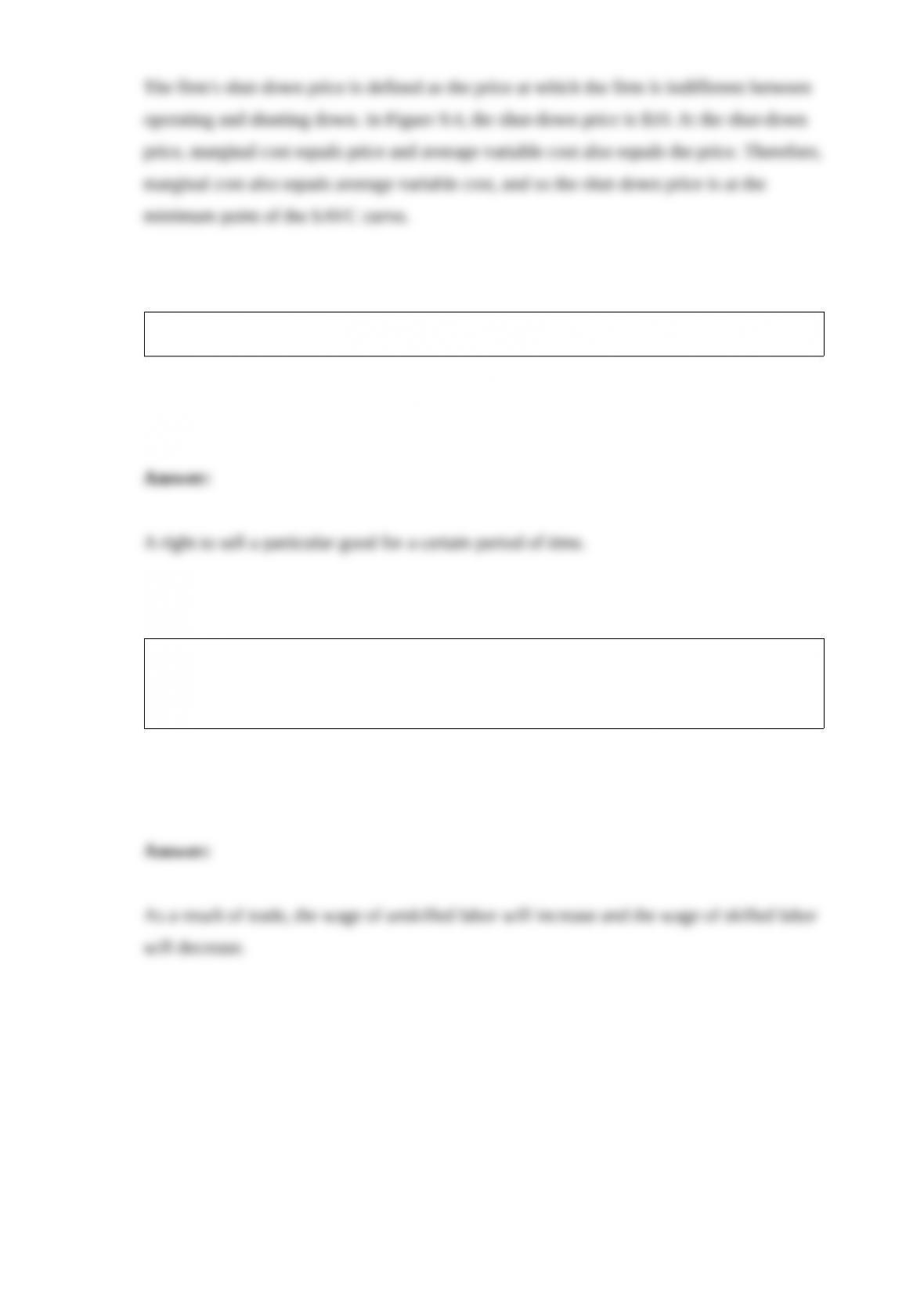
Figure 9.4 represents a perfectly competitive firm’s costs. Illustrate the firm’s shut-down
price on the graph. Explain.
Figure 9.4
What is a patent?
Consider a nation that has a comparative advantage in the production of goods using
unskilled labor. What types of workers will benefit from increased trade, and what type
will lose?