
Suppose a positive technological change in the production of disease-resistant corn
caused the price of corn to fall. Holding everything else constant, how would this affect
the market for wheat (a substitute for corn)?
A) The supply of wheat would increase and the equilibrium price of wheat would
decrease.
B) The demand for wheat would decrease and the equilibrium price of wheat would
decrease.
C) The demand for wheat would increase because consumers could afford to buy more
wheat and corn.
D) The demand for wheat would decrease and the equilibrium price of wheat would
increase.
A firm has an incentive to decrease supply now and increase supply in the future if it
expects that
A) more firms will enter the market in the future.
B) the prices of inputs used to produce the product will rise in the future.
C) the price of its product will be lower in the future than it is today.
D) the price of its product will be higher in the future than it is today.
Which of the following statements is true?
A) Economic efficiency would be increased if the United States eliminated all of its

trade restrictions, but only if all other countries eliminated their trade restrictions too.
B) The U. S. economy would gain from the elimination of its tariffs but not from the
elimination of its quotas.
C) Eliminating its tariffs and quotas unilaterally would not benefit the United States
because this would remove the leverage it would have to persuade other countries to
eliminate their trade restrictions.
D) The U.S. economy would gain from the elimination of tariffs and quotas even if
other countries do not reduce their tariffs and quotas.
The tax wedge is the difference between the
A) amount of taxes needed to balance the federal budget and the actual amount of taxes.
B) amount of taxes needed to pay off the national debt and the actual amount of taxes.
C) pretax and posttax returns to an economic activity.
D) nominal and real interest rates.
Figure 18-1

Refer to Figure 18-1. Suppose that the U.S. government deficit causes interest rates in
the United States to rise relative to those in the European Union. Assuming all else
remains constant, how would this be represented?
A) Supply would decrease, demand would decrease and the economy moves from B to
C to D.
B) Supply would increase, demand would decrease and the economy moves from C to
B to A.
C) Supply would decrease, demand would increase and the economy moves from A to
D to C.
D) Supply would increase, demand would increase and the economy moves from D to
A to B.
The Bureau of Labor Statistics would categorize a person as ________ if they were
temporarily away from their job because they were ill.
A) employed
B) unemployed
C) a discouraged worker
D) out of the labor force
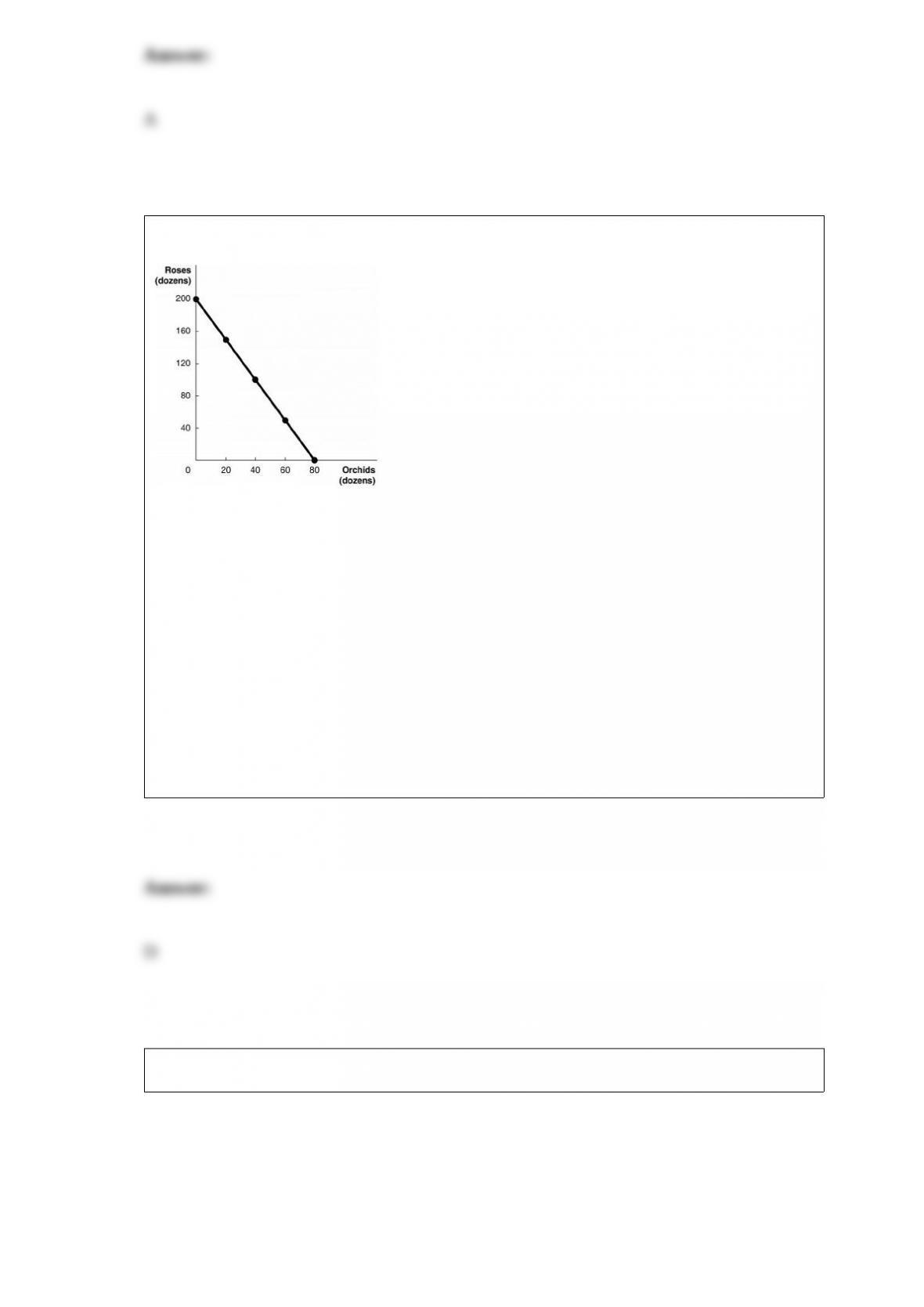
Figure 2-2
Figure 2-2 above shows the production possibilities frontier for Vidalia, a nation that
produces two goods, roses and orchids.
Refer to Figure 2-2. If Vidalia chooses to produce 60 dozen orchids, how many roses
can it produce to maximize production?
A) 30 dozen roses
B) 50 dozen roses
C) 100 dozen roses
D) 150 dozen roses
Figure 2-2
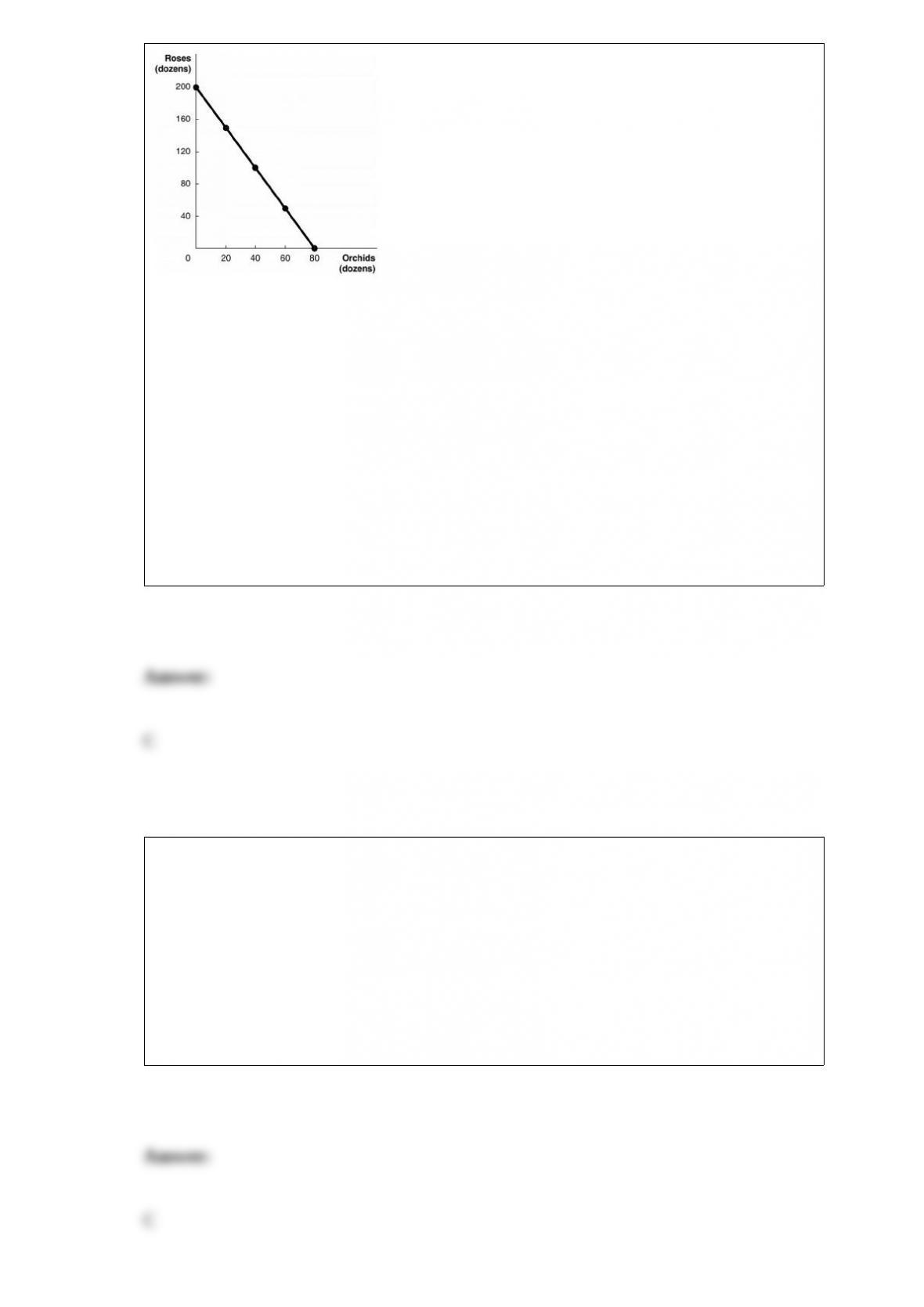
Figure 2-2 above shows the production possibilities frontier for Vidalia, a nation that
produces two goods, roses and orchids.
Refer to Figure 2-2. If Vidalia chooses to produce 50 dozen roses, how many orchids
can it produce to maximize production?
A) 20 dozen orchids
B) 40 dozen orchids
C) 60 dozen orchids
D) 80 dozen orchids
A firm’s net worth is calculated as
A) the difference between a firm’s revenues and explicit costs.
B) the difference between a firm’s revenues and implicit costs.
C) the difference between a firm’s assets and liabilities.
D) the difference between a firm’s liabilities and outstanding equities.

Which of the following is an appropriate policy for the Fed to pursue if it wants to
increase the money supply?
A) raise the reserve requirement
B) raise the discount rate
C) buy U.S. Treasury bills
D) lower taxes
If the Commerce Department adjusts the growth rate of GDP downward for the first
quarter of 2014, and the Bureau of Labor Statistics adjusts the number of hours worked
upward for the first quarter of 2014, what will the Bureau of Labor Statistics do in
terms of revising the figures on the growth rate of labor productivity for the first quarter
of 2014?
A) The BLS will adjust the growth rate downwards.
B) The BLS will adjust the growth rate upwards.
C) The BLS will not change the growth rate of productivity.
D) The BLS will adjust the level of labor productivity upward and the growth rate
downward.
A federal budget deficit ________ interest rates, which ________ exchange rates

(foreign currency per domestic currency), and ________ the balance of trade.
A) raises; raises; reduces
B) reduces; raises; reduces
C) raises; reduces; reduces
D) reduces; reduces; raises
Suppose the Fed purchases Treasury Securities. Interest rates in the United States will
________ and the U.S. dollar will ________ against foreign currencies.
A) decrease; appreciate
B) decrease; depreciate
C) increase; depreciate
D) increase; appreciate
According to economists Robert Lucas and Thomas Sargent, the apparent short-run
trade-off between unemployment and inflation in the 1950s and 1960s was the result of
A) unexpected changes in monetary policy.
B) expected changes in monetary policy.
C) unexpected changes in fiscal policy.

D) expected changes in fiscal policy.
Competition among sellers generates
A) productive efficiency.
B) allocative efficiency.
C) equity.
D) scarcity.
All ________ economies have been political dictatorships.
A) centrally planned
B) mixed
C) market
D) mixed and market
The international trade effect states that
A) an increase in the price level will raise net exports.
B) an increase in the price level will lower net exports.
C) an increase in the price level will raise exports.
D) an increase in the price level will lower imports.
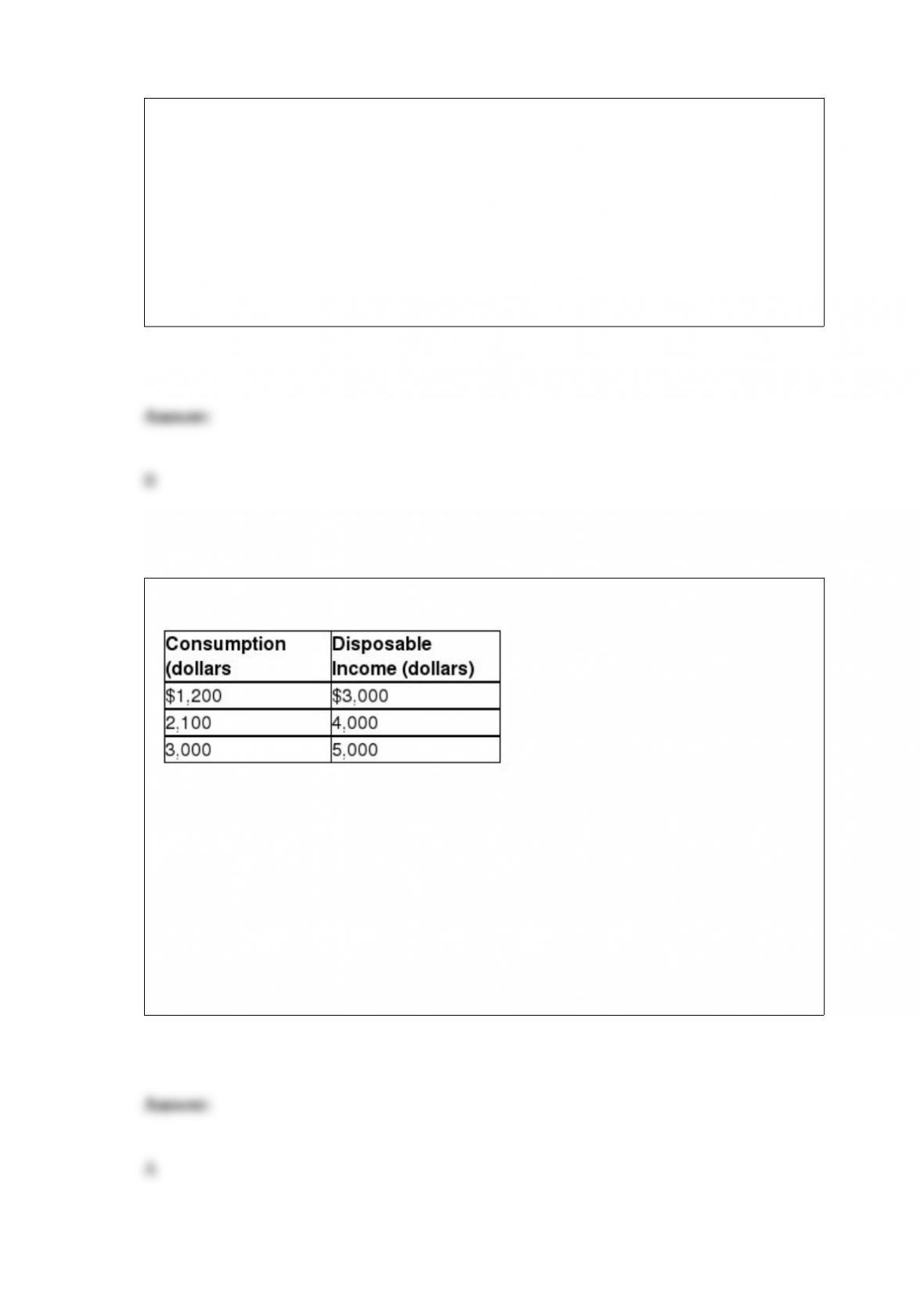
Table 12-3
Refer to Table 12-3. Given the consumption schedule in the table above, the marginal
propensity to save is
A) 0.1.
B) 0.4.
C) 0.7.
D) 0.9.

To make the calculation of real GDP more accurate, in 1996 the BEA switched to using
A) base-year prices.
B) current prices.
C) chain-weighted prices.
D) market prices.
How can a partnership raise funds needed for firm expansion?
Suppose the current inflation rate and the expected inflation rate are both 3 percent. The
current unemployment rate and the natural rate of unemployment are both 4 percent.
Use a Phillips curve graph to show the effect on the economy of a severe supply shock.
If the Federal Reserve keeps monetary policy unchanged, what will eventually happen
to the unemployment rate? Show this on your Phillips curve graph.
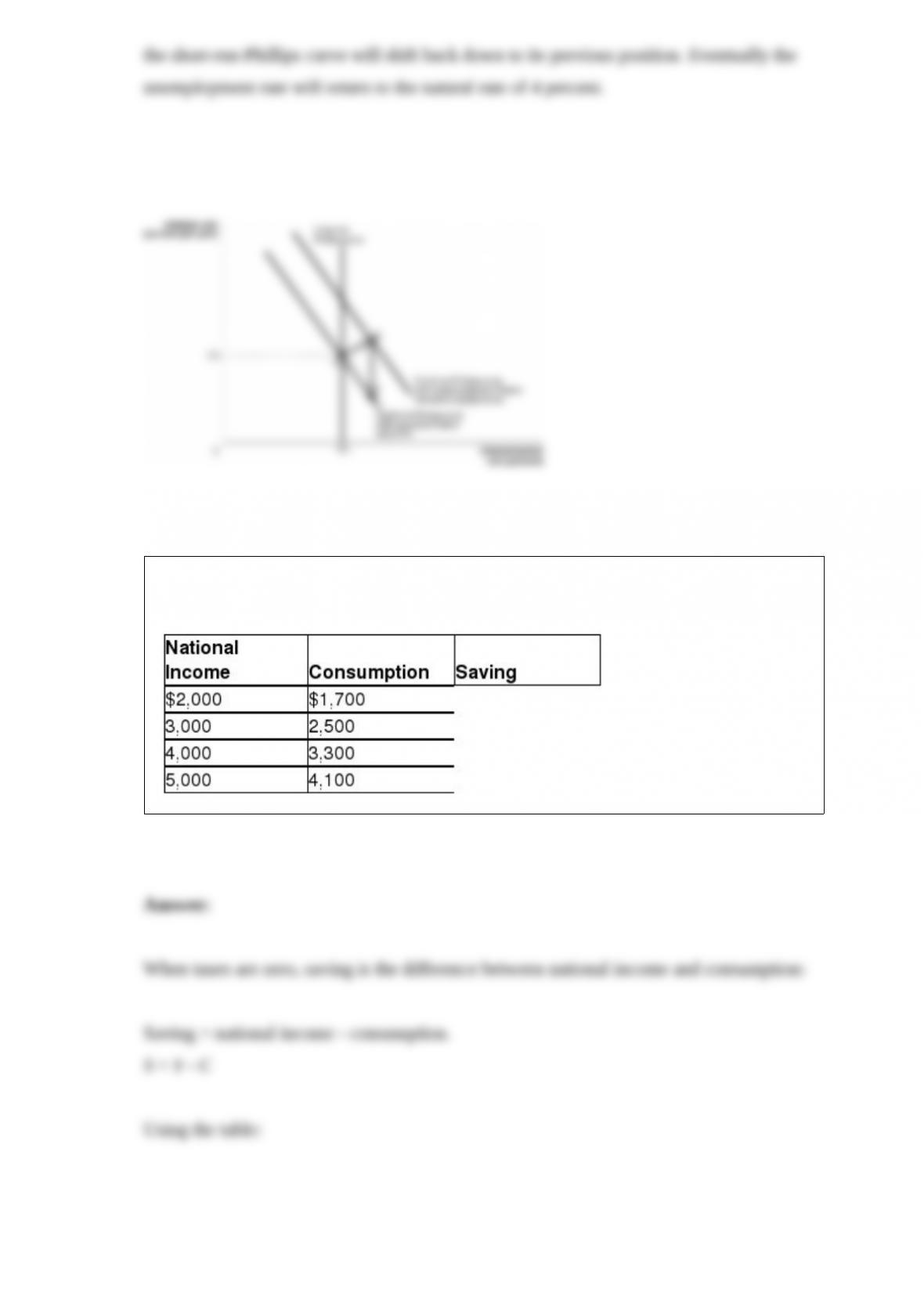
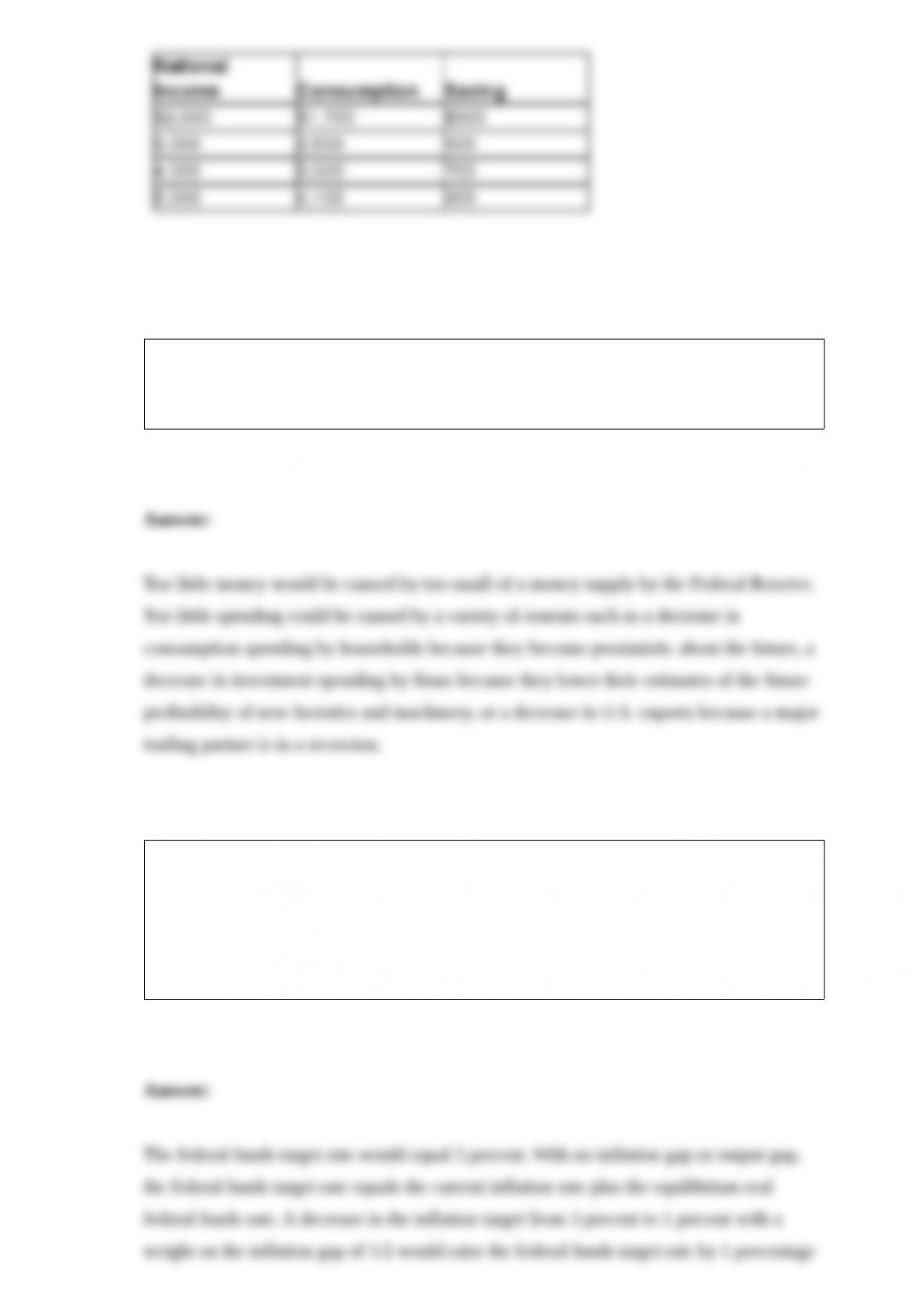
Given Table 12-8 below, fill in the values for saving. Assume there are no taxes.
Table 12-8
The problem typically during a recession is not that there is too little money, but too
little spending. If the problem was too little money, what would be its cause? If the
problem was too little spending, what could be its cause?
Consider the Taylor rule for the target of the federal funds rate. Suppose the equilibrium
real federal funds rate is 2 percent, the target rate of inflation is 3 percent, the current
inflation rate is 3 percent, real GDP equals potential real GDP, and the weights are 1/2
for the inflation gap and the output gap. Using the Taylor rule, what does the target for
the federal funds rate equal? Next, if the Federal Reserve lowered the target for the
inflation rate to 1 percent, how much would the target for the federal funds rate change?
In the dynamic aggregate demand and aggregate supply model, what is the result of
aggregate demand increasing slower than potential real GDP?
Last year, the unemployment rate was 4 percent and the inflation rate was 3 percent. If
the natural rate of unemployment is 3 percent, how do you expect inflation to change?
How would you expect the Fed to respond to a negative supply shock in the economy?
Explain the meaning of the word “convergence” in the context of economic growth and
standards of living.