Identify each of the following as (i) part of an expansionary fiscal policy, (ii) part of a
contractionary fiscal policy, or (iii) not part of fiscal policy. a. The personal income tax
rate is lowered.
b. Congress cuts spending on defense.
c. College students are allowed to deduct tuition costs from their federal income taxes.
d. The corporate income tax rate is lowered.
e. The state of Nevada builds a new tollway in an attempt to expand employment and
ease traffic in Las Vegas.
If the consumption function is defined as C = 7,250 + 0.8Y, what is the multiplier?
A) 0.2
B) 0.8
C) 1.25
D) 5

Which of the following is the largest category of federal government expenditures?
A) defense spending
B) transfer payments
C) interest on the debt
D) grants to state and local governments
Which of the following government provisions would help increase the accumulation of
knowledge capital?
A) patents
B) copyrights
C) education subsidies
D) All of the above are correct.
Table 18-8
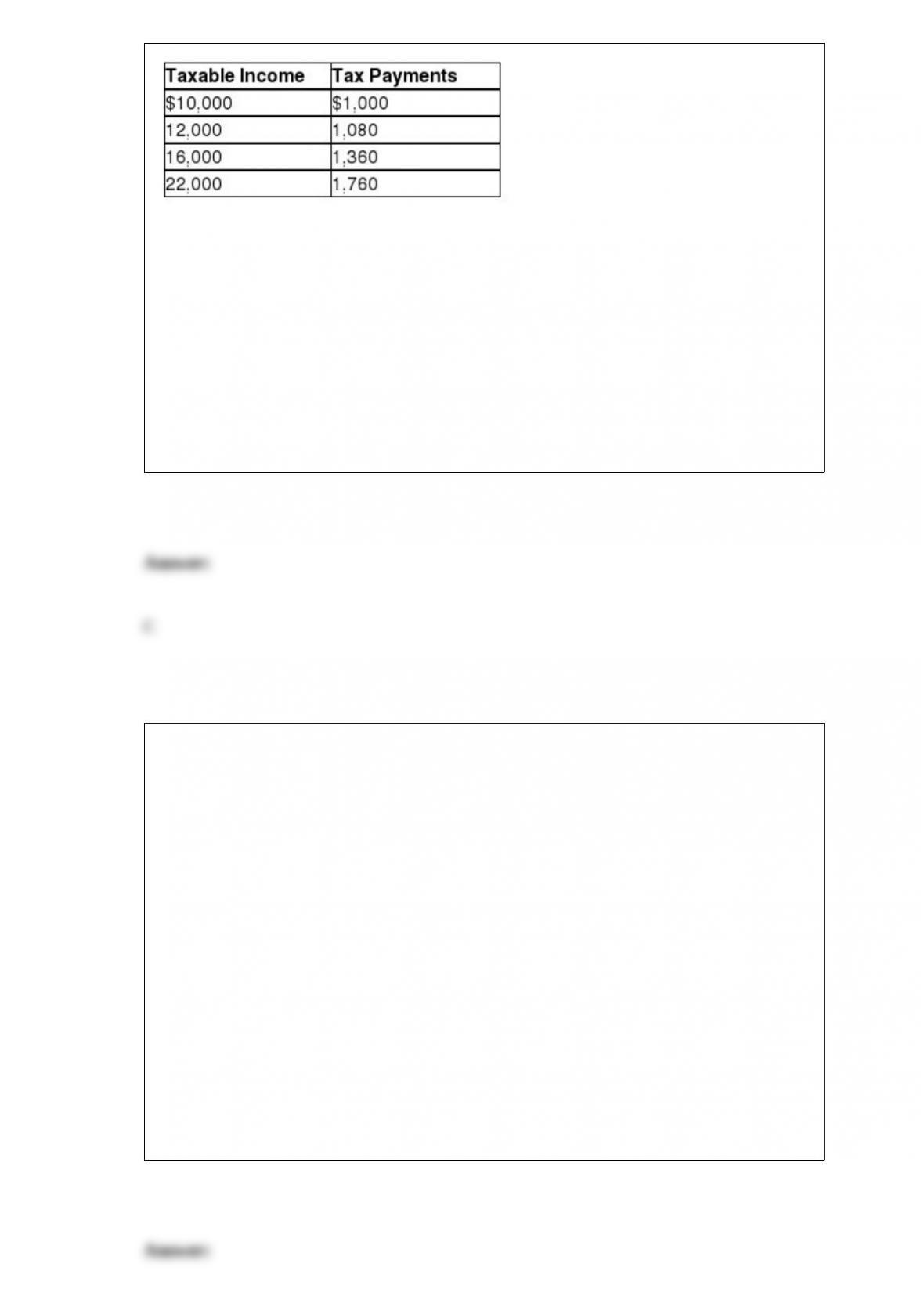
Table 18-8 shows the amount of taxes paid on various levels of income. The tax system
is
A) progressive throughout all levels of income.
B) proportional throughout all levels of income.
C) regressive throughout all levels of income.
D) progressive between $10,000 and $12,000 of income and regressive between
$12,000 and $22,000.
Consider the following economic agents:
a. the government
b. consumers
c. producers Who, in a centrally planned economy, decides what goods and services
will be produced with the scarce resources available in that economy?
A) the government
B) producers
C) consumers
D) consumers and producers
E) the government, consumers and producers

The most widely used measure of inflation is based on which of the following price
indices?
A) the producer price index
B) the consumer price index
C) the GDP deflator
D) the wholesale price index
An advantage of the personal consumption expenditures price index (PCE) over the
Consumer Price Index (CPI) as a measure of inflation is that the PCE
A) is a more narrow, focused measure of inflation.
B) is a chain-type price index that allows the mix of products to change each year.
C) includes the prices of industrial equipment.
D) includes the prices of goods, but not services.
A firm in a market economy must do all of the following to succeed except

A) produce the goods and services that consumers want at a lower cost than consumers
themselves can produce.
B) organize the factors of production into a functioning, efficient unit.
C) have access to sufficient funds.
D) be organized as a corporation.
If the economy experiences a negative supply shock, which of the following will be
true?
A) Inflation will rise, and real GDP will fall.
B) Inflation will rise, and real GDP will rise.
C) Inflation will fall, and real GDP will fall.
D) Inflation will fall, and real GDP will rise.
A table that shows the possible payoffs each firm earns from every combination of
strategies by all firms is called
A) an earnings table.
B) a payoff table.
C) a payoff matrix.
D) a strategic matrix.

Which of the following headlines would be more closely related to what
macroeconomists study than what microeconomists study?
A) Avocado prices rise due to a late frost in California.
B) The United Auto Workers sign a contract raising wages and benefits 7% over the
next 3 years.
C) Real GDP grows by 2.3% in the second quarter.
D) Airlines raise ticket prices in response to rising fuel costs.
All else equal, if job turnover has people leaving jobs and finding new jobs in the same
industry, this will
A) increase the demand for labor and the supply of labor.
B) increase the demand for labor and decrease the supply of labor.
C) decrease the supply of labor, but not change the demand for labor.
D) not change demand or supply in the labor market.

Which of the following statements is true?
A) Whenever a firm raises its price, its total revenue will increase.
B) When a firm lowers its price, its total revenue may either increase or decrease.
C) Whenever a firm increases its quantity sold, its revenue will increase.
D) Total revenue will equal zero when the demand for a product is unit-elastic.