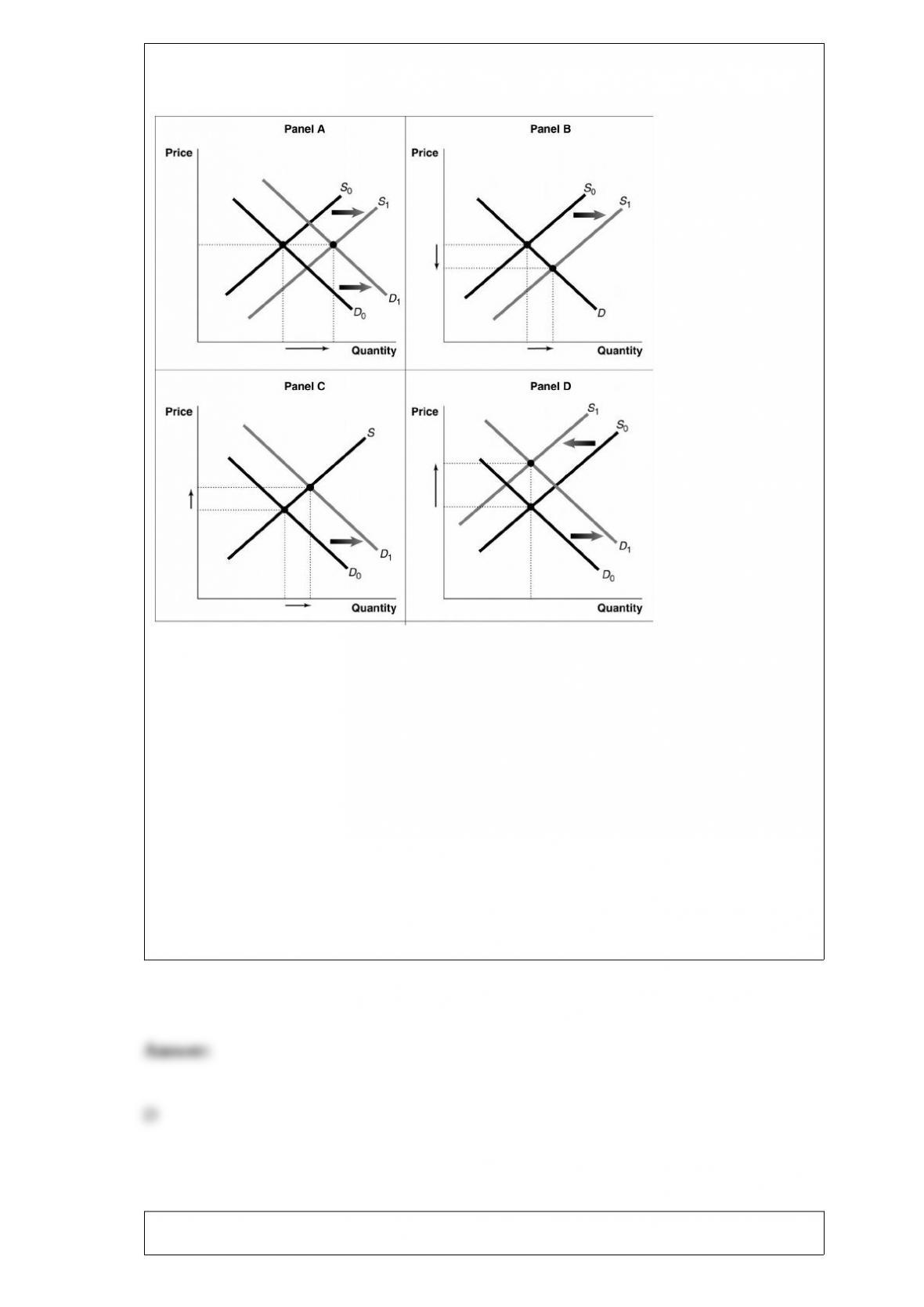
Figure 12-15
Assume that the medical screening industry is perfectly competitive and that some
firms are making short-run losses. Suppose the medical screening industry runs an
effective advertising campaign which convinces a large number of people that yearly
CT scans are critical for good health. Which of the diagrams in the figure best describes
what happens in the industry?
A) Panel A
B) Panel B
C) Panel C
D) Panel D
If property rights are not enforced in a country,

A) the market system will still work smoothly.
B) entrepreneurs are unlikely to risk their own funds investing in such an economy.
C) that country’s growth rate will not be affected.
D) that country will grow more rapidly because of the reduction of law suits.
Which of the following statements regarding equilibrium in the markets for capital and
for a natural resource used in producing a good is true?
A) The marginal revenue product of capital will equal the marginal revenue product of
the natural resource.
B) The rental price of capital will equal the price of the natural resource.
C) The marginal product of capital will equal the rental price of capital and the marginal
product of the natural resource will equal the price of the natural resource.
D) The marginal revenue product of capital will equal the rental price of capital and the
marginal revenue product of the natural resource will equal the price of the natural
resource.
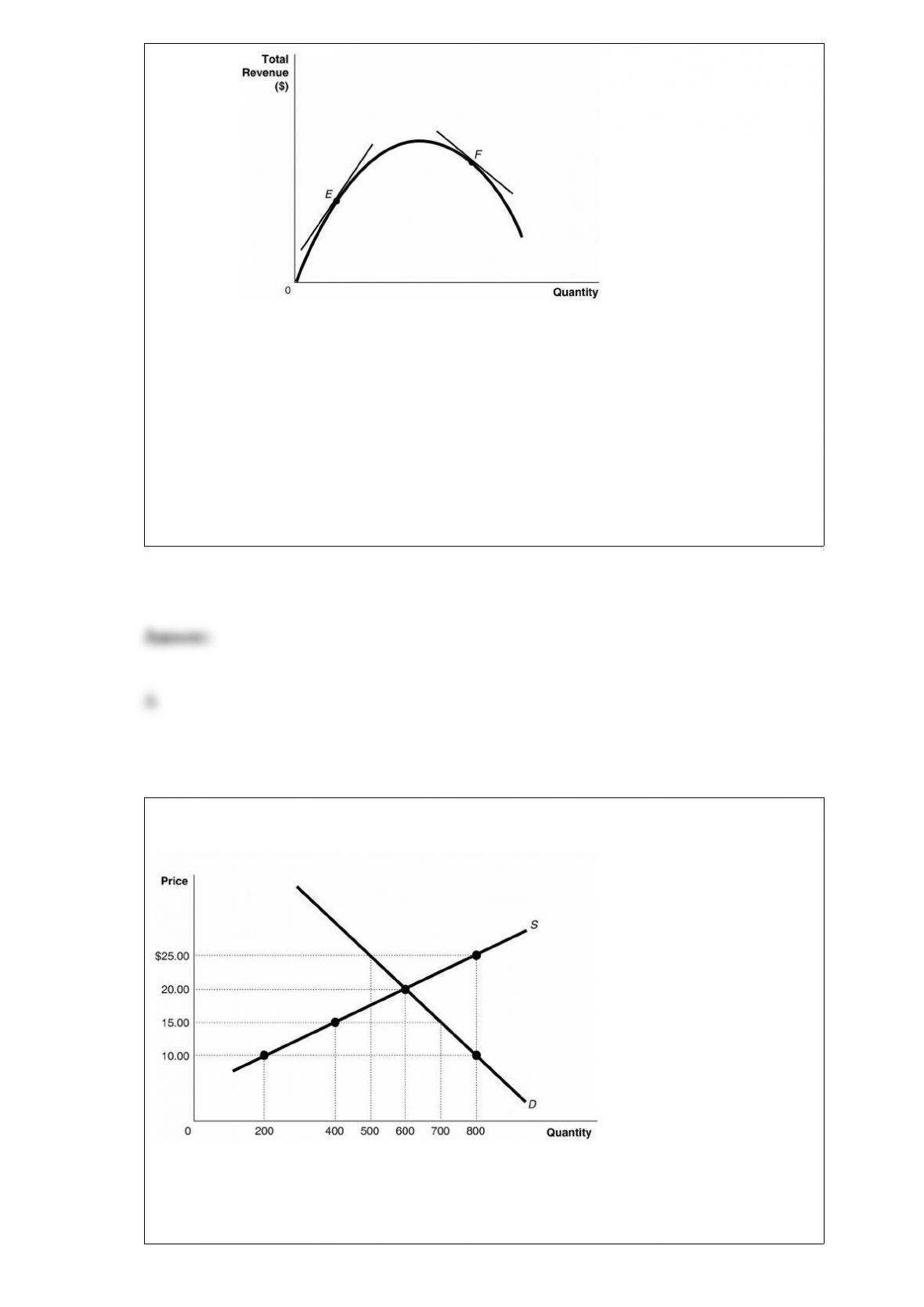
Figure 1-4
Which of the following statements is true?
A) The slope of the tangent at E is positive and the slope of the tangent at F is negative.
B) The slope of the tangent at E is negative and the slope of the tangent at F is positive.
C) The slope of the tangent at E and the slope of the tangent at F are negative.
D) The slope of the tangent at E and the slope of the tangent at F are positive.
Figure 3-4
If the current market price is $10, the market will achieve equilibrium by
A) a price increase, increasing the supply and decreasing the demand.
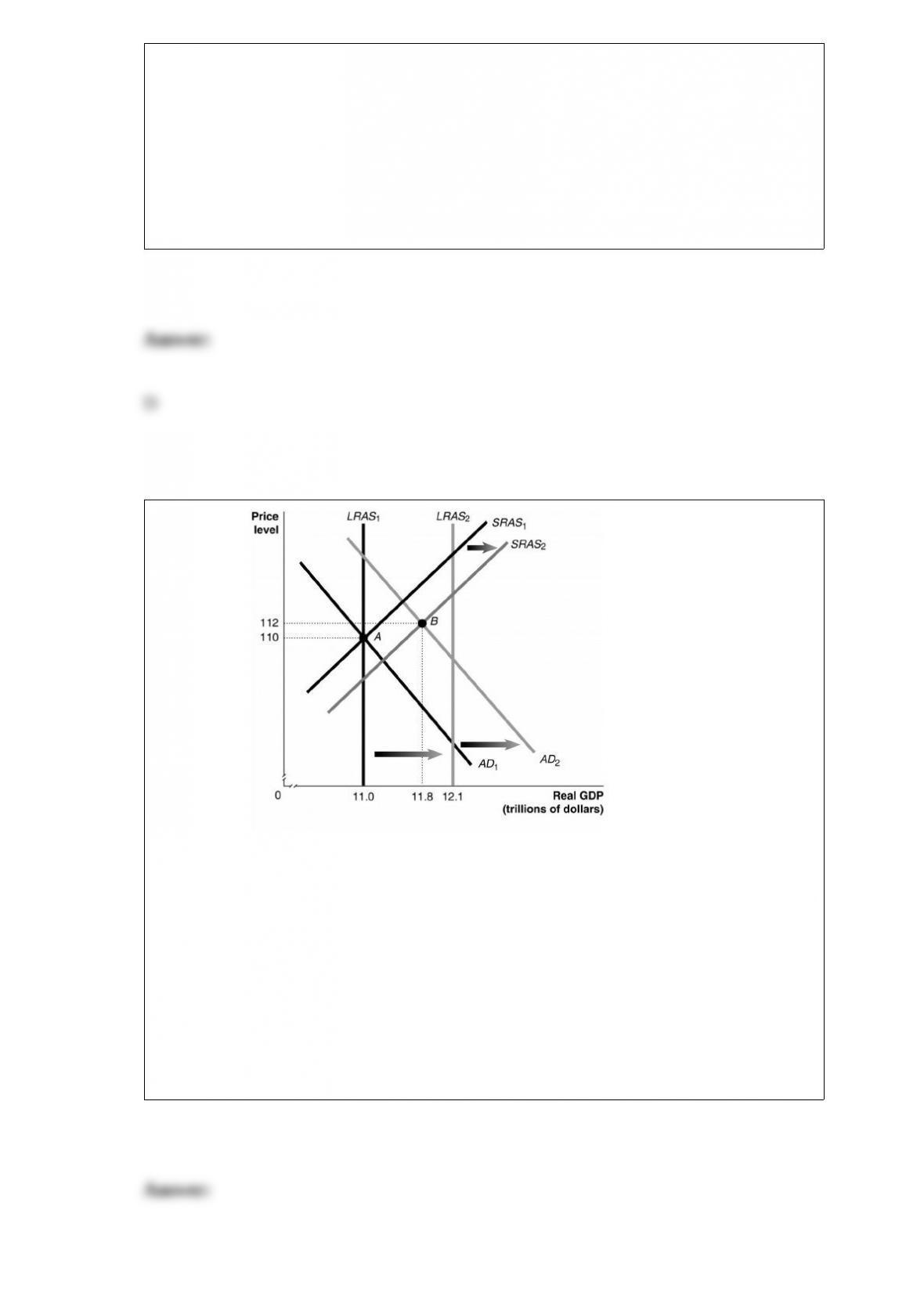
B) a price decrease, decreasing the supply and increasing the demand.
C) a price decrease, decreasing the quantity supplied and increasing the quantity
demanded.
D) a price increase, increasing the quantity supplied and decreasing the quantity
demanded.
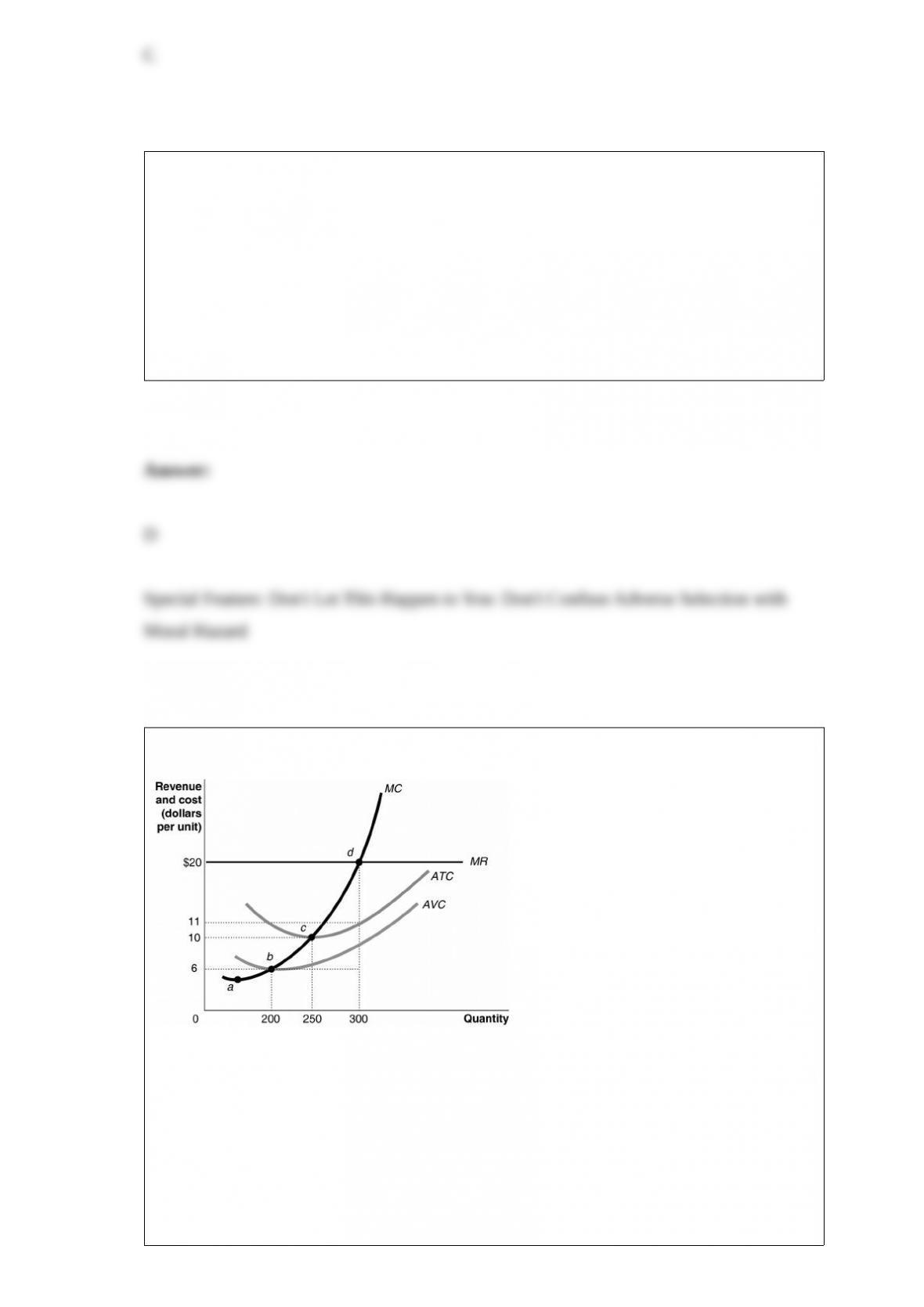
Figure 13-4
Given the economy is at point A in year 1, what is the difference between the actual
growth rate in GDP in year 2 and the potential growth rate in GDP in year 2?
A) 0.3%
B) 1.1%
C) 2.7%
D) 3.7%
In markets with asymmetric information,
A) moral hazard causes adverse selection which in turn causes asymmetric information.
B) adverse selection causes moral hazard which in turn causes asymmetric information.
C) asymmetric information causes moral hazard and then it causes adverse selection.
D) asymmetric information causes adverse selection and then it causes moral hazard.
Figure 12-10
The total cost at the profit-maximizing output level equals
A) $4,800.
B) $3,300.
C) $2,500.

D) $1,800.
________ and ________ are the largest sources of revenue collected by the federal
government.
A) Individual income taxes; corporate income taxes
B) Individual income taxes; social insurance taxes
C) Corporate income taxes; excise and other taxes
D) Excise and other taxes; individual income taxes
The health care system in ________ is referred to as a universal health insurance
system, under which every resident is required to enroll in either a private or the
government-provided health insurance program.
A) Canada
B) Japan
C) the United Kingdom
D) the United States