A person’s wealth
A) is a measure of how much money the person has.
B) equals the value the person’s assets minus his or her liabilities.
C) is measured independent of his or her current and expected future income.
D) All of the above are correct.
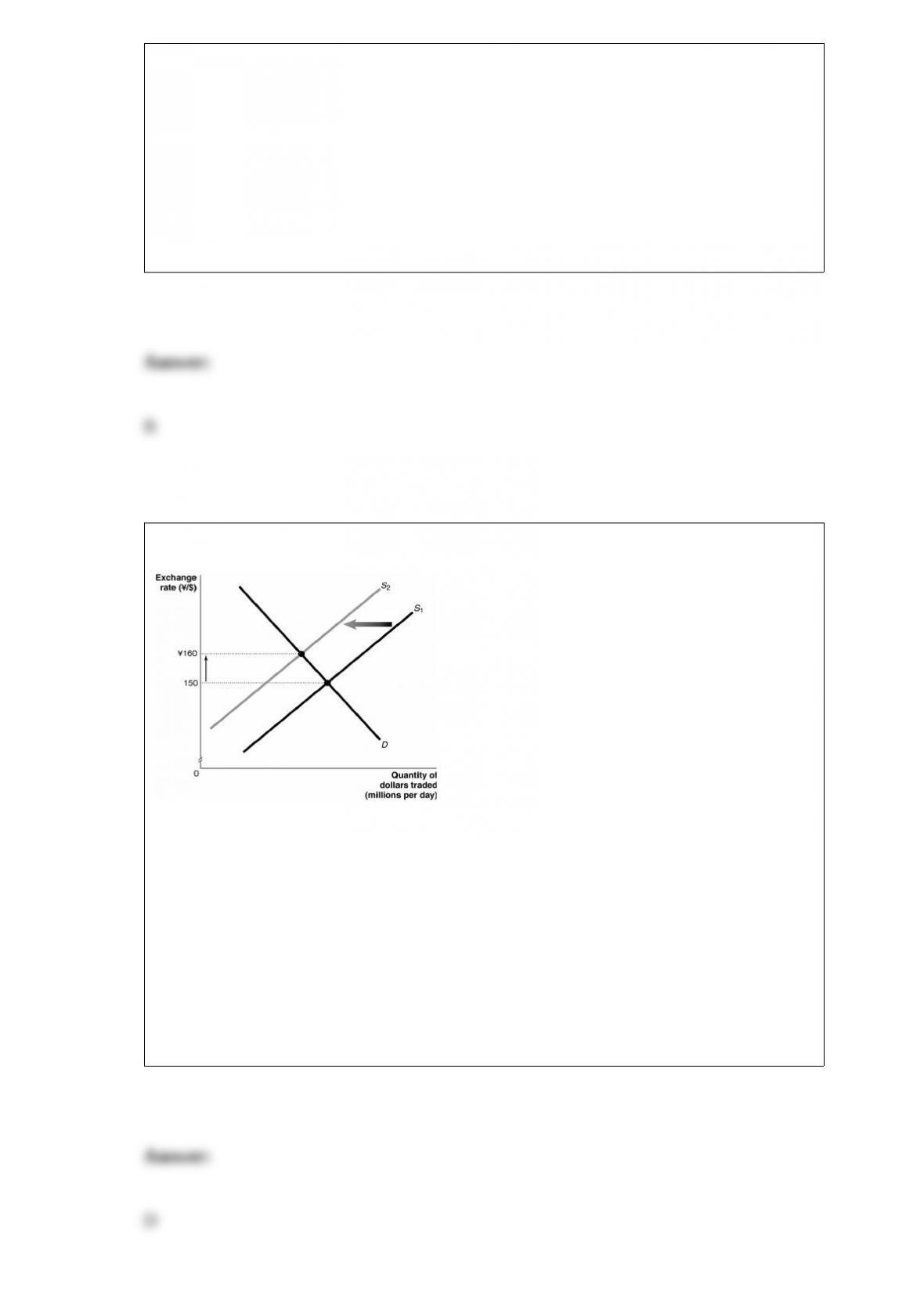
Figure 18-3
Refer to Figure 18-3. Consider the market for U.S. dollars against the Japanese yen
shown above. An event which could have caused the changes shown in the graph would
be
A) an increase in U.S. real income.
B) speculators expect the dollar to depreciate in value in the near future.
C) an economic expansion in the United States.
D) a decrease in Japanese interest rates.

The level of aggregate supply in the long run is not affected by
A) changes in technology.
B) changes in the capital stock.
C) changes in the price level.
D) changes in the number of workers.
In a small economy, gross investment in 2013 is $1,500, consumption spending is
$6,000, net investment is $200, government spending is $1,500, exports are $2,000 and
imports are $1,000. What is GDP for this economy in 2013?
A) $10,700
B) $10,300
C) $10,200
D) $10,000
Table 9-15
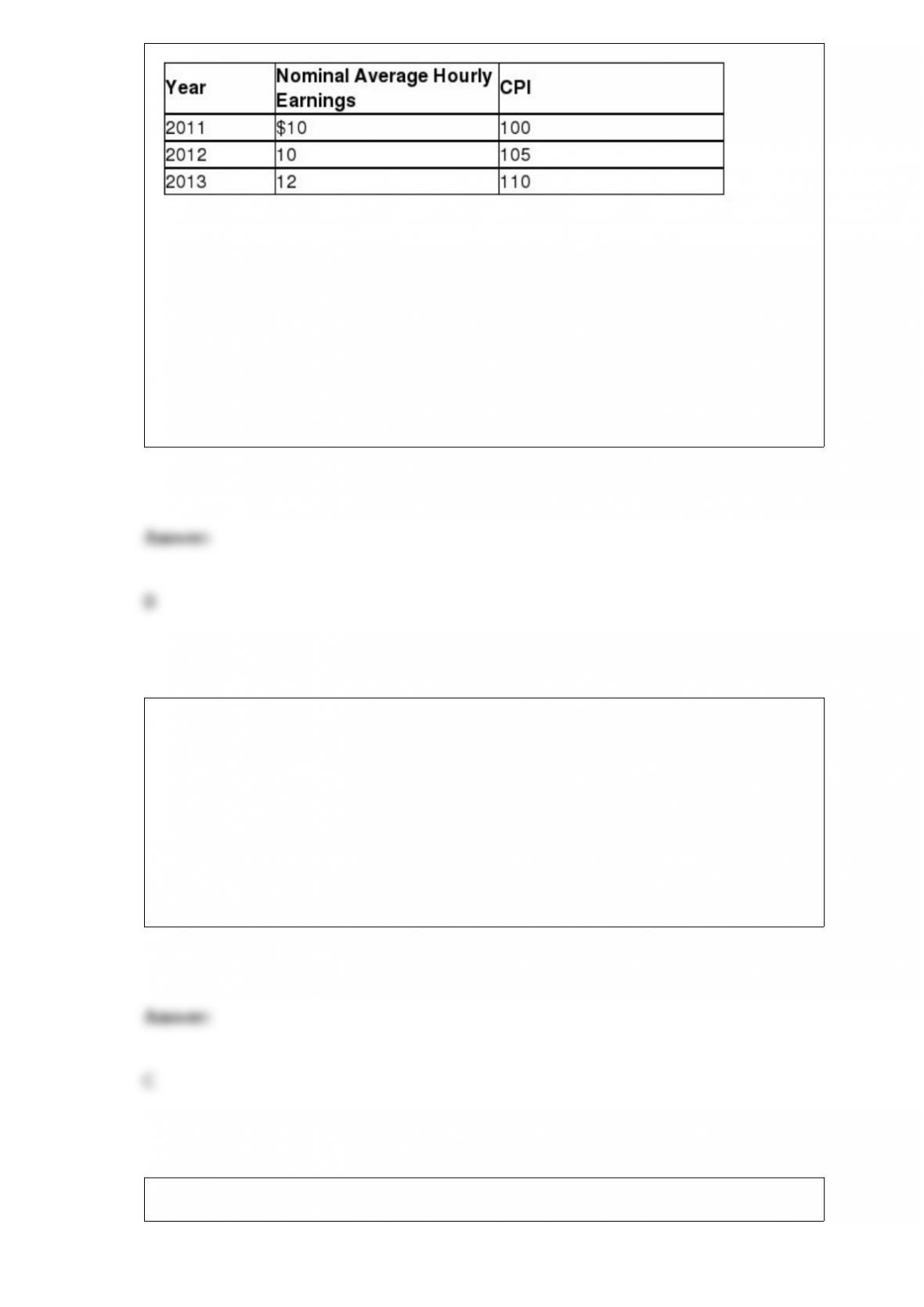
Refer to Table 9-15. Looking at the table above, real average hourly earnings were
equal to ________ in 2012.
A) $9
B) $9.52
C) $10
D) $12
International trade
A) harms consumers but helps exporting firms.
B) helps consumers but harms exporting firms and their workers.
C) helps consumers but hurts firms that are less efficient than their foreign competitors.
D) helps consumers and firms that compete with their foreign competitors.
Figure 4-11
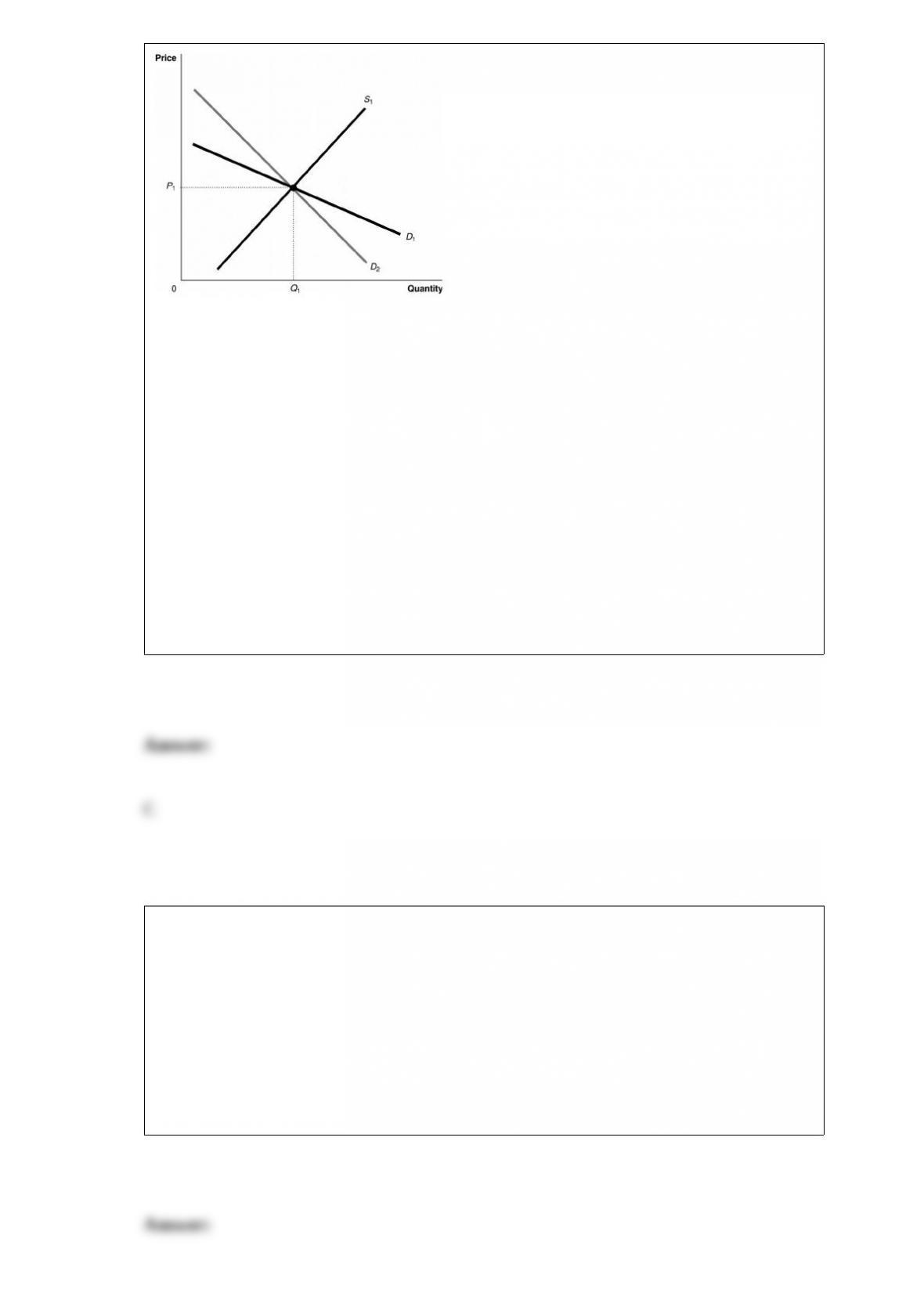
Refer to Figure 4-11. Suppose the market is initially in equilibrium at price P1 and then
the government imposes a tax on every unit sold. Which of the following statements
best describes the impact of the tax?
A) The consumer will bear a greater share of the tax burden if the demand curve is D1.
B) The consumer’s share of the tax burden is the same whether the demand curve is D1
or D2.
C) The consumer will bear a greater share of the tax burden if the demand curve is D2.
D) The consumer will bear the entire burden of the tax if the demand curve is D1 and
the producer will bear the entire burden of the tax if the demand curve is D2.
Which of the following is a positive economic statement?
A) People should use public transportation more often.
B) The government should ban diesel engines in automobiles.
C) Due to a decrease in state funding, university tuition has risen.
D) Foreign citizens should not be allowed to work without a work visa.

The price of a financial asset should be equal to
A) the face value of the asset.
B) the present value of the sum of the coupon payments and the interest rate.
C) the face value of the asset divided by the interest rate.
D) the present value of payments to be received from owning that asset.
If wages and prices adjust rapidly, we would expect expansionary monetary policy to be
A) more likely to reduce the natural rate of unemployment.
B) more likely to affect the unemployment rate.
C) less likely to affect the unemployment rate.
D) less likely to result in a vertical short-run Phillips curve.
In the long run,
A) GDP > potential GDP.

B) unemployment is at its natural rate.
C) LRAS and SRAS lie on the same line.
D) the inflation rate is zero.
Active changes in tax and spending by government intended to smooth out the business
cycle are called ________, and changes in taxes and spending that occur passively over
the business cycle are called ________.
A) automatic stabilizers; discretionary fiscal policy
B) discretionary fiscal policy; automatic stabilizers
C) automatic stabilizers; monetary policy
D) discretionary fiscal policy; conscious fiscal policy