1)
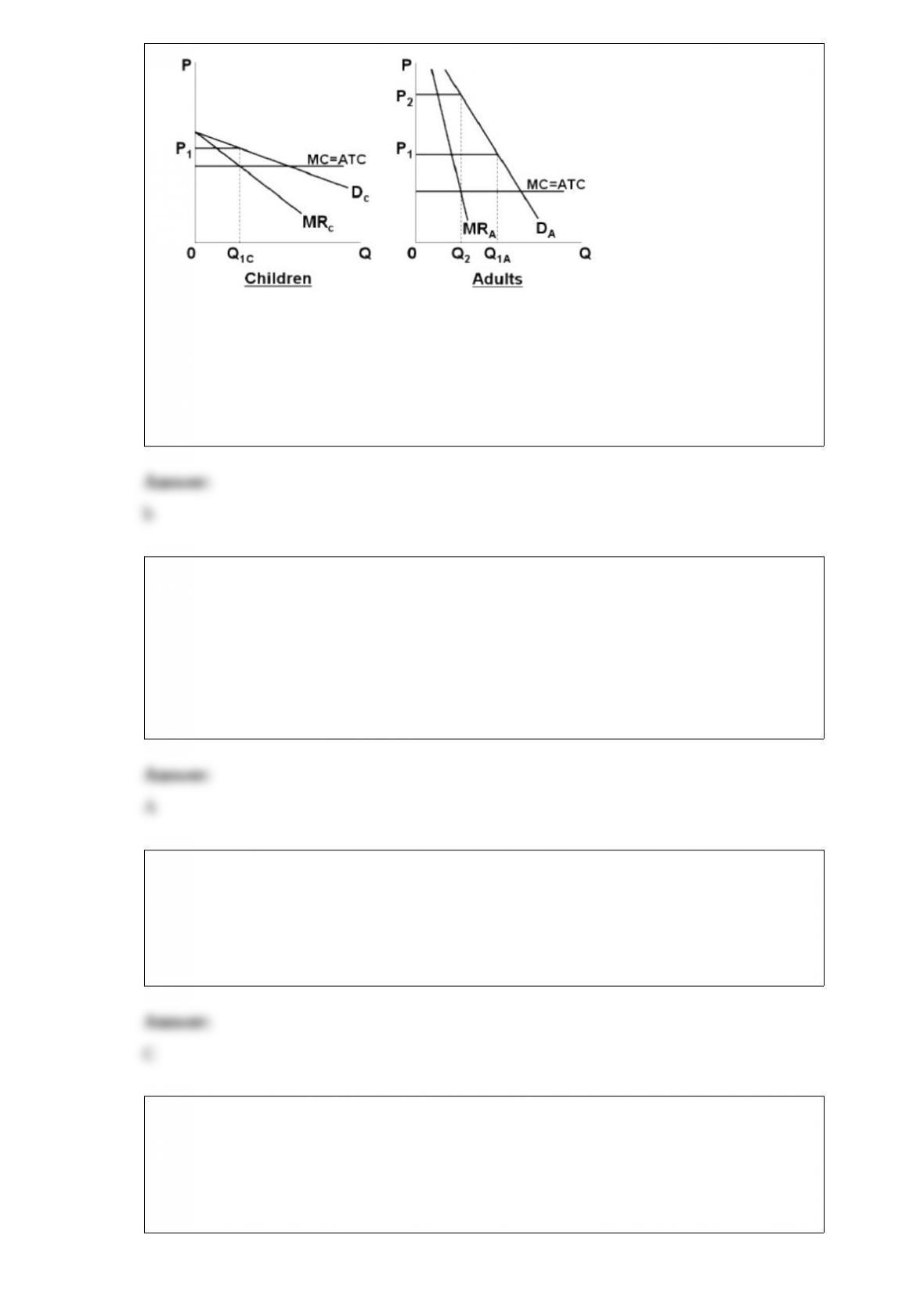
assume the above figure applies to a pure monopolist. if this firm is able to price
discriminate between children and adults, its profit-maximizing level of output will be:
a.q1a + q1c.
b.q1c + q2.
c.q1a + q2.
d.q1a + q1c + q2.
2) (Last Word) In 1995 Microsoft released its Windows 95 operating system which was
a far better system than the Microsoft system it replaced. Microsoft’s Window 95 best
illustrates:
A.innovation.
B.scientific determinism.
C.venture capitalism.
D.creative destruction.
3) Other things equal, an increase in productivity will:
A.reduce aggregate supply and increase real output.
B.reduce both the interest rate and the international value of the dollar.
C.increase both aggregate supply and real output.
D.increase net exports, increase investment, and reduce aggregate demand.
4) The largest efficiency gains from deregulation have occurred in the:
A.natural gas and cable television industries.
B.cable television and railroad industries.
C.communications and stockbrokering industries.
D.airlines, trucking, and railroad industries.
5) in recent decades, total health care spending in the united states has:
a.increased, but health care spending as a percentage of gdp has decreased.
b.increased, and so has health care spending as a percentage of gdp.
c.decreased, and so has health care spending as a percentage of gdp.
d.decreased, but health care spending as a percentage of gdp has increased.
6) the percentage of u.s. adults with a high school education or above has:
a.remained constant since the 1960s.
b.risen from 8 percent in 1960 to 29 percent in 2007.
c.risen to over 90 percent in the twenty-first centure.
d.risen from 41 percent in 1960 to 86 percent in 2007.
7)
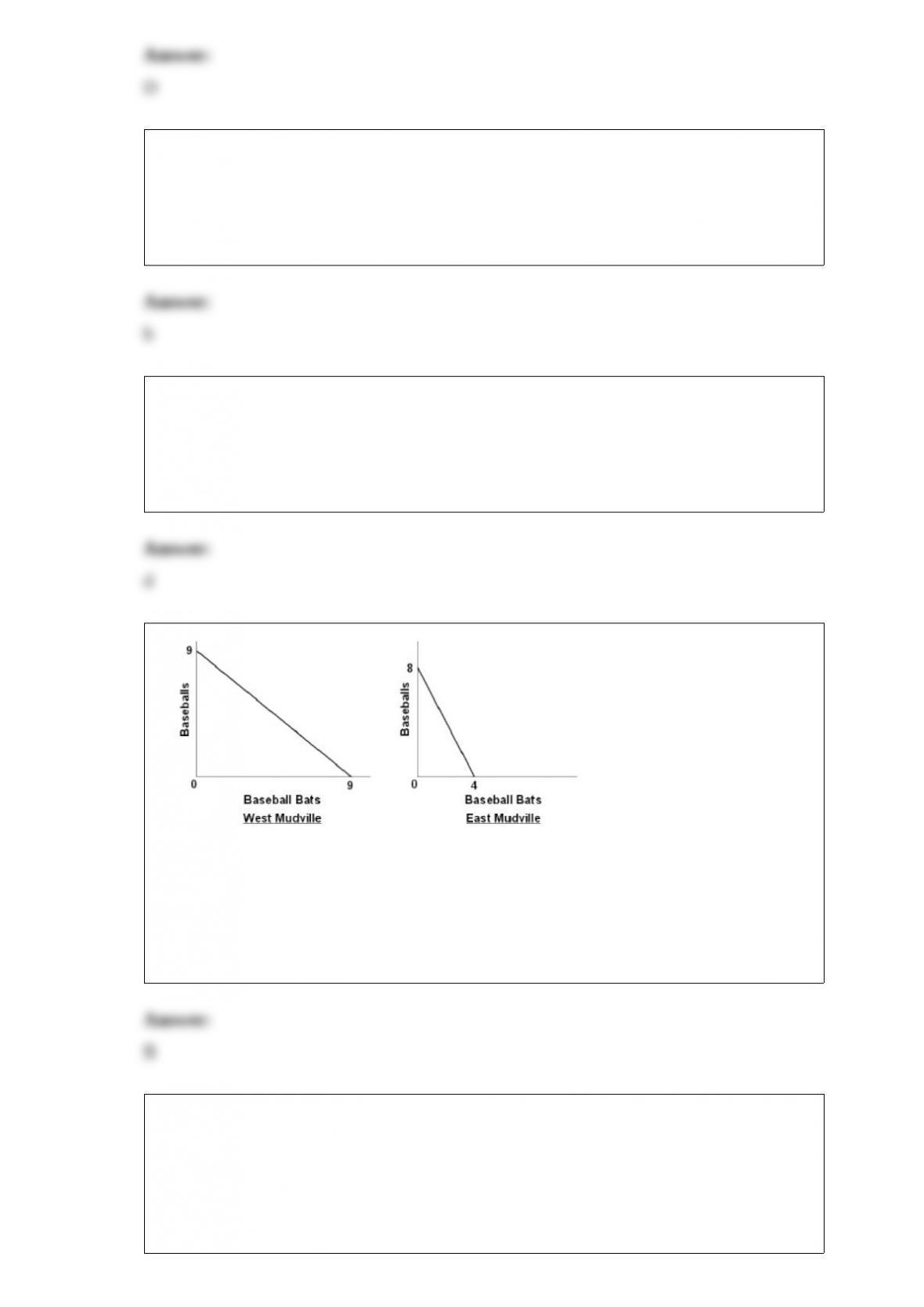
Assuming labor forces of equal size, the production possibilities curves above suggest
that workers in West Mudville will have:
A.lower wages than workers in East Mudville before trade but equal wages after trade.
B.higher wages than workers in East Mudville both before and after trade.
C.lower wages than workers in East Mudville both before and after trade.
D.higher wages than workers in East Mudville before trade but lower wages after trade.
8) corporate profits are found by:
a.summing corporate income taxes, dividends, and undistributed corporate profits.
b.adding corporate income taxes and dividends, and subtracted undistributed corporate
profits.
c.subtracting corporate income taxes from the sum of dividends and undistributed
corporate profits.

d.summing dividends, undistributed corporate profits, and proprietors’ income.
9) Which of the following groups is most likely to support the World Trade
Organization (WTO)?
A.anarchists.
B.extreme environmentalists.
C.labor union leaders in industrially advanced countries.
D.economists.
10) total cost minus total variable cost equals:
a.average fixed cost.
b.total fixed cost.
c.average variable cost.
d.marginal cost.
11) The effect of a government surplus on the equilibrium level of GDP is substantially
the same as:
A.a decrease in saving.
B.an increase in saving.
C.an increase in consumption.
D.an increase in investment.
12) the world’s largest exporter (measured in total dollar volume) is:
a.the united states.
b.china
c.japan
d.germany.
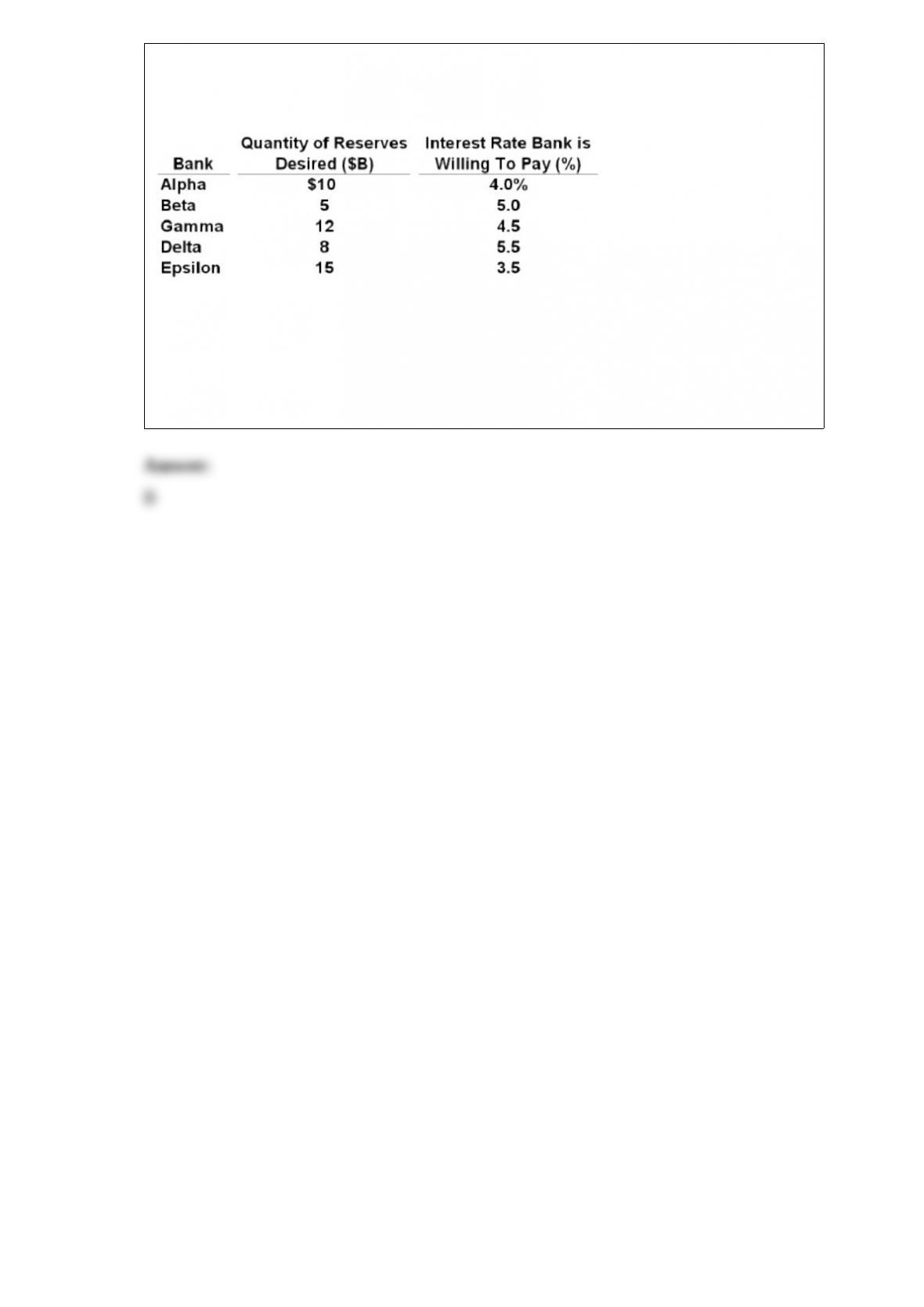
13) The following information: The Fed is going to auction $30 billion in reserves using
the term auction facility. It receives the following bids:
Refer to the above information. As a result of the auction, how much and at what
interest rate will Delta bank borrow?
A.$8 billion; 5.5 percent
B.$8 billion; 4 percent
C.$0; 4.5 percent (rate charged winning bidders)
D.$3 billion; 4 percent