
The velocity of money is the ratio of real GDP to the money supply.
The Phillips curve is a graph showing the relationship between the rate of inflation and
the unemployment rate.
The multiplier increases as the MPC increases.
Nominal GDP is measured by calculating real GDP at constant prices.

When the level of the stock market is high, investment spending tends to be high,
ceteris paribus.
Recall Application 1, “The Chinese Yuan and Big Macs,” to answer the following
questions:
Purchasing power parity suggests that exchange rates are set so that the price of similar
goods in different countries reflects the relative interest rates in those countries.
Which of the following increases the real interest rate?
A) a decrease in the nominal interest rate, holding the inflation rate constant
B) an increase in both the nominal interest rate and the inflation rate by the same
percentage points
C) a decrease in the inflation rate, holding the nominal interest rate constant
D) a decrease in both the nominal interest rate and the inflation rate by the same
percentage points

Which of the following statements about discouraged workers is correct?
A) People who are still looking for work and have been unemployed for longer than
four weeks are classified as having dropped out of the labor force rather than as being
unemployed.
B) Because of the existence of discouraged workers, the reported unemployment rate
generally understates the true level of unemployment in an economy.
C) The unemployment rate rises when those no longer looking for work are no longer
counted as unemployed.
D) None of the above statements is correct.
When the economy experiences a balance of payments surplus, the central bank must
________ to maintain the exchange rate.
A) buy foreign currency
B) sell bonds
C) buy home currency
D) sell foreign currency
When the government provides its citizens an unemployment insurance program, it is
providing its citizens:

A) a social safety net.
B) a public good.
C) a new job.
D) uncertainty.
Recall Application 2, “The Growth in Excess Reserves,” to answer the following
questions:
According to the application, what was the reason why banks started to hold more
excess reserves after September 2008?
A) The Fed started paying interest on bank reserves.
B) The Fed required that banks hold excess reserves.
C) The Fed lent lots of money to banks, which in turn did not lend any of it.
D) The Fed allowed banks with little excess reserves to be taken over by banks with a
large amount of excess reserves.
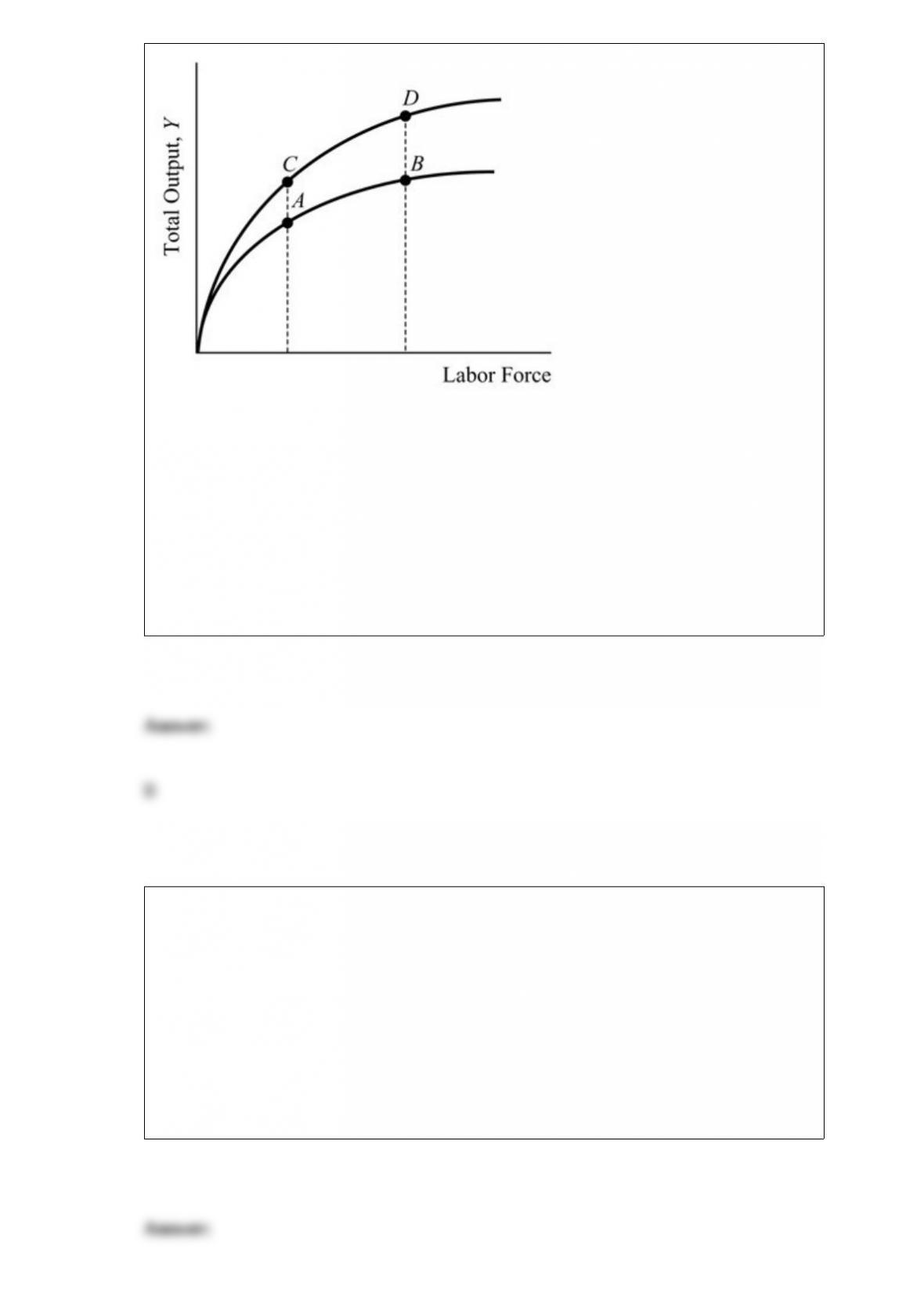
Figure 7.1 Please refer to Figure 7.1. Suppose the economy is at point A. An
improvement in technology will:
A) move the economy to point B.
B) move the economy to point C.
C) move the economy to point D.
D) keep the economy at point A
When the deficit increases under the concept of Ricardian Equivalence, what happens
to savings in the private sector?
A) nothing
B) savings decrease
C) savings increase
D) savers hedge on purchases

Table 2.1
Kaitlyn and Larissa have formed a dog bathing and grooming business. The number of
dogs they can bathe or groom in any given day is depicted in Table 2.1. As they groom
more dogs, the opportunity cost of bathing additional dogs
A) falls.
B) rises.
C) remains constant.
D) depends on the prices being charged.
Imagine that an upward sloping line is depicted in a graph with income per week on the
y-axis and hours worked per week on the x-axis. The slope of the line in the graph
depicts the:
A) minimum wage of the worker.
B) hourly wage of the worker.
C) the total monthly income of the worker.

D) increase in income earned by the worker per every year of service.
Because GDP must be divided among competing demands in the economy, we should
expect:
A) increases in private saving to reduce private investment when the economy is in full
employment.
B) increases in consumption to reduce net exports when the economy is in full
employment.
C) increases in government expenditure to reduce private investment when the
economy is in full employment.
D) increases in imports to reduce exports when the economy is in full employment.
Assume that total deposits in the banking system are $200 million. If the required
reserve ratio is increased, then the money supply will:
A) decrease.
B) increase.
C) not change because there was no change in deposits.
D) not change because the required reserve ratio has no impact on the money supply.

Recall Application 2, “World Savings and the U.S. Current Account Deficits,” to answer
the following questions:
According to the application, the U.S. can continue having current account deficits only
because:
A) other countries choose to sell foreign assets.
B) other countries choose to buy U.S. patents.
C) other countries choose to purchase U.S. assets.
D) other countries choose to sell foreign patents.
Explain why a central bank’s political independence lowers inflation expectations.
In economics, a change in preferences for the product causes a ________.
Can net investment be negative? Explain.
Is money neutral in the long run? Explain.
Will consumption taxes lead to more savings? Why or why not?
If the current exchange rate is 0.65 British pounds per dollar, what is the dollar price of
one British pound? If the exchange rate changes to 0.70 British pounds per dollar, what
is the new dollar value of one British pound?
Using the Q-theory of investment, explain how a stock market crash can worsen a
recession.
If real GDP is 100 in year 1, and grows at a rate of 3 percent per year for 9 years, what

will the GDP be in 9 years?