
The incomes earned by the top one percent in the U.S. has decreased in recent years.
The long-run supply curve is upward sloping in an increasing cost industry.
Recall the example about the dam and the farmers, the cause of building the dam is
spread among a small special interest group (farmers) and the benefit is obtained by the
taxpayers.
When the long-run cost curve is negatively sloped the firm is experiencing economies
of scale.

After the first unit, a monopolist’s marginal revenue is less than the price it charges
because to sell an additional unit it needs to lower its price.
Food stamps handed out to the needy by the government are an example of a public
good.
Insurance leads to taking less risk.

High school graduates have a higher poverty rate than college graduates.
Analysis of a proposed merger involves examining its effect only on a market’s
concentration.
An oligopolistic industry has no barriers to entry.
Price elasticity of demand tends to be more elastic as you move down the linear demand
curve.

Exports are products produced in the home country and sold in another country.
A merger may cause movement upward along the demand curve.
If product differentiation continues to diminish, the firm’s demand curve becomes more
elastic.
Tradeoffs involve an exchange of one thing for another because resources are limited
and can be used in different ways.

A budget line connects the combinations of two goods that exhaust a consumer’s
budget.
Recall Application 3, “Civil Liberties and the Efficiency of Government,” to
answer the following questions:
The returns to public sector investment is highest in poor countries like North Korea
and Afghanistan, where measures of civil liberties are lower.
Recall the Application about the government of Mexico City repainting highway
lane lines to transform a 4-lane highway into a 6-lane highway to answer the
following question(s).
Using simple percentage change formulas, the percent change of the number of TVs

from 1 to 2 should be the same if you instead go from 2 to 1.
Long-run cost curves are generally steeper than short-run cost curves.
Microeconomics is the branch of economics that helps explain economic fluctuations,
why the economy shrinks and expands and why some of the economy’s resources are
idle.
In a market for used cars, if the minimum supply price for plums is lower than
consumers’ willingness to pay for a lemon, only plums will be supplied at the
consumers’ willingness to pay for a lemon.

An example of a monopolistically competitive industry is grocery stores.
The more blood sugar in the brain, the more thoughtful the decision-making process.
There are profit opportunities in a thin market because the gap between what a buyer is
willing to pay for a true plum and the amount a plum owner is willing to accept is large.

The median-voter theory suggests that different political parties will not adopt the same
position as the median voter to distinguish from the competition.
Ignoring the income effect, an increase in the wage rate will cause an increase in labor
supply.
The reservation price provides consumers with a convenient rule for when to continue
searching for a lower price.
Economic models explore decision making by individuals, firms and other
organizations.

To maximize profit, a natural monopolist will produce at a point where marginal
revenue is equal to marginal cost.
The social cost of production is the sum of the private cost and external cost.
The entry of an additional firm into a market shifts the demand curve for the original
firm to the left.

The equilibrium price under an import quota is below the price that occurs with an
import ban.
Fixed costs do not vary as output changes.
Under the average-cost pricing policy, a regulated monopolist is guaranteed a normal
economic profit even if there is a change in its cost of production.
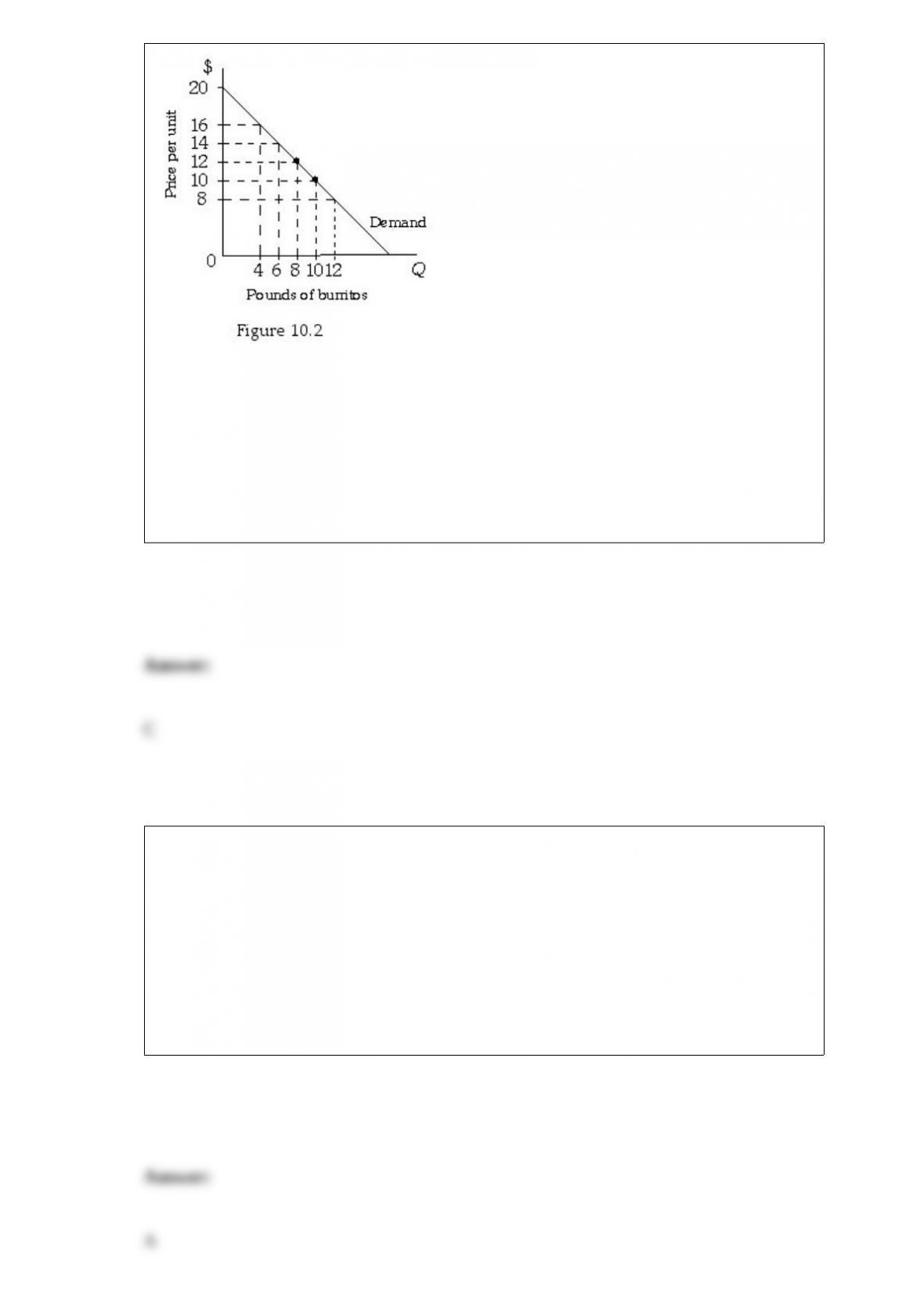
Refer to Figure 10.2. The marginal revenue of the 10th pound of burritos is:
A) -$4.
B) -$1.
C) $1.
D) $4.
When a second firm enters a monopolist’s market:
A) market price will drop.
B) sales for the first firm will rise.
C) the first firm’s profits will increase.
D) All of the above will occur.

A likely consequence over time of an average-cost pricing policy for a natural
monopoly is:
A) an increase in the average cost curve.
B) an increase in profits.
C) no change in price.
D) a decrease in the average cost curve.
The price of an hour of leisure time is:
A) the income that could have been earned in that hour.
B) zero.
C) the minimum wage rate.
D) determined by the value of the activity the person engages in during that hour of
leisure.
If there are external benefits associated with education, then:
A) the social benefit exceeds the private benefit.

B) the private benefit exceeds the social benefit.
C) the social benefit equals the private benefit.
D) None of the above are true.
A government sometimes creates an excess supply of a product by setting a minimum
price at which the product may be sold to consumers. This is sometimes called a:
A) price ceiling.
B) price floor.
C) tax.
D) none of the above
Refer to Table 12.1. The four-firm concentration ratio of the cigarette industry is equal
to:
Table 12.1
A) 48%.
B) 54%.
C) 71%.
D) 81%.
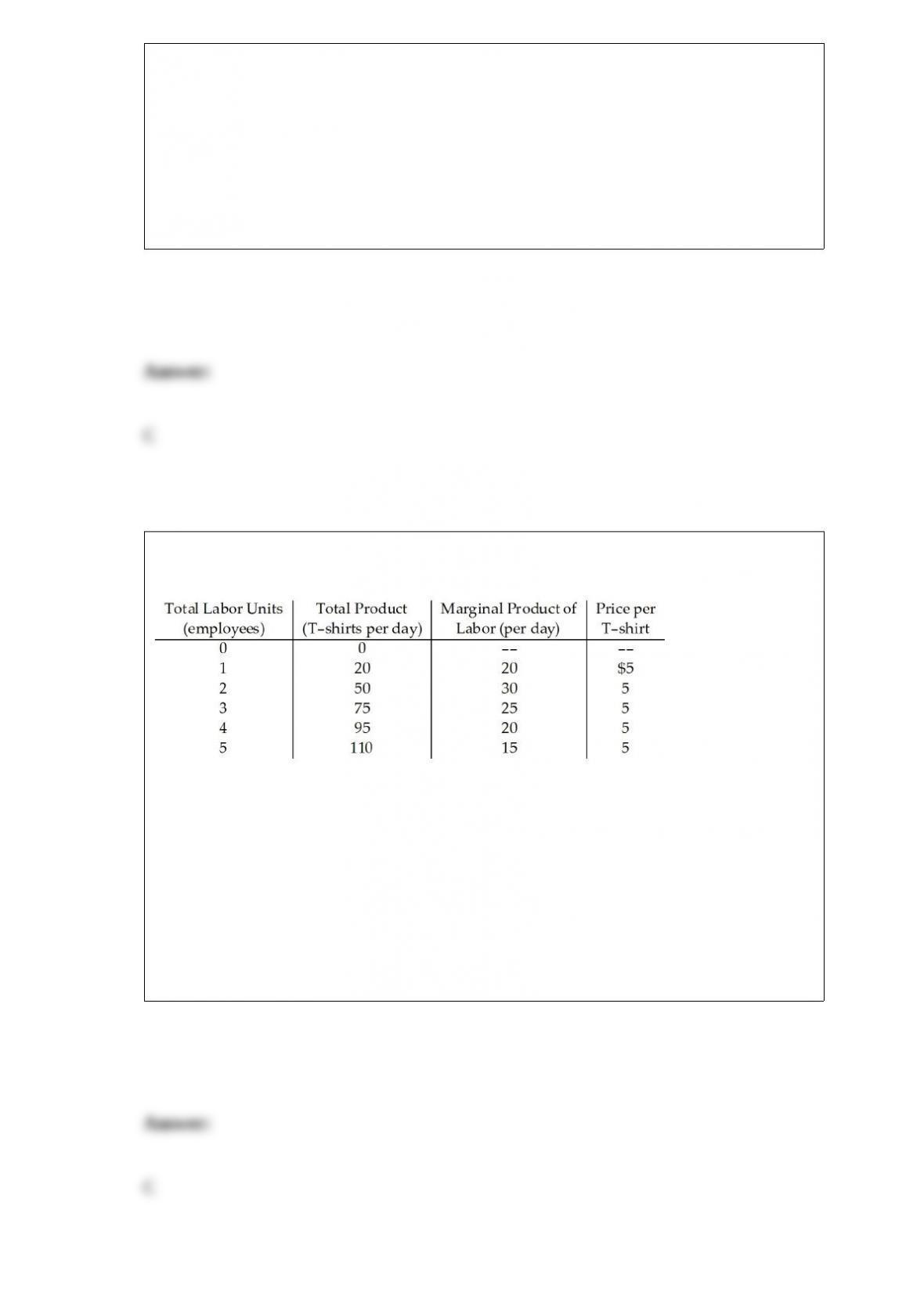
Refer to Table 17.2. If the wage per day is $100, this T-shirt manufacturer will be
maximizing profits if he hires ________ employees.
Table 17.2
A) two
B) three
C) four
D) five
Occupational licensing:
A) lowers the supply of labor in a particular occupation.
B) lowers the wages earned by the workers in a particular occupation.
C) ensures that consumers always get the best possible service.
D) raises the employment level of workers in a particular occupation.
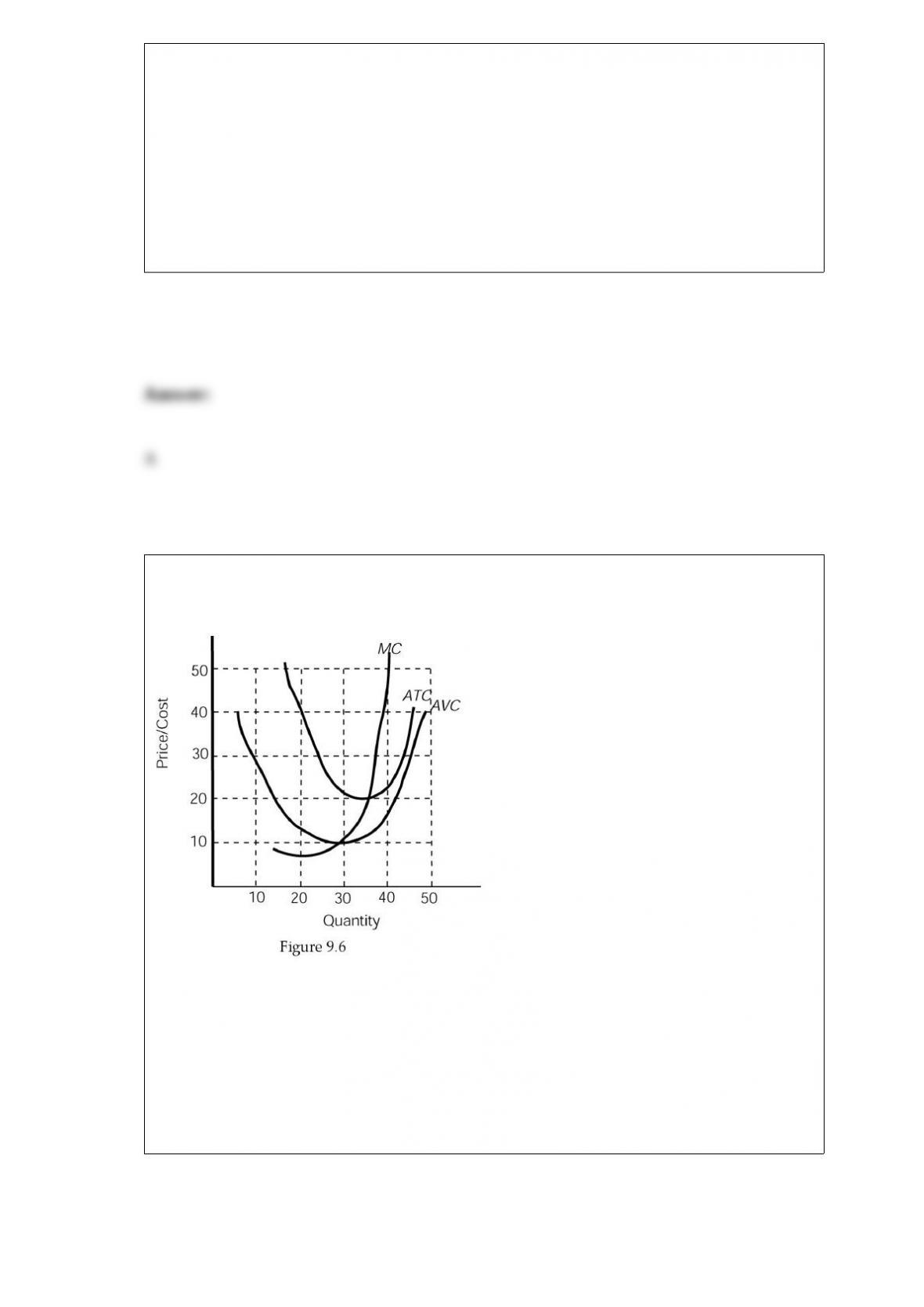
Refer to Figure 9.6. At a market price of $20, this profit maximizing firm would earn $
________ economic profit.
A) 30
B) 25
C) 20
D) 0
Suppose you operate in a monopolistically competitive market. If you sell your good at
a price of $20 and your average cost of production is $15:
A) your market may be in long-run equilibrium.
B) you cannot be in short-run equilibrium.
C) you should expect competing firms to enter your market and shift the demand curve
for your good to the left.
D) you should expect competing firms to enter your market and shift the demand curve
for your good to the right.
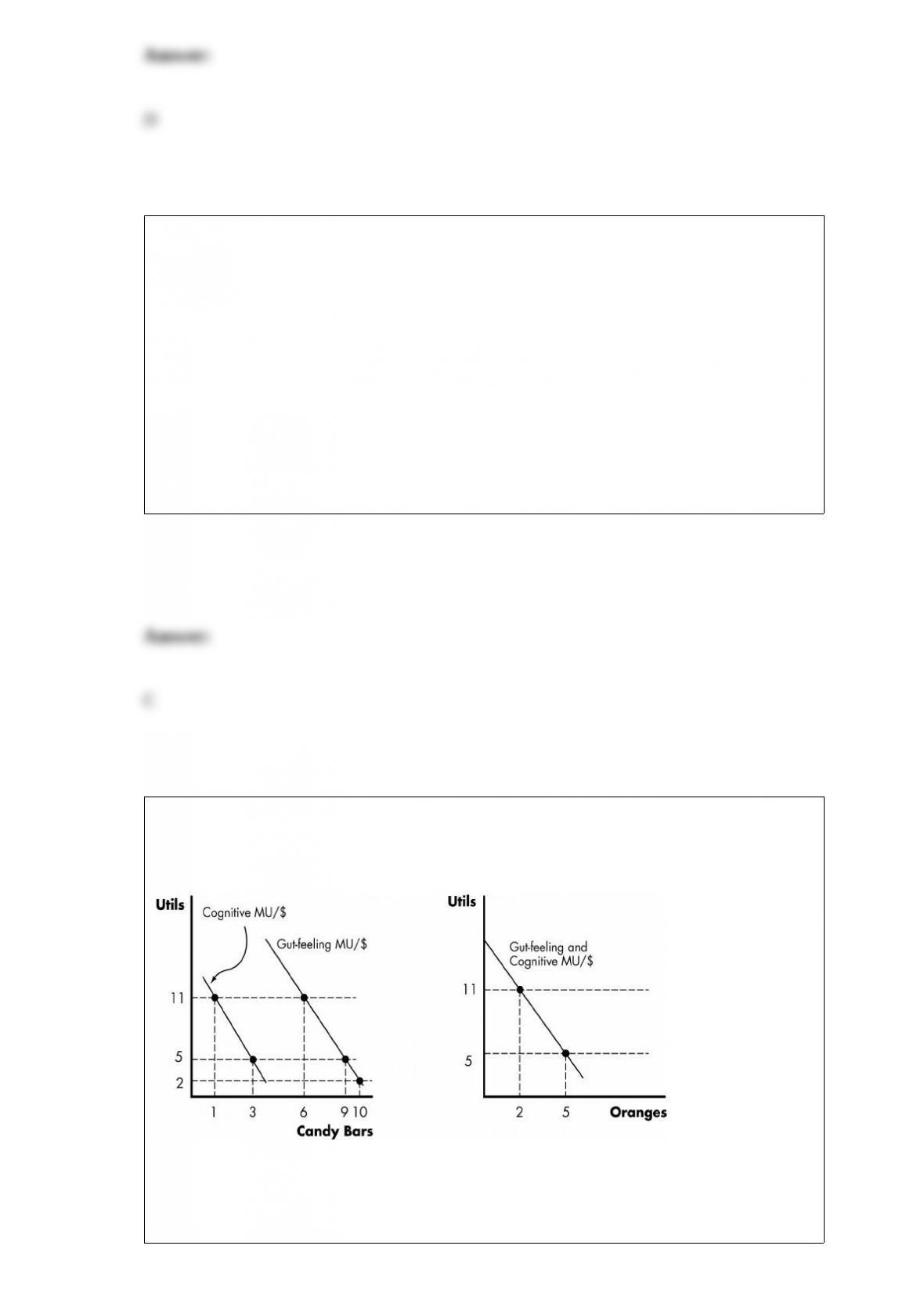
Refer to Figure 7.4. If Sophia goes from making her choice based on gut feeling to
making her choice based on cognition, bases her choice on cognition , she will:
Figure 7.4
The above figure represents the marginal utility per dollar for candy bars and
oranges for Sophia. The price of each product is $0.50, and Sophia has a budget of
$4.
A) increase orange and candy bar consumption.
B) decrease orange and candy bar consumption.
C) increase candy bar consumption at the expense of orange consumption.
D) increase orange consumption at the expense of candy bar consumption.
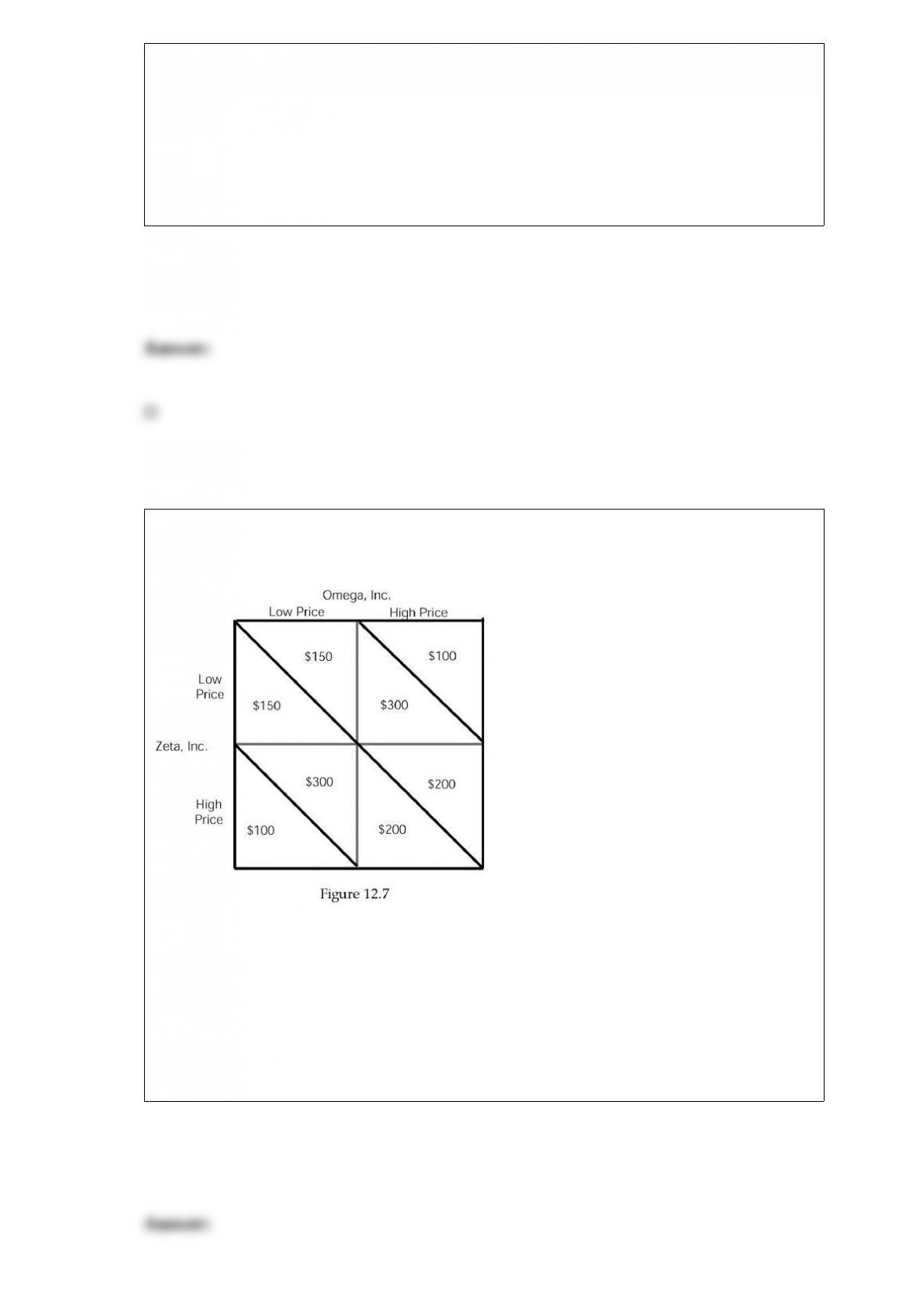
Refer to Figure 12.7 The numerical data show daily profits for each of the two firms
when they choose a specific pricing strategy.In the Nash equilibrium:
A) both firms would a high price.
B) both firms would charge a low price.
C) only Zeta would charge a low price.
D) only Omega would charge a low price.
The slope of a curve measures:
A) the change in one variable in response to the change in the other variable.
B) the length of the curve.
C) only the change in the horizontal variable.
D) only the change in the vertical variable.
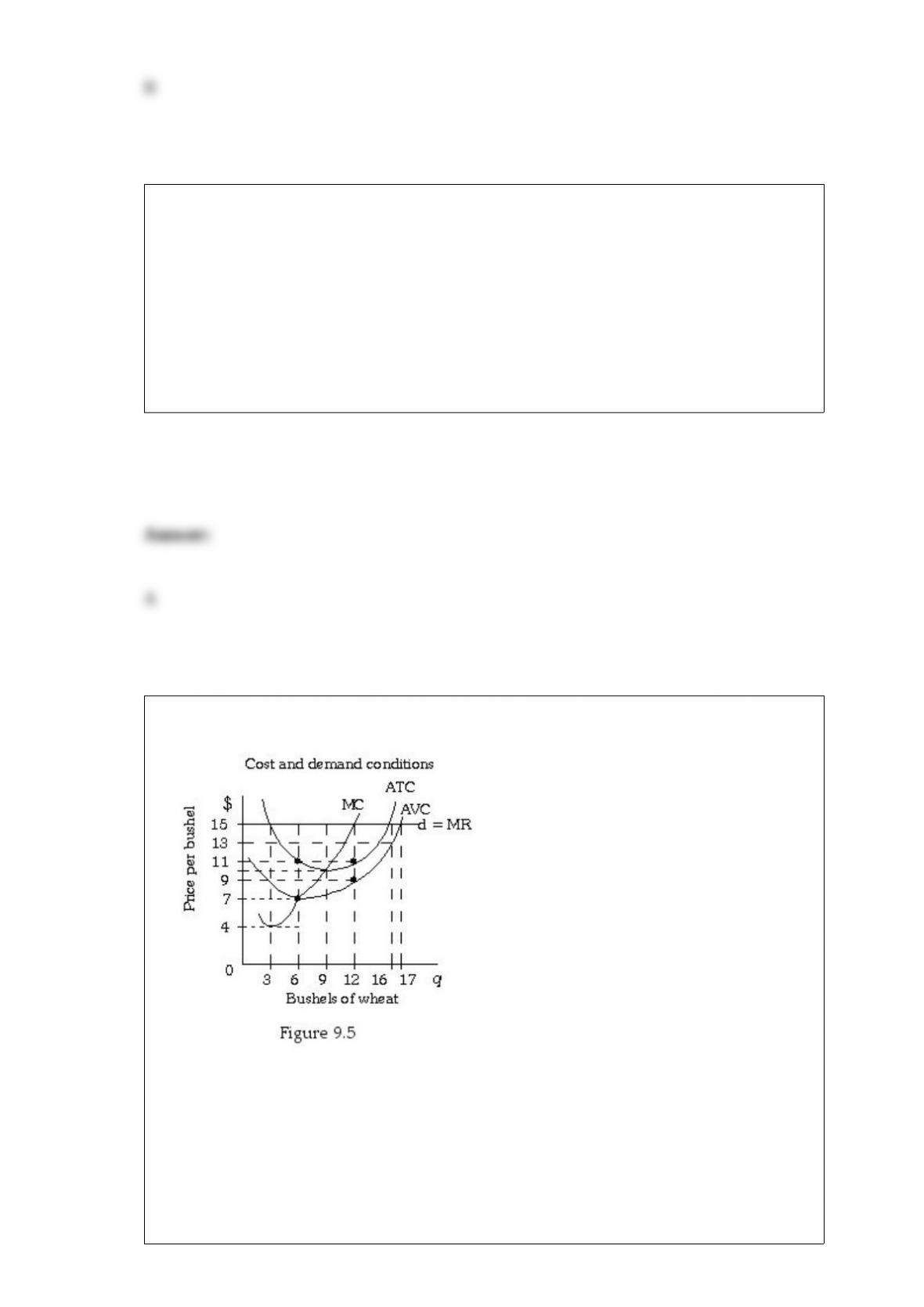
Refer to Figure 9.5. If this farmer is maximizing profits, his total revenue will be:
A) $90.
B) $135.
C) $180.
D) $240.

On a linear demand curve, demand is ________ at small quantities than it is at the
middle of the demand curve.
A) more elastic
B) less elastic
C) equally elastic
D) impossible to tell
Experience ratings provide firms with an incentive NOT to:
A) hire older workers.
B) invest in health and safety programs.
C) hire disabled workers.
D) both A and C
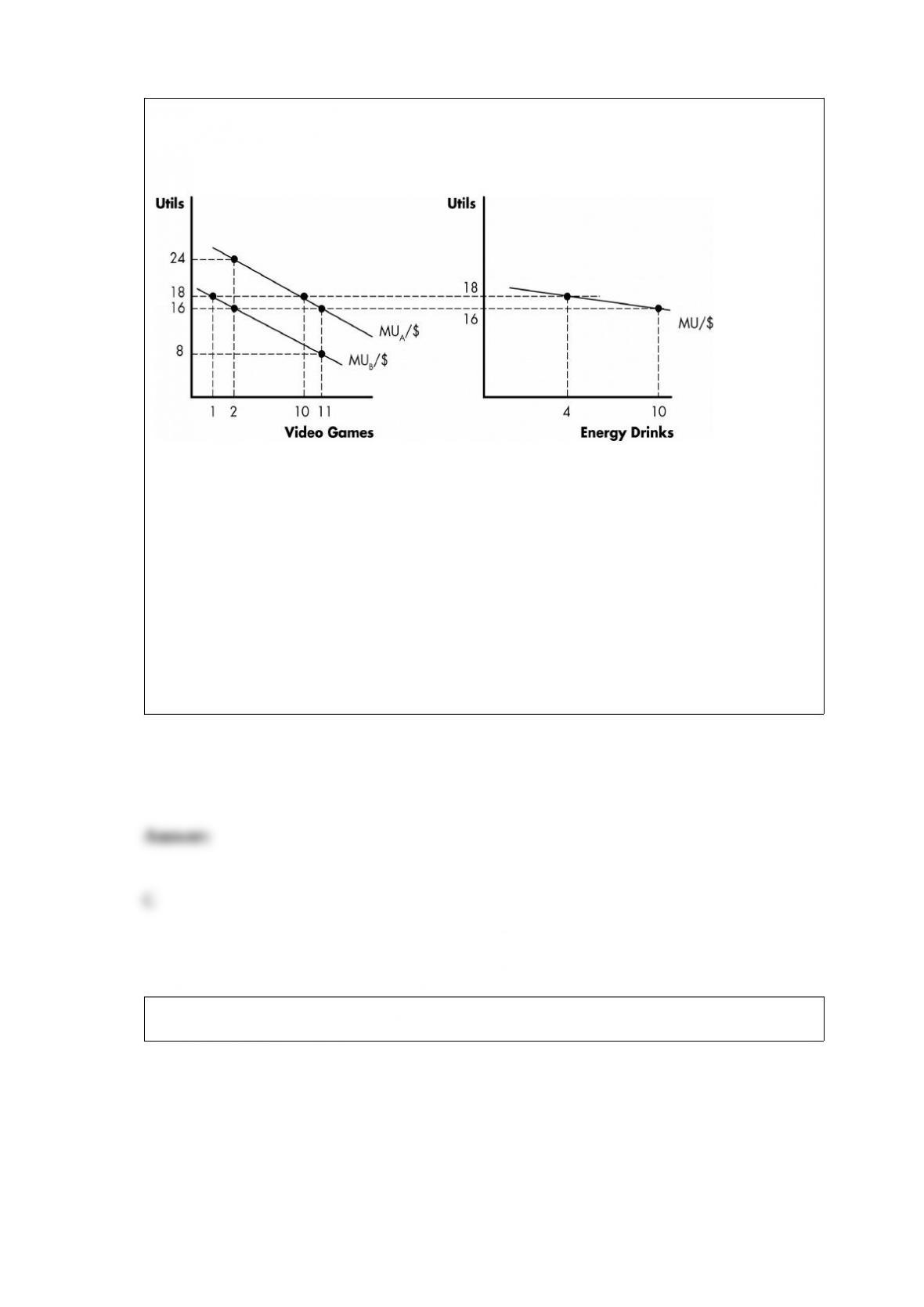
Refer to Figure 7.3. If the price of video game rentals drops from $4 to $2, the utility
maximizing combination is ________ video game rentals and ________ energy drinks.
Figure 7.3
The price of Video Game rentals is $2 For MUA/$ and $4 for MUB/$.
The price of Energy Drinks is $2.
Budget = $28.
A) 1; 4
B) 2; 10
C) 10; 4
D) 11; 10
In Figure 5.4 supply elasticity is zero in graph:
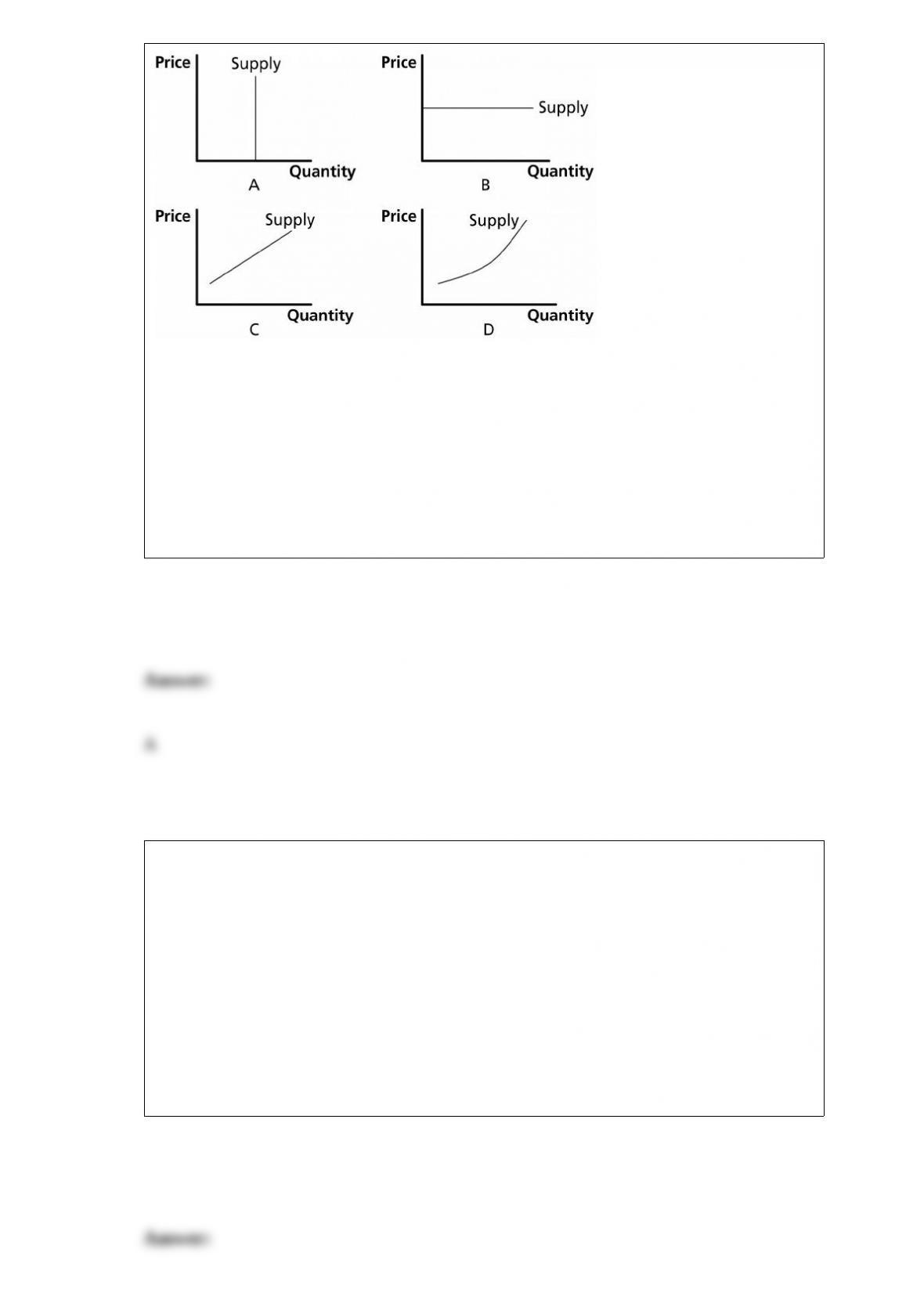
Figure 5.4
A) A.
B) B.
C) C.
D) D.
Laura makes hand-made jewelry and she would be willing to sell pairs of earrings for
$50. If Laura sells each pair of earrings for $65, her producer surplus per pair of
earrings sold would be equal to:
A) $115.
B) $65.
C) $15.
D) $50.
A decrease in a consumer’s budget set can be caused by:
A) an increase in prices.
B) a decrease in prices.
C) an increase in income.
D) a change in preferences.
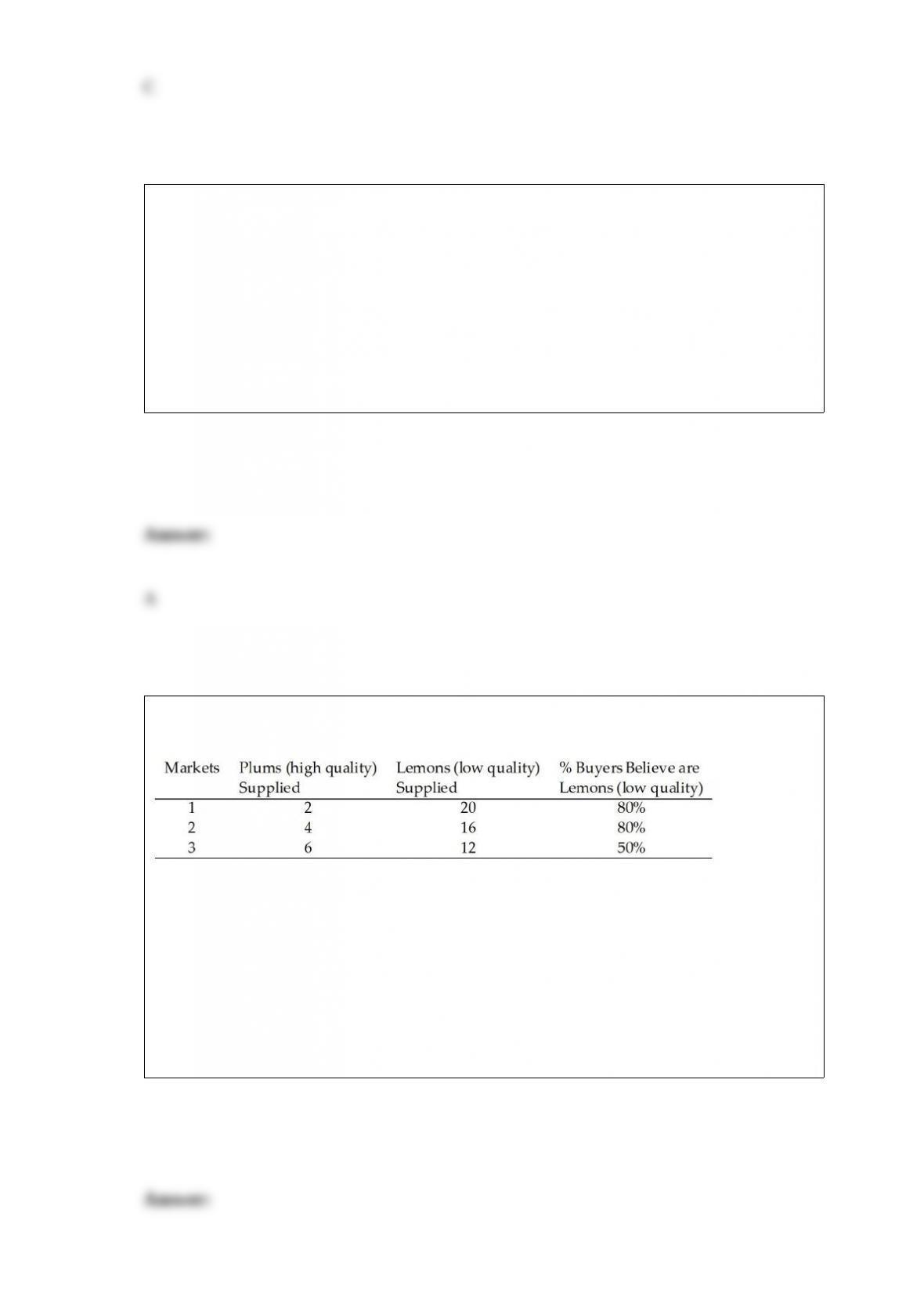
In Table 14.4, Market 3 would be in equilibrium if buyers believed plums accounted
for:
Table 14.4
A) 11.11% of the market.
B) 22.22% of the market.
C) 33.33% of the market.
D) 66.67% of the market.

Suppose buyers in the used car market are willing to pay $6,000 for a plum
(high-quality) used car and $3,000 for a lemon (low-quality) used car. If buyers believe
that 75% of the used cars on the market are lemons (low quality), what would they be
willing to pay for a used car?
A) $4,250
B) $4,000
C) $3,750
D) $3,500
O’Connor Lamp Factory has total fixed costs of $4500. O’Connor Lamp Factory’s
average variable cost per lamp is $30 and its average total cost is $45. O’Connor Lamp
Factory sells each lamp for $100 each. How many lamps is O’Connor Lamp Factory
currently manufacturing:
A) 200 lamps.
B) 250 lamps.
C) 300 lamps.
D) a number of lamps that is indeterminate from this information.

Bananas and apples are substitutes. When the price of bananas falls, and a technological
advance in apple production occurs at the same time:
A) the equilibrium price of apples rises and the equilibrium quantity of apples falls.
B) the equilibrium price of apples rises and the equilibrium quantity of apples rises.
C) the equilibrium price of apples rises and the equilibrium quantity of apples might
rise or fall.
D) the equilibrium price of apples falls and the equilibrium quantity of apples might
rise or fall.
According to the Application, what effects of the Chinese imports were advantageous to
local communities, but is usually not included in the study done by Autor, Dorn and
Hanson?
A) lower prices for consumers
B) improved U.S.-China relations
C) a stronger local currency.
D) more export opportunities for U.S. producers.

Economists use assumptions to:
A) make things simpler.
B) focus on what really matters.
C) simplify decision-making.
D) all of the above
You want to purchase a new car. You have gone to 3 dealerships that sell the type of car
you want. The price of the car is different at each of the dealerships. You have estimated
that if you go to another dealership, the marginal amount you may save will be $250,
but the marginal cost of going to the dealership would be $350. Which of the following
statements is accurate?
A) You should go to the next dealership, as you would be able to save an additional
$250.
B) In order to determine whether or not you should go to the next dealership, you would
need to know the total costs and total benefits of this action.
C) You should not go to the next dealership because the marginal cost of this action
exceeds the marginal benefit.
D) You should continue going to dealerships as long as the marginal benefit of
additional search is positive.
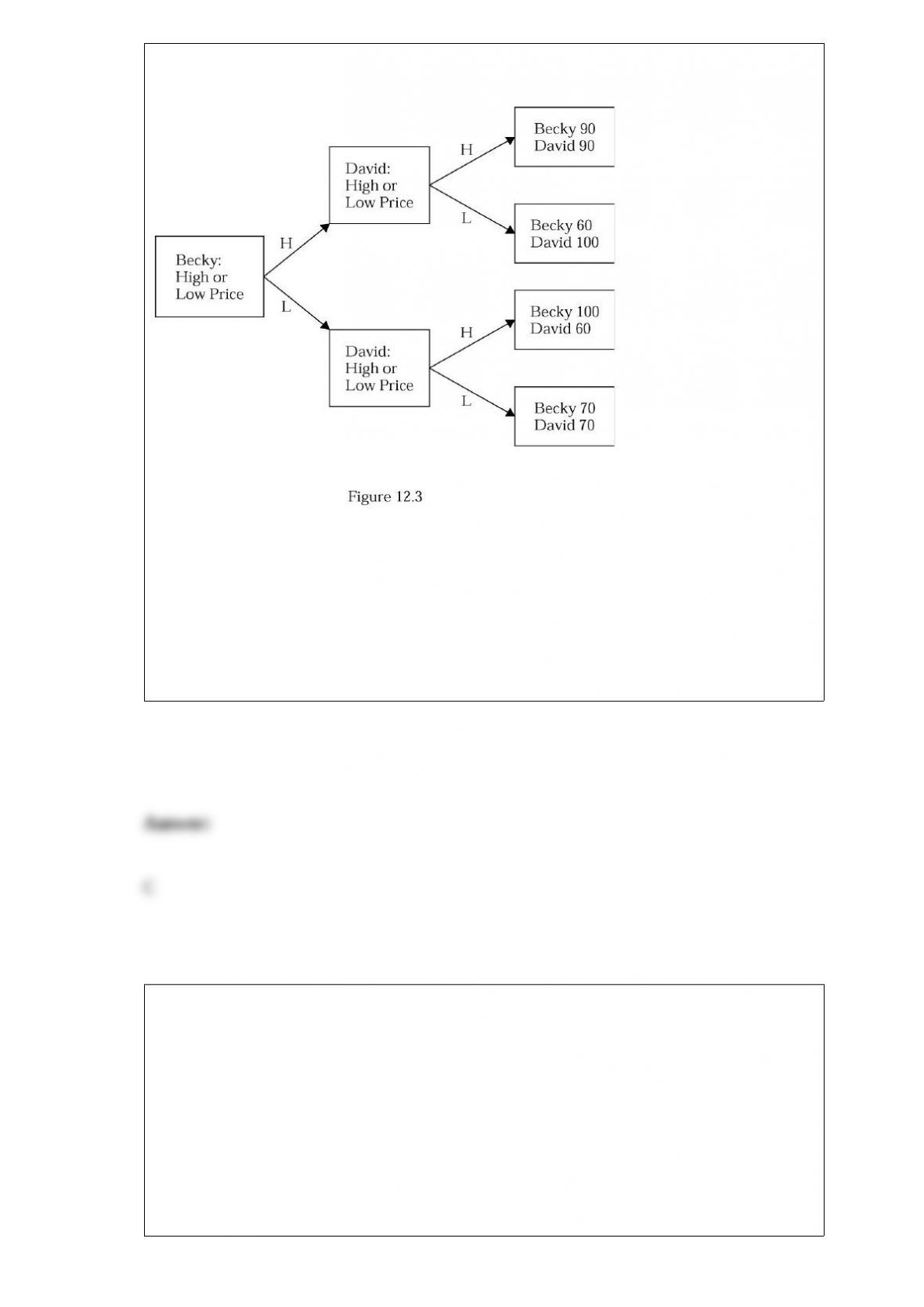
Consider Figure 12.3. David chooses to charge a low price:
A) only if Becky chooses a high price.
B) only if Becky chooses a low price.
C) regardless of whether Becky chooses a high or low price.
D) in order to induce Becky to choose a high price.
If the government limits the number of firms in a market by issuing a limited number of
licenses, the market structure is most likely to be:
A) a perfectly competitive market.
B) a monopoly.
C) a monopolistically competitive market.
D) an oligopoly.
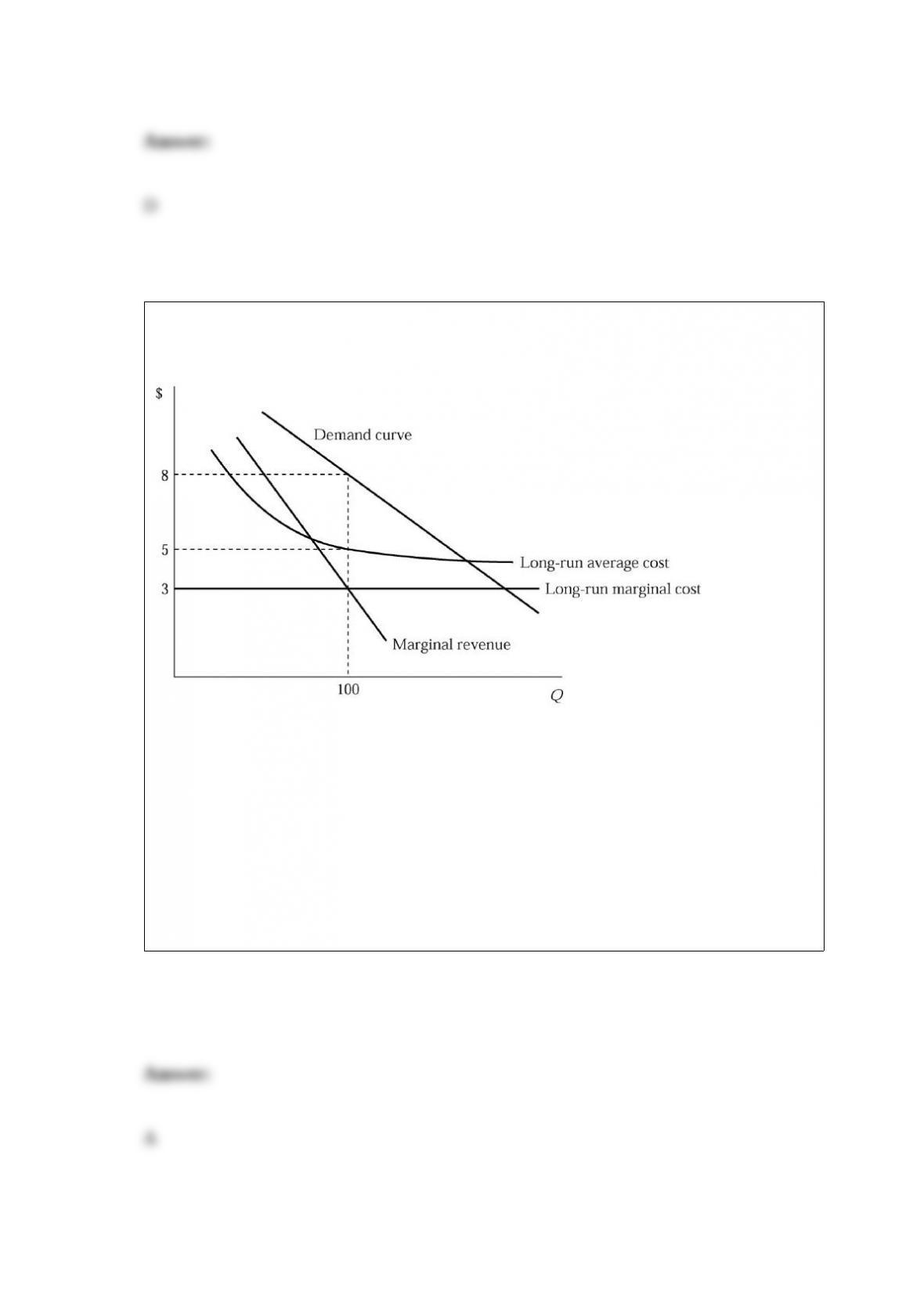
Figure 11.4 depicts demand and costs for a monopolistically competitive firm. If the
firm’s demand curve shifts to the left as more firms enter the market:
Figure 11.4
A) the firm’s profit will be smaller at the new profit maximizing output level.
B) the firm’s profit will be greater at the new profit maximizing output level.
C) the firm’s profit will remain the same at the new profit maximizing output level.
D) There is not sufficient information.
The weekly income earned in 1974 at that time could buy ________ standard baskets of
goods and services in 2011.
A) 1.70
B) 1.16
C) 1.54
D) 2.81
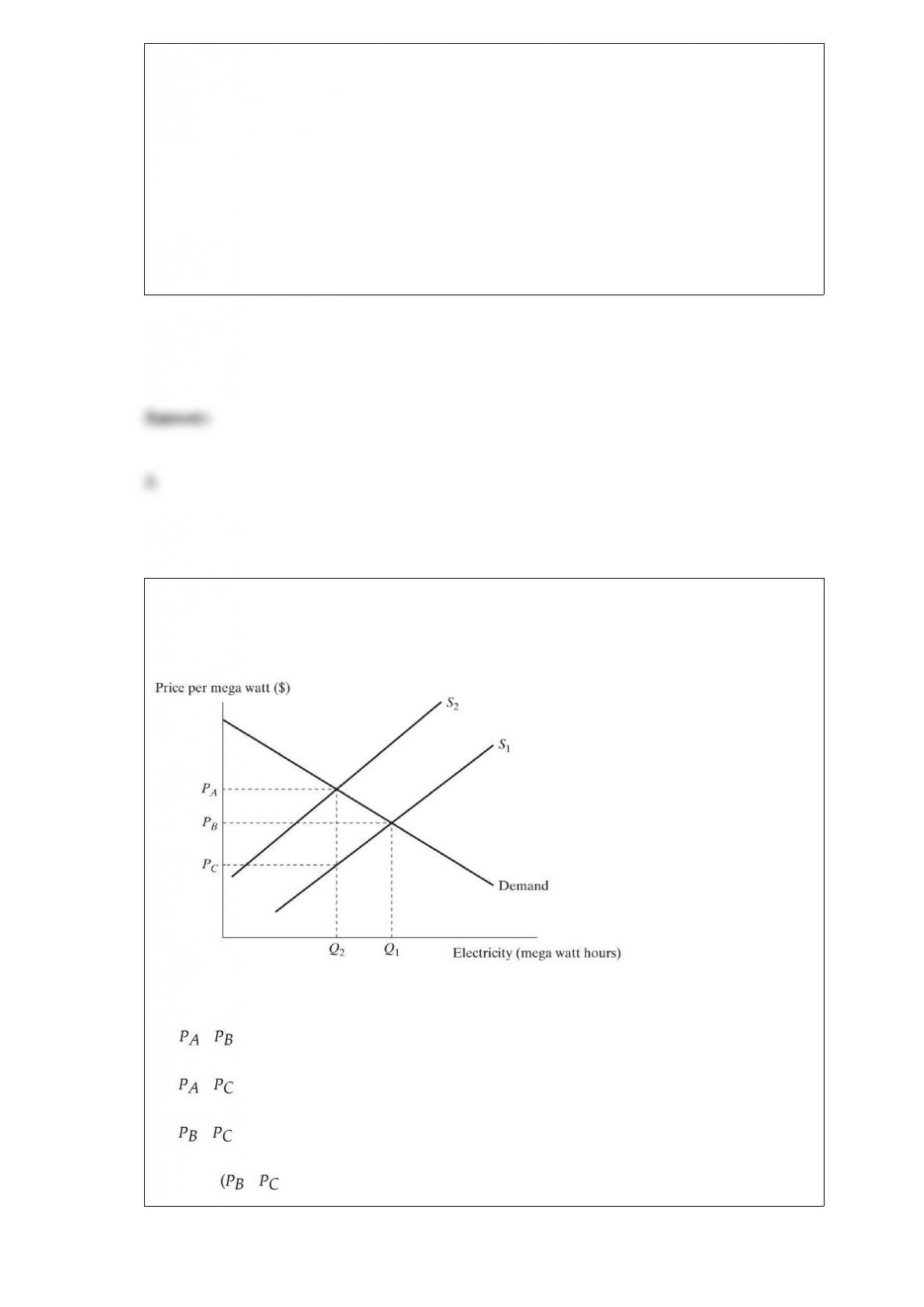
Figure 16.3 depicts a market for electricity. Assume electricity production incurs
external costs. If the government imposes the pollution tax in the amount illustrated, the
amount of the pollution tax shifted forward on to consumers is:
Figure 16.3
A) – .
B) – .
C) – .
D) (1/2)∙ – ).

If Jerry’s demand for leisure increases as the wage increases:
A) the income effect dominates the substitution effect.
B) the substitution effect dominates the income effect.
C) the income effect is completely offset by the substitution effect.
D) There is insufficient information.
Dumping occurs when a firm:
A) charges a higher price to a foreign market than either its home market or the
production costs.
B) generates toxic waste when producing export goods and then dumps the waste in the
ocean.
C) stops selling to a foreign market due to excessive tariffs.
D) charges a lower price to a foreign market than either its home market or the
production costs.
What is the difference between a ‘shift in the demand curve” and a “movement along
the demand curve”?
By making acquisitions, resources are used that could have been used to ________.
Why do used goods of different qualities often sell for the same price, while used goods
of different sizes sell for different prices?

How does the outcome of a command-and-control policy compare with the outcome of
a pollution tax?
Suppose that the price of oranges increases and the quantity of oranges in the market
decreases. Suggest two reasons why this might have happened.
What is an import quota?

Explain why a consumer may be willing to drive 20 miles to save 10% on a $3 gallon
of milk, but is not willing to drive the same 20 miles to save 3% on a $500 refrigerator.
Describe the Robinson-Patman Act.
What happens in the long run if firms in a monopolistically competitive industry are
earning positive economic profits? Explain.

A fast-food restaurant currently hires the amount of labor that maximizes profit at a
market-determined wage of $3.00 per hour. If government legislation now states that all
firms must pay their workers a minimum of $5.00 per hour, how will this legislation
affect the firm’s hiring decision?
Explain the difference between a change in quantity supplied and a change in supply.
Explain the income effect and the substitution effect due to an increase in the wage rate.

What are the rationales for protectionist policies?
What is the input-substitution effect?
When a firm hired its tenth worker, its factory output increased by four units per month.
Would you expect the firm’s output to increase by eight more units per month if the firm
hired two more workers?

List the two characteristics that define a public good.
What does an increase in population do to the demand for a product?
If each of us could produce everything we needed for ourselves, we would be
considered to be ________.