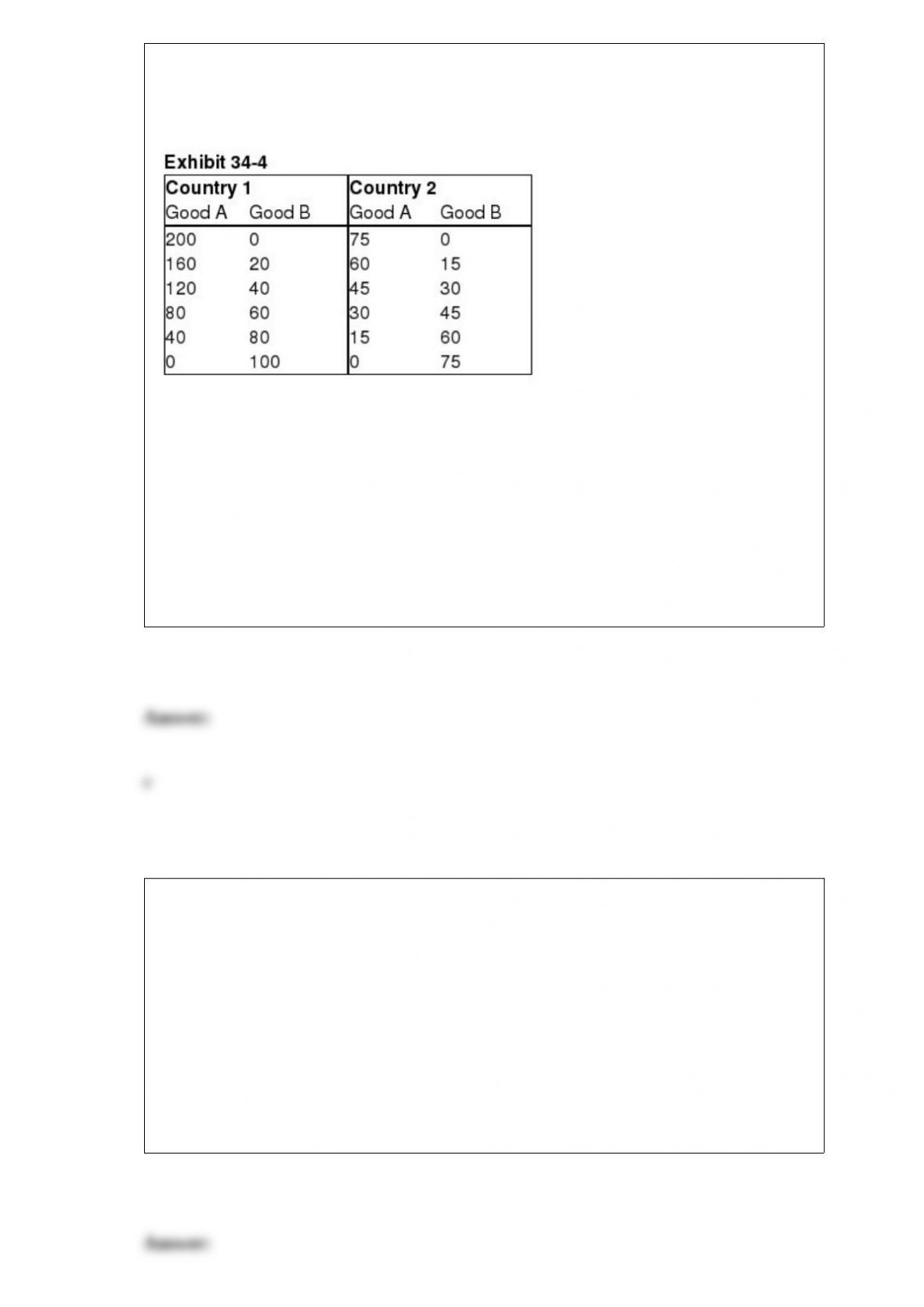
Refer to Exhibit 34-5. The opportunity cost of one unit of good B is __________ for
country 1 and __________ for country 2.
a. 20A; 15A
b. 1/20A; 1/15A
c. 10A; 15A
d. 1/2A; 1A
e. 2A; 1/2A
The major economic objective of cartels is to
a. impose their political will on others.
b. restrict output, push up price, and increase profits.
c. reduce costs.
d. develop new ways of doing things.
e. b and d
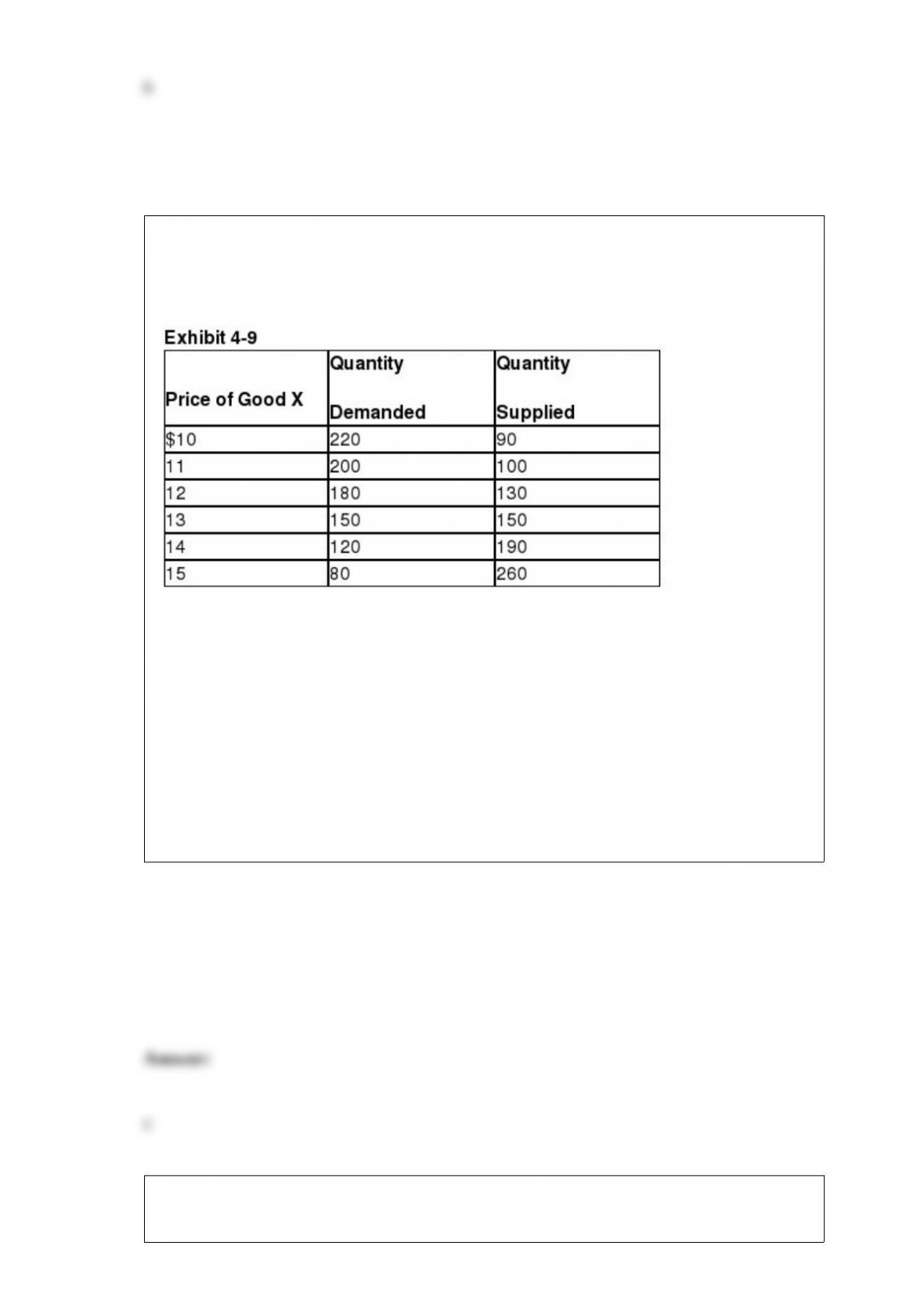
Refer to Exhibit 4-9.Suppose that the government imposes a price ceiling at a price of
$10.The number of units that would be exchanged in this market would be
a. 150, since that is the equilibrium quantity and the price ceiling is below the
equilibrium price.
b. 220, since that is the number of units demanded at the price ceiling (and the quantity
demanded is greater than the quantity supplied).
c. 90, since that is the number of units supplied at the price ceiling (and the quantity
supplied is less than the quantity demanded).
d. 155, since that is the average of the quantity demanded and the quantity supplied at
the price ceiling.
The supply curve of loanable funds is __________ sloping, which implies that as the
interest rate __________, the __________ loanable funds will increase.

a. downward; decreases; demand for
b. upward; increases; supply of
c. upward; decreases; supply of
d. downward; decreases; quantity demanded of
e. upward; increases; quantity supplied of
Which of the following statements is true?
a. A perfectly competitive firm that seeks to maximize profits will not be
resource-allocative efficient.
b. If the demand curve and the marginal revenue curve weren’t the same curve for a
perfectly competitive firm, then the firm would not be resource-allocative efficient.
c. Resource allocative efficiency exists when a firm produces its output at the lowest
possible per unit cost (lowest ATC).
d. Productive efficiency exists when firms produce the quantity of output at which price
equals marginal cost.
e. c and d
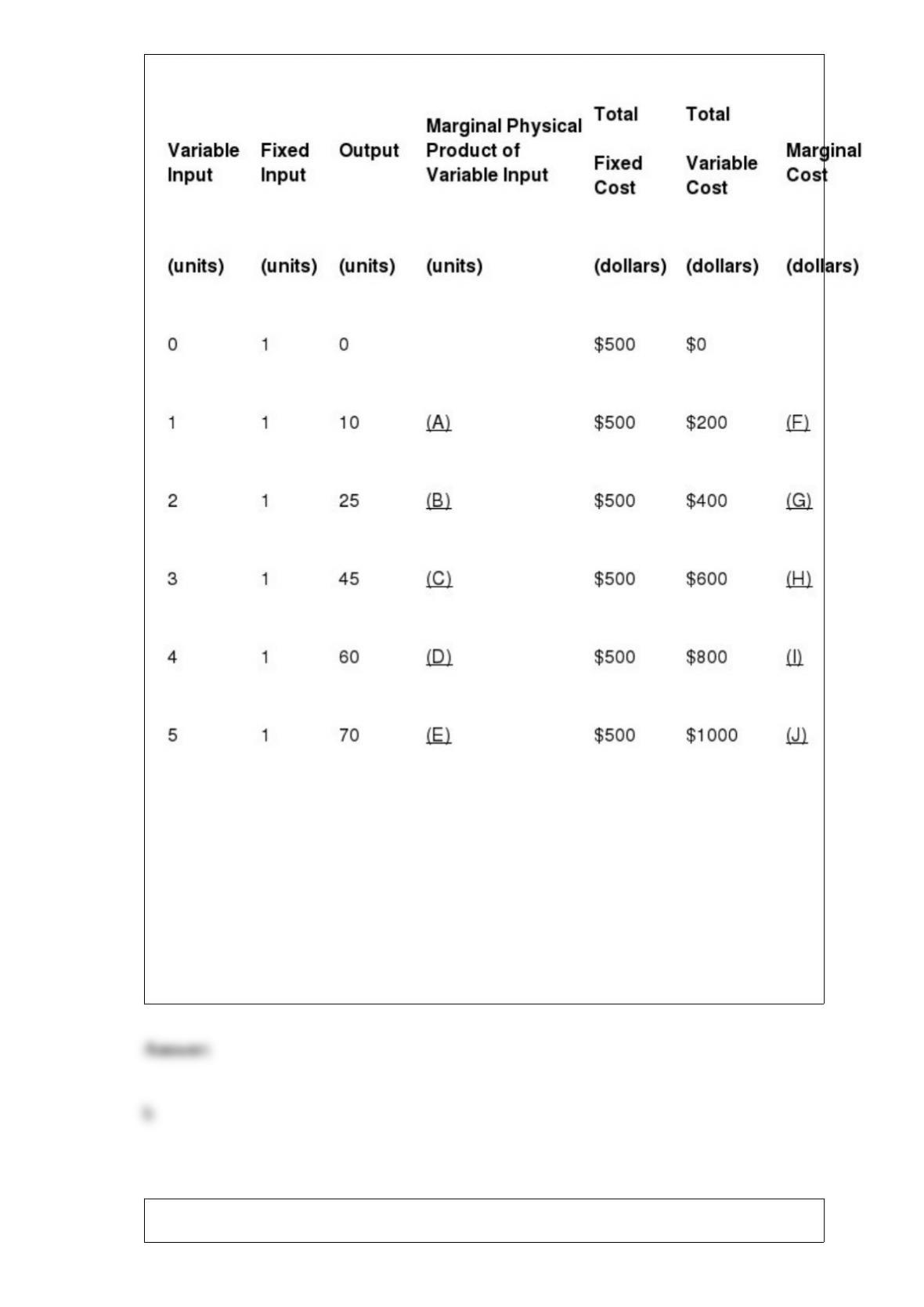
Refer to Exhibit 22-3. The average fixed cost of producing 25 units of output is
Exhibit 22-3
a. $500.00.
b. $20.00.
c. $50.00.
d. $2.50.
e. indeterminable with the information given.
Which of the following situations probably would not yield a negative externality?

a. a rock concert in the quad next to the library
b. one person who is smoking cigarettes in a closed room where several other people
are present
c. a tutor quietly instructs a student in economics as a bystander willingly listens in
without the tutor knowing it
d. mowing your lawn early on a Saturday morning when you live in a densely
populated neighborhood
e. All of the above situations would yield negative externalities.
According to the law of demand, the higher the price of an assigned textbook, the
_______________ the quantity demanded of assigned textbooks will be,ceteris paribus,
and the ______________ likely students will seek out an alternative to the assigned
textbook.
a. lower; less
b. lower; more
c. higher; less
d. higher; more
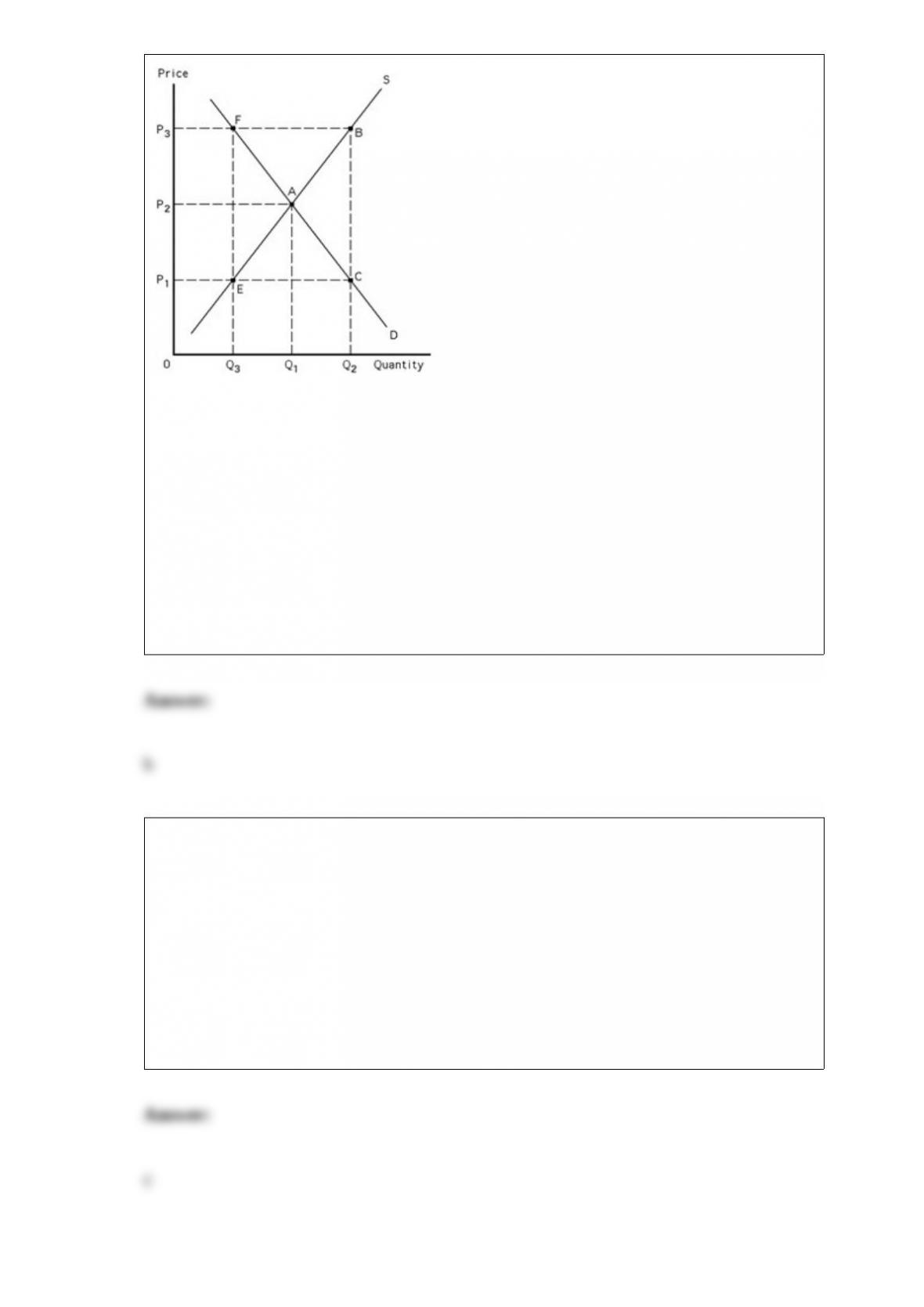
Refer to Exhibit 39-3. If P3 is a target price, the quantity supplied is
Exhibit 39-3
a. Q1.
b. Q2.
c. Q3.
d. Q2 – Q3.
e. Q1 – Q3.
If a firm is incurring a loss, the loss is a signal that
a. the firm is not a monopolist.
b. the firm has never enjoyed profits.
c. consumers would rather have some of the resources used by the loss maker be used to
produce other goods.
d. the government has withdrawn its “protection” of the firm.
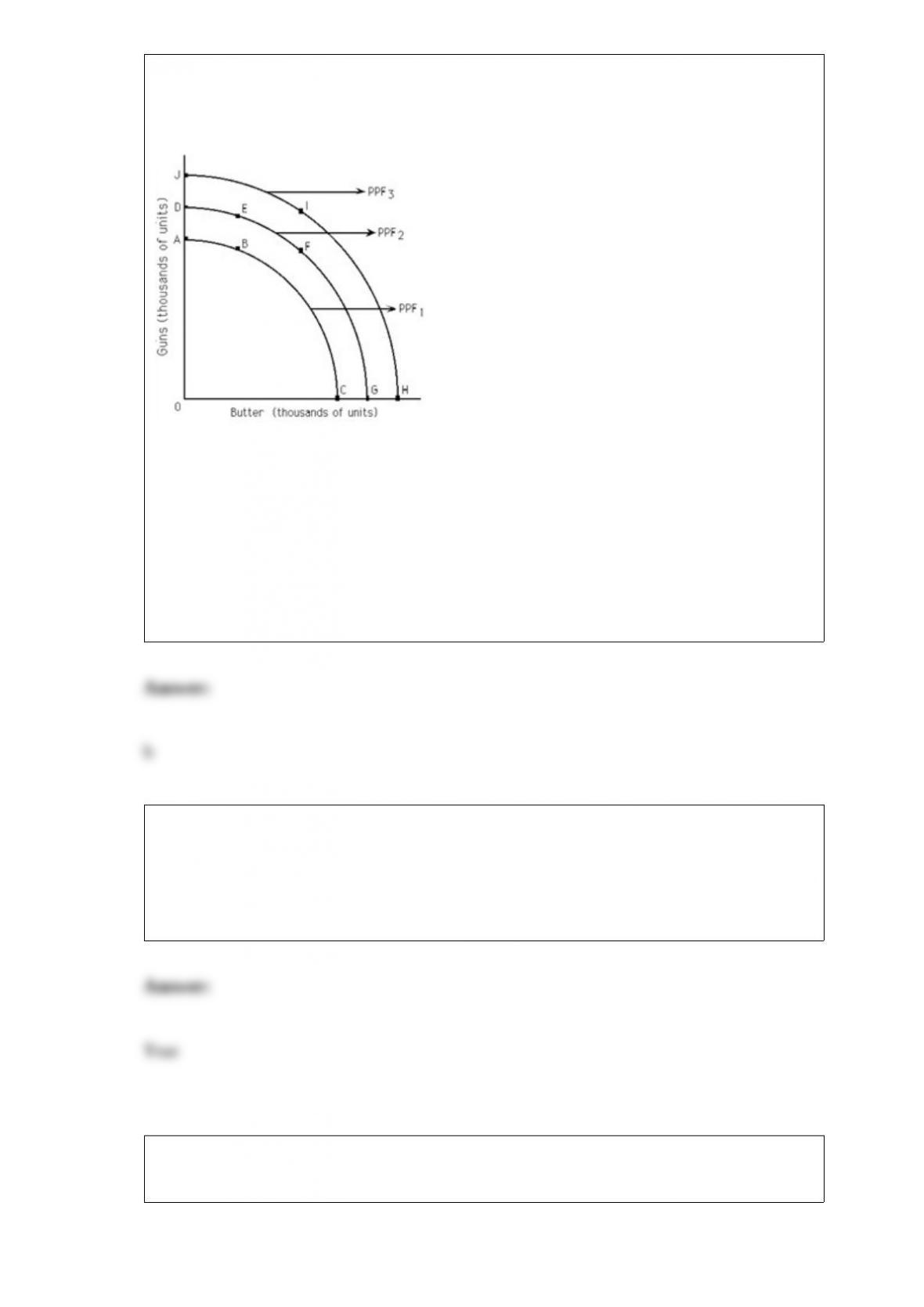
Refer to Exhibit 2-2.The production possibilities frontiers shown in this exhibit depict
_______________ opportunity costs.
Exhibit 2-2
a. constant
b. increasing
c. decreasing
d. There is not enough information provided to answer this question.
The U.S. Postal Service is an example of a public franchise.
a. True
b. False
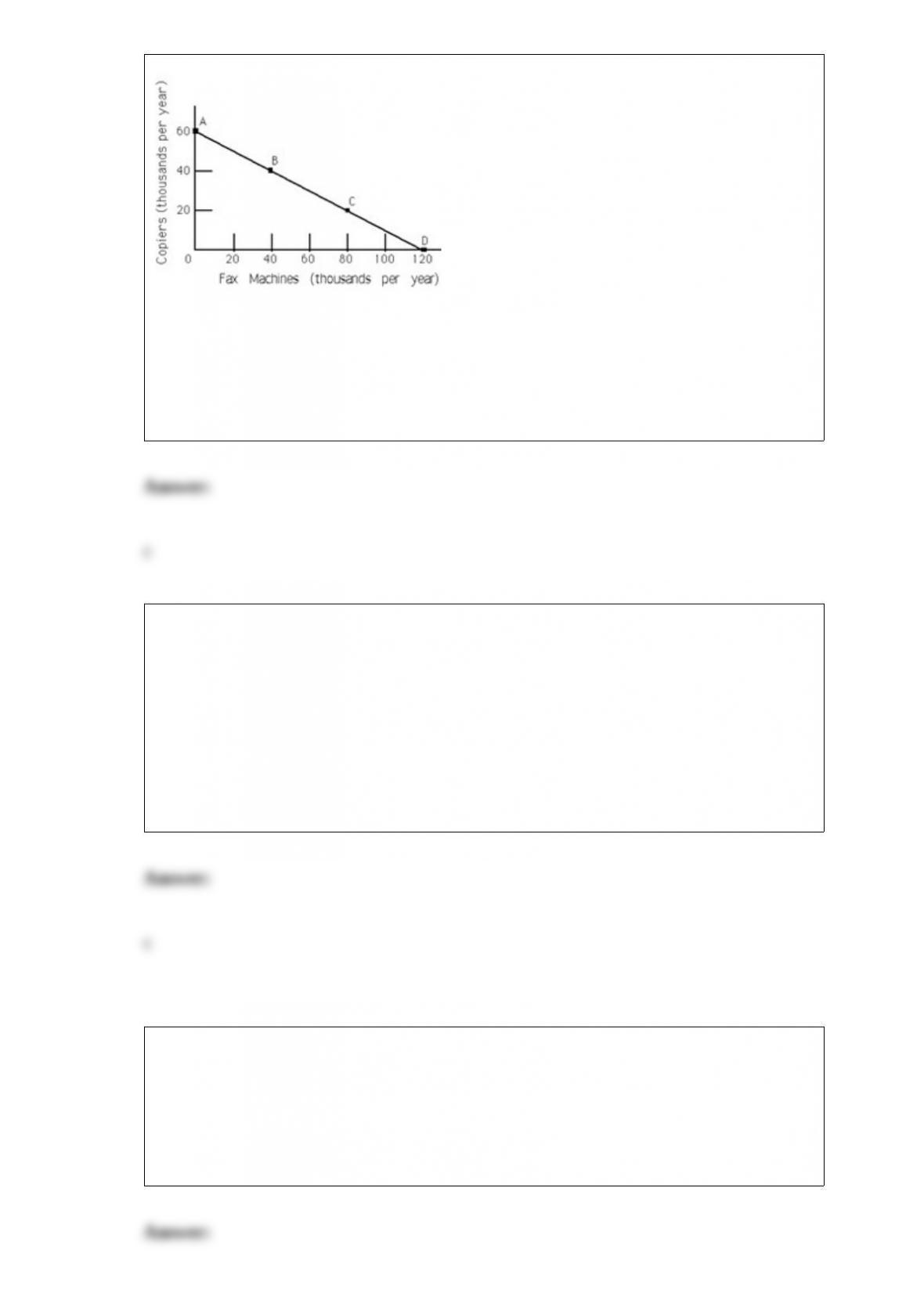
Refer to Exhibit 2-4. The line joining points A and D is called the
Exhibit 2-4
a. production function frontier.
b. utility function.
c. production possibilities frontier.
d. demand curve.
The natural monopolist might have an incentive to decrease cost under
a. price regulation.
b. profit regulation.
c. output regulation.
d. a and b
A stock with a price-earnings ratio of 11.2 means that the stock is selling for a closing
share price that is 11.2 times its latest available net earnings per share.
a. True
b. False

The Sherman Act of 1890
a. made interlocking directorates illegal.
b. set up the Federal Trade Commission (FTC) to deal with “unfair methods of
competition.”
c. made monopolization of trade a misdemeanor.
d. prohibited suppliers from offering special discounts to large chain stores without
offering them to everyone else.
e. empowered the FTC to deal with false and deceptive acts or practices.