
Which of the following is not directly counted in GDP?
A) investment expenditures
B) government purchases
C) intermediate goods
D) consumer goods
Equations for C, I, G, and NX are given below. If the equilibrium level of GDP is
$32,000, what is the marginal propensity to consume?
C = 5,000 + (MPC)Y
I = 1,500
G = 2,000
NX = -500
A) 0.67
B) 0.75
C) 0.8
D) 0.9
The relationship between sales and revenue is
A) an inverse relationship.
B) a direct relationship.

C) a negative relationship.
D) independent.
Zane’s Vanes is a service that restores old weather vanes. Zane has just spent $125
purchasing a 1920s era weather vane which he expects to restore and sell for $500 once
the work is completed. After having spent $125, Zane realizes that he will need to spend
an additional $200 on materials to complete the restoration. Alternatively, he can sell
the weather vane without restoring it for $200. What should he do?
A) He should sell the weather vane now to make the most profit.
B) It does not matter what he does; he is going to take a loss on the project.
C) He should finish the restoration and then sell the weather vane.
D) He should sell the weather vane back to the party he purchased it from and cut his
losses.
Real GDP will increase
A) only if the price level rises.
B) only if the price level falls.
C) only if the quantity of final goods and services produced rises.
D) if either the price level rises or the quantity of final goods and services produced
rises.
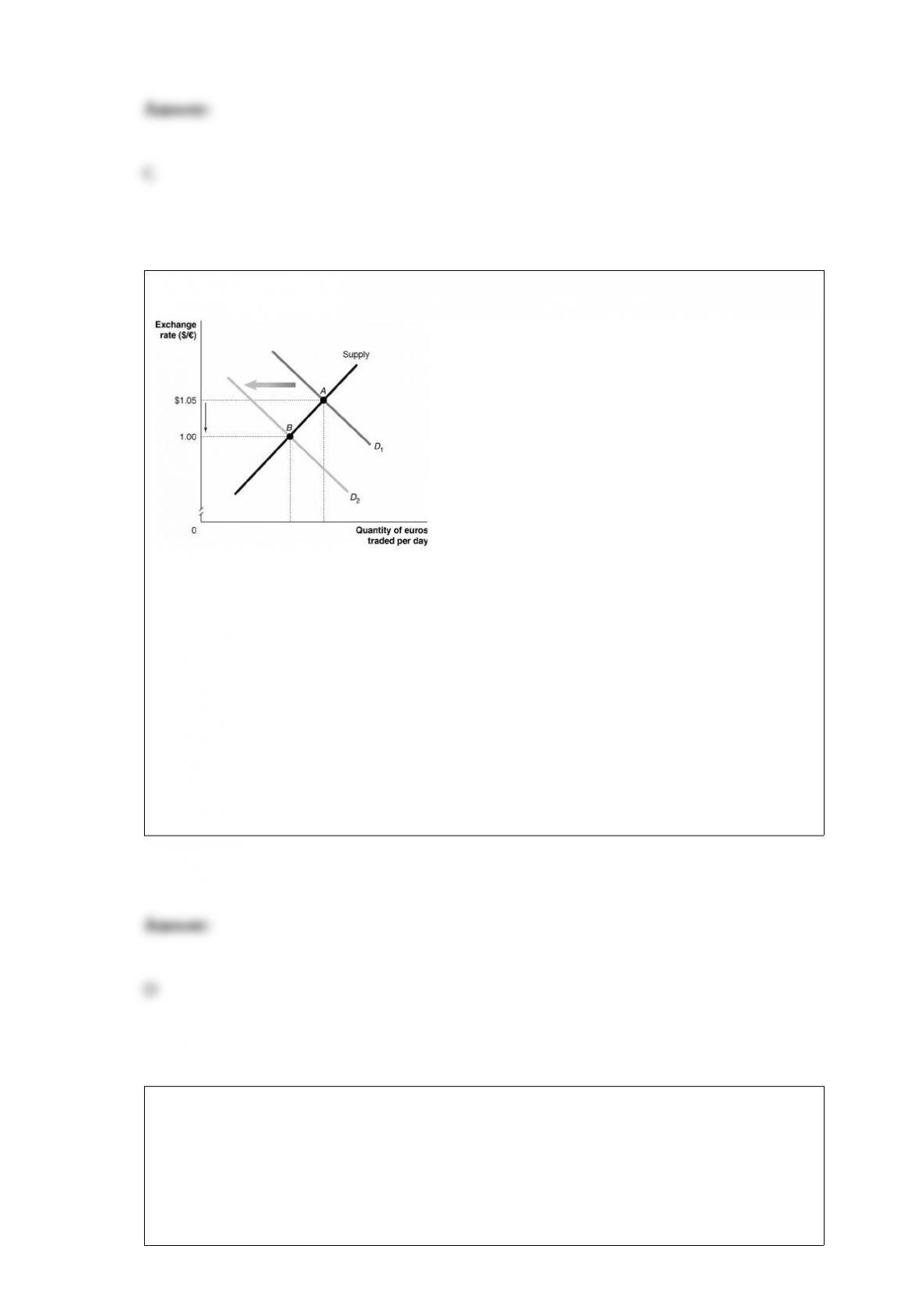
Figure 19-1
Refer to Figure 19-1. Which of the following would cause the change depicted in the
figure above?
A) European productivity rises relative to American productivity.
B) Americans decrease their preferences for goods produced in the EU relative to
American goods.
C) The European Union increases its quotas on German wristwatches.
D) The price level of goods produced in the EU increases relative to the price level of
goods produced in the United States.
In what year was the Bretton Woods system of currency exchange set up?
A) 1912
B) 1924
C) 1944
D) 1969
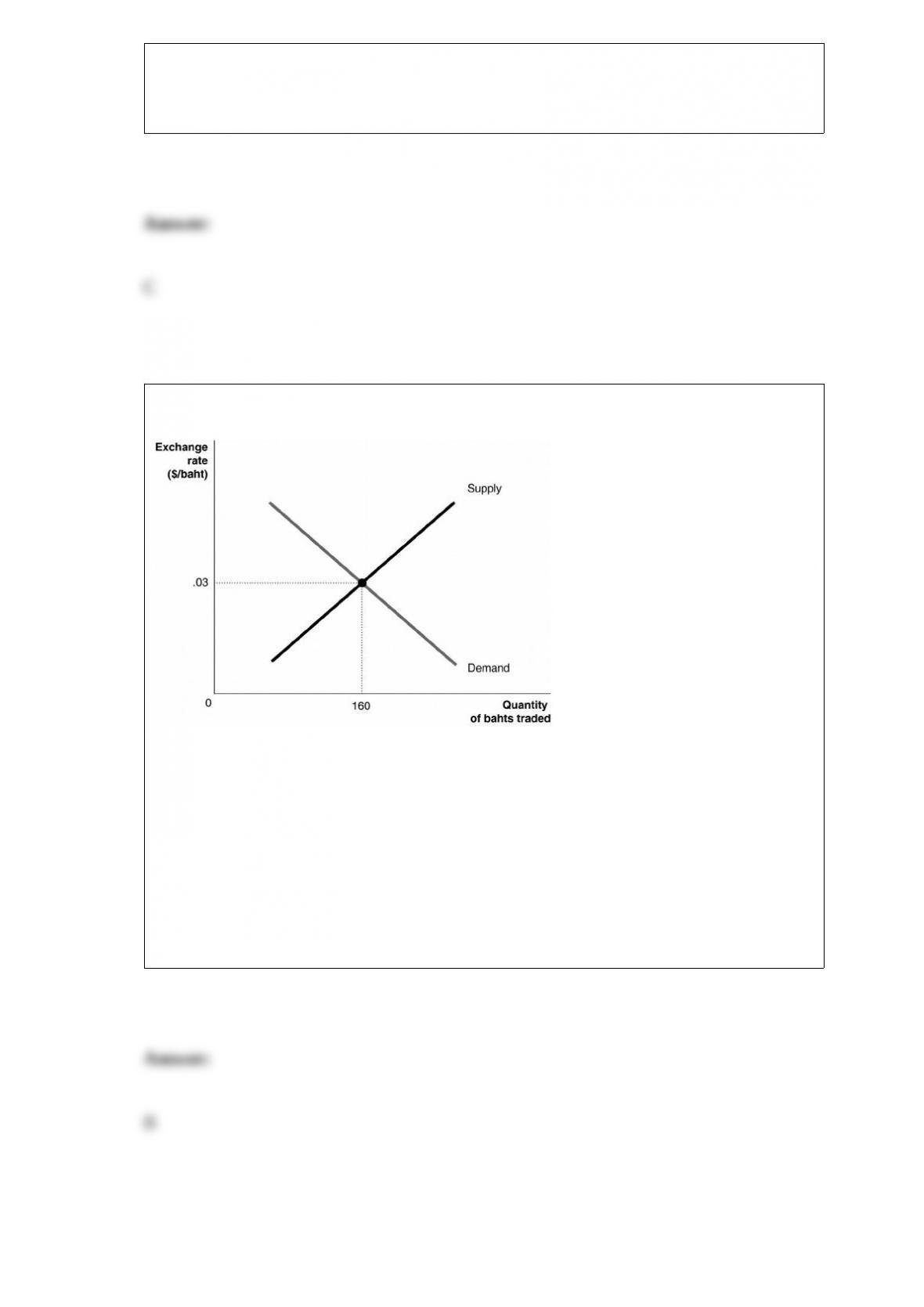
Figure 19-3
Refer to Figure 19-3. If the Thai government pegs its currency to the dollar at a value
above $.03/baht, we would say the currency is
A) undervalued.
B) overvalued.
C) parity valued.
D) equilibrium valued.

If the economy is currently in equilibrium at a level of GDP that is below potential
GDP, which of the following would move the economy back to potential GDP?
A) an increase in wealth
B) an increase in interest rates
C) a decrease in business confidence
D) an increase in the value of the dollar relative to other currencies
Article Summary
Over the past two years, the Indian rupee has fallen 26 percent in value against the
U.S. dollar, reaching a record low of 61.80 rupees per dollar in August 2013. The
decline reflects increasing capital outflows and pessimism regarding the
government’s attempts to reverse this trend. The Indian government was expected
to announce potential measures to increase the inflow of capital, including the
possibility of raising debt abroad, raising money from Indians who live abroad,
easing restrictions on overseas borrowing, and raising interest rates. Critics argue
that current and well-entrenched policies deter capital inflow from investors and
corporations, and raising interest rates may reduce confidence in the economy,
which experienced a decade-low growth rate of 5 percent in 2013.
Source: Rafael Nam, “Rupee over 60: Why Indian currency weakness may be here
to stay,” Reuters, August 8, 2013.
Refer to the Article Summary. All else equal, a depreciation of the Indian rupee relative
to a currency such as the U.S. dollar should ________ the current account balance in
India and therefore ________ the financial account balance in India.
A) increase; increase
B) increase; decrease
C) decrease; increase
D) decrease; decrease
Fast food restaurants produce a range of menu items such as hamburgers, chicken
sandwiches, salads, and french fries. What fundamental economic question are they
addressing by offering this range of items?
A) How to produce goods that consumers want?
B) Why produce a variety of menu items?
C) What to produce?
D) Who to produce the menu items for?
Increases in the price level will
A) lower consumption because goods and services are less affordable.
B) raise consumption because some goods and services are more affordable.
C) raise consumption because real wealth increases.
D) lower consumption because real wealth decreases.
Figure 7-1
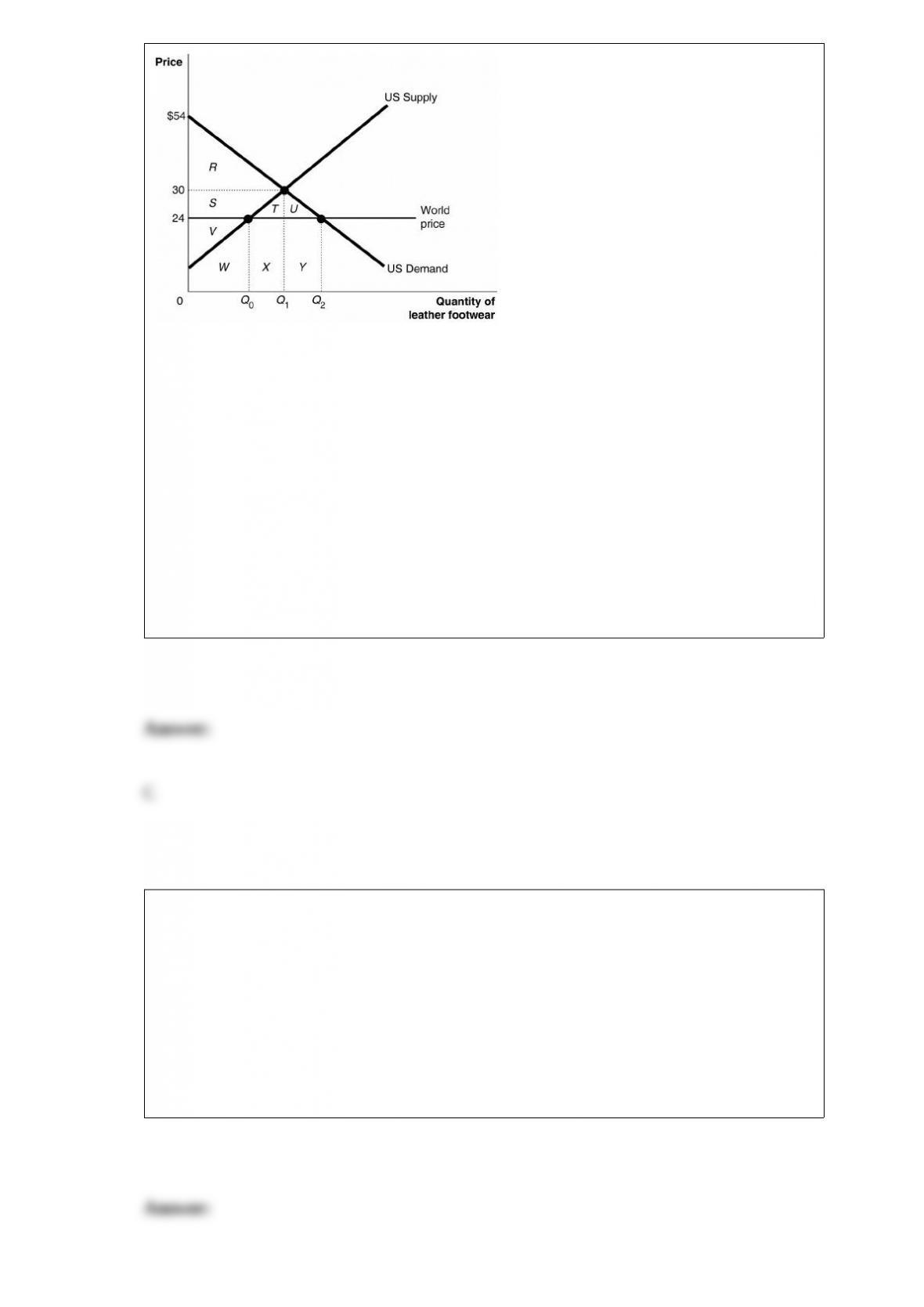
Figure 7-1 shows the U.S. demand and supply for leather footwear.
Refer to Figure 7-1. Suppose the government allows imports of leather footwear into
the United States. What will be the quantity demanded?
A) Q0
B) Q1
C) Q2
D) Q2 – Q0
About ________ of pharmaceutical patents are issued to U.S. firms.
A) 10 percent
B) one-half
C) two-thirds
D) 90 percent

The natural rate of unemployment is the amount of unemployment
A) associated with the business cycle.
B) equal to frictional plus structural unemployment.
C) that exists when the economy goes into recession.
D) that exists when the economy is in an expansion.
Which of the following is a government expenditure, but is not a government purchase?
A) The federal government buys a Humvee.
B) The federal government pays the salary of an FBI agent.
C) The federal government pays out an unemployment insurance claim.
D) The Federal government pays to support research on Aids.
The current exchange rate system has which of the following characteristics?
A) The United States allows the dollar to float against other major currencies.
B) All developing countries allow their currencies to float against the dollar and other
major currencies.
C) The countries of the European Union have adopted the gold standard.
D) Several developing countries in Asia have adopted the Bretton Woods system.
E) The current global foreign exchange system is a fixed system.
What is the difference between accounting profit and economic profit?
What are inventories? What usually happens to inventories at the beginning of a
recession, and what usually happens to inventories at the beginning of an expansion?
The “Big Mac Theory of Exchange Rates” tests the accuracy of purchasing power
parity theory. In July 2013, the Economist reported that the average price of a Big Mac
in the United States was $4.56. In Mexico, the average price of a Big Mac at that time
was 37 pesos. If the exchange rate between the dollar and the peso was 13.60 pesos per
dollar, how would purchasing power parity predict the exchange rate will change in the
long run? Support your answer graphically.
Table 8-7
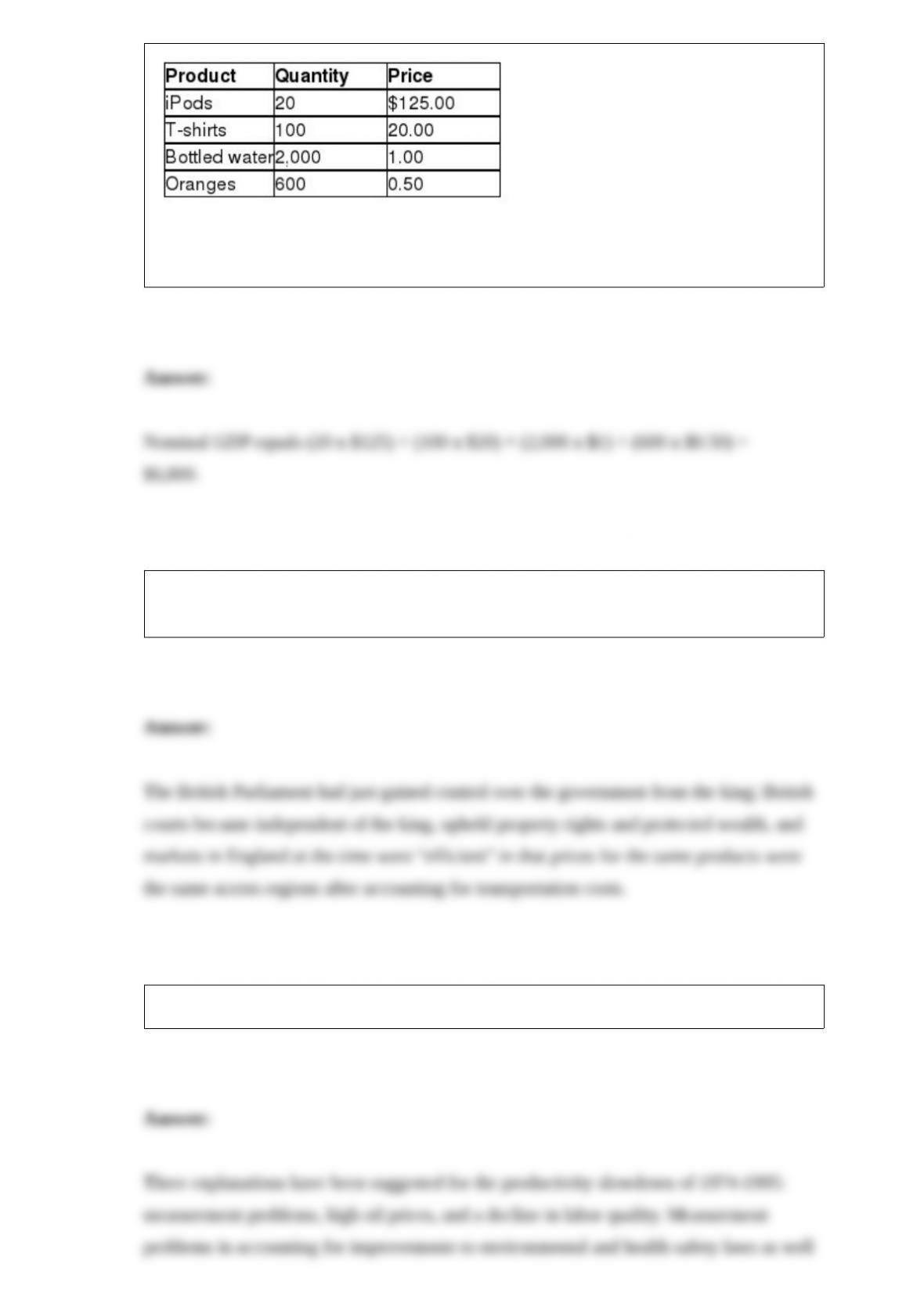
Refer to Table 8-7. Suppose that a simple economy produces only four goods and
services: iPods, t-shirts, bottled water, and oranges. Calculate nominal GDP for this
simple economy.
What features made England in the eighteenth century the place where the Industrial
Revolution occurred?
Explain three reasons why the productivity slowdown of 1974-1995 occurred.
President Obama has discussed raising income taxes for individuals earning over
$250,000 in income. Explain how these higher income taxes will affect the aggregate
demand curve.
Use the information below to explain adjustments that move the economy to a long-run
equilibrium. Assume that firms and workers have adaptive expectations.
The current unemployment rate = 4%.
The natural rate of unemployment = 6%.
Last year’s inflation rate = 3%.
This year’s inflation rate = 4%.
How does expansionary monetary policy increase spending in the economy compared
to how expansionary fiscal policy increases spending in the economy?
What does the term “increasing marginal opportunity cost” mean? How are increasing
marginal opportunity costs represented on a bowed out production possibilities frontier?