
Suppose your expenses for this term are as follows: tuition: $9,000, room and board:
$1,500, books and other educational supplies: $1,000. Further, during the term, you can
only work part-time and earn $3,000 instead of your full-time salary of $8,000. What is
the opportunity cost of going to college this term, assuming that your room and board
expenses would be the same even if you did not go to college?
A) $10,000
B) $13,000
C) $15,000
D) $18,000
Scenario 1-1 Suppose a t-shirt manufacturer currently sells 5,000 t-shirts per week and
makes a profit of $10,000 per week. A manager at the plant observes, “Although the last
400 t-shirts we produced and sold increased our revenue by $4,000 and our costs by
$4,800, we are still making an overall profit of $10,000 per week so I think we’re on the
right track. We are producing the optimal number of t-shirts.” Had the firm not
produced and sold the last 400 t-shirts, would its profit be higher or lower, and if so by
how much?
A) Its profit will be $4,800 higher.
B) Its profit will be $800 higher.
C) Its profit will be $800 lower.
D) Its profit will be $4,000 lower.
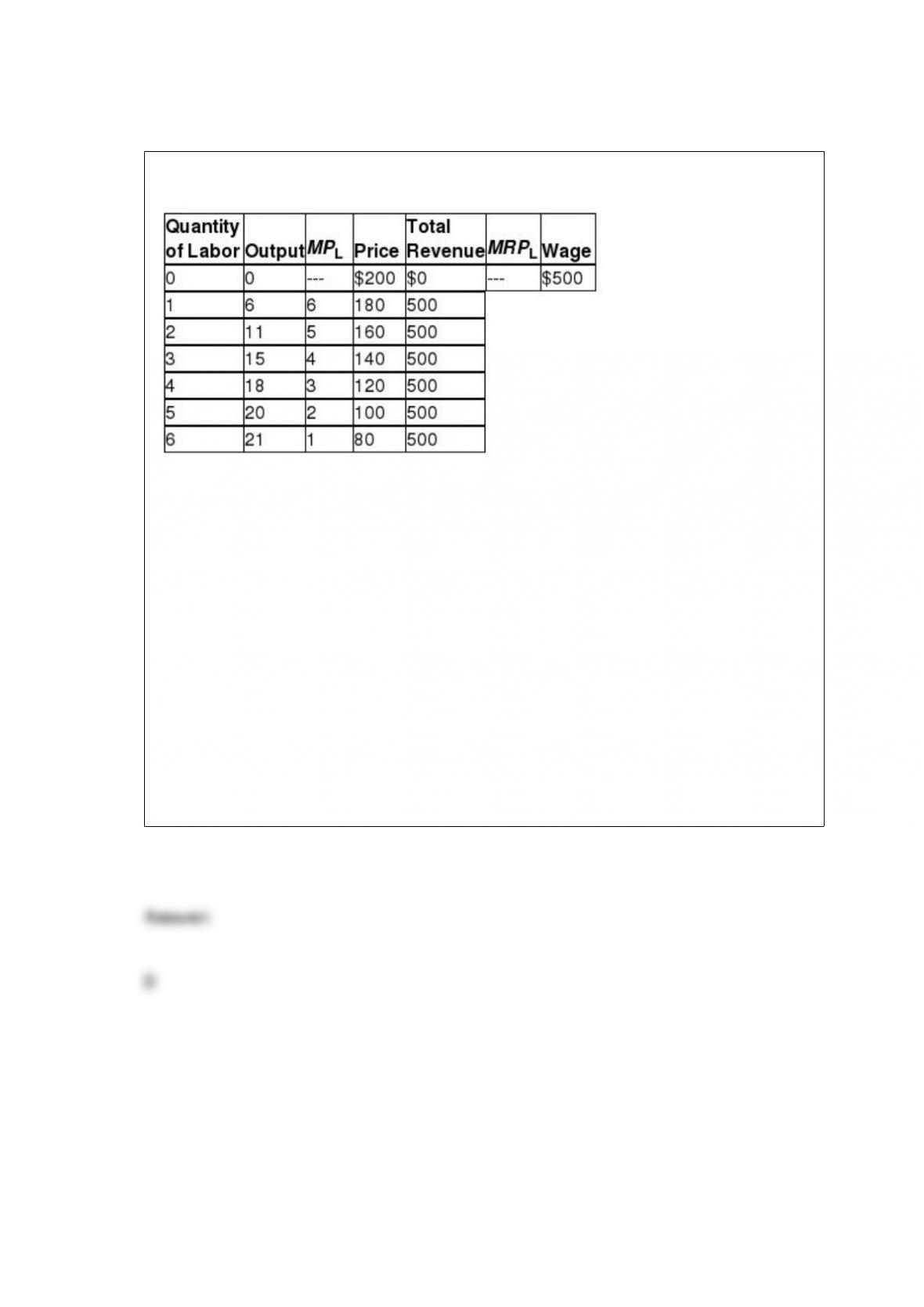
Table 17-4
Table 17-4 lists data for the production of Apple iPods. Apple is assumed to be a price
maker, so to increase its sales of iPods the firm must lower its price. MPL and MRPL
refer to the marginal product of labor and the marginal revenue product of labor,
respectively.
What are the price and quantity of workers that result in the maximum amount of profit
Apple would earn from selling iPods?
A) $140; 2
B) $160; 2
C) $140; 3
D) $180; 1
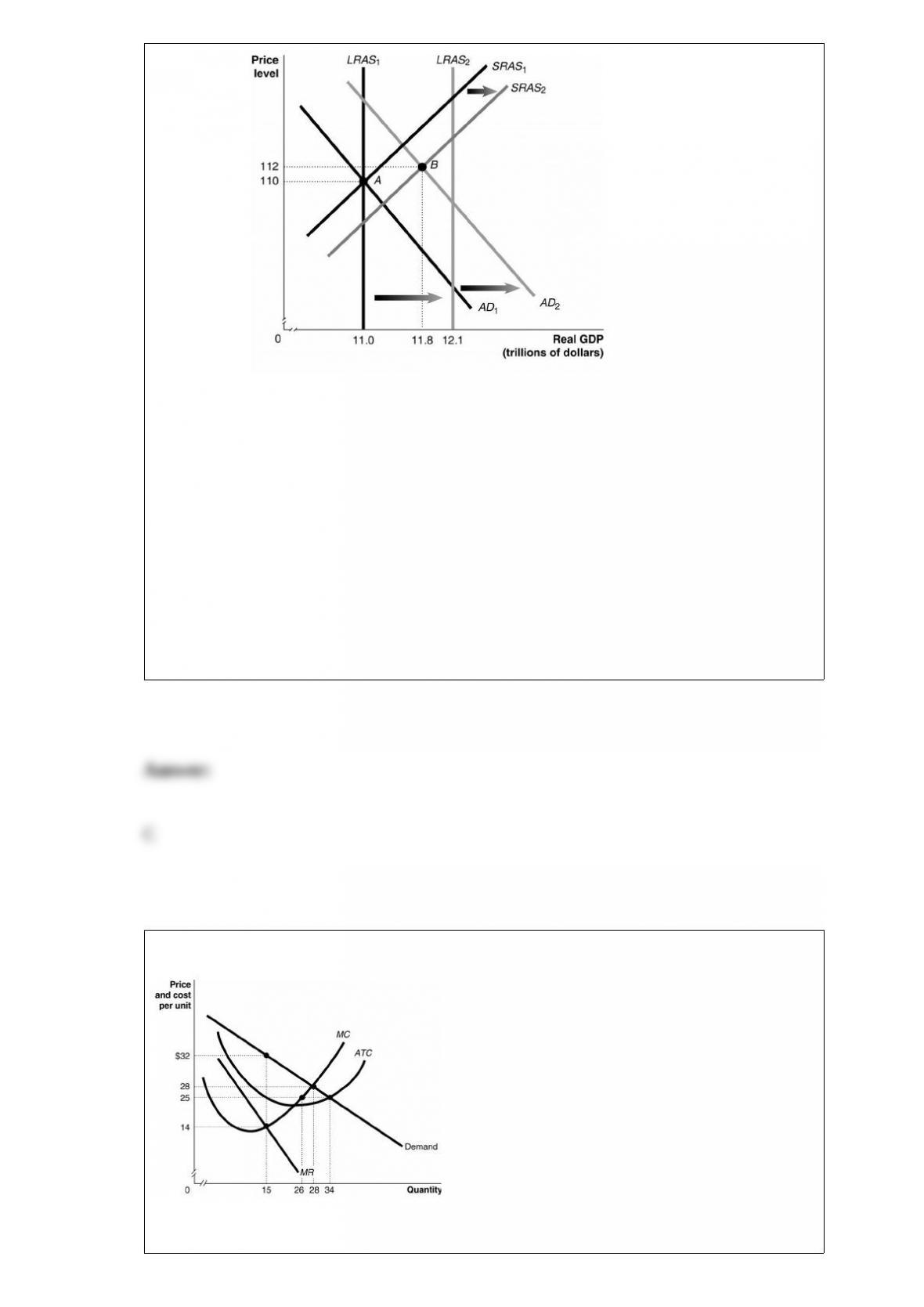
Figure 13-4
In the figure above, LRAS1 and SRAS1 denote LRAS and SRAS in year 1, while LRAS2
and SRAS2 denote LRAS and SRAS in year 2. Given the economy is at point A in year 1,
what is the growth rate in potential GDP in year 2?
A) 8%
B) 9.1%
C) 10%
D) 12%
Figure 15-17
Answer the following questions.
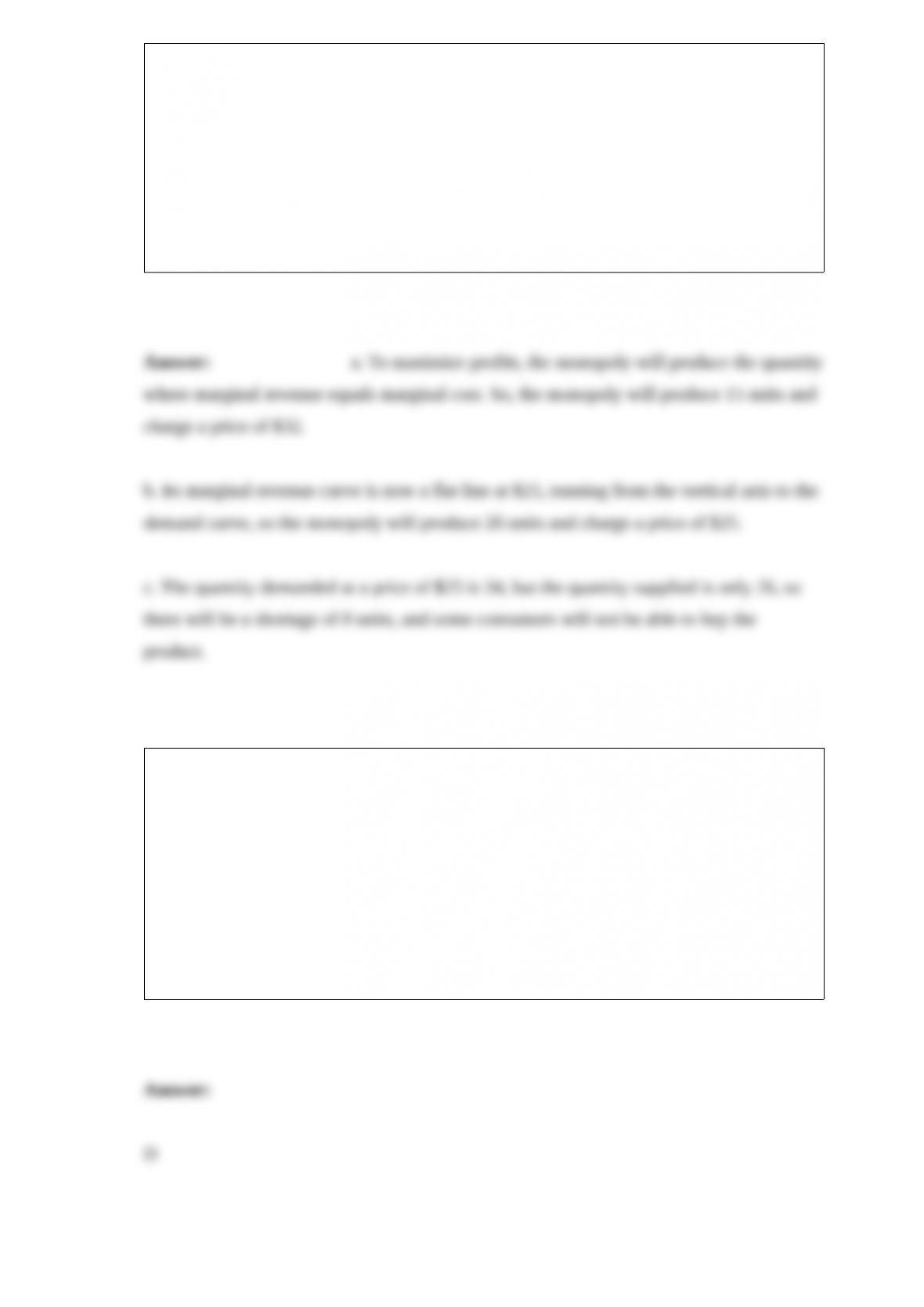
a. What quantity will this monopoly produce and what price will it charge?
b. Suppose the government decides to regulate this monopoly and imposes a price
ceiling of $25. Now what quantity will the monopoly produce and what price will it
charge?
c. Will every consumer who is willing to pay the ceiling price of $25 be able to buy the
product? Briefly explain.
A higher inflation rate can lead to lower unemployment if ________ mistakenly expect
the inflation rate to be lower than it turns out to be.
A) workers, but not employers
B) employers, but not workers
C) both workers and employers
D) neither workers nor employers
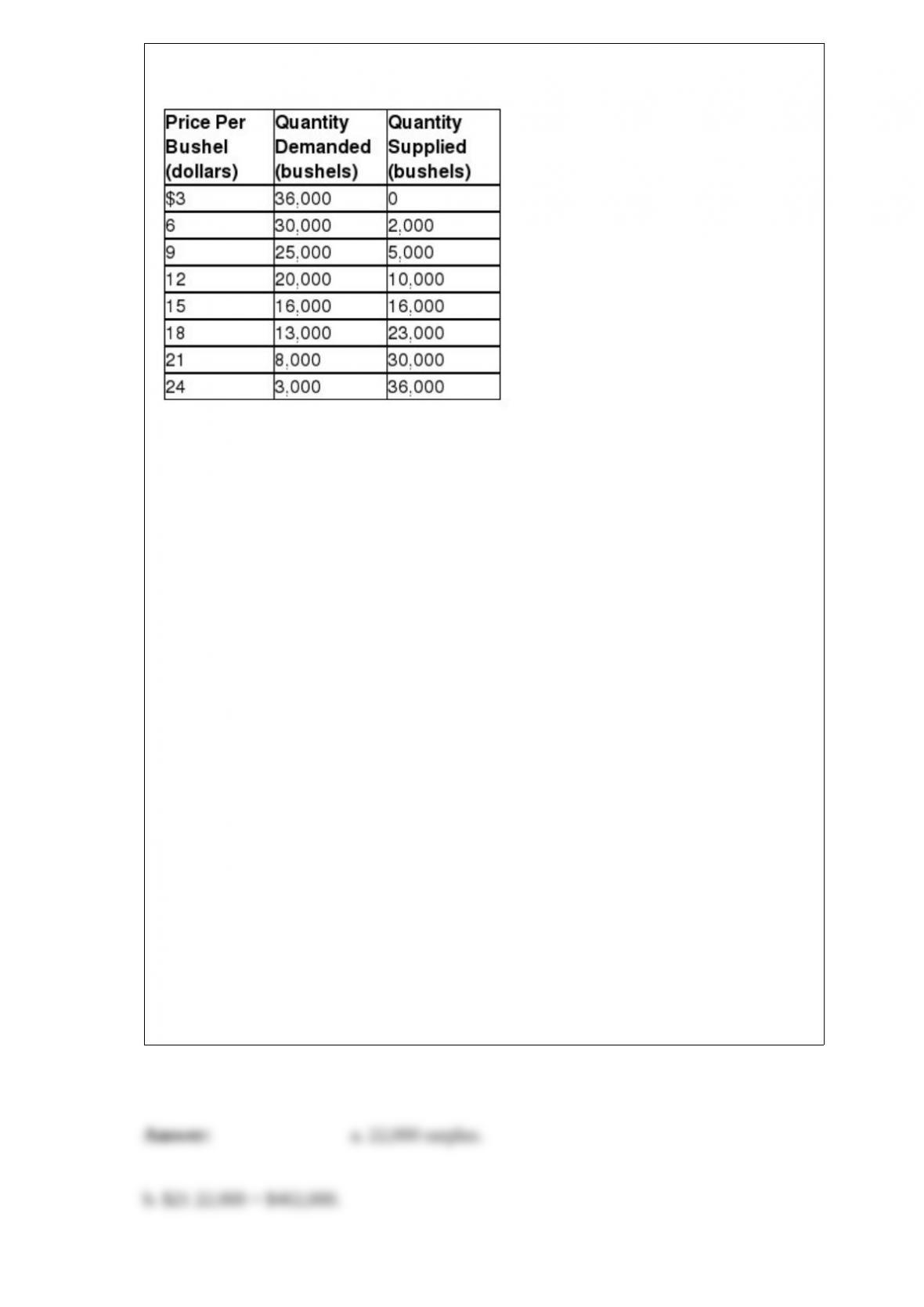
Table 4-5
Table 4-5 above contains information about the wheat market. Answer the following
questions based on this table. An agricultural price floor is a price that the government
guarantees farmers will receive for a particular crop. Suppose the federal government
sets a price floor for wheat at $21 per bushel.
a. What is the amount of shortage or surplus in the wheat market as result of the price
floor?
b. If the government agrees to purchase any surplus output at $21, how much will it
cost the government?
c. If the government buys all of the farmers’ output at the floor price, how many bushels
of wheat will it have to purchase and how much will it cost the government?
d. Suppose the government buys up all of the farmers’ output at the floor price and then
sells the output to consumers at whatever price it can get. Under this scheme, what is
the price at which the government will be able to sell off all of the output it had
purchased from farmers? What is the revenue received from the government’s sale?
e. In this problem we have considered two government schemes: (1) a price floor is
established and the government purchases any excess output and (2) the government
buys all the farmers’ output at the floor price and resells at whatever price it can get.
Which scheme will taxpayers prefer?
f. Consider again the two schemes. Which scheme will the farmers prefer?
g. Consider again the two schemes. Which scheme will wheat buyers prefer?

Which of the following describes the Soviet Union’s economy through most of the
second half of the 20th century?
A) The Soviet economy grew rapidly in the later half of the 20th century.
B) The Soviet economy increased capital per worker very slowly from 1950 through
1980.
C) The Soviet economy grew slowly because of the slow rate of technological change.
D) The Soviet economy grew because it added labor through immigration policy in the
1950s.
A monopolistically competitive firm that is profitable in the short run will face
competition that will eventually eliminate the firm’s profits in the long run. But the firm
can stave off competition and continue to earn economic profits if
A) it can successfully sue its competitors for copyright infringement.
B) it can move to another country where there is less competition.
C) it can lobby the government to establish a price floor for its product.
D) it can find new ways to differentiate its product.

Which of the following advances contributed to the “new economy” of the mid-1990s?
A) the increased use of the Internet in selling products and services
B) expanded cell phone use
C) the lower cost and increased availability of laptop computers
D) all of the above
Which of the following is an example of human capital?
A) a computer
B) a factory building
C) a college education
D) a software program
________ a nation’s production possibilities frontier represents economic growth.
A) An outward shift of
B) An inward shift of
C) Moving up along
D) Moving down along
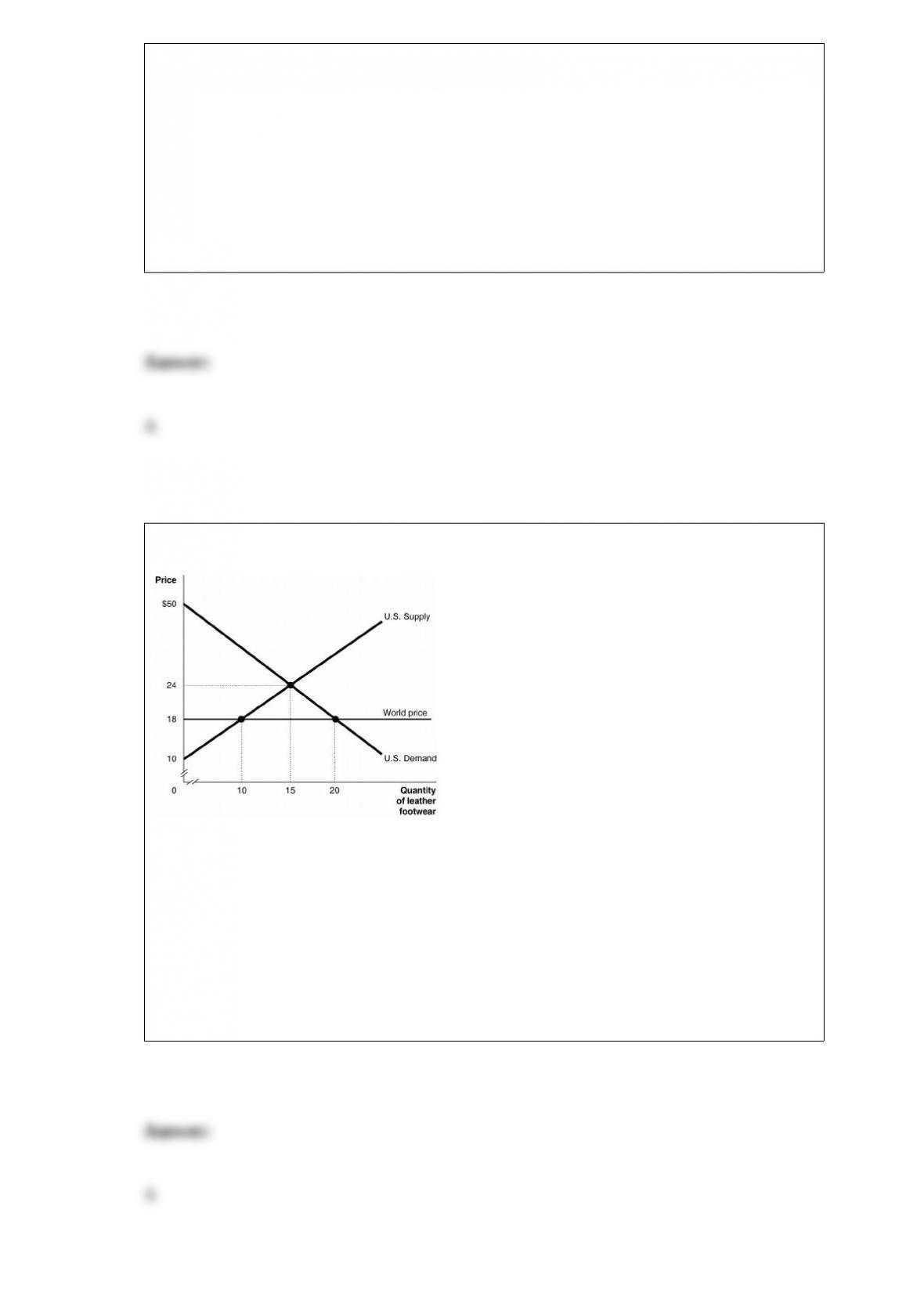
Figure 9-1
Figure 9-1 shows the U.S. demand and supply for
leather footwear. Under autarky, the deadweight loss is
A) $0.
B) $15.
C) $30.
D) $40.