
What is econometrics?
A) a bias in which people overemphasize small risks while ignoring large risks
B) the use of statistical and analytical techniques to test economic theory
C) the use of mathematical theory to speculate on cause and effect
D) the branch of economics that studies psychological biases
The deadweight loss (owing to a price ceiling) increases as demand becomes more
______ and supply becomes more ______.
A) inelastic; inelastic
B) elastic; inelastic
C) elastic; elastic
D) inelastic; elastic
Figure 11.1
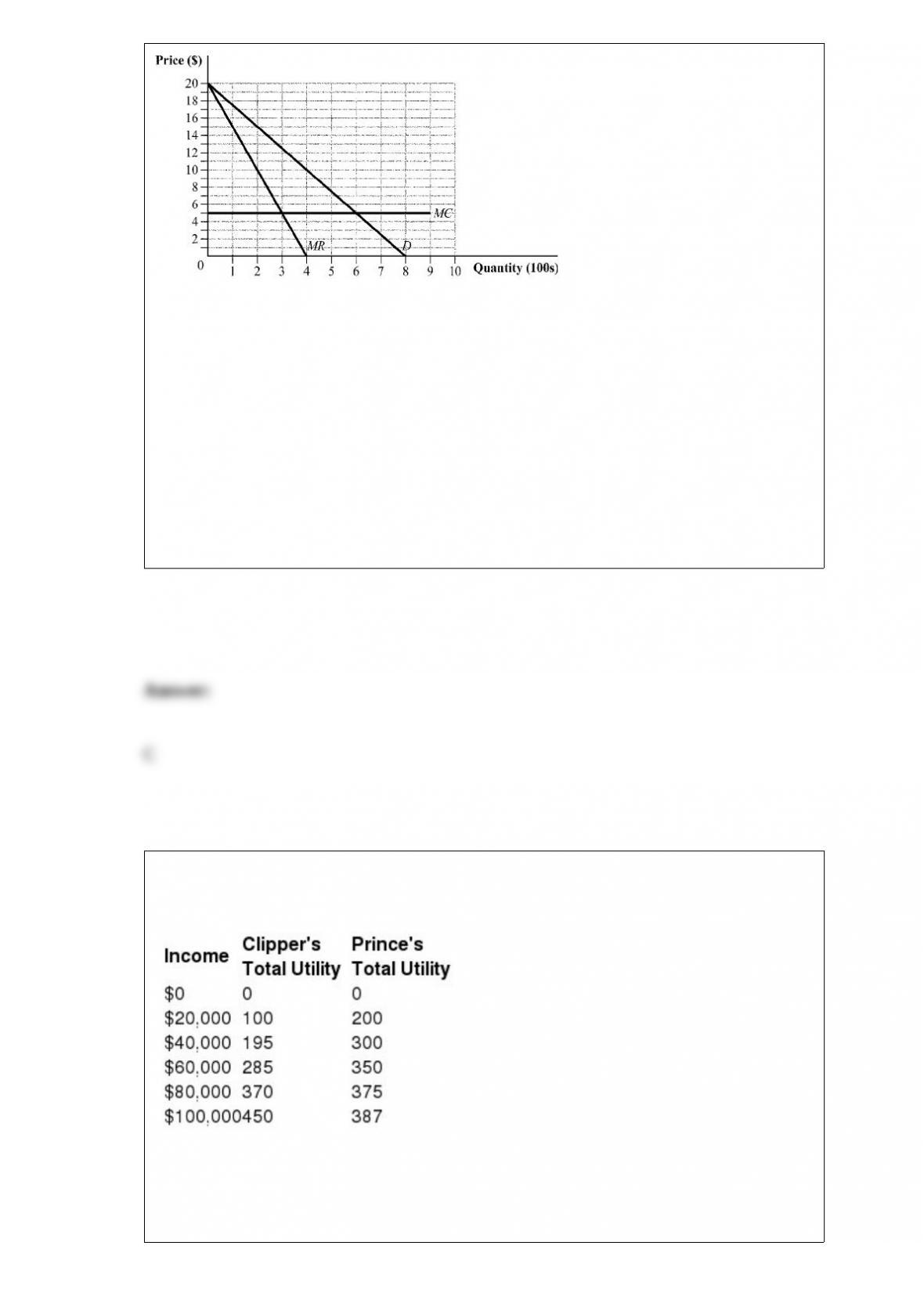
(Figure 11.1) The graph depicts the market demand curve for a two-firm industry. If the
two firms collude and evenly split the market output, how much output will each firm
produce?
A) 400 units
B) 200 units
C) 150 units
D) 300 units
Table 13.11
(Table 13.11) Because Clipper is ______ risk averse than Prince, Prince will pay the
________ risk premium.
A) more; larger

B) less; larger
C) less; smaller
D) more; smaller
In the market for used cars, the demand and supply conditions are given by QD =
12,000 ” 0.4P and QS= 1P + 5,000, where P is the price per car and Q measures the
quantity of cars. What is the size of the deadweight loss at a price floor of $15,000?
A) $250,000
B) $500,000
C) $750,000
D) $1 million
Suppose a firm lowers its price to $10, causing the quantity sold to rise from 4 to 5
units. If the marginal revenue of the fifth unit is $2, the firm must have lowered its price
by:
A) $8.
B) $2.
C) $4.
D) $10.
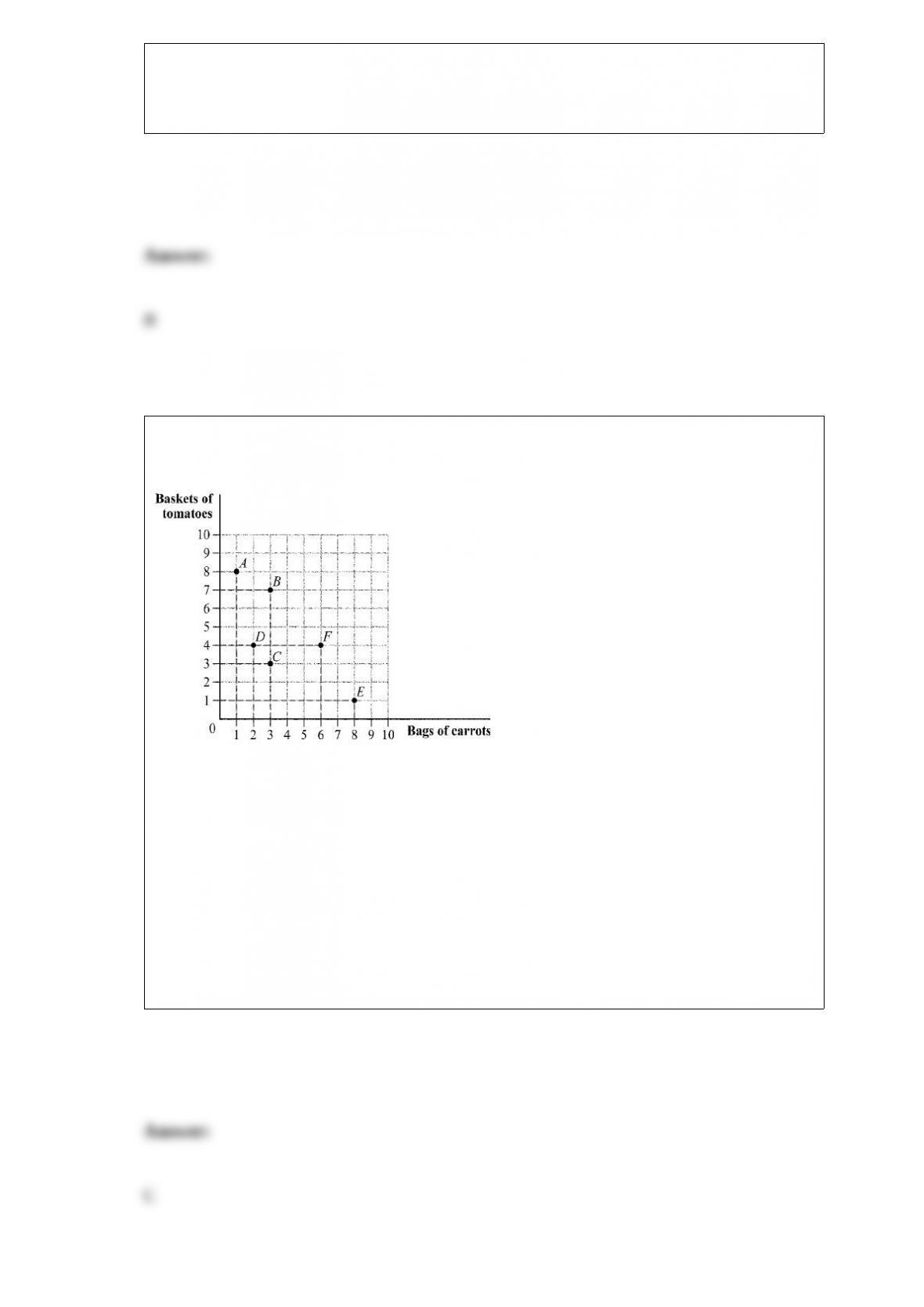
Figure 4.2
(Figure 4.2) Joanne’s utility function is U = TC, where T is baskets of tomatoes and C
is bags of carrots. One of Joanne’s indifference curves will go through points:
A) A, B, andF.
B) B, D, and E.
C) A, D, and E.
D) D, C, and E.
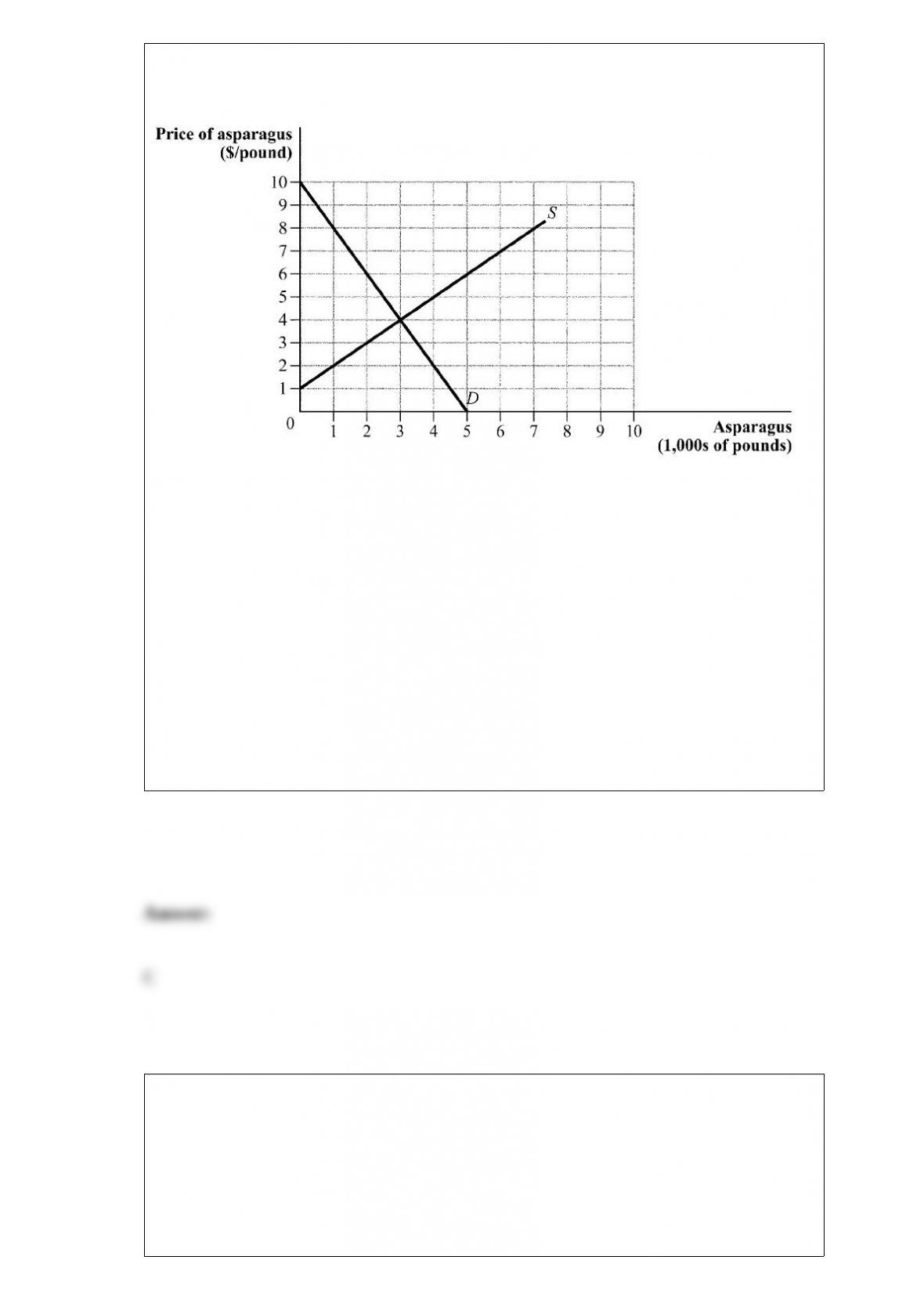
Figure 17.9
(Figure 17.9) Suppose that eating asparagus reduces the incidence of contagious
disease. The external marginal benefit of asparagus is $3. To achieve the socially
optimal quantity of asparagus, the government should:
A) subsidize the production of asparagus by $6 per pound, increasing output to 6,000
pounds.
B) tax the production of asparagus by $6 per pound, decreasing output to 6,000 pounds.
C) subsidize the production of asparagus by $3 per pound, increasing output to 4,000
pounds.
D) tax the production of asparagus by $3 per pound, decreasing output to 4,000 pounds.
A March 25, 2010, article at SunSentinel.com reports that “Strawberry farmers in
Florida are facing such a sharp collapse in prices for their berries that many are
deciding to simply leave huge tracts of the berries to rot in the fields. . . . Wholesale
prices that were $17 to $19 for a flat of eight containers have now fallen to $5 to $6 a
flat.”
a. Why can’t a strawberry farmer simply charge a higher price for his strawberries?
b. What would likely happen to the profits of strawberry farmers if they picked the
strawberries and sold them in the market?
c. Graphically illustrate the situation facing a typical strawberry farmer, using the
farmer’s demand curve, and ATC and AVC curves.
Figure 7.18
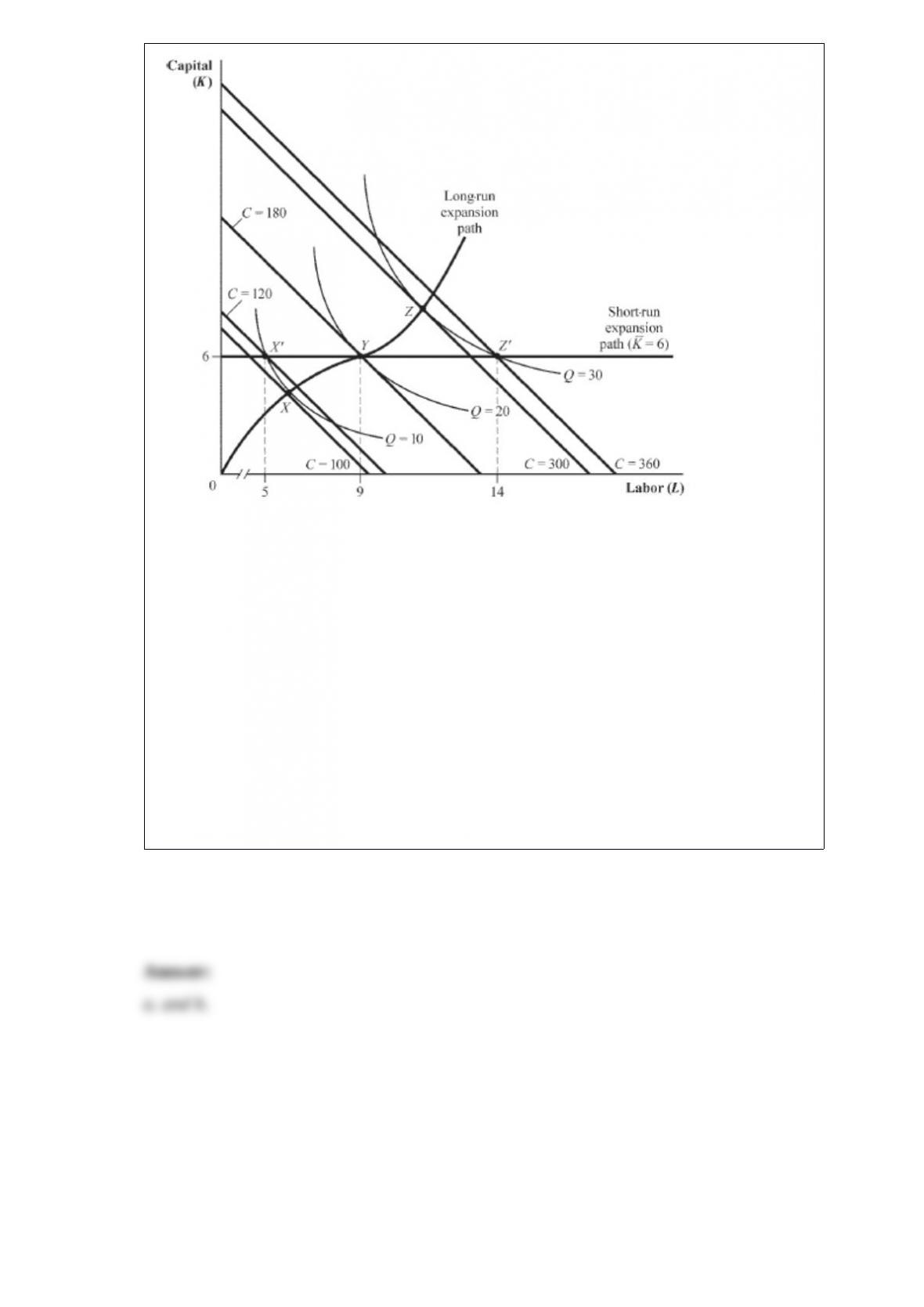
(Figure 7.18) Where the firm is currently producing at point Y:
a. graph the firm’s short-run average total cost curve, showing the total cost at 10, 20,
and 30 units of output.
b. graph the firm’s long-run total cost curve, showing the total cost at 10, 20, and 30
units of output.
c. graph the firm’s short-run ATC curve, showing the ATC at 10, 20, and 30 units of
output.
d. graph the firm’s long-run ATC curve, showing the ATC at 10, 20, and 30 units of
output.
Table 13.9
(Table 13.9) Which of the following statements is TRUE?
A) A risk-averse person prefers gamble B to gamble A.
B) A risk-averse person prefers gamble A to gamble B.
C) A risk-neutral person prefers gamble A to gamble B.
D) A risk-neutral person prefers gamble B to gamble A.
Suppose a firm is producing 2,475 units of output by hiring 50 workers (W = $20 per
hour) and 25 units of capital (R = $10 per hour). The marginal product of labor and
marginal product of capital are 40 and 25, respectively. Is the firm minimizing the cost
of producing 2,475 units of output?
A) Yes, the ratio of the number of workers to the wage equals the ratio of the number of
units of capital to the rental rate.
B) No, the firm should use more labor and less capital.
C) No, the firm should use more capital and less labor.
D) No, the firm should use more of both labor and capital.
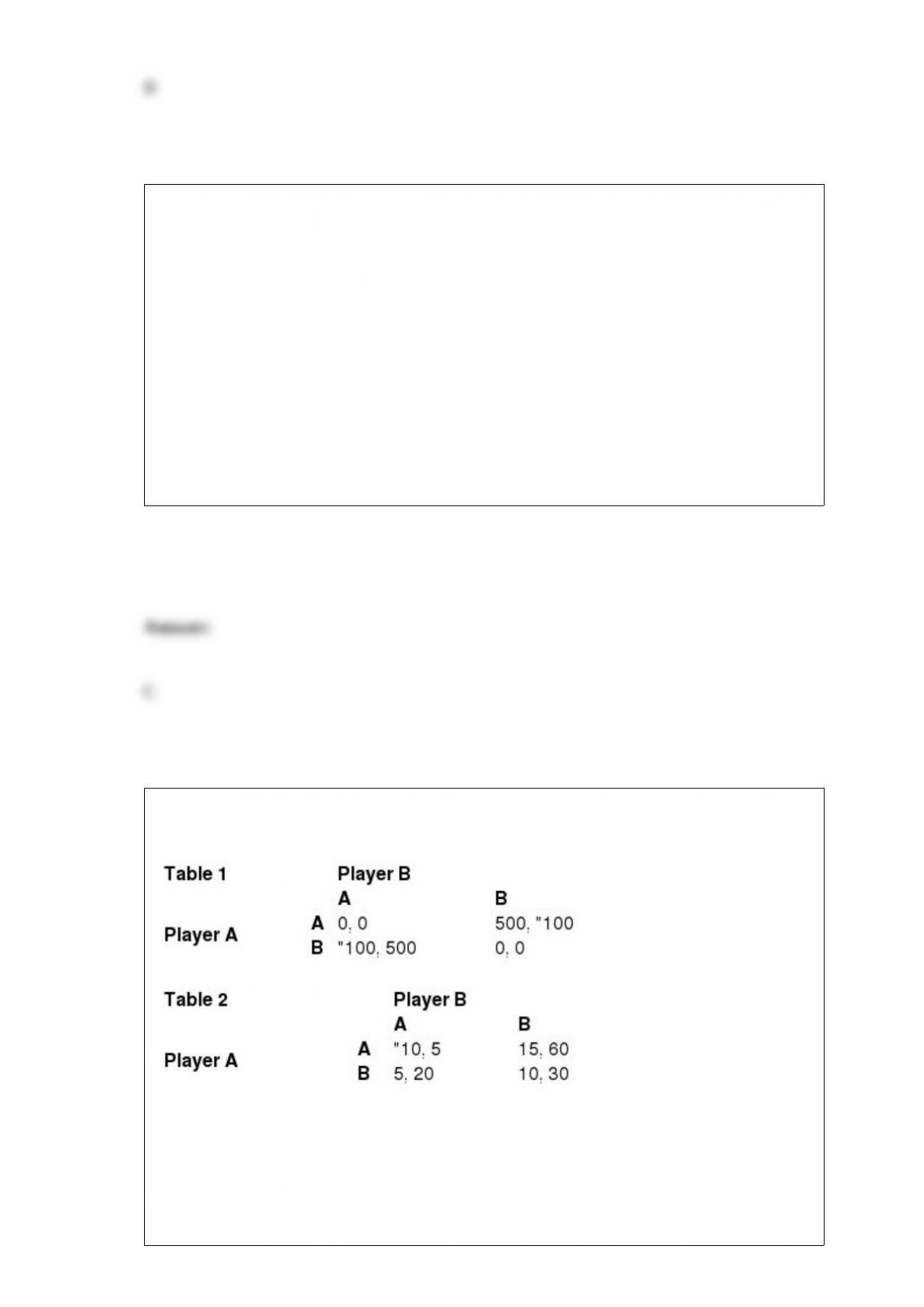
Table 12.30
(Table 12.30)
a. In Table 1, what is each player’s dominant strategy?
b. In Table 1, what is the Nash equilibrium?

c. In Table 1, what is each player’s maximin strategy?
d. In Table 2, what is each player’s dominant strategy?
e. In Table 2, what is the Nash equilibrium?
f. In Table 2, what is each player’s maximin strategy?
The market inverse demand curve for thrust bearings is P = 15 ” 1.5Q, where Q is
measured in hundreds of bearings per day and P is the price per bearing. The marginal
cost is $3.
a. Suppose two firms, which are Bertrand competitors, produce identical thrust bearings
for this market. What is the price of thrust bearings? How many thrust bearings are
produced?
b. If the thrust-bearing market were perfectly competitive, what would be the price and
quantity produced?
c. If the thrust bearing market were monopolized, what would be the price and quantity
produced?

Marty, a musician, frequently plays at large parties and nightclubs. Marty has expensive
musical equipment worth $8,000 and takes precautions to prevent theft. The marginal
benefit of these precautions is given by MB = 60 ” 3A, where A is the number of
precautionary actions Marty takes to reduce theft. The marginal cost of preventing theft
(i.e., the time, energy, and effort expended) is given by MC = 2A. What is Marty’s
optimal level of precautionary actions?
A) 20
B) 12
C) 30
D) 60
Which of the following are examples of altruism?
I. saving for your child’s education
II. volunteering at a community health center
III. donating money to Doctors Without Borders, a nongovernmental organization that
provides urgent medical care to people around the world
A) I and III
B) I, II, and III
C) III only
D) II only
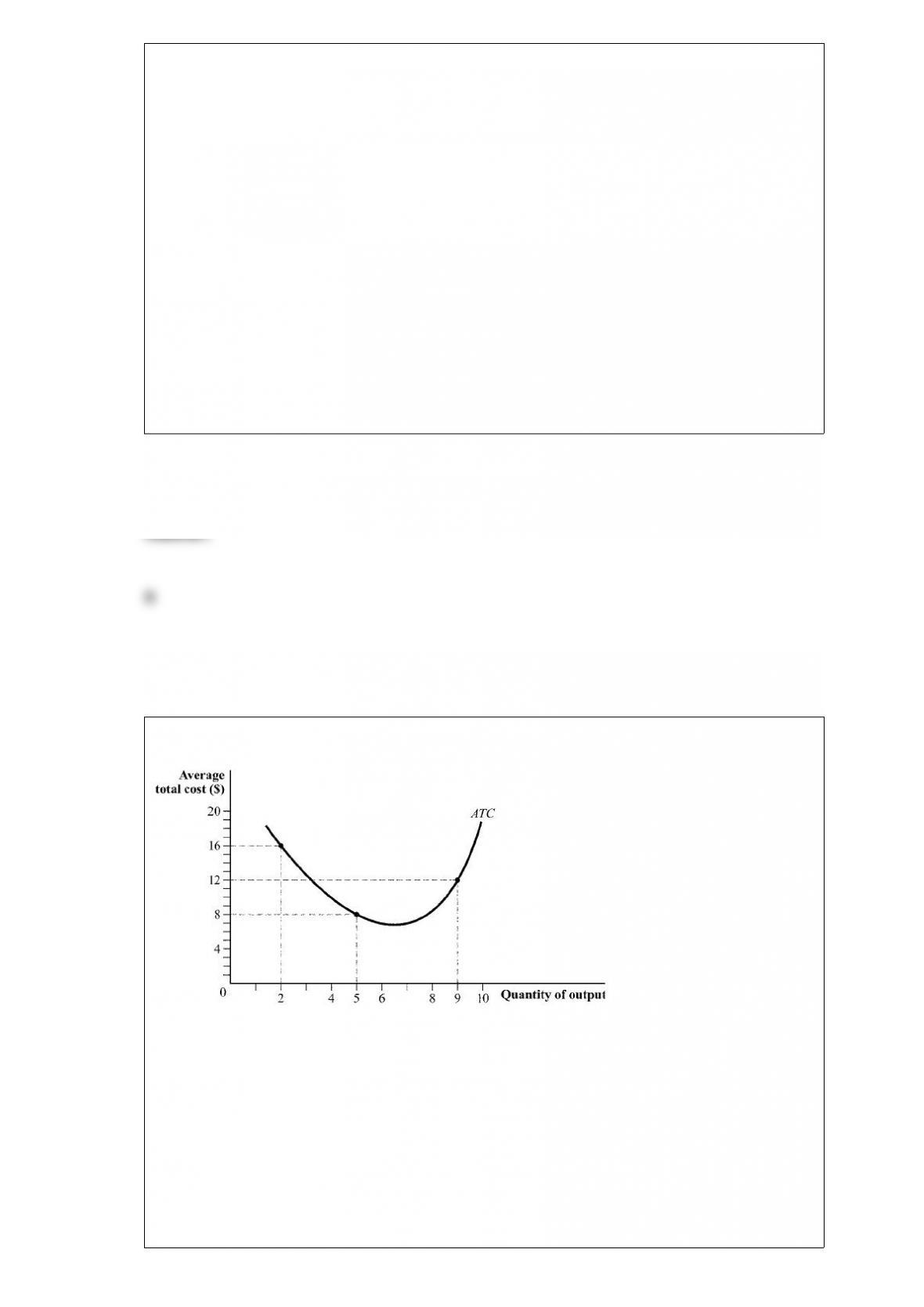
Figure 7.6
(Figure 7.6) Which of the following statements is TRUE?
I. The slope of the TC curve at 2 units of output is 8.
II. The slope of the TC curve between 2 and 5 units of output is negative.
III. The slope of the TC curve at 9 units of output is 12.
A) I and II

B) II only
C) III only
D) I only
The demand and supply of capital are given by QD = 200 ” 60r and QS= 20r ” 40, where
Q is the quantity of capital in millions of dollars and r is the interest rate measured as a
percentage. What is the equilibrium interest rate?
A) 5%
B) 2%
C) 8%
D) 3%
The ______ problem occurs when consumers want to freely consume a public good that
others have provided.
A) pull-your-own
B) rival-good
C) Coase

D) free-rider
Suppose that Billy McGee owns the Internet domain www.ironmaiden.com. Iron
Maiden, the legendary British heavy metal band, was given the rights to the name by
the World Intellectual Property Organization. Iron Maiden values the domain name at
$250,000 and Billy McGee values the domain name at $330,000. The Coase theorem
suggests that:
A) Billy McGee will pay Iron Maiden between $250,000 and $330,000 to keep the
domain name.
B) Billy McGee will pay Iron Maiden more than $330,000 to keep the domain name.
C) Iron Maiden will take control over the domain name.
D) Iron Maiden will buy the domain name from Billy McGee for less than $330,000.
Table 12.15
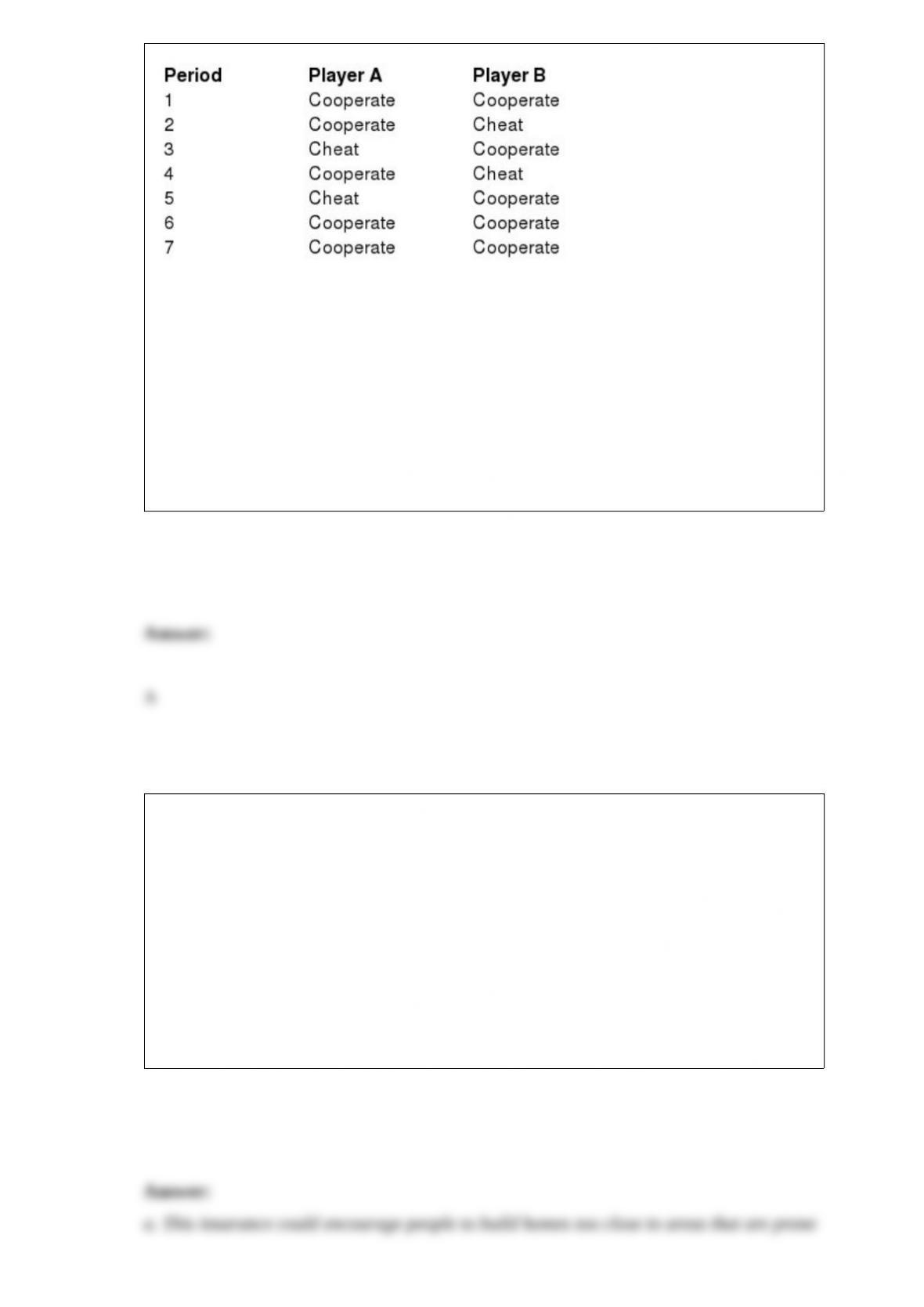
(Table 12.15) The table shows the strategies of two players playing a prisoner’s
dilemma game. What is the name of Player A’s strategy?
A) tit-for-tat
B) grim reaper
C) hammer and sickle
D) positional leadership
Explain how moral hazard could arise in the following situations.
a. The federal government offers flood insurance for homes damaged by flooding.
b. An NBA player signs a long-term guaranteed contract.
c. The government lengthens the time someone can collect unemployment insurance
benefits from 26 weeks to 99 weeks.
d. In an area where the roads are frequently snow-covered and icy, a person trades in
her rear-wheel drive sports car for a four-wheel drive SUV.
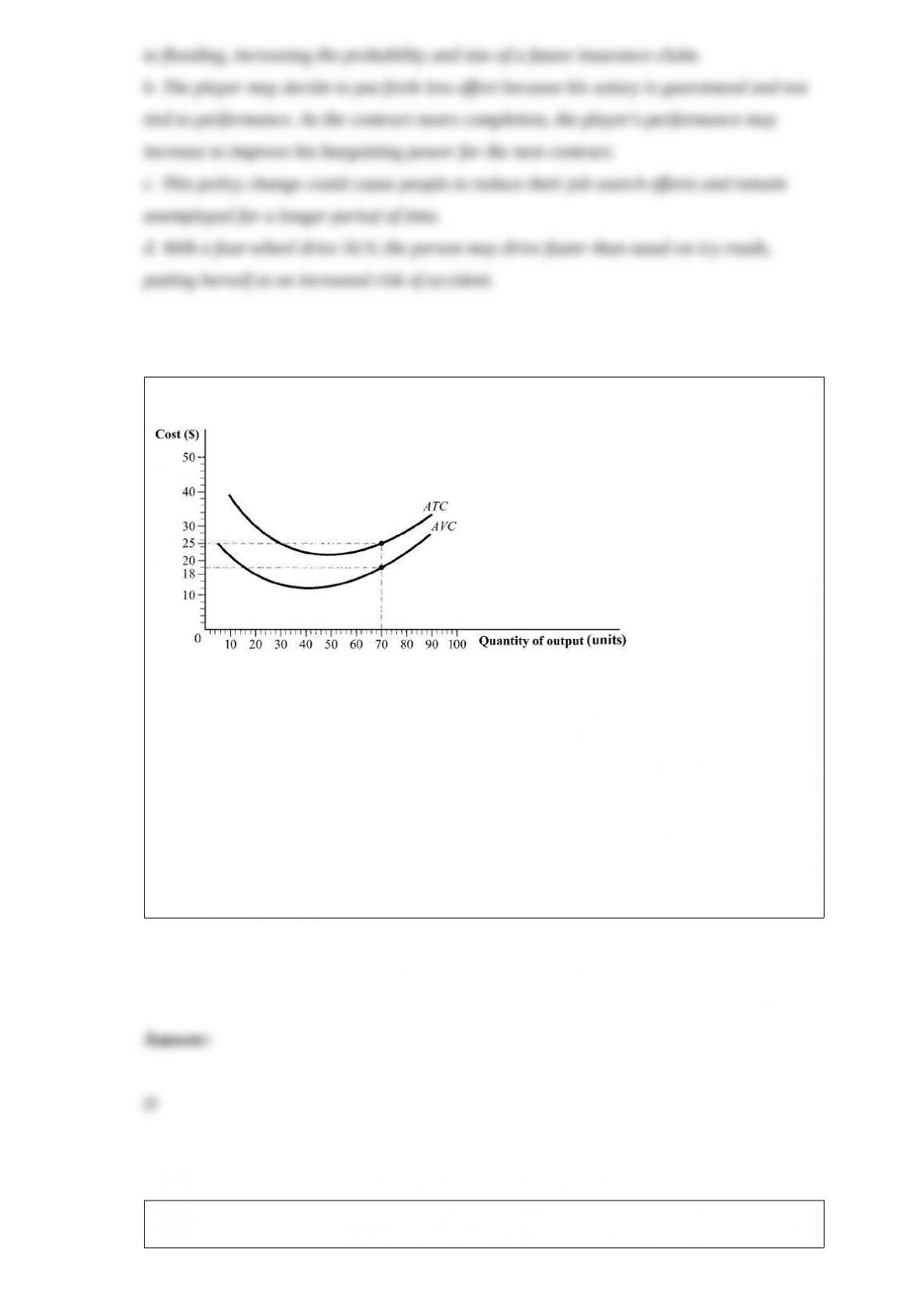
Figure 7.8
(Figure 7.8) The average fixed cost at 70 units of output is ______, and the firm’s fixed
cost of production is ______.
A) $43; $3,010
B) $11; $560
C) $0.10; $7
D) $7; $490
Suppose the slope of a short-run production function is given by 2/L0.5. Which of the

following statements is TRUE?
I. The marginal product of the fifth worker is 0.20. II. The production function exhibits
increasing marginal returns. III. The marginal product of the sixteenth worker is 0.50.
IV. The production function’s slope eventually changes from positive to negative, as the
firm produces more and more units of output.
I. The marginal product of the fifth worker is 0.20.
II. The production function exhibits increasing marginal returns.
III. The marginal product of the sixteenth worker is 0.50.
IV. The production function’s slope eventually changes from positive to negative, as the
firm produces more and more units of output.
A) II and III
B) I and IV
C) III only
D) I, II, and IV
Figure 12.3
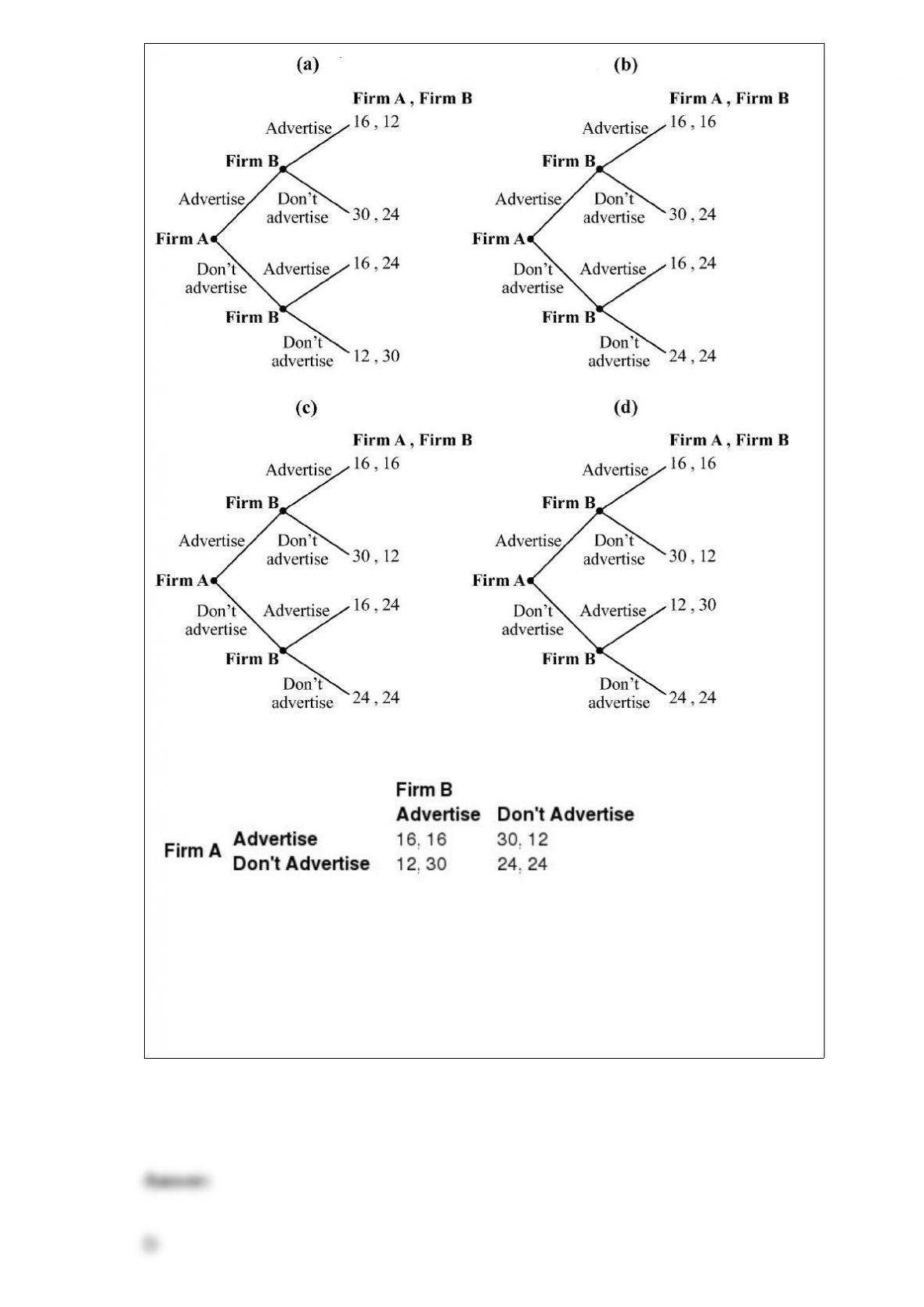
(Figure 12.3) Which figure corresponds to the following normal-form game?
A) panel (a)
B) panel (b)
C) panel (c)
D) panel (d)

A firm’s production function is given by Q = KL, where MPL=K and MPK=L. The wage
rate (W) = $50 and the rental rate per unit of capital (R) is $12.50. In the short run,
capital (K) is fixed at 10 units. The short-run average total cost of producing 100 units
of output is ______, and the long-run average total cost of producing 100 units of
output is ______.
A) $14.75; $8.80
B) $6.25; $5
C) $6.25; $4.20
D) $14.75; $9
Consider a game in which three men are given $20. All three must secretly decide
whether they will contribute any part of their $20 to a trust fund. At the end of the
game, each player will receive 40% of the total money contributed to the trust fund, in
addition to any of the remaining $20 that he is currently holding.
a. If all three players contribute $20 to the trust fund, how much will each player earn at
the end of the game?
b. If all the players are altruistic, how much money will each player earn at the end of
the game?
c. Suppose that the first two players contributed $20 each to the trust fund. What should
a rationally self-interested player contribute?

Table 13.10
(Table 13.10) Suppose the person’s utility function is given by U = I0.5, where I is
income. What guaranteed income level would offer the same expected utility level as
that from the uncertain income (i.e., find the certainty equivalent)?
A) $432,600
B) $464,400
C) $448,900
D) $457,000
Market power arises from:
A) the entry of new firms in an industry in which the firms are earning large producer
surplus.
B) barriers to entry.
C) diseconomies of scale.
D) diminishing marginal returns.

Which of the following factors influences demand?
I. consumer income
II. prices of complement goods
III. prices of substitute goods
IV. the number of consumers
A) I and IV
B) II and III
C) I, III, and IV
D) I, II, III, and IV
Figure 2.12
(Figure 2.12) As the price of the product rises from $0 to $40, what happens to total
expenditures?
A) Total expenditures increase, reaching a maximum at a price of $40.
B) Total expenditures remain unchanged.
C) Total expenditures decrease, reaching a minimum at a price of $40.
D) Total expenditures first increase and then decrease, as price approaches the midpoint
of the demand curve.
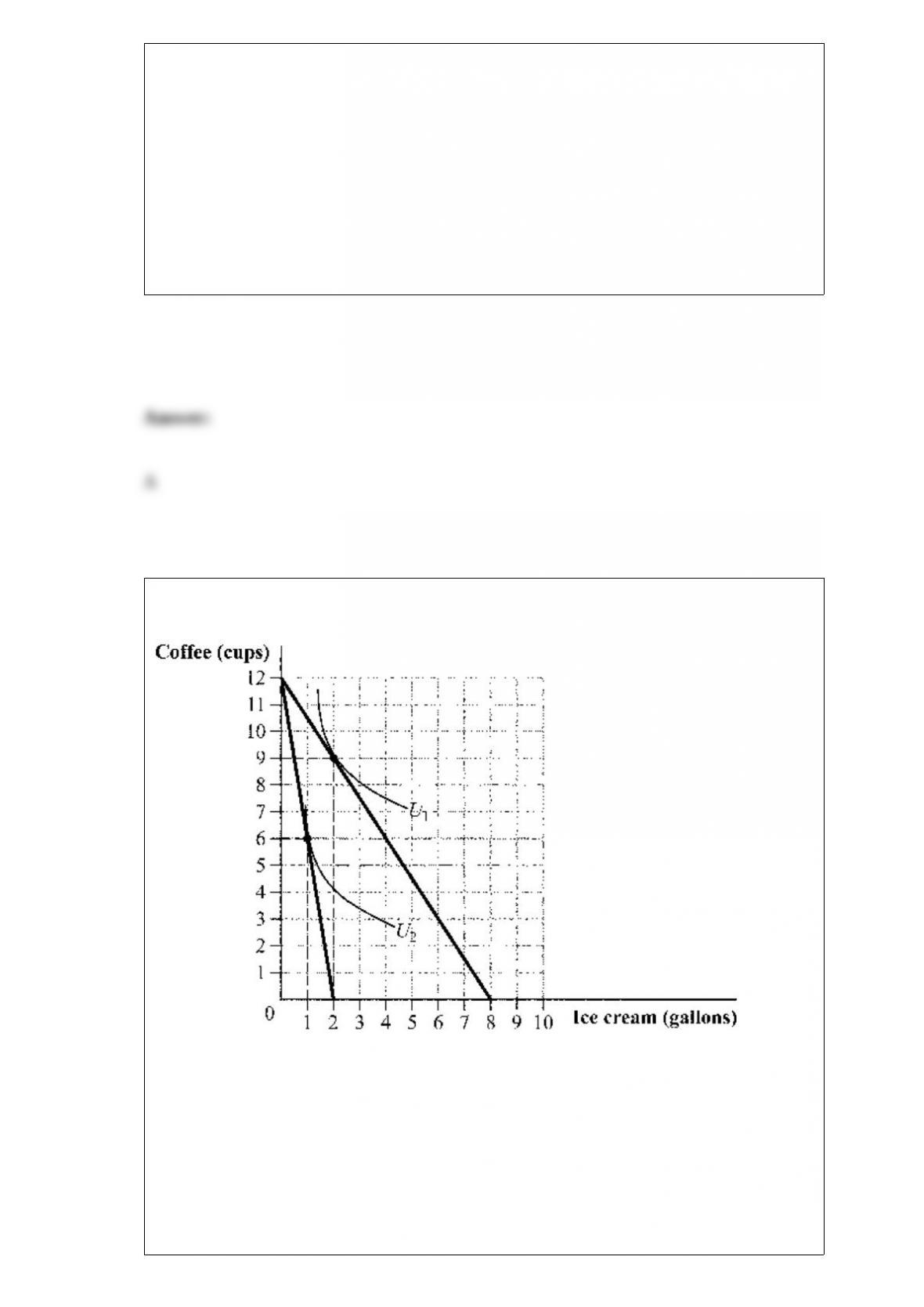
Figure 5.6
(Figure 5.6) Garth spends his income on ice cream and coffee, and coffee sells for $1 a
cup. If ice cream sells for $1.50 per gallon, Garth will purchase:
A) 2 gallons.
B) 8 gallons.
C) 1 gallon.
D) 6 gallons.
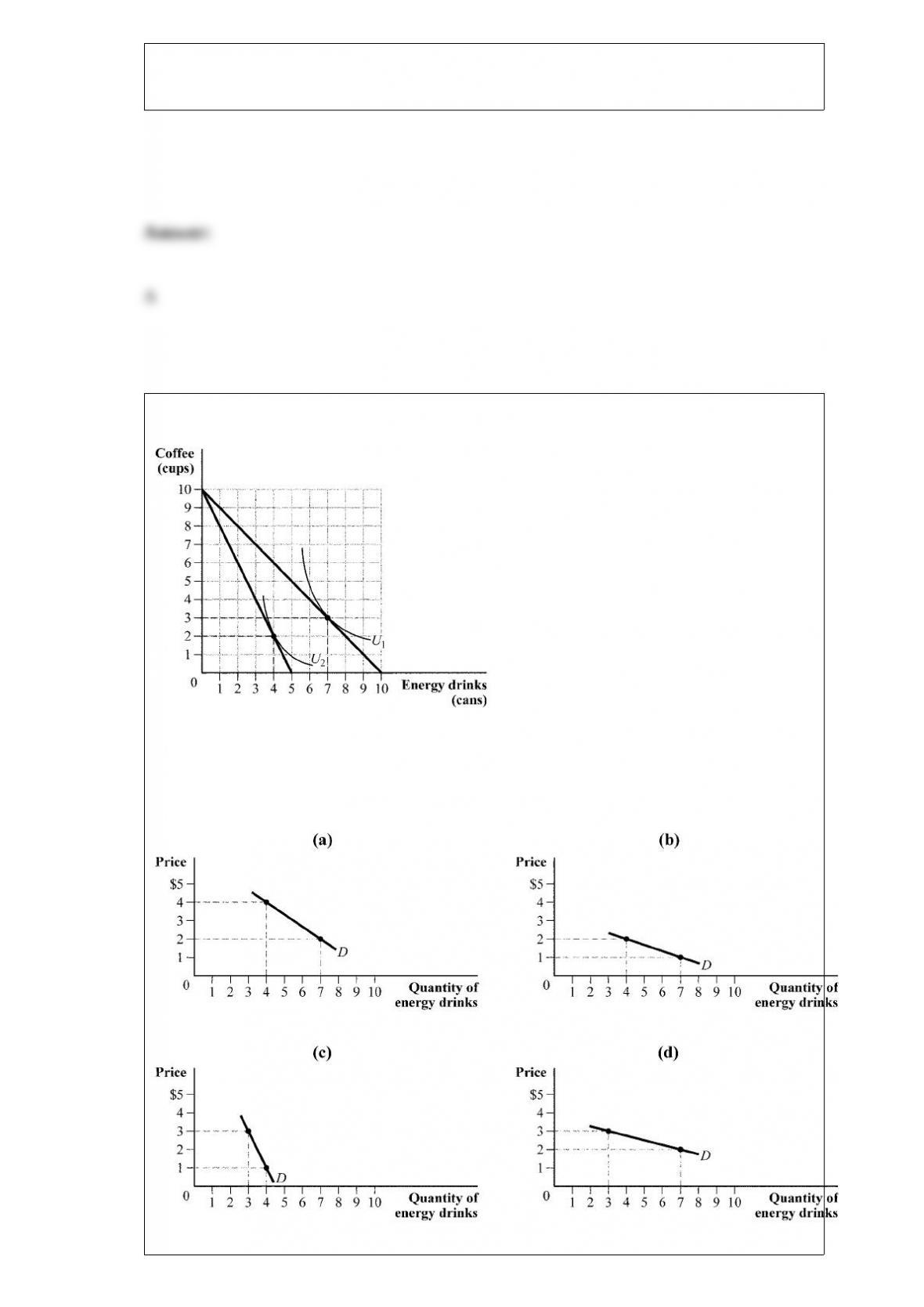
Figure 5.5
(Figure 5.5) Suppose the consumer has $10 of income to spend on energy drinks and
coffee. Which of the following figures represents the consumer’s demand curve for
energy drinks?

A) panel (a)
B) panel (b)
C) panel (c)
D) panel (d)
Suppose that a community health center finds that, regardless of the number of
physicians or nurse practitioners employed, it can always replace one family practice
physician by using two additional nurse practitioners without affecting the quantity (and
quality) of patient office visits. This finding implies that:
A) physicians and nurse practitioners are perfect substitutes in production.
B) physicians and nurse practitioners are perfect complements in production.
C) diminishing returns will occur as the health center hires more nurse practitioners.
D) the marginal product of physicians will increase by two with every nurse practitioner
hired.
The cost of obtaining a four-year degree is $120,000 for low-ability workers and
$60,000 for high-ability workers. Suppose that workers without a four-year degree are
paid lifetime wages of $500,000. For education to be an effective signal of ability, what
range of lifetime earnings must be paid to workers with a four-year degree?
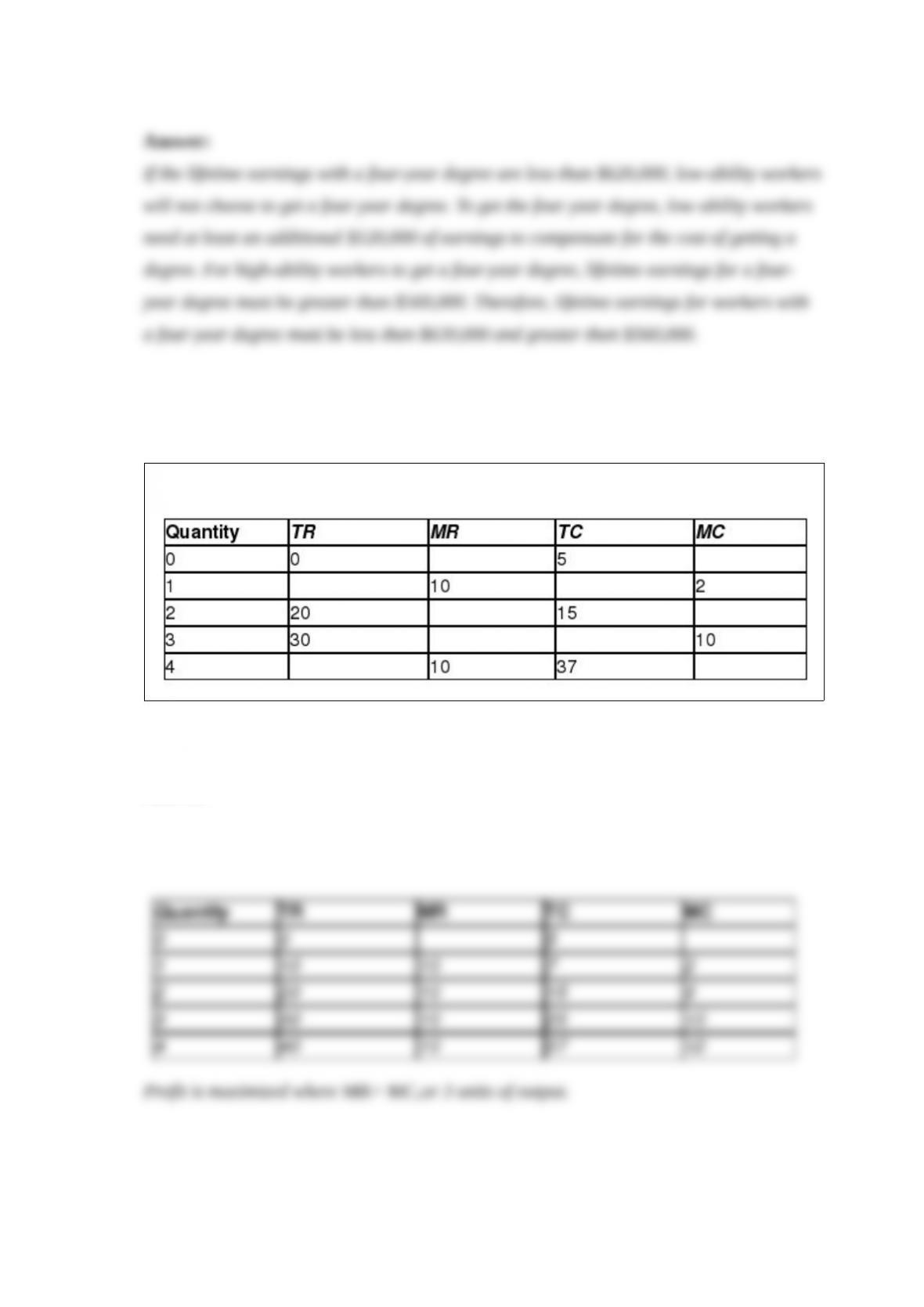
Complete the following table and identify the quantity that maximizes profit.
Why might overconfidence lead some people to try highly addictive drugs such as
methamphetamine?
Two legendary rock bands, The Who and Kiss, are scheduling concerts in Detroit this
summer. The supply of Who concert tickets is fixed at 40,000 and the supply of Kiss
concert tickets is fixed at 40,000. The demand for Who and Kiss tickets are given by the
following equations:
Who: = 100,000 ” 1,000PW + 250PK
Kiss: = 100,000 ” 1,000PK + 250PW
where PW is the price of a Who ticket and PK is the price of a Kiss ticket. In general
equilibrium, what are prices of a Who and a Kiss ticket?
Firm A has price elasticity of demand of “1.5 and a marginal cost of $30. Firm B has a
price elasticity of demand of “2.0 and a marginal cost of $30. What is the
profit-maximizing price of each firm?

There are two firms that produce large commercial airplanes, namely, Boeing and
Airbus. Boeing and Airbus have different flight control systems, with many pilots
preferring one system over the other. The Airbus A380 has a double-deck design that
can hold up to 840 passengers and sells for $375.3 million. By contrast, the Boeing 747
can hold up to 568 passengers and sells for $317.5 million. What key assumptions of
the supply and demand model are violated in the large commercial airplane market?
Figure 14.7
(Figure 14.7) If the economy is at point B, the input mix is:
A) not Pareto-efficient, so a movement to point C or point D would be a Pareto
improvement.
B) Pareto-efficient, so a movement to any other point would be Pareto inefficient.
C) not Pareto-efficient, so a movement only to point D would be a Pareto improvement.
D) not Pareto-efficient, so a movement to point C or point D would be Pareto
inefficient.
List the four basic assumptions of the supply and demand model.

Define a production function and give an example of a Cobb”Douglas production
function with constant returns to scale.
Figure 14.10
(Figure 14.10) Which of the following statements is TRUE?
I. Points G, H, I, and J lie on the production contract curve.
II. Points H and J represent an inefficient input allocation.
III. At point G, allocating more labor and capital to the cereal industry will increase the
output of cereal and pancakes.
A) II only
B) I and III
C) I only
D) II and III
While on a once-in-a-lifetime road trip, Mr. Jingles had numerous restaurant meals at
roadside diners, each time tipping his waitress 20% of the bill. Which basic economic
assumption is Mr. Jingles violating?
Ricki, CC, and Brett are the only consumers in the market for leather jackets; their
inverse demand curves, repectively, are as follows:
P = 200 ” 10QR
P = 200 ” 50QCC
P = 200 ” 20QB
What is the equation for the market demand curve for leather jackets?

Table 13.12
(Table 13.12) Complete the table.
What is the difference between a change in supply and a change in quantity supplied?
What is the First Welfare Theorem? What conditions are required for it to hold true?
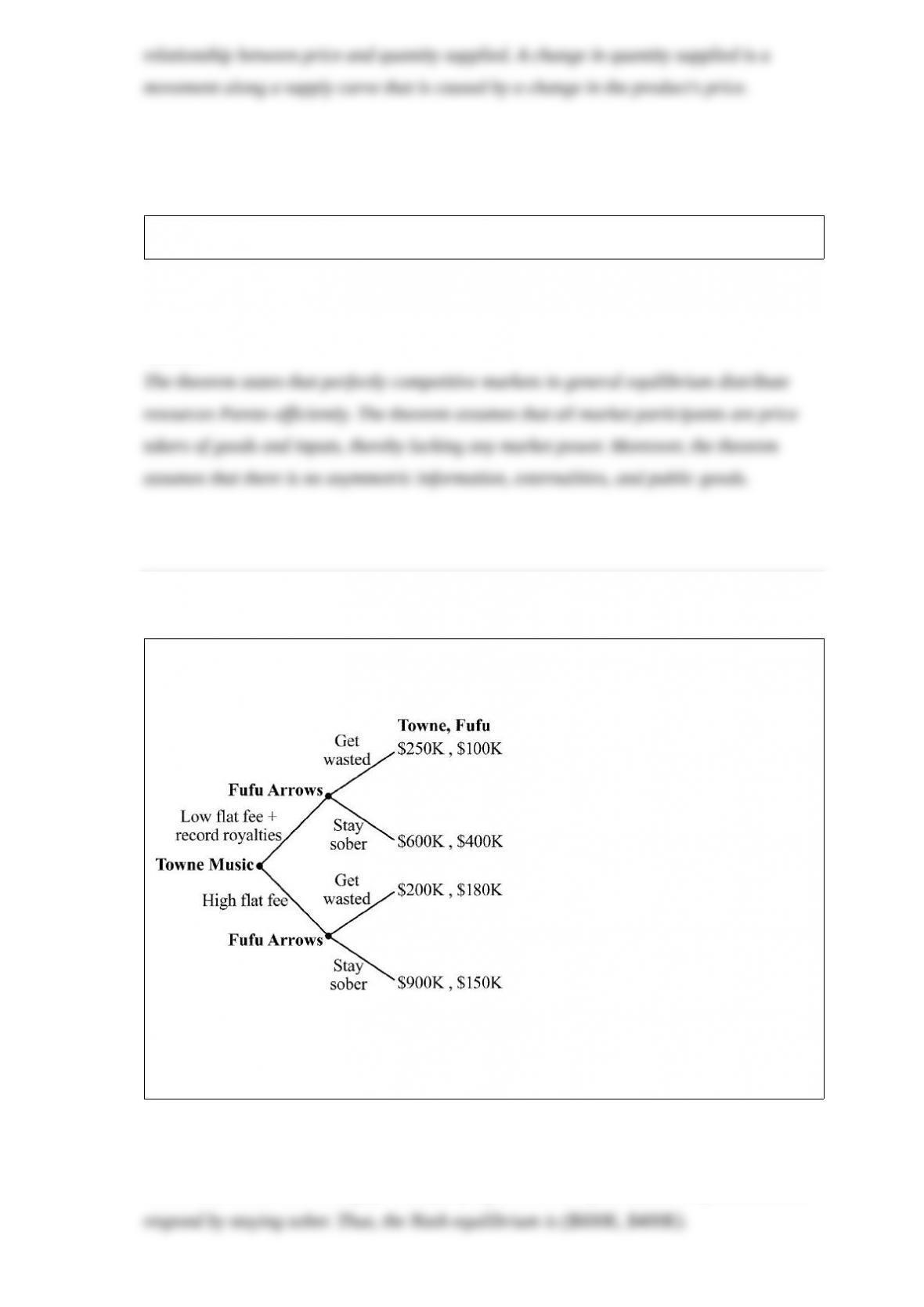
Figure 15.7
(Figure 15.7) Towne Music would like the rock band Fufu Arrows to produce a 10-song
record. Towne is considering paying the band either (1) a high flat fee or (2) a low flat
fee plus record royalties.