1) An increase in the money supply will:
A.lower interest rates and lower the equilibrium GDP.
B.lower interest rates and increase the equilibrium GDP.
C.increase interest rates and increase the equilibrium GDP.
D.increase interest rates and lower the equilibrium GDP.
2) which of the following is not one of the five fundamental questions?
a.what prices will be charged for goods and services?
b.who will get the goods and services?
c.what goods and services will be produced?
d.how will the system promote progress?
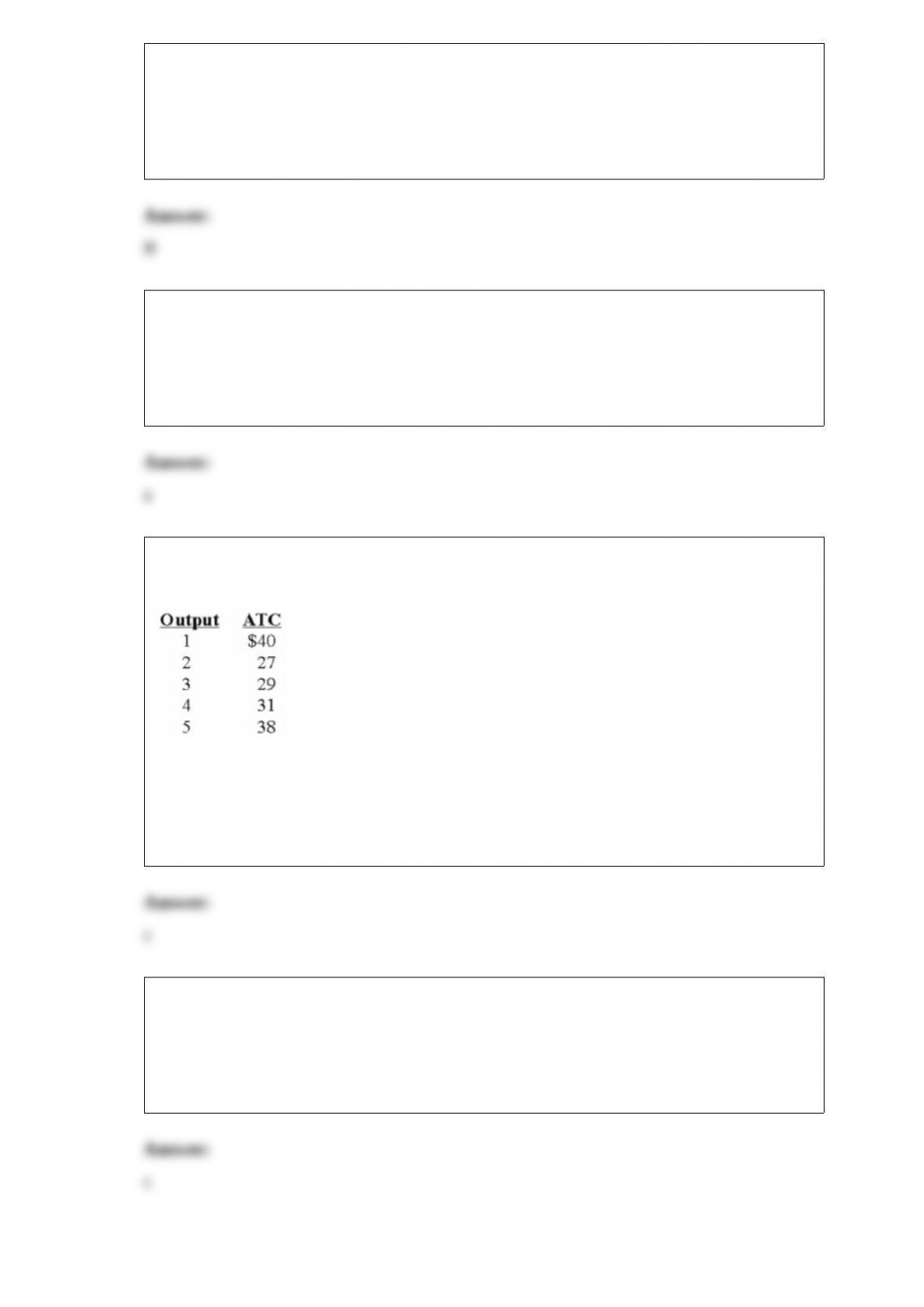
3) the accompanying table that shows average total costs (atc) for a manufacturing firm
whose total fixed costs are $10:
refer to the above data. the marginal cost of the fourth unit of output is:
a.$2.
b.$12.
c.$37.
d.$16.
4) a nation’s production possibilities curve might shift to the left (inward) as a result of:
a.technological advance.
b.increases in the size of the labor force.
c.the depletion of its soil fertility due to overplanting and overgrazing.
d.investing in more capital goods.
5) which of the following is an intermediate good?
a.the purchase of gasoline for a ski trip to colorado.
b.the purchase of baseball uniforms by a professional baseball team.
c.the purchase of a pizza by a college student.
d.the purchase of jogging shoes by a professor
6) If resources A and B are complementary and employed in fixed proportions:
A.a change in the price of A will have no effect on the quantity of B employed.
B.an increase in the price of A may either increase or decrease the demand for B.
C.an increase in the price of A will increase the demand for B.
D.an increase in the price of A will decrease the demand for B.
7) An oligopoly producing a homogeneous product is composed of three firms that act
like a cartel. Assume that these three firms have identical cost schedules. Assume also
that if any one of these firms sets a price for the product, the other two firms charge the
same price. As long as they all charge the same price they will share the market equally;
and the quantity demanded of each will be the same.
Below are the total-cost schedule of one of these firms and the demand schedule that
confronts it when the other firms charge the same price as this firm. Complete the
marginal-cost and marginal-revenue schedules facing the firm.
(a)What price would be charged, what output would be produced, and what profit
would be made by this firm?
(b)If the firms collude to maximize joint profits, what would be the industry price,
output, and profit?
8) which of the following is incorrect? imperfectly competitive producers:
a.face downsloping demand curves.
b.do not compete with one another.
c.can alter their output by changing price.
d.find that, when they reduce price, their total revenue increases by less than the new
price.
9) Which one of the following might offset a crowding-out effect of financing a large
public debt?
A.a decline in net exports
B.an increase in public investment
C.a decrease in the money supply
D.a decline in public investment
10) The M2 money supply includes:
A.stock certificates.
B.currency in bank vaults.
C.the cash value of life insurance policies.
D.individual shares in money market mutual funds.
11)
refer to the above diagram, which shows demand and supply conditions in the
competitive market for product x. given d0, if the supply curve moved from s0 to s1,
then:
a.supply has increased and equilibrium quantity has decreased.
b.supply has decreased and equilibrium quantity has decreased.
c.there has been an increase in the quantity supplied.
12) In a fractional reserve banking system:
A.bank panics cannot occur.
B.the monetary system must be backed by gold.
C.banks can create money through the lending process.
D.the Federal Reserve has no control over the amount of money in circulation.
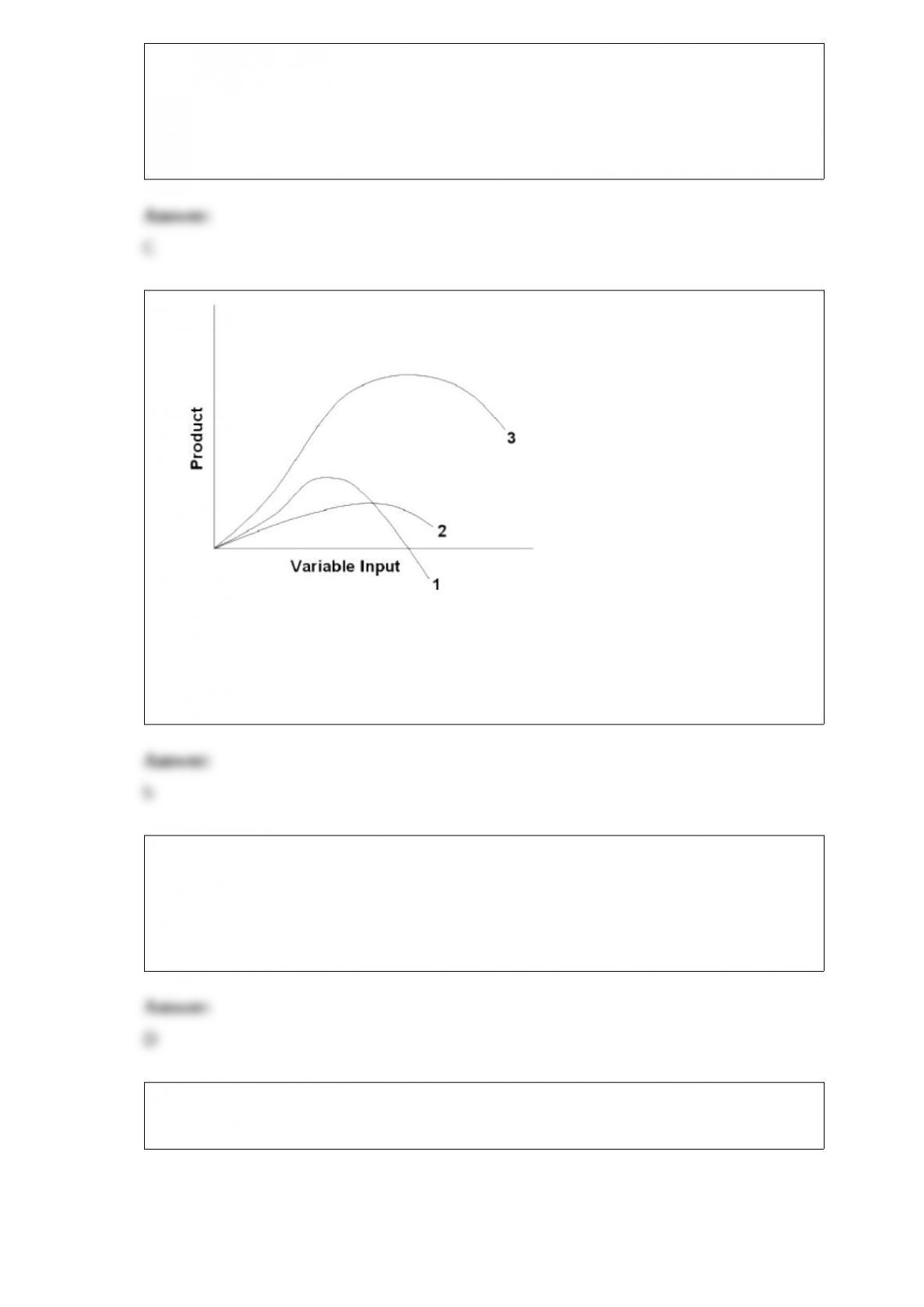
13)
the above diagram suggests that:
a.when marginal product is zero, total product is at a minimum.
b.when marginal product lies above average product, average product is rising.
c.when marginal product lies below average product, average product is rising.
d.when total product is at a maximum, so is marginal product and average product.
14) Which of the following is not an antitrust law?
A.the Sherman Act
B.the Clayton Act
C.the Celler-Kefauver Act
D.the Wagner Act
15) The following data for the hypothetical nations of Alpha and Beta. Qs is domestic
quantity supplied and Qd is domestic quantity demanded.
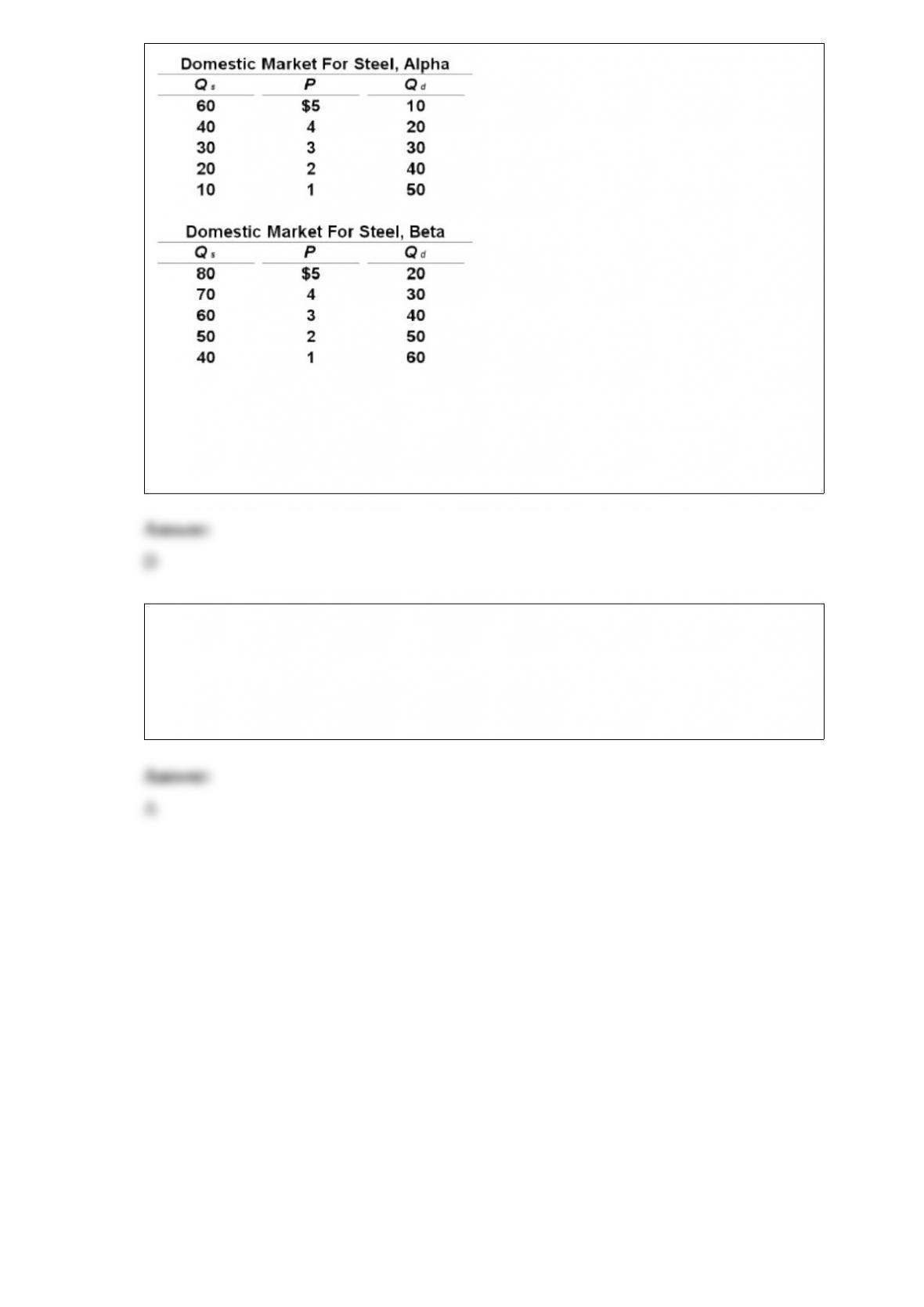
Refer to the above data. At the equilibrium world price:
A.both nations will export steel.
B.both nations will import steel.
C.Alpha will export steel and Beta will import steel.
D.Beta will export steel and Alpha will import steel.
16) The user cost of extracting a non-renewable resource is:
A.inversely related to how much of the resource remains.
B.directly related to how much of the resource remains.
C.unrelated to how much of the resource remains.
D.inversely related to the expected future price of the resource.