
1) (Last Word) The rapid spread of ATMs has:
A.resulted from changes in banking laws.
B.increased the demand for bank tellers.
C.reduced the demand for bank tellers.
D.increased the hourly wage paid to bank tellers.
2) In 1985, the exchange rate between the U.S. dollar and the Japanese yen was $1 =
262 yen; in 2003, the rate was $1 = 110 yen.
Refer to the above information. Which one of the following might be a plausible
explanation for the change in the dollar-yen exchange rate from 1985 to 2003?
A.Japan exported much more to the United States during this period than it imported
from the United States.
B.Japan greatly increased its purchases of military equipment from the United States
during this period.
C.Japan’s economy grew far faster than the U.S. economy during this period.
3) If the Fed were to reduce the legal reserve ratio, we would expect:
A.lower interest rates, an expanded GDP, and a higher rate of inflation.
B.lower interest rates, an expanded GDP, and a lower rate of inflation.
C.higher interest rates, a contracted GDP, and a higher rate of inflation.
D.higher interest rates, a contracted GDP, and a lower rate of inflation.
4) Rightward and upward shifts of the Phillips Curve in the 1970s and early 1980s were
caused by:
A.adverse shocks to aggregate supply.
B.adverse shocks to aggregate demand.
C.an increase in the misery index.
D.the Vietnam War.
5) An employer whose discrimination coefficient is $4 will:
A.refuse to hire non-preferred-race workers at any wage rate.
B.hire only non-preferred-race workers if the actual non-preferred-preferred wage
differential is $3 an hour.
C.hire only preferred-race workers if the actual non-preferred-preferred wage
differential is $3 an hour.
D.hire only preferred-race workers if the non-preferred-preferred wage differential is
$4.
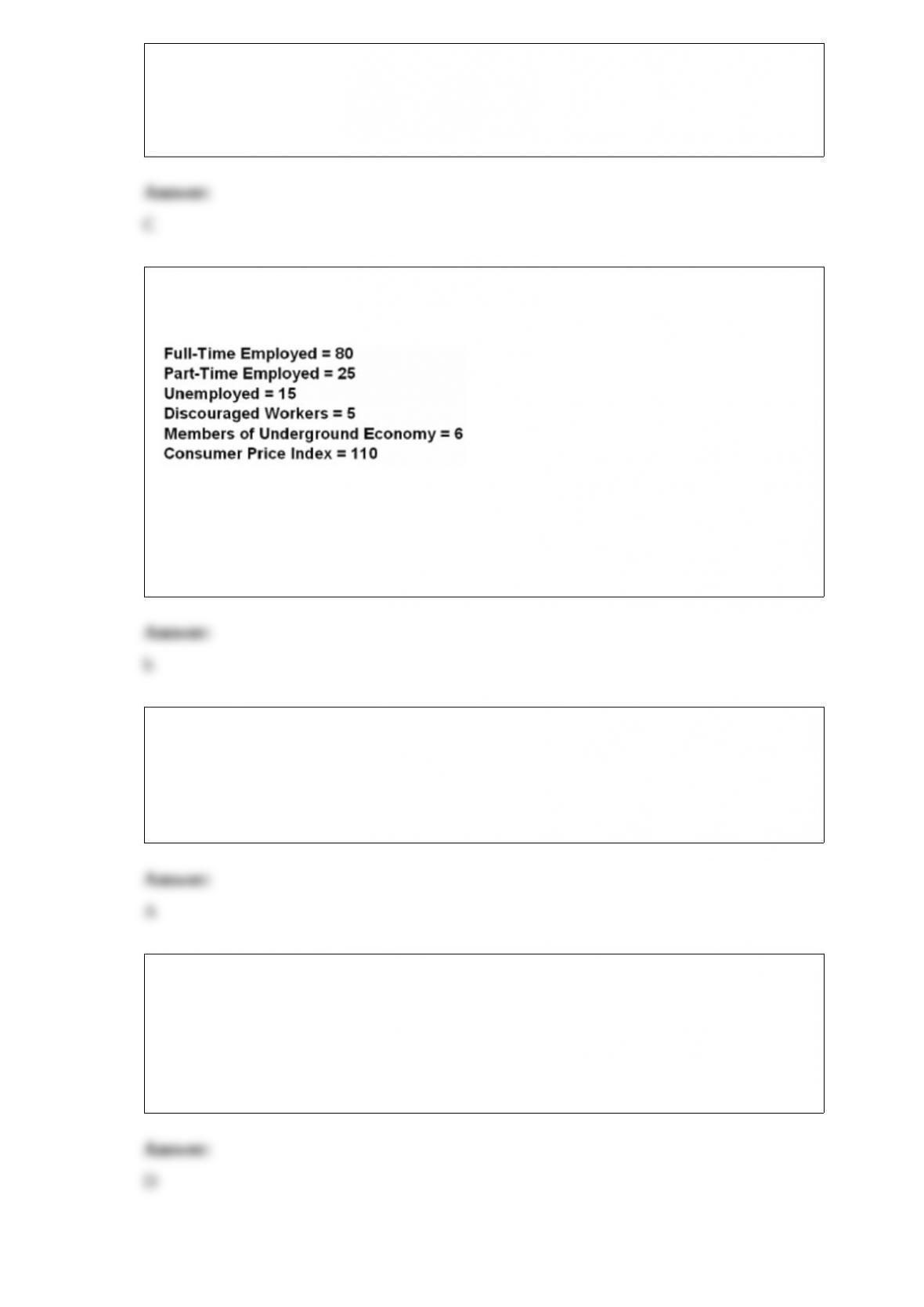
6) answer the next question(s) on the basis of the following information about a
hypothetical economy:
refer to the above information. the unemployment rate is:
a.18.8 percent.
b.12.5 percent.
c.16.7 percent.
d.25 percent.
7) Mainstream economists favor:
A.the use of discretionary monetary policy and fiscal policy.
B.a monetary rule.
C.a balance-budget amendment.
D.wage and price controls.
8) If the United States has full employment and the dollar dramatically depreciates in
value, we can expect (other things equal):
A.both U.S. imports and U.S. exports to rise.
B.both U.S. imports and U.S. exports to fall.
C.U.S. exports to fall and U.S. imports to increase.
D.inflation to occur.
9) if a firm increases all of its inputs by 10 percent and its output increases by 10
percent, then:
a.it is encountering diseconomies of scale.
b.it is encountering economies of scale.
c.it is encountering constant returns to scale.
d.the marginal products of all inputs are falling.
10) Which of the following is correct?
A.Most IAC private capital flows in the 1990s were to African nations.
B.IAC capital flows in the 1990s shifted from private enterprises in the DVCs to their
governments.
C.IAC capital flows in the 1990s were largely to DVCs that instituted macro and micro
reforms.
D.Generally, in the 1990s DVC nations restructured their economies toward greater
governmental direction and involvement.
11) Discretionary fiscal policy refers to:
A.any change in government spending or taxes that destabilizes the economy.
B.the authority that the President has to change personal income tax rates.
C.changes in taxes and government expenditures made by Congress to stabilize the
economy.
D.the changes in taxes and transfers that occur as GDP changes.
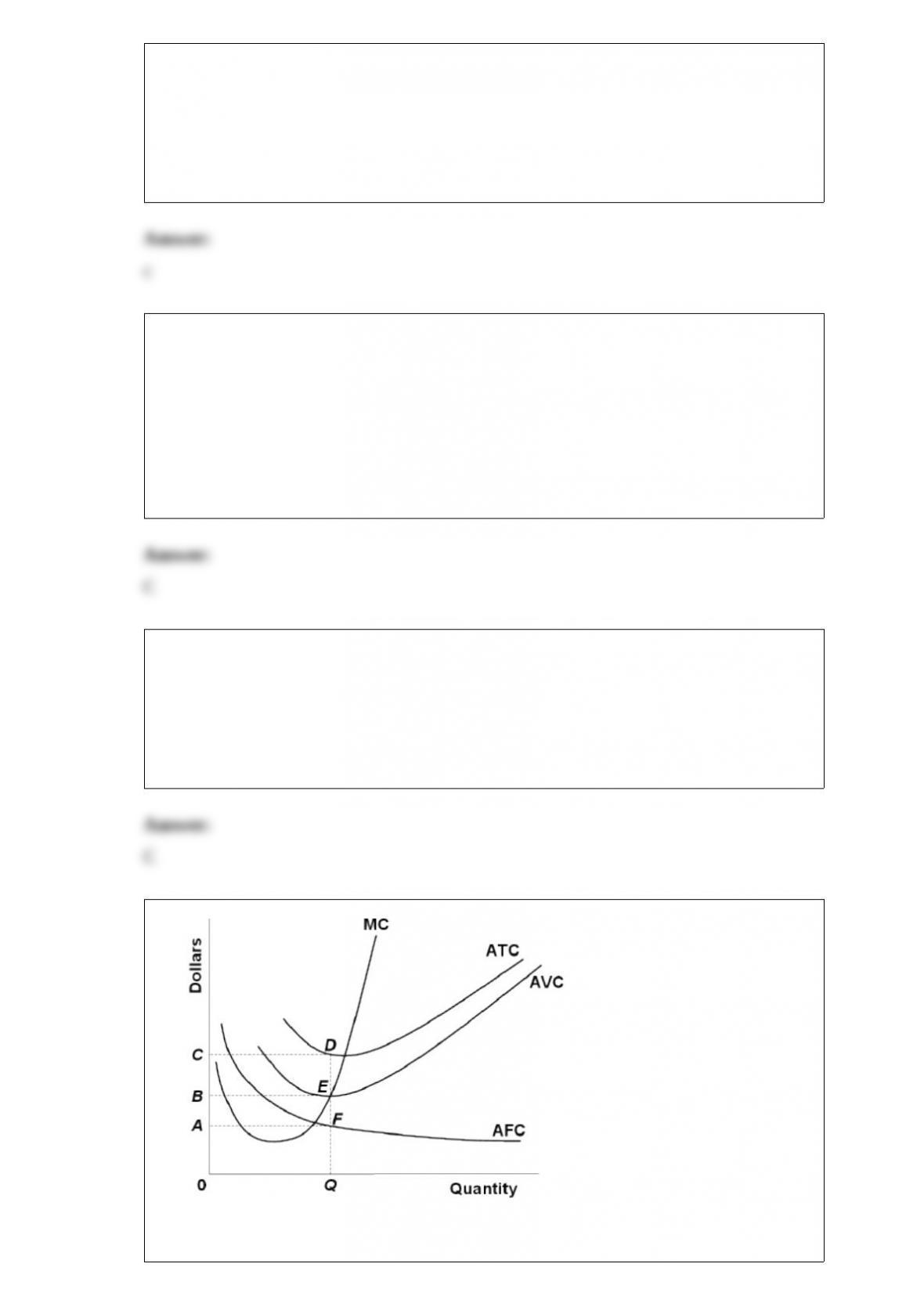
12)
refer to the above diagram. at output level q average fixed cost:
a.is equal to ef
b.is equal to qe
c.is measured by both qf and ed
d.cannot be determined from the information given
13) in the past few years, the social security trust fund in the united states has been:
a.drawn down to cover payouts that currently exceed payroll tax revenues.
b.built up in anticipation of payroll revenue shortfalls beginning in 2017.
c.drawn down to eliminate unnecessarily large surpluses in the fund.
d.built up because of greater than expected immigration to the united states.
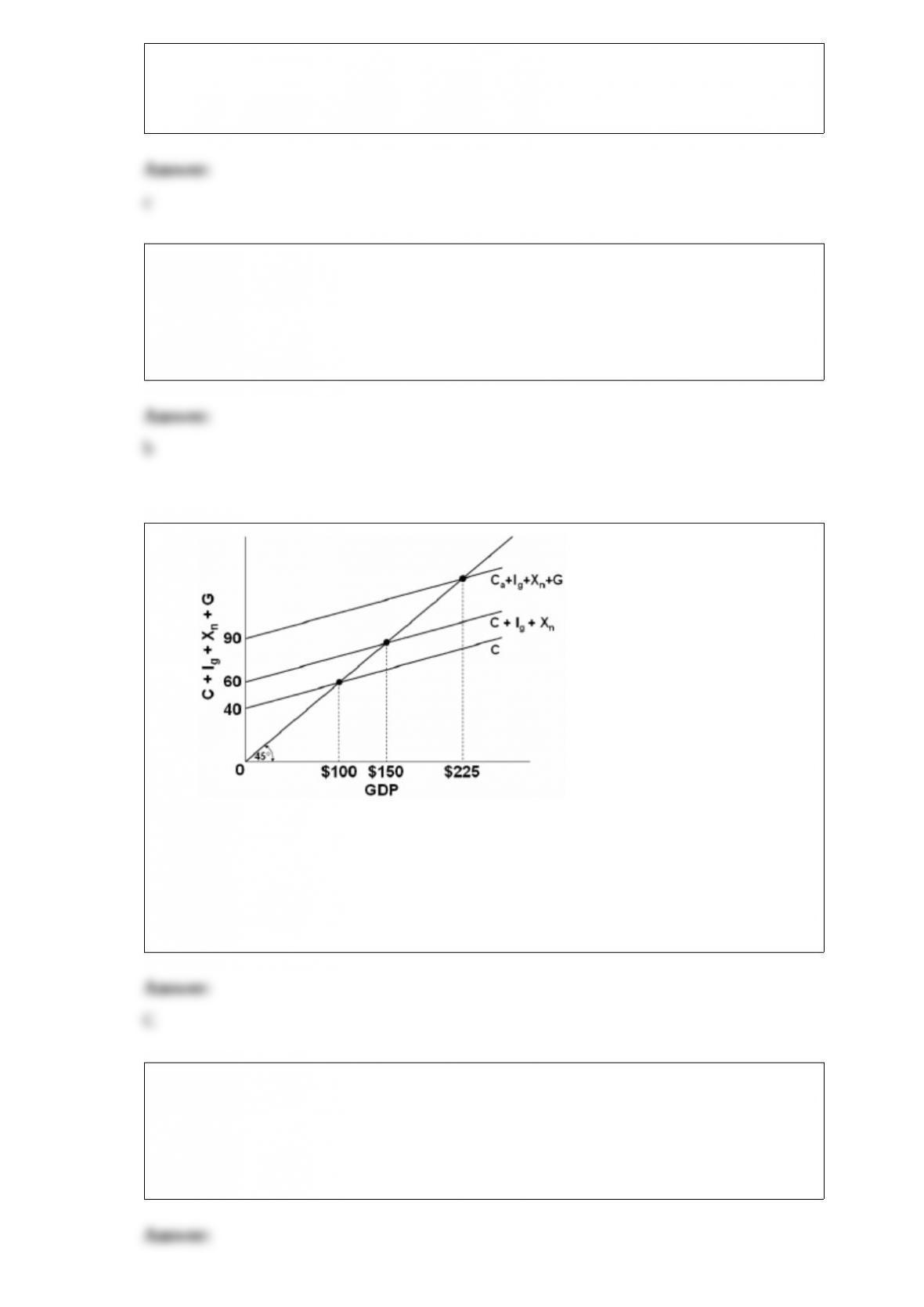
14)
Refer to the above diagram. The sizes of the multipliers associated with changes in
investment and government spending in this economy are:
A.2.5 and 1.5 respectively.
B.3 and 2 respectively.
C.both 2.5.
D.2 and 3 respectively.
15) A public good:
A.can be profitably produced by private firms.
B.is characterized by rivalry and excludability.
C.produces no positive or negative externalities.
D.is available to all and cannot be denied to anyone.
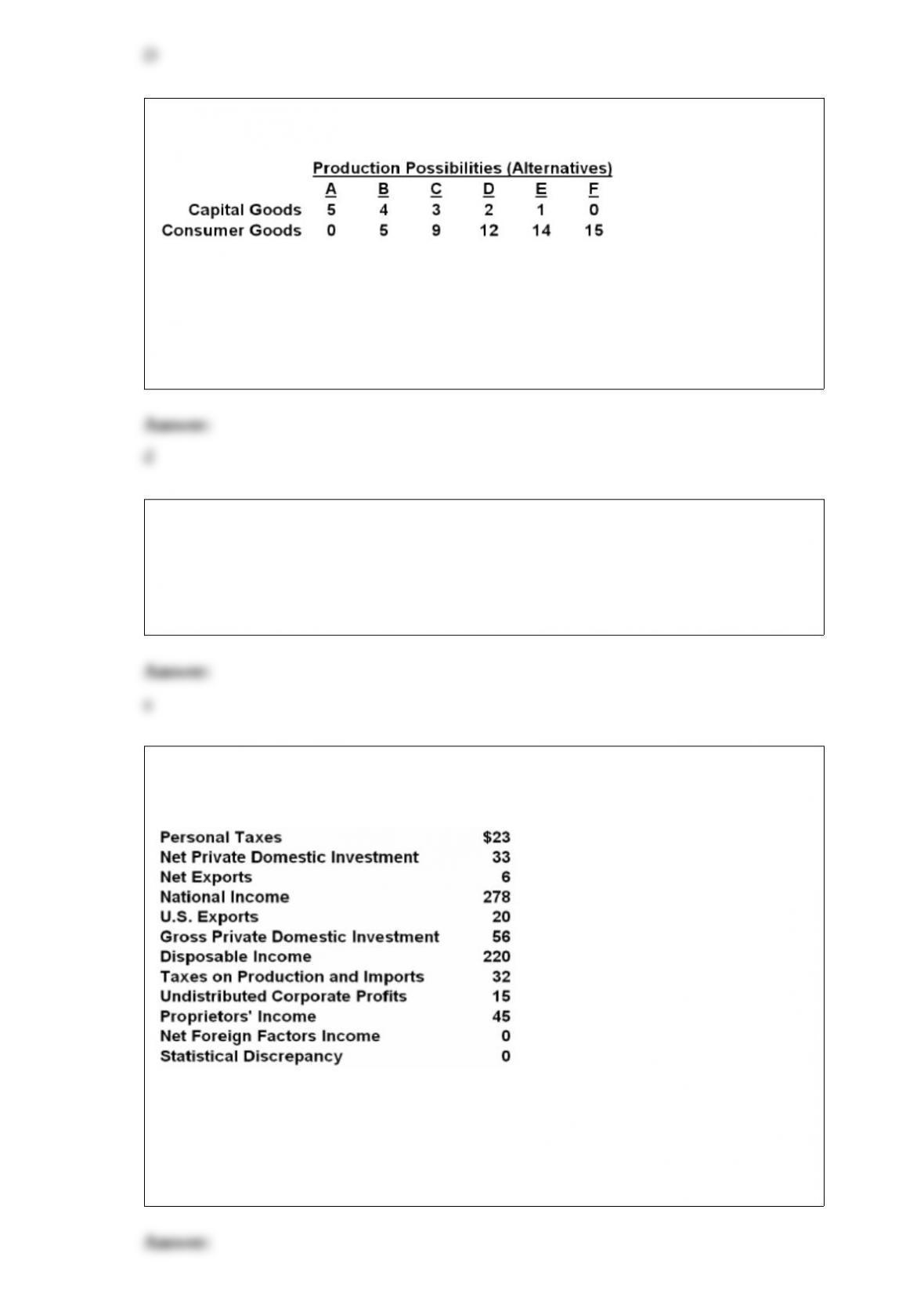
16) answer the next question(s) on the basis of the data given in the following
production possibilities table:
refer to the above table. if the economy is producing at production alternative c, the
opportunity cost of the tenth unit of consumer goods will be:
a.4 units of capital goods.
b.2 units of capital goods.
c.3 units of capital goods.
d.1/3 of a unit of capital goods.
17) the major purpose of medicare is to:
a.provide health care services to the aged.
b.provide health care services to those receiving public assistance.
c.contain rising health care costs.
d.make a basic health care package available to all americans.
18) answer the next question(s) on the basis of the following national income data. all
figures are in billions of dollars.
refer to the above data. personal income is:
a.$229.
b.$253.
c.$274.
d.$243.