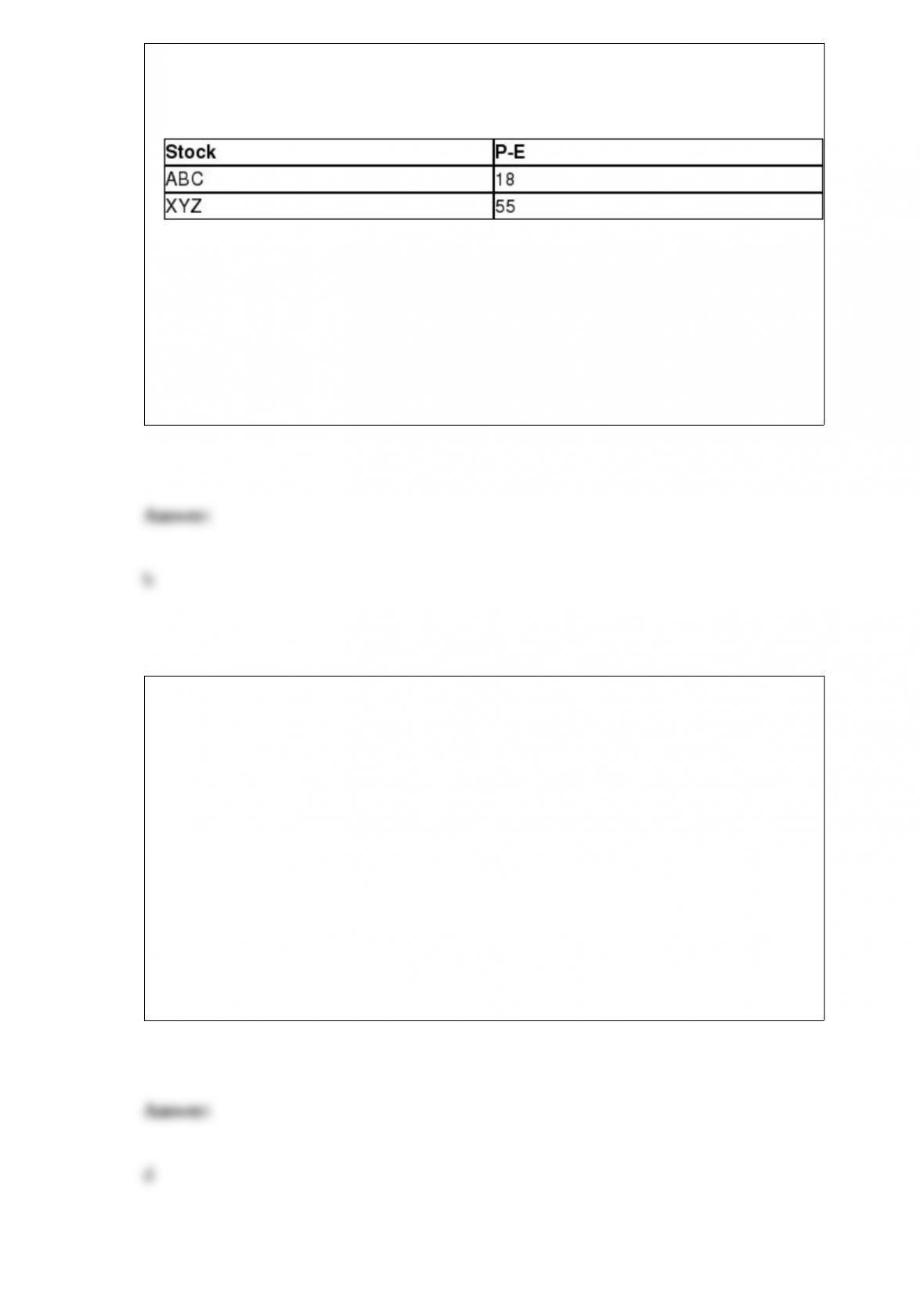
Refer to Exhibit 38-3.Which of the two stocks has a bigger gap between its close price
and net earnings per share?
Exhibit 38-3
a. Stock ABC
b. Stock XYZ
c. Both stocks have the same gap between its close price and net earnings per share
d. There is not enough information provided to answer the question.
At the minimum wage (set above the equilibrium wage),
a. all individuals who end up working are paid less than if they were paid the
equilibrium wage.
b. none of the workers will lose their jobs or find themselves working fewer hours.
c. none of the individuals who end up working are paid more than if they were paid the
equilibrium wage.
d. there will be fewer people working (or fewer labor hours demanded) than at the
equilibrium wage.
e. none of the above

If we assume that the income elasticity of demand for food has been around 0.2 and that
agricultural producers have become increasingly more productive, we can conclude that
a. prices of food have increased.
b. supply increases have been less than demand decreases.
c. as consumers’ real incomes have been increasing over the years, they have been
spending absolutely less on food.
d. prices of food have been stable.
e. none of the above
Adam Smith observed that often things that have the greatest value in use, or are the
most useful, have a relatively low price, and things that have little or no value in use
have a high price.
a. True
b. False
A util is an artificial construct used as a means of measuring the
a. price of a good.
b. satisfaction one receives from the consumption of a good.

c. costs of producing a good.
d. difference between the price and the value of a good.
If the demand for a particular agricultural product is highly elastic and bad weather
causes the supply to decrease, then we would expect the price of agricultural products
to
a. decrease and farmers’ revenues to decrease.
b. increase and the demand to decrease.
c. increase while farmers’ revenues decrease significantly.
d. increase by a large percentage while farmers’ revenues decrease only slightly.
All other things being equal, the __________ the percentage of one’s budget spent on a
good, the __________ the price elasticity of demand.
a. greater; higher
b. smaller; lower
c. greater; lower
d. smaller; higher
e. a and b

The law of diminishing marginal utility can be stated as follows:
a. As the amount of a good consumed increases, the sum of satisfaction received tends
to decrease.
b. As the amount of a good consumed increases, the additional satisfaction gained from
consuming additional units tends to decrease.
c. As the amount of a good consumed decreases, the additional satisfaction gained from
consuming additional units tends to increase.
d. As the amount of a good consumed increases, the sum of satisfaction received tends
to increase but at a diminishing rate.
e. b and d
Mutually beneficial trade between buyers and sellers drives a market to equilibrium.
a. True
b. False
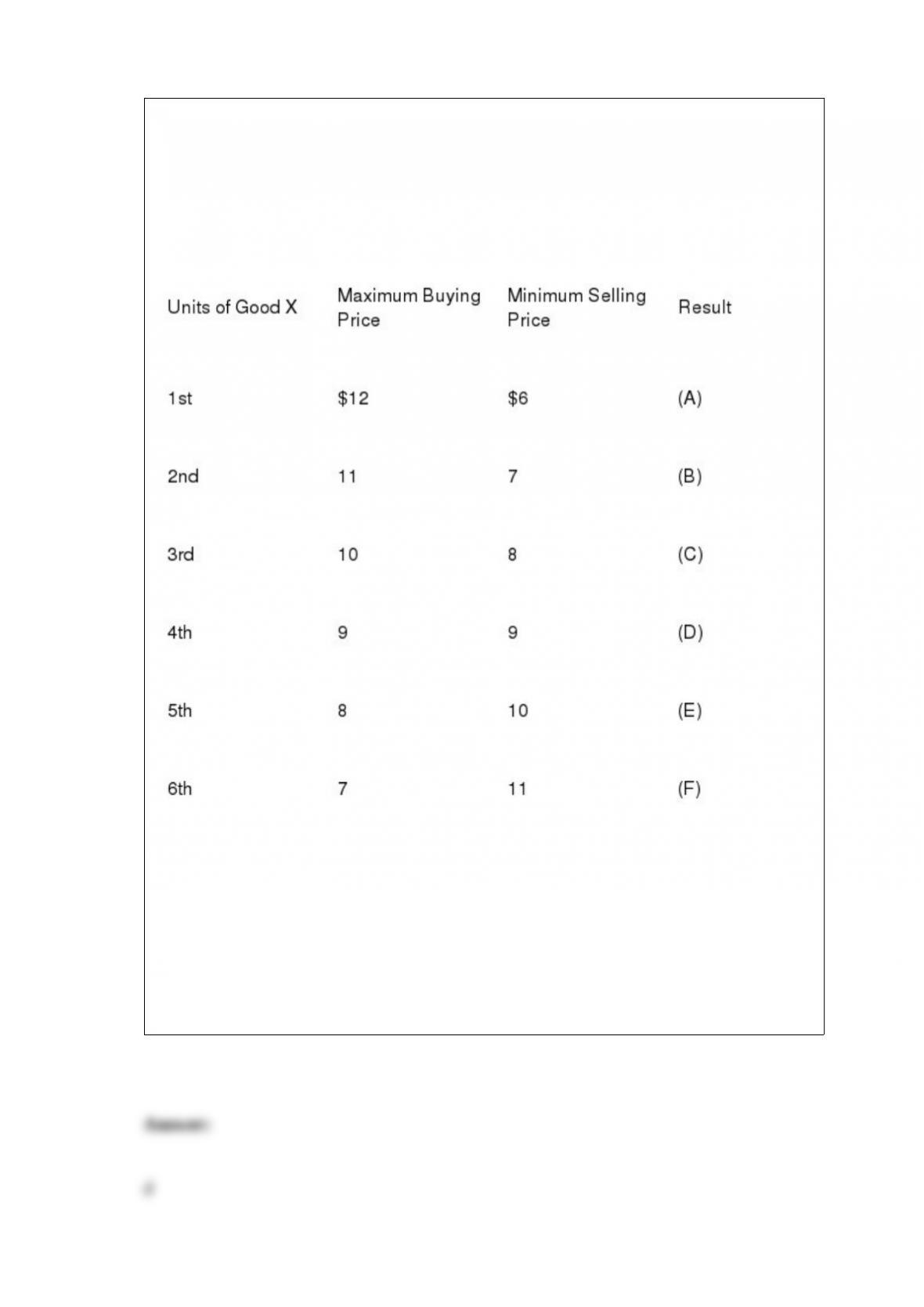
Refer to Exhibit 3-11.Fill in blanks (E) and (F) respectively with “Exchange” or “No
Exchange”to indicate whether or not exchange would take place at the given prices.
Exhibit 3-11
a. Exchange; Exchange
b. Exchange; No Exchange
c. No Exchange; Exchange
d. No Exchange; No Exchange
Cross elasticity of demand is the percentage change in the quantity __________ of a
good divided by the percentage change in __________.
a. demanded; the price of the good
b. supplied; the price of the good
c. demanded; the price of another good
d. supplied; the price of another good
e. demanded; income
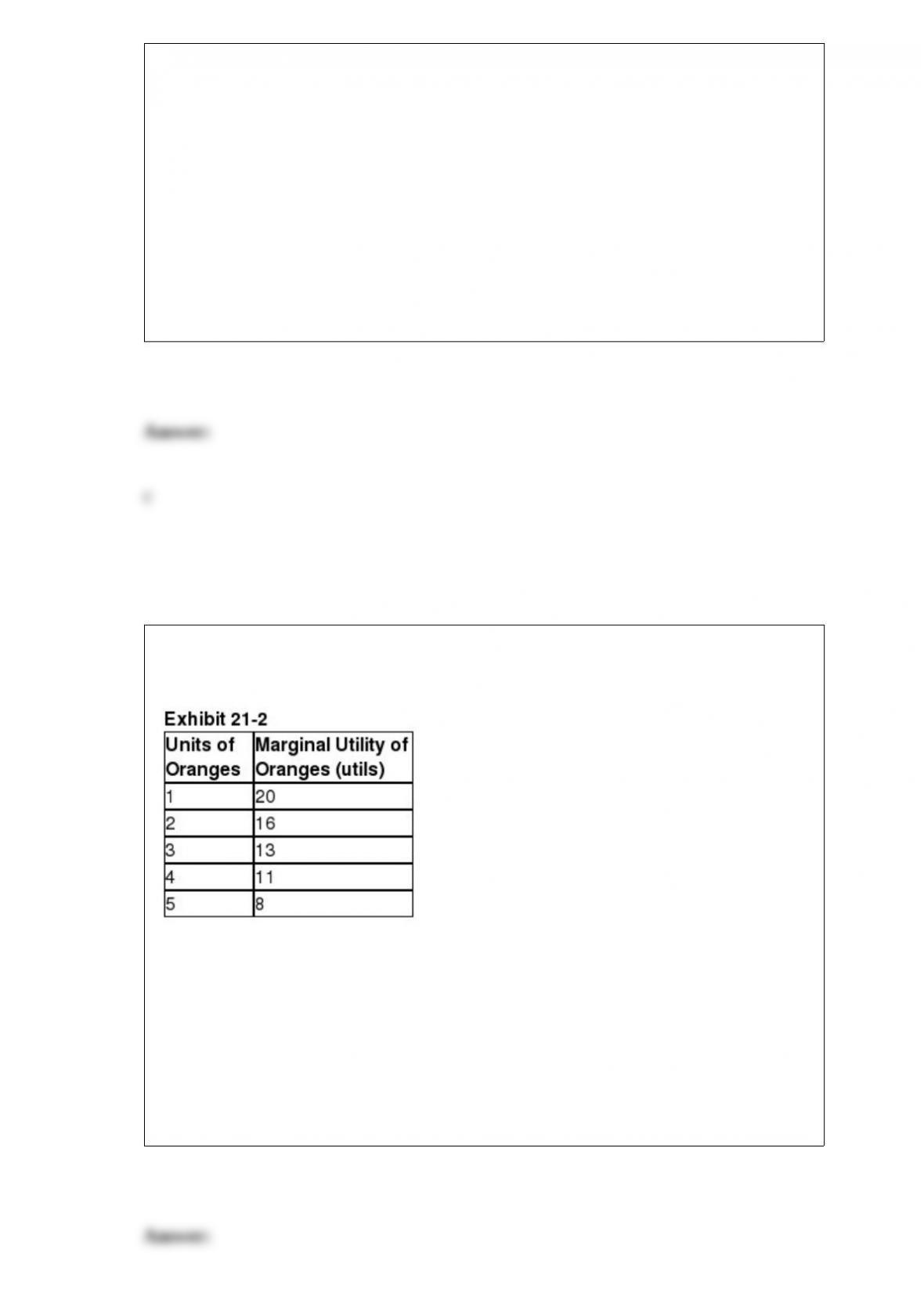
Refer to Exhibit 21-2. Total utility for the first three oranges is
a. 12 utils.
b. 62 utils.
c. 49 utils.
d. 15 utils.
e. 42 utils.
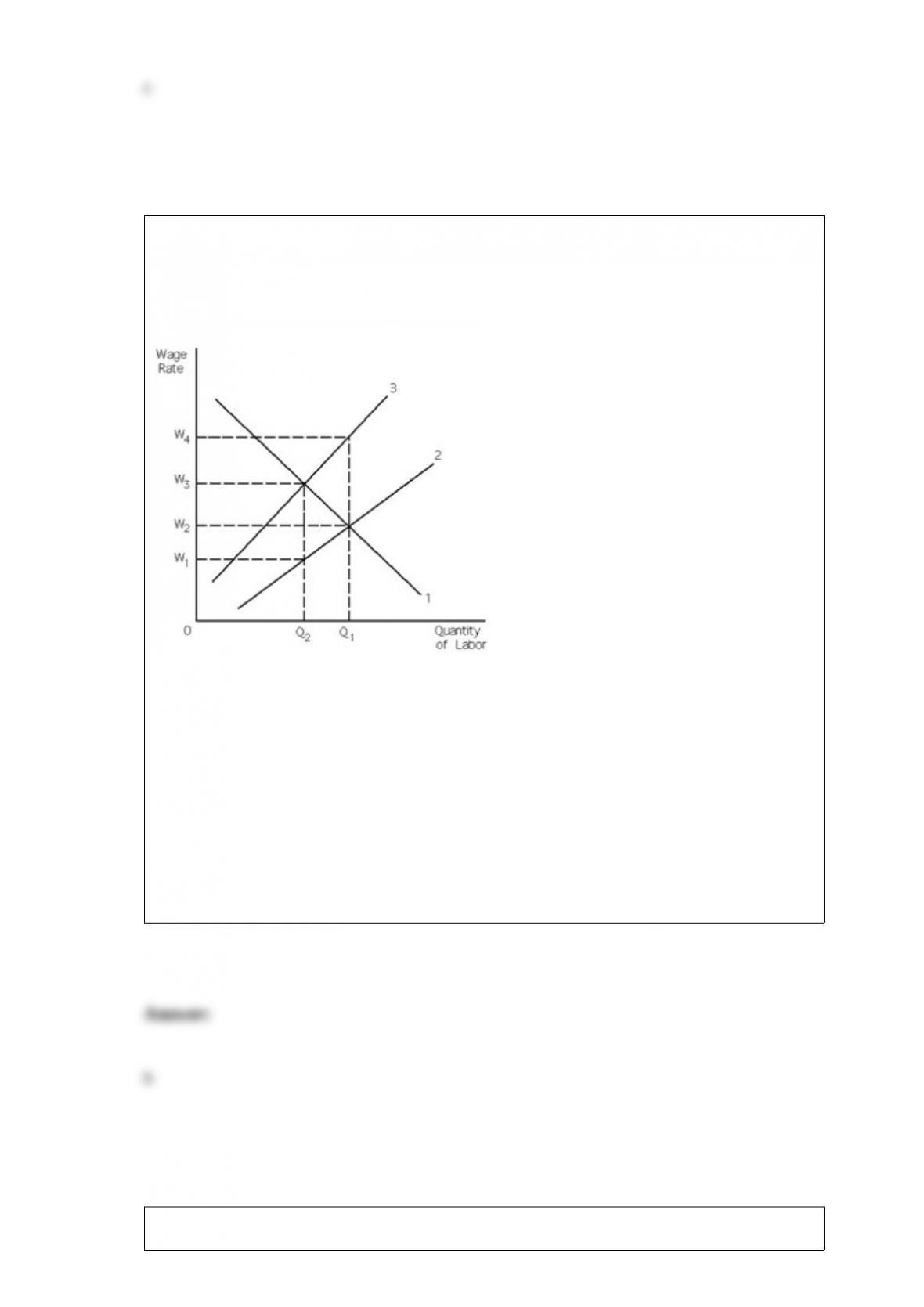
Refer to Exhibit 28-10. If the firm in the exhibit is a monopsony, it will hire
__________ quantity of labor and pay its workers the wage rate of __________.
Exhibit 28-10
a. Q2; W3
b. Q2; W1
c. Q1; W2
d. Q1; W4
e. none of the above
If consumers’ surplus is $30 and the price paid for the good is $50, then the maximum
price a buyer is willing and able to pay for the good is
a. $80.
b. $30.
c. $50.
d. $20.
e. There is not enough information to answer the question.
The marginal cost curve cuts through the AVC, ATC, and AFC curves at their lowest
points.
a. True
b. False
Land can earn economic rent, and so can
a. labor and capital.
b. labor.
c. capital.
d. none of the above
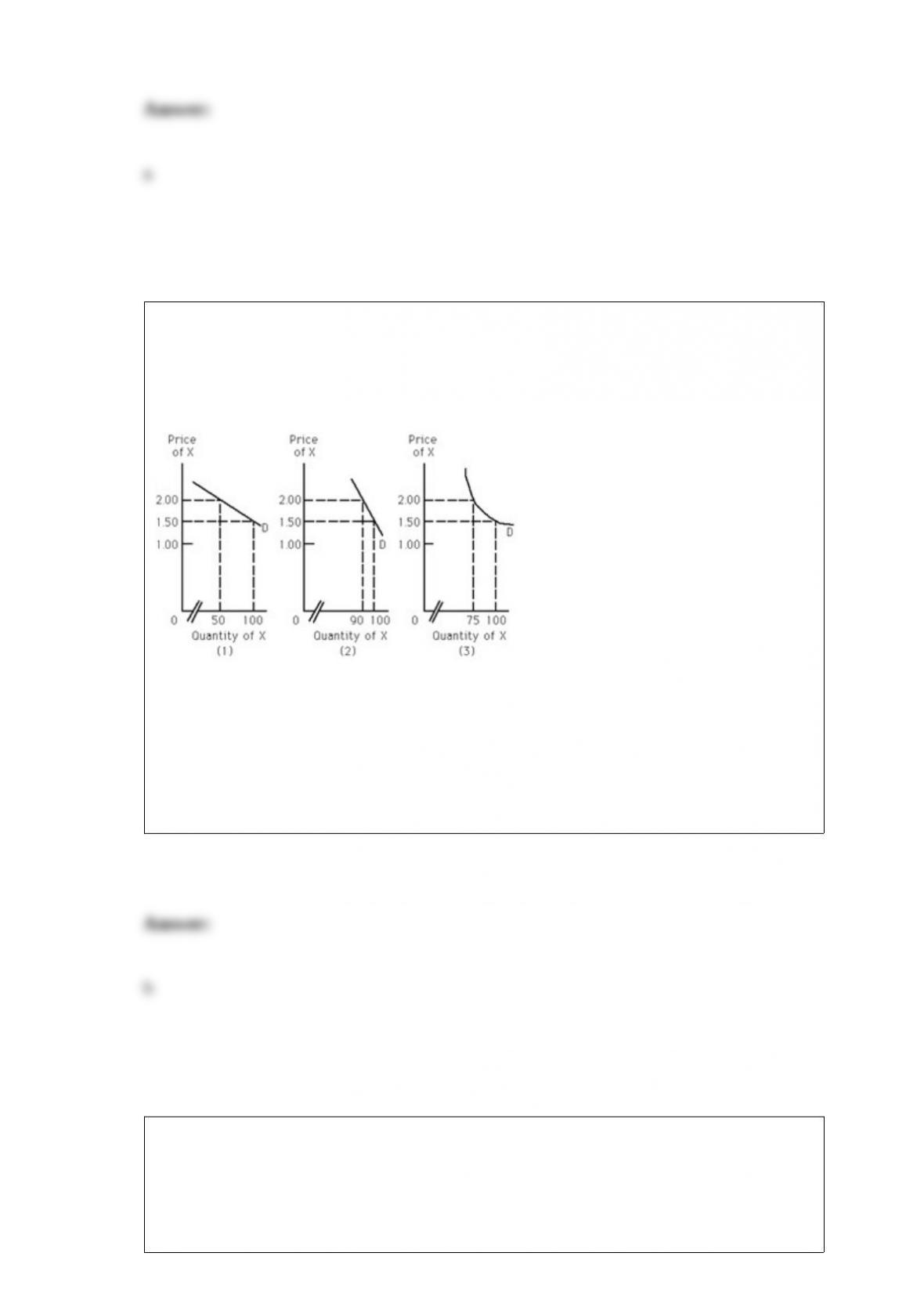
Refer to Exhibit 20-5. Assume that the seller of X increases the price from $1.50 to
$2.00, and this results in an increase in total revenue. Which of the graphs represents
the demand curve for X?
Exhibit 20-5
a. (1)
b. (2)
c. (3)
d. all of the above
An American labor union worker has a picket sign that reads “Say No to Tokyo, Buy
American.” Most likely, the worker is trying to
a. increase the price of substitute factors.
b. decrease the price of substitute factors.
c. increase demand for the product he or she produces.
d. increase his marginal physical product.
e. increase the availability of substitutes for the product he or she produces.
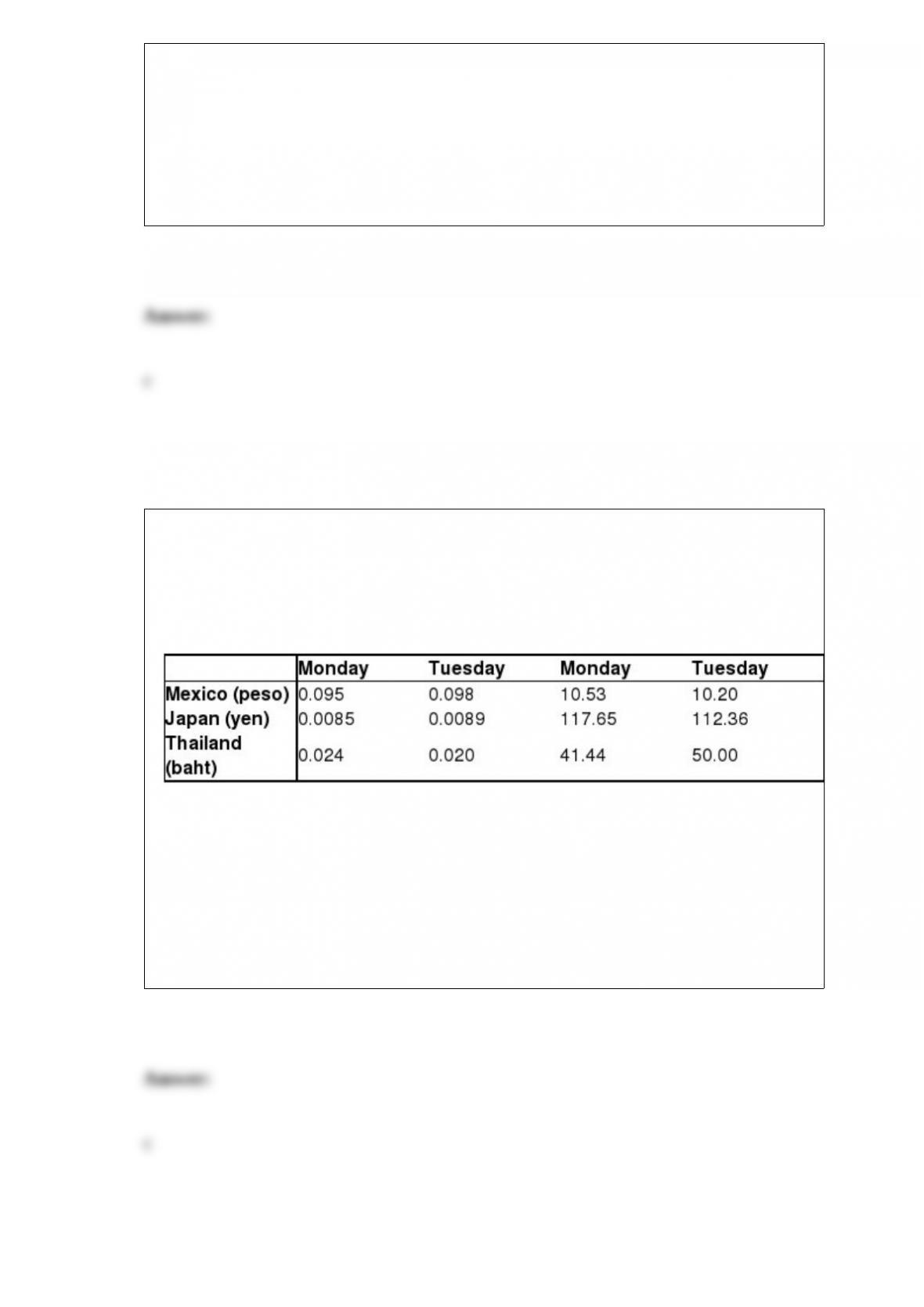
Refer to Exhibit 35-5.Based on the information provided in this table, between Monday
and Tuesday, the U.S. dollar ____________ against the Thai baht and the baht
_____________ against the U.S. dollar.
Exhibit 35-5
U.S. $ EquivalentForeign Currency per U.S. $
a. appreciated; appreciated
b. depreciated; appreciated
c. appreciated; depreciated
d. depreciated; depreciated

People who buy houses in good-weather locations receive this benefit absolutely for
free.
a. True
b. False
Saying “the marginal costs are greater than the marginal benefits” is the same as saying
a. the average costs are greater than the average benefits.
b. the total costs are greater than the average benefits.
c. the benefits are greater than the costs.
d. the additional costs are greater than the additional benefits.
e. the costs minus the benefits equal the net costs.
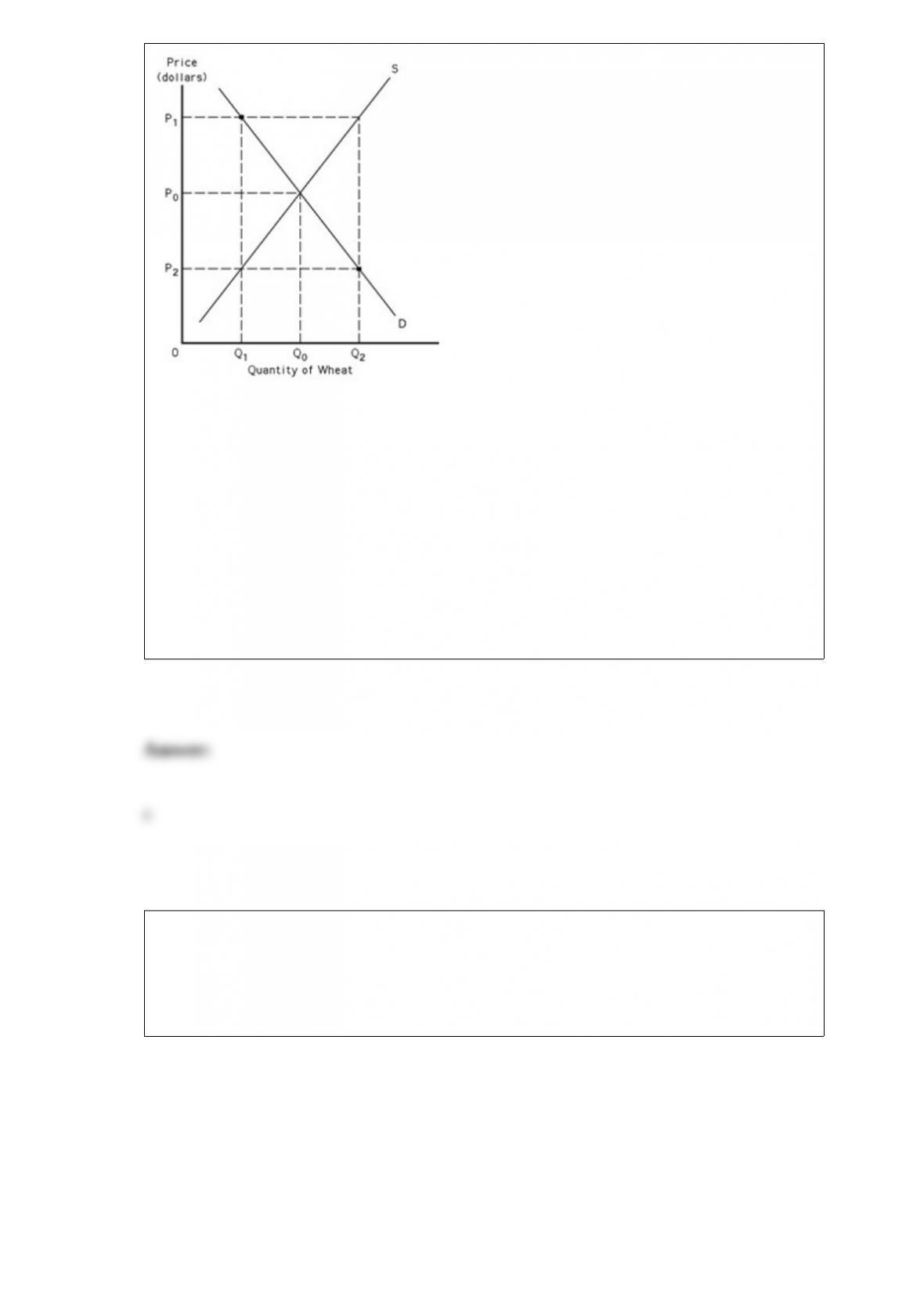
Refer to Exhibit 39-2. If P1 is a price support, the quantity of wheat purchased by the
market would be equal to
Exhibit 39-2
a. Q2.
b. Q0.
c. Q1.
d. Q2 – Q1.
e. Q1 – Q0.
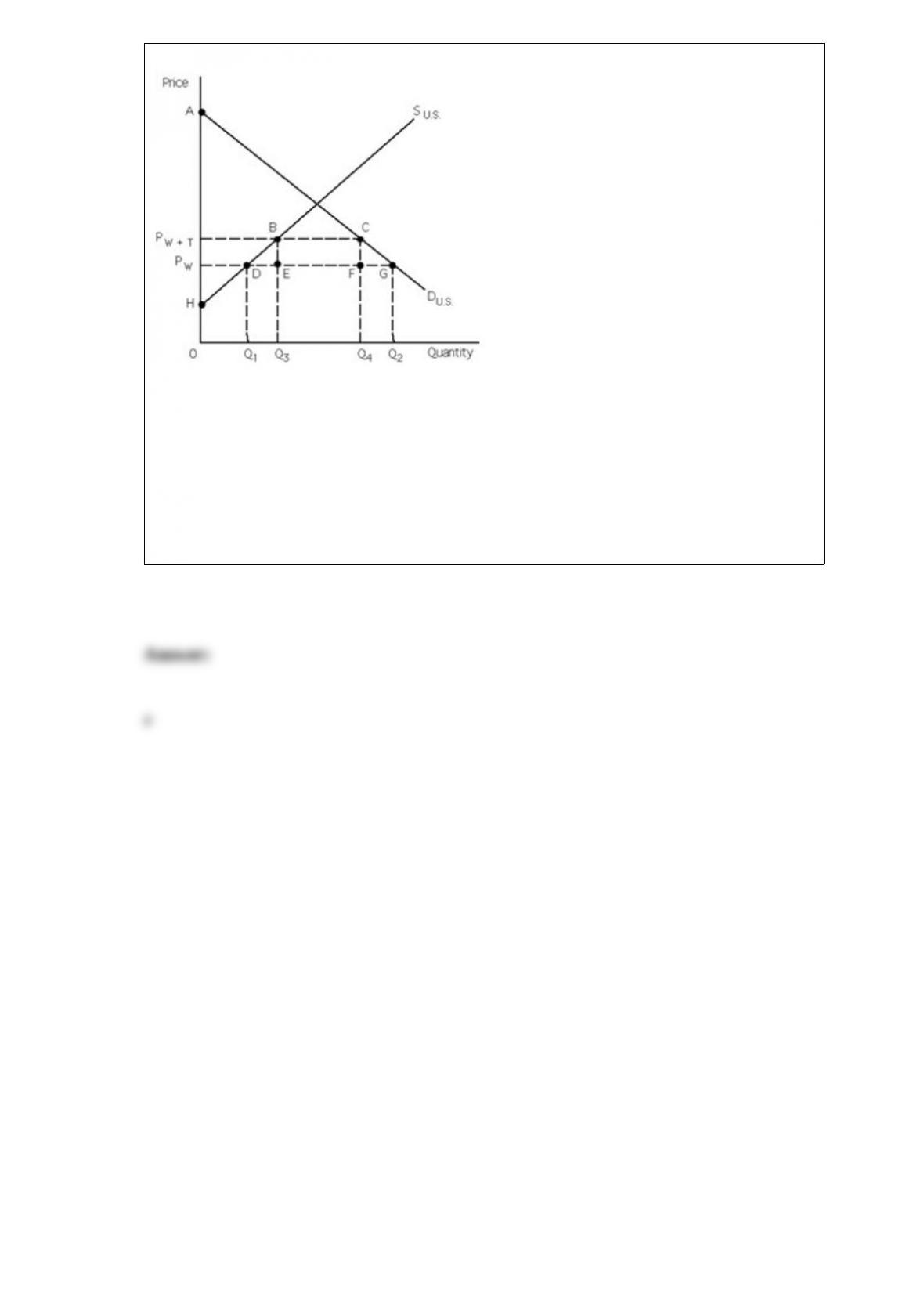
Refer to Exhibit 34-11. PW is the price that exists in the market before a tariff is
imposed and PW + T is the price that exists in the market after a tariff is imposed. The
tariff results in a net loss to society equal to area(s)
Exhibit 34-11
a. DBE + FCG.
b. EBCF.
c. DBE + EBCF.
d. FCG + EBCF.
e. none of the above