1) A checking account entry is money because it:
A.is ensured by the Federal Deposit Insurance Corporation.
B.has been declared as such by the Federal government.
C.performs the functions of money.
D.can be sold for currency.
2) price discrimination is:
a.always legal.
b.always illegal.
c.only illegal if it hurts consumers more than non-discrimination.
d.only illegal if used to lessen or eliminate competition.
3)
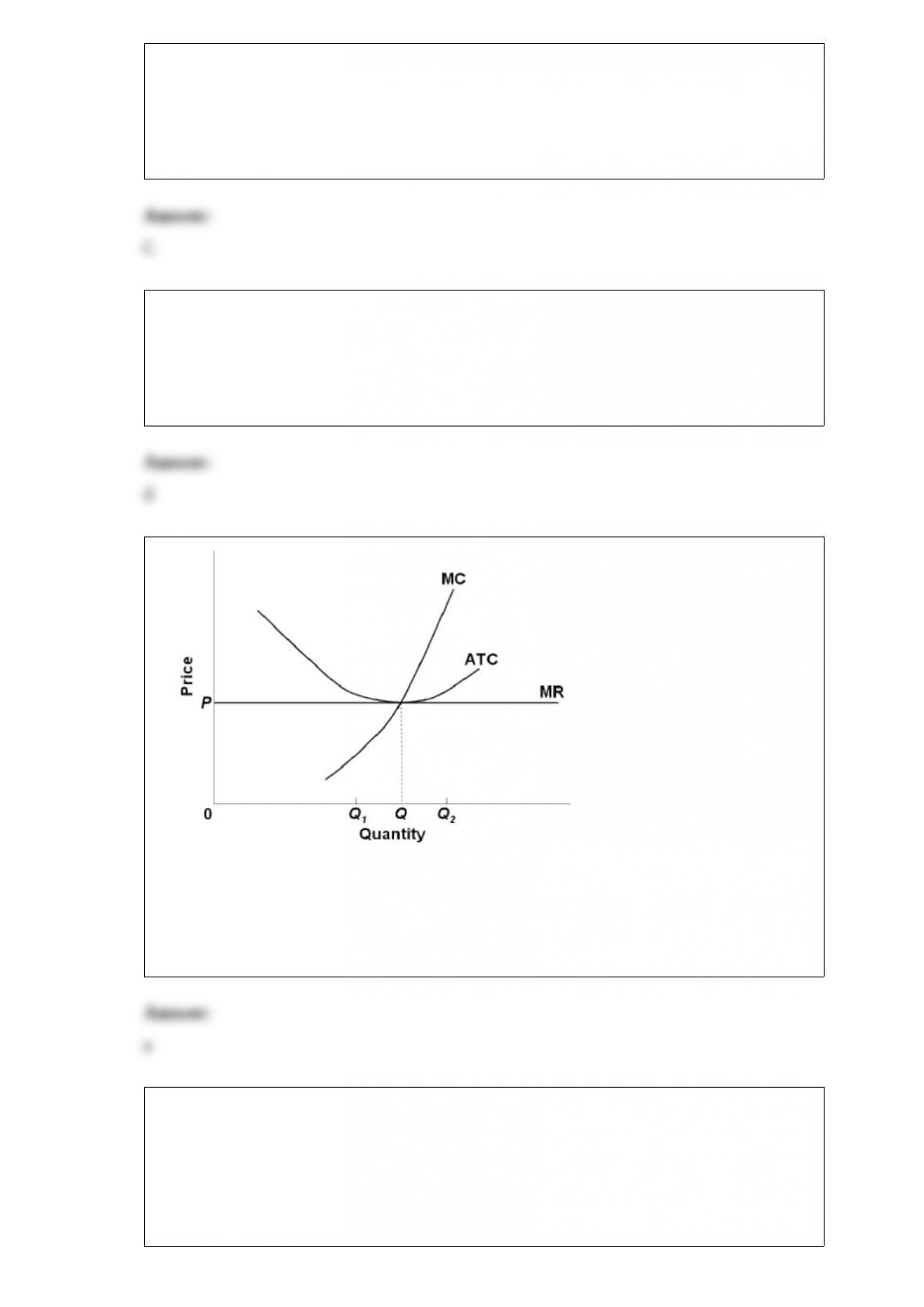
refer to the above diagram. at output level q2:
a.resources are overallocated to this product and productive efficiency is not realized.
b.resources are underallocated to this product and productive efficiency is not realized.
c.productive efficiency is achieved, but resources are underallocated to this product.
d.productive efficiency is achieved, but resources are overallocated to this product.
4) If the Fed were to purchase government securities in the open market, we would
anticipate:
A.lower interest rates, an expanded GDP, and depreciation of the dollar.
B.lower interest rates, an expanded GDP, and appreciation of the dollar.
C.higher interest rates, a contracted GDP, and depreciation of the dollar.
D.lower interest rates, a contracted GDP, and appreciation of the dollar.
5) Projecting that it might temporarily fall short of legally required reserves in the
coming days, the Bank of Beano decides to borrow money from its regional Federal
Reserve Bank. The interest rate on the loan is called the:
A.prime rate.
B.Federal funds rate.
C.Treasury bill rate.
D.discount rate.
6) The purchasing power of money and the price level vary:
A.inversely.
B.directly during recessions, but inversely during inflations.
C.directly, but not proportionately.
D.directly and proportionately.
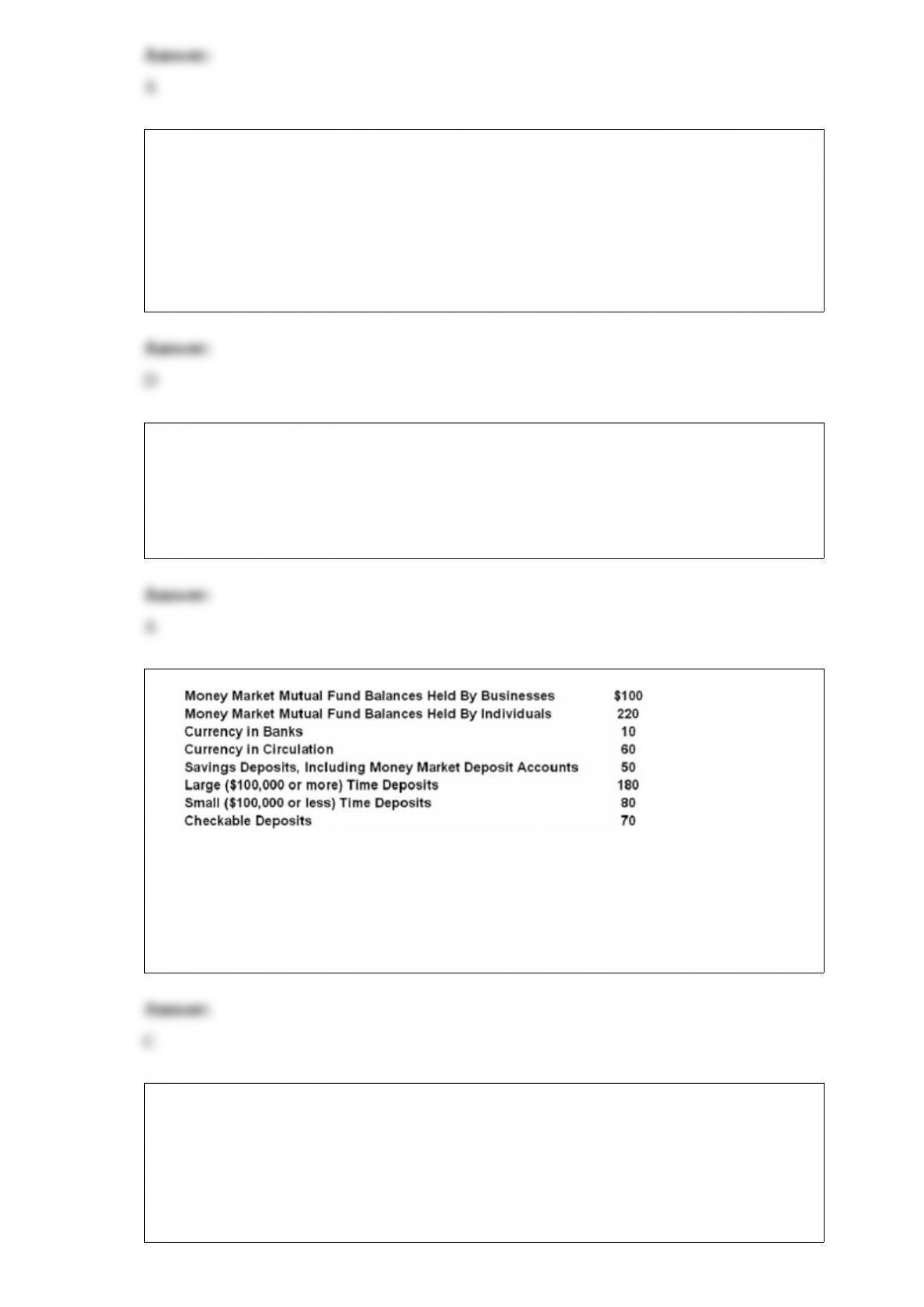
7)
Refer to the above information. The value of the “near-monies” that are part of M2 is:
A.$480.
B.$630.
C.$350.
D.$530.
8) If the MPC in an economy is .8, government could shift the aggregate demand curve
rightward by $100 billion by:
A.increasing government spending by $25 billion.
B.increasing government spending by $80 billion.
C.decreasing taxes by $25 billion.
D.decreasing taxes by $100 billion.
9) Upon which of the following industries is a restrictive monetary policy likely to be
most effective?
A.furniture
B.clothing
C.food processing
D.residential construction
10) (Consider This) The ratchet effect is the tendency of:
A.the price level to increase but not to decrease.
B.nominal GDP to increase more rapidly than real GDP.
C.real interest rates to fall more rapidly than nominal interest rates.
D.consumption to rise year after year regardless of what happens to disposable income.
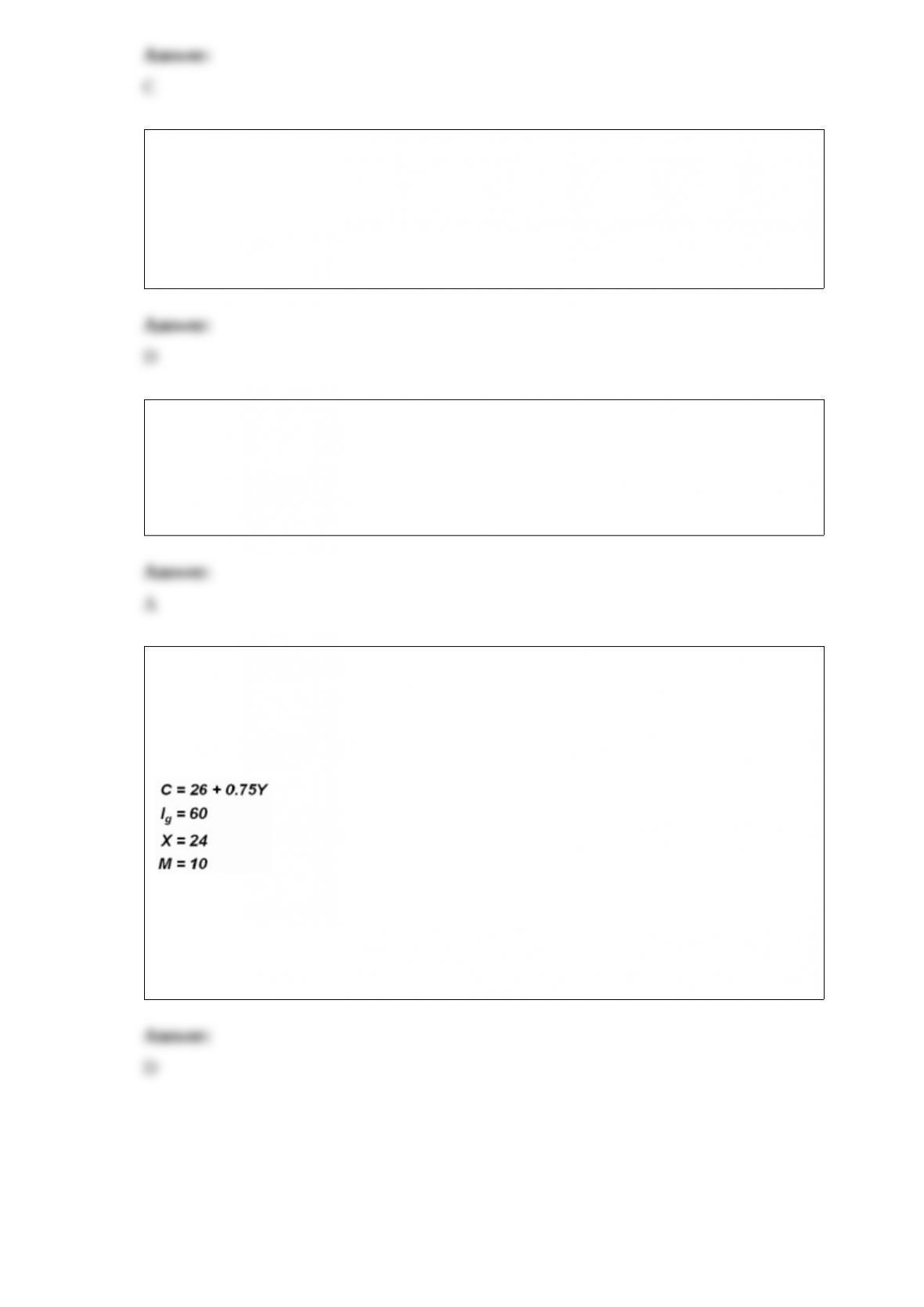
11) (Advanced analysis) Answer the next question(s) on the basis of the following
information for a private open economy. The letters Y, C, Ig, X, and M stand for GDP,
consumption, gross investment, exports, and imports respectively. Figures are in
billions of dollars.
The equilibrium GDP for the above open economy is:
A.$390.
B.$375.
C.$320.
D.$400.