
When constructing ratios, average balance sheet data should be used.
Answer:
Community banks tend to operate in a limited geographic region.
Answer:
Banks should never assume any interest rate risk.
Answer:
Investment banks are prohibited from making a market in the stock of publically traded
companies.

Answer:
Trading revenue for banks is highly cyclical.
Answer:
Every balance sheet and income statement item must be recognized on a cash-based
income statement.
Answer:
A function of investment banking is to facilitate corporate mergers and acquisitions.
Answer:

Derivatives can be a cost-effective way to manage interest rate risk.
Answer:
Duration of equity measures the dollar change in EVE with a 1% change in interest
rates.
Answer:
Banks with the highest efficiency ratios are presumed to be the most efficient.
Answer:

National banks can directly take equity positions in real estate projects.
Answer:
Every futures contract has a formal expiration date.
Answer:
Pro forma analysis is a form of sensitivity analysis.
Answer:
Foreign banks generally operate with higher capital ratios than U.S. banks.

Answer:
Arbitrageurs take relatively low-risk positions.
Answer:
The primary appeal of online banking is:
a. prevention of identity theft.
b. high-volume traffic.
c. lack of face-to-face interaction.
d. its convenience.
e. the ability to make small dollar purchases.
Answer:

To be considered well-capitalized, a bank’s minimum Tier 1 capital, total capital, and
leverage capital must be:
a. 4%, 8%, and 3%, respectively.
b. 8%, 5%, and 3%, respectively.
c. 10%, 10%, and 10%, respectively.
d. 6%, 10%, and 5%, respectively.
e. 3%, 4%, and 8%, respectively.
Answer:
Which of the following is not one of the essential issues in evaluating commercial loan
requests?
a. The structure of the borrower’s board of directors.
b. The character of the borrower.
c. The use of the loan proceeds.
d. The source of repayment for the loan.
e. The amount the customer needs to borrow.
Answer:

Which of the following will cause a bank’s 1-year cumulative GAP to decrease,
everything else the same.
a. An increase in 3-month loans and an offsetting increase in 9-month loans.
b. A decrease in 6-month loans and an offsetting increase in 2-year CDs.
c. An increase in 9-month CD’s and an offsetting increase in 5-year CDs.
d. a. and c.
e. b. and c.
Answer:
A firm’s ability to meet its short-term debt obligations is measured by:
a. liquidity ratios.
b. market value ratios.
c. profitability ratios.
d. activity ratios.
e. leverage ratios.
Answer:

When an investment bank commits its own funds to take a risk position in an
underlying security, it is known as:
a. underwriting.
b. market making.
c. proprietary trading.
d. organizing a market.
e. brokering.
Answer:
Use the following information.
The minimum total capital for this bank is:
a. $348
b. $450
c. $509
d. $581
e. $696
Answer:

Historically, what has prevented universal banks from operating in the United States?
a. The Universal Bank Prohibition Act
b. The Glass-Steagall Act
c. U.S. banks have no desire to become universal banks.
d. Universal banks have less risk diversification capabilities than traditional U.S. based
banks.
e. a. and c. only
Answer:
Which of the following is false regarding bank preferred stock?
a. Preferred stock investor claims are senior to those of common stockholders.
b. All preferred stock investors pay taxes on only 20% of dividends.
c. Most preferred stock issues are adjustable-rate perpetual stock.
d. Preferred stock has the same disadvantages as common stock.
e. None of the statements is false.
Answer:

___________ includes transaction accounts, MMDAs, savings accounts and small time
deposits.
a. Retail funding
b. Wholesale funding
c. Borrowed funding
d. Equity funding
e. Lockbox funding
Answer:
A bank’s periodic GAP:
a. is defined as the dollar amount of rate-sensitive assets divided by the dollar amount
of rate-sensitive liabilities.
b. is defined as the dollar amount of earning assets divided by the dollar amount of total
liabilities.
c. compares rate-sensitive assets with rate-sensitive liabilities across all time buckets.
d. compares rate-sensitive assets with rate-sensitive liabilities across a single time
bucket.
e. compares the dollar amount of earning assets times the average liability interest rate.

Answer:
All of the following are sources of cash except:
a. an increase in long-term debt.
b. a decrease in inventory.
c. a new equity issue.
d. a decrease in notes payable.
e. an increase in accounts payable.
Answer:
Deposit insurance was increased to __________ per depositor in 2008.
a. $100,000
b. $150,000
c. $250,000
d. $300,000
e. $500,000
Answer:

Answer:
Under the Equal Credit Opportunity Act, for which of the following is it illegal for a
bank to discriminate against borrowers?
a. The applicant’s income
b. The applicant’s credit history
c. The applicant’s national origin
d. The applicant’s job history
e. A civil judgment against the applicant
Answer:
If rate-sensitive assets equal $600 million and rate-sensitive liabilities equals $800
million, what is the expected change in net interest income if rates increase by 1%?

a. Net interest income will increase by $2 million.
b. Net interest income will fall by $2 million.
c. Net interest income will increase by $20 million.
d. Net interest income will fall by $20 million.
e. Net interest income will be unchanged.
Answer:
Common size financial statements convert figures to a common size by:
a. dividing balance sheet items by total assets and income statement items by net
income.
b. dividing balance sheet items by net sales and income statement items by net income.
c. dividing balance sheet items by total assets and income statement items by net sales.
d. dividing balance sheet items by net sales and income statement items by total assets.
e. dividing balance sheet items by total equity and income statement items by net sales.
Answer:

An example of a contra-asset account is:
a. the loan and lease loss allowance.
b. unearned income.
c. buildings and equipment.
d. revenue bonds.
e. the provision for loan loss.
Answer:
Which of the following allows depository institutions to borrow for a fixed term against
a variety of collateral that is normally accepted for discount window loans?
a. Term Auction Facility
b. Term Securities Lending Facility
c. Primary Dealer Credit Facility
d. Troubled Asset Relief Program
e. Housing and Economic Recovery Facility
Answer:

A bank estimates that their average balance on demand deposit accounts is $2,000, net
of float. Each account costs the bank $150 per year in processing costs. The bank
collects an average of $7.50 per month on each account in service charges. Assume
reserve requirements are 10%. What is the net cost of an average demand deposit?
a. 3.0%
b. 3.3%
c. 3.6%
d. 3.9%
e. 4.2%
Answer:
Which of the following formalizes a bank’s lending guidelines?
a. Loan policy
b. Credit culture
c. Credit analysis
d. Credit review
e. Loan documentation

Answer:
Bank assets fall into each of the following categories except:
a. loans.
b. investment securities.
c. demand deposits.
d. noninterest cash and due from banks.
e. other assets.
Answer:
To increase asset sensitivity, a bank can:
a. buy longer-term securities.
b. pay premiums on subordinated debt.
c. shorten loan maturities.
d. make more fixed rate loans.
e. All of the above.

Answer:
The operating risk ratio measures:
a. cost controls versus fee generation.
b. fee income versus net interest margin.
c. noninterest expense versus non-interest income.
d. depositors versus employees.
e. depreciation versus required reserves.
Answer:
Use the following information.
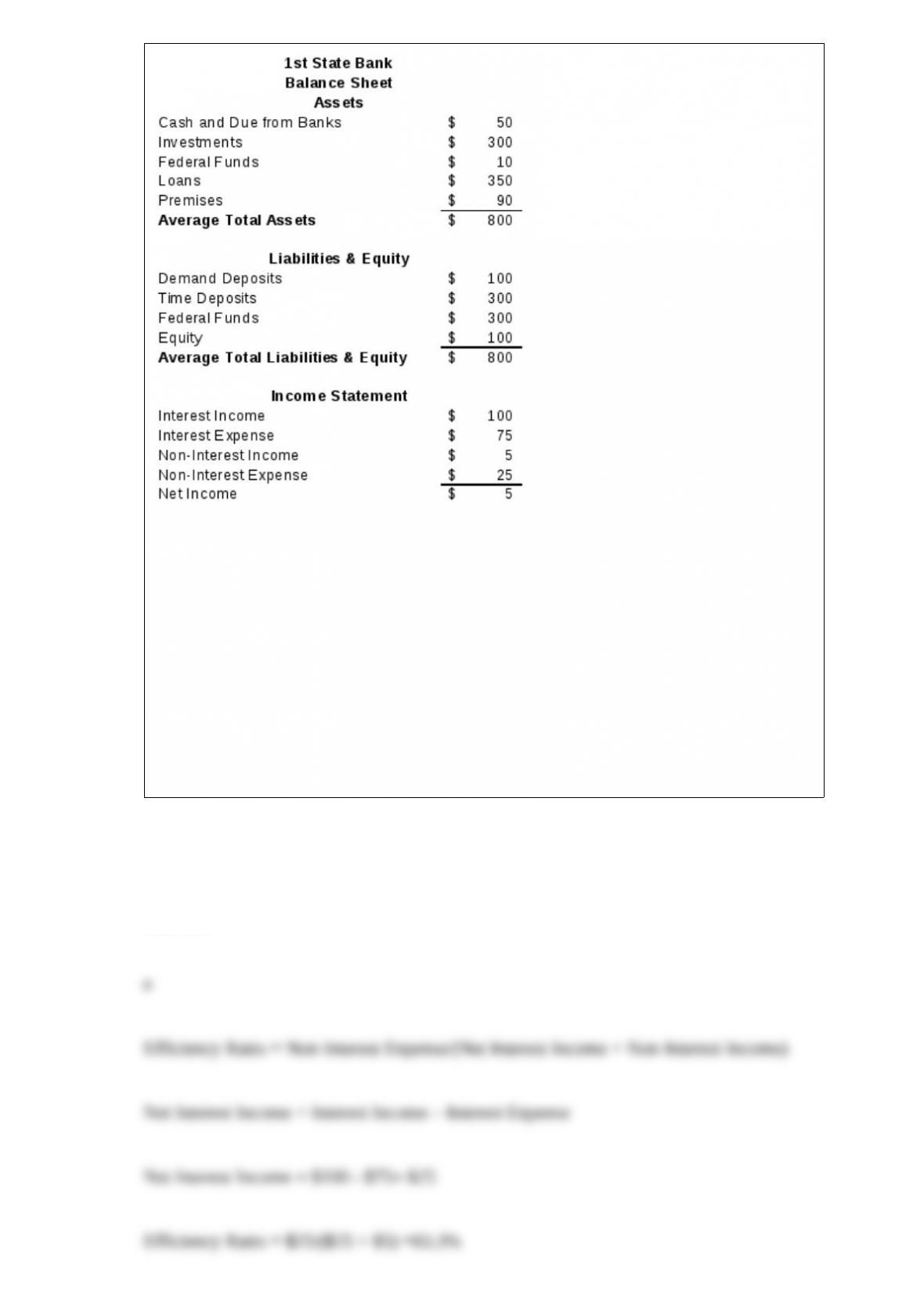
What is 1st State’s efficiency ratio?
a. 2.53%
b. 17.51%
c. 0.83%
d. 0.45%
e. 83.3%
Answer:

Under which category are dividends classified on the statement of cash flows?
a. Cash From Investing Activities
b. Cash From Operating Activities
c. Cash From Financing Activities
d. Cash From Profit Activities
e. None of the above
Answer:
Who is at risk if an indirect loan defaults on a loan with full recourse?
a. The bank
b. The borrower
c. The dealer
d. The credit bureau
e. All of the above
Answer:

Which of the following is included in regulatory capital but not accounting capital?
a. Capital reserve for contingencies
b. Preferred stock
c. Subordinated debt
d. Surplus
e. All of the above are included in both regulatory and accounting capital
Answer:
From the following list, which two are the biggest contributors to non-interest income?
a. Fiduciary Activities & Deposit Service Charges
b. Trading Revenue & Investment Banking
c. Insurance Commission Fees and Income & Other Non-Interest Income
d. Depository Service Charges and Other Non-Interest Income
e. Fiduciary Activities and Investment Banking

Answer:
When you wish to own the underlying security, your spot position is _______.
a. fat.
b. long.
c. short.
d. skinny.
e. a. and c.
Answer:
Use the following information on Dylan Enterprises.
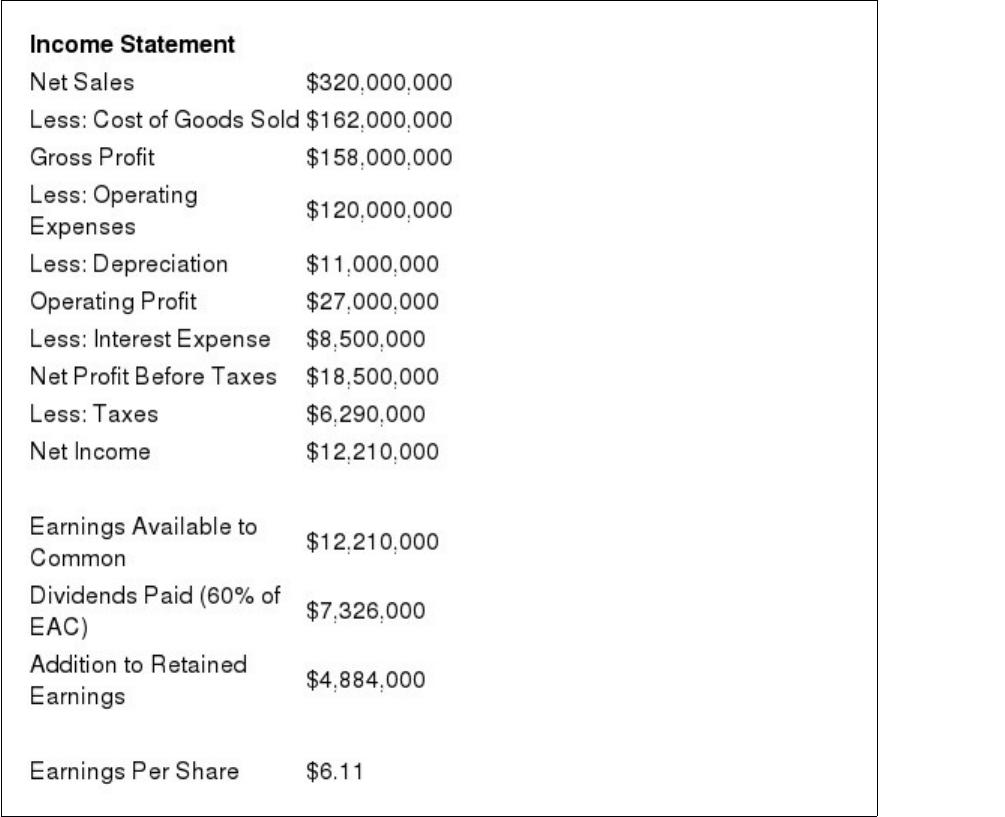
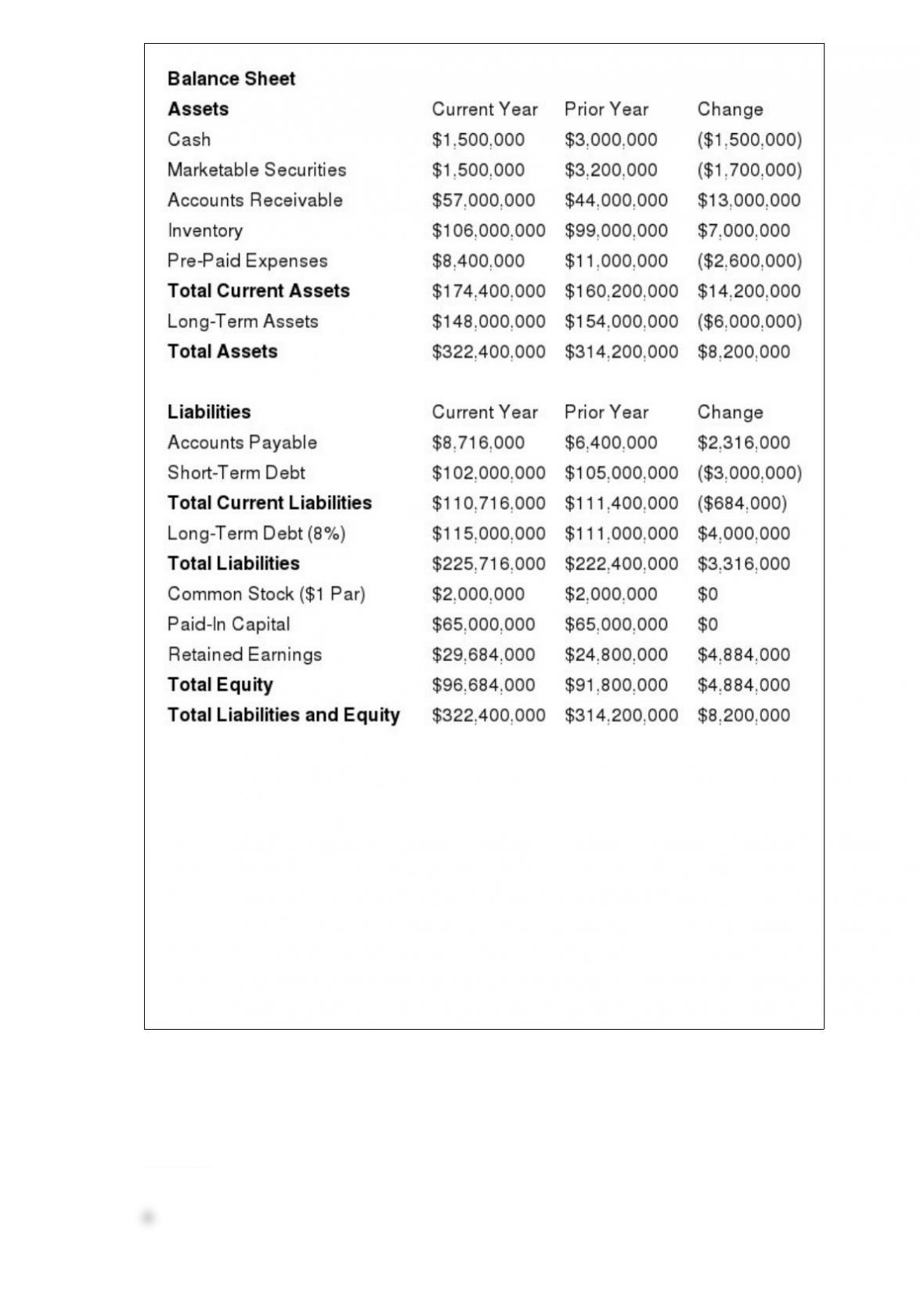
What were Dylan’s cash receipts during the year?
a. $307,000,000
b. $320,000,000
c. $323,000,000
d. $424,000,000
e. $482,000,000
Answer:

The U.S. government took all of the following actions to address the credit crisis in
2008 except:
a. putting Fannie Mae into conservatorship.
b. passed the Troubled Asset Relief Program (TARP).
c. created the Keep Banks Solvent (KBS) agency.
d. authorized large non-financial firms to sell bonds that were FDIC-insured.
e. temporarily increased FDIC domestic deposit coverage to $250,000.
Answer:
Which of the following is NOT a type of credit enhancement?
a. Excess cash flow
b. Credit derivatives
c. Loan guarantees
d. All of the above are a type of credit enhancements
e. a. and b. are NOT credit enhancements

Answer:
Which of the following is not considered a non-interest expense?
a. Wages and salaries
b. Rent
c. Required reserves held at the Federal Reserve
d. Electricity
e. Employee benefits
Answer:
A reverse collar consists of:
a. buying an interest rate floor and an interest rate cap.
b. buying an interest rate floor and selling an interest rate cap.
c. selling an interest rate floor and buying an interest rate cap.
d. buying a call option and selling a futures contract.
e. selling a put option and buying a futures contract.
Answer: