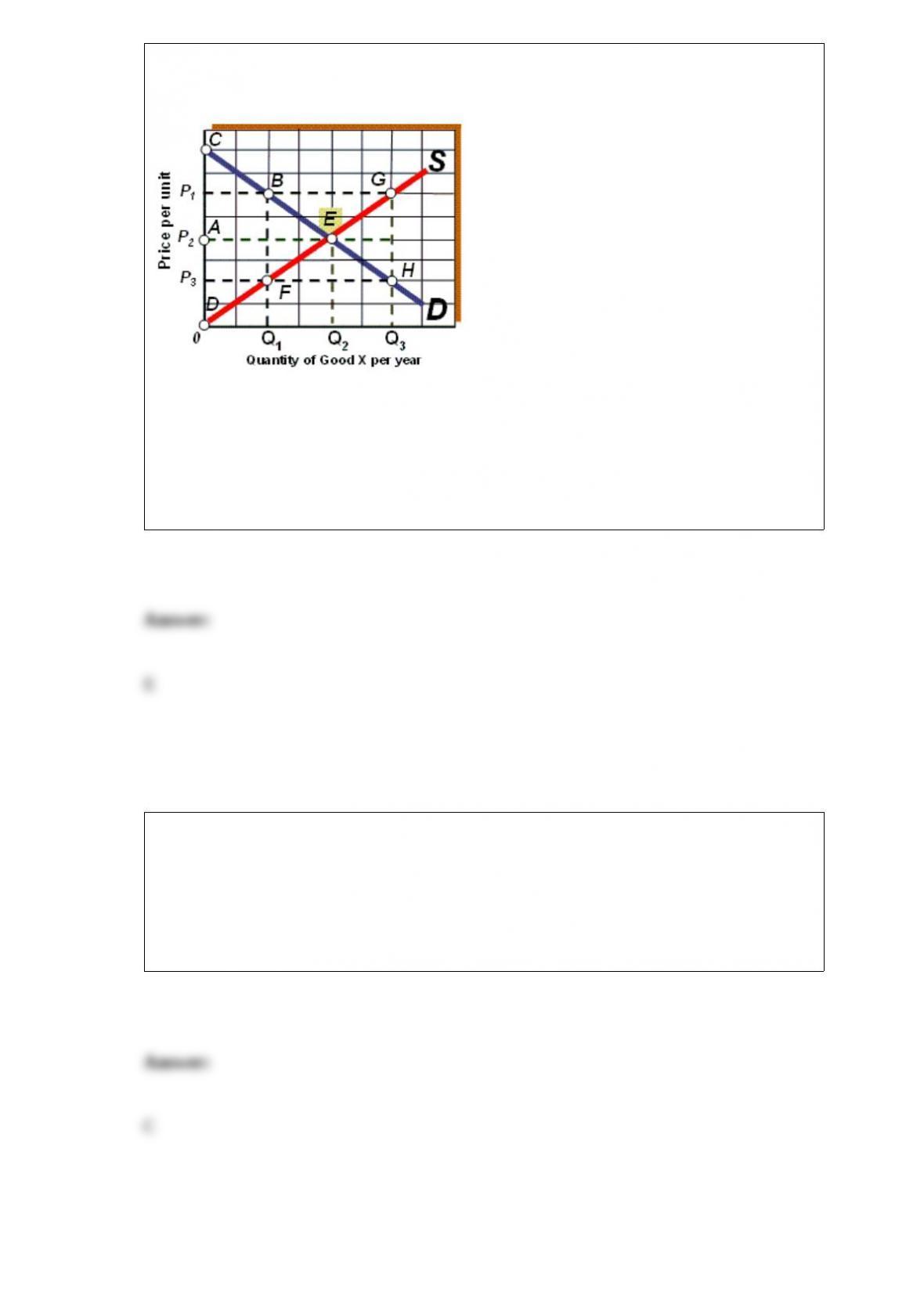
Exhibit 3A-2 Comparison of Market Efficiency and Deadweight Loss
As shown in Exhibit 3A-2, if the market price falls from P2 to P3, then:
a. consumer surplus increases.
b. producer surplus increases.
c. deadweight loss increases.
d. all of the above are true.
e. none of the above are true.
Game theory is an especially useful model for analysis in the following types of
markets:
a. perfect competition. c. oligopoly.
b. monopolistic competition. d. monopoly.

Which of the following is true about advertising?
a. If monopolistically competitive firms compete through advertising, that creates brand
loyalty, then advertising can be an effective entry cost.
b. Advertising may be the only way that a new entrant can penetrate a market
dominated by long-established firms.
c. Advertising has no impact on entry costs or market structure.
d. Both a. and b. above are correct.
If government taxes a firm which pollutes this will:
a. increase the demand for the good produced.
b. decrease the supply of the good produced.
c. increase the equilibrium quantity of the good produced in the market.
d. decrease the equilibrium price of the good produced in the market.
e. all of these.
Exhibit 6A-5 Consumer equilibrium
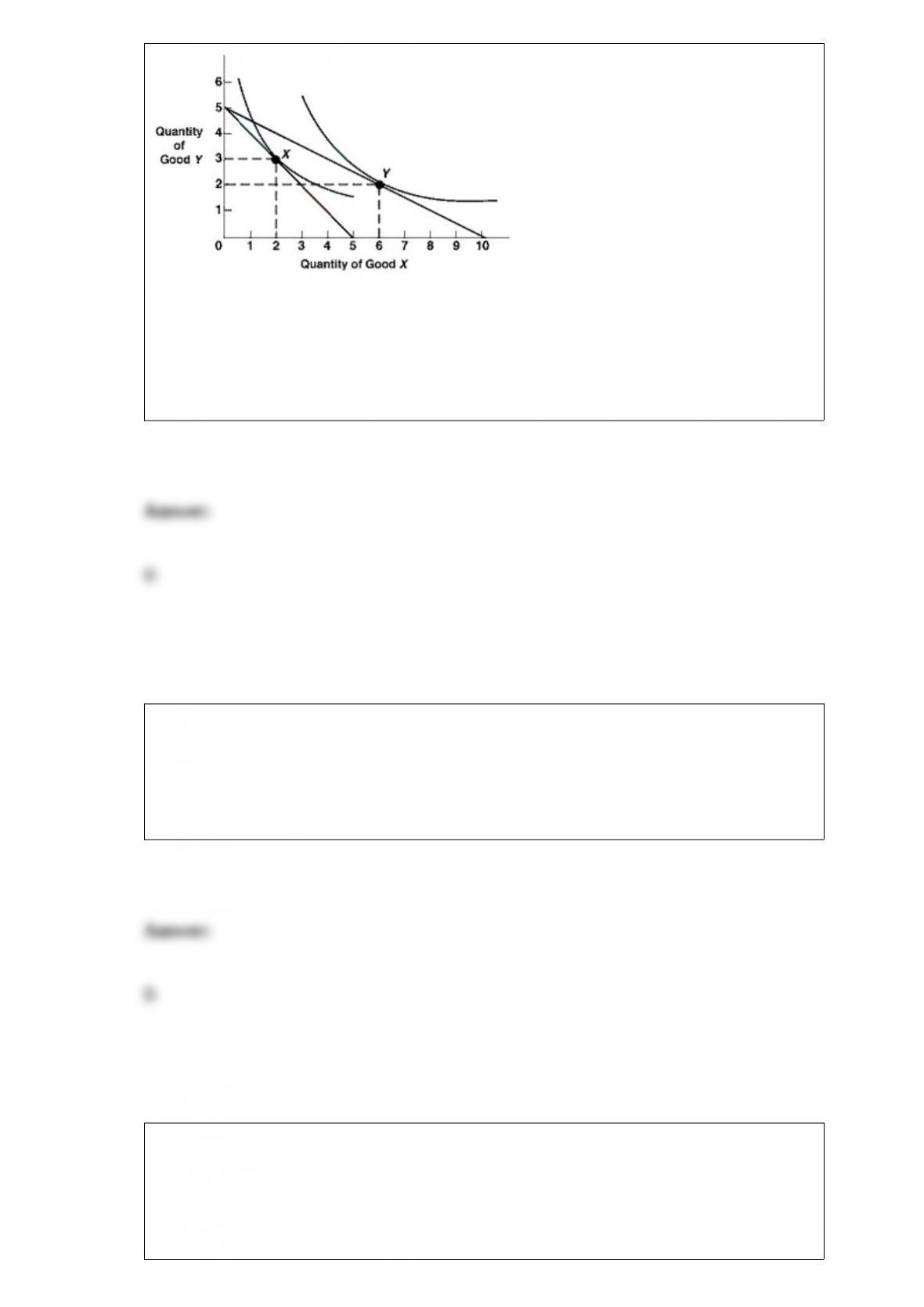
As shown in Exhibit 6A-5, the marginal rate of substitution (MRS) at point X is ____
the marginal rate of substitution at point Y.
a. less than
b. greater than
c. equal to
d. twice
In long-run equilibrium, a competitive firm produces the level of output at which:
a. marginal cost is at a minimum.
b. short-run average total cost and long-run average cost are at a minimum.
c. total revenue is at a maximum.
d. diseconomies of scale end.
Which of the following is true for a monopolist?
a. The firm has a perfectly elastic demand curve.
b. The firm has a perfectly inelastic demand curve.
c. The straight-line demand curve is above the marginal revenue curve.
d. The marginal revenue curve is above the demand curve.
e. All of these.
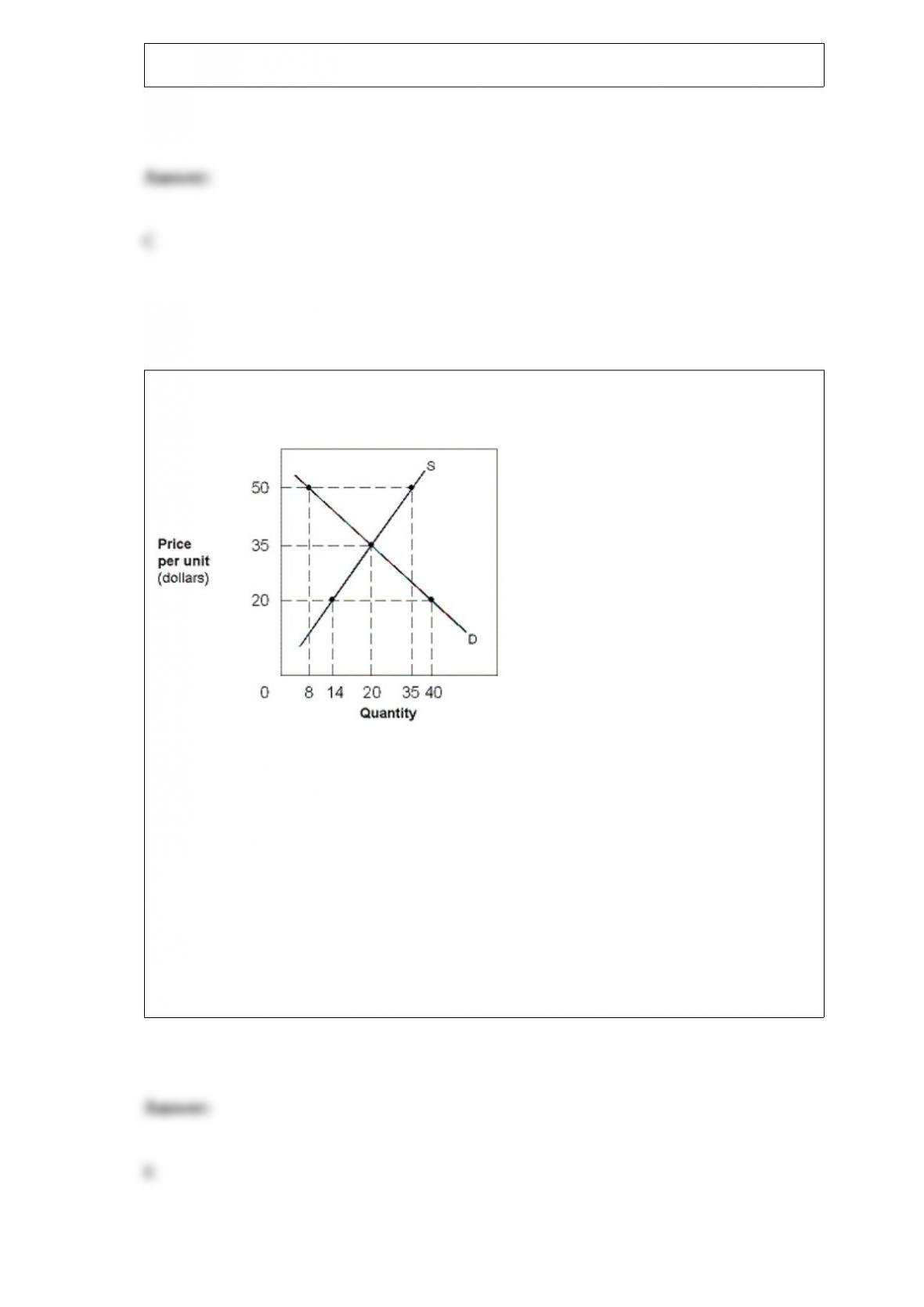
Exhibit 3-9 Demand and supply curves
In Exhibit 3-9, if the market price is $50,
a. this market will be in equilibrium.
b. a shortage of 27 units would result.
c. the price is below the equilibrium price.
d. a surplus of 26 units would result.
e. a surplus of 27 units would result.

Assuming that shoe repair services are an inferior good, an increase in consumer
income, other things being equal, will cause a(n):
a. leftward shift in the demand curve.
b. downward movement along the demand curve.
c. rightward shift in the demand curve.
d. upward movement along the demand curve.
An exclusive contract:
a. makes it illegal to price discriminate.
b. requires a buyer to purchase all products from a specified supplier.
c. requires a buyer not to purchase any requirements from the competitor of a specified
supplier.
d. requires the buyer to purchase a second product as a condition of receiving the one he
wants.
e. requires a seller to market its product within a limited geographic territory.
Which if the following is the best example of a public good?
a. Bread. c. Scrambled satellite broadcasts.
b. Fish in the ocean. d. National defense.

Susan wishes to buy gasoline and have her car washed. She finds that if she buys 9
gallons of gasoline at $1.50 per gallon, the car wash costs $1, but if she buys 10 gallons
of gasoline, the car wash is free. For Susan, the marginal cost of the tenth gallon of
gasoline is:
a. zero. c. $1.
b. 50 cents. d. $1.50.
Which of the following is the correct name of the free-trade agreement between
Mexico, the U.S., and Canada?
a. The American Free Trade Agreement (AFTA).
b. The North American Free Trade Agreement (NAFTA).
c. The Pacific Free Trade Agreement (PFTA).
d. The Trans-American Free Trade Agreement (TAFA).
Entry of new firms will occur in a monopolistic competitive industry until:
a. marginal cost equals zero.
b. marginal revenue equals zero.
c. marginal revenue equals marginal cost.
d. economic profit equals zero.
e. economic profit is negative.
Suppose the quantity demanded is 1,000 million bushels of peaches per year when the
price is $3 per bushel and 1,500 million bushels when the price is $1 per bushel. The
price elasticity of demand in this range of the demand curve is:
a. elastic. c. unitary elastic.
b. inelastic. d. infinitely elastic.
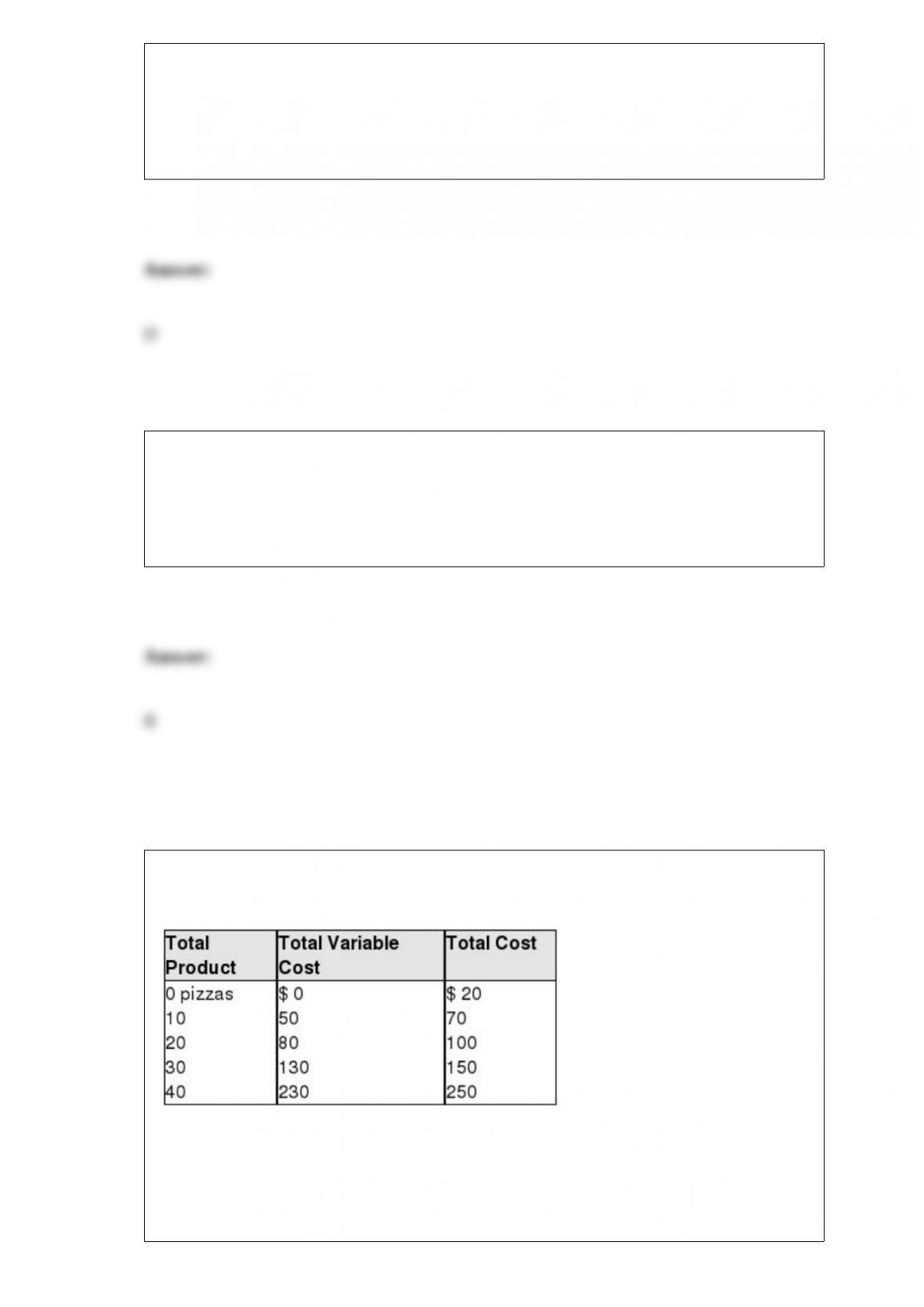
Exhibit 7-11 Short-run cost curves schedule for pizzeria’s hourly production
In Exhibit 7-11, the average total cost or producing 40 pizzas per hour is equal to:
a. $5 per pizza.
b. $5.75 per pizza.
c. $6.25 per pizza.
d. $10 per pizza.

A country that has a lower opportunity cost of producing a good:
a. has a comparative advantage.
b. can produce the good using fewer resources than another country.
c. requires fewer labor hours to produce the good.
d. all of these.
The freedom of consumers to cast their dollar votes to buy, or not to buy, at prices
determined in competitive markets describes:
a. socialism. c. consumer sovereignty.
b. communism. d. the aspirations of Karl Marx.
Which of the following might increase the supply curve of labor?
a. Increasing licensing requirements.
b. Increasing discrimination against females.
c. Increasing discrimination against blacks.
d. All of the above.
e. None of the above.

Which of the following market structures describes an industry in which a group of
firms formally agree to control prices and output of a product?
a. Perfect competition.
b. Monopoly.
c. Oligopoly.
d. Cartel.
e. Monopolistic competition.
The term Ceteris paribus means that:
a. everything is changing.
b. all other things remain unchanged.
c. no one knows which variables will change and which will remain constant.
d. the basic principle of economics do not apply to the case being considered.
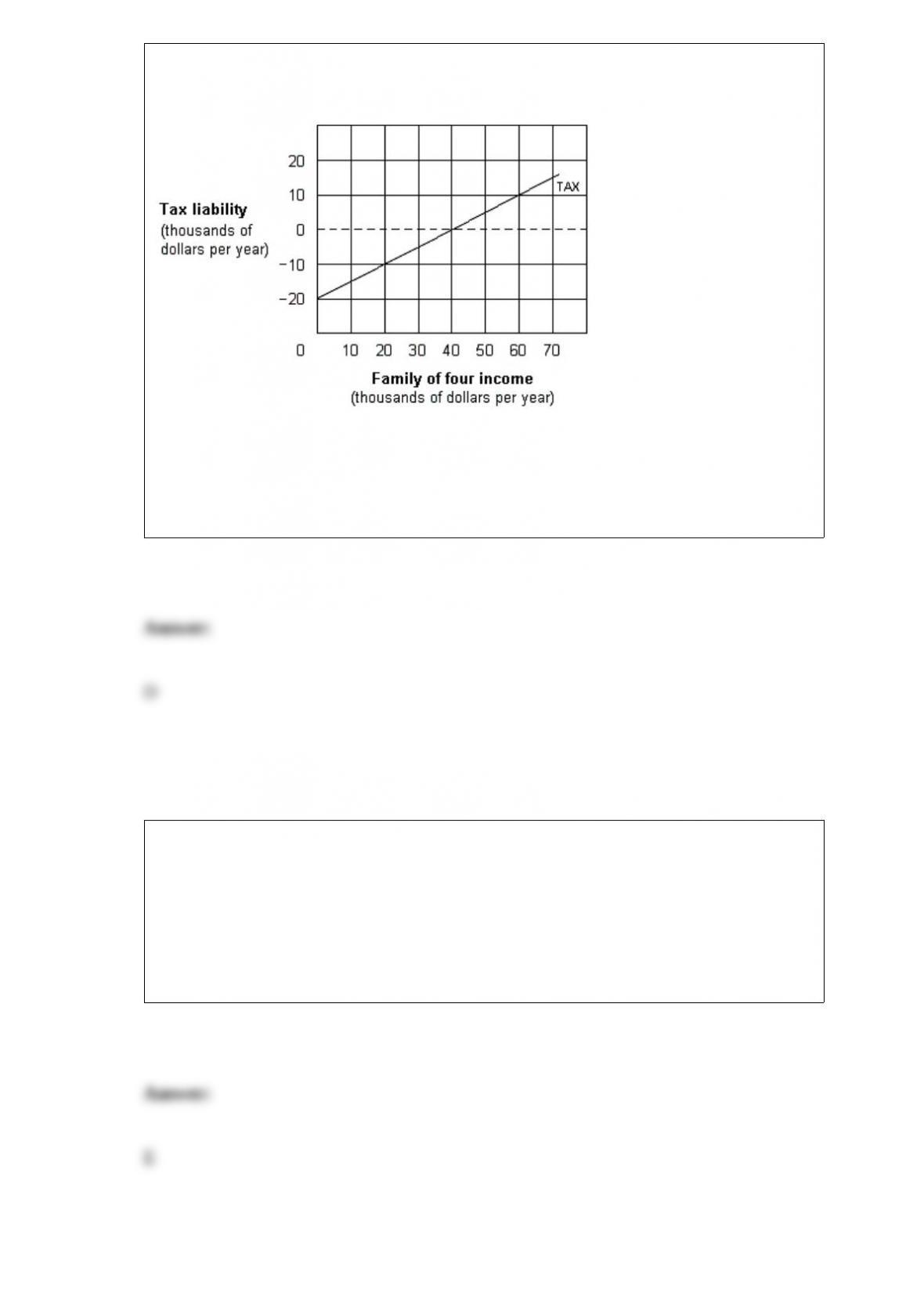
Exhibit 12-7 Negative income tax
As shown in Exhibit 12-7, a family of four pays income taxes at:
a. an income of $5,000.
b. any income between zero and $40,000.
c. all levels of income.
d. any income above $40,000.
The monopolist, unlike the perfectly competitive firm, can continue to earn an
economic profit in the long run because of:
a. collusive agreements with competitors.
b. price leadership.
c. cartels.
d. a dominant firm.
e. extremely high barriers to entry.

An industry in which total costs are kept to a minimum because only one firm serves
the whole market is called a:
a. natural monopoly.
b. competitive monopoly.
c. patent monopoly.
d. limit monopoly.
Which of the following represents a positive statement?
a. A higher income tax rate will reduce the amount of time that people spend working.
b. Teenage unemployment should be reduced.
c. We should raise the standard of living for the elderly.
d. A decrease in tax rates is needed to help the poor.
Negative externalities result in unfair, excessively high prices.
If the cost of producing a good rises for sellers, equilibrium price rises because of a

decrease in demand.
Antitrust laws in other countries are weak in comparison to U.S. antitrust laws.
One reason why we might want to impose restrictions on free trade is to protect infant
domestic industry in the formative stages of development and thus unable to compete
yet on world markets.
When a monopoly price discriminates, it charges the highest price to the group of
buyers with the least elastic demand.

A positive economic statement must be verifiable.