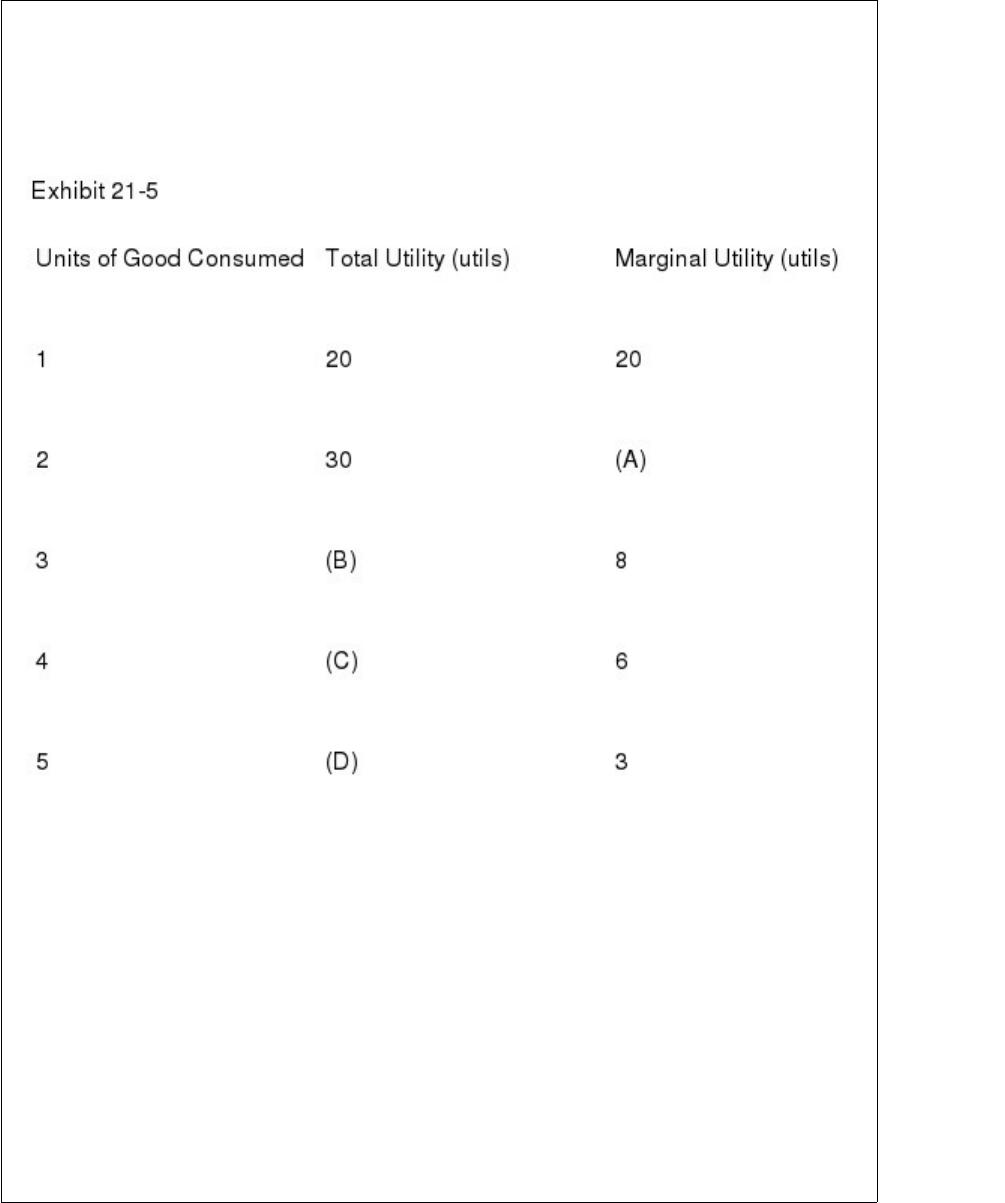
What value goes in blank (B)?
a. 27
b. 38
c. 40
d. 35
e. There is not enough information to answer this question.
Unlike in the 1930’s, farmers today can insure themselves against price swings that
would impact them adversely through the futures market.
a. True
b. False
A firm is considering the purchase of a capital good that will generate an additional
$400 income each year for 4 years (after which time the capital good is useless and has
no scrap value). The interest rate is 3 percent. It follows that the firm should not
purchase the capital good if its price is greater than (approximately)
a. $1,358.
b. $1,487.
c. $1,602.
d. $1,749.
e. $1,233.
Exhibit 31-4
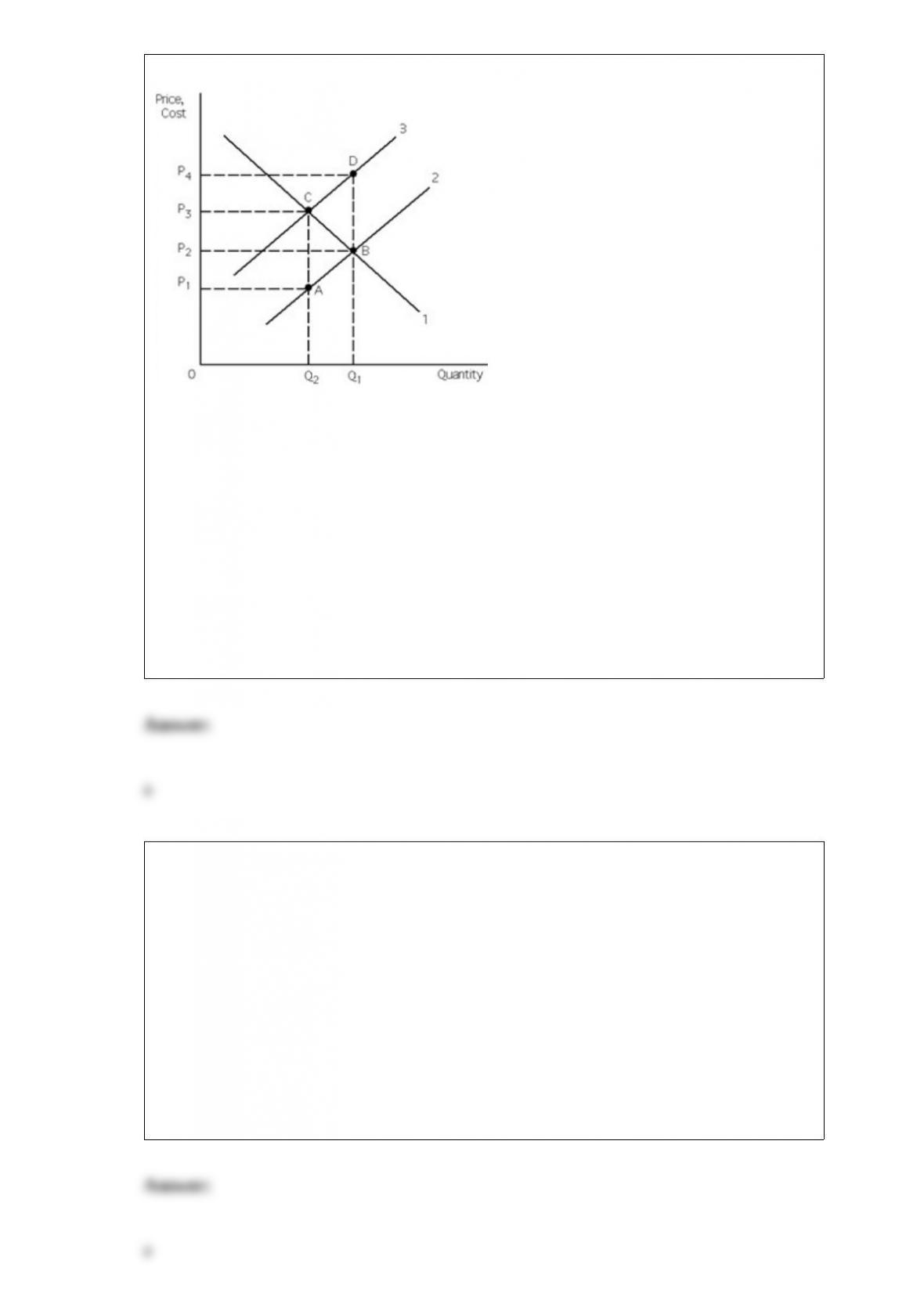
If a negative externality exists, then the external costs associated with the negative
externality equal
a. P3 – P1.
b. P4 – P3.
c. P3 – P2.
d. P2 – P1.
As the dollar price of a foreign currency (for example, dollars per yen) increases,
__________ dollars will be demanded by foreigners, U.S. goods will be __________
expensive for foreigners, __________ U.S. goods will be purchased by foreigners, and
__________ foreign currency will be supplied to the foreign exchange market.
a. more; less; more; more
b. more; less; more; less
c. fewer; more; fewer; less
d. fewer; more; fewer; more

For a product price searcher (such as a monopolist),
a. P > MR, therefore VMP < MRP.
b. P = MR, therefore VMP = MRP.
c. P > MR, therefore VMP > MRP.
d. P < MR, therefore VMP < MRP.
The opportunity cost of attending college
a. consists of the tuition costs only.
b. consists of the tuition costs plus the costs of room and board and other expenses.
c. is zero, if the student receives a scholarship that covers the costs of tuition, room and
board, and other expenses.
d. varies from person to person.
e. both b and c
Exhibit 24-9
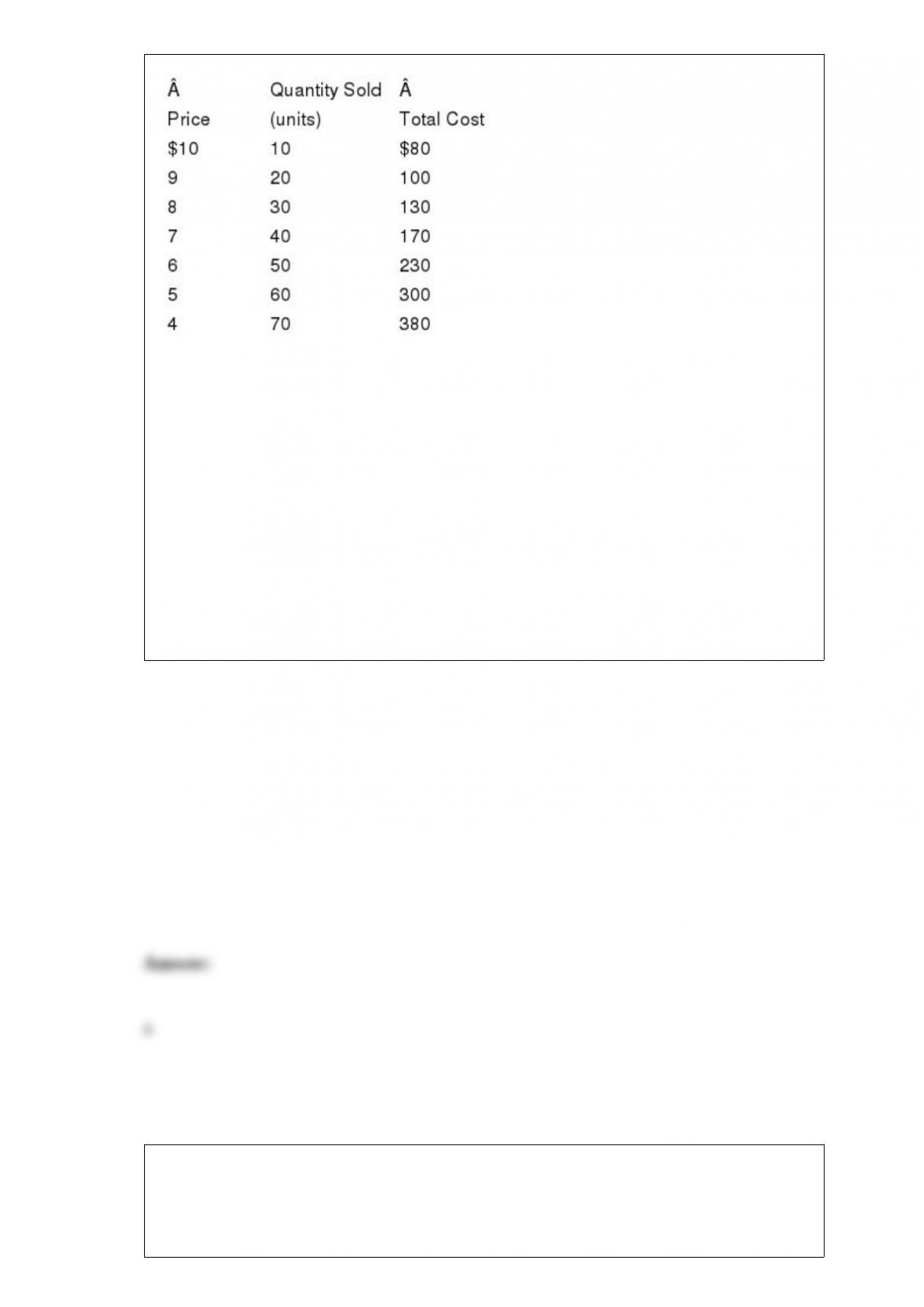
A single-price monopolist earns a total profit of __________ when it produces and sells
20 units of its good.
a. $80.
b. $100.
c. $30.
d. $61.
e. $49.
This is the solution to the diamond-water paradox: Those things that have high value in
use sometimes have low prices because they are consumed at low __________ utility;
those things that have low value in use sometimes have high prices because they are
consumed at high __________utility.

a. marginal; total
b. total; total
c. total; marginal
d. marginal; marginal
e. none of the above
Which of the following statements is false?
a. A change in the price of good X will usually change the quantity supplied of good X,
ceteris paribus.
b. A change in the number of sellers of a good can change the supply of that good.
c. Price and quantity supplied are directly related.
d. A vertical supply curve represents a direct relationship between price and quantity
supplied.
Suppose a bank makes a $1,000 loan to you at 5 percent interest when the expected and
actual inflation rate are zero percent. Before you pay back the $1,000 principal and $50
interest, the inflation rate increases to 10 percent. Does anyone lose from this situation?
a. Nobody loses, because the terms were set before the inflation rate increased, and
once the terms are set, inflation does not affect the situation.
b. You lose, because the dollars that you have borrowed are worth more the higher the
inflation rate.
c. The banker loses, because you will be paying back the loan with dollars that are
worth less than the dollars you borrowed.
d. Both the banker and you lose, for the reasons in answers b and c.

e. There is not enough information to answer the question.