
If a tripling of price triples the quantity of a good supplied, the price elasticity of supply
is
a. 3
b. 300
c. 1
d. -1
e. -3
If a perfectly competitive firm’s marginal revenue is $35,
a. the next unit sold will earn the firm less than $35 in revenue
b. the next unit sold will earn the firm more than $35 in revenue
c. the next unit sold will earn no more revenue
d. its average revenue is $35
e. its demand curve will shift if more units are sold
An example of a moral hazard would be Andrew leaving the washer, dryer, and
dishwasher running at home while he goes to class since he is fully insured and he will
not be at risk if a fire occurs.
a. True

b. False
In 2011, middle-income economies with almost three-fourths of the world’s population
produced less than one-quarter of the worlds output.
a. True
b. False
A leftward shift of the Japanese demand curve for foreign exchange will
a. increase the price of foreign exchange in Japan
b. decrease the value of the yen
c. make foreign goods more expensive in terms of yen
d. make foreign goods less expensive in terms of yen
e. make Japanese goods less expensive in terms of foreign exchange
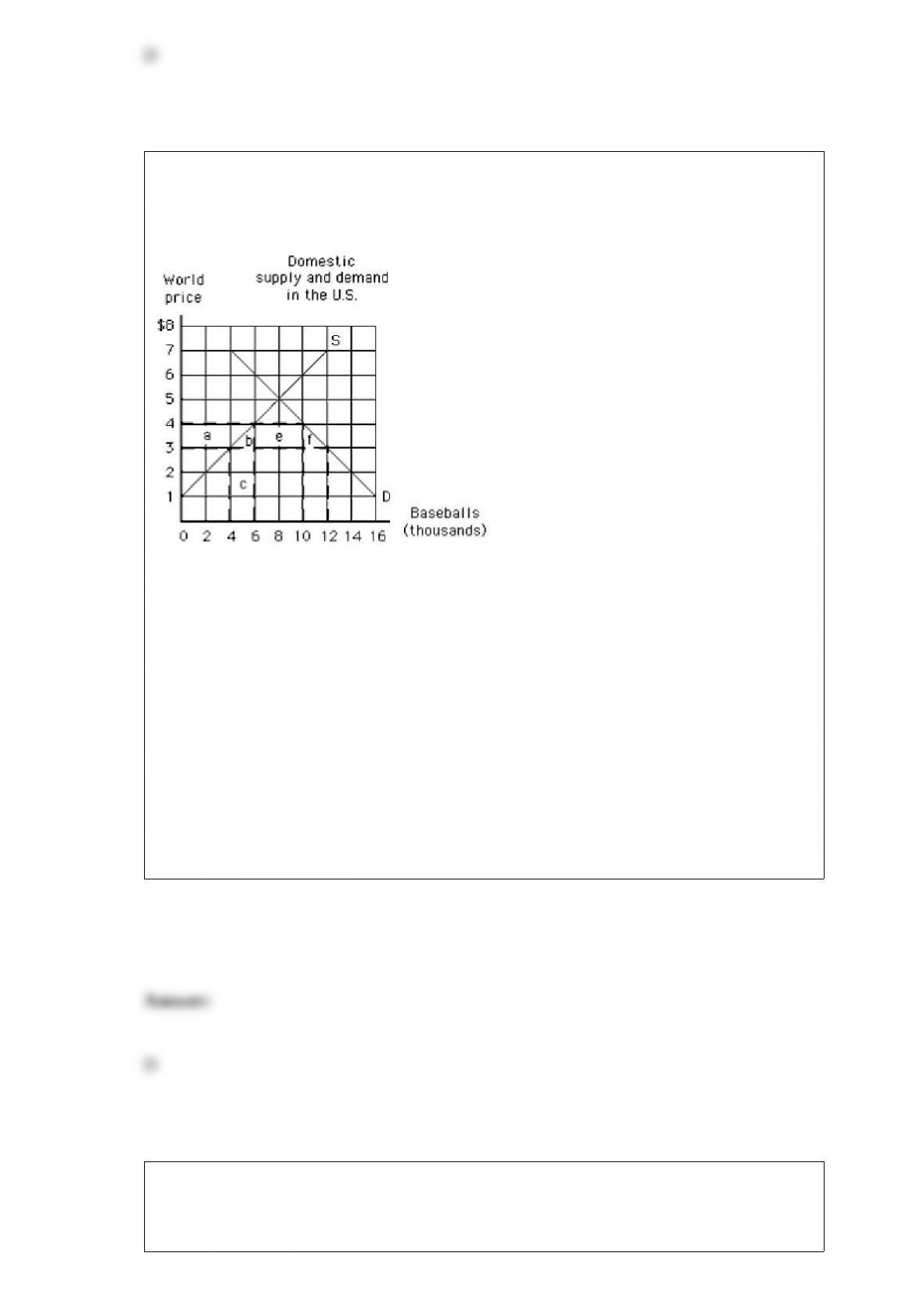
Exhibit 19-6
In Exhibit 19-6, if the world price of a baseball is $3 and a tariff of $1 per baseball is
imposed in the United States, which area represents the amount of tariff revenue the
United States government collects?
a. a
b. b
c. c
d. f
e. e
What kind of garbage tends to be recycled in the United States?
a. hazardous materials that must be transformed chemically into less dangerous

substances
b. biodegradable materials
c. foodstuffs
d. aluminum, paper, and other materials that have high commercial value
e. appliances that can be salvaged from dumps and repaired
Untreated raw sewage is dumped directly into rivers and oceans
a. only in less-developed economies
b. only in rural areas
c. only in urban areas
d. in every large city in the United States
e. in some of the largest U.S. cities
Which of the following statements would be represented by a backward-bending labor
supply curve?
a. A $50,000-a-year professor works more hours than a $20,000-a-year professor.

b. The CEO of a major computer manufacturer works more hours than the union
workers.
c. The owners of a successful business work fewer days than do their employees.
d. Hospital janitors work fewer hours than does the chief of obstetrics.
e. High-ranking executives are more likely to work past 5:00 p.m. than are middle
managers.
From the U.S. perspective, a drop in the price of foreign exchange means that
a. fewer U.S. dollars are needed to purchase foreign currency
b. more U.S. dollars are needed to purchase foreign currency
c. worldwide, imports will become more expensive
d. worldwide, exports will become cheaper
e. transaction costs on international markets will decrease
Exhibit 11-2

In Exhibit 11-2, which unit of the resource is earning the least economic rent?
a. the fifth
b. the tenth
c. the fifteenth
d. the twentieth
e. they are all earning the same economic rent
A monopoly or group of firms acting together as a monopoly
a. cannot perform the economic task of resource allocation
b. allocates resources in the most efficient way possible
c. misallocates resources by producing more output than a competitive industry would
d. misallocates resources by producing where the marginal benefit of the final unit
produced exceeds its marginal cost
e. misallocates resources by producing where the marginal benefit of the final unit
produced is less than its marginal cost
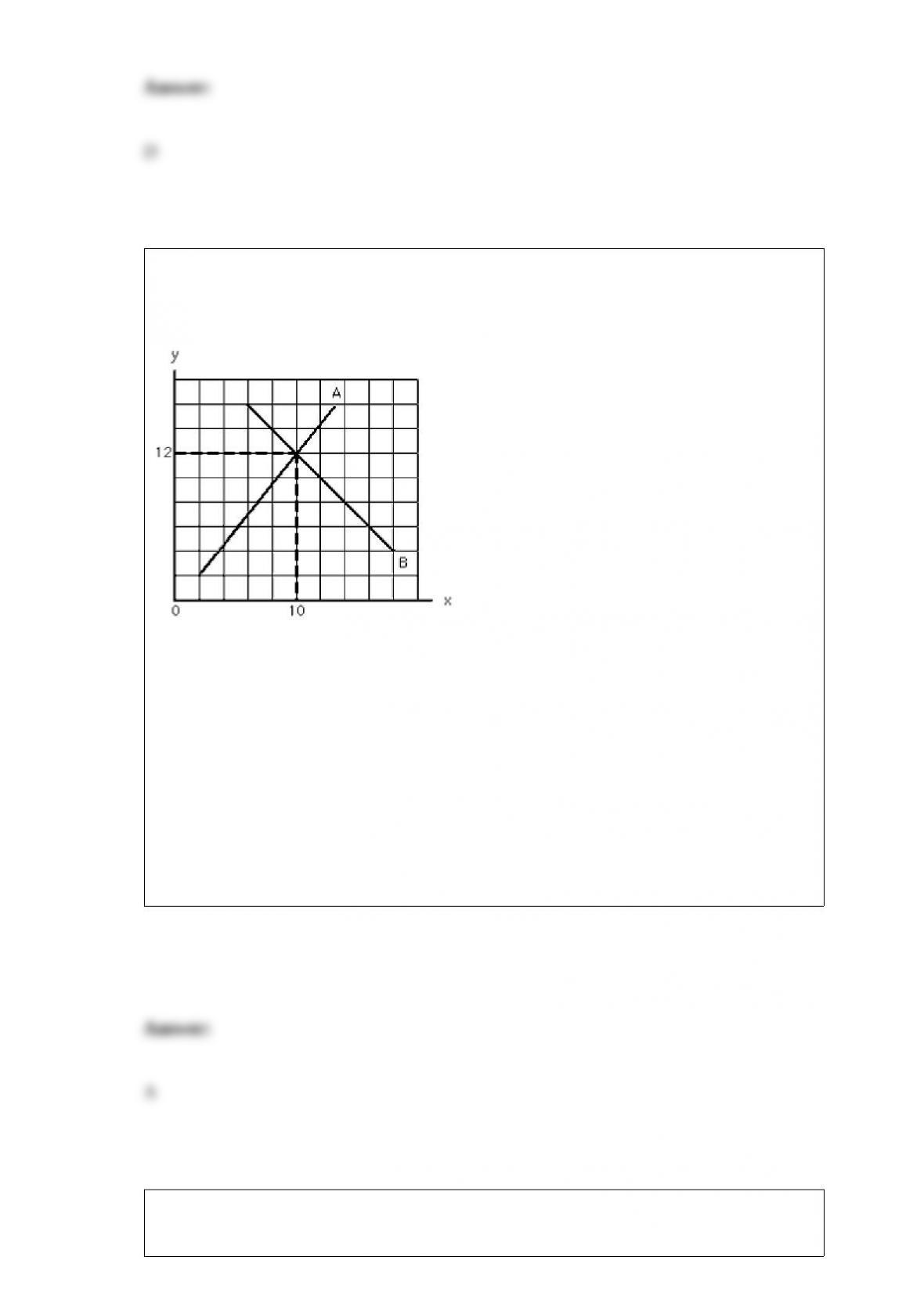
Exhibit 1-2
In Exhibit 1-2, at y = 14, the
a. value of x is larger on curve A than on curve B
b. value of x is smaller on curve A than on curve B
c. value of x is the same on curve A as on curve B
d. slope of line A is negative
e. slope of line B is positive
The Agricultural Marketing Act of 1937 was supposed to encourage competition among
farmers.

a. True
b. False
If the annual interest rate is 5 percent,
a. $100 saved today will be worth $105 after one year
b. $90 saved today will be worth $100 after one year
c. $100 saved today will be worth $5 after one year
d. $99 saved today will be worth $100 after one year
e. $100 saved today will be worth $1,000 after one year