
The opportunity cost of an economic decision is:
a. the best alternative that was sacrificed.
b. the amount of money needed to implement the decision.
c. any land, labor, and capital that are wasted.
d. all options that were lost due to scarcity.
Microeconomics approaches the study of economics from the viewpoint of:
a. inflation, unemployment, and economic growth.
b. the federal government.
c. individual economic units, such as consumers, firms, and units of government.
d. the economy as a whole.
Exhibit 13-2 Public utility monopolist
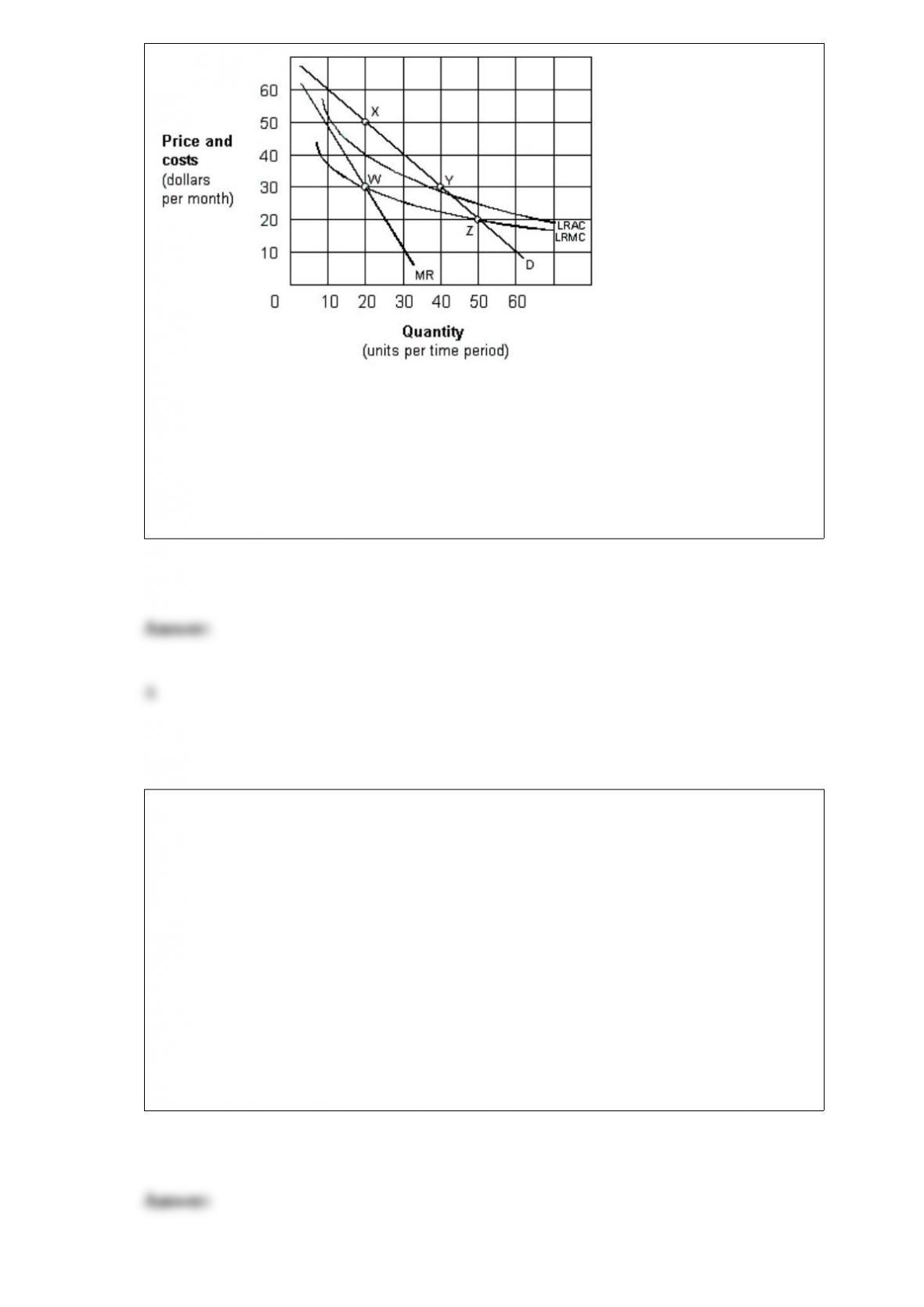
As shown in Exhibit 13-2, if the monopolist is allowed to maximize profits, it will
operate at point:
a. X. c. Z.
b. Y. d. None of these.
To grow and prosper, less-developed countries must not:
a. invest in human capital.
b. build a strong infrastructure.
c. shift resources out of the production of consumer goods and into the production of
capital goods.
d. shift resources out of the production of capital goods and into the production of
consumer goods
e. improve the quality of the water supply
A quota is a:
a. tax on a specific quantity of imported goods.
b. limited number of foreign firms that can sell imported goods.
c. restrictive health and safety standard that raises costs.
d. tax on domestic producers so that they can make higher profits.
e. limit on the quantity of a good that can be imported.
A technological improvement in producing good A would be a shift in the:
a. supply curve for A to the right. c. demand curve for A to the right.
b. supply curve for A to the left. d. demand curve for A to the left.
Deadweight loss results from:
a. equilibrium.
b. underproduction.
c. overproduction.
d. none of the above are correct.
e. Either b or c.
To maximize social welfare in the presence of a negative externality, marginal ____
must equal marginal ____.
a. social cost; private cost c. social cost; social benefit
b. private cost; social cost d. private cost; social benefit
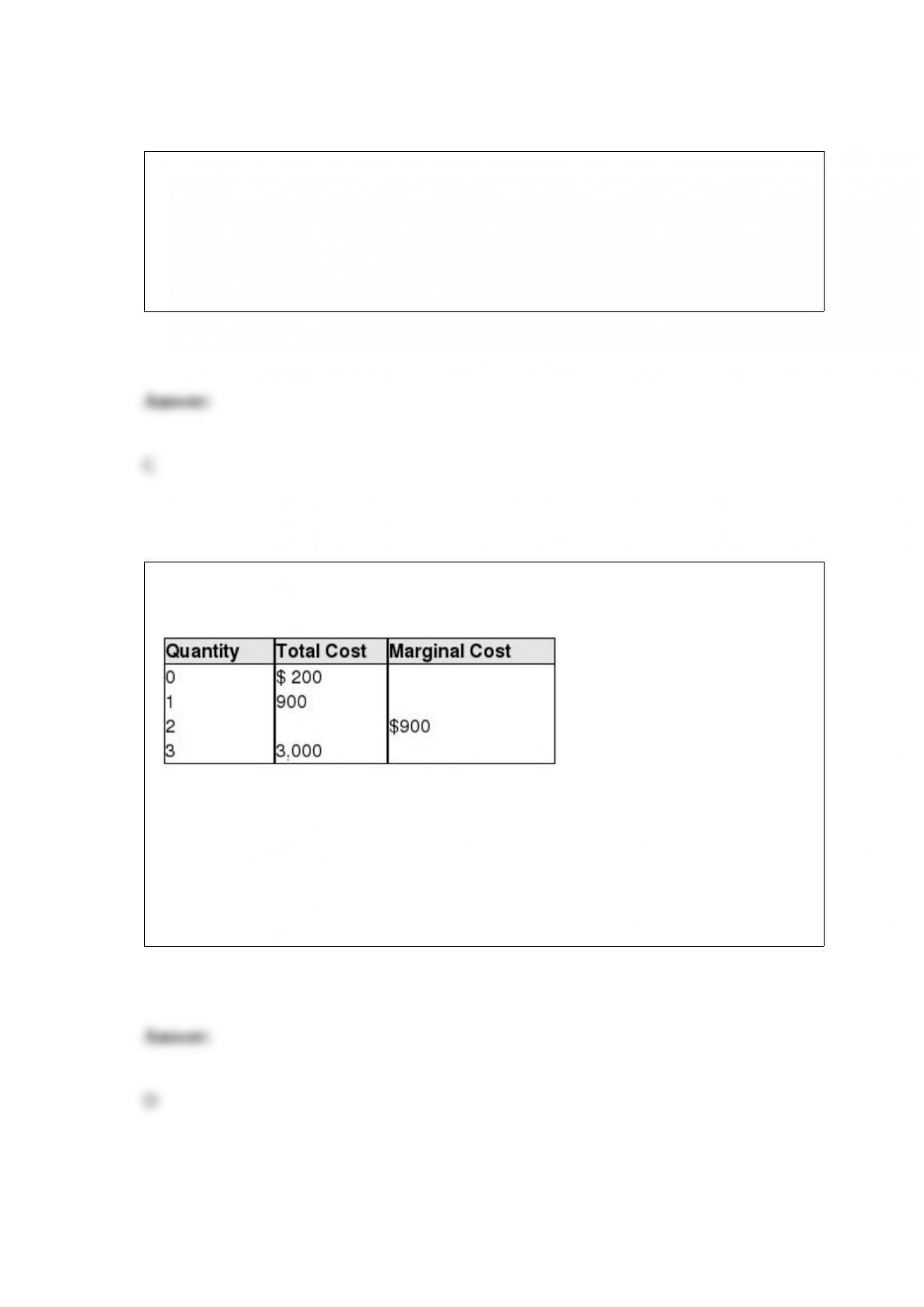
Exhibit 7-7 Cost schedule for a firm
In Exhibit 7-7, by filling in the blanks, it can be determined that the marginal cost of the
third unit of output is:
a. 0.
b. 200.
c. 700.
d. 1,200.
e. 2,000.

Which of the following statements is true of a market?
a. An increase in demand, with no change in supply, will increase the equilibrium price
and quantity.
b. An increase in supply, with no change in demand, will decrease the equilibrium price
and the equilibrium quantity.
c. A decrease in supply, with no change in demand, will decrease the equilibrium price
and increase the equilibrium quantity.
d. All of these.
The former Soviet Union was known for black markets. An explanation for the
existence of these illegal markets is that:
a. goods were not subject to price controls.
b. the government imposed a price ceiling below the equilibrium price.
c. the government imposed a price ceiling above the equilibrium price.
d. all of these.
Which of the following is the best example of a quota?
a. a tax placed on all small cars sold in the domestic market
b. a limit imposed on the number of men’s suits that can be imported from a foreign
country
c. a subsidy from the U.S. government to domestic manufacturers of men’s suits so they
can compete more effectively with foreign producers of men’s suits
d. a $100-per-car fee imposed on all small imported cars
If a straight-line demand curve slopes down, price elasticity will:
a. remain the same at all points on the demand curve.
b. change between any two points along the demand curve.
c. always be greater than one.
d. always equal one.
e. always be less than one.
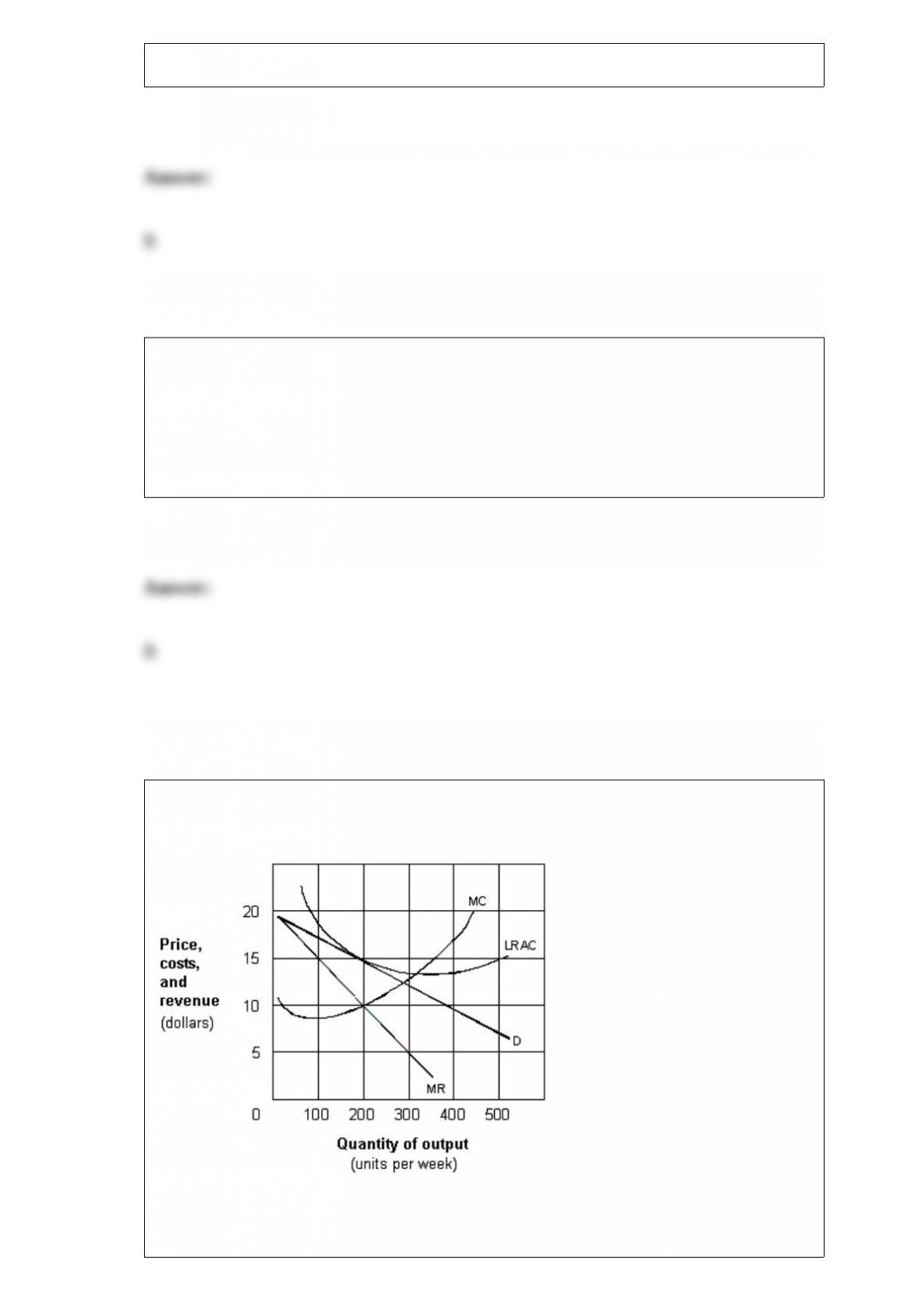
Exhibit 10-2 A monopolistic competitive firm
To maximize long-run profits, the monopolistically competitive firm shown in Exhibit
10-2 will charge a price per unit of:

a. zero.
b. $5.
c. $10.
d. $15.
e. $20.
Which of the following would not be counted in the U.S. BOP current account?
a. Helen, an American oil engineer, is a paid adviser to Middle Eastern countries in the
area of petroleum extraction.
b. General Motors Corporation owns buildings that are situated in Mexico.
c. France purchases a new jet fighter aircraft from the Boeing Company in the U.S.
d. Martha receives a $50 dividend check on stock she owns in a business in Germany.
e. A wealthy Italian purchases numerous antiques in the United States for his villa.
The government’s court case against Microsoft is an example of:
a. predatory pricing. c. economic regulation.
b. antitrust enforcement. d. the regulatory dilemma.

Under perfect competition, a firm is a price taker because:
a. setting a price higher than the going price results in profits.
b. each firm’s product is perceived as different.
c. each firm has a significant market share.
d. setting a price higher than the going price results in zero sales.
If total utility is falling, marginal utility is:
a. positive.
b. negative
c. positive, but declining.
d. either positive or negative.
e. zero.
Exhibit 4-5 Supply and demand curves for computers
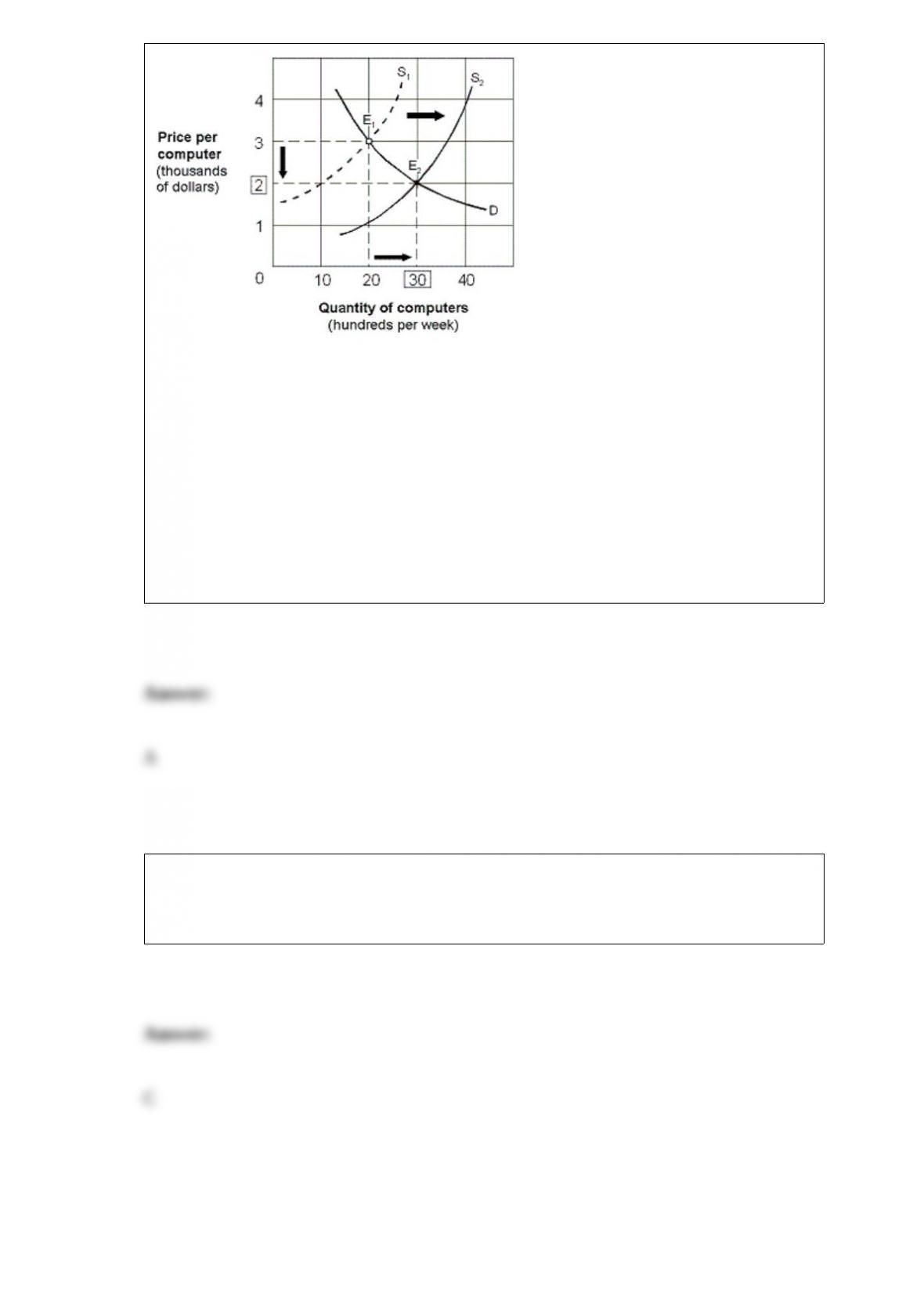
Which of the following changes could cause the computer market to change as shown
in Exhibit 4-5?
a. Lower costs for computer chips and motherboards.
b. The failure of several computer manufacturers.
c. Higher prices for computer software.
d. More features and greater ease of use.
If the price of coffee decreases, the demand curve for tea (a substitute good) will:
a. remain unchanged. c. shift to the left.
b. shift to the right. d. do none of these

An increase in the expected future price of a good will cause the current demand for the
good to:
a. decrease, which is a shift to the left of the demand curve.
b. decrease, which is a shift to the right of the demand curve.
c. increase, which is a shift to the left of the demand curve.
d. increase, which is a shift to the right of the demand curve.
If the supply of a good decreased, what would be the effect on the equilibrium price and
quantity?
a. Price would increase, and quantity would decrease.
b. Price would decrease, and quantity would decrease.
c. Price would increase, and quantity would increase.
d. Price would decrease, and quantity would increase.