1) According to international comparisons, which nation had the highest hourly wages
in U.S. dollar terms in 2006?
A.United States
B.Germany
C.Denmark
D.Sweden
2) (consider this) the assertion by economists that “there is no free lunch” is:
a.contradicted by the presence of free goods offered by firms.
b.applies to goods that have prices, not to goods given away free by firms.
c.remains true even for goods given away free by firms.
d.applies to agricultural goods, but not to manufactured goods.
3) if consumer incomes increase, the demand for product x:
a.will necessarily remain unchanged.
b.may shift either to the right or left.
c.will necessarily shift to the right.
d.will necessarily shift to the left.
4) Which of the following did not contribute to the large Federal budget deficits in 2002
and 2003?
A.spending on the wars in Afghanistan and Iraq.
B.low interest rates.
C.Federal tax cuts.
D.the recession of 2001 and its aftermath.
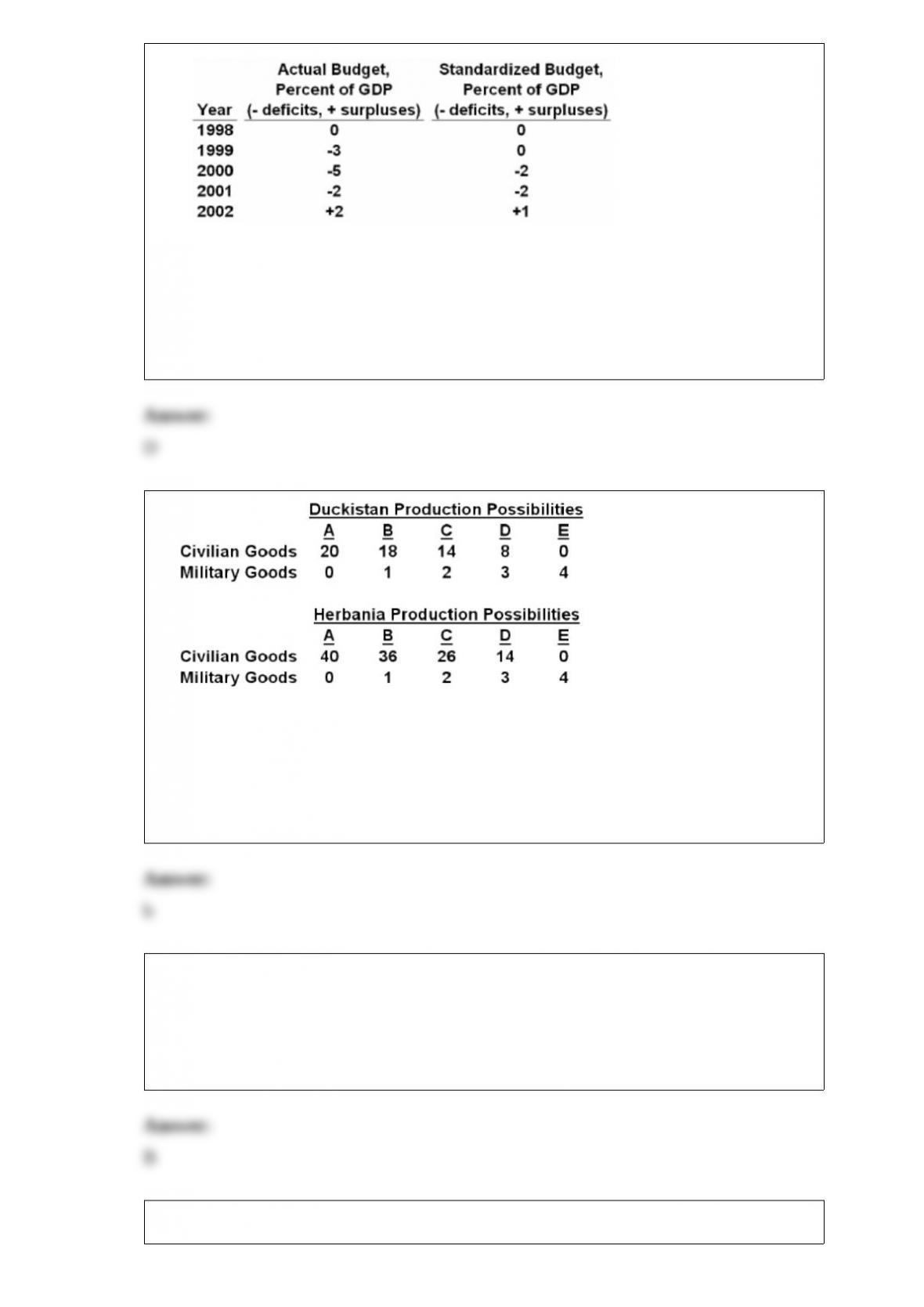
5)
Refer to the above table for a fictional economy. The changes in the budget conditions
between 2001 and 2002 best reflect a(n):
A.recession.
B.expansionary fiscal policy.
C.tax increase.
D.contractionary fiscal policy.
6)
refer to the above tables. suppose that technology and the quality of resources are the
same in both countries. we can conclude that:
a.duckistan has more resources than herbania.
b.herbania has more resources than duckistan.
c.duckistan has greater opportunity costs than herbania.
d.prices are twice as high in herbania as in duckistan.
7) Infrastructure is best illustrated by:
A.farm equipment.
B.school buildings and highways.
C.machinery and equipment for the production of consumer goods.
D.government tax revenues.
8) answer the next question(s) on the basis of the following information: only three

goods are produced in an economy in the following amounts: a = 10, b = 30, c = 5. the
current year per unit prices of these three goods are a = $2, b = $3, and c = $1.
(advanced analysis) refer to the above information. if the per unit prices of the three
goods each were $1 in a base year used to construct a gdp price index, then real gdp in
the current year is:
a.$110.
b.$115.
c.$45.
d.$160.
9) If the Federal Reserve authorities were attempting to reduce demand-pull inflation,
the proper policies would be to:
A.sell government securities, raise reserve requirements, raise the discount rate, and
reduce the amount of reserves available through the term auction facility.
B.buy government securities, raise reserve requirements, raise the discount rate, and
reduce the amount of reserves available through the term auction facility.
C.sell government securities, lower reserve requirements, lower the discount rate, and
increase the amount of reserves available through the term auction facility.
D.sell government securities, raise reserve requirements, lower the discount rate, and
increase the amount of reserves available through the term auction facility.
10) when total product is increasing at a decreasing rate, marginal product is:
a.positive and increasing.
b.positive and decreasing.
c.constant.
d.negative.
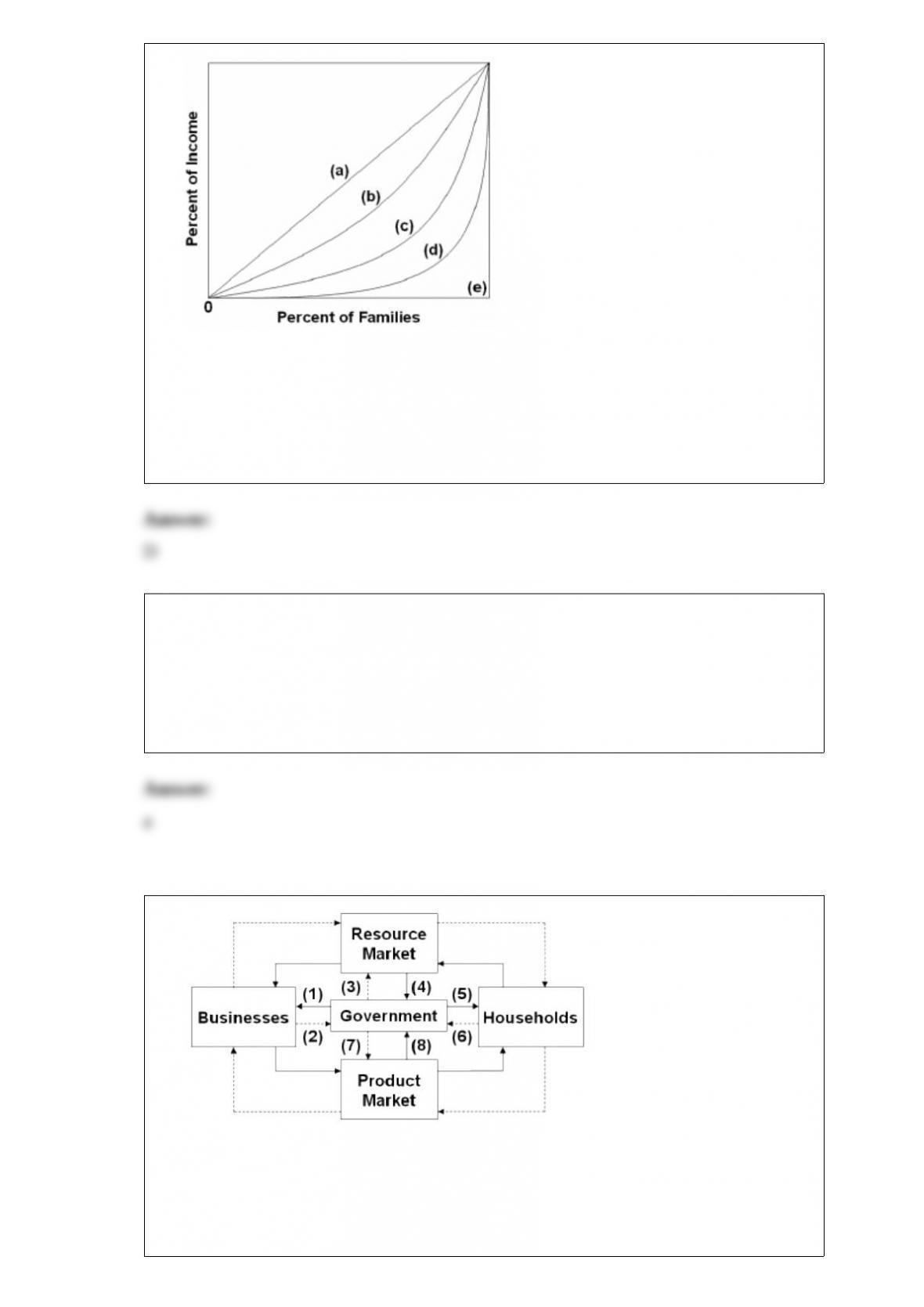
11)
Refer to the above diagram where curves (a) through (e) are for five different countries.
Of the countries listed below, income is most unequally distributed in country:
A.a.
B.b.
C.c.
D.d.
12) the relationship between the size of the negative gdp gap and the unemployment
rate is:
a.direct.
b.inverse.
c.undefined.
d. direct during recession, but inverse during expansion.
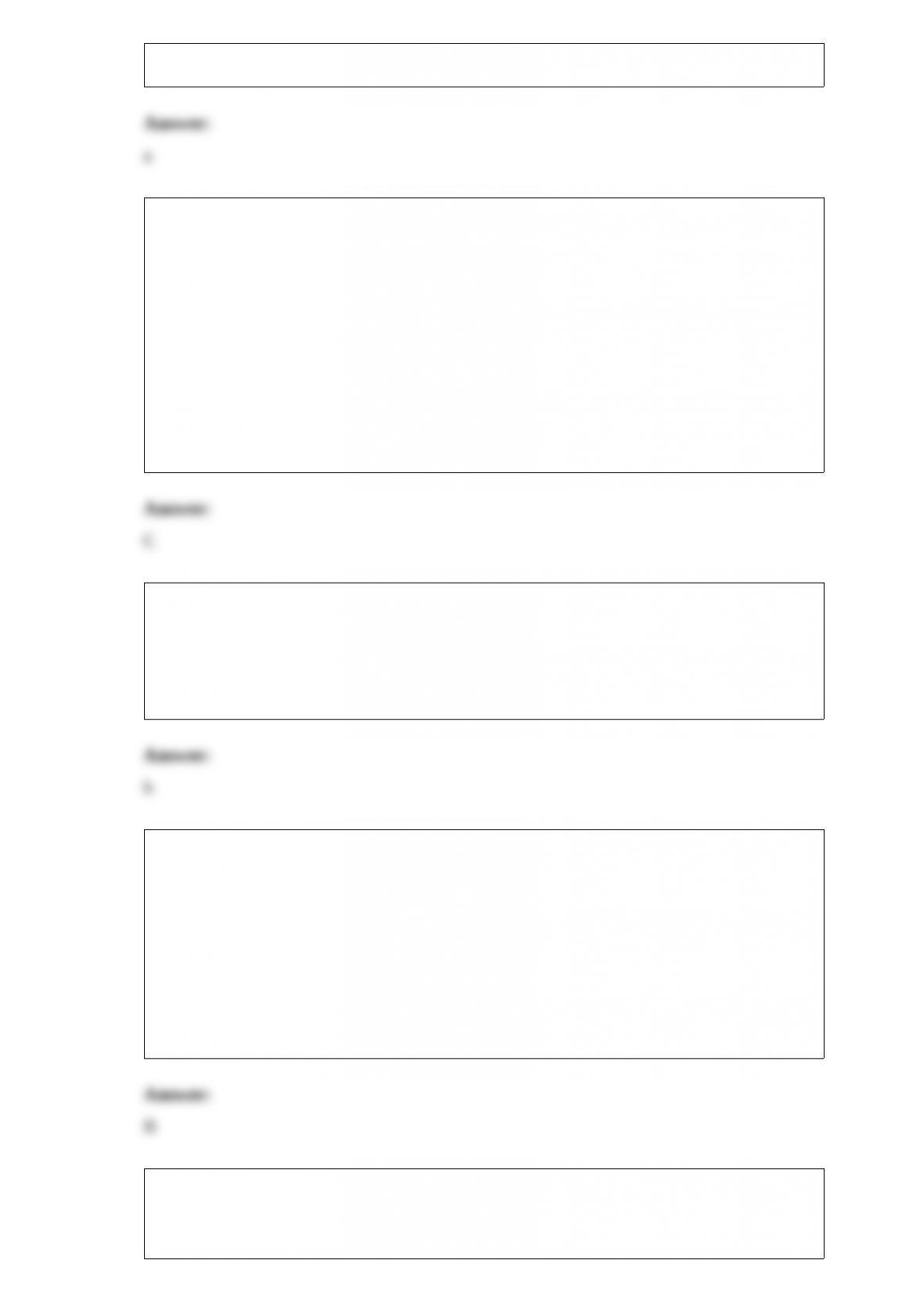
13)
refer to the above diagram, in which solid arrows reflect real flows; broken arrows are
monetary flows. flow (6) might represent:
a.the payment of payroll taxes by households.
b.corporate income tax payments.
c.the purchase of basketballs by the ogallala school district.
d.the purchase of armored personnel vehicles by government.
14) Which of the following statements best describes the twelve Federal Reserve
Banks?
A.They are privately owned and privately controlled central banks whose basic goal is
to provide an ample and orderly market for U.S. Treasury securities.
B.They are privately owned and publicly controlled central banks whose basic function
is to minimize the risks in commercial banking in order to make it a reasonably
profitable industry.
C.They are privately owned and publicly controlled central banks whose basic goal is to
control the money supply and interest rates in promoting the general economic welfare.
D.They are privately owned and publicly controlled central banks whose basic goal is
to earn profits for their owners.
15) the average tax rate is:
a.change in taxes / change in taxable income.
b.total taxes / total taxable income.
c.the sum of the marginal tax rate and the rate of transfer payments.
d.the tax on incremental income less the tax on total income.
16) When a check is drawn and cleared, the
A.reserves and deposits of both the bank against which the check is cleared and the
bank receiving the check are unchanged by this transaction.
B.bank against which the check is cleared loses reserves and deposits equal to the
amount of the check.
C.bank receiving the check loses reserves and deposits equal to the amount of the
check.
D.bank against which the check is cleared acquires reserves and deposits equal to the
amount of the check.
17) Commercial banks and thrift institutions:
A.differ because thrifts cannot make loans.
B.differ because thrifts cannot offer checkable deposits.
C.have become less similar in recent years.
D.have become increasingly similar in recent years.
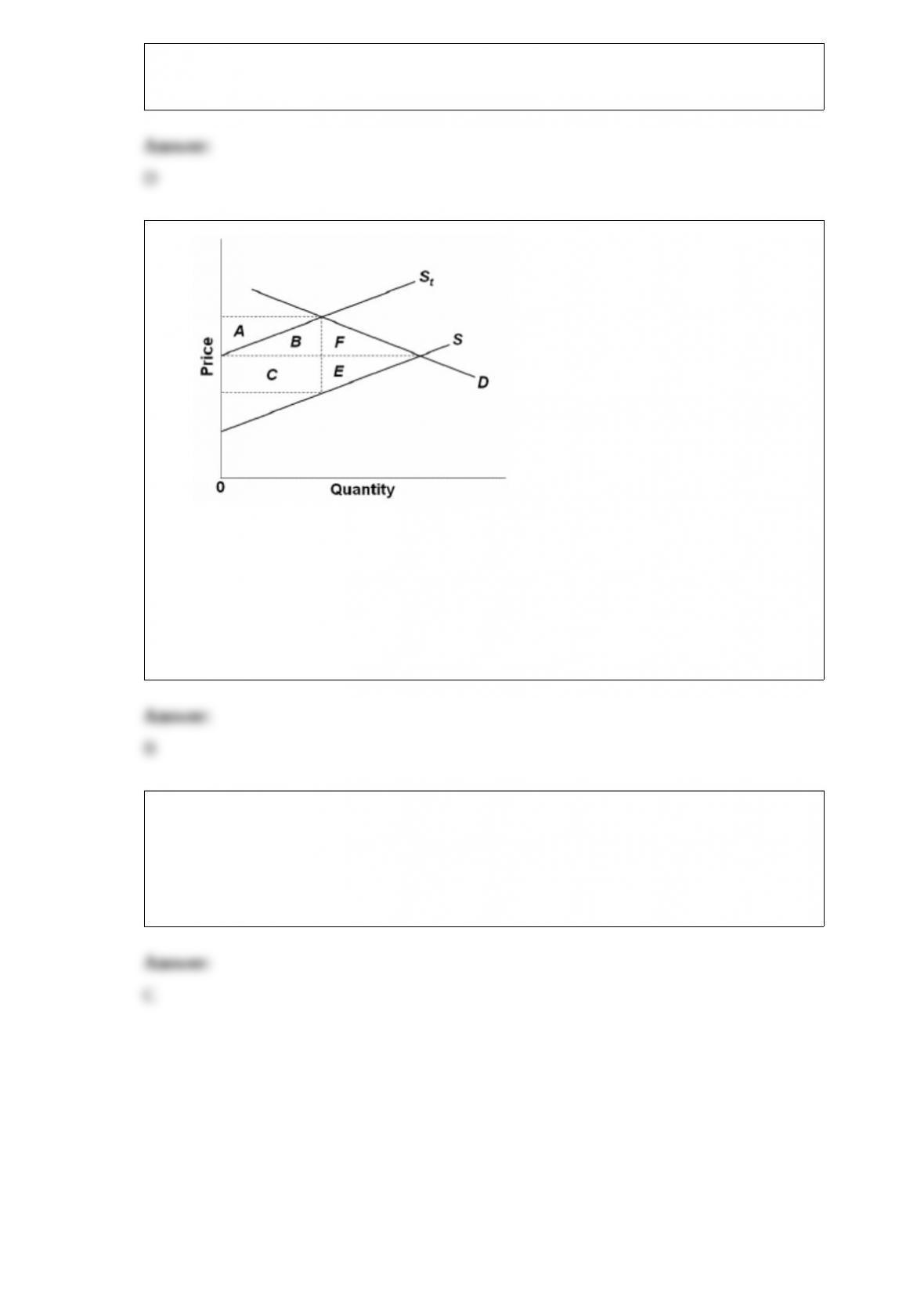
18)
Refer to the above diagram in which S is the before-tax supply curve and St is the
supply curve after an excise tax is imposed. The total amount of the tax paid by
consumers is shown by area(s):
A.A + B + F.
B.A + B.
C.A + B + C.
D.E + F.
19) Checkable deposits are:
A.included in M1 but not in M2.
B.considered to be a near-money.
C.included in M1 and in M2.
D.also called time deposits.