1) if the economy adds to its inventory of goods during some year:
a.gross investment will exceed net investment by the amount of the inventory increase.
b.this amount should be ignored in calculating that year’s gdp.
c.this amount should be subtracted in calculating that year’s gdp.
d.this amount should be included in calculating that year’s gdp.
2)
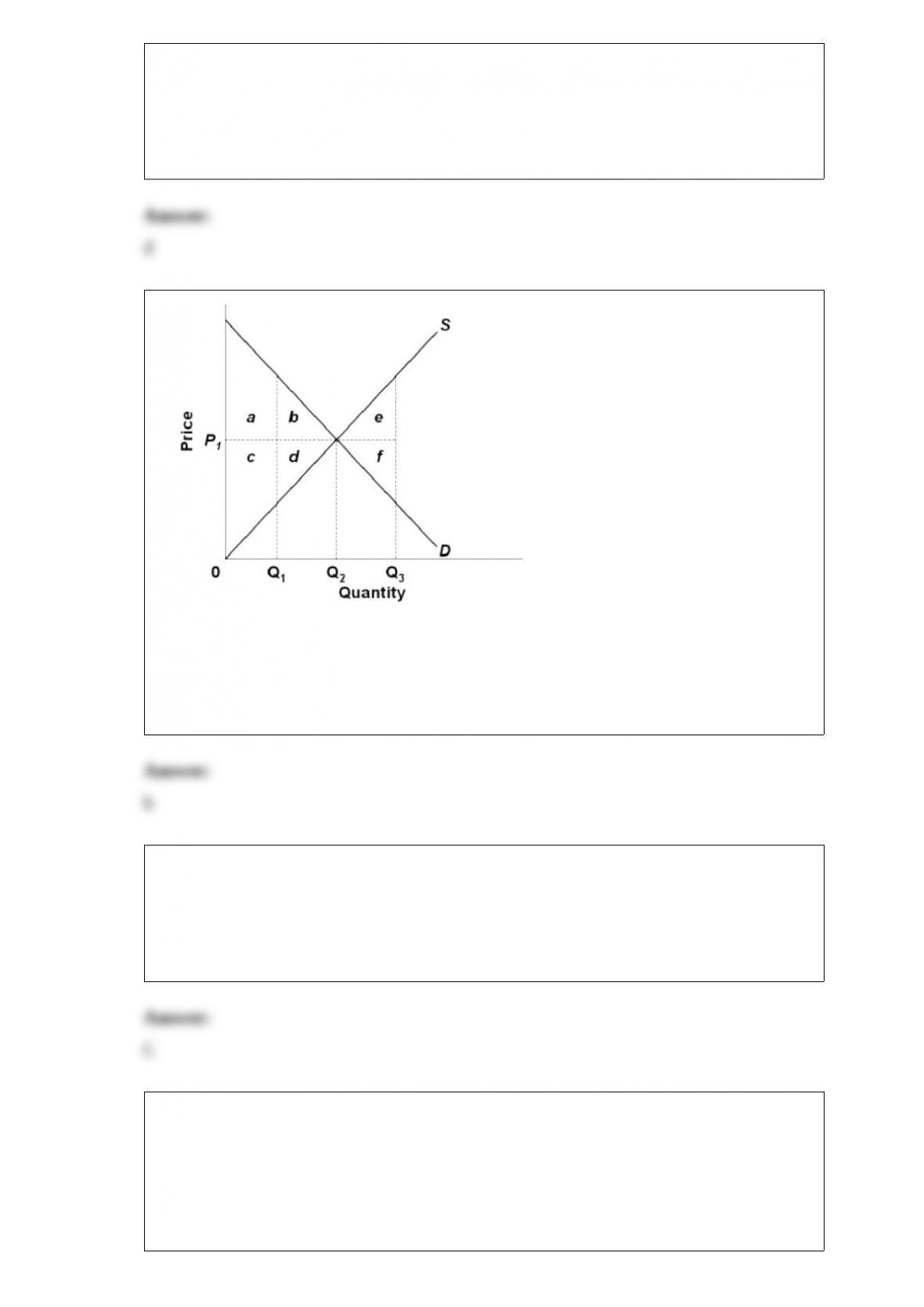
refer to the above diagram. at quantity q2:
a.maximum willingness to pay exceeds minimum acceptable price.
b.the sum of consumer and producer surplus is maximized.
c.minimum acceptable price exceeds maximum willingness to pay.
d.an efficiency loss (or deadweight loss) of b + d occurs.
3) If population is expanding at the same rate as real output:
A.real per capita output will increase.
B.real per capita output will decrease.
C.real per capita output will remain unchanged.
D.living standards will increase.
4) which of the following statements concerning the relationships between total product
(tp), average product (ap), and marginal product (mp) is not correct?
a.ap continues to rise so long as tp is rising.
b.ap reaches a maximum before tp reaches a maximum.
c.tp reaches a maximum when the mp of the variable input becomes zero.
d.mp cuts ap at the maximum ap.

5) the production possibilities curve tells us:
a.the specific combination of two products that is most desired by society.
b.that costs do not change as society varies its output.
c.costs are irrelevant in a society that has fixed resources.
d.the combinations of two goods that can be produced with society’s available
resources.
6) if products a and b are complements and the price of b decreases the:
a.demand curves for both a and b will shift to the left.
b.amount of b purchased will increase, but the demand curve for a will not shift.
c.demand for a will increase and the amount of b demanded will increase.
d.demand for a will decline and the demand for b will increase.
7) one reason that the quantity demanded of a good increases when its price falls is that
the:
a.price decline shifts the supply curve to the left.
b.lower price shifts the demand curve to the left.
c.lower price shifts the demand curve to the right.
d.lower price increases the real incomes of buyers, enabling them to buy more.
8) Which of the following employers is the most prejudiced? Employer:
A.A whose d is $0.
B.B whose d is $2.
C.C whose d is $4.
D.D whose d is $6.
9) Which of the following monetary policy tools was introduced in December 2007?
A.the discount rate
B.the Federal funds rate
C.open-market operations
D.the term auction facility
10) suppose there are 10 million part-time workers and 90 million full-time workers in
an economy. five million of the part-time workers switch to full-time work. as a result:
a.the official unemployment rate will fall.
b.the official unemployment rate will rise.
c.the official unemployment rate will remain unchanged.
d. the size of the labor force will increase.
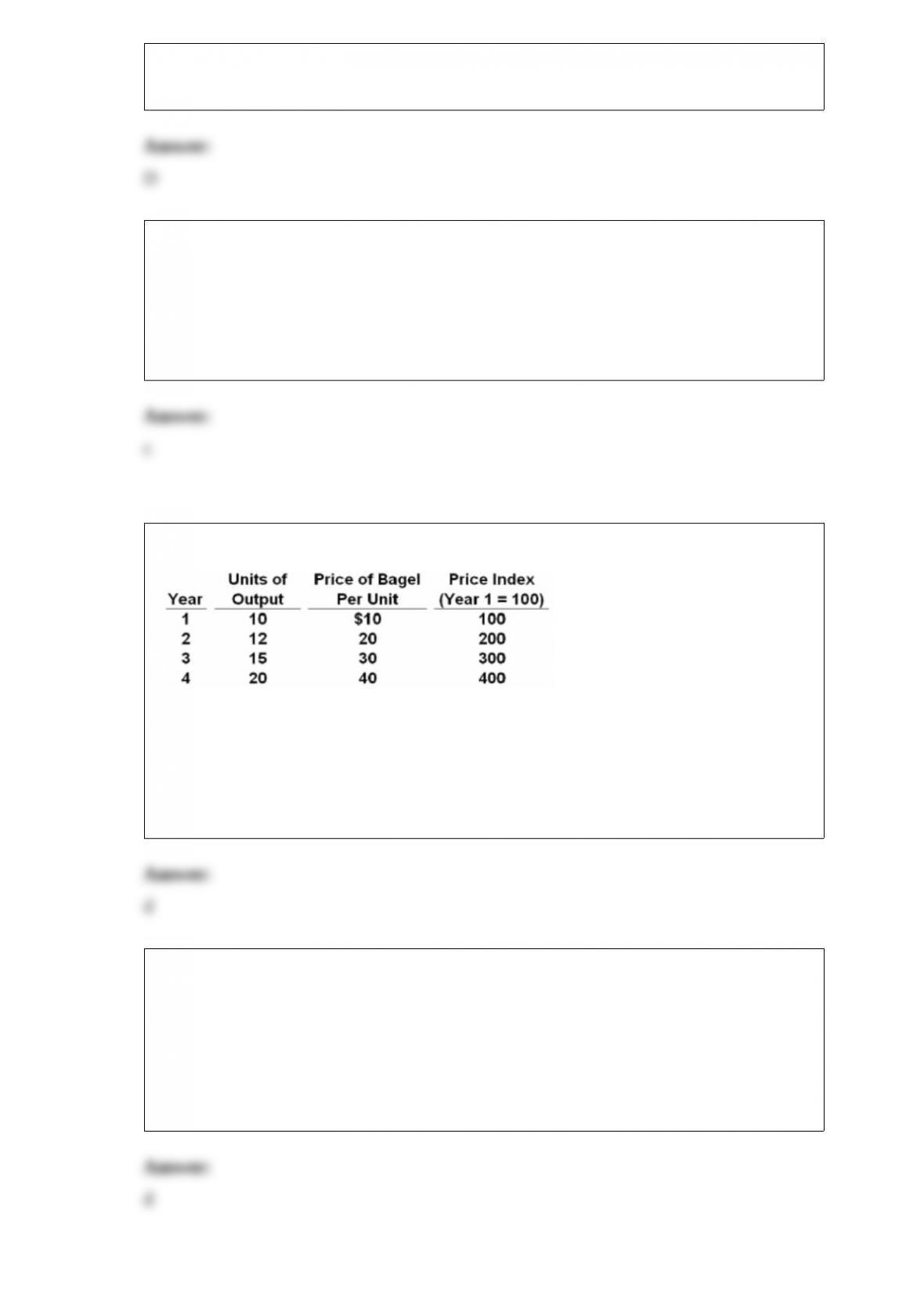
11) use the following table for a hypothetical single-product economy.
refer to the above data. nominal gdp in year 4 is:
a.$320.
b.$450.
c.$225.
d.$800.
12) which of the following statements is correct?
a.utility and usefulness are synonymous.
b.the marginal utility derived from successive units of a product tends to be similar for
all consumers.
c.because utility is not measurable, the utility-maximizing rule provides no useful
insights as to consumer behavior.
d.a product may yield utility, but not be functionally useful.
13) (consider this) the main focus of the story about nuclear particle accelerators used
for cancer treatments is:
a.cost-saving medical technology.
b.cost reductions from spreading an overhead expense over many patients.
c.longer-lasting equipment than the equipment being replaced.
d. benefit-producing, but cost-increasing, medical technology.
14) if someone produced too much of a good, this would suggest that:
a.rational choice cannot be applied to many economic decisions.
b.the good was produced to the point where its marginal cost exceeded its marginal
benefit.
c.certain goods and services such as education and health care are inherently desirable
and should be produced regardless of costs and benefits.
d.the good was produced to the point where its marginal benefit exceeded its marginal
cost.
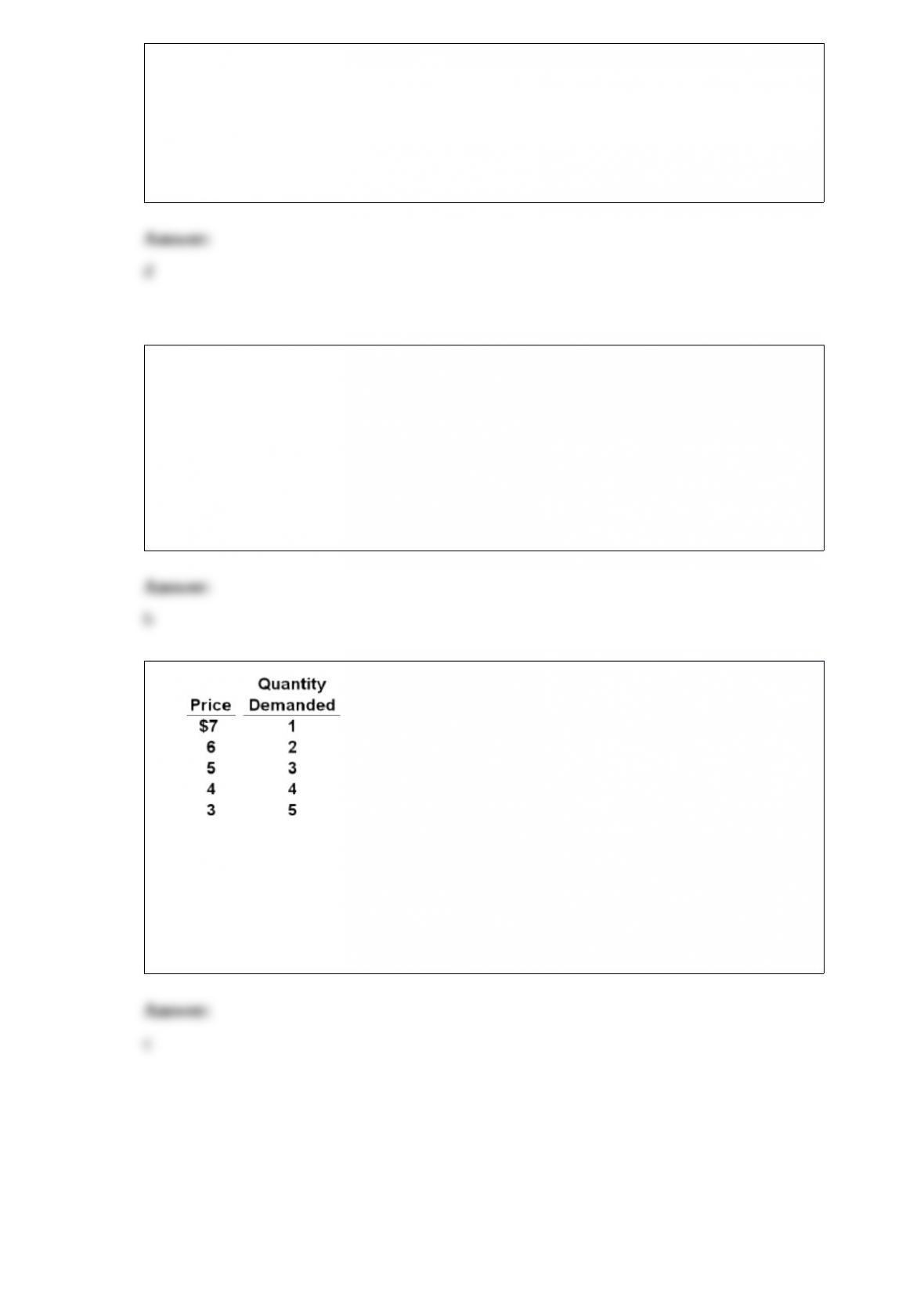
15)
refer to the above data. the marginal revenue obtained from selling the third unit of
output is:
a.$6.
b.$1.
c.$3.
d.$5.
16)
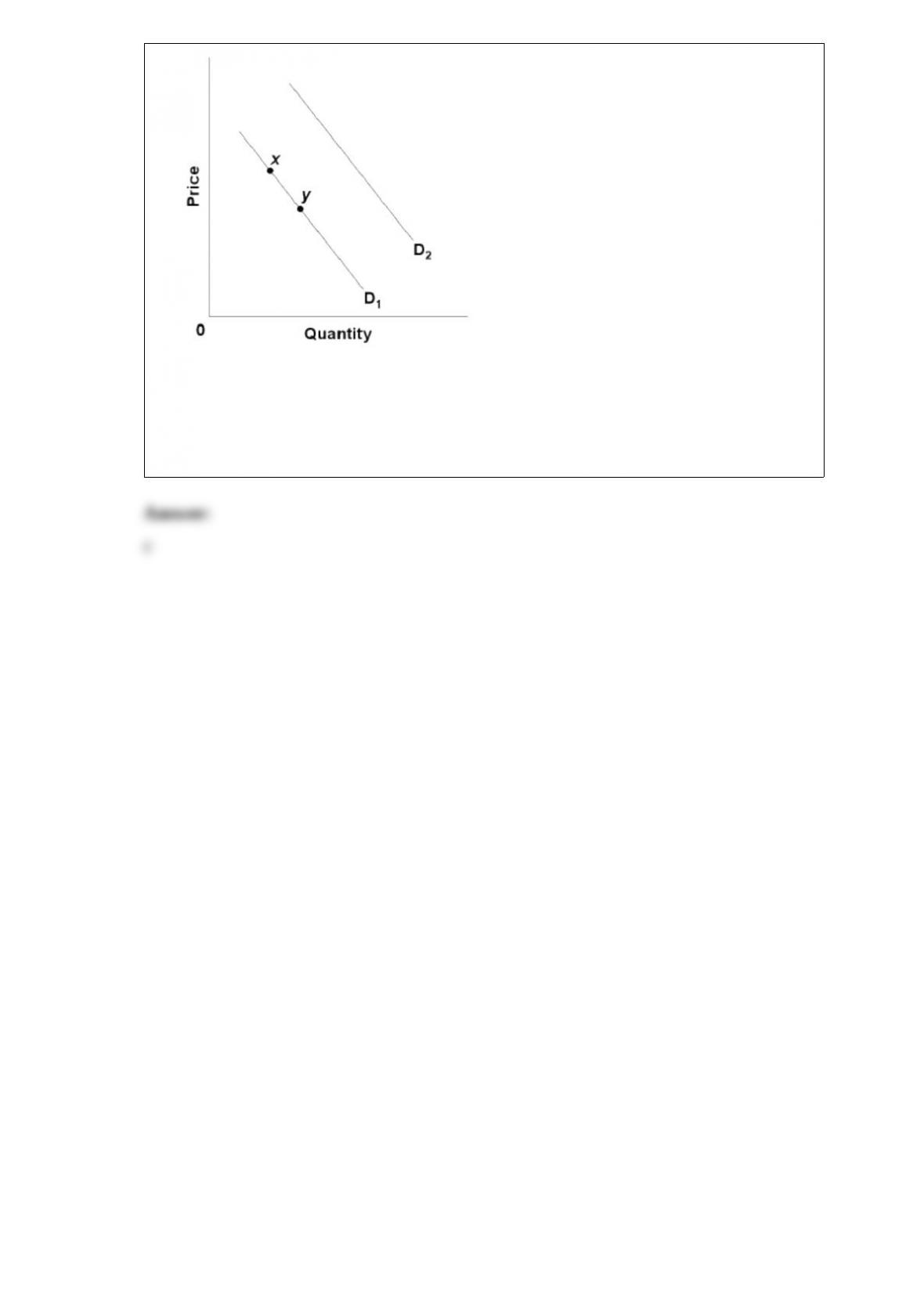
refer to the above diagram. a decrease in demand is depicted by a:
a.move from point x to point y.
b.shift from d1 to d2.
c.shift from d2 to d1.
d.move from point y to point x.