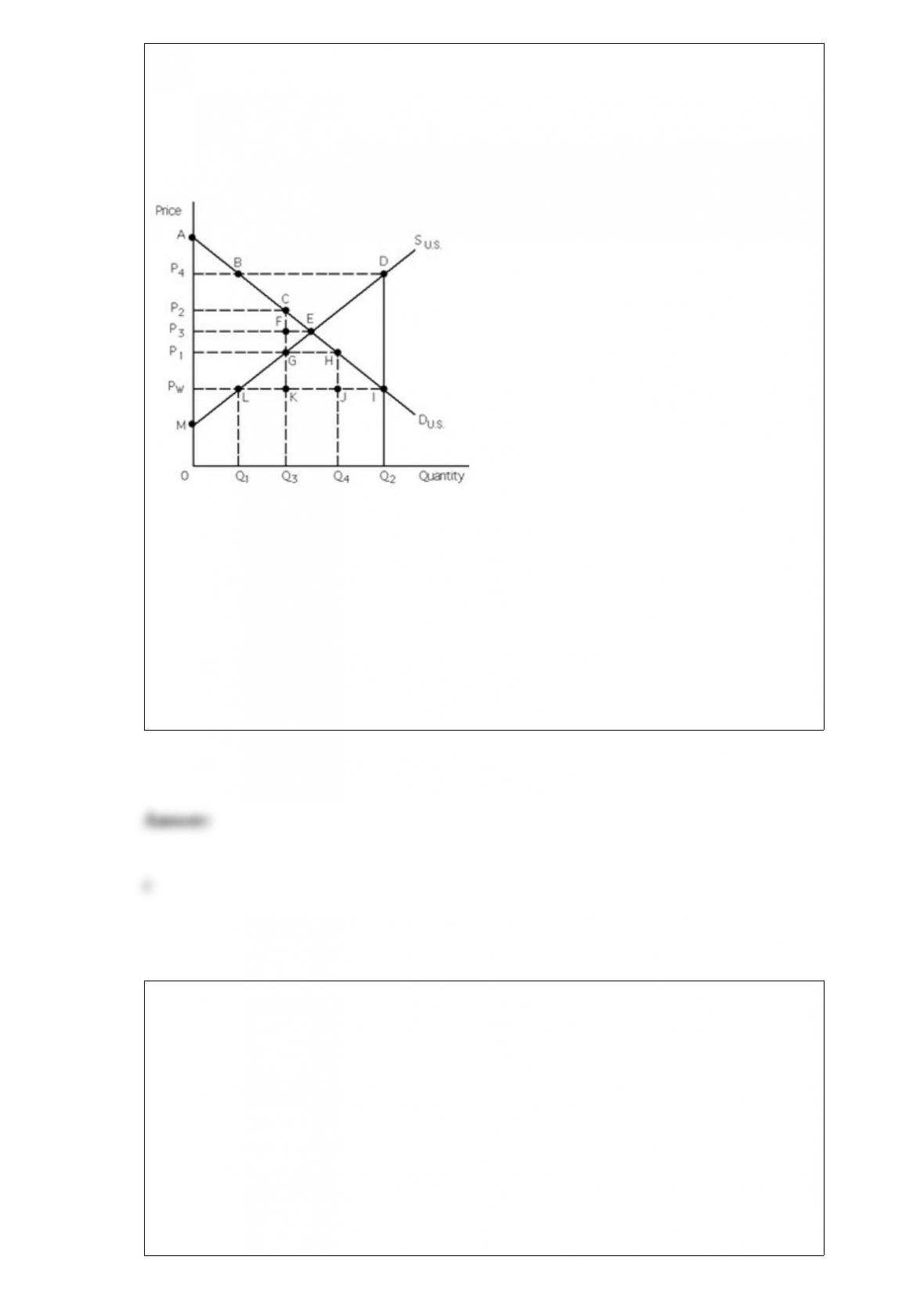
Refer to Exhibit 34-12. PW is the price that exists in a free world market. A quota is
imposed and imports are Q4 – Q3. Importers gain revenues equal to the area
__________.
Exhibit 34-12
a. GKL + HIJ
b. GCE
c. GHJK
d. GFEH
e. none of the above
Approximately how much money would you need to place in a savings account today
to accumulate $5,000 five years from now if the savings account pays an interest rate of
6.5 percent per year?
a. $3,649
b. $4,740
c. $3,077
d. $3,411
e. $3,887
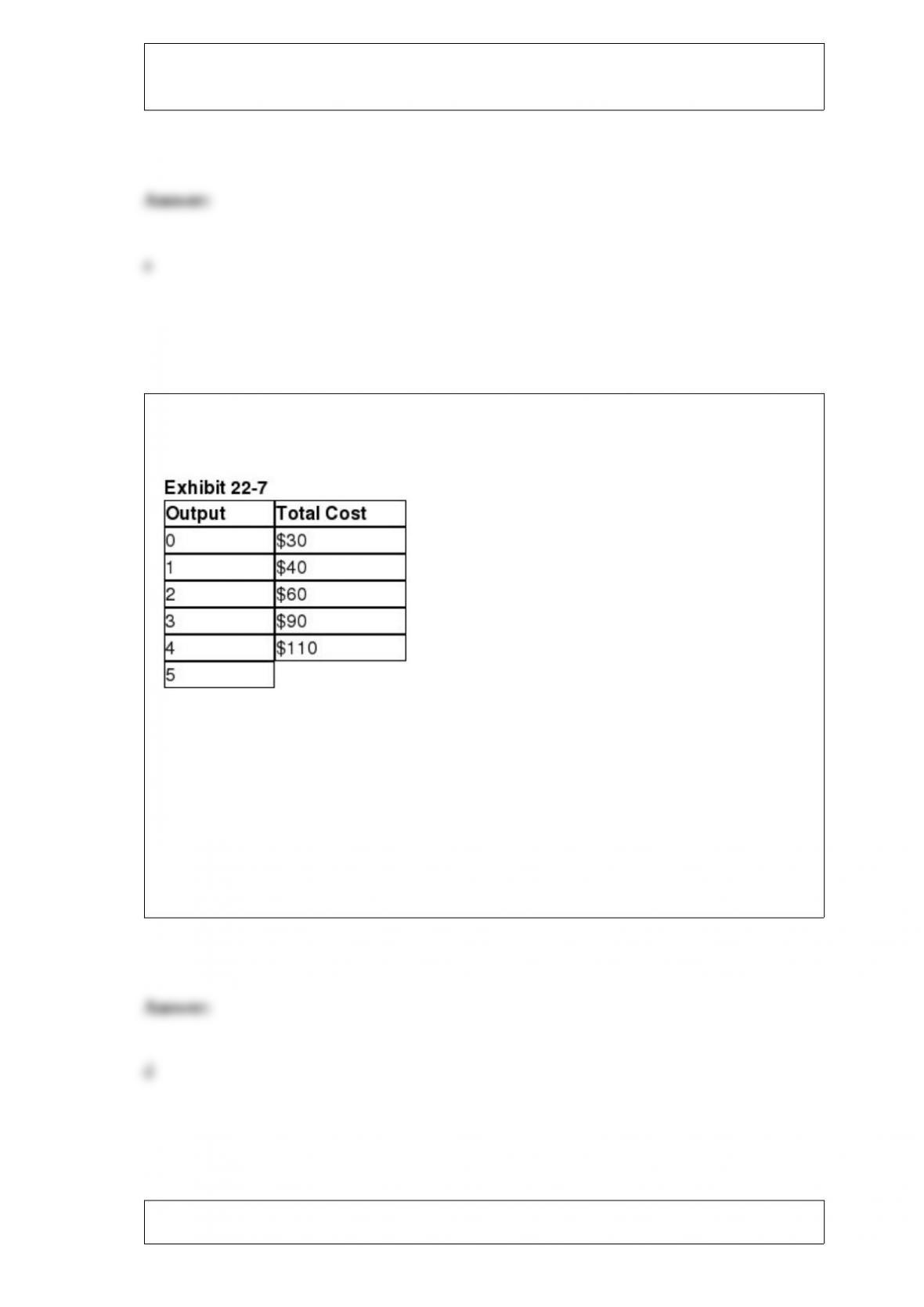
Refer to Exhibit 22-7. The average total cost of producing 4 units of output is
a. $11.25.
b. $5.00.
c. $3.50.
d. $27.50.
e. There is not enough information to answer this question.
Assume that a constant-cost industry experiences an increase in demand. In the long
run, this will
a. exceed its original equilibrium level.
b. equal its original level.
c. be lower than its original level.
d. any of the above, depending on the elasticity of demand
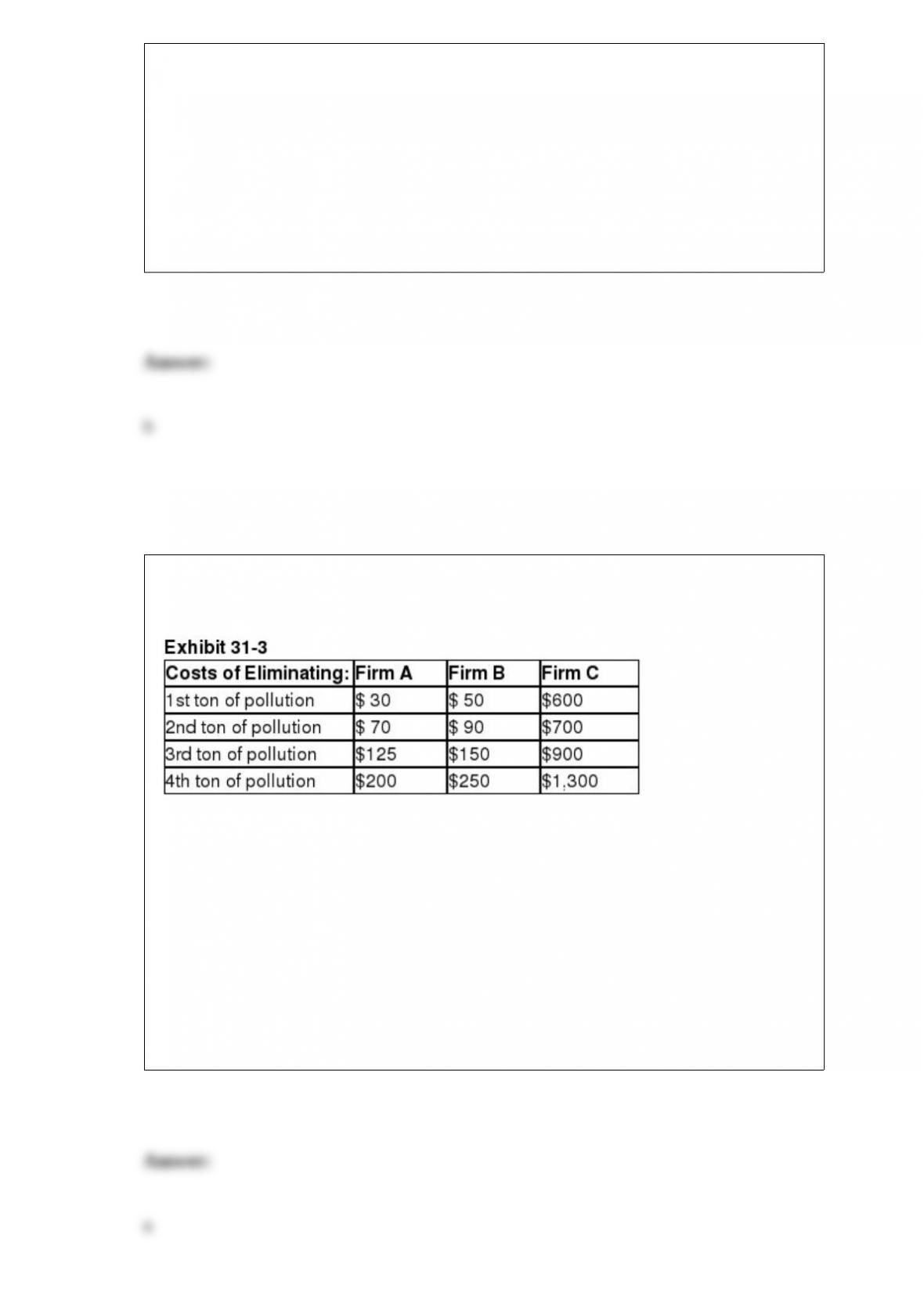
Refer to Exhibit 31-3. What is the cost to Firm C of eliminating 2 tons of pollution?
a. $1,300
b. $300
c. $1,500
d. $2,200
e. $3,500
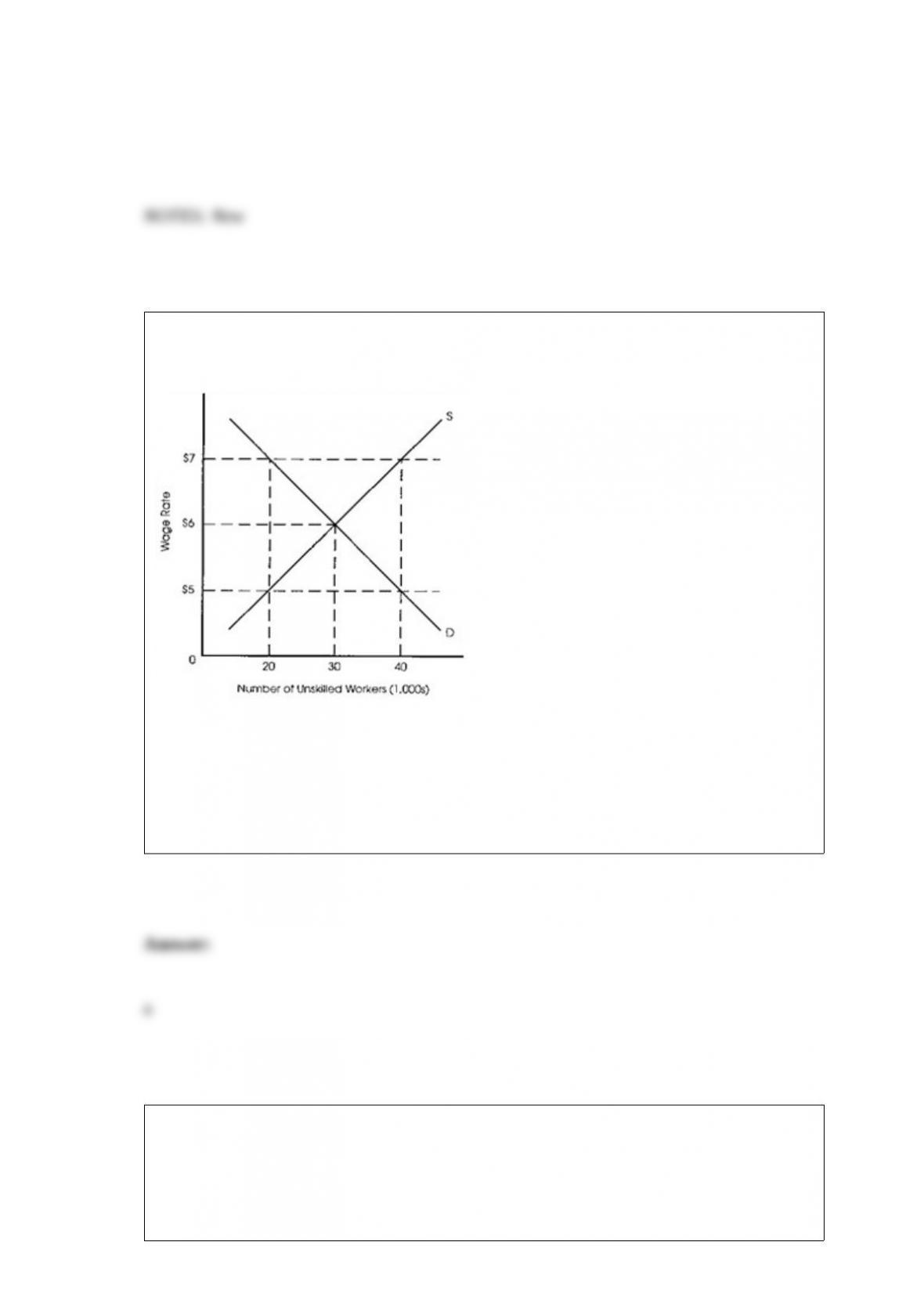
Refer to Exhibit 4-6. Suppose the minimum wage is set at $7. The result will be
Exhibit 4-6
a. a surplus of unskilled workers.
b. a shortage of unskilled workers.
c. no effect on the market for unskilled labor.
d. none of the above
“If you hadn’t gone to dinner with your friends, you would have stayed home and
watched television.” It follows that
a. watching television is the opportunity cost of having dinner with your friends.

b. the price of having dinner with your friends is more than the price you would have
had to pay to watch television.
c. the opportunity cost of having dinner with your friends is lower than the opportunity
cost of watching television.
d. it is less costly to watch television than to have dinner with your friends.
Using social media, unlike traditional media, people can make their opinions known
with little to no marginal cost.
a. True
b. False
The merger of two firms producing personal computers is an example of a __________
merger.
a. horizontal
b. vertical
c. conglomerate
d. parallel

Marginal productivity theory states that
a. firms in price searcher product markets pay factors their marginal factor cost.
b. firms in perfect factor markets pay factors their equilibrium wages.
c. firms that are more productive, earn higher profits.
d. firms in perfect product and factor markets pay factors their marginal revenue
products.
e. none of the above
Which of the following is not an example of in-kind transfer payments?
a. food stamps
b. subsidized public housing
c. subsidized public education
d. Aid to Families with Dependent Children (AFDC)
e. Medicaid

The public choice theory of regulation states that a regulatory agency makes decisions
based on
a. surveys of what the public believes is in the best interest.
b. its own conception of what is in the public’s best interest.
c. how these decisions affect the well-being of the agency itself.
d. how these decisions affect the economic profits of the regulated firms.
Since most colleges and universities charge the same tuition to every student regardless
of what time students choose to take their classes,
a. the schools must develop some type of non-price rationing device.
b. it follows that all classes will have a shortage of seats.
c. it follows that all classes will have a surplus of seats.
d. it follows that some classes will likely have a shortage of seats while other classes
may have a surplus of seats.
e. a and d

Economic profit is the difference between total revenue and
a. explicit costs.
b. implicit costs.
c. sunk costs.
d. the sum of explicit and implicit costs.
As the wage rate rises,
a. the supply of labor rises.
b. the quantity demanded of labor rises.
c. the quantity supplied of labor rises.
d. the demand for labor falls.
e. a and d
Which of the following is not true about production possibilities frontiers?
a. moving from one point to another on a PPF incurs a tradeoff
b. economic growth is shown by shifting the PPF outward

c. unemployment of resources is shown by shifting the PPF inward
d. a PPF can shift inward or outward
A tax credit given to first-time home buyers would result in a _____________ shift in
the ______________ curve for housing, which would lead to the unintended result of
a(n) _____________ in the price of housing.
a. leftward; supply; increase
b. leftward; demand; decrease
c. rightward; supply; decrease
d. rightward; demand; increase
e. none of the above
The monopolistic competitor’s demand curve is
a. perfectly elastic because of the many buyers and sellers in the market.
b. downward sloping because of product differentiation.
c. perfectly elastic because of identical products.
d. downward sloping because of the few buyers and sellers in the market.
e. none of the above

If the marginal physical product (MPP) of the variable input is constant over a range of
output, then it follows that __________ cost will be constant over the same range of
output.
a. marginal
b. average fixed
c. average total
d. a and b
e. a, b, and c
The U.S. dollar has depreciated relative to the Japanese yen if it takes
a. fewer yen to buy a dollar.
b. more yen to buy a dollar.
c. more dollars to buy a yen.
d. fewer dollars to buy a yen.
e. a and c

In order for a firm to continue producing, price must exceed __________ and total
revenue must exceed __________.
a. marginal cost; total cost
b. ATC; total cost
c. AFC; total fixed cost
d. AVC; total variable costs
e. price; total cost
Marginal revenue product is equal to marginal revenue multiplied by
a. average physical product.
b. marginal physical product.
c. average total cost.
d. marginal cost.
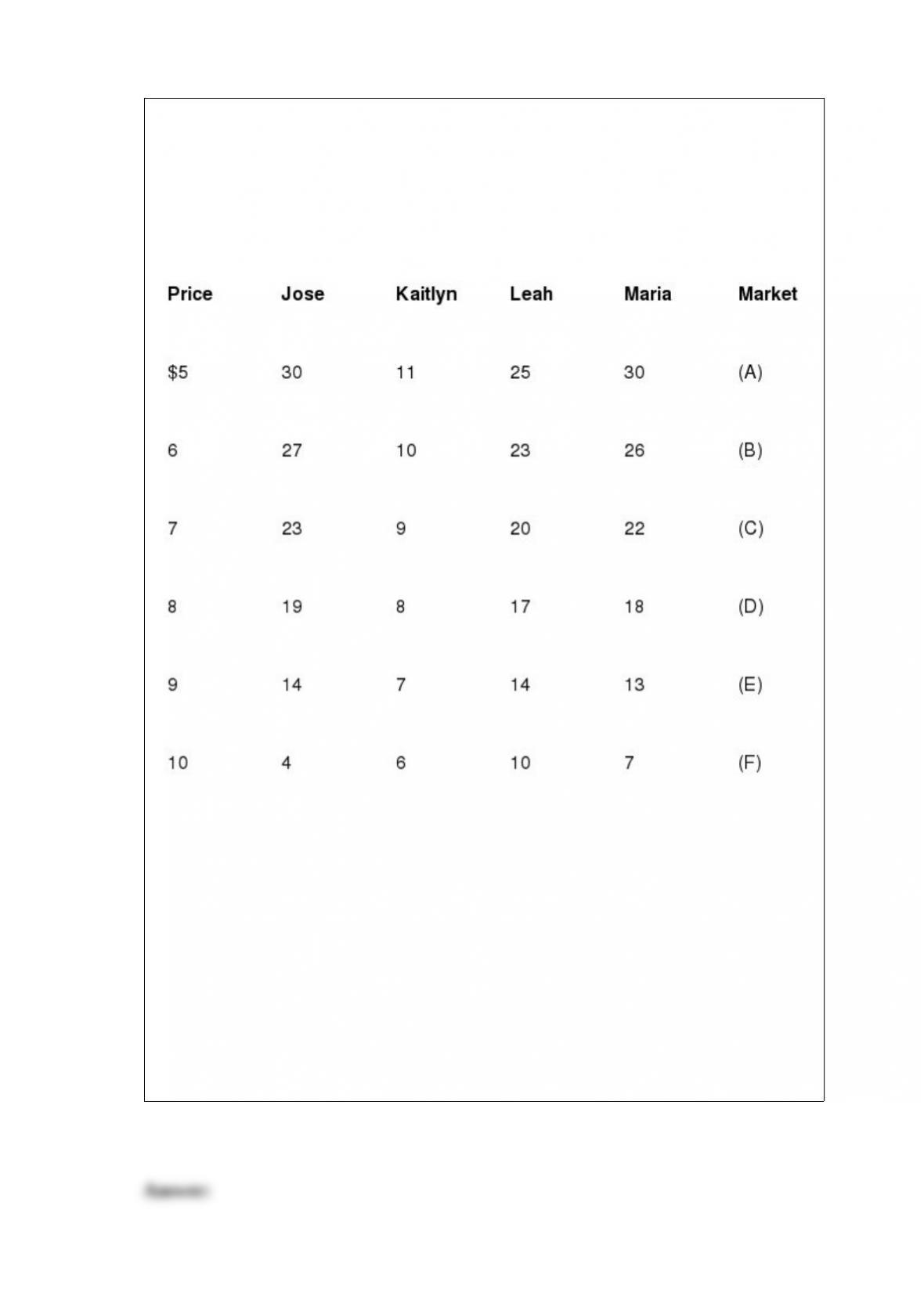
Refer to Exhibit 3-13.Fill in blanks (C) and (D) respectively with the market quantity
demanded at each given price. Exhibit 3-13
—————————–Quantity Demanded————————————-
Assume that Jose, Kaitlyn, Leah, and Maria are the only buyers in this market.
a. 18.5; 15.5
b. 74; 62
c. 75; 64
d. 50; 43
e. none of the above

Market failure is a situation in which
a. negative economic profits persist in the long run.
b. negative economic profits exist in the short run.
c. the market does not provide the ideal or optimal amount of a particular good.
d. both a and b
e. a, b, and c