
When a monopolist can perfectly price discriminate, it follows that
a. price equals marginal revenue.
b. price equals marginal cost at the quantity of output it chooses to produce.
c. the monopolist is resource-allocative efficient.
d. b and c
e. a, b, and c
When price = $16, quantity demanded = 200. When price = $14, quantity demanded =
225. When the firm lowered price from $16 to $14, it discovered that demand is
__________ and total revenue __________ by ____________,
a. elastic; increased; $3,200
b. elastic; decreased; $3,150
c. inelastic; increased; $50
d. inelastic; decreased; $50
e. inelastic; decreased; $3,150
If the price of a good ____________, the demand for its complements will __________.
a. rises; fall

b. falls; rise
c. falls; fall
d. rises; rise
e. a and b
Here are four positions that Farmer Gomez can be in:(1) bad weather for Gomez and
good weather for all other farmers; (2) bad weather for all farmers except Gomez (who
witnesses good weather); (3) bad weather for all farmers; (4) good weather for all
farmers. Assuming the demand for foodstuffs is inelastic, Farmer Gomez would
probably rank these four positions, from best for him to worst for him, the following
way:
a. 1,2,3,4.
b. 2,1,3,4.
c. 2,3,4,1.
d. 4,3,2,1.
e. 3,4,1,2.
Exhibit 20-2
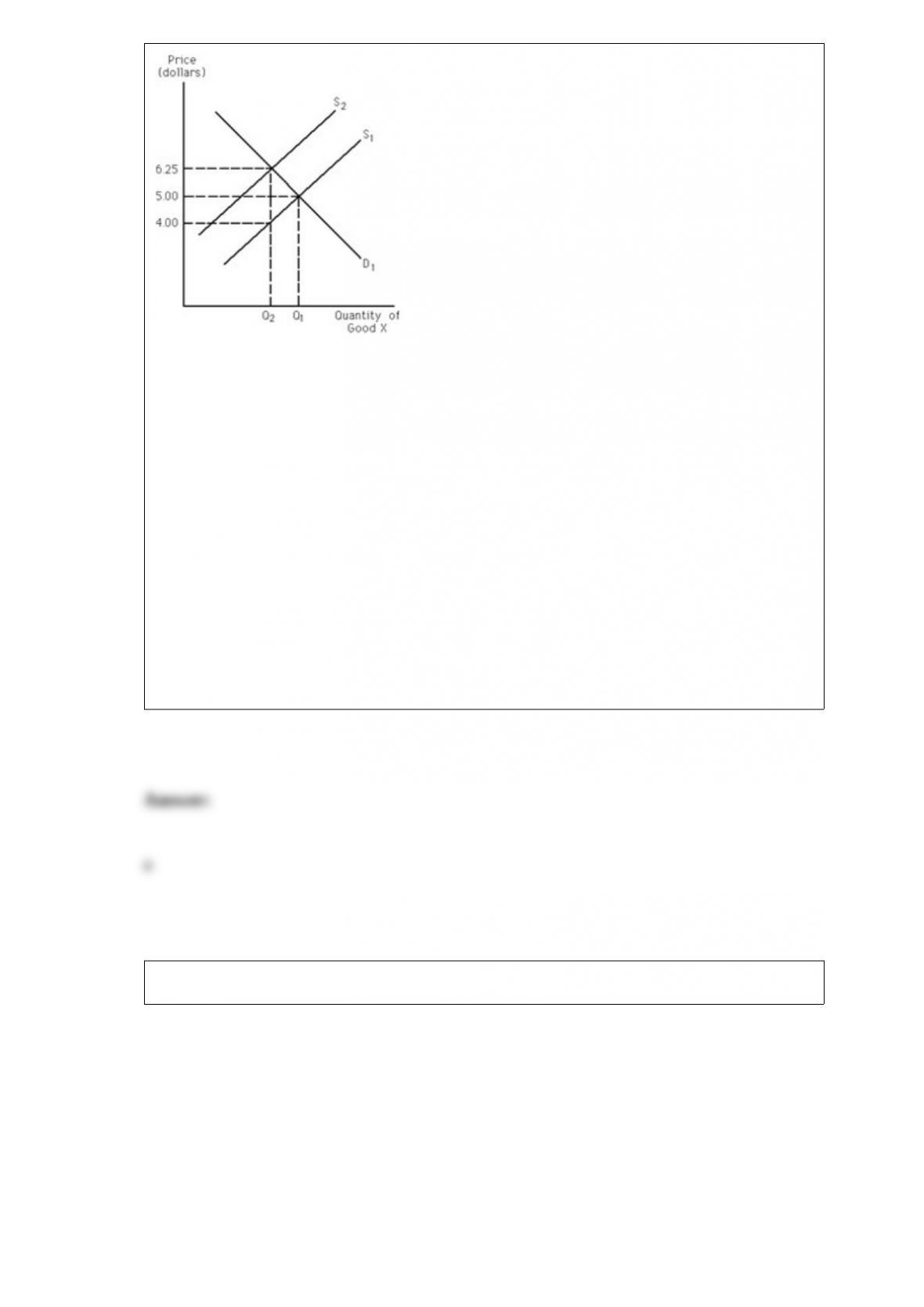
The market for good X is initially in equilibrium at $5. The government then places a
per-unit tax on good X as shown by the shift of S1 to S2. What is an expression for the
tax revenue raised?
a. $2.25 x Q2
b. $1.25 x Q2
c. $1.00 x Q2
d. ($1.00 x Q2) + [$1.25 x (Q1 – Q2)]
e. $2.25 x (Q1 – Q2)
Exhibit 21-8
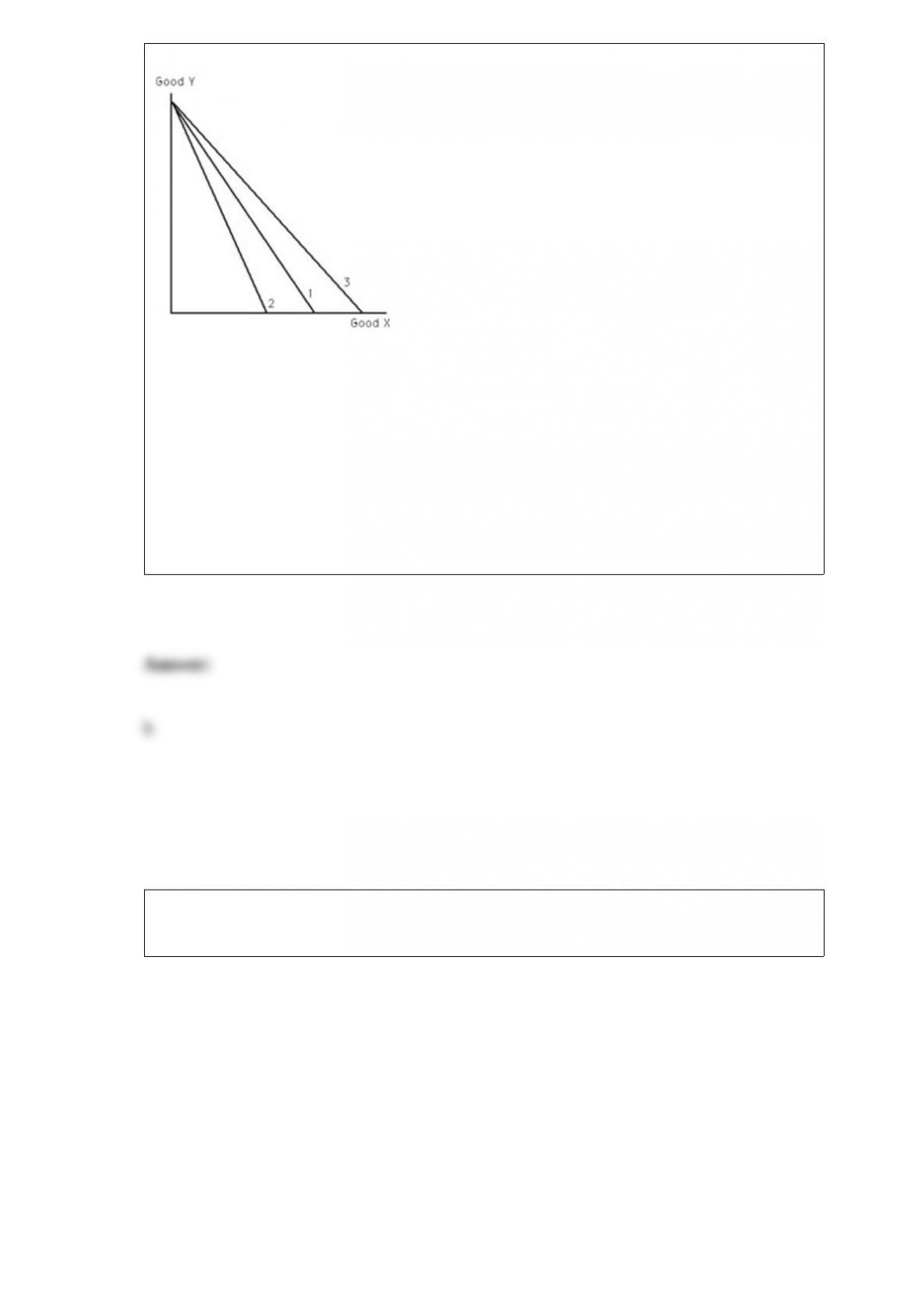
A move of the budget constraint from 2 to 3 is caused by a
a. rise in the price of good X.
b. fall in the price of good X.
c. rise in the price of good Y.
d. fall in income.
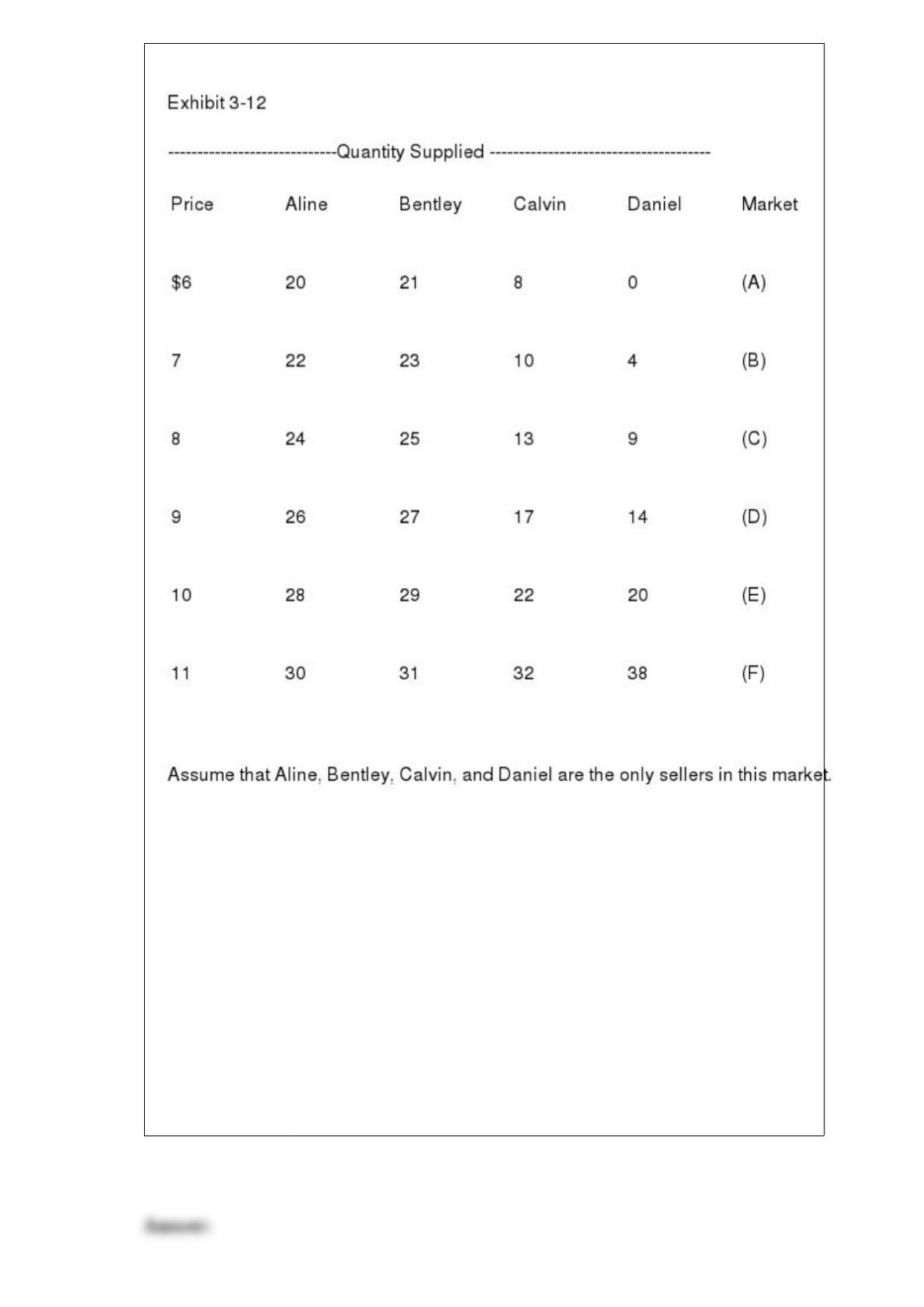
Fill in blanks (E) and (F) respectively with the market quantity supplied at given each
price.
a. 24.75; 32.75
b. 47; 52
c. 99; 131
d. 48; 65
e. none of the above

A tariff raises the price of the product on which the tariff has been placed, decreases
consumers’ surplus, increases producers’ surplus, and generates tariff revenue for the
government.
a. True
b. False
The law of increasing opportunity costs states that as
a. less of a good is produced, the higher the opportunity costs of producing that good.
b. more of a good is produced, the lower the opportunity costs of producing that good.
c. more of a good is produced, the higher the opportunity costs of producing that good.
d. more of a good is produced, the opportunity cost of producing the good remains the
same.
e. a and b
Exhibit 24-7
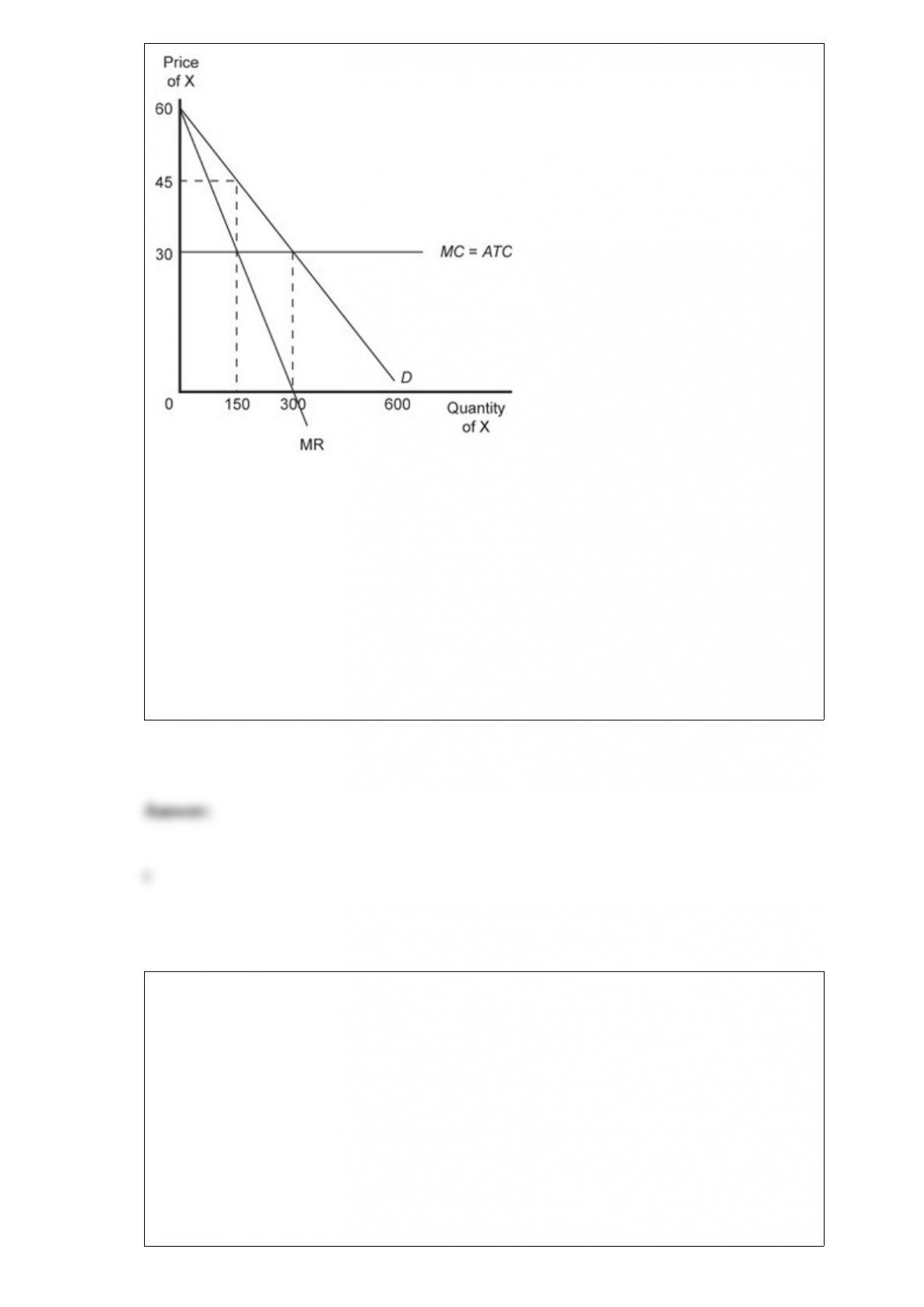
If D represents the demand curve facing a perfectly price-discriminating monopolist,
the price it charges for the last unit sold exceeds the marginal cost of the last unit by
a. $30.
b. $15.
c. $0.
d. an amount that cannot be determined without the average cost curve.
The value of marginal product (VMP) is
a. equal to the product price multiplied by the marginal physical product of the factor.
b. equal to marginal revenue product for a product price taker.
c. the firm’s factor demand curve if the firm is a product price taker.
d. a measure of the value that each factor unit adds to the firm’s product.
e. all of the above

In which of the following situations would a negative externality most likely be
involved?
a. It is night and Kenneth is sitting in his easy chair reading a novel by John Grisham.
The lamp he is reading by has only a 40-watt light bulb. He is having a hard time
reading.
b. Alyson lives near an airport. At five o’clock in the morning every day she can hear
the airplanes taking off and it awakens her.
c. Lucy went to a fancy restaurant last night and ordered the most expensive meal on
the menu. She hated it.
d. Richard is taking an economics class from Professor Franklin. Professor Franklin
often says things that confuse Richard.
Given that MUX/PX < MUY/PY, consumers who spend all their income on these two
goods
a. can never maximize total utility.
b. have maximized total utility.
c. can increase total utility by buying more of X and less of Y.
d. can increase total utility by buying more of Y and less of X.
e. a and b

The public interest theory of regulation holds that
a. regulators are seeking to do and will do through regulation what is in the best interest
of the public.
b. over time, natural monopolies will wither away.
c. regulators are uninformed on specific matters that relate to regulation and therefore
are often swayed by false information.
d. natural monopolies manipulate the public into buying particular products.
Situation 22-1
Diane’s Donuts will begin selling donuts next week. Diane figures that the average
variable cost to make each donut will be constant at $0.30. She has already paid
$20,000 for the donut-making machinery and one year’s rent.
What will Diane’s total variable costs be if she sells 36,500 donuts in one year?
a. $10,950
b. $18,450
c. $22,080
d. $12,500
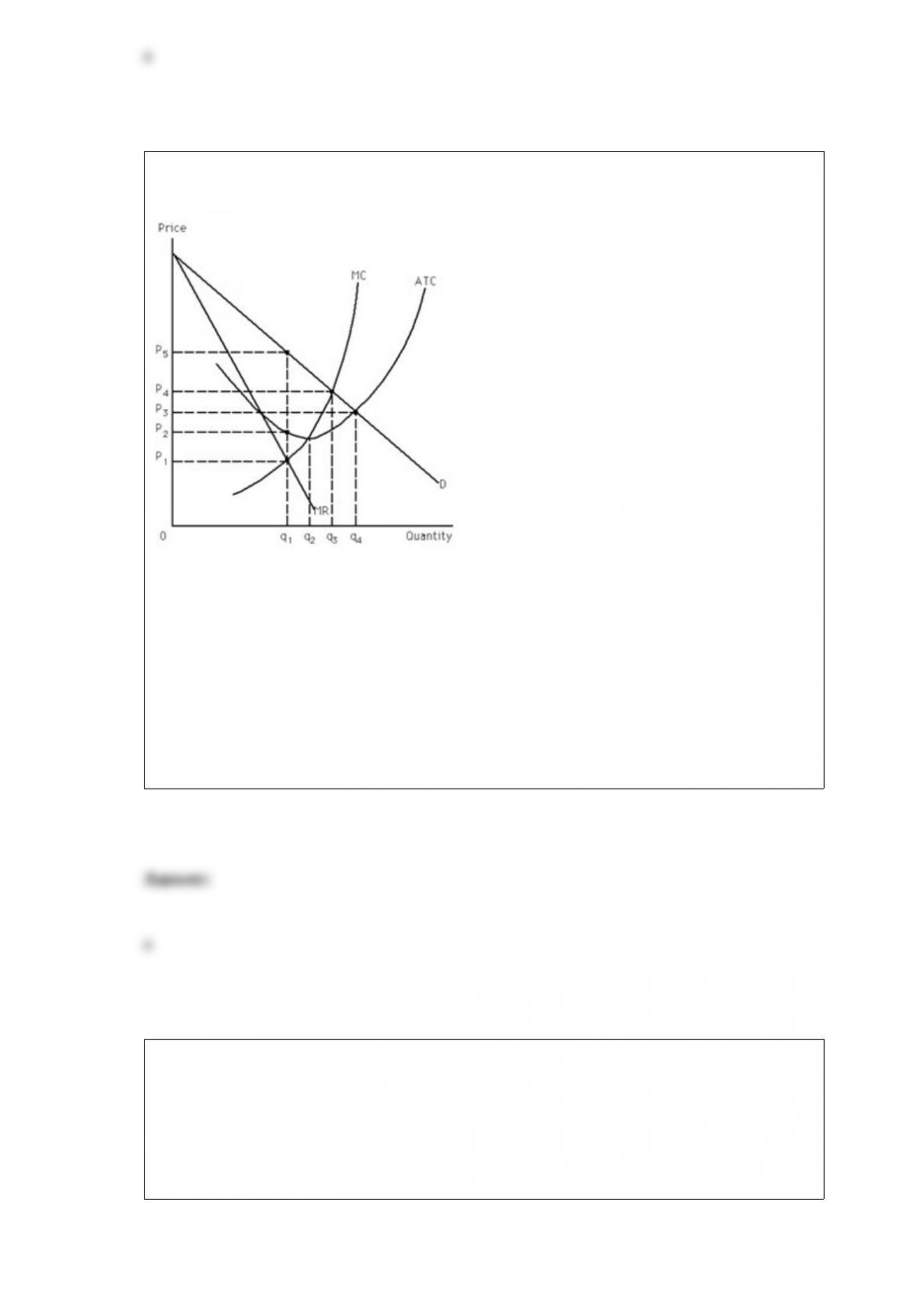
Exhibit 24-3
The profit of the single-price monopolist is
a. positive.
b. zero.
c. negative.
d. uncertain without more information.
Marginal productivity theory states that if a firm sells its product in a perfectly
competitive product market it will necessarily pay its factors their VMP.
a. True
b. False
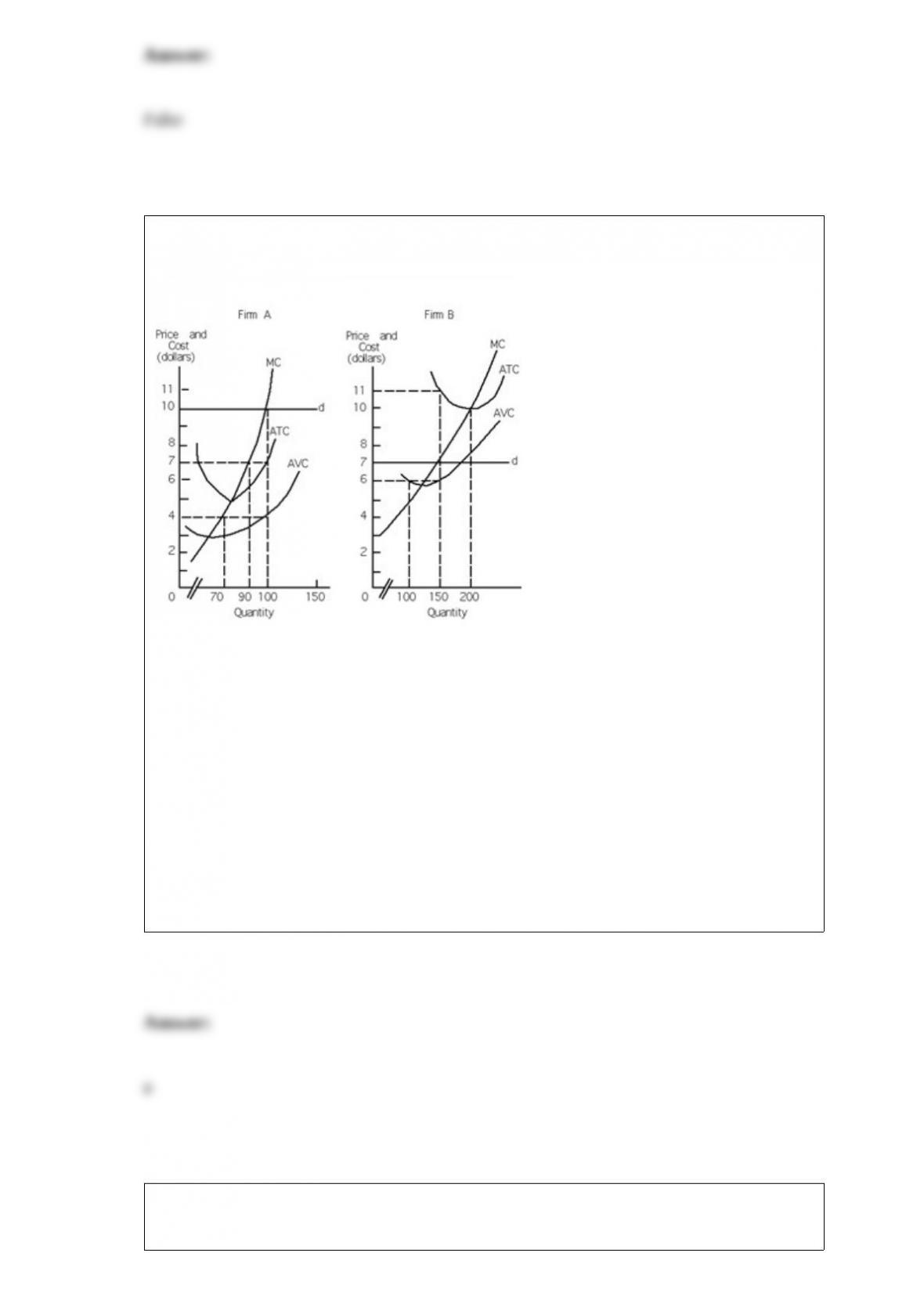
Exhibit 23-8
Which of the following is true in the short run of firms A and B, two perfectly
competitive firms?
a. Both firm A and firm B will continue to produce in the short run.
b. Firm A will continue to produce and firm B will shut down.
c. Firm A will shut down and firm B will continue to produce.
d. Firm A will continue to produce in the short run and shut down in the long run.
e. a and d
The law of diminishing marginal returns helps to explain why the marginal cost curve
typically has a downward-sloping portion.

a. True
b. False