
Marginal utility is defined as the
a. average amount of satisfaction gained from consuming a product
b. total amount of satisfaction gained from consuming a product
c. additional satisfaction gained from consuming one more unit of a product
d. total amount of satisfaction gained from consuming a product divided by the number
of units consumed
e. total amount of satisfaction gained from consuming a product times the number of
units consumed
The market for chewing gum is competitive with a current price of 50 cents per pack
and a quantity of 100,000 packs per day. Which of the following events would lead to a
new equilibrium price of 75 cents and a new equilibrium quantity of 125,000?
a. an increase in the price of other kinds of candy
b. an increase in the price of the ingredients used to make chewing gum
c. an agreement by workers in the chewing gum industry to work for lower wages
d. a decrease in the number of young people in the population
e. a decrease in income

Consensus becomes easier to achieve as the number of firms in a cartel grows
a. True
b. False
The more price inelastic is demand, the more likely it is that a tax will fall on sellers.
a. True
b. False
Developing countries
a. do not benefit from foreign aid
b. do not benefit from private investment
c. generate less than half of their annual flow of foreign exchange from exports
d. must acquire foreign exchange in order to pay for imports
e. need to decrease labor productivity
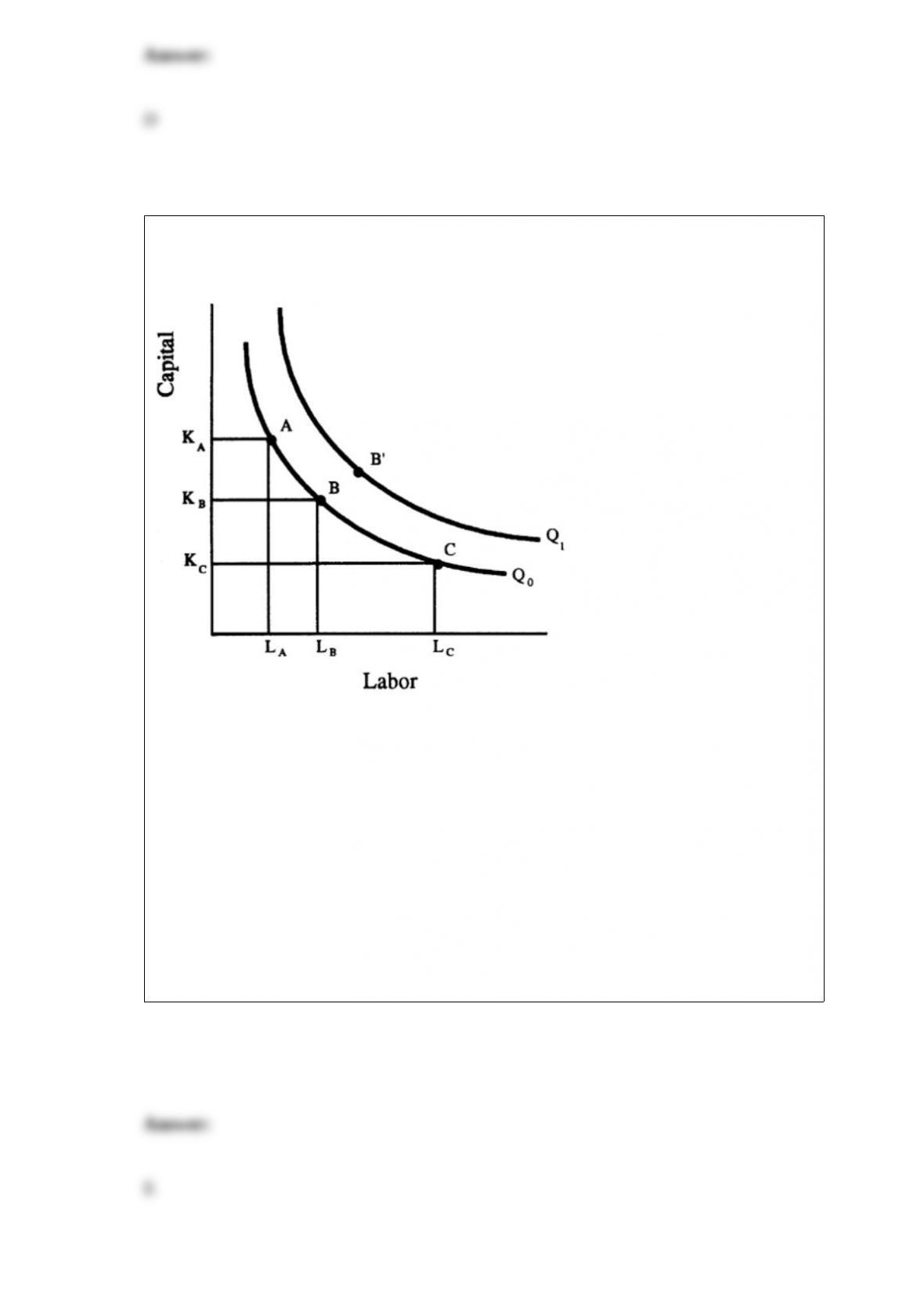
Exhibit 7-23 Production Isoquants ans Isocosts
In terms of output produced, which of the following expresses the relationships
illustrated in Exhibit 7-23?
a. A > B > C
b. A = B > C
c. B > C > A
d. A = B = C
e. B” > C = A
Which of the following statements about resource allocation is correct?
a. Within a firm, resources are allocated by prices; in the market, resources are allocated
by the decisions of managers.
b. Resources are allocated by prices both in the market and within the firm.
c. Within a firm, resources are allocated by the decisions of managers; in the market,
resources are allocated by prices.
d. Resources are allocated by the decisions of managers both within the firm and in the
market.
e. In the market, resources are allocated either by prices or by the decisions of
managers.
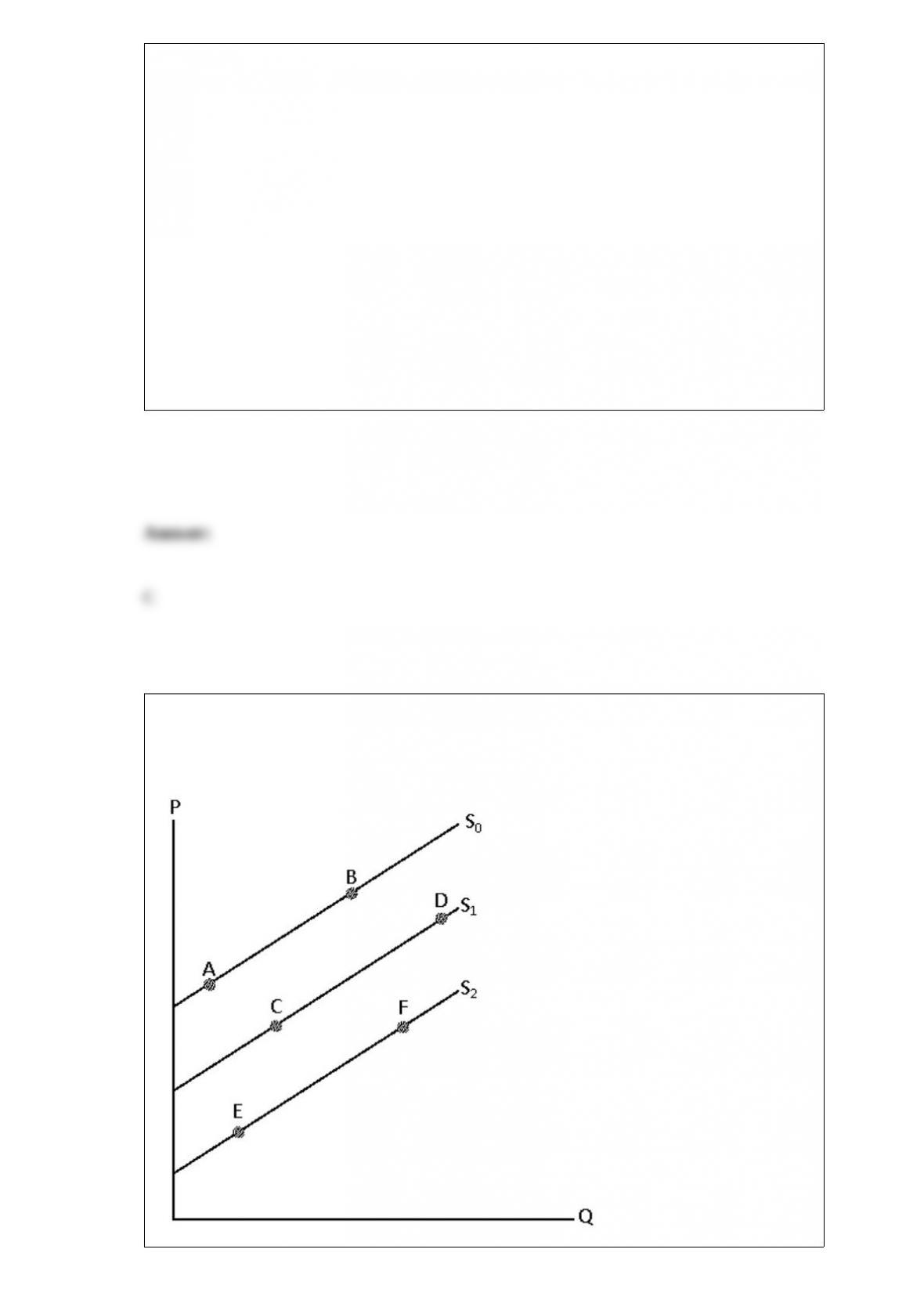
Exhibit 4-2

Consider Exhibit 4-2 which shows 3 supply curves for milk. Which of the following
would shift the supply curve for milk from S1 to S0?
a. an increase in the price cattle feed
b. the expectation of a higher price in the near future
c. an increase in the price of milk
d. a decrease in the price of beef
e. a new and improved cattle food that increases the yield per dairy cow
Which of the following is not a government transfer program?
a. unemployment compensation
b. Social Security
c. food stamps
d. Medicare
e. movement of soldiers to a different military base

A monopolist has no supply curve because
a. as demand changes, each output level can be consistent with more than one
profit-maximizing price
b. monopolists tend to restrict output
c. monopolists have no marginal cost curve
d. monopolists can charge any price they want
e. as demand changes, the firm’s profit-maximizing choice of output may change
An increase in the wage rate will decrease the demand for labor.
a. True
b. False
Which of the following is not an example of price discrimination?
a. IBM charges business users of its laser printer more than home users
b. Intel offered faster and slower versions of a computer chip
c. An amusement park charges the same admission fee to local residents and
out-of-towners
d. Adobe stripped some features from Photoshop to offer a cheaper version
e. Holders of Nevada driver’s licenses pay less to ride the Las Vegas monorail

The slope of a vertical straight line is infinity.
a. True
b. False
The various models of oligopoly explain observed behavior in different industries, but
none is satisfactory as a general theory of oligopoly.
a. True
b. False
Your willingness to pay additional money for time-saving goods depends primarily on
a. the opportunity cost of your time

b. your wealth and property
c. your social status
d. the number of people in your household
e. the distance between your home and your workplace
Long-run average costs are the same as long-run total costs
a. True
b. False
In the short run, a firm will produce a positive amount of output as long as
a. P > AVC at some output level
b. P > MC at some output level
c. P < AVC at some output level
d. AVC < ATC at some output level
e. FC > TR at some output level

The long-run supply curve for a constant-cost perfectly competitive industry is
a. a ray from the origin at a 45-degree angle
b. perfectly inelastic
c. somewhat inelastic
d. perfectly elastic
e. declining
A progressive tax means
a. people who make more money pay less total taxes
b. the marginal tax rate increases as income increases
c. the percentage of income paid out decreases as income increases
d. people who are poor receive the proceeds of the tax
e. the same thing as a flat-rate tax
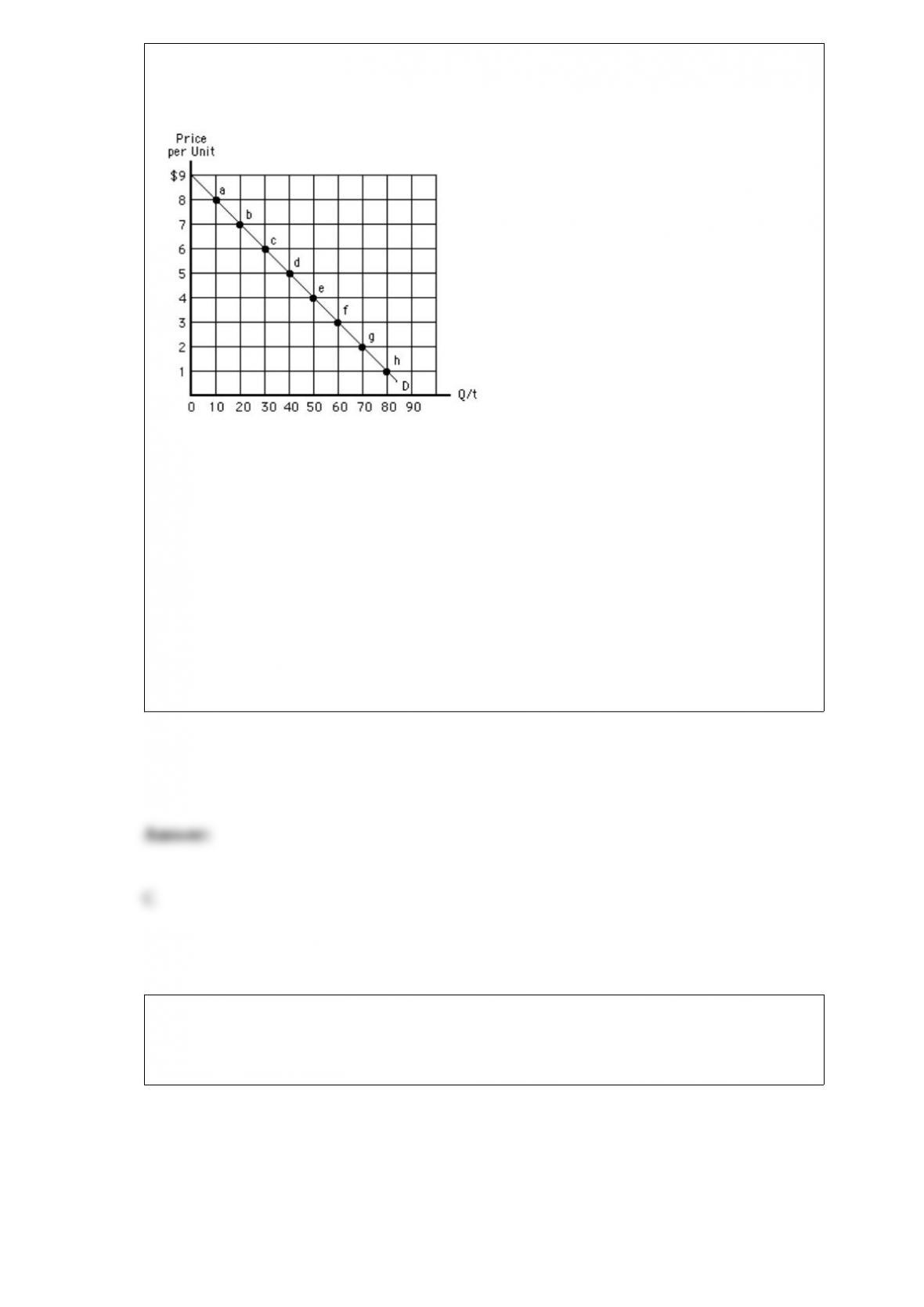
Exhibit 5-7
Which of the following is true between points g and h in Exhibit 5-7?
a. Total revenue remains constant at $180.
b. Total revenue falls by $12.
c. Total revenue falls by $60.
d. Total revenue falls by $180.
e. Demand is elastic.
Exhibit 6-25
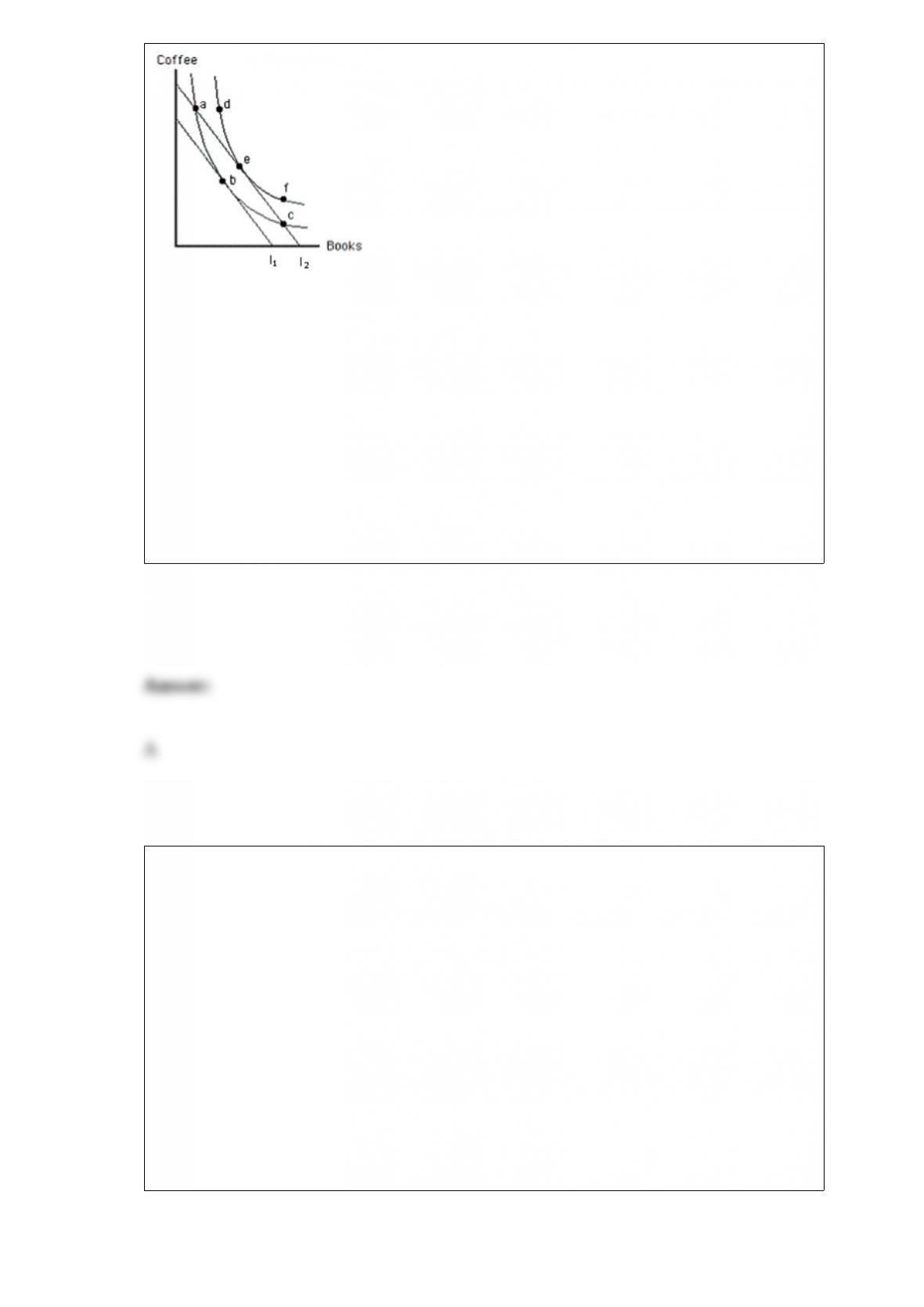
Point b in Exhibit 6-25 is better than which other point(s)?
a. Points a and c because b represents the same utility at a lower level of expenditure.
b. Points a and c because b represents higher utility at the same level of expenditure.
c. Points a and c because b represents higher utility at a lower level of expenditure.
d. Point e only because b represents a lower level of expenditure.
e. All other points on the graph.
If Ellie Mae spends her income on possum and biscuits and the price of possum is three
times the price of biscuits, then when Ellie Mae maximizes total utility, she will buy
a. equal quantities of possum and biscuits
b. three times as much possum as biscuits
c. three times as many biscuits as portions of possum
d. biscuits and possum until the marginal utility of possum is three times the marginal
utility of biscuits
e. biscuits and possum until the marginal utility of biscuits is three times the marginal
utility of possum
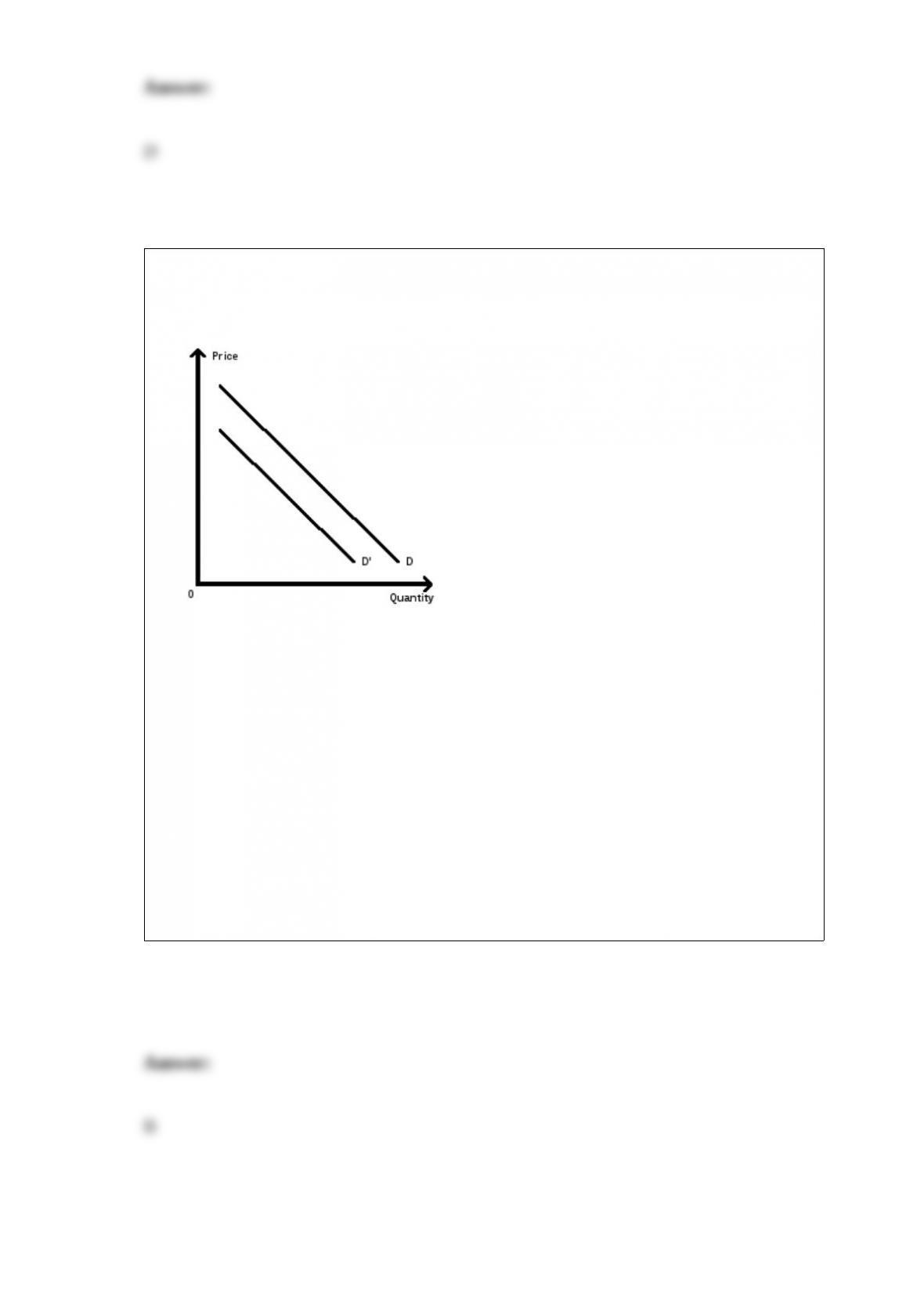
Exhibit 4-10
Refer to Exhibit 4-10. A shift from demand curve D to demand curve D” would be
caused by a(n)
a. decrease in the price of the product under consideration
b. significant decrease in population because of emigration
c. increase in consumer income
d. decrease in the number of producers of the product
e. increase in the price of a relevant resource

If demand increases and supply decreases,
a. equilibrium price will fall and equilibrium quantity will rise
b. equilibrium price and quantity will both rise
c. equilibrium quantity will rise; equilibrium price will either rise or fall
d. equilibrium price will fall; equilibrium quantity will either rise or fall
e. equilibrium price will rise; equilibrium quantity will either rise, fall, or remain
unchanged
The supply curve of U.S. dollars is drawn assuming other things constant, such as
a. income in the rest of the world
b. expectations about the rate of inflation in the United States relative to the rest of the
world
c. U.S. tastes and preferences for foreign goods
d. the interest rate in the United States relative to the rest of the world
e. tastes and preferences of the rest of the world for U.S. goods and services
Over time, poverty in the United States, as measured by the number of poor, has

increased the most
a. among women because of discrimination
b. among women because of an increasing divorce rate
c. among households headed by women
d. among the elderly because of cutbacks in the Social Security program
e. for men because there are more of them
Demand is inelastic only if
a. price elasticity has an absolute value of 1
b. price elasticity has an absolute value greater than 1
c. price elasticity has an absolute value less than 1
d. price elasticity is negative
e. consumers do not respond to a change in price
Mountain bikers and rollerbladers share the only trail in a city park. The city allows
everyone into the park and onto the trail. The mountain bikers say the rollerbladers are a
hazard to them; the rollerbladers say it’s the other way around. Frequently there are
collisions, and many injuries occur. What is the property rights problem?
a. Rollerbladers do not have mountain bikes.
b. Bikers do not have rollerblades.
c. No one owns both bikes and blades.
d. No one has property rights to the use of the trail.
e. No one owns the park.
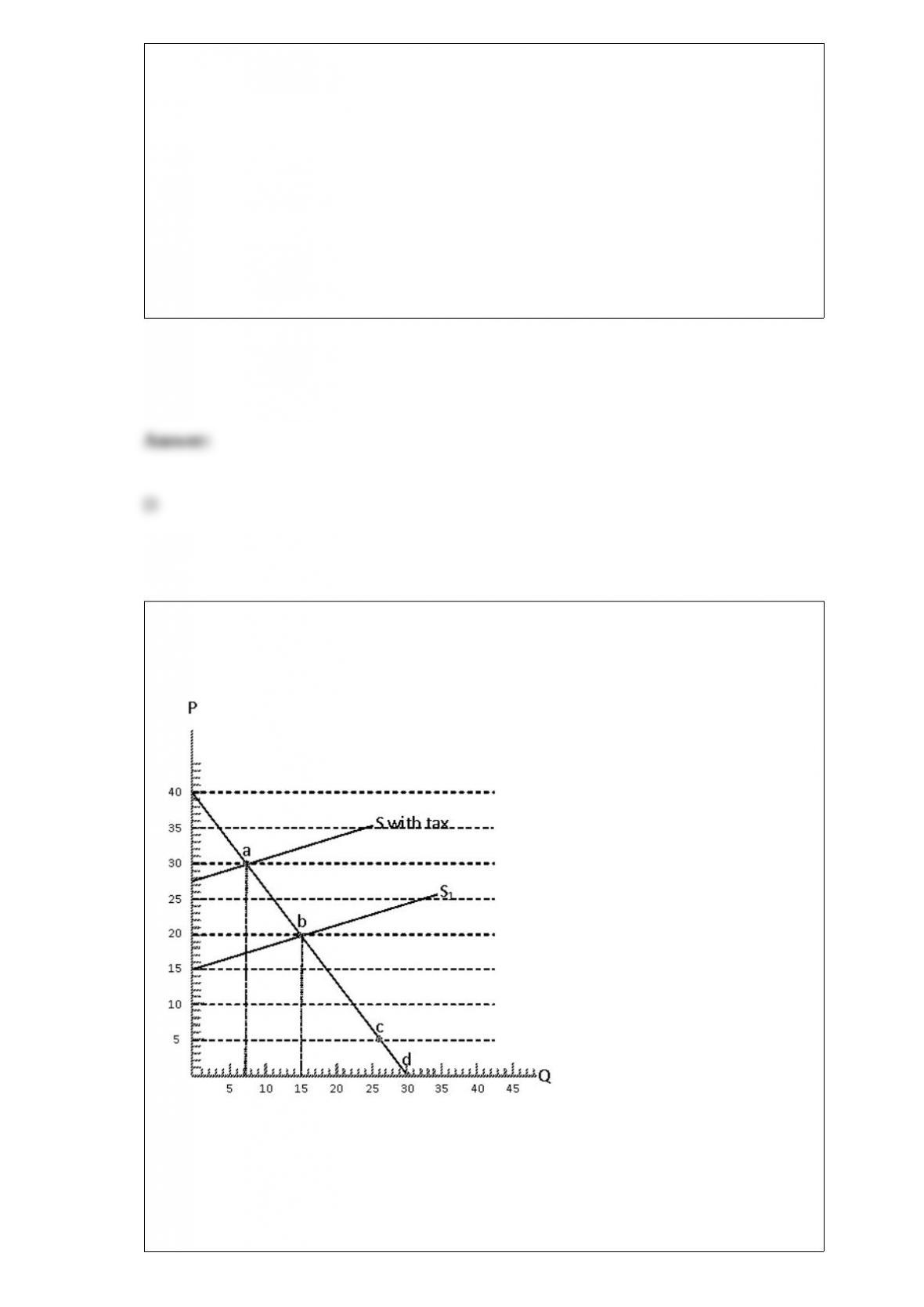
Exhibit 5-32
Refer to Exhibit 5-32. The tax burden borne by producers is:
a. $5.50
b. $9.50

c. $14.50
d. $19.50
e. $20.50
Your marginal utility of a third waffle is 10 and your marginal utility of a second piece
of ham is 30. If you eat the third waffle, which of the following must be true?
a. You are irrational.
b. You prefer waffles.
c. The price of a waffle is less than one third the price of a piece of ham.
d. The price of a waffle is more than the price of a piece of ham.
e. The price of a waffle is three times the price of a piece of ham.
When a developing country relies on import substitution,
a. it sacrifices the gains from specialization and comparative advantage
b. replaces low-cost foreign goods with high-cost domestic goods
c. domestic producers, shielded from foreign competition, usually fail to become

efficient
d. other countries often retaliate with their own trade restrictions
e. All of the answers are correct