
When President Obama took office in January 2009, he pledged to pursue an
expansionary fiscal policy to try to pull the economy out of the recession. The next
month, Congress passed the American Recovery and Reinvestment Act of 2009, an
$840 billion package of spending increases and tax cuts that was
A) the largest fiscal policy action in U.S. history.
B) second in size only to the fiscal policy action taken during the Great Depression.
C) small in comparison to the actions taken during the recession of 1974-1975
D) roughly equal to the spending increases and tax cuts implemented during the
recession of 1980-1982.
A study by Price Fishback and Shawn Kantor of the University of Arizona shows that
after the passage of workers’ compensation laws, wages received by workers in the coal
and lumber industries fell.
Source: Price V. Fishback and Shawn Everett Kantor, “Did Workers Pay for the
Passage of Workers’ Compensation Laws?” Quarterly Journal of Economics, Vol.
100, No. 3, August 1995, pp. 713-742. Which of the following could explain why
passage of workers’ compensation laws led to a fall in wages in some industries?
A) The passage of the workers’ compensation laws made it more expensive for firms to
employ workers, thus reducing the demand for workers.
B) The passage of the workers’ compensation laws allowed employers in hazardous
industries to reduce compensating differentials which, in turn, reduce wages.
C) Employers reduced wages to partially offset the cost of having to purchase insurance
that would compensate workers for injuries suffered on the job.
D) The supply of labor in these hazardous industries increased following the passage of
the workers’ compensation laws because jobs in these industries now pose less risk.
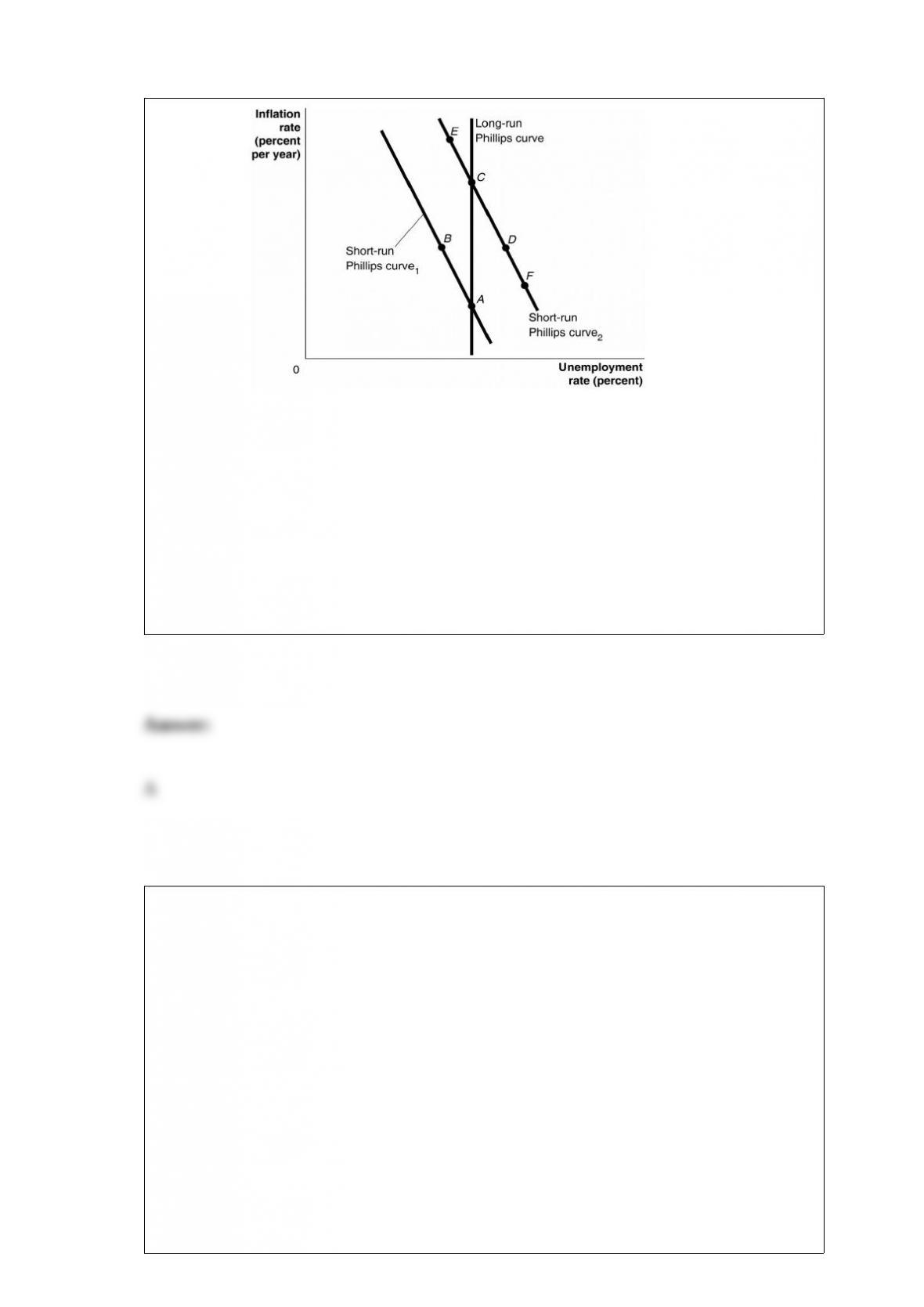
Figure 17-9
A(n) ________ would be depicted as a movement from A to D to C.
A) supply shock, such as rising oil prices,
B) increase in aggregate demand
C) implementation of contractionary monetary policy
D) increase in short-run aggregate supply
One of your classmates asserts that advertising, marketing research, and brand
management are redundant expenditures because a firm can obtain the same
information by simply looking at what customers are already buying. Which of the
following is not a response you might offer her?
A) Conducting market research is a good way for firms to keep abreast of changing
consumer tastes and preferences.
B) Advertising and brand management allow a firm to create an entry barrier which will
insulate the firm from competition and from undertaking further product innovations.
C) Marketing research could allow a firm to identify new market opportunities and at
least, in the short run, a firm can make a profit supplying products to this market
segment.

D) If a firm successfully manages its brand, customers become less price sensitive as
they perceive fewer substitutes for the firm’s brand.
Which of the following is a characteristic of a bond?
A) A bond represents a promise to repay a fixed amount of funds.
B) The face value or principal plus interest is repaid at a specified period of time.
C) The length of coupon payments is fixed by the stated maturity period.
D) All of these are characteristic of bonds.
If total utility increases at a decreasing rate as a consumer consumes more coffee, then
marginal utility must
A) remains constant.
B) increase also.
C) decrease.
D) be negative.
In a modern mixed economy, who decides what goods and services will be produced?
A) only the producers
B) only consumers
C) only the government
D) all of the above
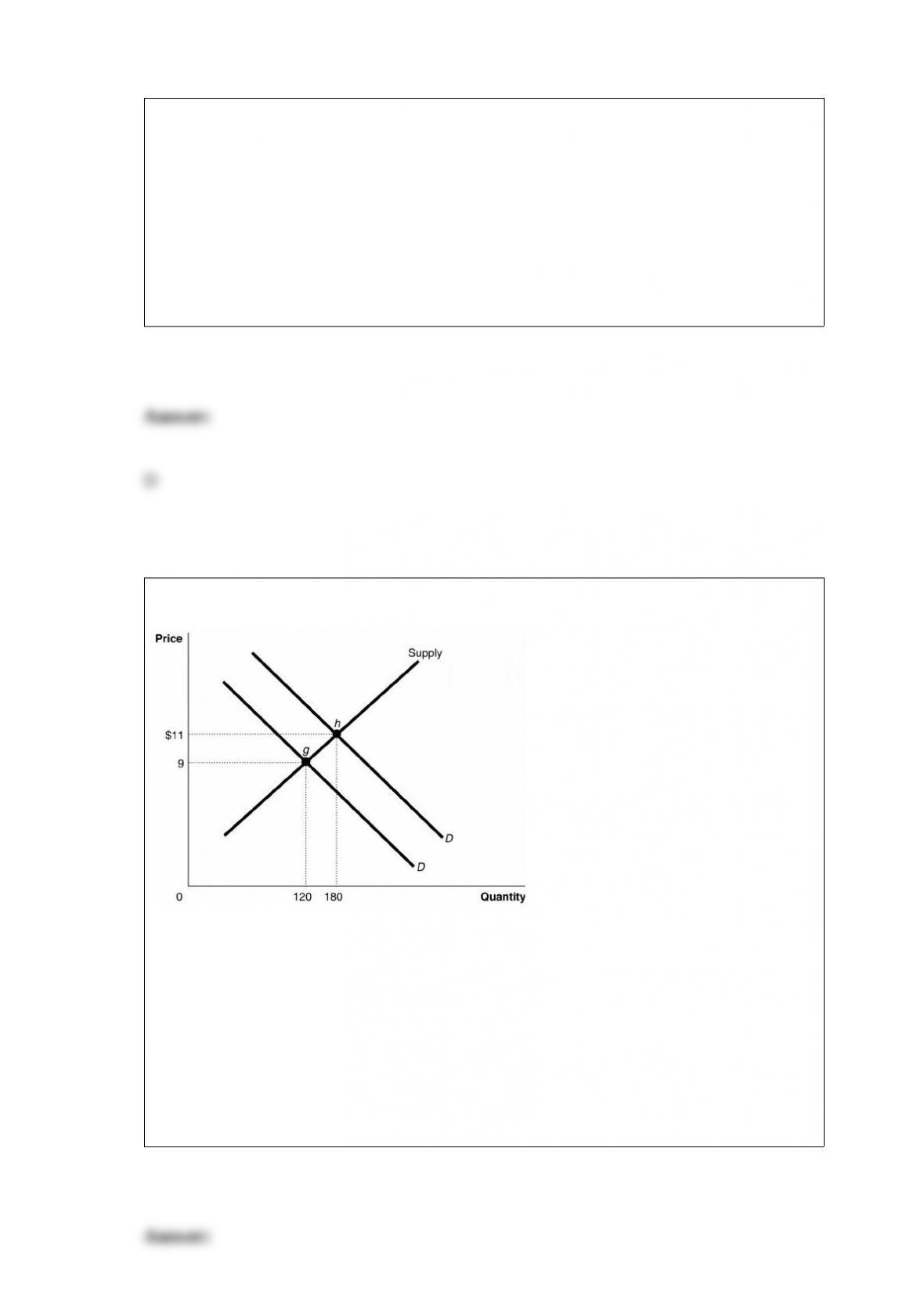
Figure 6-11
What is the value of the price elasticity of supply between g and h?
A) 20 percent
B) 0.5
C) 2
D) 0.02
An example of a barrier to entry is
A) product differentiation.
B) high profits.
C) superior technological knowledge.
D) increasing marginal costs
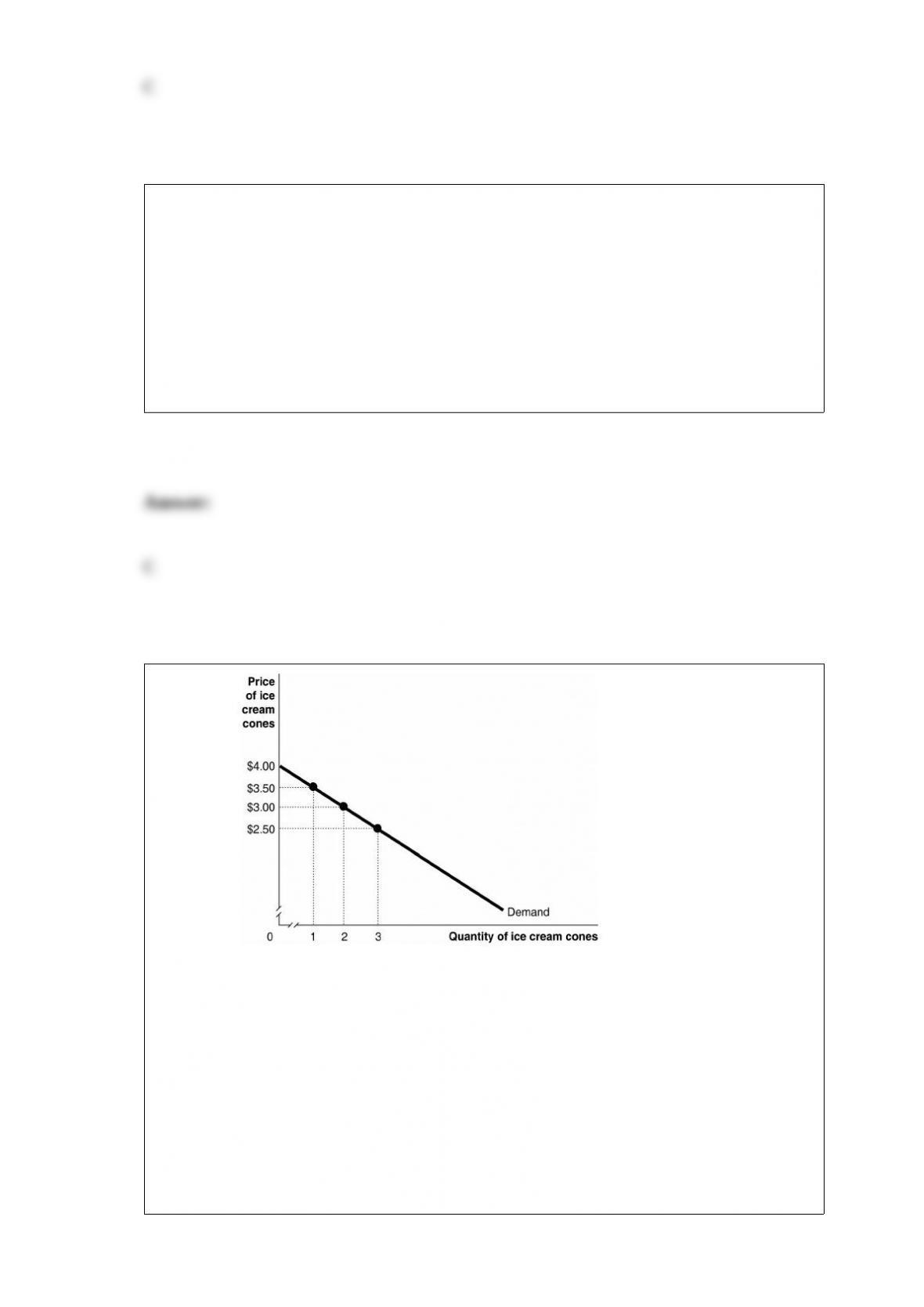
Figure 4-3 Figure 4-3 shows Kendra’s
demand curve for ice-cream cones.
What is the total amount that Kendra is willing to pay for 2 ice cream cones?
A) $1.50
B) $3.00
C) $5.50
D) $6.50

The Federal Reserve responded to the 2008 financial crisis in several ways. Which of
the following is one of the ways the Fed responded?
A) The Fed banned investment banks from obtaining discount loans.
B) The Fed lent investment banks Treasury securities in exchange for mortgage-backed
securities.
C) The Fed lowered the required reserve ratio on demand deposit accounts in order to
increase the amount of bank reserves.
D) The Fed helped Citibank to acquire General Motors and Chrysler.
The difference between the value of the goods a country exports and the value of the
goods a country imports is the country’s
A) financial account balance.
B) current account balance.
C) balance of trade.
D) capital account balance.