
As a result, of adverse selection problems in the fire insurance market, it is likely that
over time ________.
A) fewer low-risk people will be insured
B) fewer high-risk people will be insured
C) fewer low-risk and high-risk people will be insured
D) more low-risk people will be insured
________ refers to compensation sent back to family in the home country by recent
emigrants.
A) Remittances
B) Transaction costs
C) Outsourcing
D) Capital flight
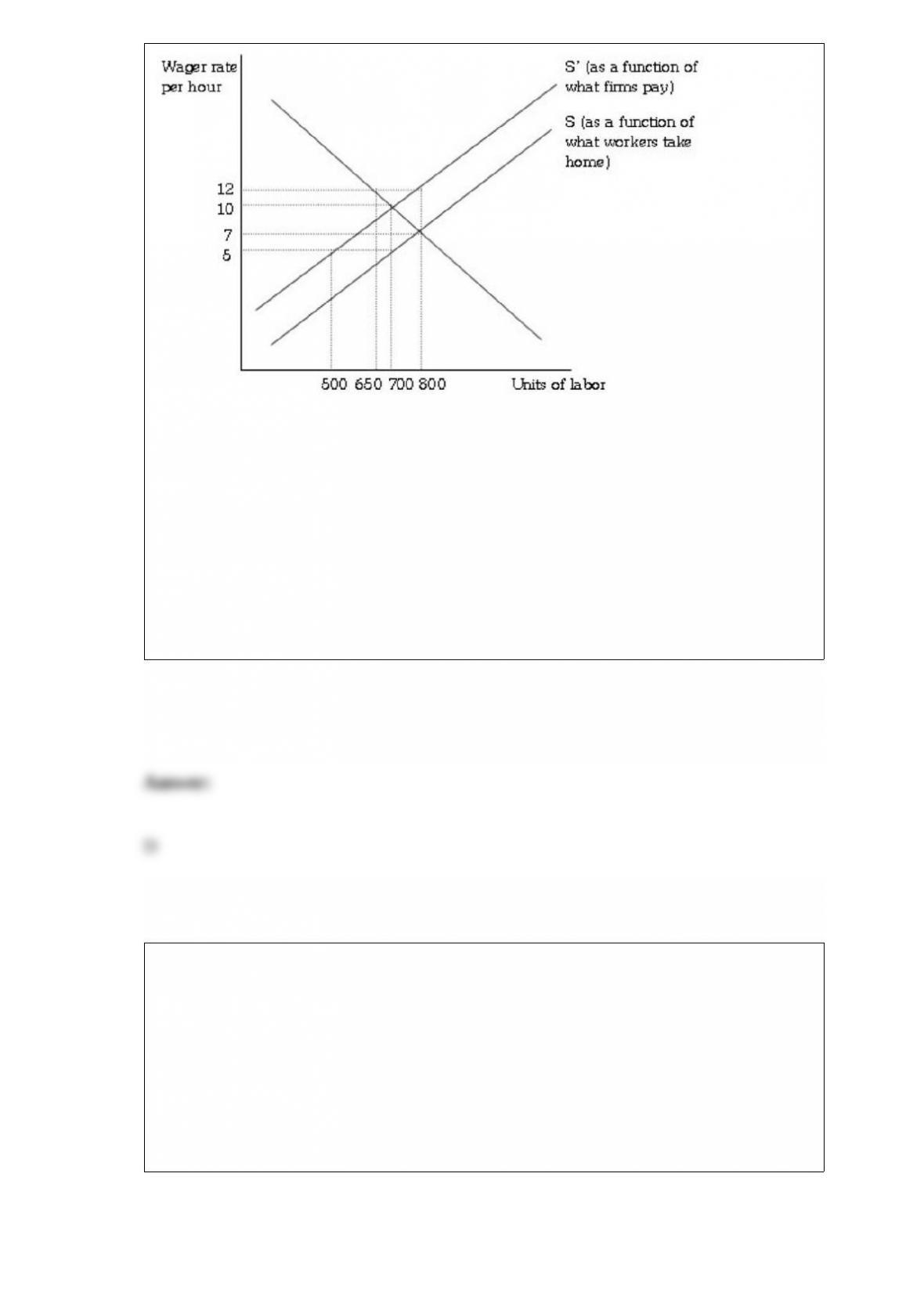
Figure 19.1
Refer to Figure 19.1. The payroll tax imposed initially
A) reduced the equilibrium wage rate by $5 per hour.
B) increased the equilibrium wage rate by $3 per hour.
C) reduced the equilibrium wage rate by $3 per hour.
D) did not change the equilibrium wage rate.
The fast-food industry is not considered perfectly competitive because
A) entry and exit are strictly regulated by the government.
B) the firm’s products are not homogeneous.
C) there is a small number of dominant firms.
D) there is a very large number of firms.

________ is (are) often used to measure individual well-being because it is (they are)
easily measured.
A) Only income
B) Income and wealth
C) Income, wealth and utility
D) Utility
For a perfectly competitive firm, the marginal revenue curve has ________ point(s) in
common with the firm’s demand curve.
A) one
B) no
C) all
D) Indeterminate from the given information.
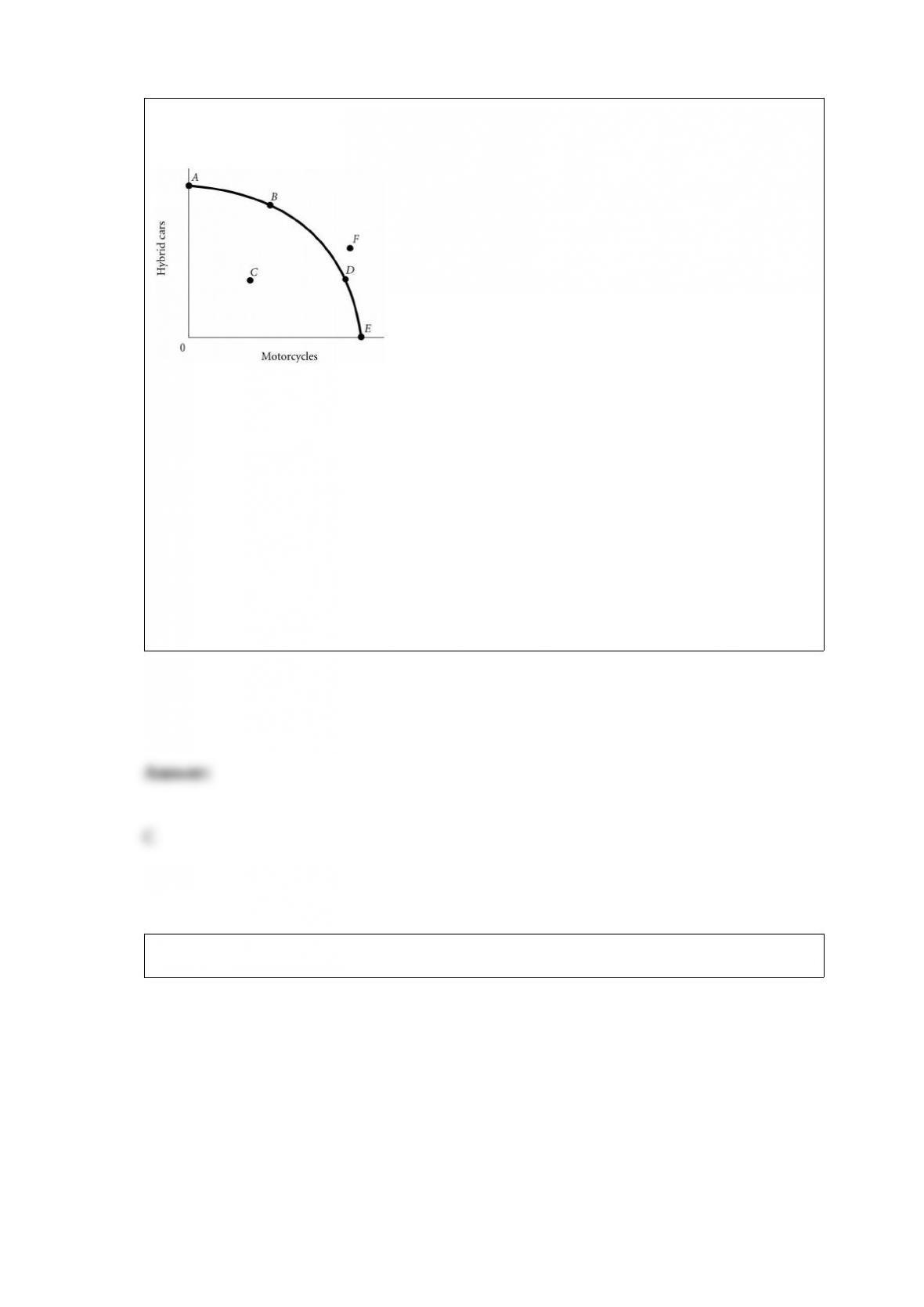
Figure 2.4
Refer to Figure 2.4. The economy moves from Point E to Point B. This could be
explained by
A) an increase in unemployment.
B) a reduction in unemployment.
C) a change in society’s preferences for hybrid cars versus motorcycles.
D) an increase in economic growth.
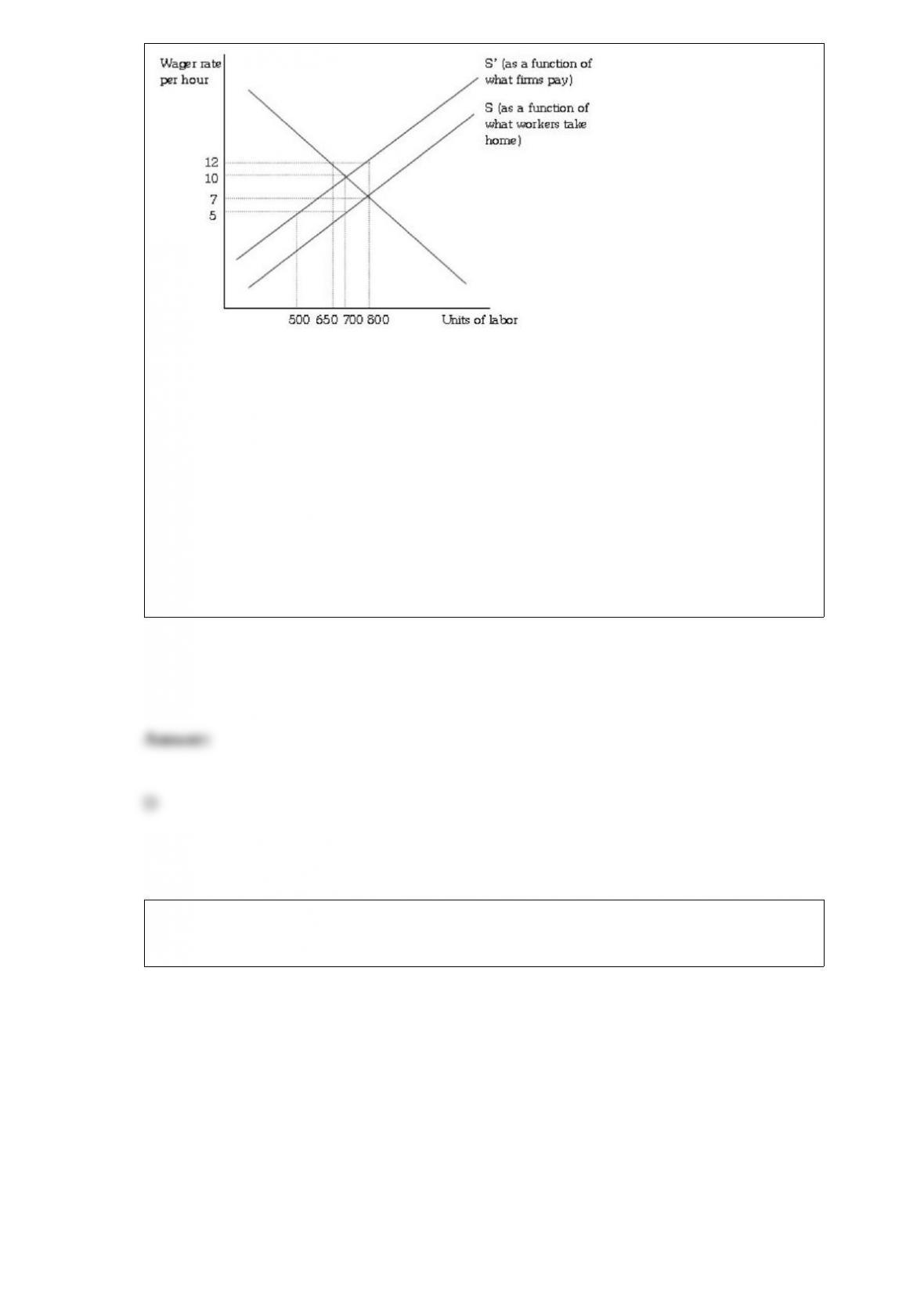
Figure 19.1
Refer to Figure 19.1. Initially after the payroll tax is imposed, the firms cost per unit ofʹ
labor is ________ per hour and the workers take home pay is ________ per hour.ʹ
A) $10; $9
B) $9; $9
C) $10; $10
D) $12; $7
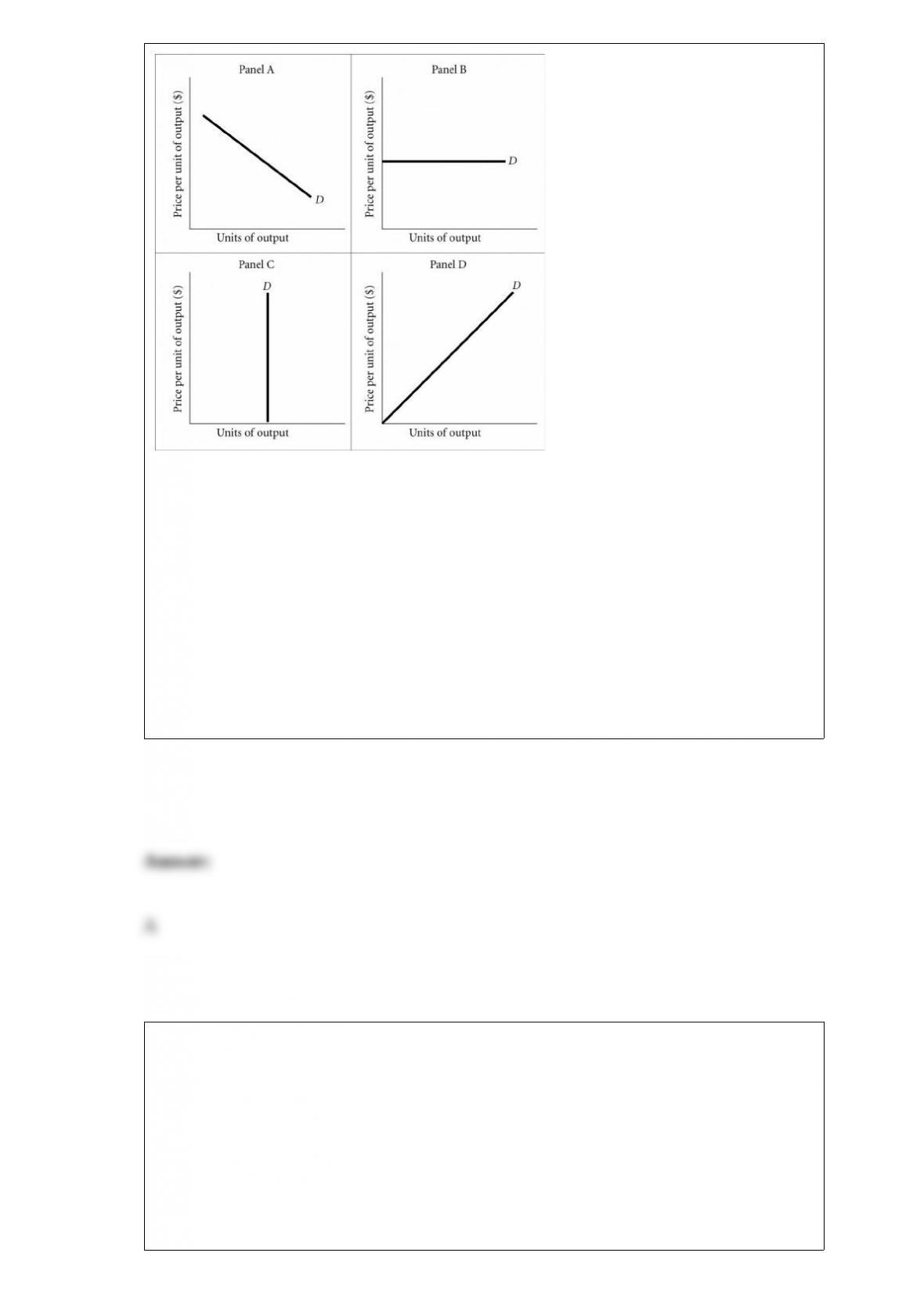
Figure 13.1
Refer to Figure 13.1. Of the following choices, Panel B best represents the demand
curve for
A) an individual producer of soybeans.
B) a utility company.
C) insulin.
D) Samsung televisions.
Every tax has two parts: a(n) ________.
A) base and a rate structure
B) incidence and a rate
C) base and an incidence
D) rate structure and an excess burden
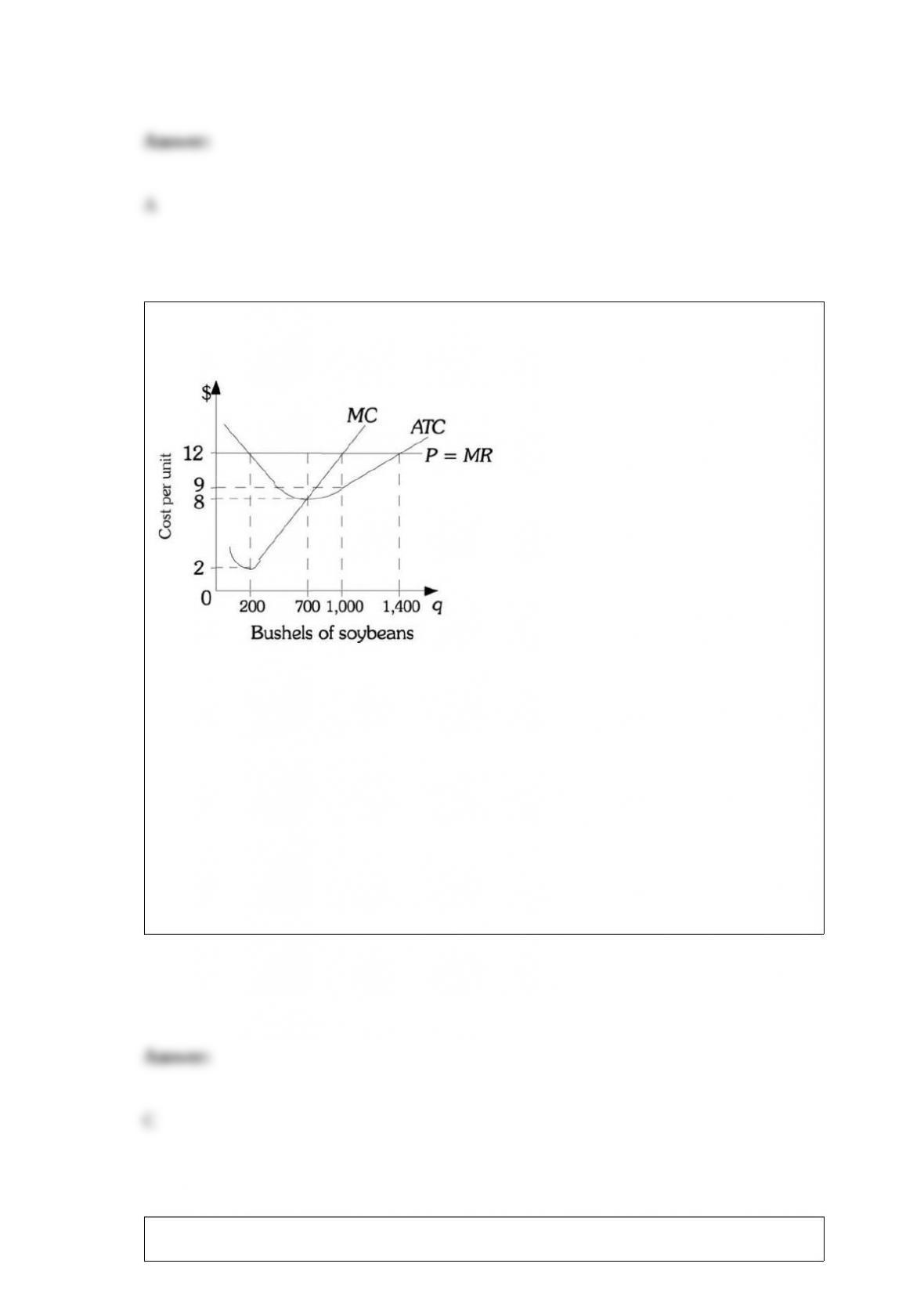
Figure 8.8
Refer to Figure 8.8. If this farmer produces the profit maximizing level of soybeans
when the market price is $8 per bushel, then her total cost would be
A) $1,200.
B) $2,800.
C) $5,600.
D) $8,400.
Related to theEconomics in Practice on page 55: The Amazon Kindle and the electronic

textbooks available for the Kindle are complementary goods. Electronic textbooks and
traditional, hard copy textbooks are substitute products. If the price of electronic
textbooks for the Kindle increases,
A) demand for the Kindle decreases, demand for electronic textbooks decreases, and
demand for traditional, hard copy textbooks increases.
B) the quantity of Kindles demanded decreases, demand for electronic textbooks
decreases, and the quantity of traditional, hard copy textbooks demanded increases.
C) demand for the Kindle increases, the quantity of electronic textbooks demanded
decreases, and demand for traditional, hard copy textbooks increases.
D) demand for the Kindle decreases, the quantity of electronic textbooks demanded
decreases, and demand for traditional, hard copy textbooks increases.
If ________, a firm would either operate or shut down in the short run and contract in
the long run.
A) TR > TC
B) TC > TR
C) AVC > ATC
D) AFC > AVC
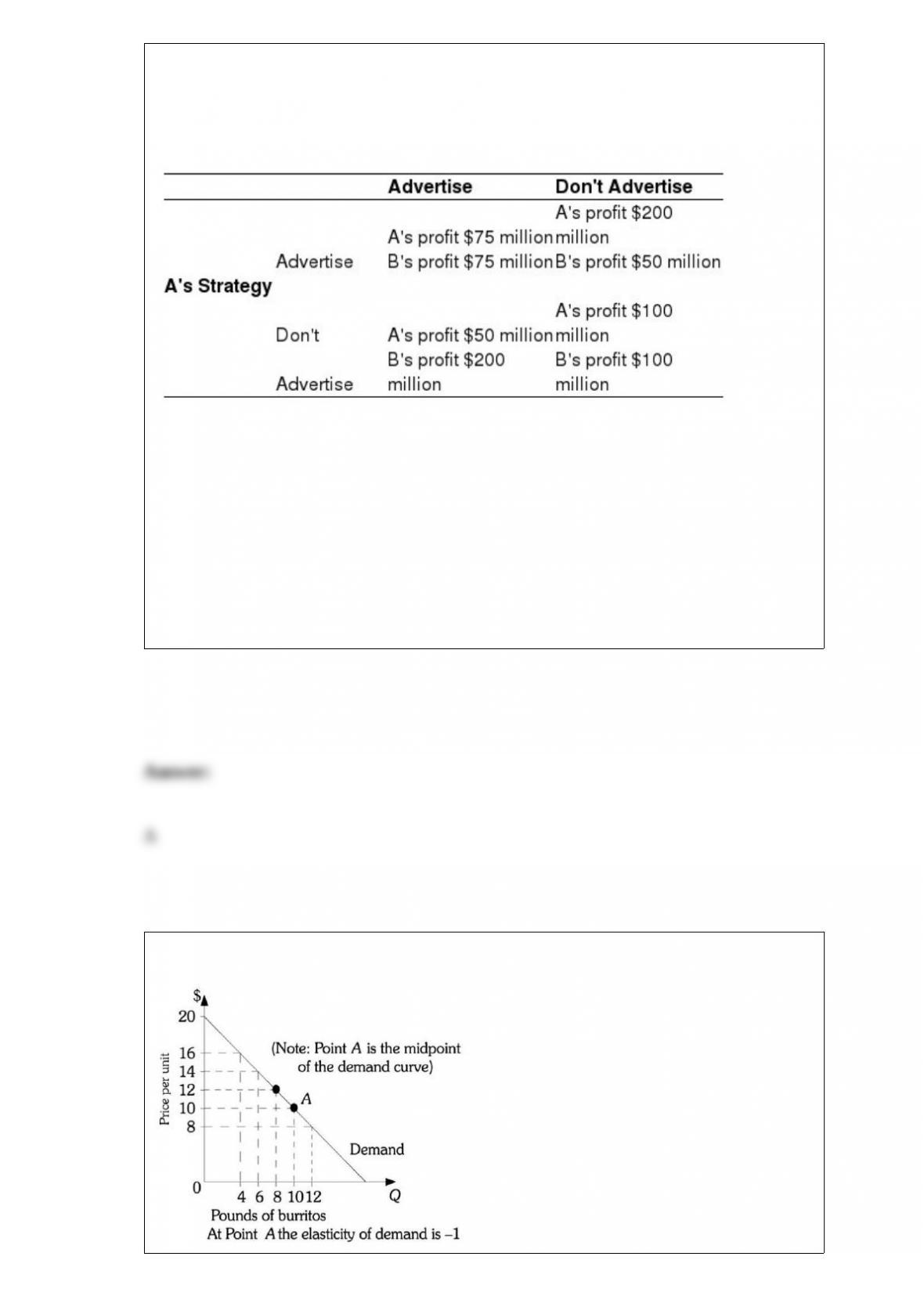
Table 3
B’s Strategy
Refer to Table 14.3. What is the Nash equilibrium in the game?
A) (Advertise, Advertise)
B) (Don’t Advertise, Don’t Advertise)
C) (Don’t Advertise, Advertise)
D) (Advertise, Don’t Advertise)
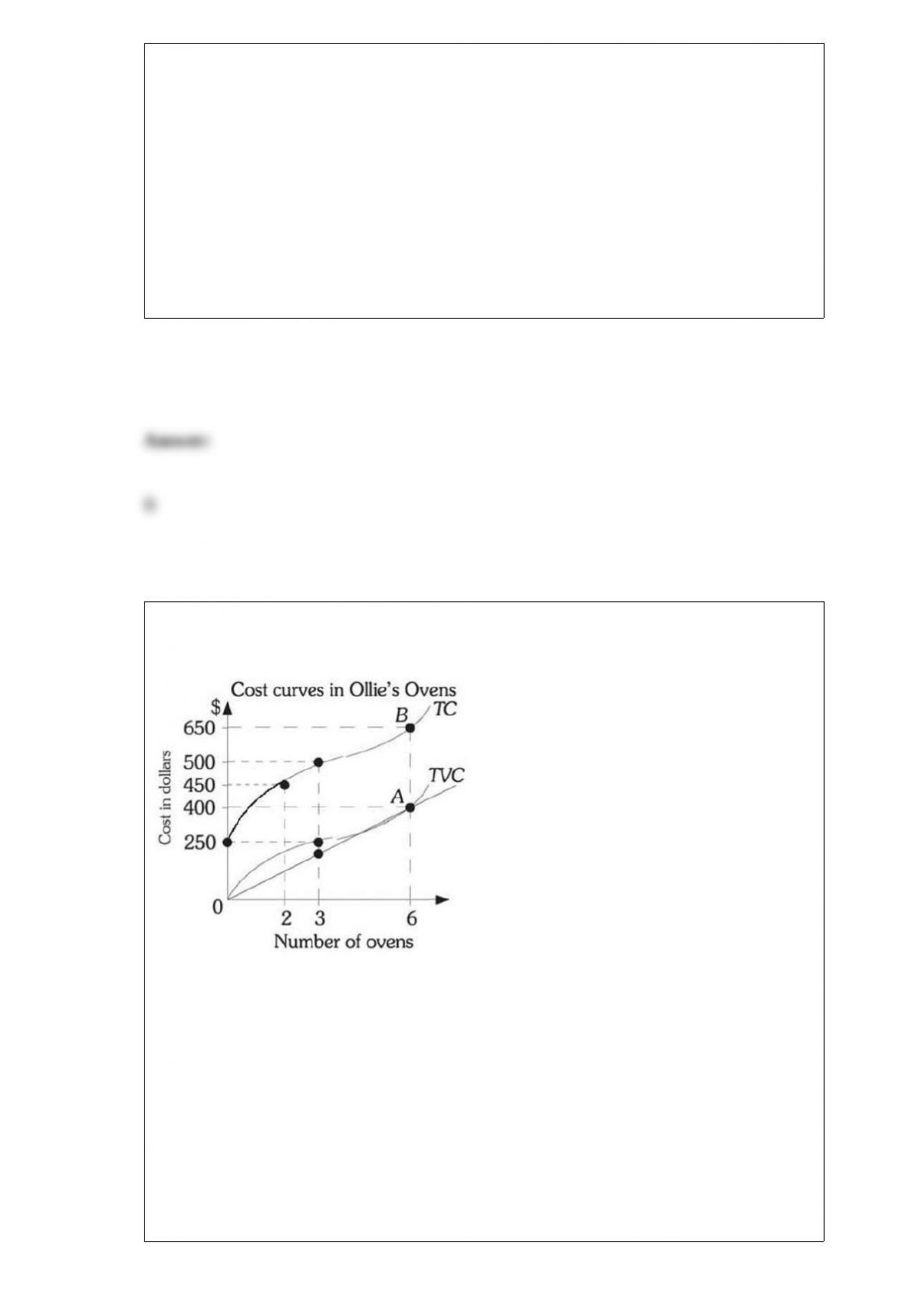
Figure 13.4
Refer to Figure 13.4. The marginal revenue of the eighth pound of burritos is
A) $3.
B) $5.
C) $12.
D) $96.
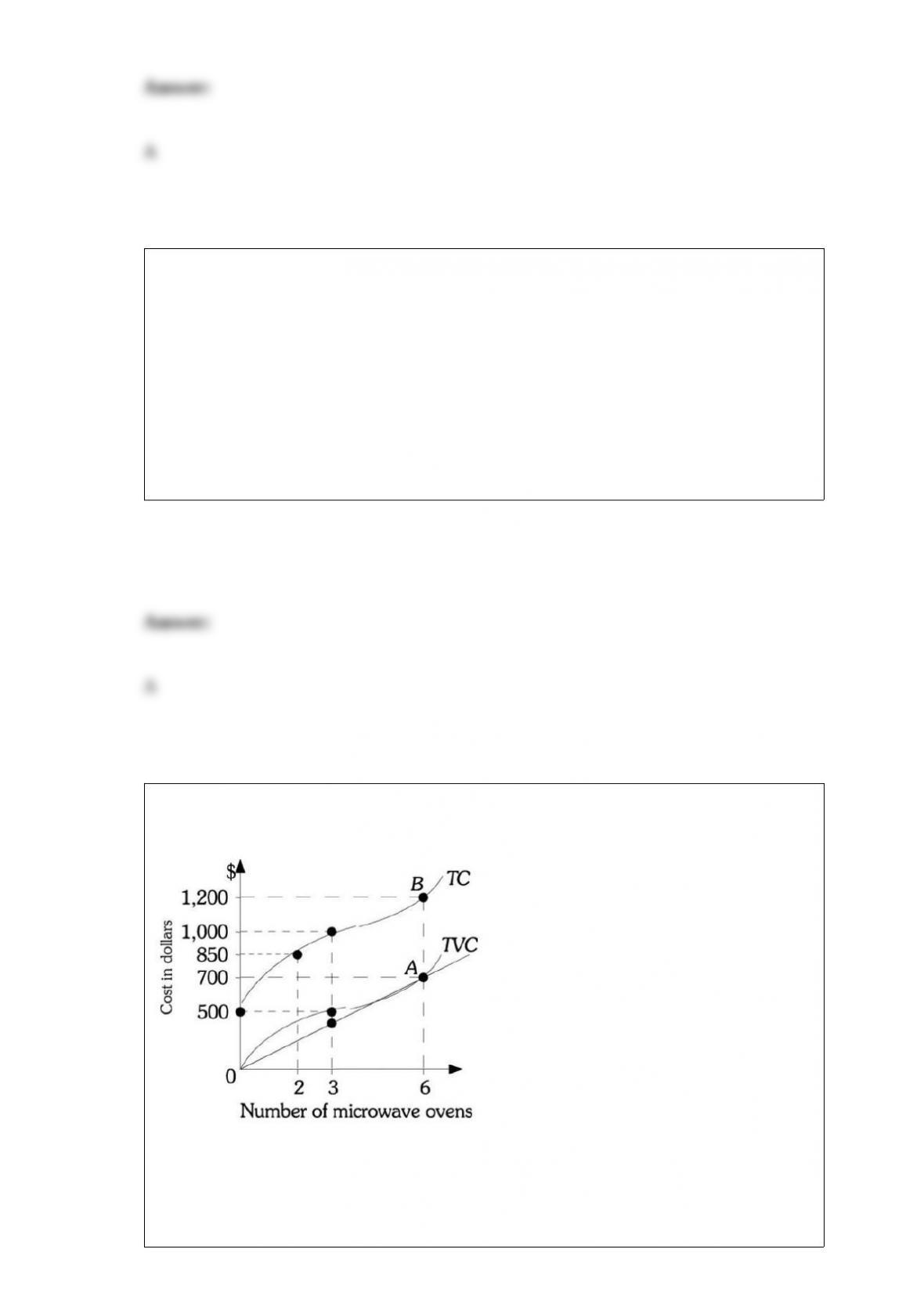
Figure 8.5
Refer to Figure 8.5. Average total cost is ________ if Ollie’s Ovens produces two
ovens.
A) $100
B) $200
C) $225
D) indeterminate from this information

At the Pampered Pet Salon the marginal products of the first, second, and third workers
are 20, 16, and 10 dogs washed, respectively. The total product (number of dogs
washed) of the three worker is
A) 15.33.
B) 30.
C) 46.
D) 138.
Tax shifting ________.
A) is the way in which a tax is structured
B) is the ultimate distribution of a tax’s burden
C) occurs when taxes cause prices to increase, but wages to fall
D) occurs when taxed agents can alter their behavior and do something to avoid paying
a tax

Investors put up $1,040,000 to construct a building and purchase all equipment for a
new restaurant. The investors expect to earn a minimum return of 10 per cent on their
investment. The restaurant is open 52 weeks per year and serves 900 meals per week.
The fixed costs are spread over the 52 weeks (i.e. prorated weekly). Included in the
fixed costs is the 10% return to the investors and $2,000 in other fixed costs. Variable
costs include $2,000 in weekly wages, and $600 per week in materials, electricity, etc.
The restaurant charges $8 on average per meal.
Total fixed costs per week are
A) $1,000.
B) $2,000.
C) $3,000.
D) $4,000.
Mustard and mayonnaise are substitutes. Mustard and relish are complements. Mustard
is a normal good. During the summer, about 50% of all mustard was recalled by
manufacturers and removed from store shelves.
Refer to Scenario 3.2. The government wants to protect consumers from rising food
prices. Therefore, price restrictions are imposed on mustard producers, prohibiting them
from raising the price of mustard. This will cause
A) an excess demand for mustard.
B) an excess supply of mustard.
C) an increase in the demand for mustard.
D) a decrease in the supply of mustard.
A comprehensive tax of 15% on all forms of income with no deductions or exclusions is
an example of a
A) proportional tax.
B) progressive tax.
C) regressive tax.
D) rate tax.
Figure 8.4
Refer to Figure 8.4. The vertical distance AB represents ________ costs.
A) total fixed

B) average fixed
C) marginal
D) average total
If an economy is fully utilizing its resources, it can produce more of one product only if
it
A) doubles manufacturing of the product.
B) produces less of another product.
C) adds more people to the labor force.
D) reduces the price of the most expensive products.
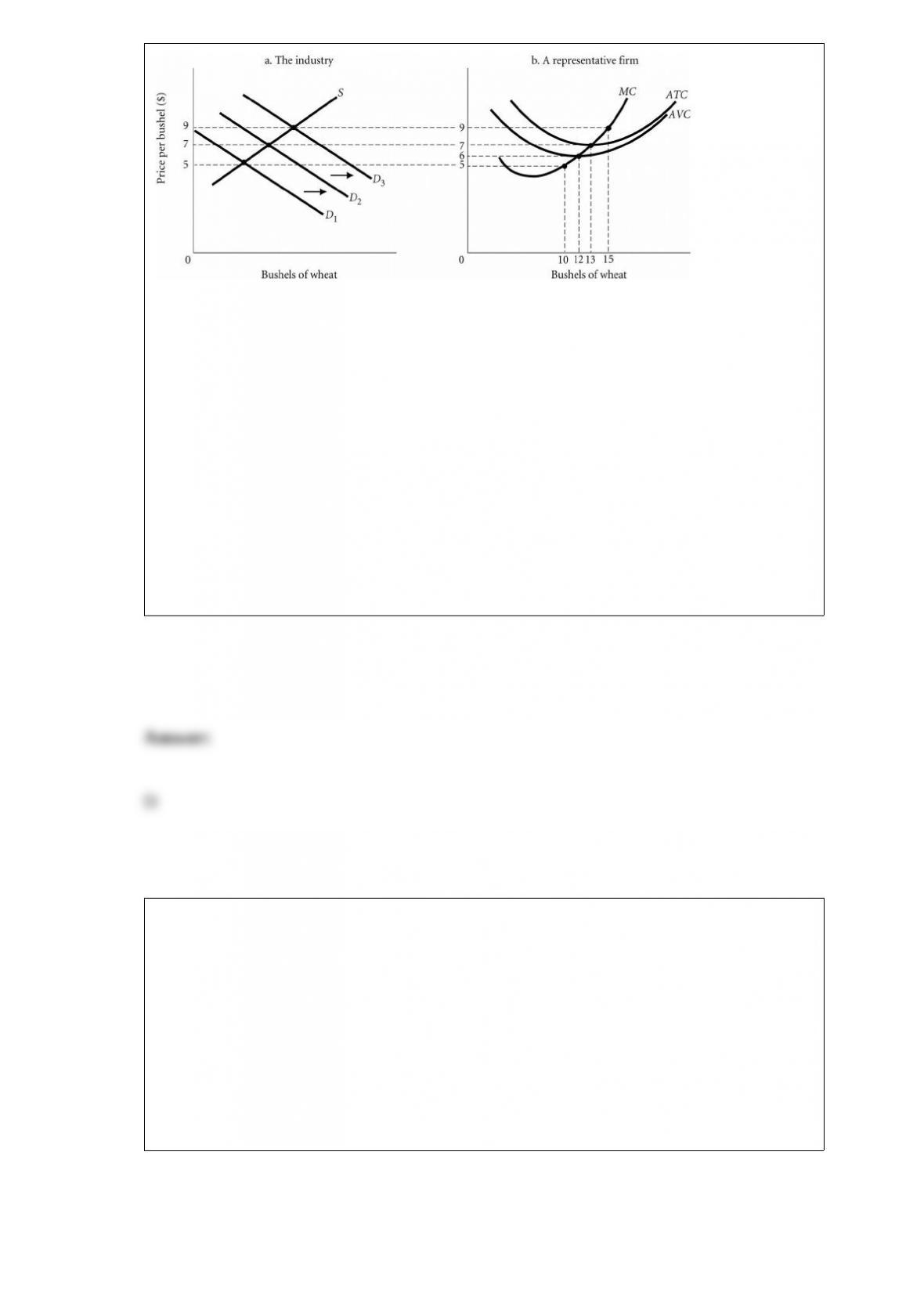
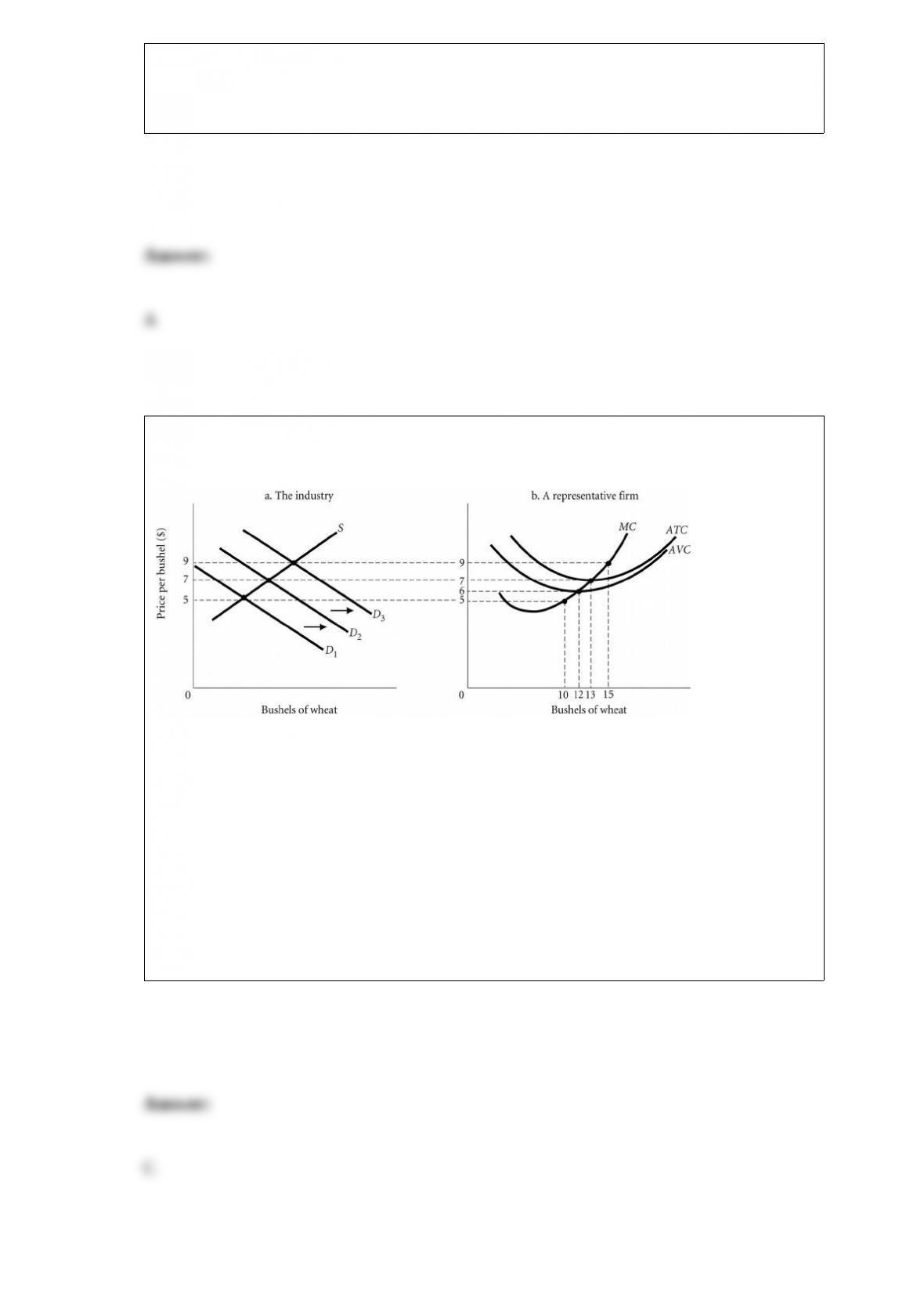
Figure 9.7
Refer to Figure 9.7. Suppose demand for wheat is initially D2. If consumer incomes
decrease, then demand for wheat will shift to ________. This will ________ the
equilibrium price of wheat, and individual profit maximizing firms will produce
________ bushels of wheat.
A) D3; increase; 15
B) D1; increase; 10
C) D3; decrease; 7
D) D1; decrease; 0
The four largest firms account for approximately 90% of U.S. beer sales. The U.S. beer
industry would be best classified as a(n)
A) perfectly competitive industry.
B) monopolistically competitive industry.
C) oligopoly.
D) monopoly.
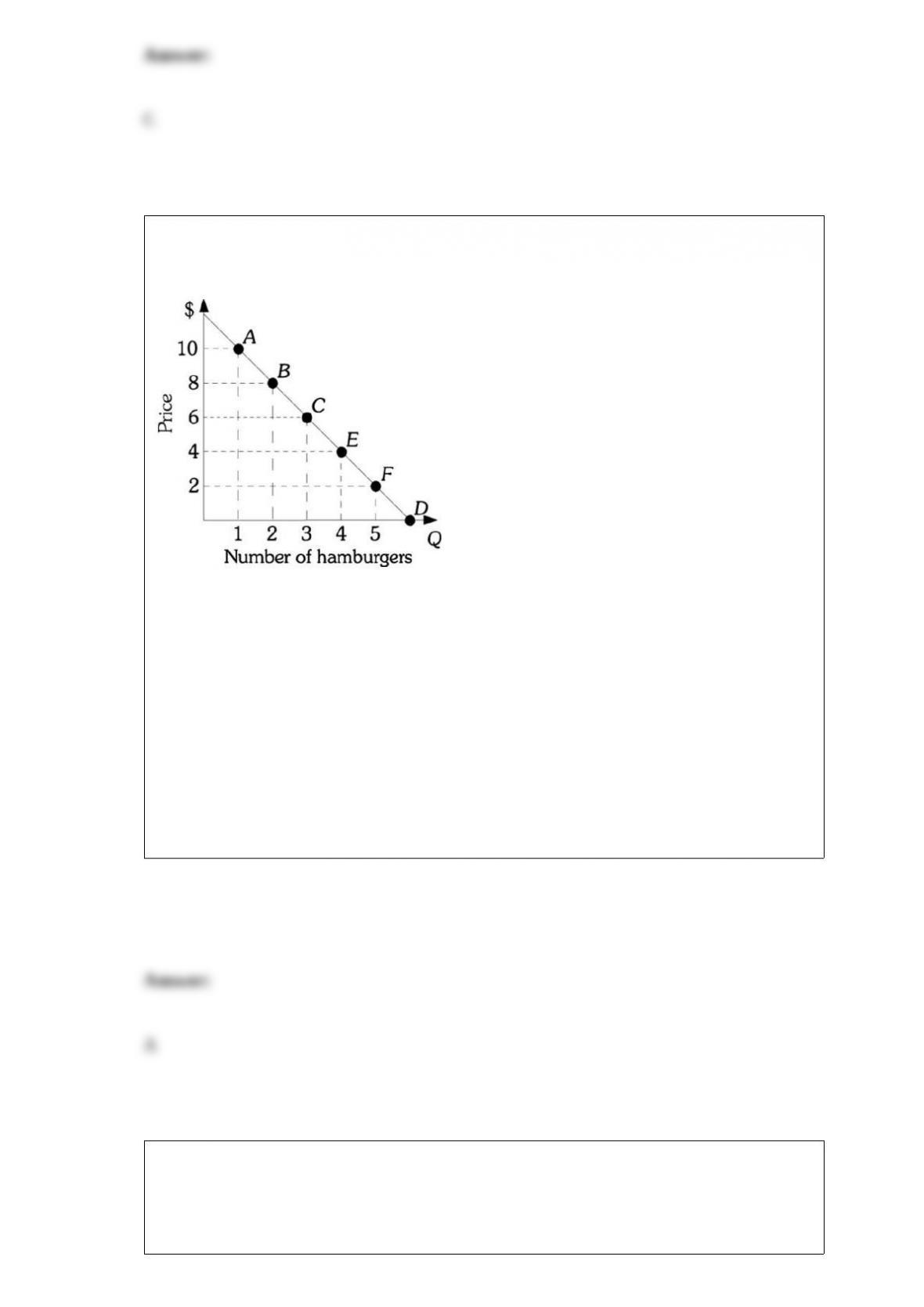
Figure 5.2
Refer to Figure 5.2. If the price of a hamburger is increased from $2 to $4, the price
elasticity of demand equals ________. Use the midpoint formula.
A) -0.33
B) -2.0
C) -3.0
D) -5.0
In a laissez-faire economy,
A) individual people and firms pursue their own self-interest.

B) the government decided how to distribute goods and services.
C) a centralized authority establishes what will be produced.
D) consumers do not exercise choice.
Which of the following is a question answered with positive economic analysis?
A) Should the college offers free parking for students?
B) Should the college provide more financial aid assistance?
C) If the college increased tuition, will class size decline?
D) Should the college cut tuition to stimulate enrollment?
It is necessary to ration a good whenever ________ exists.
A) excess demand
B) excess supply
C) a surplus
D) market equilibrium
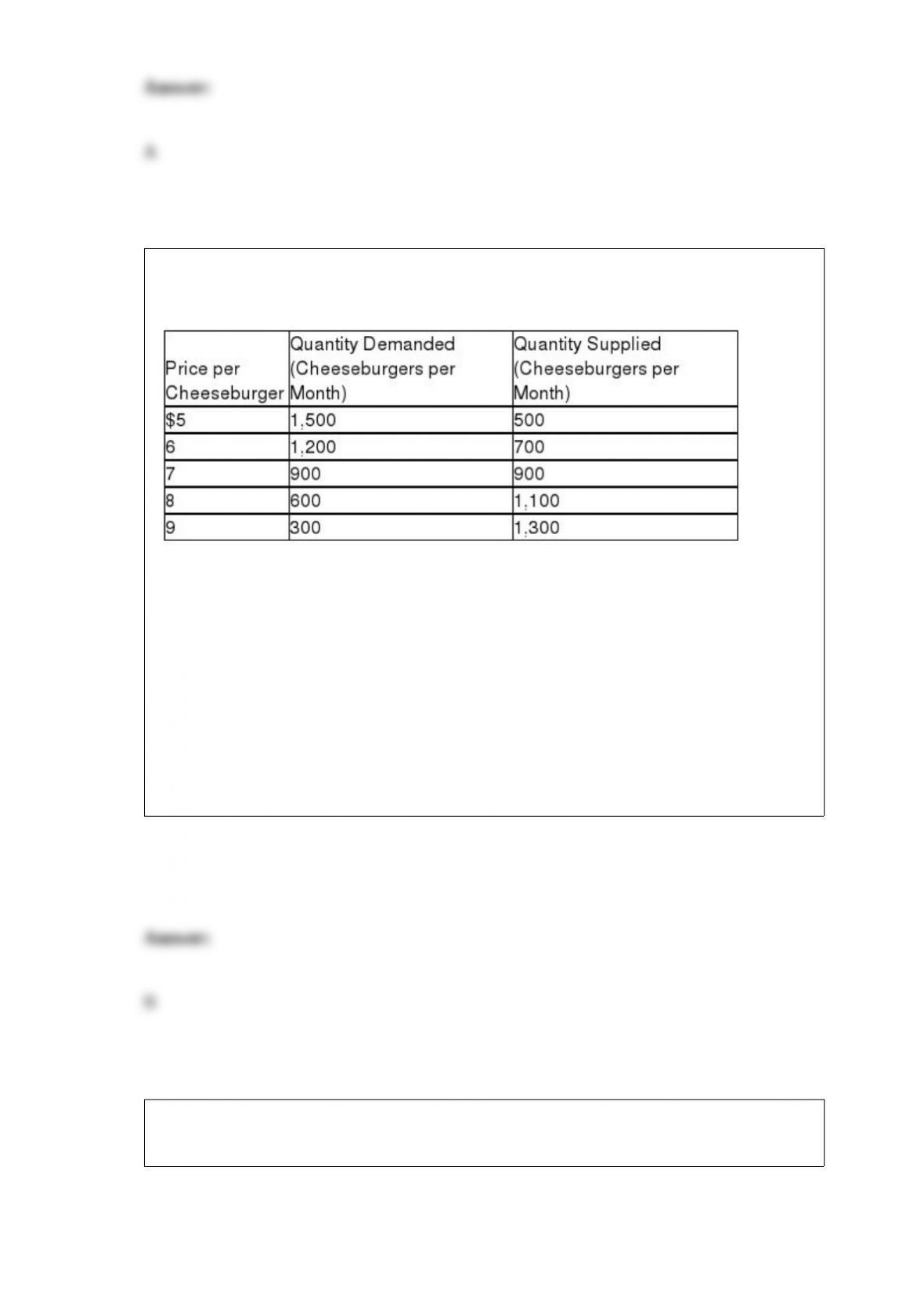
Table 3.2
Refer to Table 3.2. In this market there will be an excess demand of 500 cheeseburgers
at a price of
A) $5.
B) $6.
C) $7.
D) $8.
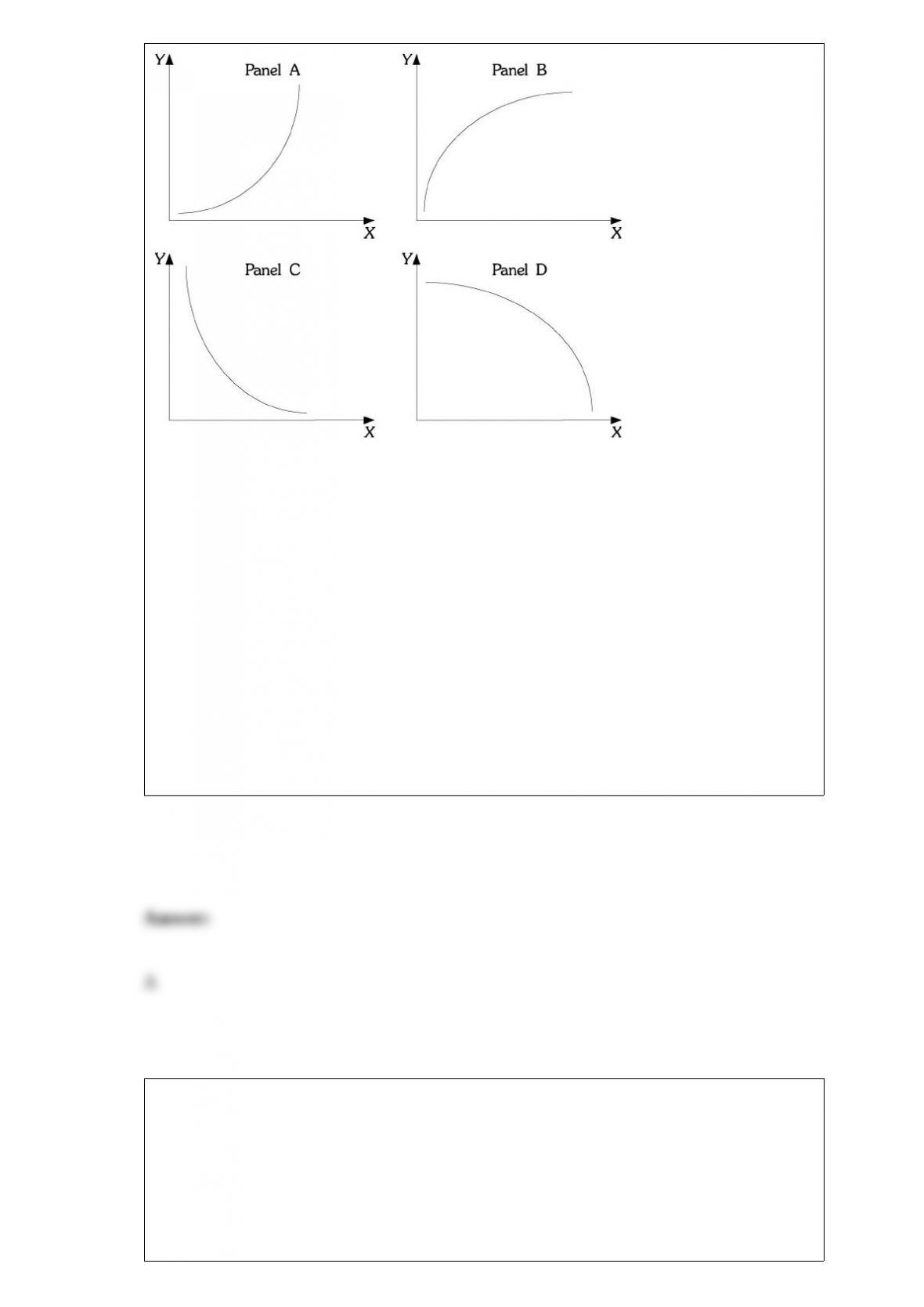
Figure 1.5
Refer to Figure 1.5. As income increases, consumption increases, but for each
additional increase in income, consumption increases by a larger and larger amount. If
consumption is graphed on the vertical axis and income is graphed on the horizontal
axis, the relationship between consumption and income would look like which of the
following panels?
A) A
B) B
C) C
D) D
________ refers to a firm’s ability to raise price without losing all demand for its
product.
A) Market power
B) Price taking
C) Price discriminating
D) Price gouging
Figure 9.7
Refer to Figure 9.7. If MR = $9, then in the long run,
A) the firm will shut down.
B) the firm will exit the industry.
C) new firms will enter the industry, and the current firms will expand production.
D) None of the above is correct.

Relating to the Economics in Practice on page 257: Which of the following would be
an expected result of increased government subsidies for ethanol, a fuel produced from
corn?
A) an increase in the price of gasoline made in part from ethanol
B) an increase in the price of land used to farm corn
C) decreases in the price of land used to farm grains other than corn
D) a decrease in the production of corn relative to other grains
Total cost is calculated as
A) TFC + TVC.
B) ATC × P.
C) the sum of all the firm’s implicit costs.
D) AFC + AVC.
What is meant by consumer sovereignty?
Define the concept used in economics known as Ockham’s Razor.
Use the graph below to show the firm’s short-run supply curve of a perfectly
competitive firm.
Often bar owners will require that patrons stand in a line to get a wristband entitling
them to pay a preferred price for drinks if they arrive early to the bar. The wristbands
are typically tamper- resistant and can be easily identified if patrons have been
switching wristbands with other customers. What is the bar owner concerned about and
why does he make his patrons wear these bands?
Describe the properties of a progressive tax and illustrate with an example.
Explain the difference between economic growth and stability. Can a country
experience both at the same time? Why or why not?
Crtically evaluat the following statement. “It is possible to calculate comparative
advantage even when prices are not known.”
List and describe the two government agencies that enforce antitrust laws in the United
States.
Newspaper machines and soda vending machines operate very differently. The
newspaper machine is a mechanical box. You place your four quarters in the machine
and you open the door and low and behold there is a stack of newspapers at your
disposal. Most people take one and close the door for the next patron to purchase his
own copy. But notice that soda vending machines don”t operate the same way. They are
also mechanical but when the four quarters are inserted and a selection is made only
one can of soda is available for the consumer to purchase. Explain in terms of marginal
utility why these two machines are designed so differently?
Explain how to calculate the slope of a non-linear function. What does the slope
measure?
In a nutshell what has been the reality of central planning?
Comment on the following statement: “If one player in the game does not have a
dominant strategy, it is impossible to predict the outcome of the game.”
Comment on the following statement: “Capital investment decisions always involve
risk.”
What was the GATT?
When Peter’s Pizza Company produces 50 pizzas, its average total cost is $8. The
marginal cost of the 51st pizza is $7. If the firm chooses to produce the 51st pizza, what
will happen to average total cost? Explain.
What is the difference between stock and flow measures?
What is the profit-maximizing rule for a monopolist?