The study of individual choice and its implications for the behavior of prices and
quantities in individual markets is:
A. microeconomics.
B. a normative economic principle.
C. the Scarcity Principle.
D. macroeconomics.
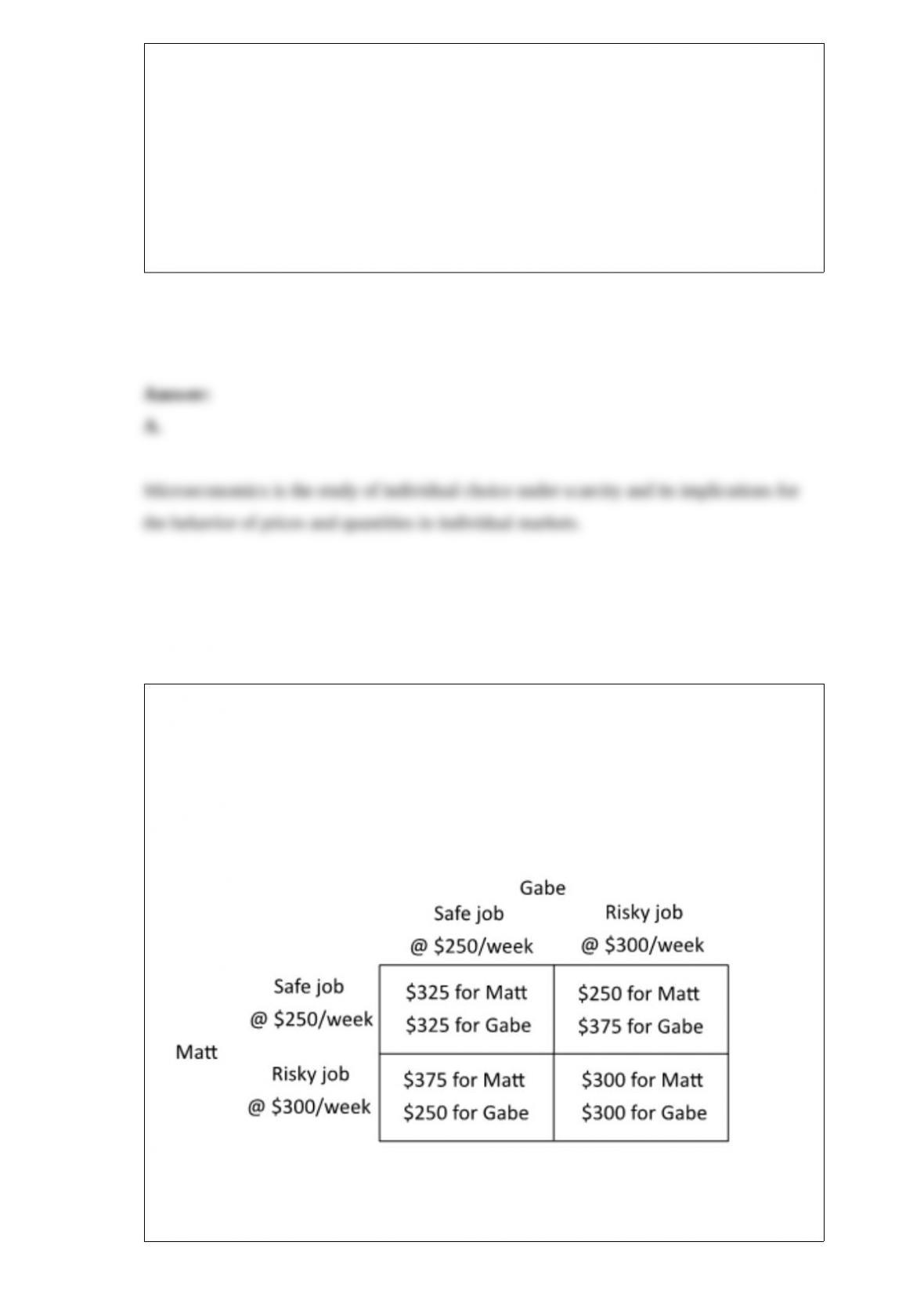
Suppose Matt and Gabe must both choose between two jobs, a safe job that pays $250
per week and a risky job that pays $300 per week. The value of safety to each is $75 per
week. Having more income than the other is worth $75 per week to each, and having
less income than the other means a $75-per-week reduction in satisfaction. Having the
same income as the other means no change in satisfaction. The payoff matrix below
summarizes this situation.
In this game, we can predict that choosing the risky job will:

A. give Matt more satisfaction only if Gabe chooses the risky job.
B. give Matt more satisfaction only if Gabe chooses the safe job.
C. give Matt more satisfaction no matter which job Gabe chooses.
D. never give Matt more satisfaction.
Most economists generally argue ______ trying to block technological advances
because these technological advances ______.
A. in favor of; cause the economy to grow to rapidly
B. in favor of; increase wage inequality
C. against; are necessary for improved standards of living
D. against; promote wage equality
The Scarcity Principle tells us ______, and the Cost-Benefit Principle tells us ______.
A. that choices must be made; how to make good choices
B. that good choices eliminate scarcity; how to make good choices
C. how to make choices; that choices must be made
D. how to make good choices; that choices involve costs and benefits
Explanations for the high saving rate in Japan consistent with the life-cycle reason for
saving include:
A. long life expectancies and large down payments required for home purchases.
B. lifetime employment.
C. the desire to leave resources to children who provide support and attention to parents
in their old age.
D. low unemployment rates in Japan.
A highway without any tolls between 12am and 5am when there is very little traffic is
an example of a ______ good.
A. collective
B. public

C. private
D. commons
In the Keynesian model, a $1 billion increase in autonomous consumption leads to
______ in short-run equilibrium output.
A. a $1billion increase
B. a greater than $1 billion increase
C. no change
D. a $1 billion decrease
Your neighbors have offered to pay you to look after their dog while they are on
vacation. It will take you one hour per day to feed, walk, and care for the dog, which
you can do either before or after you go to work. Your regular job pays $10 per hour,
and you can work up to eight hours per day. The smallest amount of money you would
accept to look after your neighbor’s dog is equal to:
A. $10 per day, because that is your opportunity cost of one hour of work.
B. $15 per day, because overtime wages are generally 1.5 times your regular wage
when you work more than eight hours a day.
C. zero, because your regular job is not available for more than eight hours per day.
D. the value of one hour of leisure, which is greater than zero.
In an expansion, the cyclical rate of unemployment is often:
A. positive.
B. zero.
C. negative.
D. equal to the natural rate of unemployment.
The figure below shows Becky’s daily production possibilities curve for dresses and
skirts.
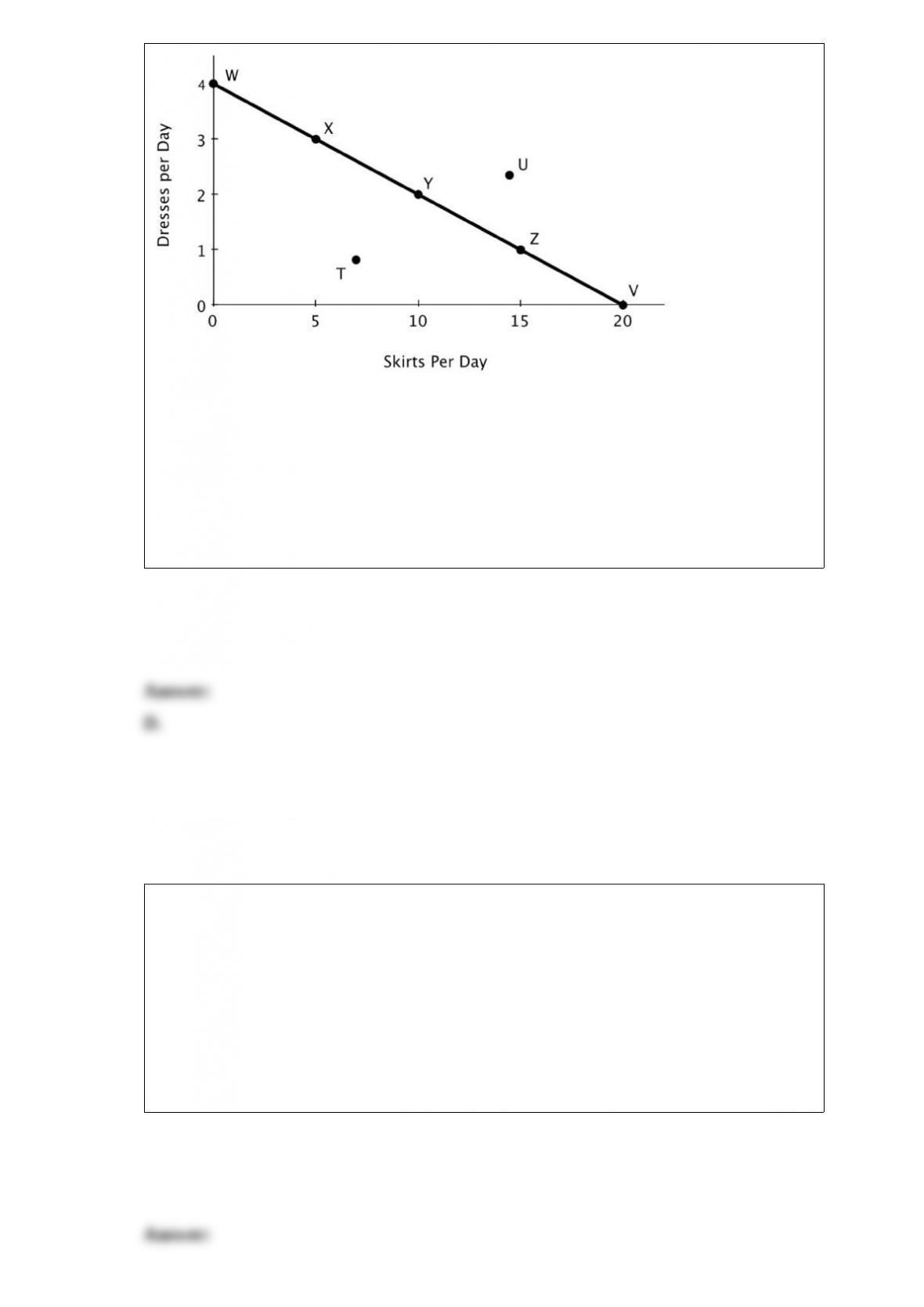
The maximum number of dresses that Becky can make in a day is represented by point:
A. U
B. T
C. V
D. W
If a firm faces a downward-sloping demand curve, then:
A. the firm could be either a perfectly competitive firm or an imperfectly firm.
B. the firm’s marginal revenue from selling an additional unit of output is less than
price.
C. it is a perfectly competitive firm.
D. the firm’s production process exhibits economies of scale.
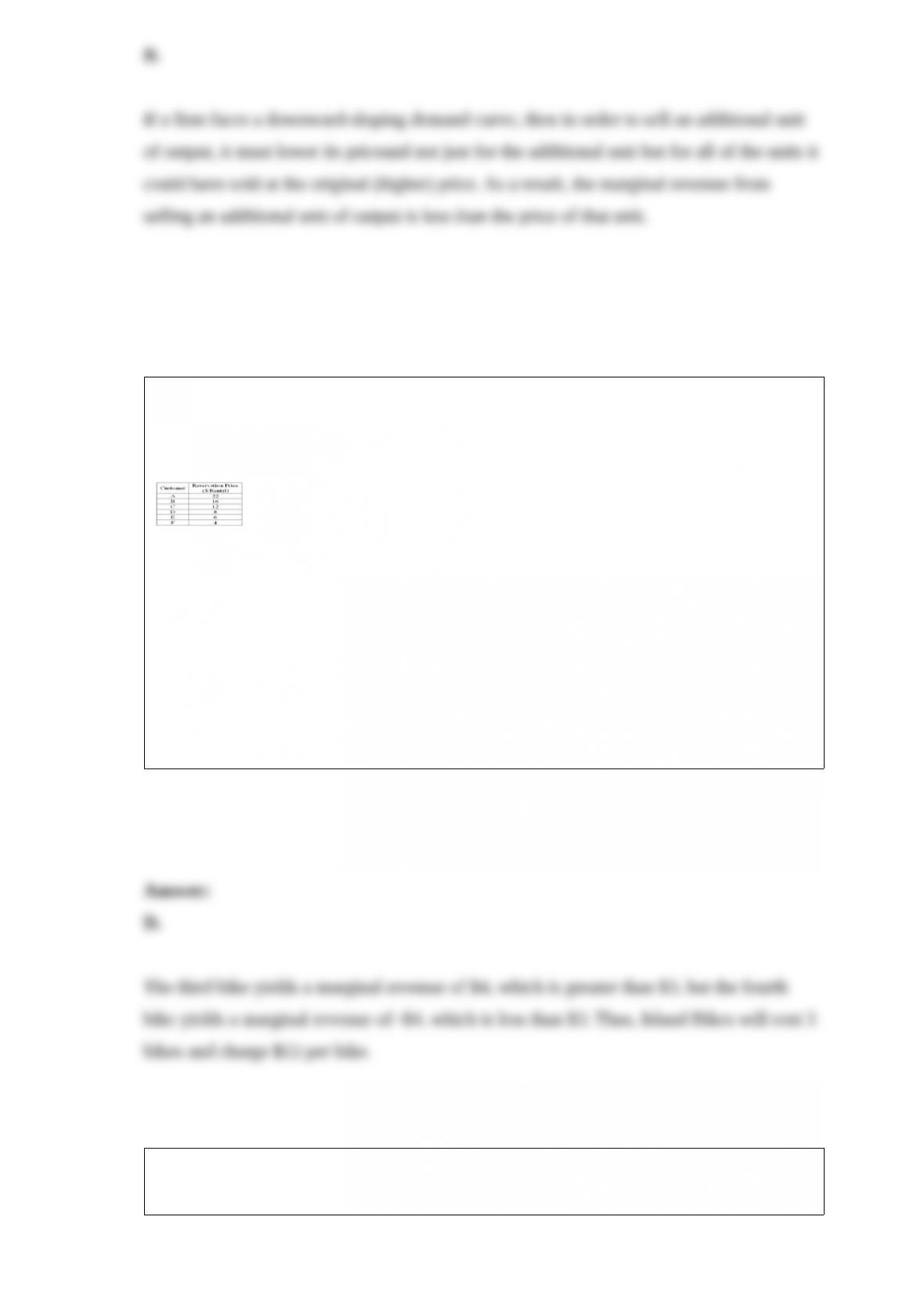
Suppose Island Bikes, a profit-maximizing firm, is the only bike rental company in a
small resort town. The marginal cost to Island Bikes of renting out a bike is $3, and
Island Bikes has no fixed costs. Each day Island Bikes has six potential customers,
whose reservations prices are listed below.
If Island Bikes charges a single price to all of its customers, then how many bikes will it
rent out each day?
A. 6
B. 5
C. 4
D. 3
This graph illustrates the marginal costs and marginal benefits of acquiring information
before making a major purchase.
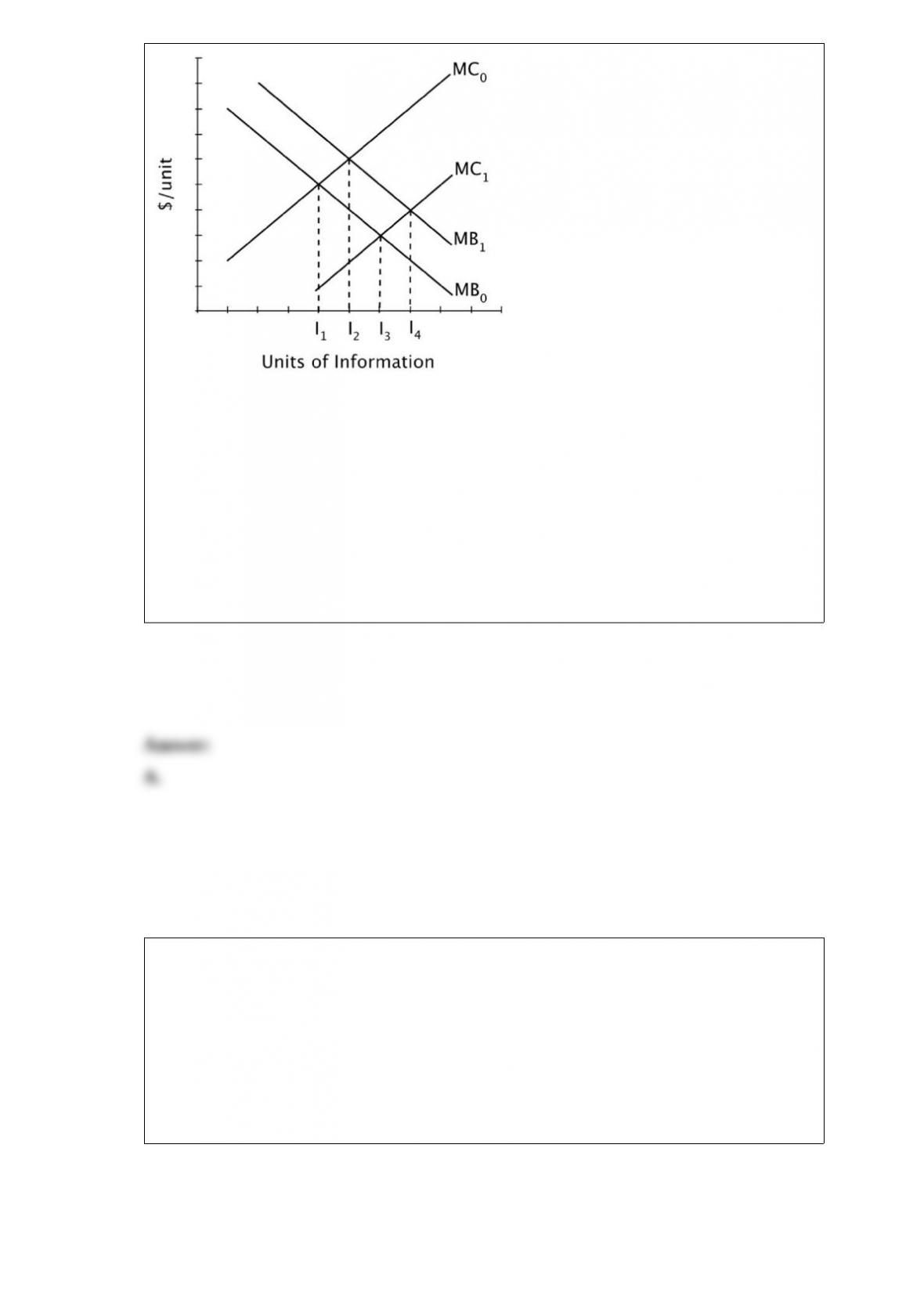
If the original curves are MB0 and MC0, the optimal quantity of information about this
product is:
A. I1.
B. I2.
C. I3.
D. I4.
The quantity equation states that:
A. money times velocity equals nominal GDP.
B. money times velocity equals real GDP.
C. money times the average price level equals nominal GDP.
D. money times the average price level equals real GDP.

Suppose Acme and Mega produce and sell identical products and face zero marginal
and average cost. Below is the market demand curve for their product.
If Acme and Mega decide to collude and work together as a monopolist with each firm
producing half the quantity demanded by the market at the monopoly price, then what
will be Mega’s economic profit?
A. $0
B. $50
C. $100
D. $150
If the slope of a demand curve is infinite, then the price elasticity of demand is:
A. zero.
B. infinite.
C. one.
D. equal to the price of the good.

The following table shows the relationship between the speed of a computer’s CPU and
its benefits and costs. Assume that all other features of the computer are the same (that
is, CPU speed is the only source of variation), and only the CPU speeds listed below are
available for purchase.
The total cost of a 2.5GHz computer is:
A. $1,000.
B. $900.
C. $200.
D. $100.
If Les can produce two pairs of pants per hour while Eva can produce one pair per hour,
then it must be true that:
A. Les has a comparative advantage in producing pants.
B. Les has an absolute advantage in producing pants.
C. Eva has a comparative advantage in producing pants.
D. Les has both comparative and absolute advantage in producing pants.

Suppose there are ten people playing cards in a room. One of them wants to smoke a
cigar; nine of them dislike the smell of cigar smoke. The smoker values the privilege of
smoking at $5, and each of the other nine people of the room would be willing to pay
fifty cents for clean air in the room. The rules governing use of the room state that
smoking is not allowed unless everyone agrees to allow smoking. Declaring the card
room a non-smoking area with no opportunity to negotiate would:
A. decrease total economic surplus.
B. increase total economic surplus.
C. leave total economic surplus unchanged, but redistribute benefits.
D. efficiently solve the externality problem.
Economists believe the Cost-Benefit Principle is:
A. a simple but useful model of how people should make choices.
B. a comprehensive description all the factors that influence people’s choices.
C. an interesting intellectual exercise with little applicability to the real world.
D. of little use to those who wish to learn how to make better decisions.

All of the following describe trends in U.S. labor markets except:
A. growing wage inequality in the United States in recent decades.
B. a slowdown in real wage growth since the 1970s.
C. substantial growth in the level of employment in the United States since 2000.
D. substantial growth in real ages during the last century..
Economists have found that the price elasticity of demand for water is higher in the
summer than in the winter. Why is this likely to be so?
A. Winter is longer than summer, and price elasticity is lower over longer time
horizons.
B. Summer is longer than winter, and price elasticity is higher over longer time
horizons.
C. Winter water use tends to be for necessities such as cleaning and cooking, and
summer water use tends to be for both necessities and non-necessities such as gardening
and recreation.
D. People take more vacations in the summer and so use less water at home.
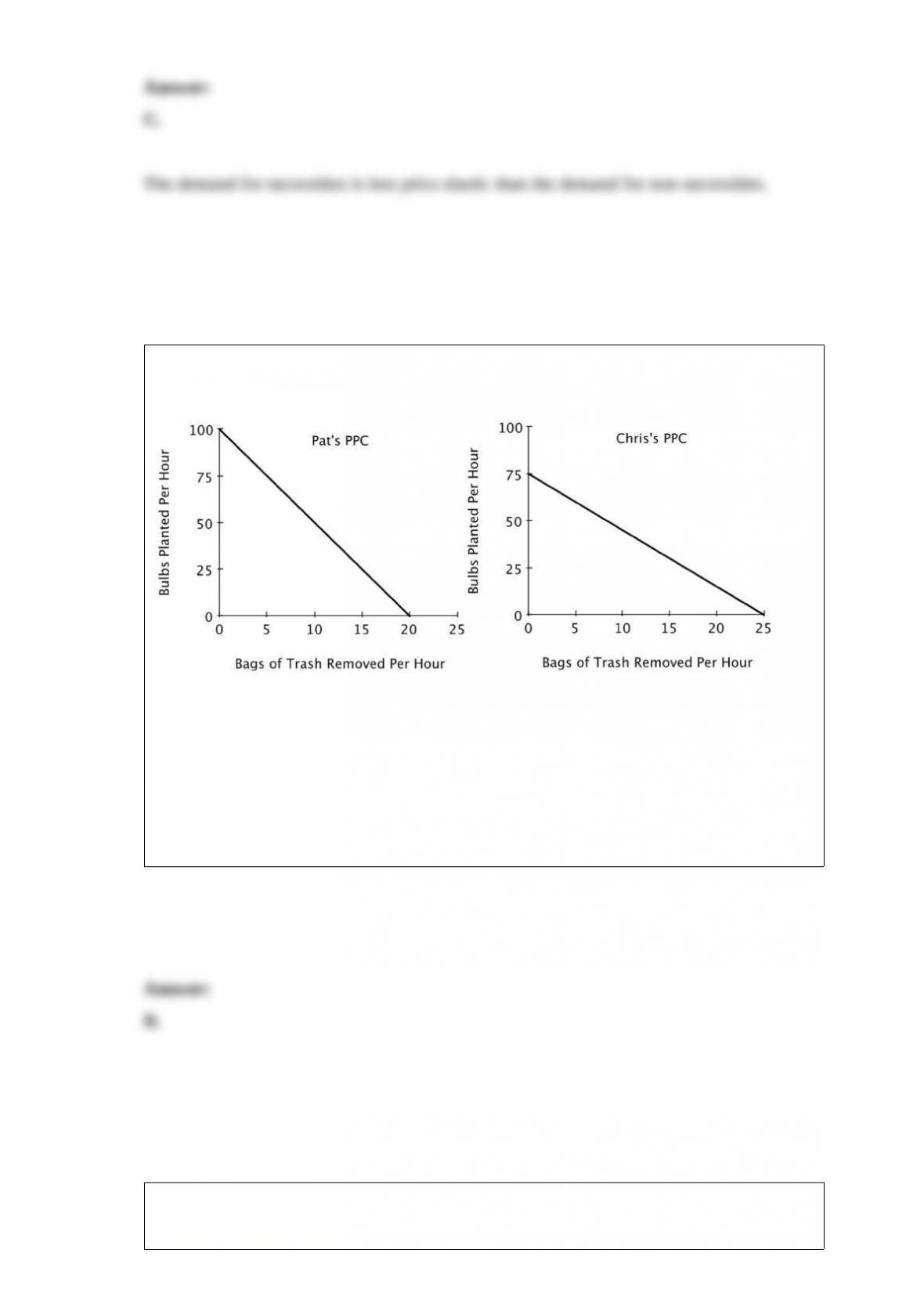
Refer to the figure below. If Pat and Chris were to specialize in the task in which each
has a comparative advantage:
A. Chris would plant bulbs and Pat would remove trash.
B. Chris would remove trash and Pat would plant bulbs.
C. Pat and Chris would each spend half of their time each task.
D. both Pat and Chris would plant bulbs because they both have an absolute advantage
in that task.
Relative to workers in Western Europe, workers in the United States:
A. face a lower marginal tax rate and work fewer hours per year.

B. face a higher marginal tax rate and work more hours per year.
C. face a lower marginal tax rate and work more hours per year.
D. face a higher marginal tax rate and work fewer hours per year.
Refer to the figure below. Player B can infer that Player A will:
A. always choose Down.
B. always choose Up.
C. choose Down when B chooses Left and choose Up when B chooses Right.
D. choose Up when B chooses Left and choose Down when B chooses Right.
Espresso Yourself Coffee Shop hires workers in a competitive labor market to make
coffee. The ingredients required to make each cup of coffee cost 50 cents. The coffee
shop’s hourly output of coffee varies with the number of workers hired, as shown in the
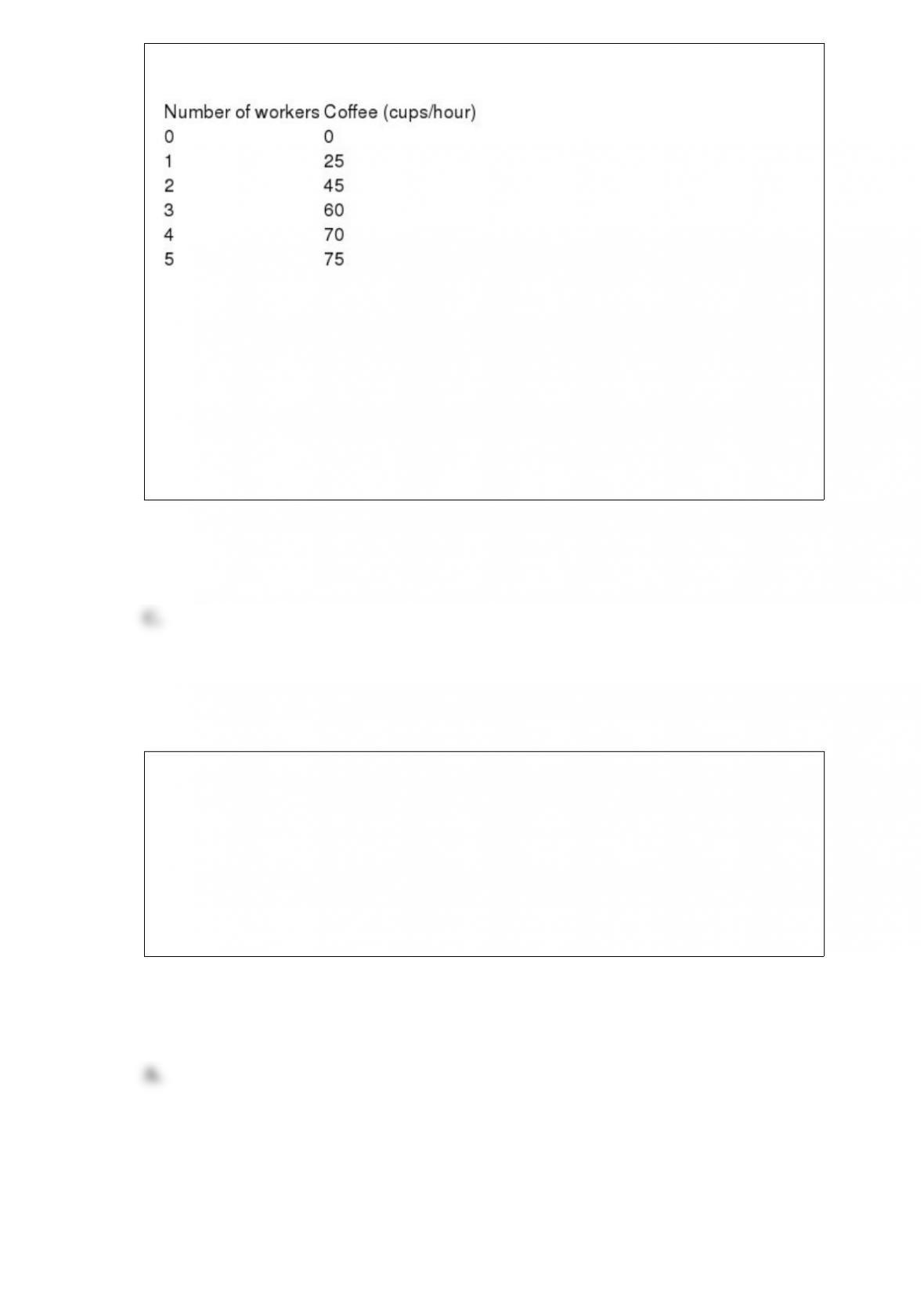
table below. Each cup of coffee sells for $2.00.
The most the coffee shop would be willing pay the third worker is ______ per hour.
A. $60.00
B. $45.00
C. $22.50
D. $15.00
Empirical evidence indicates that higher real interest rates lead to ______ in savings.
A. modest increases
B. substantial increases
C. no change in
D. modest decreases
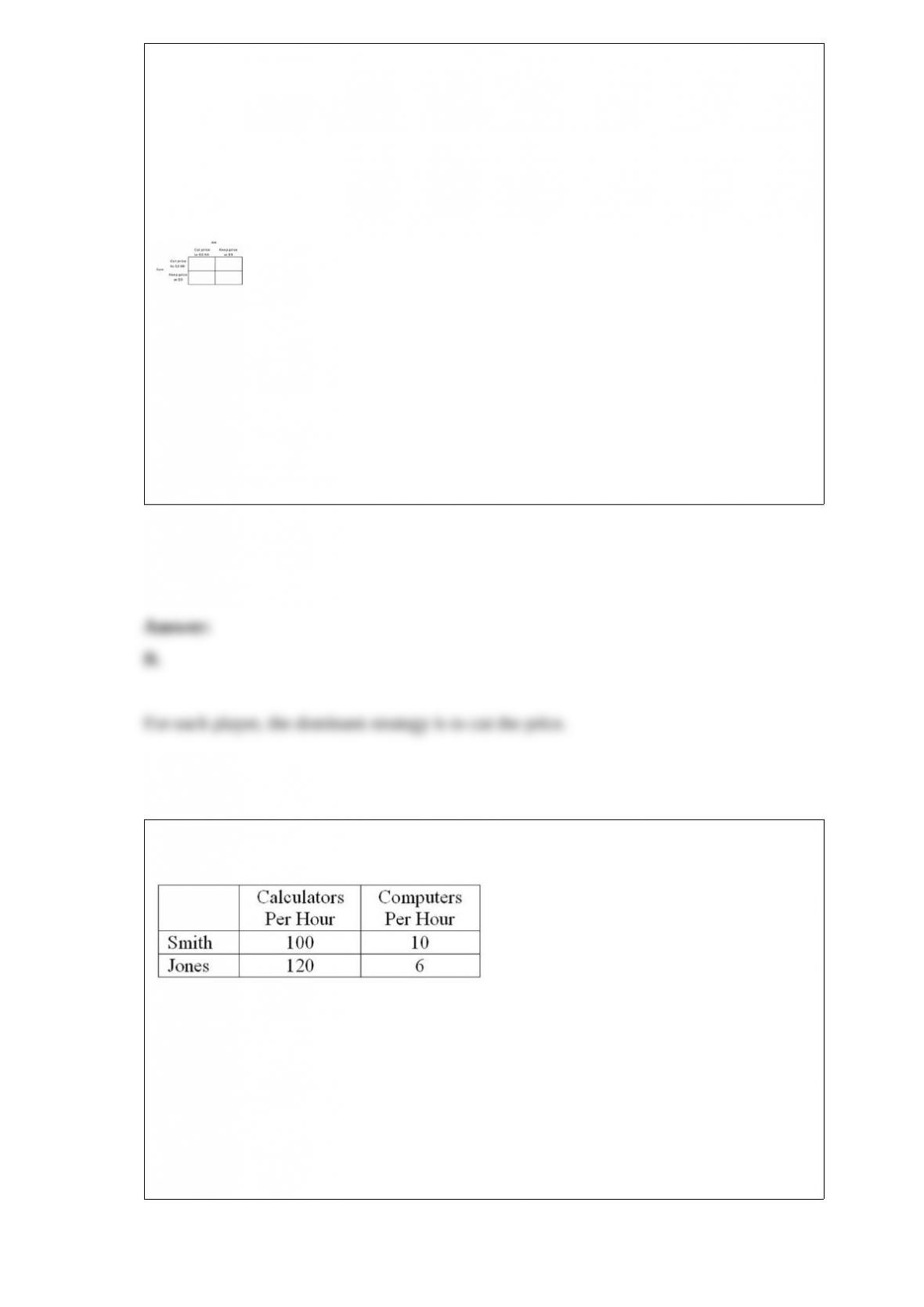
Joe is the owner of the 7-11 Mini Mart, Sam is the owner of the SuperAmerica Mini
Mart, and together they are the only two gas stations in town. Currently, they both
charge $3 per gallon, and each earns a profit of $1,000. If Joe cuts his price to $2.90 and
Sam continues to charge $3, then Joe’s profit will be $1,350, and Sam’s profit will be
$500. Similarly, if Sam cuts his price to $2.90 and Joe continues to charge $3, then
Sam’s profit will be $1,350, and Joe’s profit will be $500. If Sam and Joe both cut their
price to $2.90, then they will each earn a profit of $900. You may find it easier to
answer the following questions if you fill in the payoff matrix below.
The clear outcome of this game is that:
A. Joe will cut his price and Sam won’t.
B. both Joe and Sam will cut their price.
C. Sam will cut his price and Joe won’t.
D. neither Joe nor Sam will cut his price.
Smith and Jones comprise a two-person economy. Their hourly rates of production are
shown below.
If Smith and Jones devote all of their resources to producing computers, then the
maximum number of computers they can produce in an hour is:
A. 120.
B. 6.
C. 16.
D. 10.
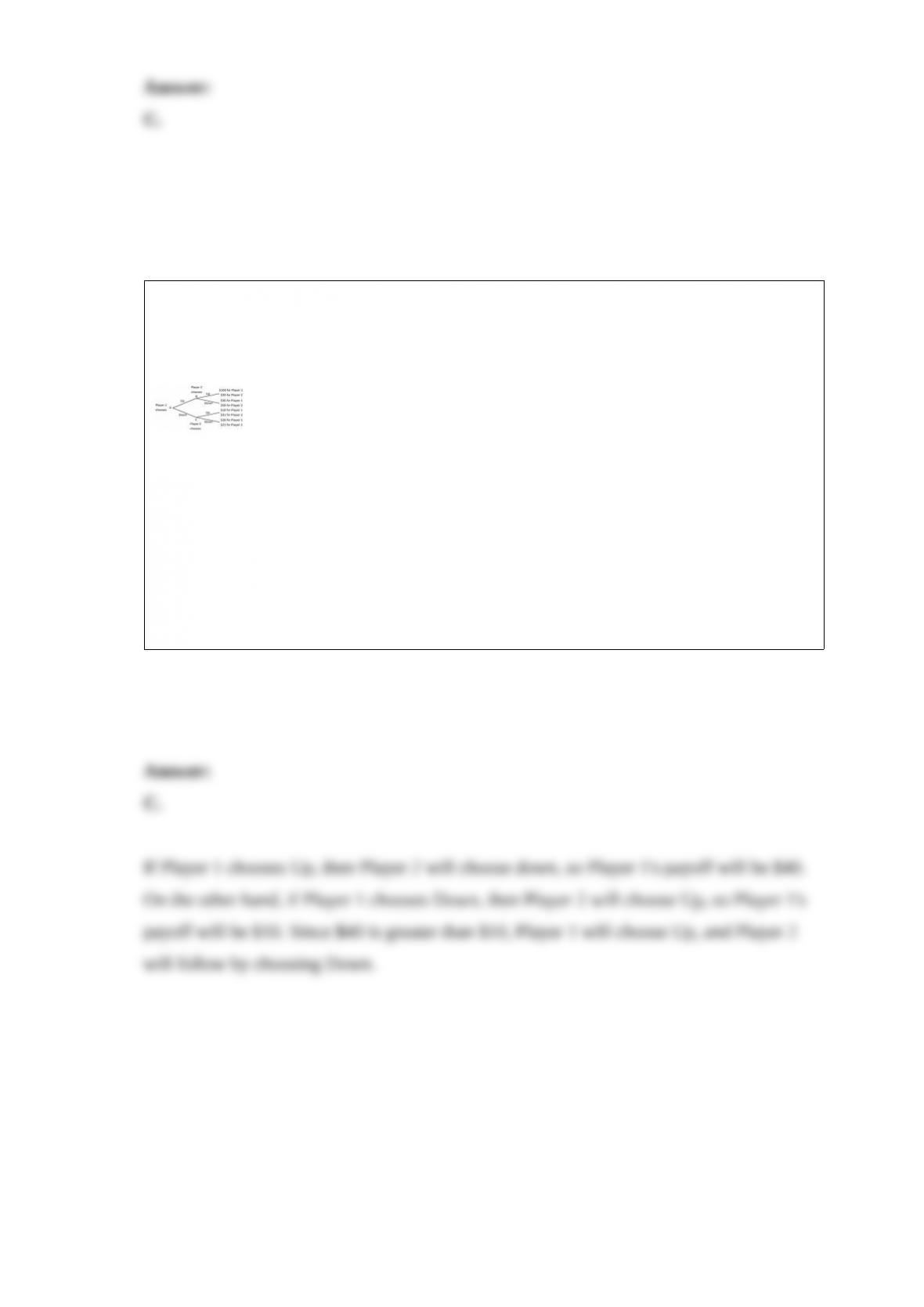
Player 1 and Player 2 are playing a game in which Player 1 has the first move at A in
the decision tree shown below. Once Player 1 has chosen either Up or Down, Player 2,
who can see what Player 1 has chosen, must choose Up or Down at B or C. Both
players know the payoffs at the end of each branch.
What is the equilibrium outcome of this game?
A. Player 1 and Player 2 both choose Up.
B. Player 1 and Player 2 both choose Down.
C. Player 1 chooses Up and Player 2 chooses Down.
D. Player 1 chooses Down and Player 2 chooses Up.