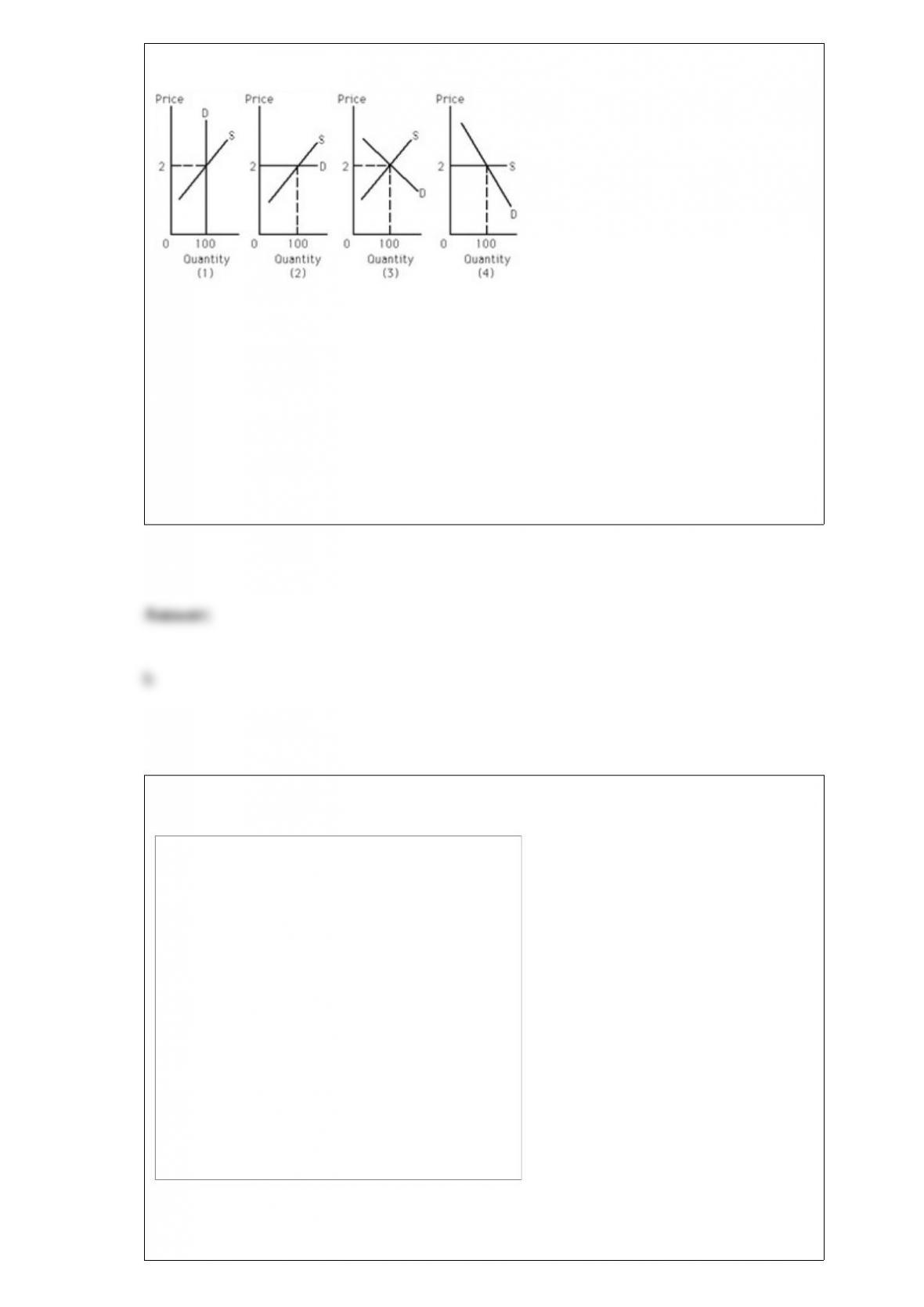
Exhibit 20-7
Which of the graphs shows a perfectly elastic demand curve?
a. (1)
b. (2)
c. (3) and (4)
d. none of the above
Exhibit 23-8
What is the profit (loss) of firm B at the profit-maximizing (or loss-minimizing) level of
production?

a. -$600
b. $270
c. $600
d. $400
e. -$400
If market demand is inelastic and supply is subject to severe shifts from season to
season, it follows that
a. price changes are likely to be small.
b. price changes are likely to be large.
c. total revenue is likely to be constant over time.
d. total revenue is likely to be highly volatile.
e. b and d
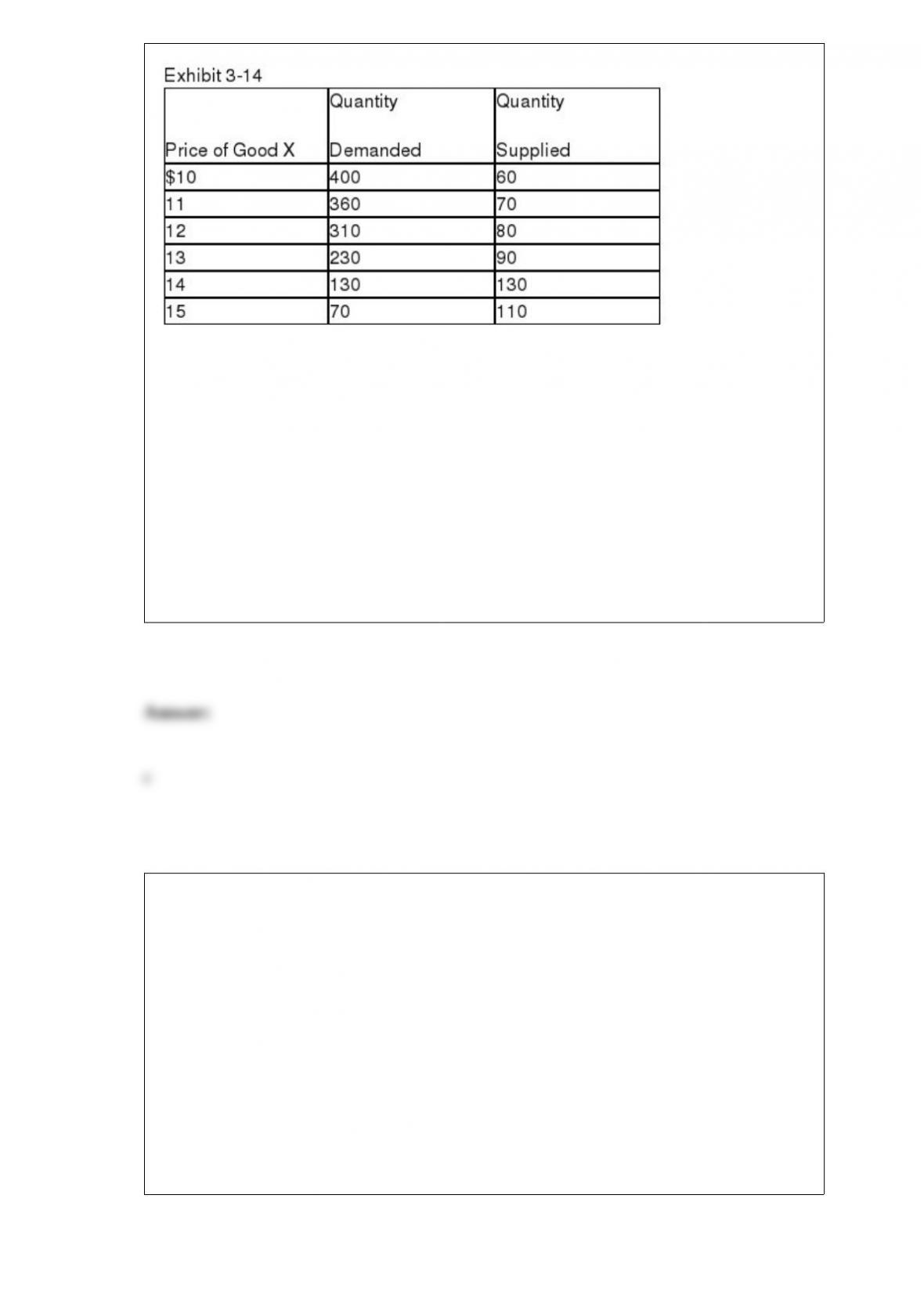
At a price of $15, there is a ____________ unit____________ of good X.
a. 40; shortage
b. 90; surplus
c. 40; surplus
d. 20; shortage
e. 20; surplus
Loanable funds are
a. another term for capital.
b. a particular type of investment fund that companies such as Merrill Lynch offer to
consumers.
c. funds that someone borrows with a promise to pay interest for the use of the funds.
d. funds that someone lends with the requirement that interest be paid for the use of the
funds.
e. c and d
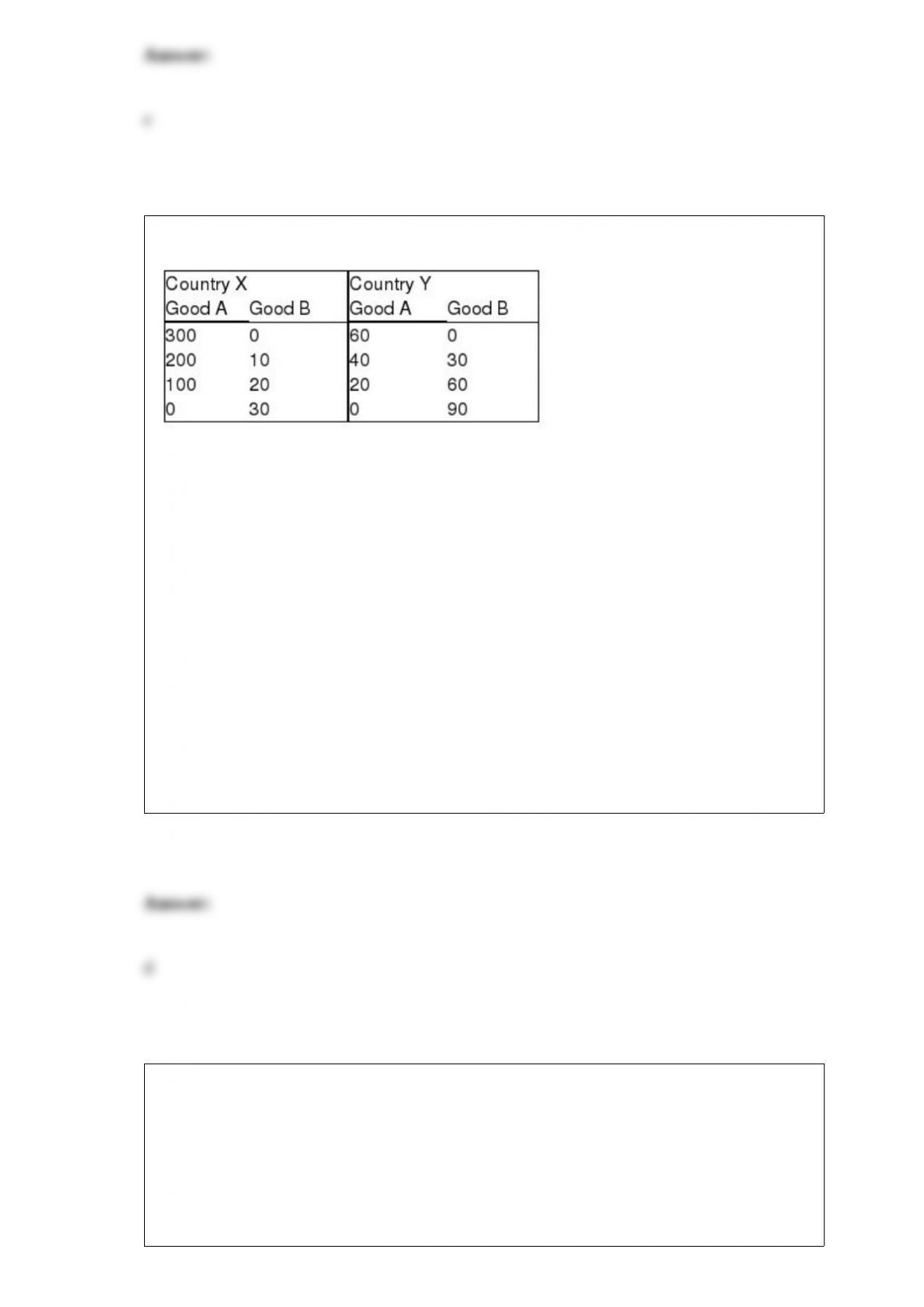
Exhibit 34-9
In the no specialization-no trade case, suppose country X produces and consumes 100
units of good A and 20 units of good B. Country Y produces and consumes 20 units of
good A and 60 units of good B. If the two countries specialize and trade, and the actual
amounts traded are 125 units of good A for 25 units of good B, how many more units of
good A will country Y consume by specializing and trading?
a. 125
b. 20
c. 15
d. 105
e. 50
Antitrust law is legislation passed for the stated purpose of
a. reducing the profits of chain stores.
b. promoting U.S. banking practices in foreign countries.
c. controlling labor union practices in the states of New York, California, and Texas.
d. controlling monopoly power and preserving and promoting competition.
e. none of the above
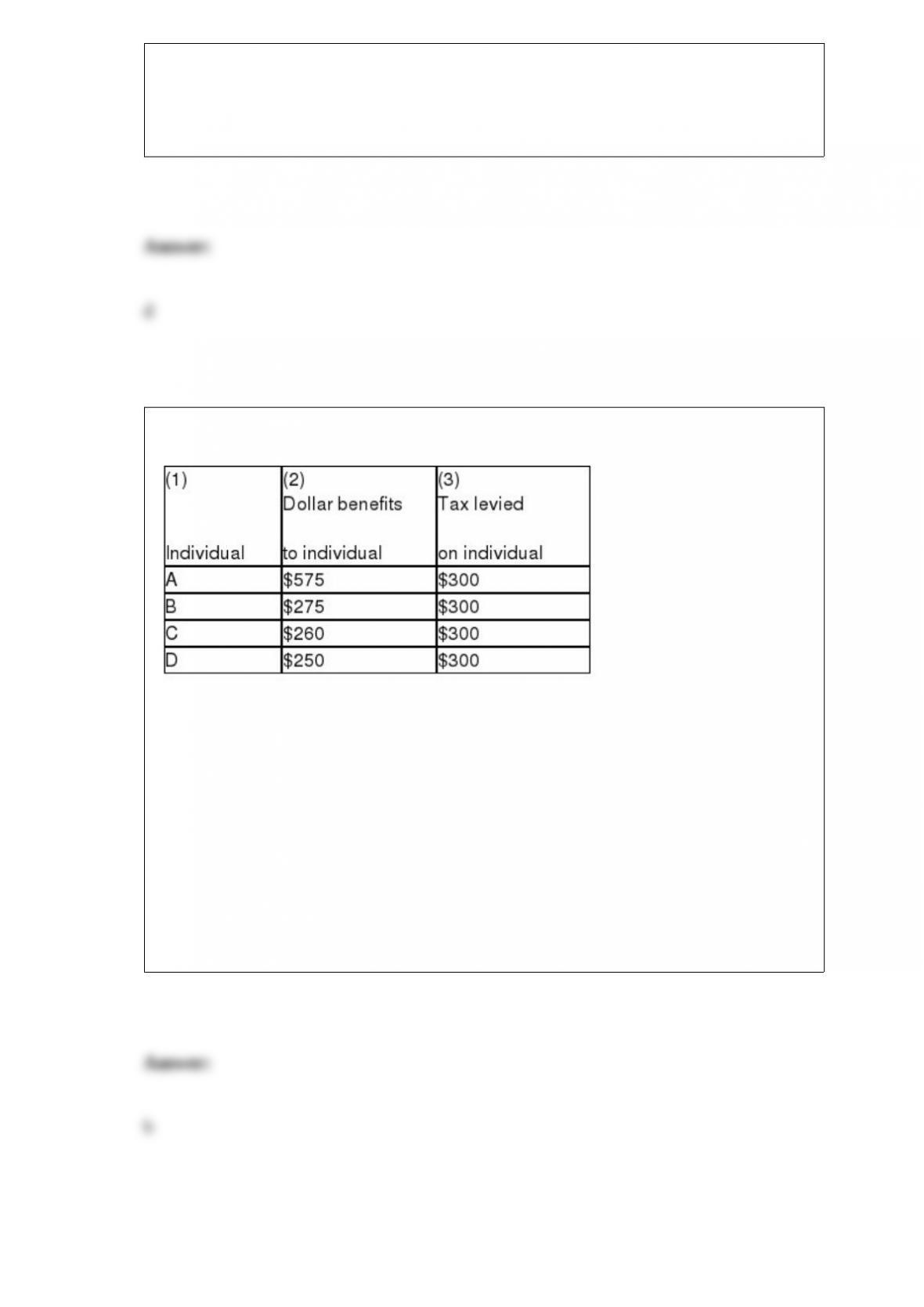
Exhibit 32-1
The exhibit shows the breakdown of benefits and costs for a four-person town of a
proposed $1,200 addition in books to the public library. The members of the community
get to vote on the project at hand, and the majority rules. Given the data, the $1,200 will
a. be spent, even though the total benefits are less than the total costs.
b. not be spent, since more persons are against the project than are for it.
c. be spent, since the total benefits are greater than the total costs.
d. not be spent, since the total benefits are less than the total costs.
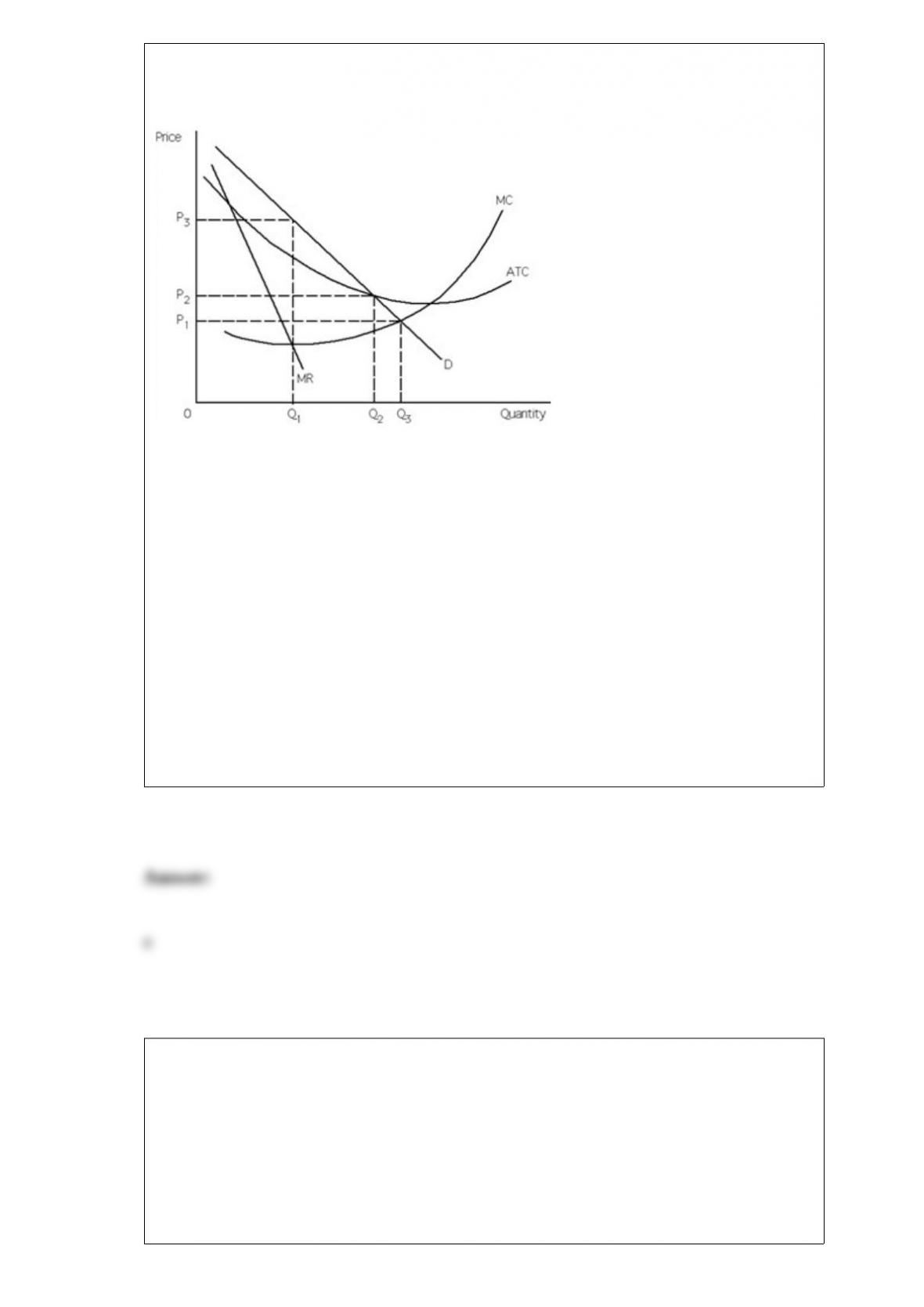
Exhibit 26-5
If the natural monopoly firm is guaranteed a normal profit (nothing more and nothing
less) then it will produce __________ quantity of output and charge a price of
__________ per unit.
a. Q1; P3
b. Q1; P2
c. Q2; P3
d. Q3; P2
e. none of the above
When P = $65, the quantity demanded of a good is 80 units, and the quantity supplied
of the good is 40 units.For every $10 increase in the price of this good, quantity
demanded falls by 10 units and quantity supplied rises by 10 units.The equilibrium
price of this good is ___________and the equilibrium quantity of this good is
_________ units.
a. $55; 30

b. $75; 50
c. $75; 70
d. $85; 50
e. $85; 60
Consider a setting in which there is a positive externality, but no negative
externality.The market outcome is __________________; government can bring about
the ___________________ outcome if it sets a subsidy equal to the
__________________.
a. inefficient; efficient; MEB
b. inefficient; efficient; MEC
c. efficient; inefficient; MPC
d. inefficient; efficient; MPB
e. inefficient; efficient; MSB
The reason people can’t have everything they want is because
a. people are selfish.
b. scarcity exists.
c. there is not enough economic growth in the world.

d. none of the above
If world markets change so that the U.S. dollar is no longer the primary reserve
currency, the exchange rate value of the dollar would rise.
a. True
b. False
Resources are allocated efficiently when
a. the exchange value of the resources to demanders equals the opportunity cost of the
resources.
b. the marginal benefit to demanders of the resources in the goods they purchase is
equal to the marginal cost to suppliers of the resources they use in producing the goods.
c. firms produce the quantity of output at which price is equal to marginal cost.
d. a and b
e. a, b, and c
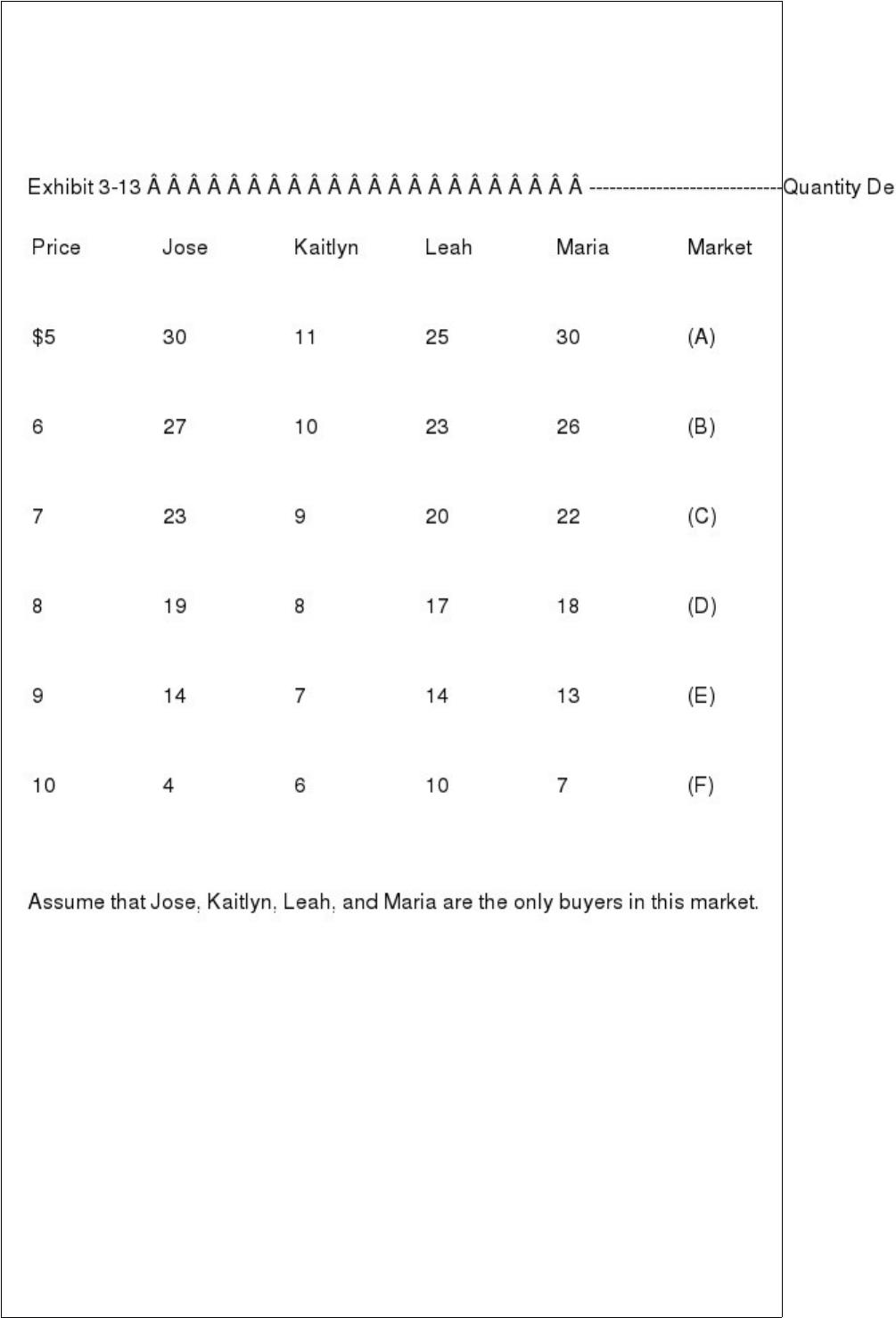
Fill in blanks (C) and (D) respectively with the market quantity demanded at each given
price.
a. 18.5; 15.5
b. 74; 62
c. 75; 64
d. 50; 43
e. none of the above

For the perfectly competitive firm, the demand curve and the marginal revenue curve
are one and the same.
a. True
b. False
At 500 units of output, total cost is $35,000 and total variable cost is $22,000. What
does total fixed cost equal at 500 units?
a. $57,000
b. $900
c. $13,000
d. $34
e. There is not enough information provided to answer this question.

“Rent seeking” is socially wasteful because
a. resources devoted to transferring rents are not used to produce goods.
b. wage income is converted into profit income.
c. it results in higher prices than would exist without monopoly.
d. it discourages innovation and risk taking.
Under profit regulation, a natural monopolist has an incentive to be very careful about
minimizing costs.
a. True
b. False