The production possibilities frontier is a graph that shows the various combinations of
output that an economy
a. should produce.
b. wants to produce.
c. can produce.
d. demands.
Figure 3-4
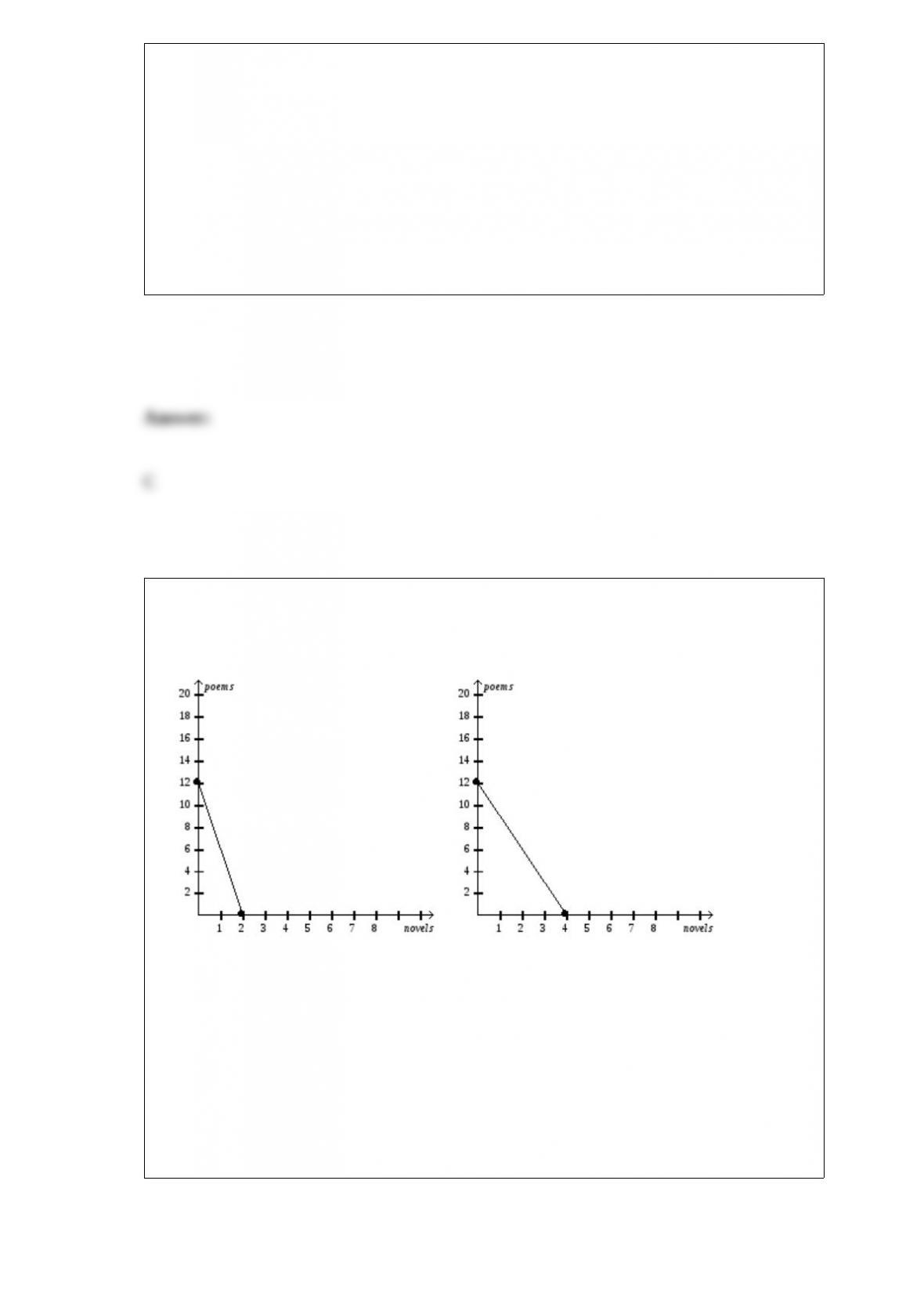
Perry’s Production Possibilities Frontier Jordan’s Production Possibilities Frontier
Refer to Figure 3-4. Which of the following is not correct?
a. Perry and Jordan could each consume 2 novels and 6 poems without trade.
b. Jordan could consume 2 novels and 6 poems both with and without trade.
c. Perry and Jordan could each consume 2 novels and 6 poems with trade.
d. Perry and Jordan could each consume 12 poems without trade.
The maximum price that a buyer will pay for a good is called the
a. cost.
b. willingness to pay.
c. equity.
d. efficiency.
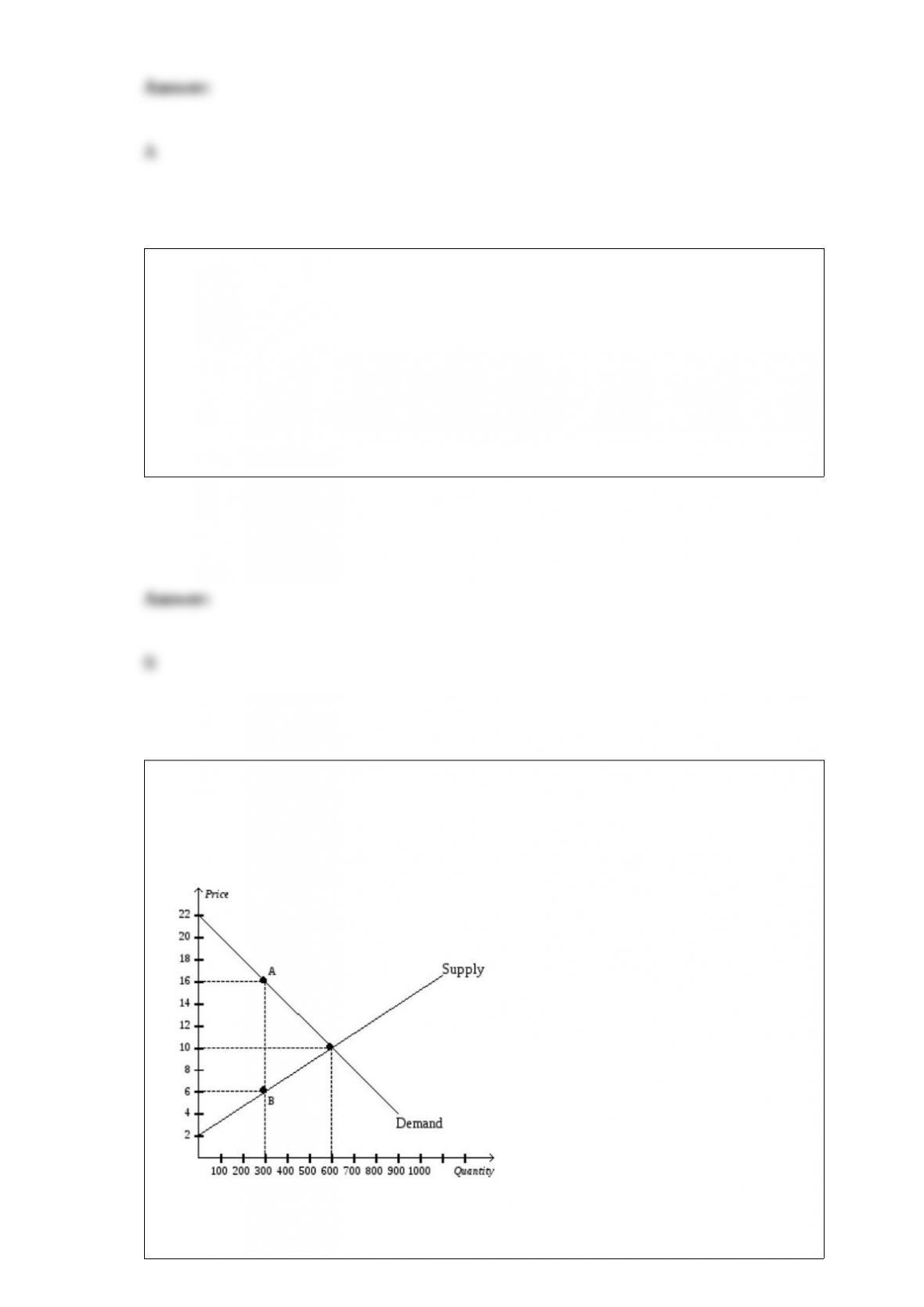
Figure 8-6
The vertical distance between points A and B represents a tax in the market.
Refer to Figure 8-6. Without a tax, consumer surplus in this market is

a. $1,500.
b. $2,400.
c. $3,000.
d. $3,600.
A larger budget deficit
a. raises the interest rate and investment.
b. reduces the interest rate and investment.
c. raises the interest rate and reduces investment.
d. reduces the interest rate and raises investment.
When quantity moves proportionately the same amount as price, demand is
a. elastic, and the price elasticity of demand is 1.
b. perfectly elastic, and the price elasticity of demand is infinitely large.
c. perfectly inelastic, and the price elasticity of demand is 0.
d. unit elastic, and the price elasticity of demand is 1.

Efficiency in a market is achieved when
a. a social planner intervenes and sets the quantity of output after evaluating buyers’
willingness to pay and sellers’ costs.
b. the sum of producer surplus and consumer surplus is maximized.
c. all firms are producing the good at the same low cost per unit.
d. no buyer is willing to pay more than the equilibrium price for any unit of the good.
Which of the following is the correct way to compute the future value of $1 put into an
account that earns 5 percent interest for 16 years?
a. $1(1 + .05)16
b. $1(1 + .05 x16) x16
c. $1(1 + .05 x16)
d. $1(1 + 16/.05)16
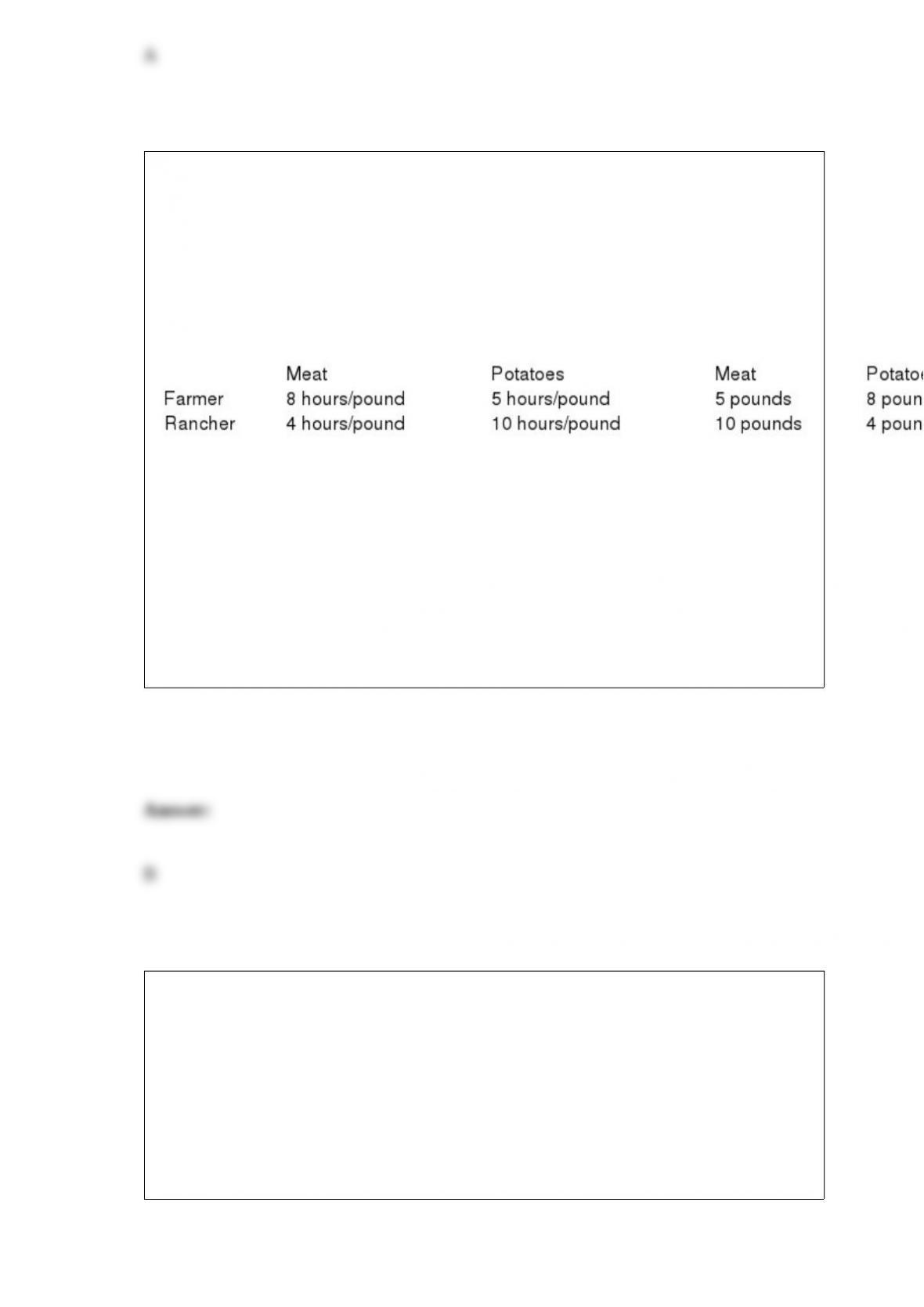
Table 3-12
Labor Hours Needed to
Make 1 Pound of: Amount
Produced in 40 hours
Refer to Table 3-12. Relative to the rancher, the farmer has a comparative advantage in
the production of
a. meat, but not in the production of potatoes.
b. potatoes, but not in the production of meat.
c. both meat and potatoes.
d. neither meat nor potatoes.
The monetary-policy framework called inflation targeting is used explicitly by
a. no major country.
b. most major countries except the United States and Japan.
c. the United States, but it is not used by other major countries.
d. most major countries, including the United States and Japan.

According to purchasing power parity, if it took 3.5 Israeli Shekels to buy a dollar this
year, but it took 4 to buy it last year, then the dollar has
a. appreciated, indicating inflation was higher in the U.S. than in Israel.
b. appreciated, indicating inflation was lower in the U.S. than in Israel.
c. depreciated, indicating inflation was higher in the U.S. than in Israel.
d. depreciated, indicating inflation was lower in the U.S. than in Israel.
Cost is a measure of the
a. seller’s willingness to sell.
b. seller’s producer surplus.
c. producer shortage.
d. seller’s willingness to buy.

Suppose the cost of operating a 75 room hotel for a night is $6,000 and there are 5
empty rooms for tonight. The marginal cost per room per night
a. is $40.
b. is $80.
c. is $120.
d. cannot be determined from the information given.
If a country went from a government budget deficit to a surplus, national saving would
a. increase, shifting the supply of loanable funds right.
b. increase, shifting the supply of loanable funds left.
c. decrease, shifting the demand for loanable funds right.
d. decrease, shifting the demand for loanable funds left.
The famous observation that households and firms interacting in markets act as if they
are guided by an “invisible hand” that leads them to desirable market outcomes comes
from whose 1776 book?
a. David Ricardo

b. Thorstein Veblen
c. John Maynard Keynes
d. Adam Smith
After the 1982 recession, the U.S. and world economies entered into a long period
a. of high unemployment rates.
b. high inflation rates.
c. that has become known as the “Great Moderation.”
d. that has become known as the “Great Recession.”
To increase the money supply, the Fed can
a. buy government bonds or increase the discount rate.
b. buy government bonds or decrease the discount rate.
c. sell government bonds or increase the discount rate.
d. sell government bonds or decrease the discount rate.
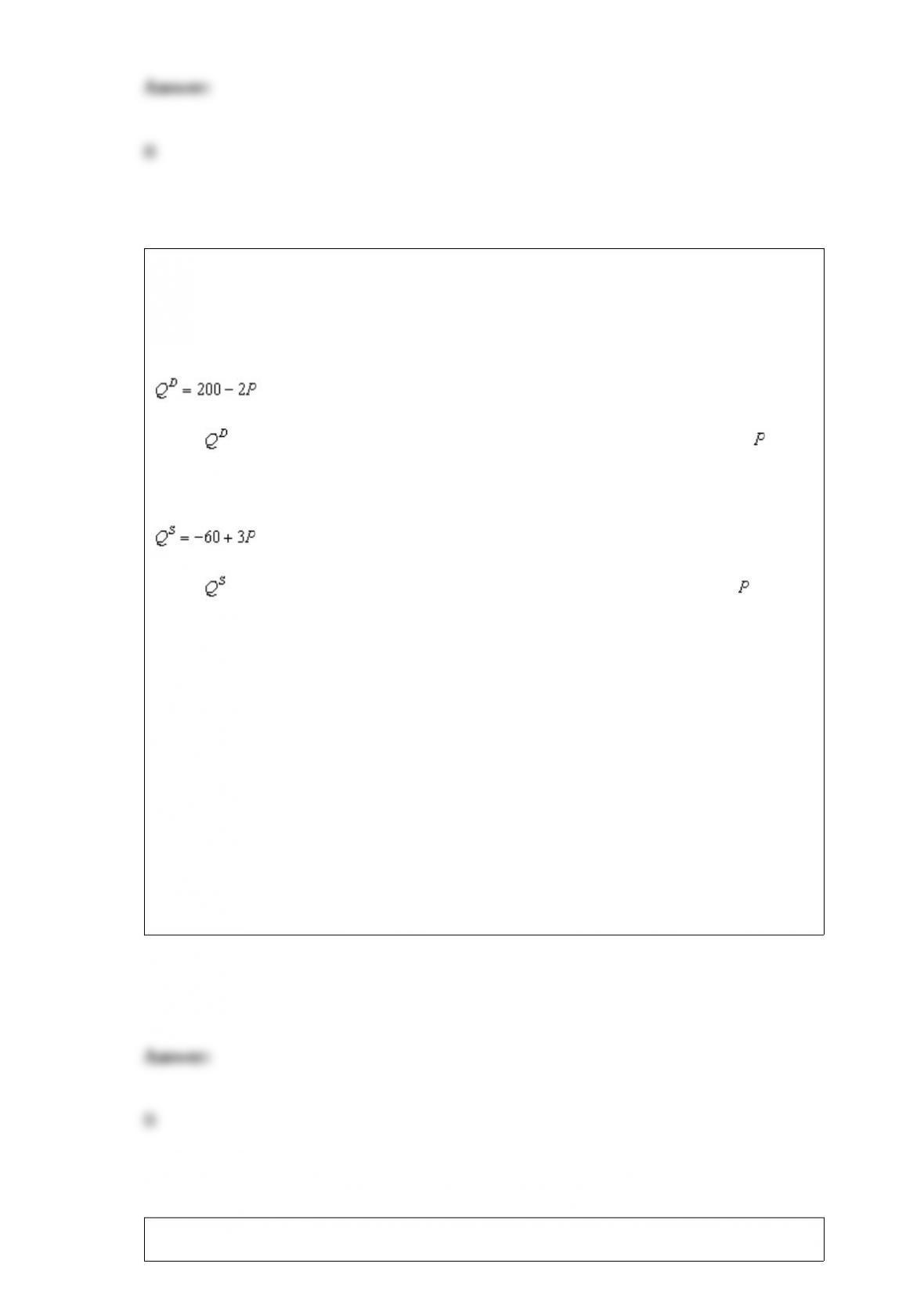
Scenario 9-2
For a small country called Boxland, the equation of the domestic demand curve for
cardboard is
,
where represents the domestic quantity of cardboard demanded, in tons, and
represents the price of a ton of cardboard.
For Boxland, the equation of the domestic supply curve for cardboard is
,
where represents the domestic quantity of cardboard supplied, in tons, and again
represents the price of a ton of cardboard.
Refer to Scenario 9-2. Suppose the world price of cardboard is $45. Then, relative to
the no-trade situation, international trade in cardboard
a. benefits Boxlandian consumers by $721 and harms Boxlandian producers by
$525.00.
b. benefits Boxlandian consumers by $721 and harms Boxlandian producers by
$598.50.
c. benefits Boxlandian consumers by $672 and harms Boxlandian producers by
$598.50.
d. harms Boxlandian consumers by $336 and harms Boxlandian producers by $525.00.
Which of the following events must cause equilibrium price to rise?

a. demand increases and supply decreases
b. demand and supply both decrease
c. demand decreases and supply increases
d. demand and supply both increase
Efficiency wages
a. increase frictional unemployment by keeping wages above equilibrium.
b. decrease frictional unemployment by keeping wages at equilibrium.
c. increase structural unemployment by keeping wages above equilibrium.
d. decrease structural unemployment by keeping wages at equilibrium.
In which of the following cases was the inflation rate 10 percent over the last year?
a. One year ago the price index had a value of 110 and now it has a value of 120.
b. One year ago the price index had a value of 120 and now it has a value of 132.
c. One year ago the price index had a value of 126 and now it has a value of 140.
d. One year ago the price index had a value of 145 and now it has a value of 163.
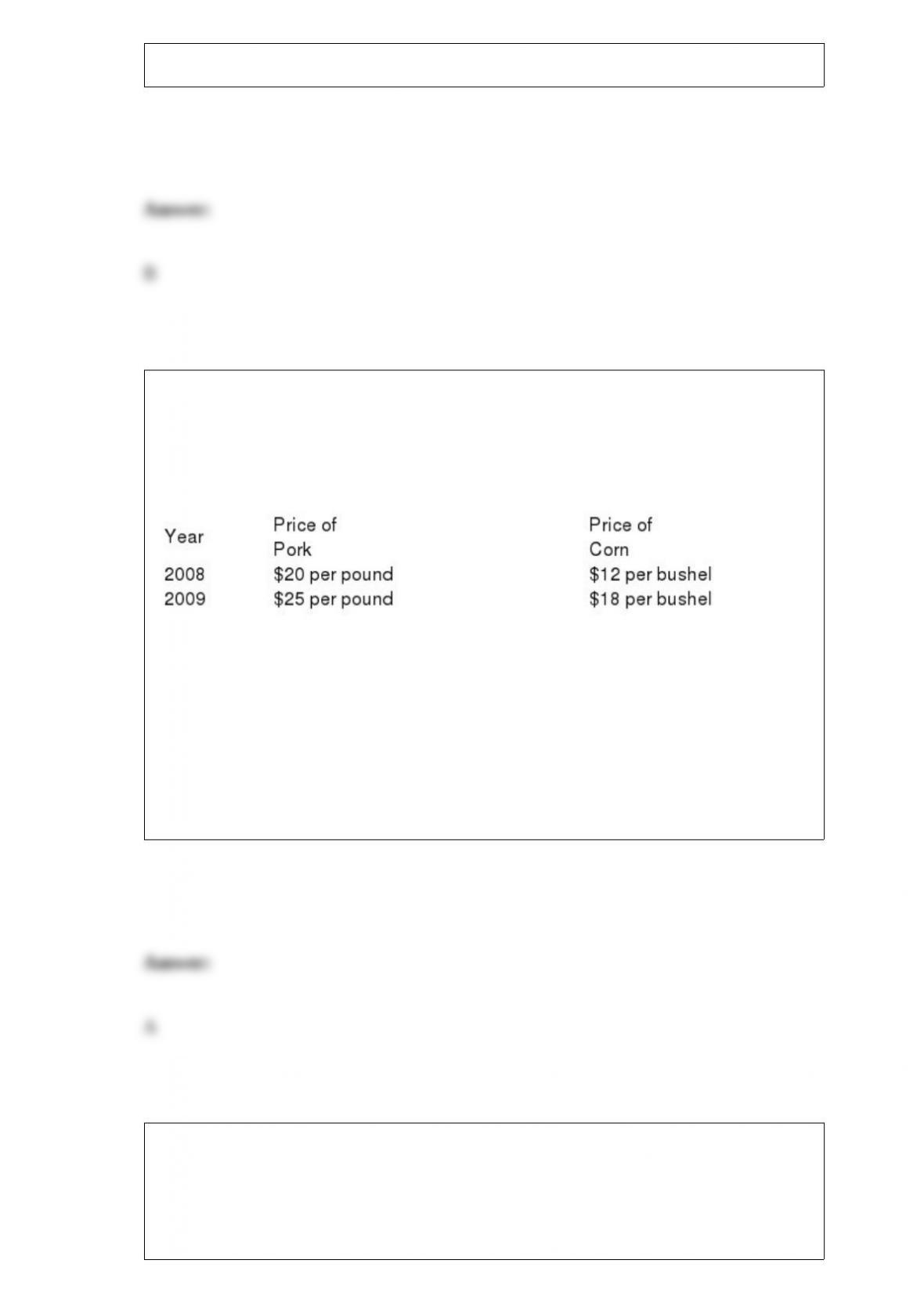
Table 11-2
The table below pertains to Iowan, an economy in which the typical consumer’s basket
consists of 3 pounds of pork and 4 bushels of corn.
Refer to Table 11-2. The cost of the basket in 2008 was
a. $108.
b. $147.
c. $160.
d. $224.
Countries that have lower levels of real GDP per person than the United States
a. tend to have growth rates that are higher than that of the United States.
b. tend to have growth rates that are about the same as that of the United States.
c. tend to have growth rates that are lower than that of the United States.
d. in some cases have growth rates that are higher than that of the United States and in
other cases lower than that of the United States.
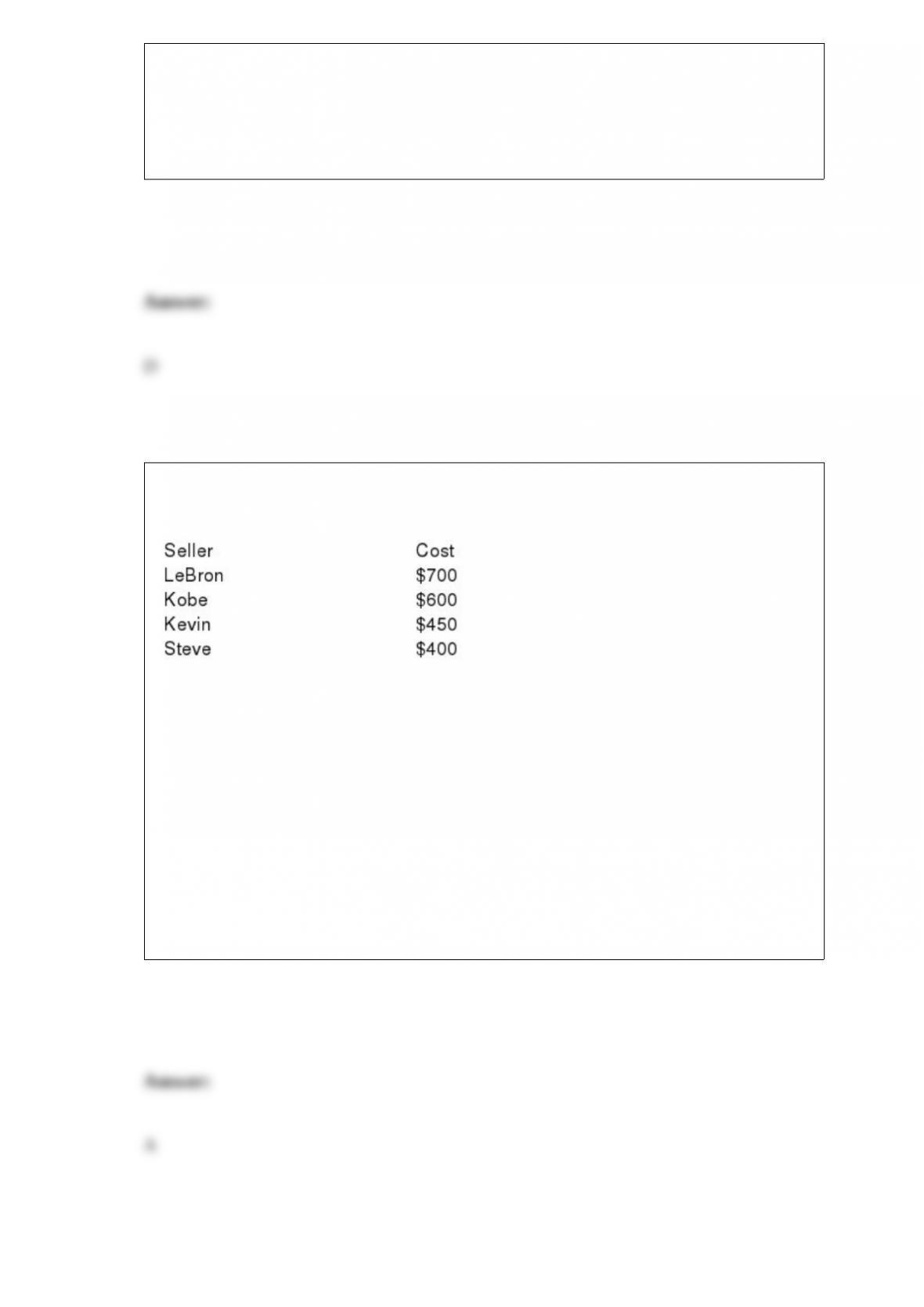
Table 7-10
Refer to Table 7-10. You want to hire a professional photographer to take pictures of
your family. The table shows the costs of the four potential sellers in the local
photography market. You take bids from the sellers. Who offers the winning bid, and
what does he offer to charge for the photography session?
a. Steve; more than $400 but less than $450
b. Steve; $399
c. LeBron; more than $700
d. LeBron; more than $600 but less than $700

In the open-economy macroeconomic model, if investment demand increases, then
a. the supply of dollars in the market for foreign-currency exchange shifts left.
b. the supply of dollars in the market for foreign-currency exchange shifts right.
c. the demand for dollars in the market for foreign-currency exchange shifts left.
d. the demand for dollars in the market for foreign-currency exchange shifts right.
Initially, the economy is in long-run equilibrium. The aggregate demand curve then
shifts $80 billion to the left. The government wants to change spending to offset this
decrease in demand. The MPC is 0.75. Suppose the effect on aggregate demand of a tax
change is 3/4 as strong as the effect of a change in government expenditure. There is no
crowding out and no accelerator effect. What should the government do if it wants to
offset the decrease in real GDP?
a. Raise both taxes and expenditures by $80 billion dollars.
b. Raise both taxes and expenditures by $10 billion dollars.
c. Reduce both taxes and expenditures by $80 billion dollars.
d. Reduce both taxes and expenditures by $10 billion dollars.
The level of real GDP person
a. differs widely across countries, but the growth rate of real GDP per person is similar
across countries.
b. is very similar across countries, but the growth rate of real GDP per person differs
widely across countries.
c. and the growth rate of real GDP per person are similar across countries.
d. and the growth rate of real GDP per person vary widely across countries.
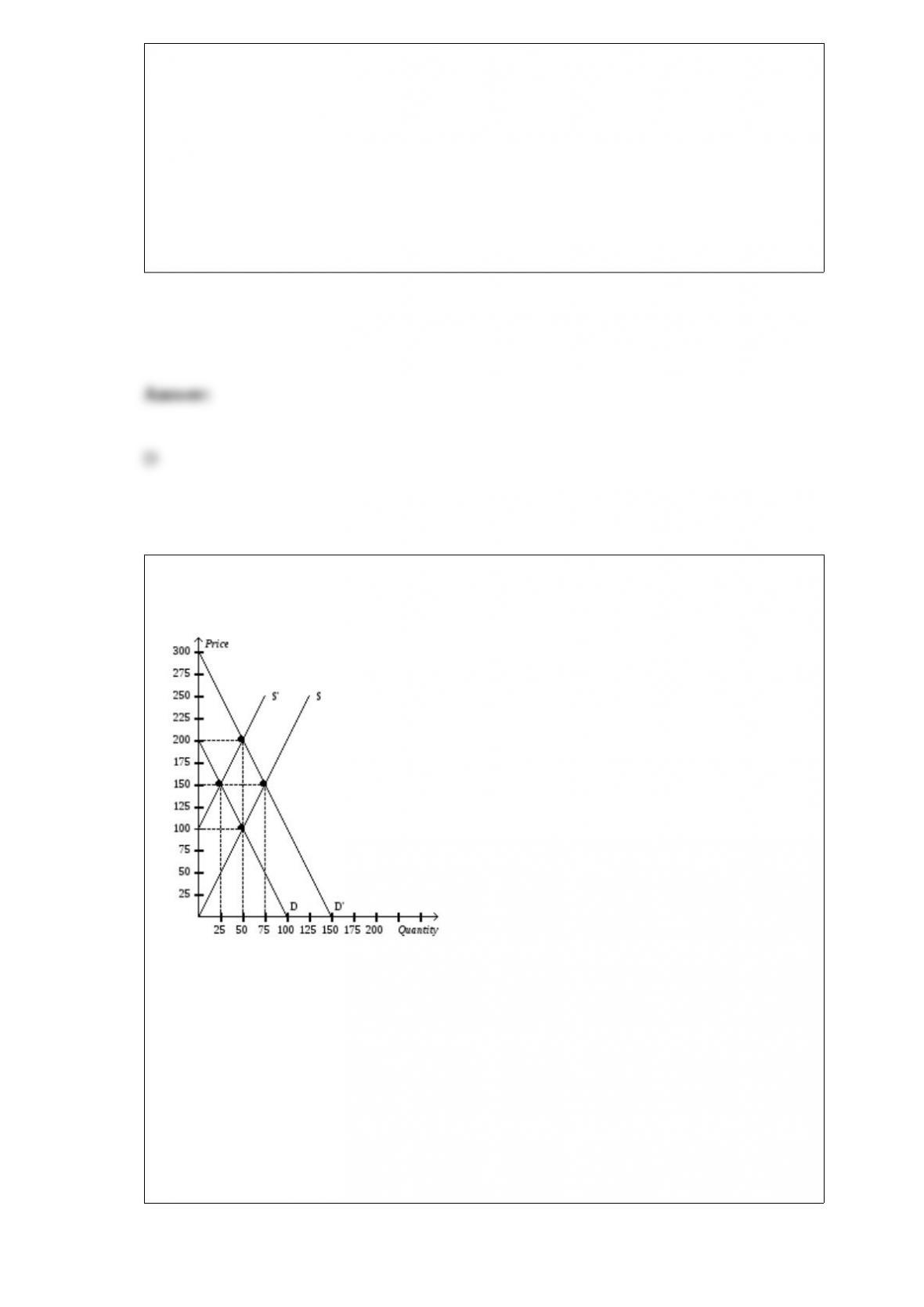
Figure 7-9
Refer to Figure 7-9. If the supply curve is S”, the demand curve is D, and the
equilibrium price is $150, what is the producer surplus?
a. $625
b. $1,250
c. $2,500
d. $5,000

Dallas buys strawberries, and he would be willing to pay more than he now pays.
Suppose that Dallas has a change in his tastes such that he values strawberries more
than before. If the market price is the same as before, then
a. Dallas’s consumer surplus would be unaffected.
b. Dallas’s consumer surplus would increase.
c. Dallas’s consumer surplus would decrease.
d. Dallas would be wise to buy fewer strawberries than before.
Unlike minimum wage laws, wage subsidies
a. discourage firms from hiring the working poor.
b. cause unemployment.
c. help only wealthy workers.
d. raise the living standards of the working poor without creating unemployment.

Paul, a U.S. citizen, builds a telescope factory in Israel. His expenditures
a. increase U.S. and Israeli net capital outflow.
b. increase U.S. net capital outflow, but decrease Israeli net capital outflow.
c. decrease U.S. net capital outflow, but increase Israeli net capital outflow.
d. None of the above is correct.
When Mexico suffered from capital flight in 1994, the U.S. real interest rate
a. rose and the real exchange rate of the dollar appreciated.
b. rose and the real exchange rate of the dollar depreciated.
c. fell and the real exchange rate of the dollar appreciated.
d. fell and the real exchange rate of the dollar depreciated.
Table 4-1
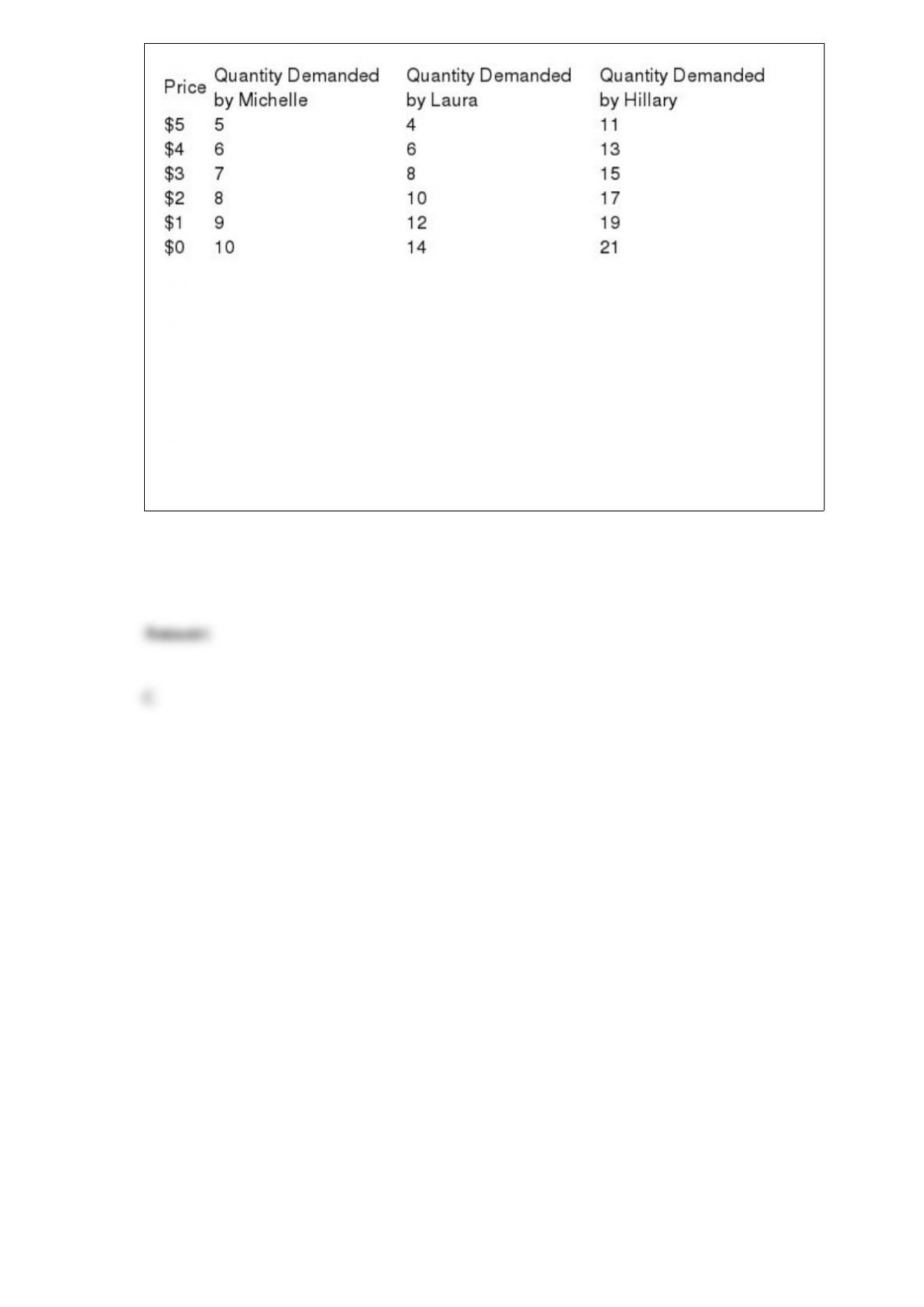
Refer to Table 4-1. If the market consists of Laura and Hillary only and the price falls
by $1, the quantity demanded in the market increases by
a. 2 units.
b. 3 units.
c. 4 units.
d. 5 units.