Free trade refers to trade between countries without government restrictions.
If prices rise on average in the U.S. economy, the purchasing power of a dollar declines.
The saving and investment equation holds only when the federal budget is balanced.
A college must decide if it wants to offer more evening and weekend classes. This
decision involves answering the economic question of “for whom to produce.”
The situation in which one party to a transaction takes advantage of knowing more than
the other party to the transaction is known as adverse selection.
In labor economics, the term “customer discrimination” refers to a situation where
customers are charged different prices for services rendered by a firm.
Trade only occurs if there are only winners, and no losers, as a result of the trade.
In order to reduce or eliminate a chronic shortage in the market for a currency under a
fixed exchange rate system, we must devalue the currency.
The values of real GDP and real GNP are almost the same for the United States.
A statistical tool used to measure inequality is
A) the Lorenz curve.
B) the Gini coefficient.
C) the absolute poverty rate.
D) the relative poverty rate.
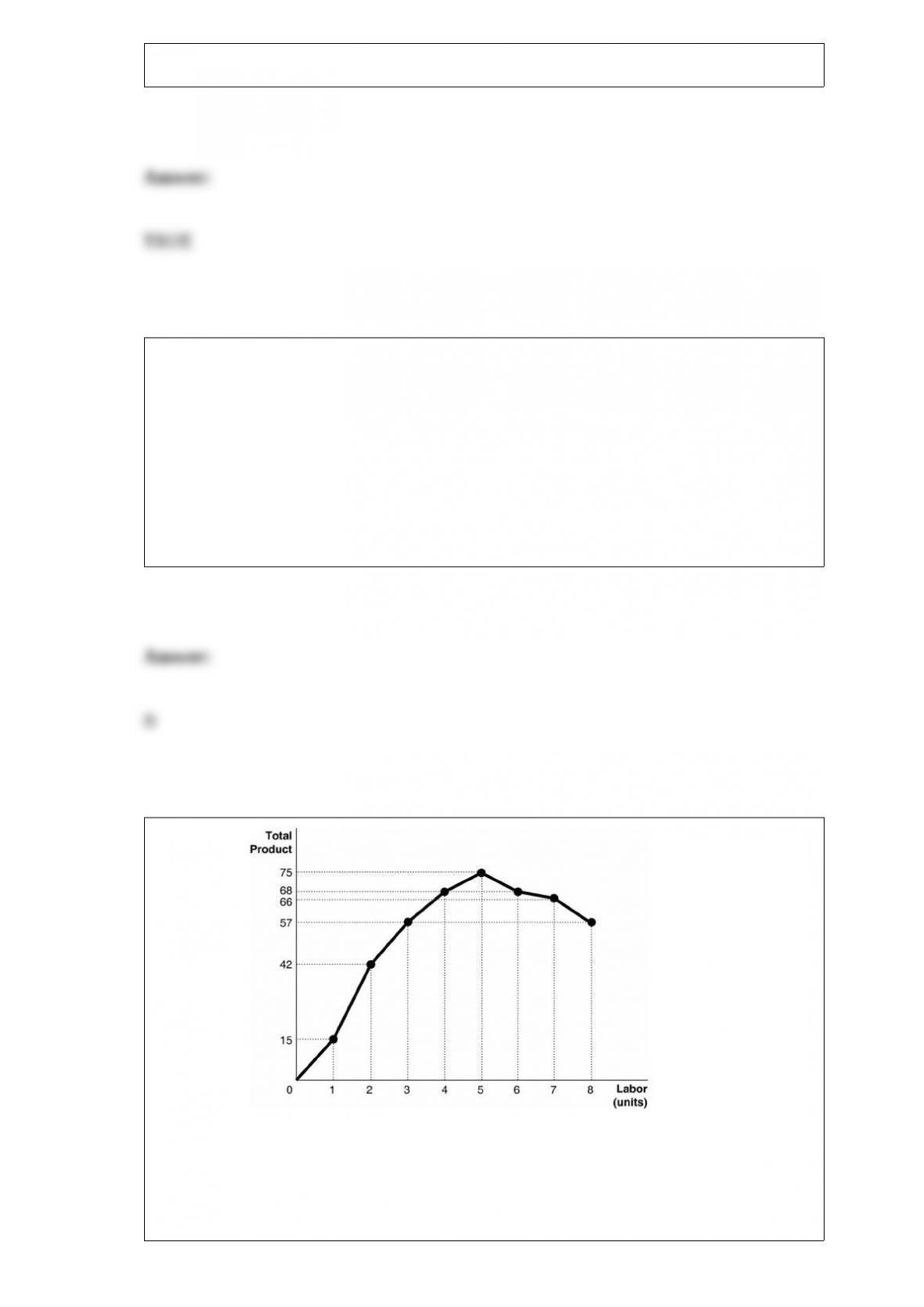
Figure 11-1
The marginal product of the 3rd worker is
A) 57.
B) 19.
C) 15.
D) 11.
Which of the following is not a function of the Federal Reserve System, or the “Fed”?
A) acting as a lender of last resort
B) acting as a banker’s bank
C) performing check clearing services
D) insuring deposits in the banking system
E) taking actions to control the money supply
A study by Edward Prescott found that the ________ marginal tax rates in the United
States relative to Europe resulted in a ________ quantity of labor supplied in the United
States.
A) higher; larger
B) lower; larger
C) higher; smaller
D) lower; smaller
The first important federal law passed to regulate monopolies in the United States was
the
A) Cellar-Kefauver Act.
B) Clayton Act.
C) Federal Trade Commission Act.
D) Sherman Act.
Each point on a ________ curve shows the willingness of consumers to purchase a
product at Different prices.
A) demand
B) supply
C) production possibilities
D) marginal cost
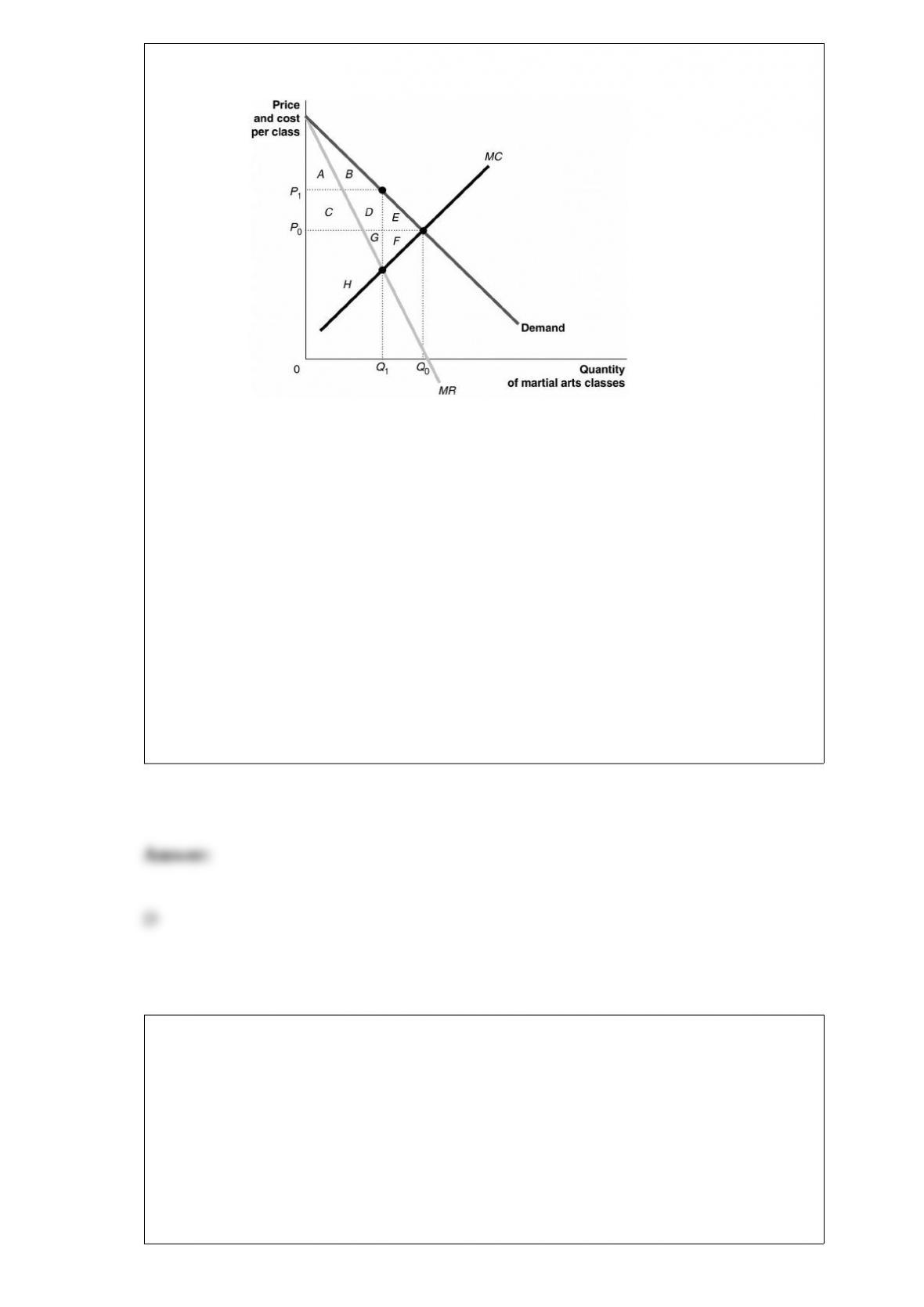
Figure 16-6 Watanabe Sensei
operates the only martial arts school in Hartfield. For simplicity, assume that consumers
have identical demand curves and that Sensei knows what this demand curve is. Figure
16-6 shows this demand curve.
If Sensei acts as a monopolist, his profit-maximizing price is ________ and the number
of classes sold is ________.
A) P0; Q0
B) P0; Q1
C) P1; Q0
D) P1; Q1
Which of the following is not necessarily a consequence of occupational licensing
laws?
A) They restrict competition.
B) Consumers pay higher prices for the services of licensed professions.
C) They result in a higher quality of service.
D) They ensure that licensed professionals meet some minimum qualifications.
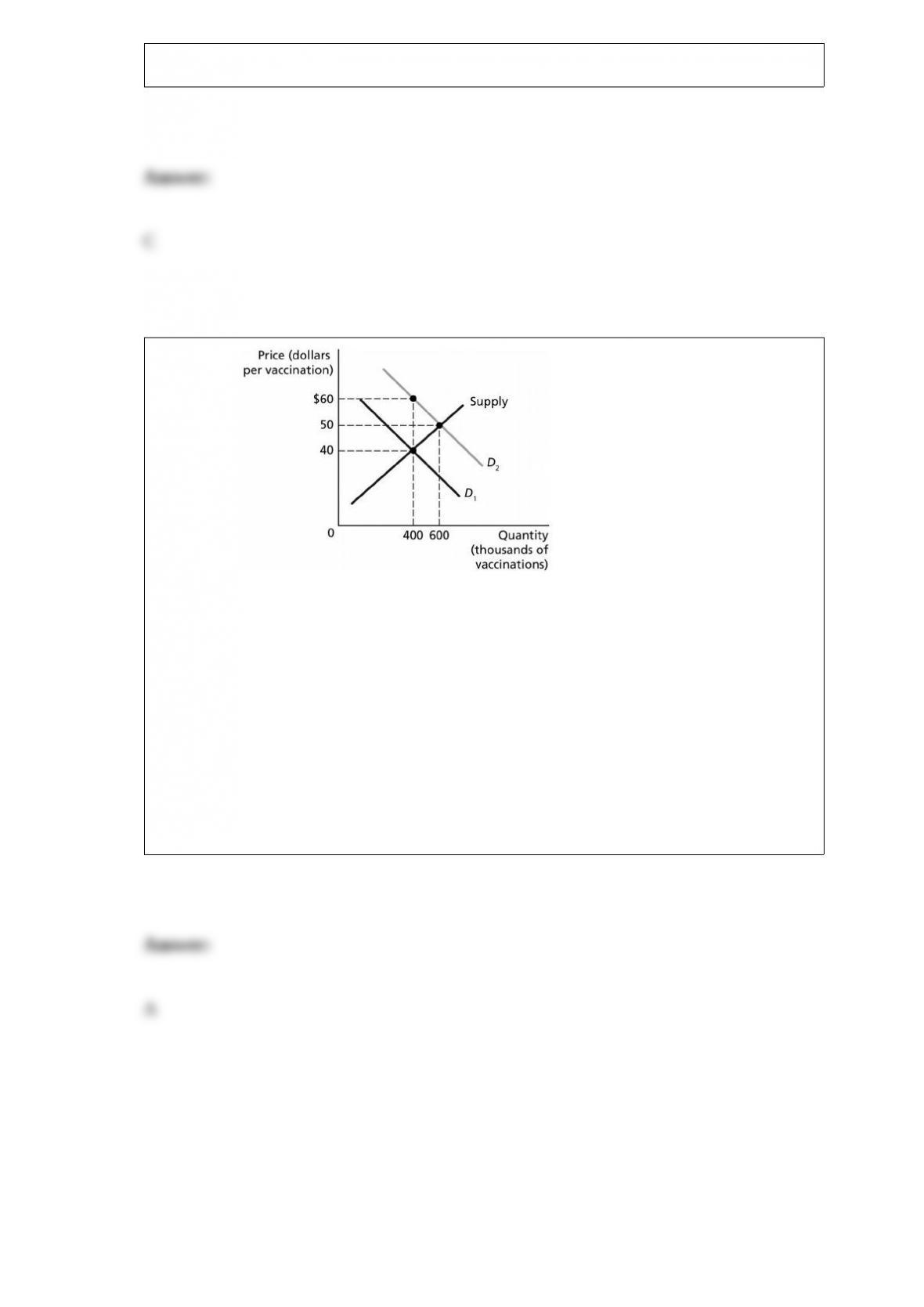
Figure 5-1 Figure 5-1 represents the market
for vaccinations. Vaccinations are considered a benefit to society, and the figure shows
both the marginal private benefit and the marginal social benefit from vaccinations.
Marginal private benefit is represented by which curve?
A) D1
B) D2
C) Supply
D) All of the above represent marginal private benefit.
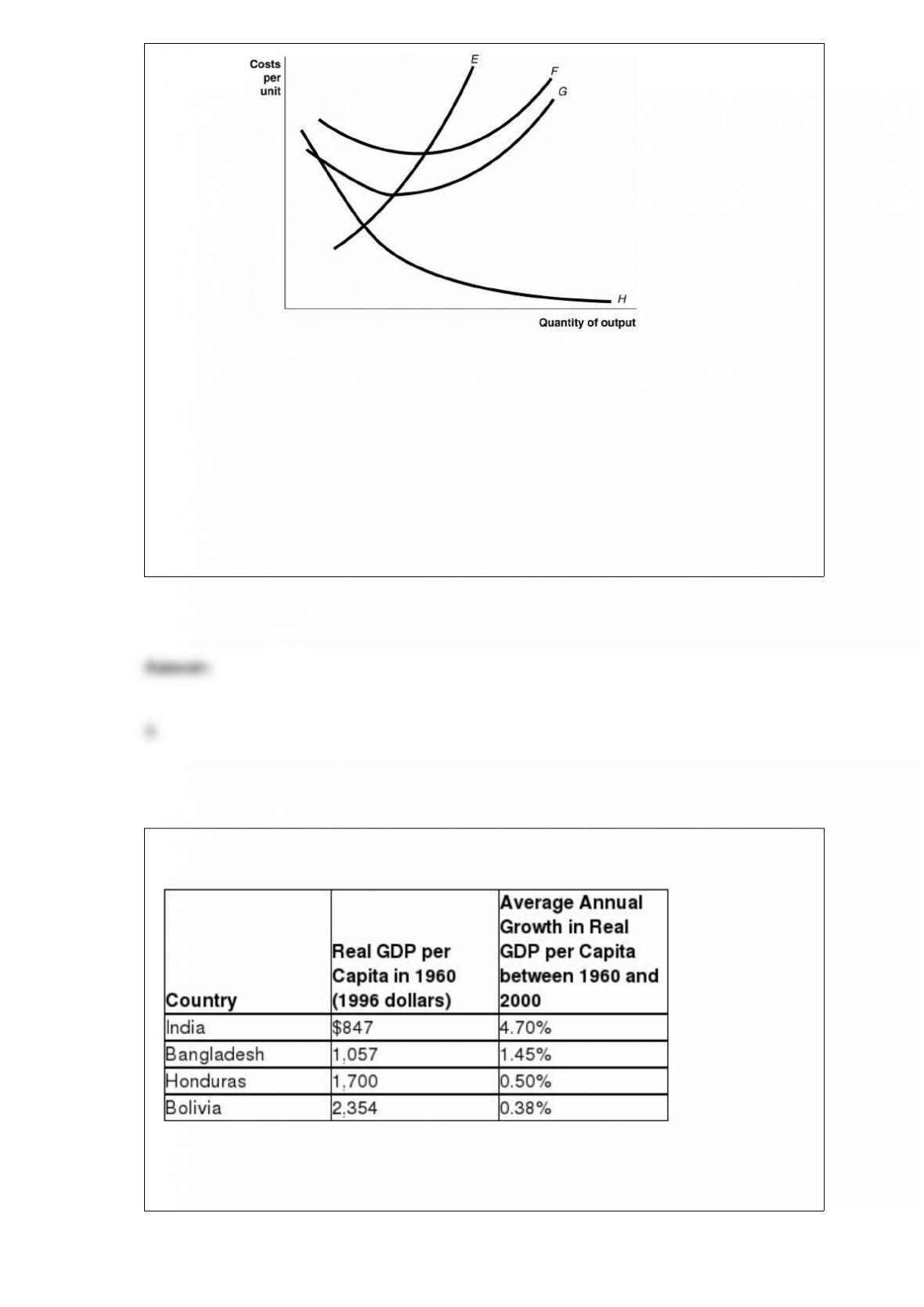
Figure 11-5
The vertical difference between curves F and G measures
A) average fixed costs.
B) marginal costs.
C) fixed costs.
D) sunk costs.
Table 22-6
Consider the statistics in the table above in describing the developing countries. Are
these consistent with the economic growth model? Briefly explain.
Suppose the velocity of money is not fixed, but stable at about two percent growth per
year. How could the quantity theory of money be modified to include a stable growth
rate of the velocity of money? In this modified quantity theory of money with velocity
growing at two percent per year, what would the growth rate of the other variables in
the theory need to be to cause inflation?
Explain the term “economics.”
How is accounting profit found?
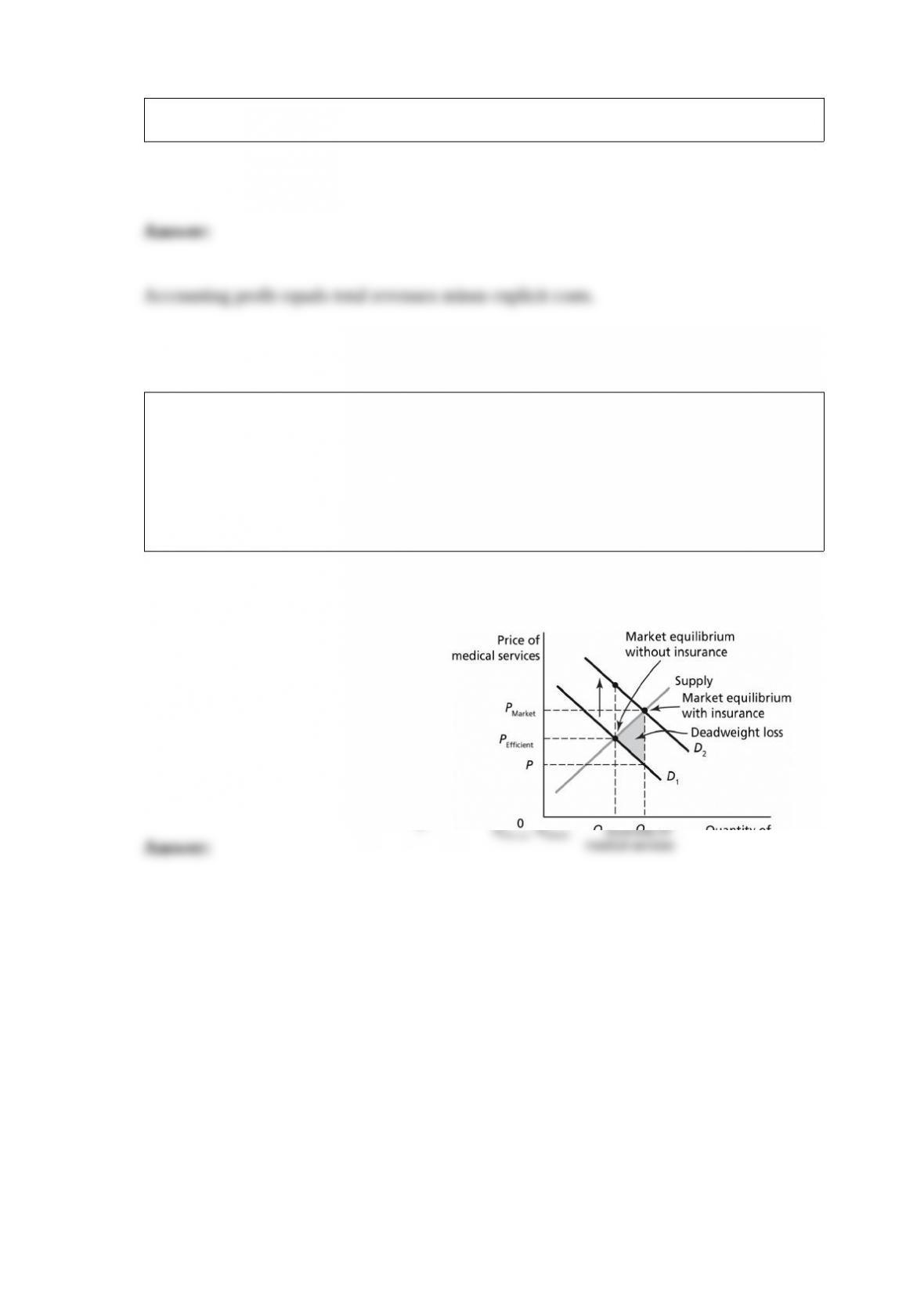
Suppose consumers pay less than the true cost of medical services because a third party,
such as an insurance company, pays most of the bill. Draw a graph showing the supply
and demand for medical services with and without a third-party payer. Identify the
market equilibrium without insurance, the market equilibrium with insurance, and the
area representing the deadweight loss. Be sure to label the efficient and the market
prices and quantities.