In long-run equilibrium, the typical perfectly competitive firm will:
a. earn zero economic profit.
b. change plant size in the long run.
c. change output in the short run.
d. do any of these.
If the percentage change in the quantity demanded of a good is greater than the
percentage change in price, price elasticity of demand is:
a. elastic. c. perfectly inelastic.
b. inelastic. d. perfectly elastic.
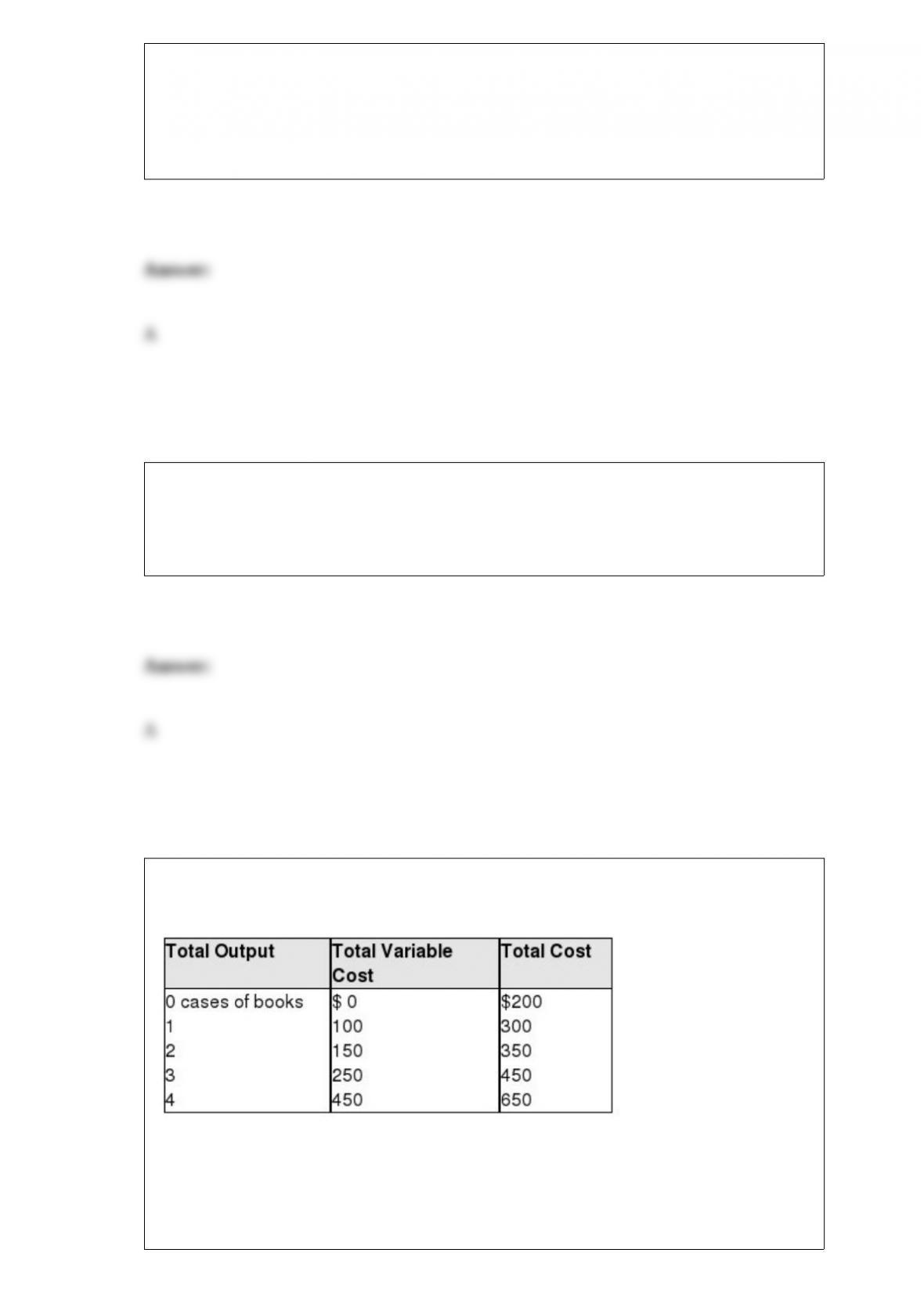
Exhibit 7-10 Short-run cost schedule for book publisher’s hourly production
In Exhibit 7-10, the average variable cost of producing 2 cases of books is:
a. $50 per case.
b. $75 per case.
c. $100 per case.
d. $150 per case.
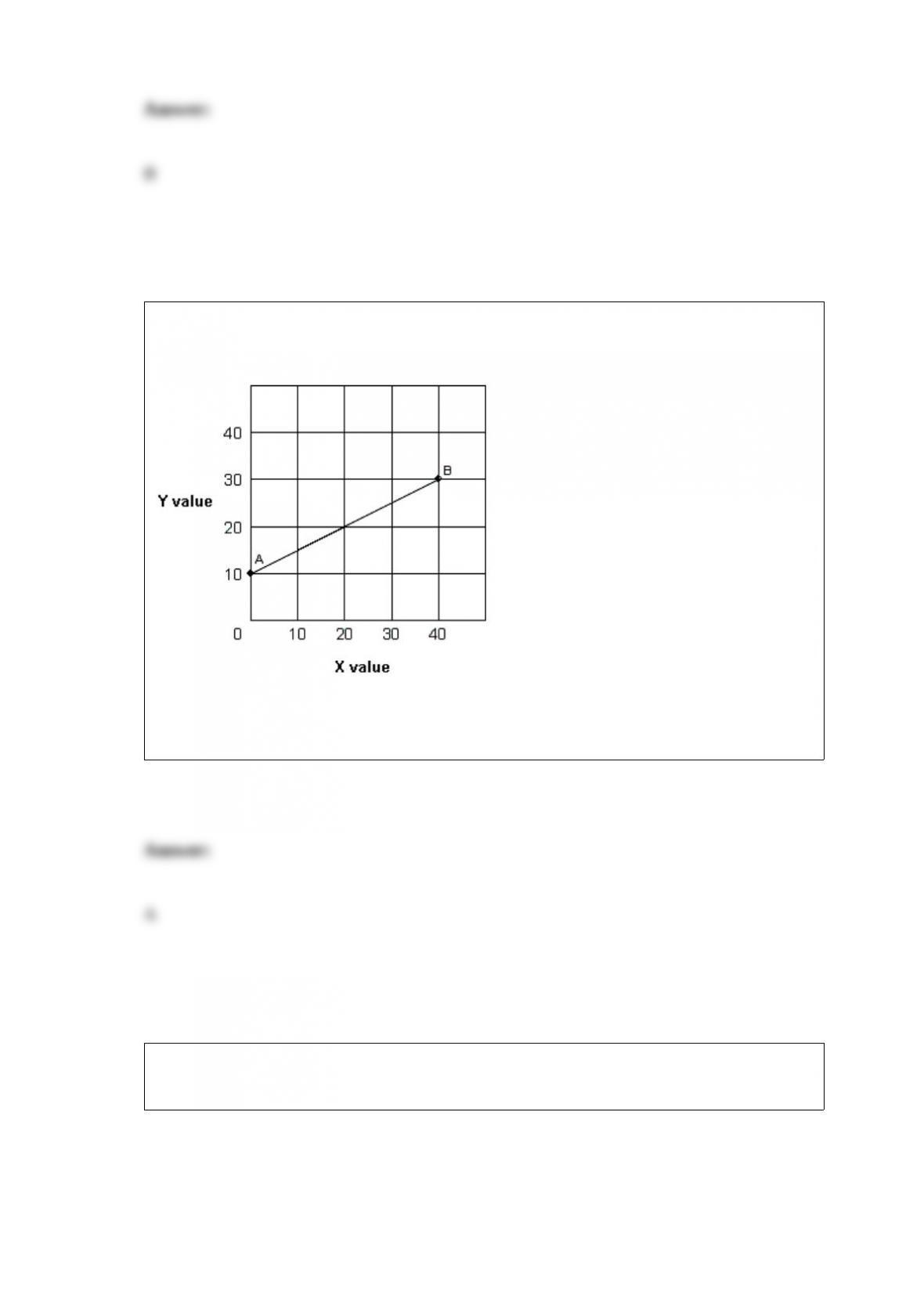
Exhibit 1A-1 Straight line
In Exhibit 1A-1, the slope of straight line AB is:
a. positive. c. negative.
b. zero. d. variable.
Exhibit 8-11 A firm’s cost and marginal revenue curves
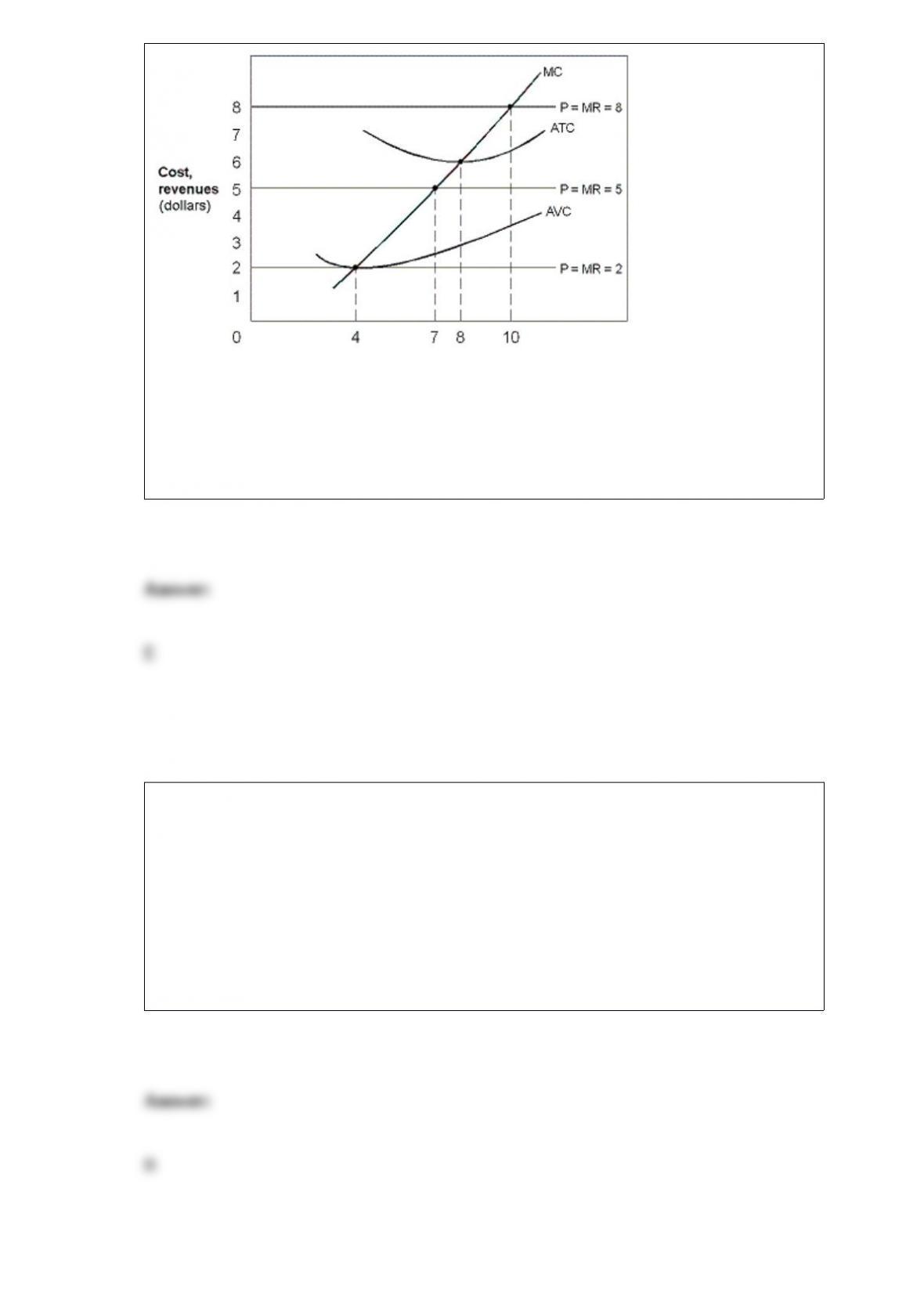
In Exhibit 8-11, the profit-maximizing output level at the price of $8 is:
a. 0.
b. 4.
c. 7.
d. 8.
e. 10.
If there is a decrease in demand for lettuce, we would expect:
a. both the price and quantity sold to increase.
b. both the price and quantity sold to decrease.
c. the price to decrease and the quantity sold to increase.
d. the price to increase and the quantity sold to decrease.
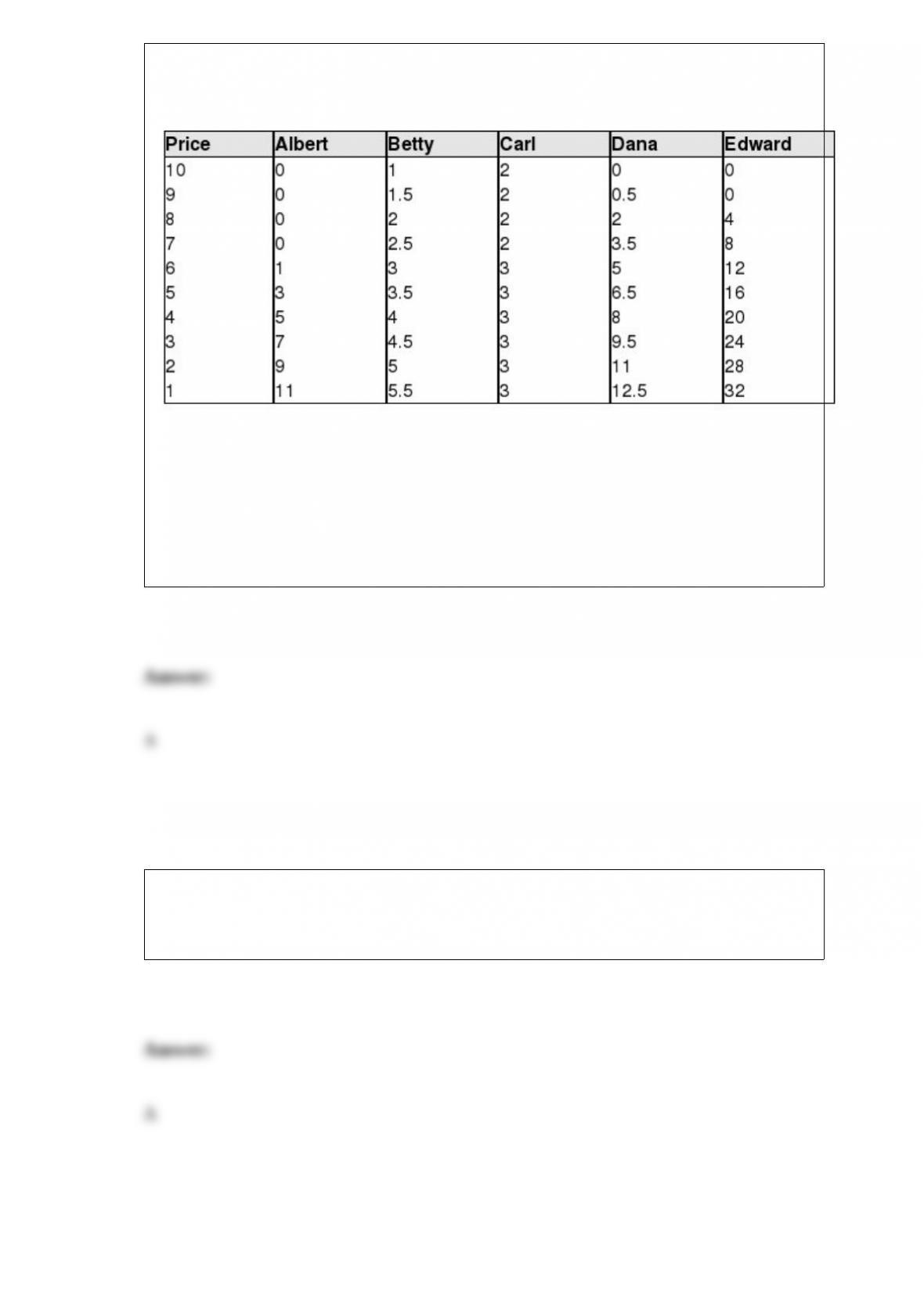
Exhibit 5-3 Demand curves for gallons of orange juice
Using Exhibit 5-3, whose “quantity demanded” experiences the largest percentage
increase when the price falls from $2 to $1?
a. Albert
b. Betty
c. Carl
d. Dana
e. Edward
The price of a good will rise when:
a. there is a shortage of the good. c. demand for the good decreases.
b. there is a surplus of the good. d. the supply of the good increases.

Comparative advantage explains why a nation will benefit from trade when:
a. it exports more than it imports.
b. its trading partners are experiencing offsetting losses.
c. it exports goods for which it is a high-opportunity cost producer, while importing
those for which it is a low-opportunity cost producer.
d. it exports goods for which it is a low-opportunity cost producer, while importing
those for which it is a high-opportunity cost producer.
If an economy is operating at a point inside the production possibilities curve,
a. its resources are not being used efficiently.
b. the curve will begin to shift inward.
c. the curve will begin to shift outward.
d. This is a trick question because an economy cannot produce at a point inside the
curve.
If a government tax has as its purpose the raising of revenue, it would be best to place
the tax on a product which:
a. is a non-essential.
b. has a highly elastic demand.
c. has many good substitutes.
d. has a highly inelastic demand.
e. has a unit elastic demand curve.

Which of the following is included in the study of macroeconomics?
a. Wage rate of college students. c. Unemployment in the nation.
b. Prices of automobiles. d. Price of silver and gold.
A direct relationship exists when:
a. there is no association between two variables.
b. one variable increases and there is no change in the other variable.
c. one variable increases and the other variable increases.
d. one variable increases and the other variable decreases.
The term Ceteris paribus means that:
a. the model includes all important variables occurring in the real world.
b. all factors which influence the event are changing at the same time.
c. one influence is changing and everything else is being held constant.
d. the consumer is king.

Price elasticities of supply are always:
a. the same as price elasticities of demand.
b. negative numbers.
c. positive numbers.
d. greater than one.
e. increased when a tax is imposed.
Which of the following helps low-income countries grow rapidly relative to
high-income countries?
a. Low-income countries are in a better position to save a larger share of their income.
b. Low-income countries can employ technologies and practices that have been
successful in high-income countries.
c. Low-income countries generally have legal systems that protect property rights and
enforce contracts in a more evenhanded manner.
d. Low-income countries generally have more favorable weather conditions.
Who was one of the first proponents of employing market economies instead of

command economies?
a. Robert Heilbroner. c. Jeffrey Sachs.
b. Karl Marx. d. Adam Smith.
In the United States since 1970, the poverty rate for blacks has been about:
a. 12 percentage points higher than the poverty rate for whites.
b. twice the poverty rate for whites.
c. three times the poverty rate for whites.
d. five times the poverty rate for whites.
At the point where total utility is at its peak, marginal utility is:
a. zero.
b. positive.
c. negative.
d. positive, but declining.
e. positive, but increasing.

The most fundamental concepts underlying the discipline of economics are:
a. scarcity and choice. c. money, stocks, and bonds.
b. supply and demand. d. inflation and unemployment.
The consumer equilibrium condition for two goods is achieved by equating the:
a. marginal utility of one to the price of the other for the last dollar spent on each good.
b. prices of both goods for the last dollar spent on each good.
c. marginal utilities of both goods for the last dollar spent on each good.
d. ratios of marginal utility to the price of both goods for the last dollar spent on each
good.
Exhibit 11-4 Supply and demand curves for food servers
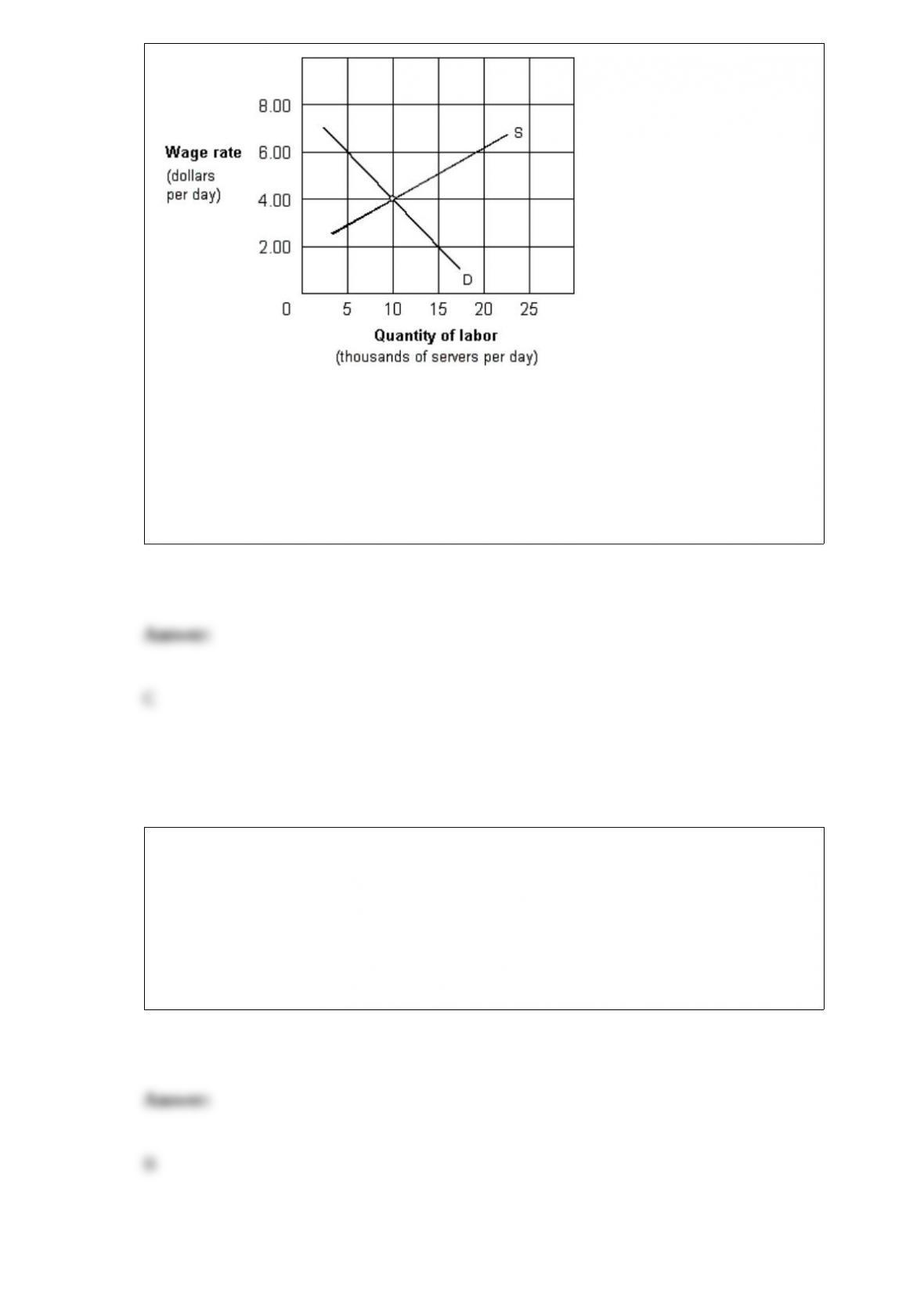
In Exhibit 11-4, suppose that in the interest of boosting incomes of the working poor,
Congress imposes a minimum wage of $6.00 per hour. This minimum wage rate creates
a(n):
a. new labor market equilibrium.
b. excess demand for labor of 10 thousand food servers.
c. excess supply of labor of food servers.
d. situation of full employment for food servers.
In a competitive labor market, the change in total labor costs divided by the change in
labor is always equal to:
a. one.
b. the wage rate.
c. the number of firms in the market.
d. the change in total revenue.
e. the competitive market price of the output.
Assuming peaches are a normal good and consumer incomes rise, producer surplus in
the peach market:
a. increases. c. remains unchanged.
b. decreases. d. equals the deadweight loss increase.
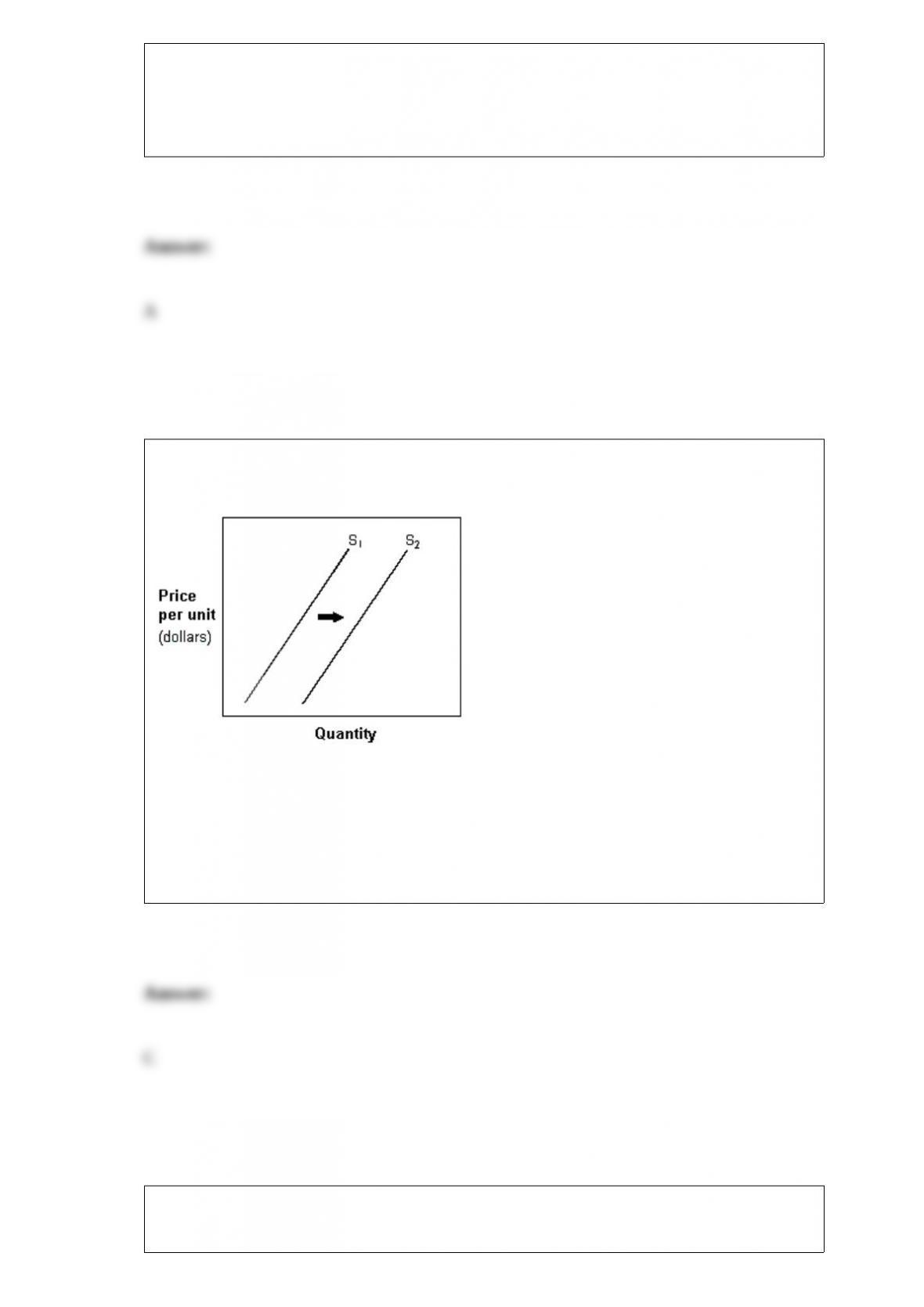
Exhibit 3-4 Supply curves
In Exhibit 3-4, a shift in the supply curve from S1 to S2 represents a(n):
a. decrease in supply.
b. decrease in the quantity supplied.
c. increase in supply.
d. increase in the quantity supplied.
e. increase in demand.
In a natural monopoly, the long-run average cost curve declines and therefore average
cost is lower when there is only one seller.

Economics is the study of people making choices faced with the problem of unlimited
wants and limited resources.
A perfectly competitive firm’s short-run supply curve is its marginal cost curve below
its average variable cost curve.
All of a firm’s inputs are considered to be variable in the long run.

In traditional economies, people base economic decisions on the precedents established
by previous generations.
If the demand for a product is inelastic, then a price increase will result in a decrease in
total revenue.