Hewlett-Packard will not raise the prices of its personal computers without first
considering how Dell might respond. This is evidence of
A) interdependence.
B) collusion.
C) cutthroat competition.
D) price fixing.
Figure 2-15 Figure
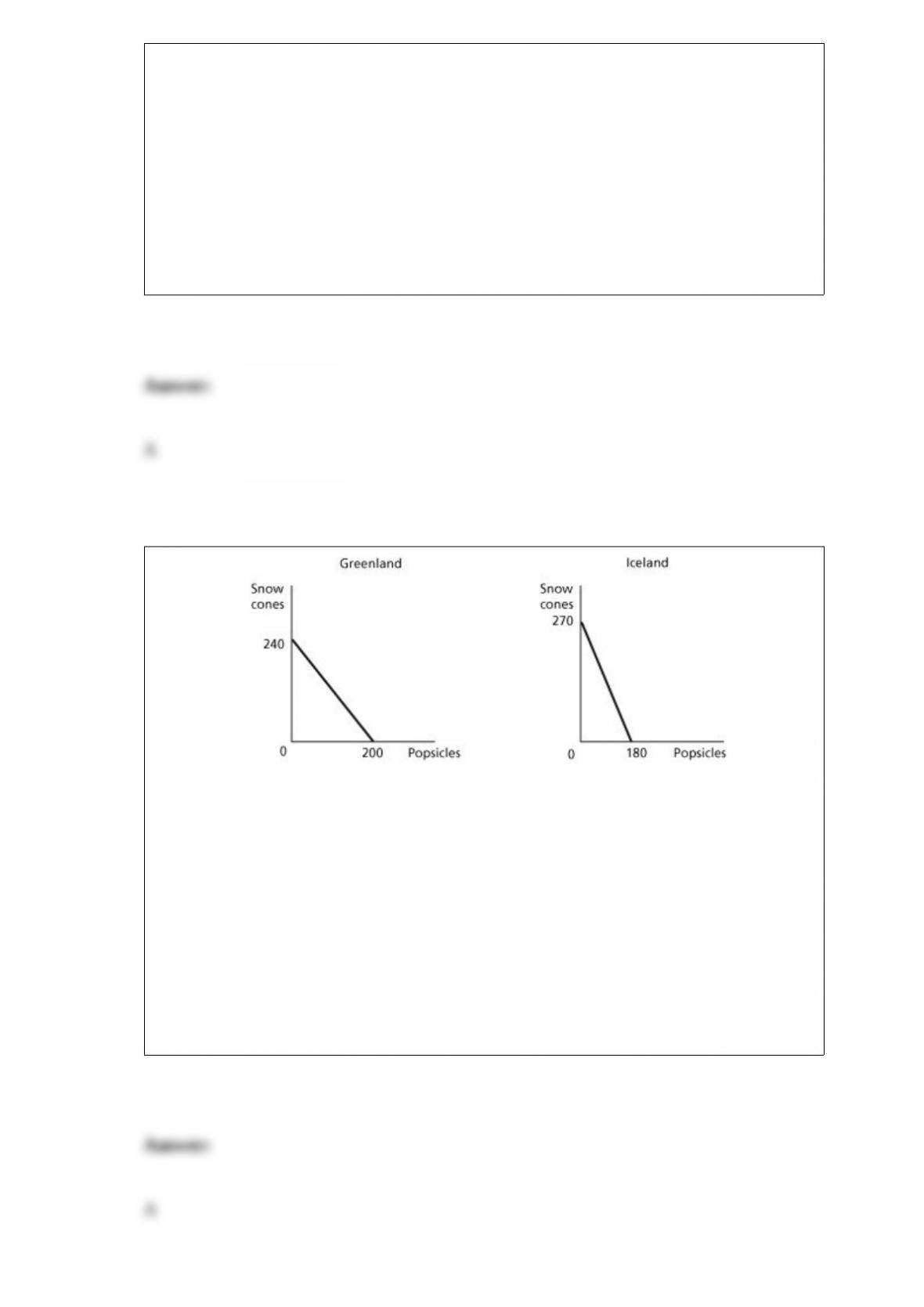
2-15 shows the production possibilities frontiers for Greenland and Iceland. Each
country produces two goods, snow cones and popsicles. If the two countries have the
same amount of resources and the same technological knowledge, which country has an
absolute advantage in the production of popsicles?
A) Greenland
B) They have the same advantage.
C) Iceland
D) cannot be determined

If the painting firms in a city sign a contract outlining a pricing plan, they are involved
in
A) price competition.
B) a legal form of business contract in the United States.
C) collusion.
D) price regulation.
A firm that successfully differentiates its product or lowers its average cost of
production creates
A) value for its customers.
B) entry barriers into its market.
C) a perfectly inelastic demand curve for its product.
D) economies of scale.
Suppose electronic cigarette manufacturer NJOY is successful in establishing a
profitable market for e-cigarettes in what is a monopolistically competitive industry. In
the long run, NJOY will most likely find it ________ to remain profitable as they face

________ competition in the e-cigarette market.
A) harder; more
B) harder; less
C) easier; more
D) easier; less
If technological change increases the profitability of new investment for firms, then the
________ curve for loanable funds will shift to the ________ and the equilibrium real
interest rate will ________.
A) supply; right; fall
B) supply; left; rise
C) demand; right; rise
D) demand; left; fall
Increases in the minimum wage are intended to raise the incomes of low-income
workers. Many economists favor a Different policy to achieve this goal, a policy that
avoids the deadweight losses that result from the minimum wage. What is this policy?
A) distribution of food stamps to low-income consumers
B) distribution of vouchers that can be used for rent or mortgage payments
C) the Alternative Minimum Tax
D) the earned income tax credit
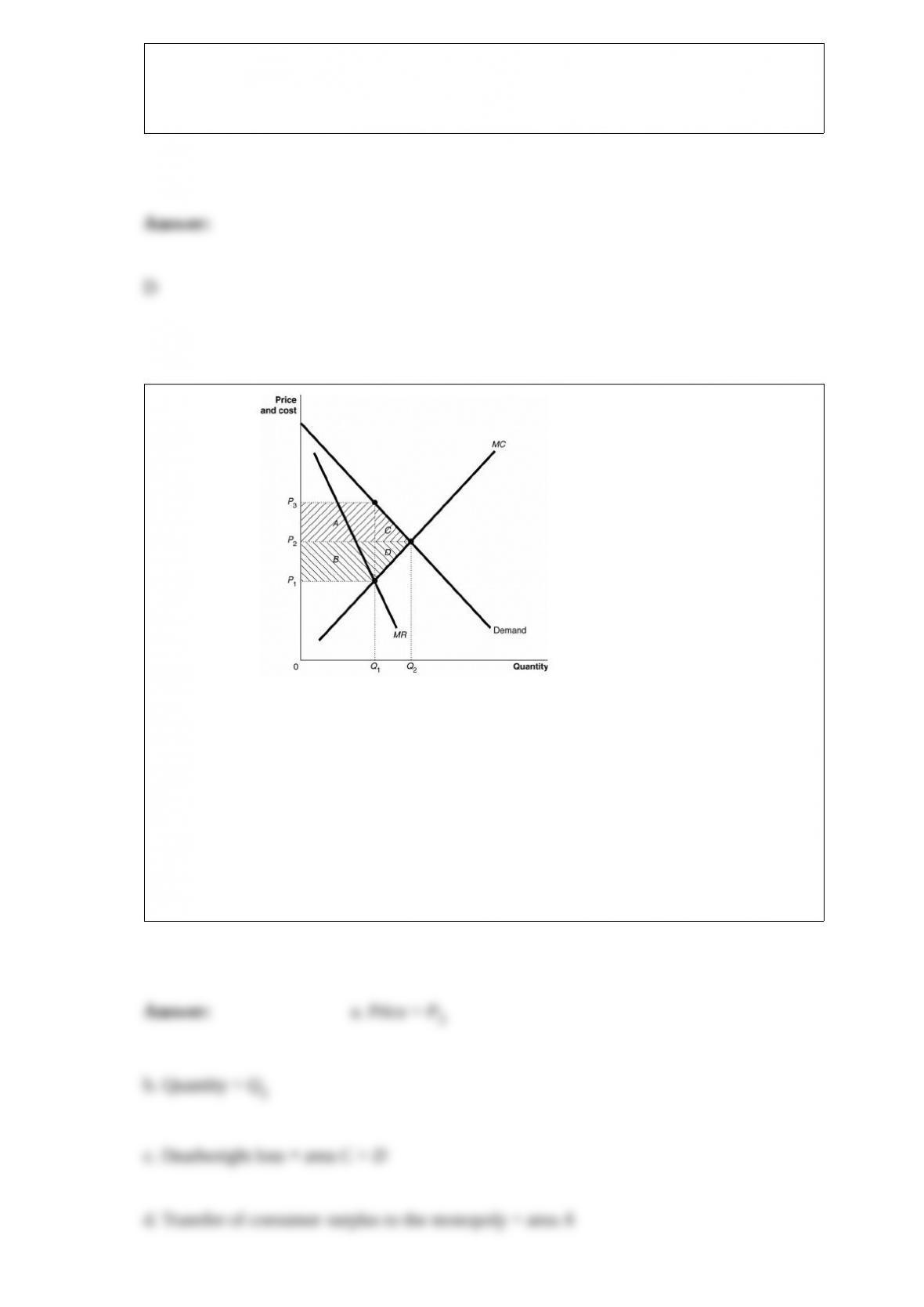
Figure 15-14
From the monopoly graph above, identify the following:
a. The profit maximizing price
b. The profit maximizing quantity
c. The area representing deadweight loss
d. The area representing the transfer of consumer surplus to the monopoly
Arbitrage
A) is the act of buying an item at a low price and reselling the item at a higher price.
B) is the act of selling an item on consignment and collecting a huge portion of the
proceeds to compensate for the seller’s time.
C) is the act of buying an item at a low price, bundling it with another and selling the
new package at a much higher price.
D) is any act of buying and selling that results in the seller earning an above normal
profit.
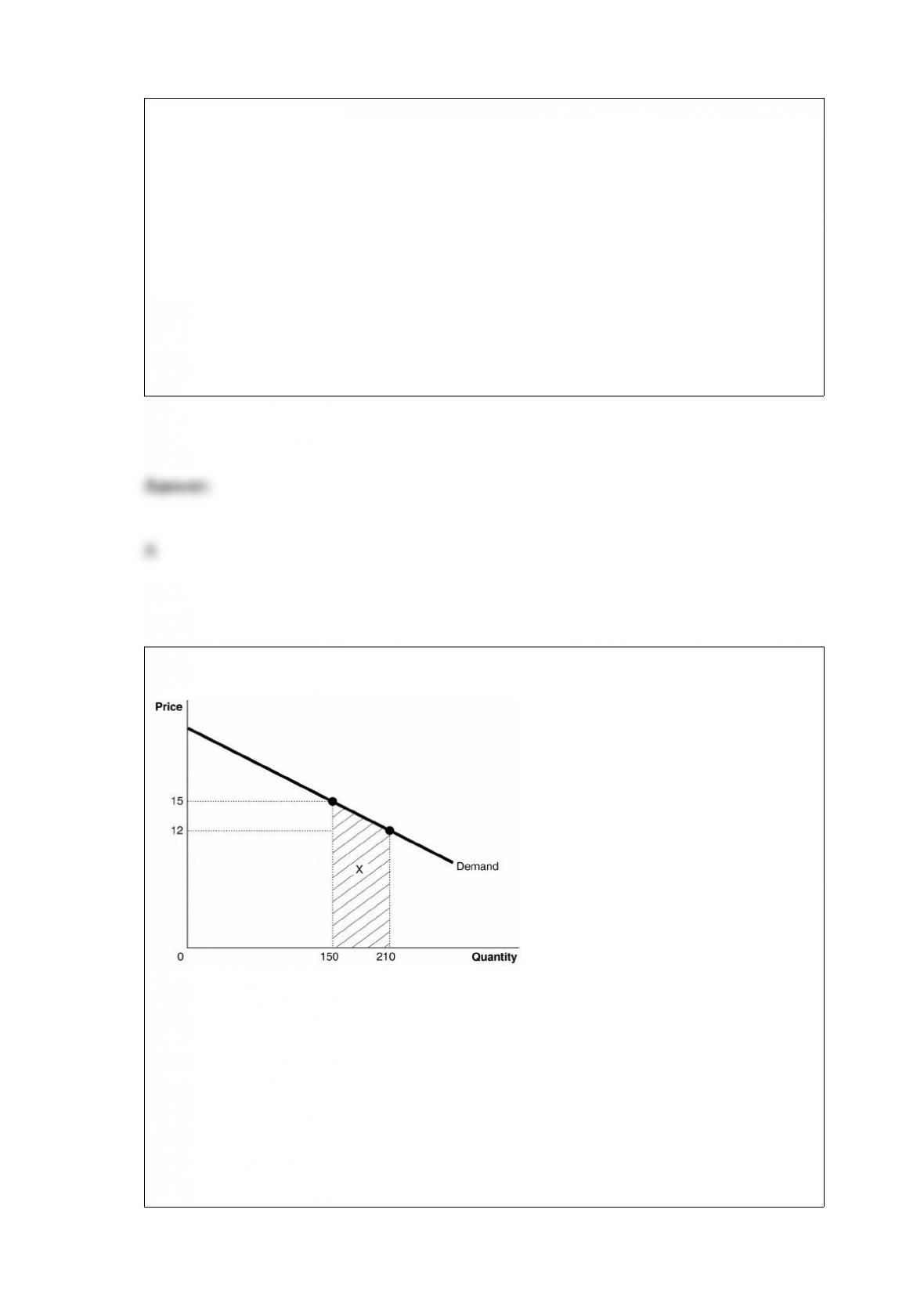
Figure 1-3
Calculate the area of the trapezoid X.
A) $270
B) $720
C) $810
D) $2,520
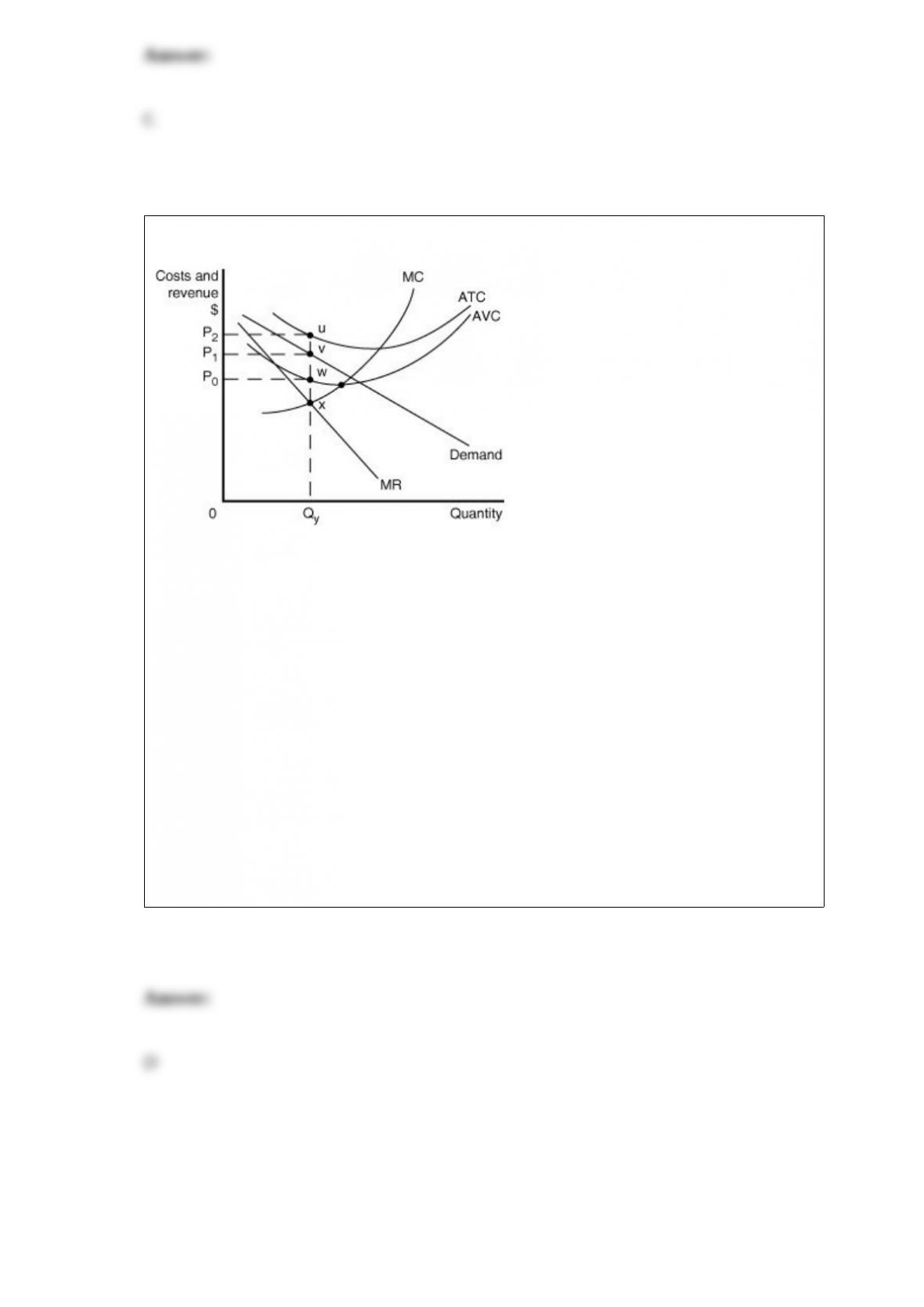
Figure 13-7
Figure 13-7 shows short-run cost and
demand curves for a monopolistically competitive firm in the footwear market. Which
of the following statements describes the best course of action for the firm depicted in
the diagram?
A) The firm should exit the industry because its price is less than its average total cost.
B) The firm should minimize its losses by producing Qy units and charging a price of
P0.
C) The firm should minimize its losses by producing Qy units and charging a price of
P2.
D) The firm should minimize its losses by producing Qy units and charging a price of
P1.