
Which price index measures the change in housing prices from repeated sales
information?
A) S&P / Case-Shiller index
B) GDP deflator
C) Chain-weighted consumer price index
D) Dow-Jones index
Which of the following statements is true?
A) If marginal costs are constant, then it is optimal to advertise until the last dollar
spent on advertising generates one additional dollar of sales.
B) If the demand curve shifts leftward as the advertising expenditure increases, then the
advertising elasticity of demand is positive.
C) If the advertising elasticity of demand declines and consumer demand becomes more
price elastic, then the optimal advertising-to-sales ratio declines.
D) If the advertising elasticity of demand is positive, then the demand curve must be
upward sloping.
The maximum price that a consumer is willing to pay for each unit bought is the
________ price.

A) market
B) reservation
C) consumer surplus
D) auction
E) choke
Why are many oligopolistic market outcomes conveniently described by a Prisoners’
Dilemma?
A) The firms can always achieve the outcome that maximizes joint outcomes.
B) The firms could do better than the Nash equilibrium if they collude.
C) The outcome of a Prisoners’ Dilemma is always efficient.
D) The outcome of a Prisoners’ Dilemma is always identical to the perfectly
competitive outcome.
An examination of the production isoquants in the diagram below reveals that:
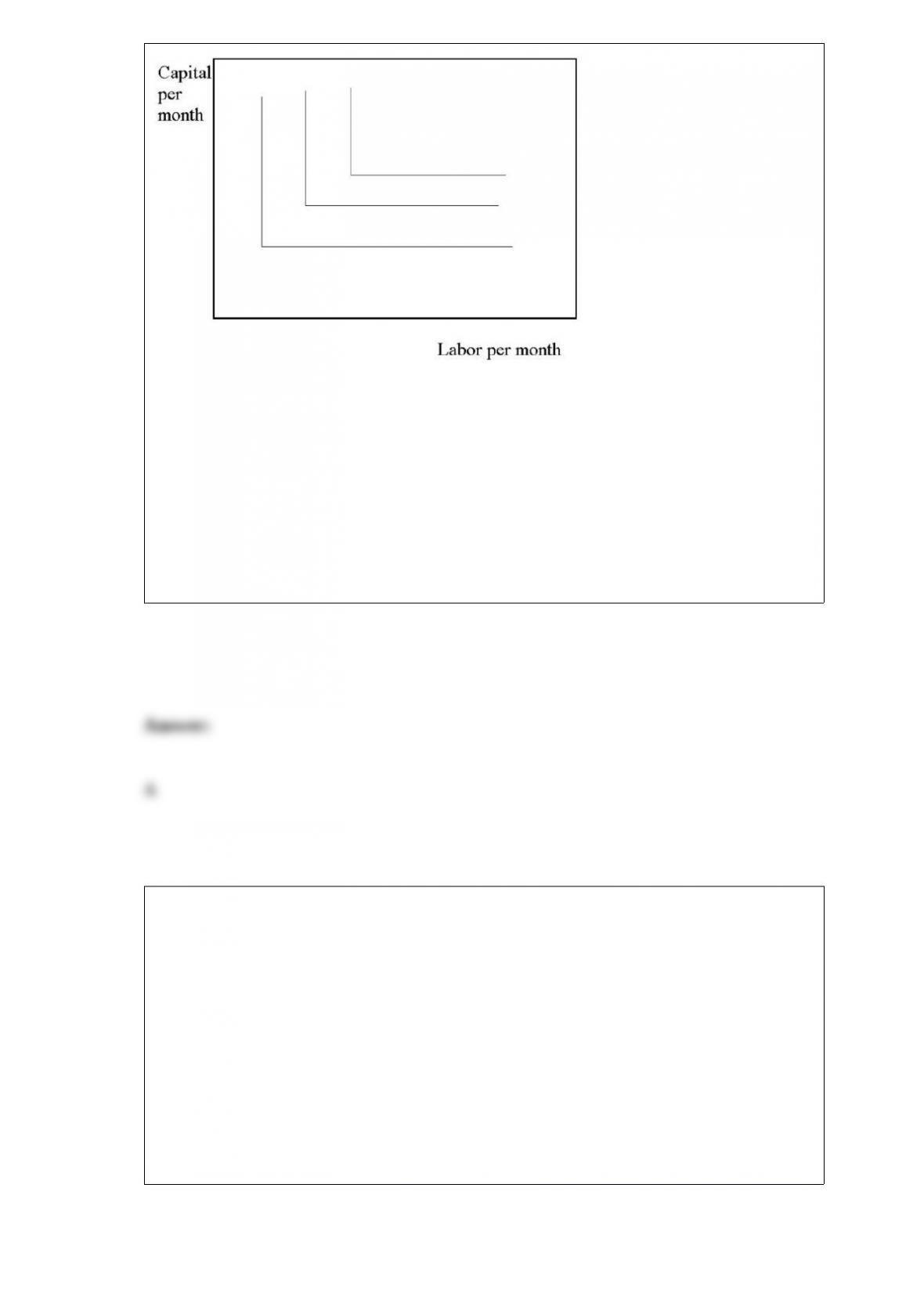
A) capital and labor will be used in fixed proportions.
B) capital and labor are perfectly substitutable.
C) the MRTS is constant.
D) Both B and C are correct.
E) none of the above
As the manager of a firm you calculate the marginal revenue is $152 and marginal cost
is $200. You should
A) expand output.
B) do nothing without information about your fixed costs.
C) reduce output until marginal revenue equals marginal cost.
D) expand output until marginal revenue equals zero.
E) reduce output beyond the level where marginal revenue equals zero.

Which of the following are examples of cooperative games?
A) The bargaining between a buyer and seller over the price of a car
B) Independent action by two firms in a market regarding advertising strategies
C) Independent pricing strategies by two firms in a market
D) Independent pricing strategies by many firms in a market
E) Team games (such as baseball or basketball)
A certain firm can hire two types of workers: Group A workers who have high
productivity and Group B workers with low productivity. Group A workers will add
$27,500 to the firm’s revenues per year, while Group B workers will increase the firm’s
revenues by $15,000 per year. The firm’s managers expect workers to be employed for
eight years. The differences in the workers’ productivity levels are reflected in their
costs per year of education. Each year of education (which includes the psychic costs of
study effort) costs an A worker $12,500, while each year costs a B worker $25,000.
a. Under competitive conditions, how much would A and B workers earn?
b. Assuming that the firm is unable to distinguish A from B workers and that it is
equally likely that a worker is of either type, what pay scale will the firm offer?
c. Suppose that the firm decides to use education as a market signaling device to
distinguish A workers from B workers. What education requirement could the firm set?
Which of the following is true for both perfectly competitive and monopolistically
competitive firms in the long run?
A) P = MC.
B) MC = ATC.
C) P > MR.
D) Profit equals zero.
The Tire Shed is a regional chain that sells tires and other automobile parts. The
company sells its own brand of tires under a block pricing scheme that charges $100 per
tire if the customer buys one or two tires and $75 per tire if the customer buys three or
four tires. The monthly demand curve facing the typical store is Q = 1000 – 4P, and the
marginal cost of the tires is constant at $40 per tire.
a. What are the monthly profits for the typical store under the block pricing scheme?
What is the consumer surplus enjoyed by customers of the typical store?
b. Suppose the firm is considering a uniform pricing scheme with P = $90 per tire. How
does the firm profit and consumer surplus under uniform pricing compare to the profit
and consumer surplus outcomes under block pricing?
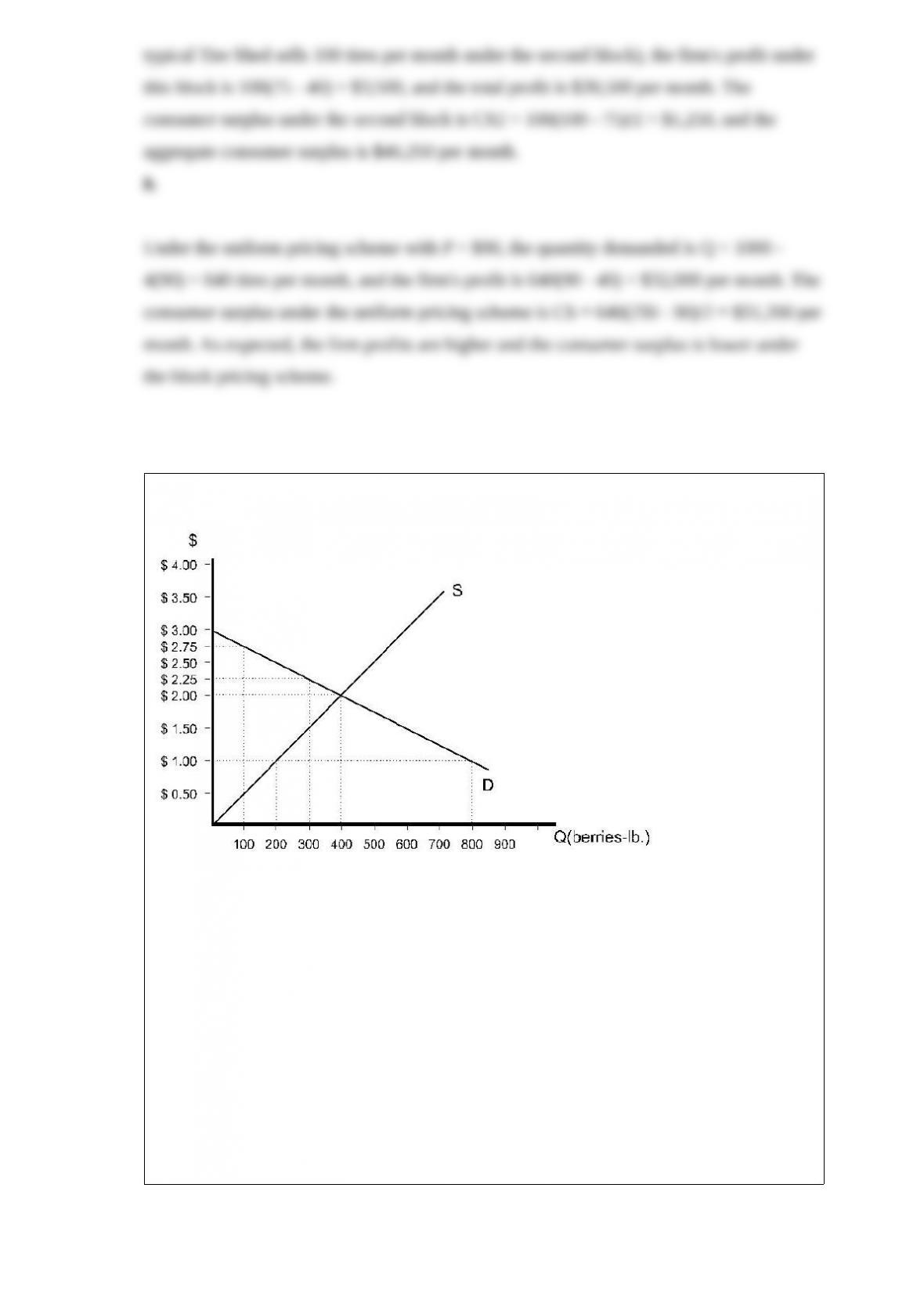
Figure 9.3
Refer to Figure 9.3. If the government establishes a price ceiling of $1.00, producer
surplus will
A) fall by $150.
B) fall by $300.
C) remain the same.
D) rise by $150.
E) rise by $300.

Consider a linear, upward sloping supply curve. If the supply curve shifts upward, then:
A) the price elasticity of supply will increase.
B) the price elasticity of supply will increase if the slope of the supply curve is greater
than one.
C) the price elasticity of supply will increase if the slope of the supply curve is greater
than one and the lowest price needed to induce firms to supply anything is positive.
D) the price elasticity of supply will be constant.
E) none of the above
As we move downward along a typical isoquant, the slope of the isoquant
A) becomes flatter.
B) becomes steeper.
C) remains constant.
D) becomes linear.

Scenario 10.3:
The demand curve and marginal revenue curve for red herrings are given as follows:
Q = 250 – 5P
MR = 50 – 0.4Q
Refer to Scenario 10.3. What level of output maximizes revenue?
A) 0
B) 45
C) 85
D) 125
E) 245
Alvin’s preferences for good X and good Y are shown in the diagram below.
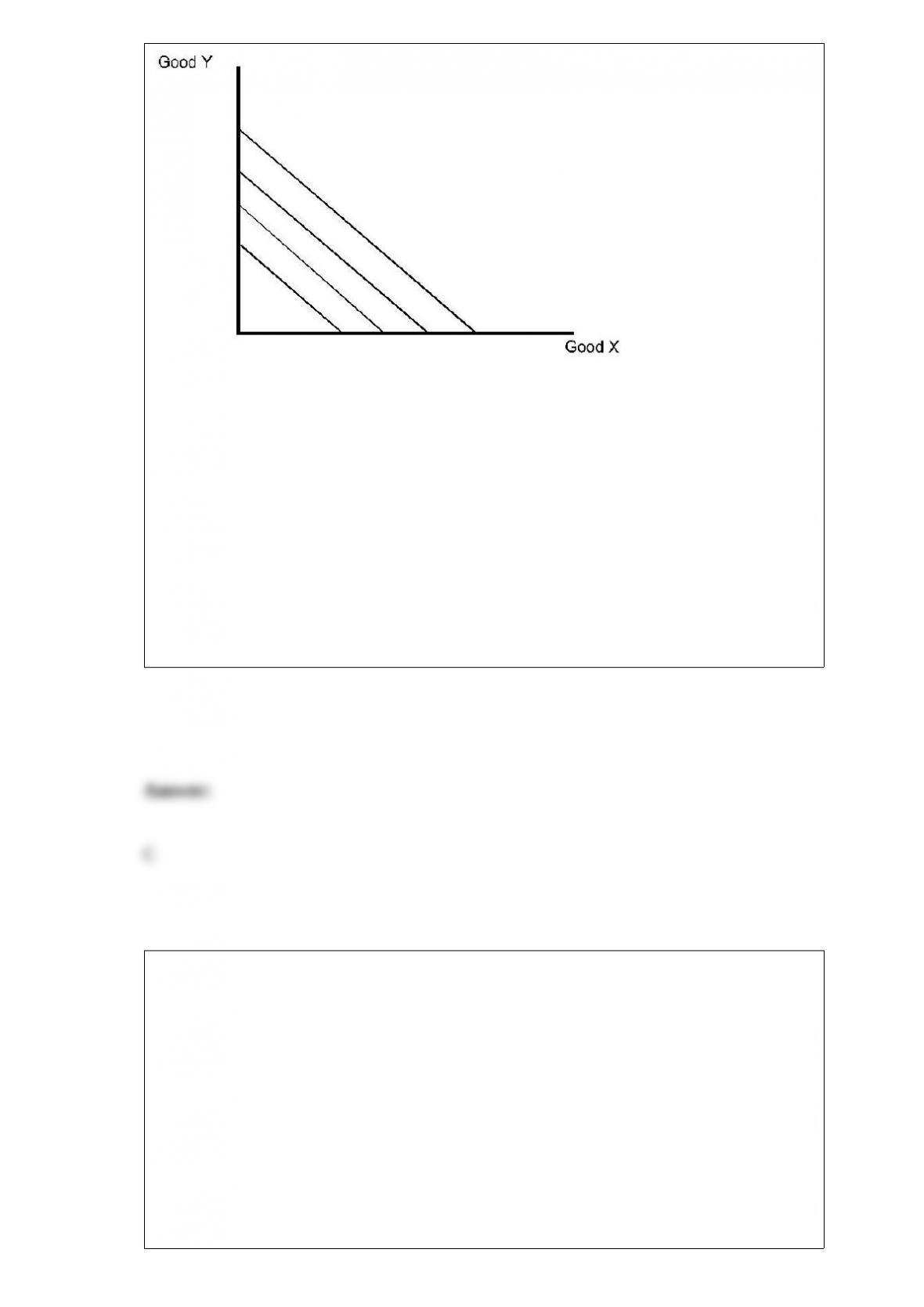
Figure 3.1
Based on Figure 3.1, it can be inferred that:
A) Alvin does not consider good X as “good.”
B) Alvin will never purchase any of good Y.
C) Alvin regards good X and good Y as perfect substitutes.
D) Alvin regards good X and good Y as perfect complements.
E) none of the above
An oligopolistic situation involving the possible creation of barriers to entry would
probably best be modeled by a
A) cooperative game.
B) Prisoners’ Dilemma game.
C) Battle of the Sexes game.
D) repeated game.
E) sequential game.

There are two independent dealers for Sporto automobiles in a large city. The dealers
decide to run a cooperative advertising campaign in which both dealers are listed in
local newspapers ads, and they can purchase larger ads that are more likely to attract
attention and generate more auto sales if the dealers commit more funds to the joint
advertising budget. Is this an example of a cooperative constant-sum game?
A) Yes, each firm can contribute zero to 100 percent of the advertising budget, so this is
a constant-sum game.
B) Yes, all negotiated outcomes between two firms are cooperative and constant-sum
situations.
C) No, the outcome of the advertising campaign depends on how much money the firms
contribute to the campaign, so it is not constant sum.
D) No, the firms are independent, so their interaction cannot be cooperative.
When the price of wood (which is an input in the production of furniture) falls, the
consumer surplus associated with the consumption of furniture
A) increases.
B) decreases.
C) does not change.
D) could be any of the above.

A local restaurant sells strawberry pie for $3.00 per slice. However, if you order the
prime rib dinner, you can get a slice of pie for only a dollar. This is an example of
A) bundling.
B) second-degree price discrimination.
C) a two-part tariff.
D) tying.
E) none of the above
Which of the following is true for both perfect and monopolistic competition?
A) Firms produce a differentiated product.
B) Firms face a downward sloping demand curve.
C) Firms produce a homogeneous product.
D) There is freedom of entry and exit in the long run.

If the market for labor is perfectly competitive, the profit maximizing level of labor
occurs where
A) MRPL < W (the wage).
B) MRPL = P (the output price).
C) MRPL just exceeds W.
D) MRPL = W.
E) none of the above
Government intervention can increase total welfare when
A) there are costs or benefits that are external to the market.
B) consumers do not have perfect information about product quality.
C) a high price makes the product unaffordable for most consumers.
D) all of the above
E) A and B only

The authors note that the goal of maximizing the market value of the firm may be more
appropriate than maximizing short-run profits because:
A) the market value of the firm is based on long-run profits.
B) managers will not focus on increasing short-run profits at the expense of long-run
profits.
C) this would more closely align the interests of owners and managers.
D) all of the above
When comparing the market price of an input in a market characterized by bilateral
monopoly to a perfectly competitive price
A) the bilateral monopoly price is always higher than the competitive price.
B) there is no difference; the bilateral monopoly price equals the competitive price.
C) the bilateral monopoly price is always less than the competitive price.
D) the bilateral monopoly price can be higher than, lower than, or equal to the
competitive price.

You produce stereo components for sale in two markets, foreign and domestic, and the
two groups of consumers cannot trade with one another. If your firm practices
third-degree price discrimination to maximize profits, the marginal revenue
A) in the foreign market will equal the marginal cost.
B) in the domestic market will equal the marginal cost.
C) in the domestic market will equal the marginal revenue in the domestic market.
D) all of the above
E) none of the above
The current market price for good X is below the equilibrium price, and then the
demand curve for X shifts rightward. What is the likely outcome of the demand shift?
A) The surplus increases.
B) The surplus decreases.
C) The shortage increases.
D) The shortage decreases.
The rate at which one input can be reduced per additional unit of the other input, while
holding output constant, is measured by the

A) marginal rate of substitution.
B) marginal rate of technical substitution.
C) slope of the isocost curve.
D) average product of the input.
You share a room in a large apartment complex with three other students, and you want
to have an end-of-semester party that may become very noisy. Your lease clearly states
that you are not to disturb the other residents, but you believe the Coase Theorem
implies that you should be able to bargain with your neighbors and reach an agreement
on hosting the party. However, you are wrong and bargaining is unlikely to achieve an
efficient outcome. Which condition of the Coase Theorem is not met in your situation?
A) Property rights are not clearly assigned.
B) The costs of bargaining are too high.
C) You must have the property right to host noisy parties for the Coase Theorem to
work in this case.
D) All of the Coase Theorem conditions are met.
A consumer has $100 per day to spend on product A, which has a unit price of $7, and
product B, which has a unit price of $15. What is the slope of the budget line if good A
is on the horizontal axis and good B is on the vertical axis?
A) -7/15
B) -7/100
C) -15/7
D) 7/15
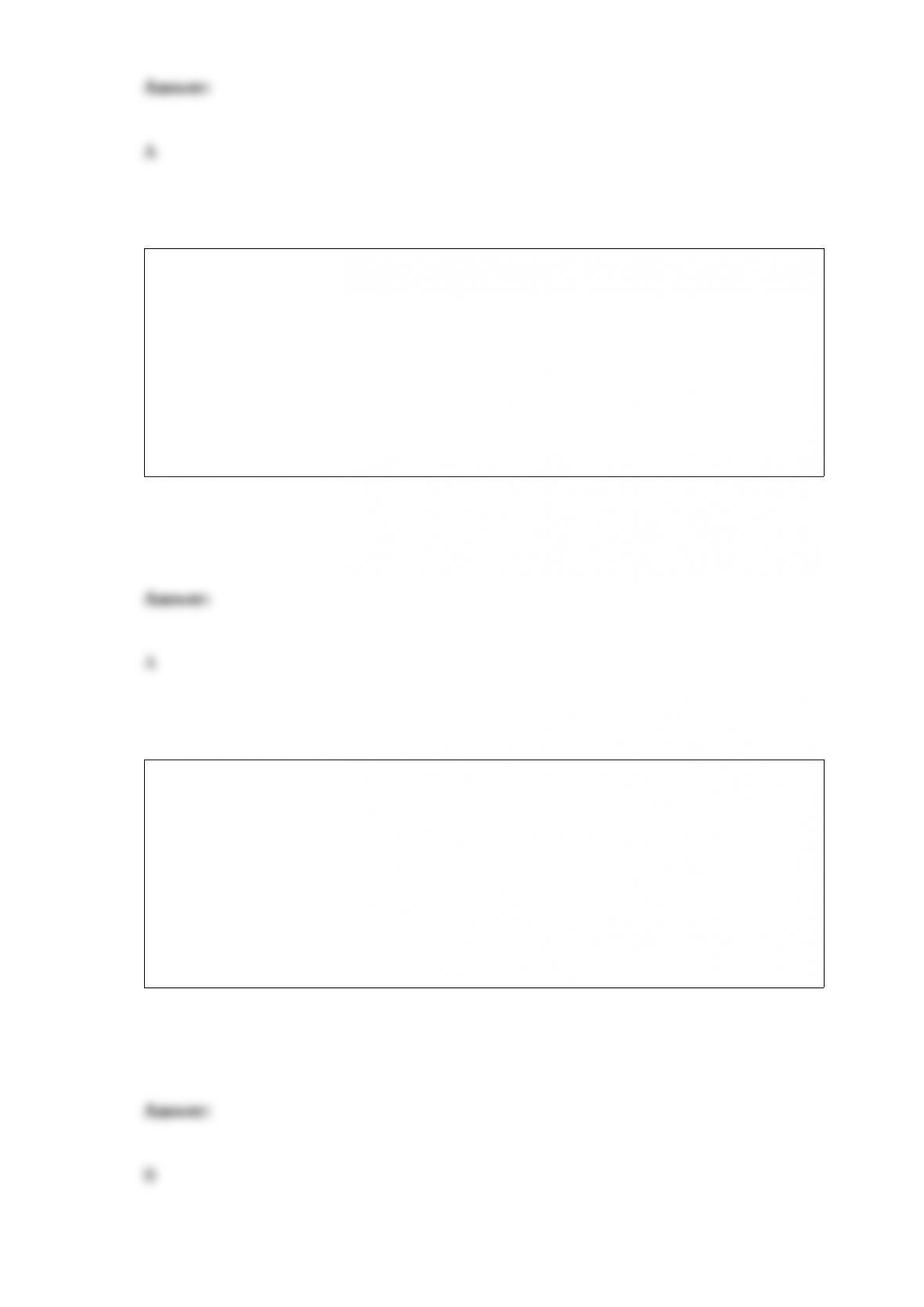
Figure 1
In Figure 5.1, the marginal utility of income is
A) increasing as income increases.
B) constant for all levels of income.
C) diminishes as income increases.
D) None of the above is necessarily correct.
Which of the following is true concerning the income effect of a decrease in price?
A) It will lead to an increase in consumption only for a normal good.
B) It always will lead to an increase in consumption.
C) It will lead to an increase in consumption only for an inferior good.
D) It will lead to an increase in consumption only for a Giffen good.
Once a point on a contract curve has been chosen,
A) it is possible to make both individuals better off.
B) it is possible to make one individual better off only at the expense of the other.
C) there is no change that would make both individuals worse off.
D) it is impossible for both individuals to have more of both goods.