
A supply curve
A) is a table that shows the relationship between the price of a product and the quantity
of the product supplied.
B) is a curve that shows the relationship between the price of a product and the quantity
of the product supplied.
C) is the relationship between the supply of a good and the cost of producing the good.
D) is a curve that shows the relationship between the price of a product and the quantity
of the product that producers and consumers are willing to exchange.
Which of the following does not take place in the direct finance market?
A) Ownership in corporations is sold in the form of common stock.
B) Deposits from savers are accumulated and loans made to borrowers.
C) Ownership in corporations is sold in the form of preferred stock.
D) Corporate bonds are sold to savers.
The long-run aggregate supply curve will shift to the right if
A) the economy experiences technological change.
B) there is a decrease in population.
C) the economy experiences high levels of inflation.

D) net exports decrease.
Figure 5-6
Figure 5-6 shows the market for measles vaccinations, a product whose use generates
positive externalities. What does D1 represent?
A) the demand curve reflecting social benefit
B) the positive externalities curve
C) the demand curve reflecting private benefit
D) the social welfare curve
If the quantity of jelly beans supplied is represented by the equation QS = -20 +4P then
the corresponding price of jelly beans is represented by the equation
A) P = 0.5QS + 80.
B) P = 0.25QS + 5.
C) P = 4QS – 80.
D) P = 2.5 – 4QS.
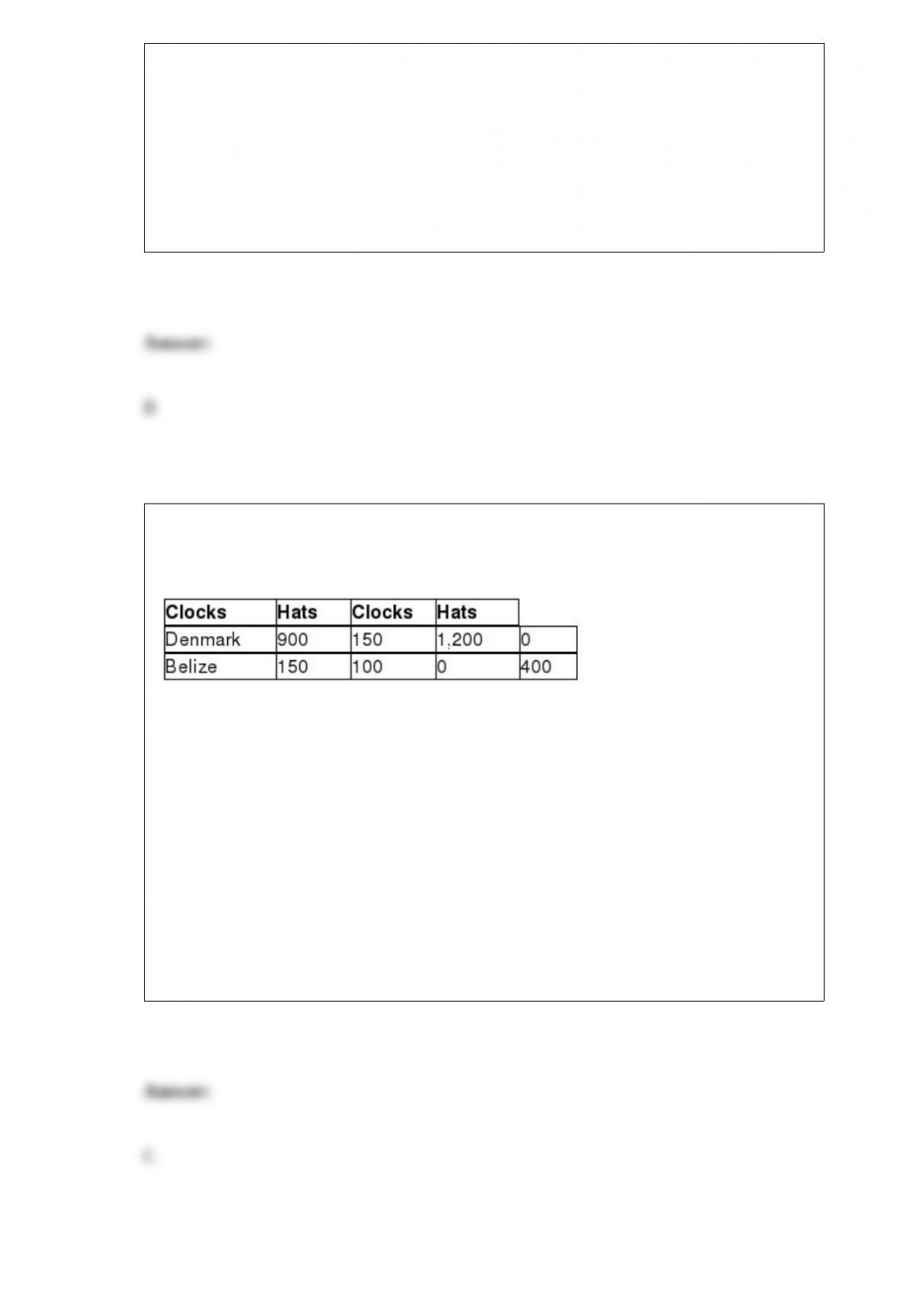
Table 9-11 Production and
Consumption Production
Without Trade With Trade
Denmark and Belize can produce both clocks and hats. Table 9-11 shows the production
and consumption quantities without trade, and the production numbers with trade.
If the actual terms of trade are 1 hat for 1.8 clocks and 150 hats are traded, how many
clocks will Belize gain compared to the “without trade” numbers?
A) -100
B) 100
C) 120
D) 250

Table 17-3
Hotspur Incorporated, a manufacturer of microwave ovens, is a price taker in its input
and output markets. The firm hires labor at a constant wage rate of $800 per week and
sells microwave ovens at a constant price of $80. Table 17-3 shows the relationship
between the quantity of labor it hires and the quantity of microwave ovens it produces.
What is the amount of profit added as a result of hiring the fourth worker?
A) $7,200
B) $1,200
C) $800
D) $400
Consider a public good such as fire protection services. Rich people may benefit more
than the poor from such a service because rich people stand to lose more from a fire that
destroys property. In this case
A) the ability-to-pay principle may support the rich paying more taxes than the poor,
but not the benefits-received principle.
B) the benefits-received principle may support the rich paying more taxes than the poor,
but not the ability-to-pay principle.
C) both the benefits-received and the ability-to-pay principles may support the rich
paying more taxes than the poor.

D) neither the benefits-received nor the ability-to-pay principles may support the rich
paying more taxes than the poor.
Except for recessions, the duration of unemployment for the typical person lasts
A) less than six months.
B) six to nine months.
C) over nine months.
D) over one year.
E) over five years.
The antitrust law that prohibits price discrimination on grounds that it reduces
competition is
A) the Clayton Act.
B) the Federal Trade Commission Act.
C) the Robinson-Patman Act.
D) the Sherman Act.
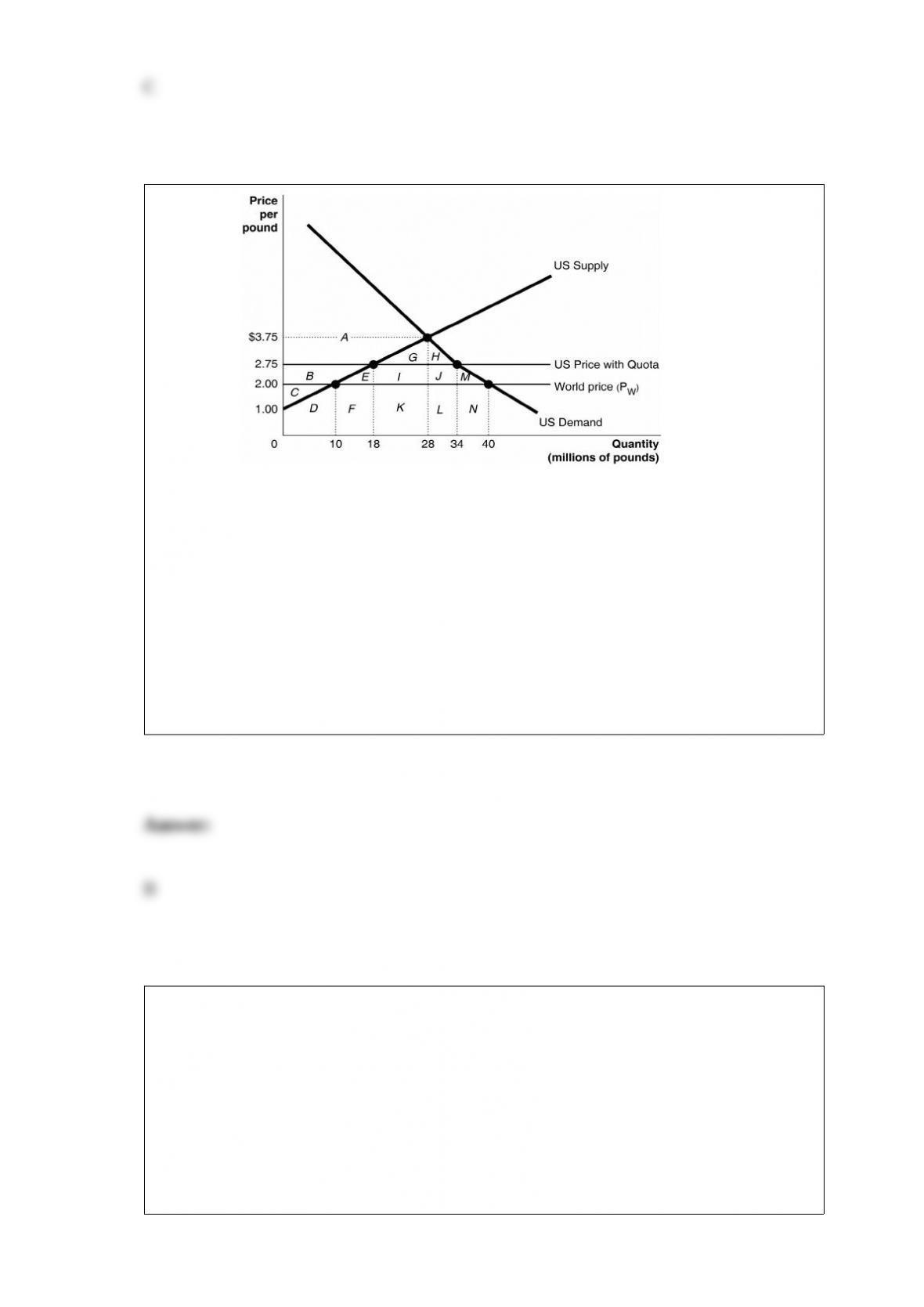
Figure 9-3 Since 1953 the
United States has imposed a quota to limit the imports of peanuts. Figure 9-3 illustrates
the impact of the quota. What is the value of domestic producer surplus after the
imposition of a quota?
A) $10.75 million
B) $15.75 million
C) $17.25 million
D) $27.75 million
According to the quantity theory of money, deflation will occur if the
A) money supply is less than real GDP.
B) money supply is more than real GDP.
C) money supply grows at a slower rate than real GDP.
D) money supply grows at a faster rate than real GDP.
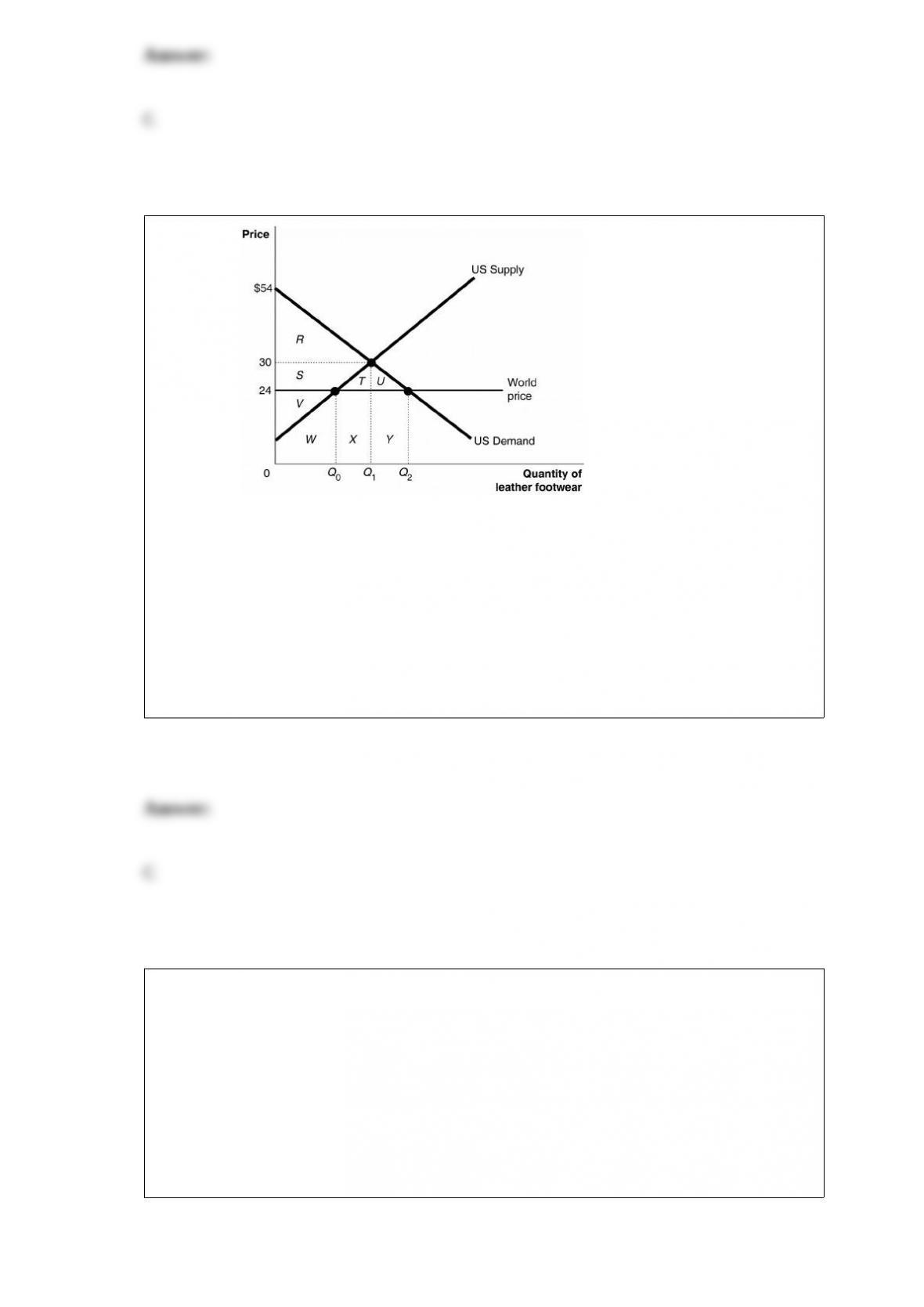
Figure 7-1 Figure 7-1 shows the U.S.
demand and supply for leather footwear. Under autarky, the equilibrium price is
A) $0.
B) $24.
C) $30.
D) $54.
How do lower taxes affect aggregate demand?
A) They increase disposable income, consumption, and aggregate demand.
B) They reduce disposable income, consumption, and aggregate demand.
C) they increase corporate investment and aggregate demand.
D) They increase aggregate supply and thus increase aggregate demand as well.