Adverse supply shocks can cause a recession with increasing price level.
The cost of unanticipated inflation is arbitrary redistribution of income and wealth.
When you have a job and your employer compensates you for your time with money,
resulting in both of you being better off, it is an example of a voluntary exchange.
A bank’s excess reserves are the fraction of a bank’s deposits held at the Federal
Reserve.
The short run aggregate supply curve is upward sloping and very steep.
An increase in human capital will cause an increase in economic growth.
The labor force participation rate is the fraction of the population over 16 years of age
that is looking for work.
Aggregate demand refers to the demand for a particular good or service.
A policy where the Federal Reserve focuses only on inflation is called monetarizing
inflation.
A liquidity trap refers to a situation when interest rates are so high, they cannot legally
go any higher.
If Tom can produce 20 multiple choice questions or 30 true/false questions in an hour,
and Mary can produce 15 multiple choice questions or 15 true/false questions in an
hour, then Mary has a comparative advantage in writing true/false questions.
The fall in value of dollar relative to yen is an appreciation of a dollar.

The congestion tax implemented in London reduced traffic volume and cut travel time
for cars and buses in half.
Recall Application 2, “Using Long-Term Macro Data to Measure Multipliers,” to
answer the following questions:
According to the application, the reason why other studies found a strong correlation
between government spending and GDP was:
A) because government spending increased in response to an increase in GDP.
B) because the increase in GDP was caused by an increase in government spending.
C) because government spending lowered interest rates and increased investments.
D) A and C are correct.
Additional Application
COPING WITH A STOCK MARKET CRASH: BLACK MONDAY, 1987
How did the Fed successfully respond to the major stock market crash in 1987?On
October 19, 1987, known as “Black Monday,” the Dow Jones index of the stock market
fell a dramatic 22.6 percent in one day. Similar declines were felt in other indexes and
stock markets around the world. These

declines shocked both businesses and investors. In just 24 hours, many people and firms
found themselves much less wealthy. The public began to worry that banks and other
financial institutions—to protect their own
loans and investments—would call in borrowers’ existing loans and stop making new
ones. A sharp drop in available credit could, conceivably, plunge the economy into a
deep recession.Alan Greenspan had just become chairman of the Federal Reserve that
year. As a sophisticated economist with historical knowledge of prior financial crises,
he recognized the seriousness of the situation. He quickly issued
a public statement in which he said that the Federal Reserve stood ready to provide
liquidity to the economy and the financial system. Banks were told that the Fed would
let them borrow liberally. In fact, the Fed provided liquidity to such an extent that
interest rates even fell. As a result of Greenspan’s action, “Black Monday” did not cause
a recession in the United States.The potentially catastrophic impact of the dramatic drop
in stock values on October 19, 1987, known as “Black Monday,” was countered by the
Fed through:
A) dramatic raising of the discount rate.
B) massive open-market sales of government bonds.
C) massive provisions of liquidity.
D) dramatic raisings of the required reserve ratio.
Recall the Application about the effectiveness of committees in making decisions about
monetary policy to answer the following question(s). Former Fed vice-chairman Alan
Blinder developed an experiment to see whether individuals or groups make better
decisions, and who makes them more rapidly. The experiment tested how quickly
individuals and groups could distinguish changes in underlying trends from random
events, such as if a one-month unemployment rate increase was a temporary aberration
or the possible beginning of a recession, and their decisions as to changing monetary
policy as a reaction to the events.
Recall the Application. The experiment conducted by Blinder showed that the actual
process of having committee meetings and discussions
A) tended to polarize the group into two distinct factions.
B) improved the group’s overall performance.
C) magnified the individual group member’s differences.
D) related to the average performance of the individual group members.
Flour is used to produce bread. If the price of flour increases:
A) the demand for bread increases.
B) the demand for bread decreases.
C) the supply of bread increases.
D) the supply of bread decreases.
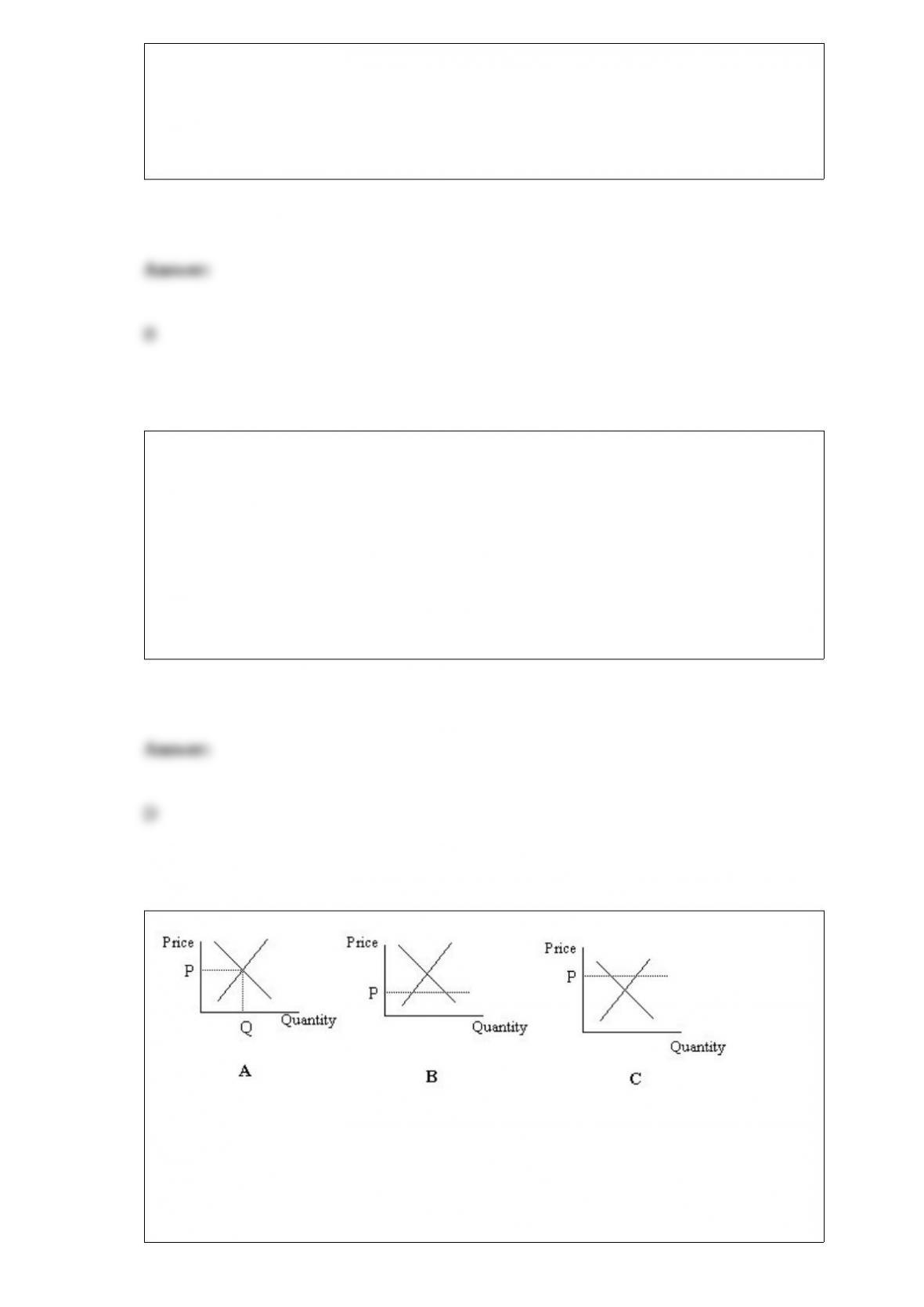
Figure 4.2 In Figure 4.2, which of the panels depicts a market in which there is an
excess demand for a product?
A) Panel A
B) Panel B

C) Panel C
D) None of the panels depicts a market in which there is an excess demand for a
product.
Assume that the consumption function is C = 200 billion + 0.8Y. When Y equals $200
billion, then saving equals ________ billion.
A) $140
B) $0
C) -$100
D) -$160
Auto workers laid off from Hot-Rod Autoworks as the result of a recession are
considered
A) structurally unemployed.
B) cyclically unemployed.
C) frictionally unemployed.
D) seasonally unemployed.

Suppose that a new tax on hiring labor is imposed. The demand for labor will
________, and as a result real wages will ________ and employment will ________.
A) increase; increase; decrease
B) decrease; decrease; decrease
C) increase; decrease; increase
D) increase; increase; increase
Which of the following sequence of events follows an expansionary monetary policy?
A) interest rate investment total demand real GDP
B) interest rate investment total demand real GDP
C) interest rate investment total demand real GDP
D) interest rate investment total demand real GDP
Daily Output of Russia and Panama
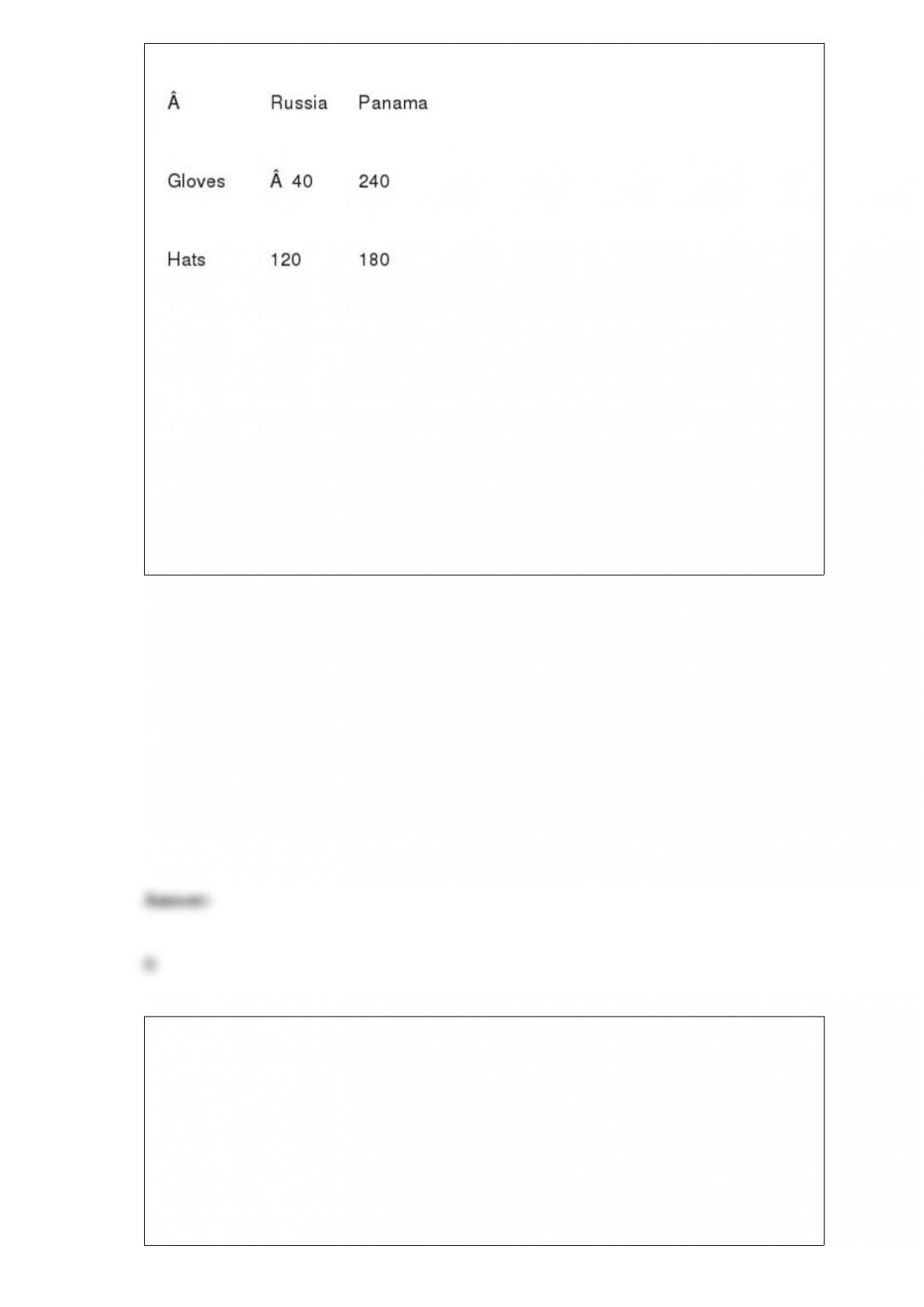
Table 18.1
Refer to Table 18.1. Panama has a comparative advantage in
A) hats.
B) gloves.
C) both hats and gloves.
D) neither hats nor gloves.
A demand curve is defined as the relationship between:
A) the price of a good and the quantity of that good that consumers are willing to buy.
B) the price of a good and the quantity of that good that producers are willing to sell.
C) the income of consumers and the quantity of a good that consumers are willing to
buy.
D) the income of consumers and the quantity of a good that producers are willing to
sell.
When there is a decrease in labor supply, real wages are likely to
A) remain the same.
B) increase.
C) decrease.
D) allow less leisure time.
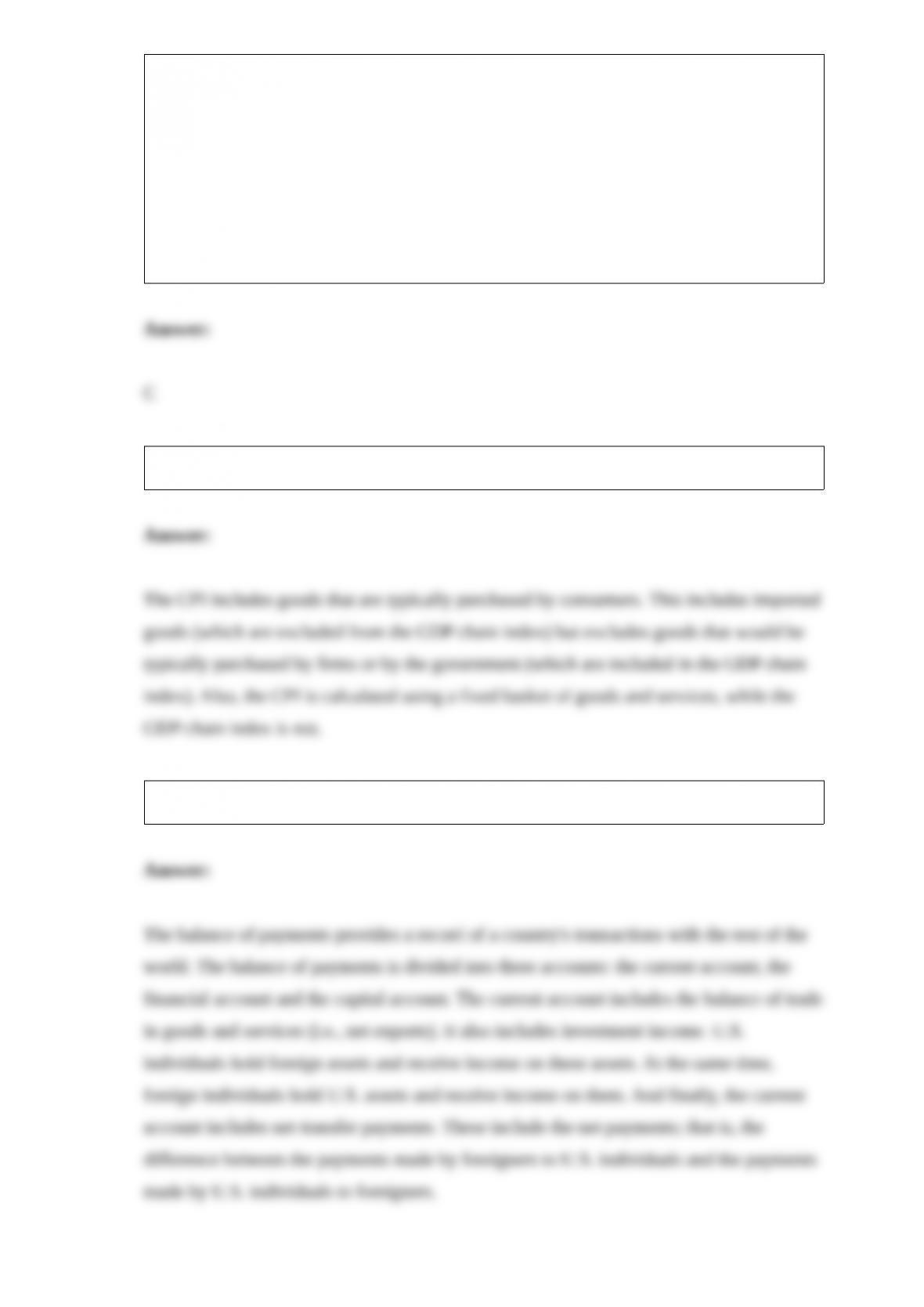
Figure 7.1 Please refer to Figure 7.1. Suppose the economy is at point A. An increase in
the labor force will:
A) move the economy to point B.
B) move the economy to point C.
C) move the economy to point D.

D) keep the economy at point A.
When a U.S. company shifts its call-center operations overseas to reduce costs, it is
applying the economic concept of
A) thinking at the margin.
B) comparative advantage.
C) diminishing returns.
D) using assumptions to simplify.
Which one of the following would shift the aggregate demand curve to the left?
A) an increase in the money supply
B)
an increase in government spending
C) an increase in exports
D) an increase in taxes
Before they can be used in regular exchanges, the assets that make up M2 must often

A) have their interest computed.
B) be converted to M1 assets.
C) be paid off if they are credit cards.
D) have reached term if they are insurance policies.
According to the possible trade-off example between warships and drinking water in the
text, the policy question that should be considered in Malaysia is
A) do the opportunity costs of the warships exceed their nominal costs?
B) do the nominal costs of the warships exceed their real costs?
C) do the benefits of the warships exceed their opportunity costs?
D) do the real costs of the warships exceed their nominal costs?
If a country’s exports equal $500 billion, while its imports equal $750 billion, then the
country’s net exports equal ________ and the economy is experiencing a trade
________.
A) -$250 billion, deficit
B) 250 billion, deficit
C) -250 billion, surplus.
D) 250 billion, balance
If the production function is Y = 3K, then an increase in labor (L) by one unit would:
A) increase Y = 3 units.
B) decrease Y by 3 units.
C) increase Y by 0 units.
D) increase K by 3 units.
How does the Consumer Price Index differ from the GDP chain index?
Explain what the current account measures.
“A trade deficit will always hurt a country.” Do you agree or disagree? Explain.
“The budget deficits incurred by the government during the first term of George W.
Bush were purely due to the tax cuts implemented by President Bush and by the wars in
Iraq and Afghanistan.” Do you agree or disagree?
How does Hall and Rabushka’s flat tax make sure that the very wealthy pay taxes?
If an economy grows at 6 percent per year, how many years would it take for real GDP
to double?
What is the difference between inside lags and outside lags?
What would happen to an economy if the government funded an increase in spending
with an equivalent increase in taxes ?
From the point of view of firms, what makes Hall and Rabushka’s flat tax a
consumption tax?