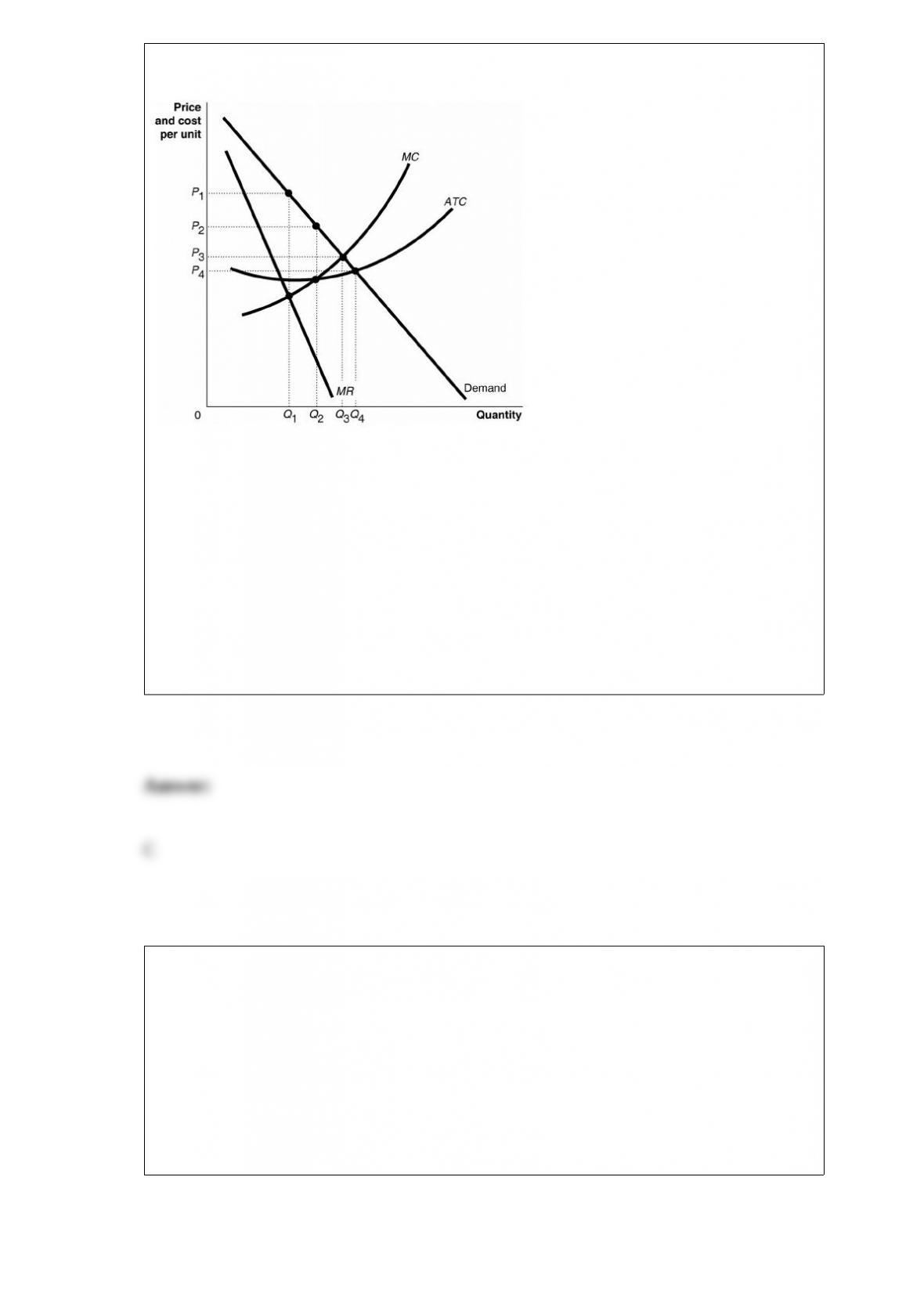
Figure 16-1
What is the economically efficient output level?
A) Q1 units
B) Q2 units
C) Q3 units
D) Q4 units
When net capital flows are positive,
A) capital inflows are greater than capital outflows.
B) net foreign investment is negative.
C) capital outflows are greater than capital inflows.
D) A and B are both correct.
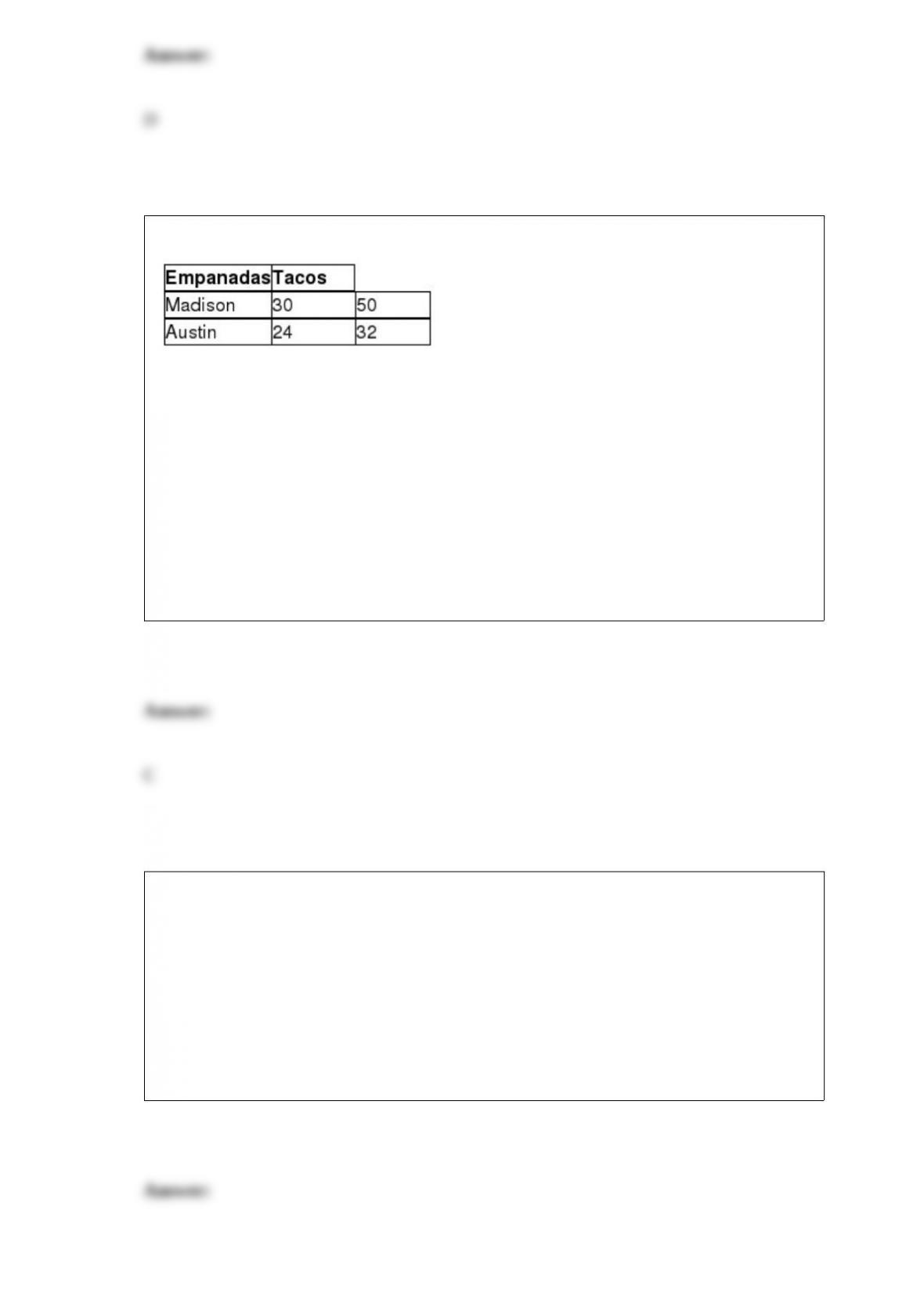
Table 7-2
Madison and Austin own Cafe Ole’. Table 7-2 lists the number of empanadas and tacos
Madison and Austin can each make in one hour. Select the statement that accurately
interprets the data in the table.
A) Madison has a comparative advantage in making empanadas.
B) Austin has an absolute advantage in making tacos.
C) Austin has a comparative advantage in making empanadas.
D) Austin has a comparative advantage in making empanadas and making tacos.
Which of the following is not a source of technological advancement for a producer?
A) better trained workers
B) more efficient physical capital
C) higher skill level of managers
D) outsourcing some aspect of production
Which of the following will not occur as the result of a decrease in net taxes?
A) decreased household saving
B) decreased government saving
C) a shift to the left of the supply curve for loanable funds
D) all of the above
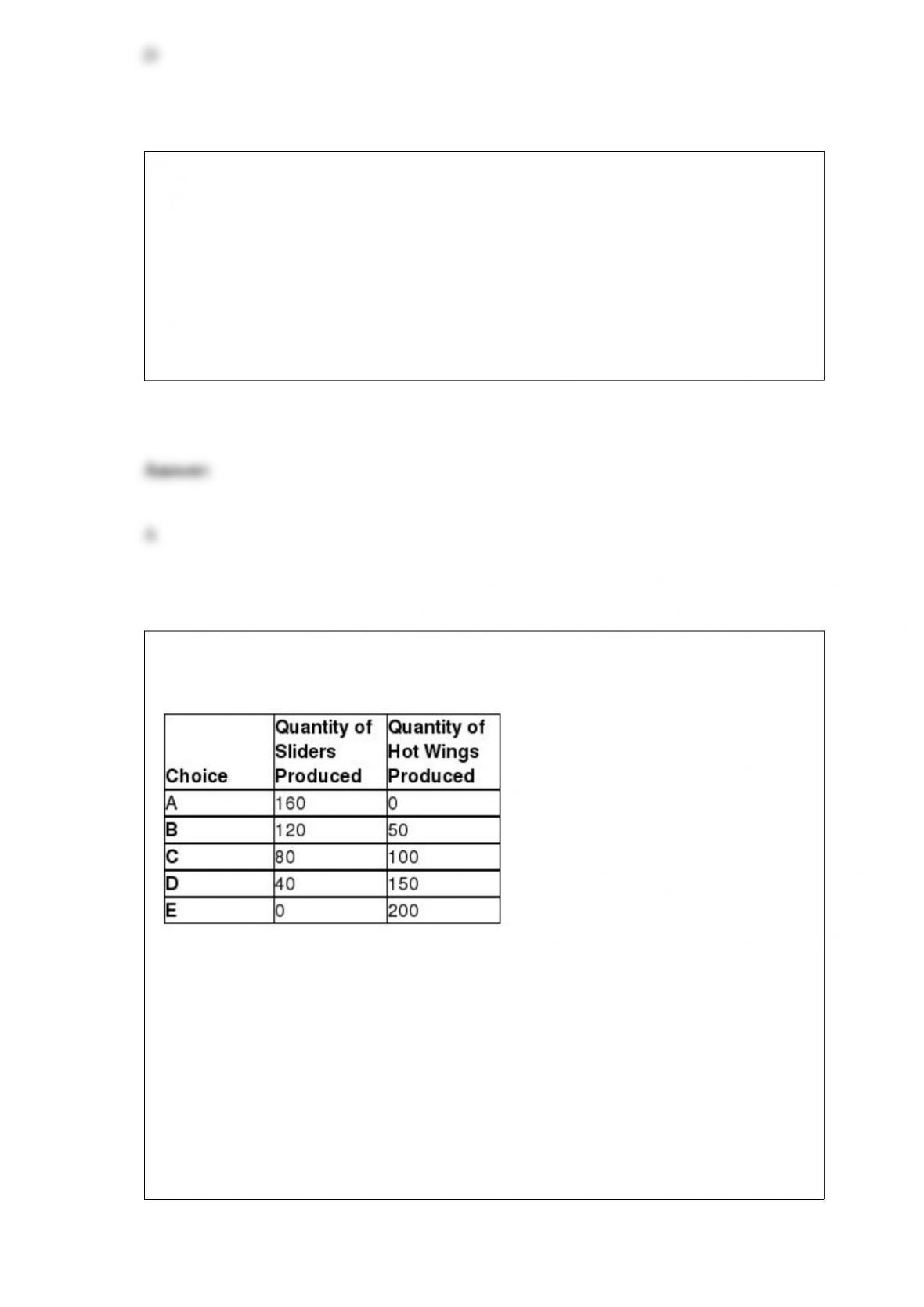
Table 2-3
Production Choices for Dina’s Diner
Assume Dina’s Diner only produces sliders and hot wings. A combination of 120 sliders
and 100 hot wings would appear
A) along Dina’s production possibilities frontier.
B) inside Dina’s production possibilities frontier.
C) outside Dina’s production possibilities frontier.
D) at the vertical intercept of Dina’s production possibilities frontier.
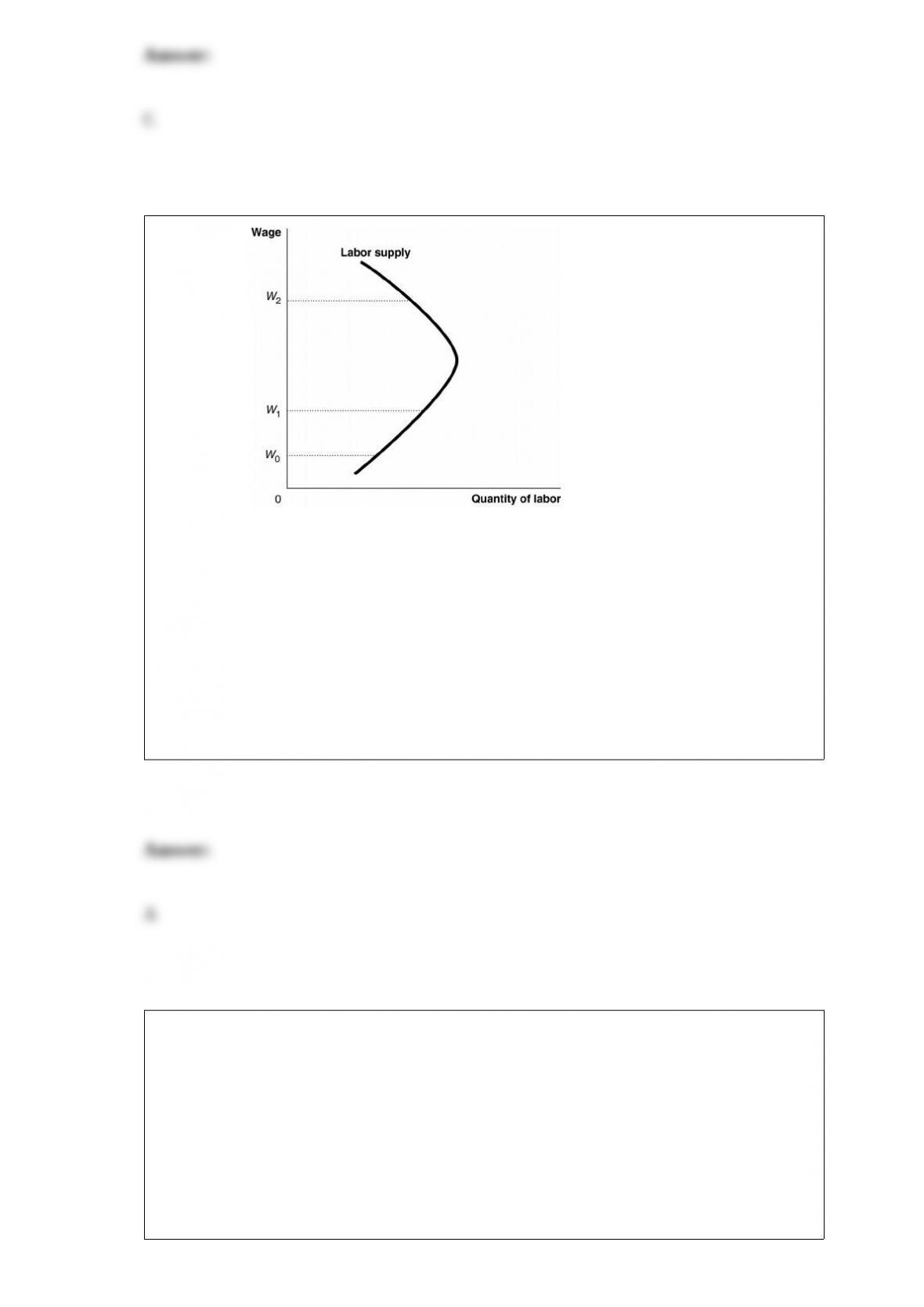
Figure 17-4
Which of the following is true if the wage rate increases from W1 to W2?
A) The income effect is larger than the substitution effect.
B) The substitution effect is larger than the income effect.
C) The income effect and the substitution effect are equal.
D) The supply curve is unit-elastic.
Max Shreck, an accountant, quit his $80,000-a-year job and bought an existing tattoo
parlor from its previous owner, Sylvia Sidney. The lease has five years remaining and
requires a monthly payment of $4,000. Max’s explicit cost amounts to $3,000 per month
more than his revenue. Should Max continue operating his business?
A) Max’s explicit cost exceeds his total revenue. He should shut down his tattoo parlor.
B) Max should continue to run the tattoo parlor until his lease runs out.

C) If Max’s marginal revenue is greater than or equal to his marginal cost, then he
should stay in business.
D) This cannot be determined without information on his revenue.
If a country’s currency ________ the dollar, its exchange rate is fixed.
A) is exchanged in currency markets for
B) depreciates against
C) is pegged to
D) has a floating exchange rate value which is equal to
________ is considered a high income country, ________ a developing country, and
________ a newly industrializing country.
A) Japan; Hong Kong; South Korea
B) United States; Somalia; Taiwan
C) Canada; France; Singapore
D) Honduras; New Zealand; South Korea

Some economists and lawmakers believe the Fed lost some of its independence when it
A) began printing money at the directive of the White House prior to the 2008
presidential election.
B) began working closely with the Treasury Department while dealing with the
financial crisis of 2008.
C) embarked on an expansionary monetary policy during the recession of 2007-2009.
D) began using the federal funds rate instead of M1 and M2 as a monetary policy target.
Consider a used car market in which half the cars are good and half are bad (lemons).
Suppose the average price of a good car is $9,000 and the average price of a lemon is
$3,000. If rational buyers are willing to pay $6,000 for a used car, then sellers will agree
to sell mostly the lemons at this price. What is the term used to describe this situation?
A) moral hazard
B) adverse selection
C) an efficient market
D) economic irrationality
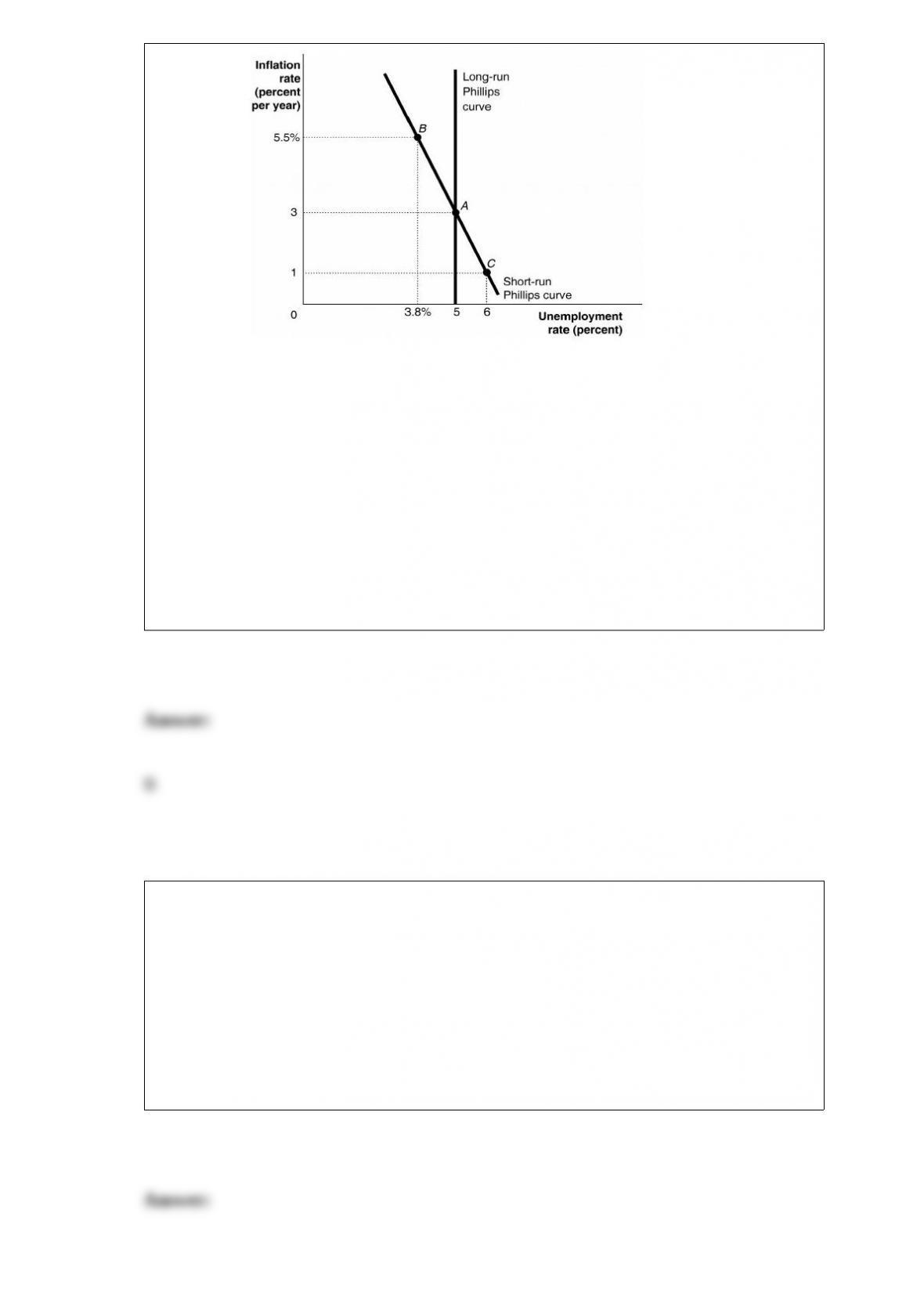
Figure 28-2
Suppose the economy is at point A in the figure above. Which of the following is true?
A) The expected rate of inflation is 5.5%.
B) The current unemployment rate is equal to the natural rate of unemployment.
C) The current unemployment rate is 3.8%.
D) Actual inflation is 1%.
E) The economy will move from A to B.
If net foreign investment is negative, which of the following must be true?
A) Capital outflows are greater than capital inflows.
B) Domestic investment must be greater than national saving.
C) Net exports are positive.
D) Private saving is greater than public saving.

Edward Lazear analyzed data provided by the Safelite Group, the nation’s largest
installer of auto glass, after the company changed the way it paid its glass installers
beginning in the mid-1990s. Instead of paying workers hourly wages, Safelite began to
pay workers on the basis of how many windows they installed. Which of the following
describes what Lazear concluded from his analysis of Safelite’s data?
A) Although workers installed more windows under the new system, Lazear found that
there was also an increase in the number of workmanship-related defects. Lazear
attributed this to workers taking short-cuts in order to earn higher wages. As a result,
productivity did not improve and Safelite went back to paying hourly wages.
B) Lazear found that worker productivity increased with the new system; about half of
the increase in productivity was due to workers who continued with the company and
half was due to new workers being more productive than those who left the company.
C) Although worker productivity improved, the increase in hourly wages resulted in a
significant decline in Safelite’s profits.
D) Because of a principal-agent problem, worker productivity was not affected by the
new compensation system. However, Lazear attributed this to management problems
that had nothing to do with Safelite’s compensation system.
Economists are reluctant to state that price controls are desirable or undesirable because
A) it is impossible to evaluate the impact on quantity demanded and quantity supplied
as a result of price controls.
B) whether the gains from the winners exceed the losses from the losers is not strictly
an economic question.
C) sometimes price controls result in increases in economic efficiency and sometimes
they result in decreases in economic efficiency.
D) economists are reluctant to conduct positive analysis of price controls.