
As a result of the tariff on Chinese tires, U.S. consumers are estimated to have spent
________ on imported tires and ________ on U.S.-produced tires.
A) more; more
B) more; less
C) less; more
D) less; less
When Mr. Peabody decides on the companies to which he will donate his time and
money, a ________ issue is being addressed.
A) microeconomic
B) macroeconomic
C) positive economic
D) normative economic
Minimum efficient scale is defined as the level of output at which
A) all economies of scale are exhausted.
B) diminishing returns affect average total cost.
C) the firm’s long-run average total cost starts falling.

D) the maximum output is produced.
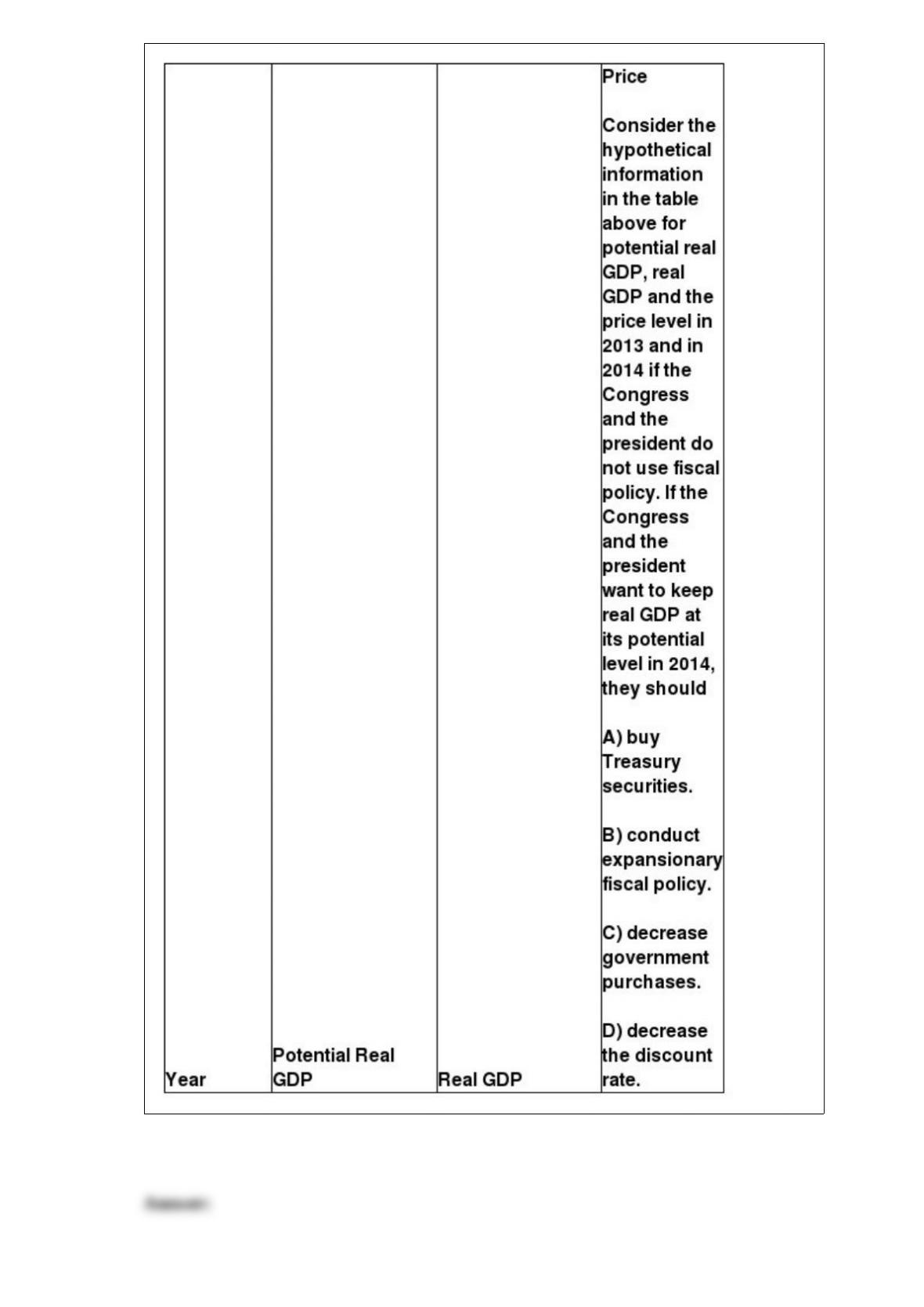
Table 16-2

Mrs. Lovejoy decides to invest in companies which she believes can produce its goods
at the lowest possible cost. Mrs. Lovejoy is investing in companies that are
A) productively efficient.
B) allocatively efficient.
C) both productively and allocatively efficient.
D) always going to be profitable.
In cities with rent controls, the actual rents paid can be higher than the legal maximum.
One explanation for this is
A) rent control laws are so complicated that landlords and tenants may not be aware of
what the legal price is.
B) landlords are allowed to charge more than the legal maximum on some apartments
so long as they charge less on others.
C) because there is a shortage of apartments, tenants often are willing to pay rents
higher than the law allows.
D) the legal penalty landlords face for charging more than the legal maximum rent is
less than the revenue earned by charging their tenants more than the maximum rent.
A firm’s cost of production is determined by all of the following except
A) the technology used to produce its output.
B) the productivity of its workers.
C) the cost of raw material used in production.
D) the amount of corporate taxes it must pay on its profit.
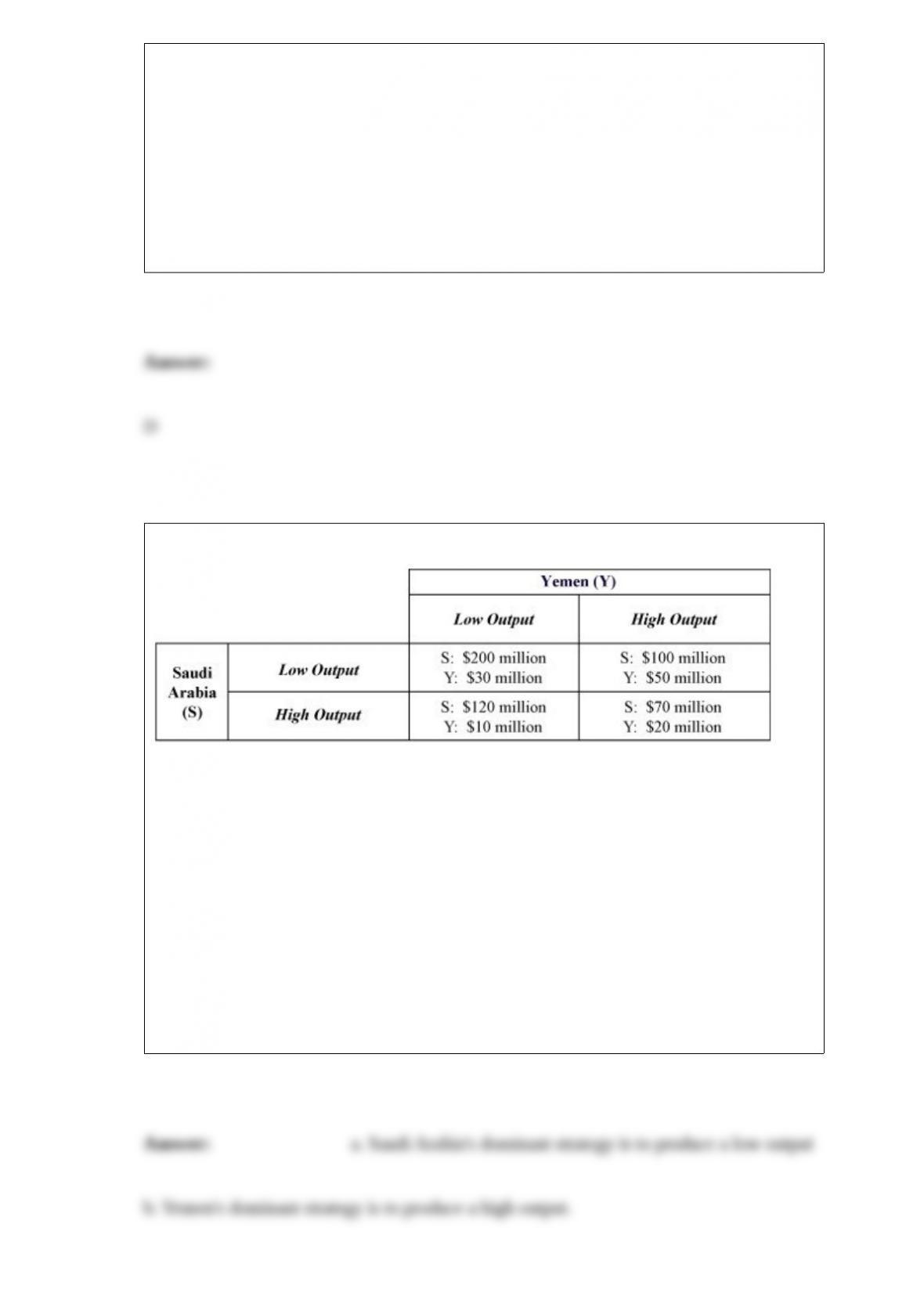
Table 14-9
Saudi Arabia and Yemen must decide how much oil to produce. Since the demand for
oil is inelastic, relatively low production rates drive up prices and profits. Saudi Arabia,
the world’s largest and lowest cost producer, is able to influence market price; it has an
incentive to keep output low. Yemen, on the other hand, is a relatively high cost
producer with much smaller reserves. Use the payoff matrix in Table 14-9 to answer the
following questions.
a. What is the dominant strategy for Saudi Arabia?
b. What is the dominant strategy for Yemen?
c. What is the Nash equilibrium?
Assuming the United States is the “domestic” country, if the real exchange rate between
the United States and France increases from 1.5 to 1.8,
A) the prices of U.S. goods and services have increased by 53% relative to France.
B) the prices of U.S. goods and services have increased by 3% relative to France.
C) the prices of U.S. goods and services have decreased by 16% relative to France.
D) the prices of U.S. goods and services have increased by 20% relative to France.
If the GDP deflator is 142, by how much have prices changed since the base year?
A) Prices have increased by 42%.
B) Prices have increased by 142%.
C) Prices have decreased by 4.2%.
D) Prices have increased by 58%.
Buying a house during a recession may be a good idea if your job is secure because the
Federal Reserve often
A) raises interest rates during recessions.
B) lowers interest rates during recessions.
C) lowers income taxes during recessions.
D) sells Treasury bills to help the housing market.
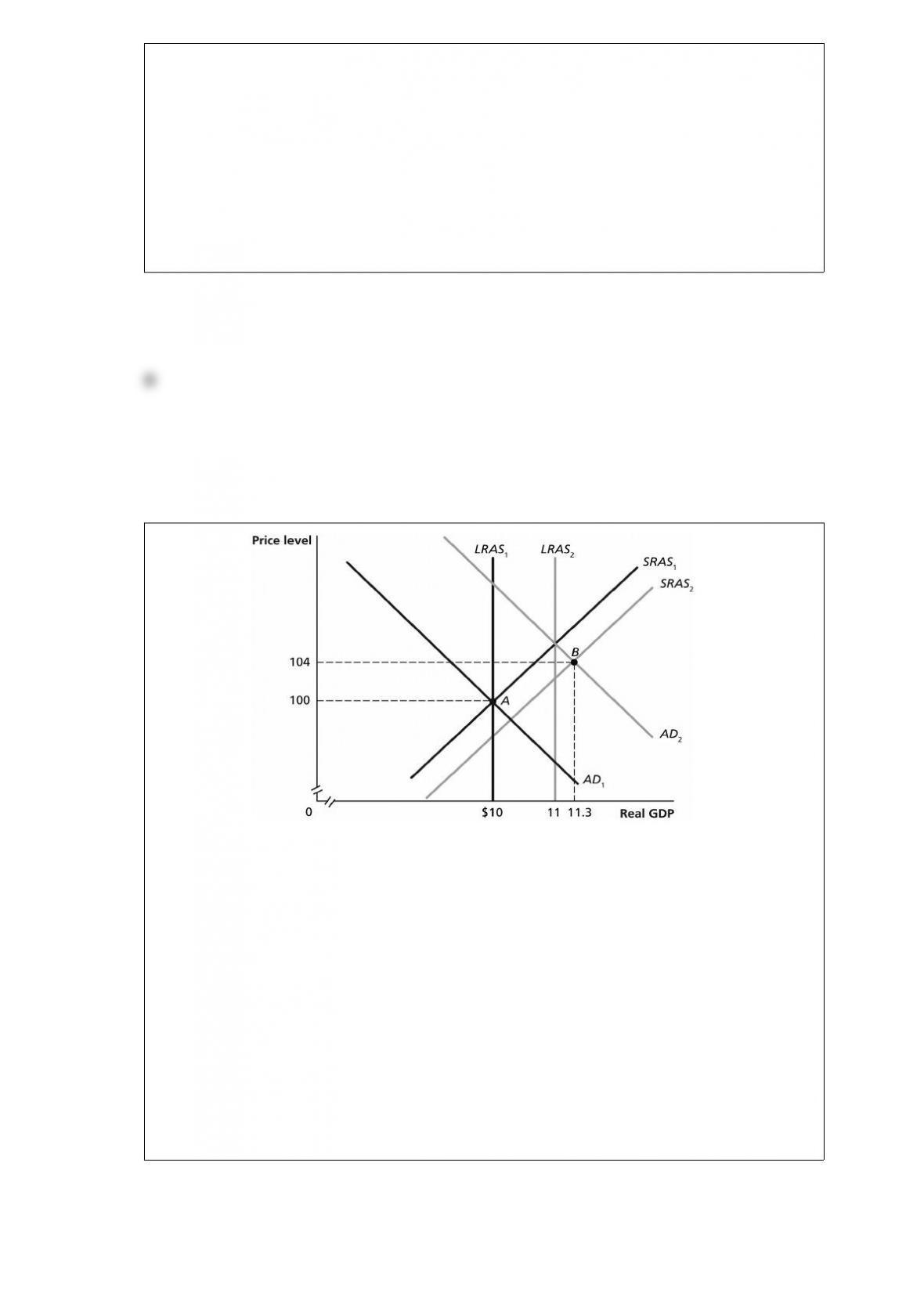
Figure 27-6
In the dynamic model of AD–AS in the figure above, if the economy is at point A in year
1 and is expected to go to point B in year 2, Congress and the president would most
likely
A) increase the money supply and decrease the interest rate.
B) increase taxes.
C) increase government spending.
D) increase oil prices.
E) raise interest rates.

If a typical monopolistically competitive firm is making short-run losses, then
A) other more competitive firms will enter the market.
B) as some firms leave, the remaining firms will experience an increase in the demand
for their products.
C) as some firms leave, the demand for the products of the remaining firms will become
more elastic.
D) the industry will eventually cease to exist.